
A whodunit with a why he dunit rationale and a big con. Trickery in the “F for Fake” tradition?
This looks great.
A whodunit with a why he dunit rationale and a big con. Trickery in the “F for Fake” tradition?
This looks great.
I excepted more of a “Stranger Things” bounce for Winona Ryder. But she’s working, and this creeper in a cabin in the woods is in the can and on the release slate — July 15.
Dermot Mulroney is also in the cast.

“Hyde Park” is a romantic dramedy with a court case as its backdrop set among affluent African Americans and African immigrants in the Chicago neighborhood that bears the same name as the more famous “Park” in London.
Pitched as an LGTBQ melodrama, as the story’s inciting incident is a shooting stemming from African intolerance for homosexuality, it daintily dances around the subject, avoiding engaging with it in any realistic sense.
The resulting movie, having the slimmest “African” slices of the life of this cultural melting pot, with courtroom scenes almost wholly consisting of ill-constructed and recited opening arguments that suggest the screenwriters did their homework by watching not one, but TWO whole episodes of “Law & Order,” looks polished but is quaintly amateurish, a tenth film that plays like a stumbling debut feature from director Mark Harris.
Eric and Tyler (Xavier McKnight and Vonzell Scott) step out of a revival house cinema and into an Uber, which is Eric’s undoing. The traditionally-clothed/close-minded African driver gets his nose bent out of joint by having two two guys almost kiss in his backseat. He comes at them with a baseball bat, and Eric shoots him.
That takes us into the legal world of David (Kenneth Okolie) and Lola (Dawn Halfkenny), fellow lawyers at a big Chicago firm. David’s angling for “partner.” Lola’s angling to make David her partner.
But he’s a Nigerian, with haughty “You need to be with a Nigerian woman!” parents. Lola is American, taking advice from sassy BFF Aja (Erica Hubbard) on how to move David towards commitment.
Maybe, with her staying in his apartment while hers is renovated and them thrown together on this case — the State is ready to deport trigger-happy Eric — that’ll happen.
Their friends are mostly folks they met in college and law school, with Sam (Corey Hendrix) a somewhat funny guy about to open a comedy club and prosecutor Santiago (Javier Villamil) ready to put the moves on old classmate Lola.
The best scenes in “Hyde Park” make use of the group dynamic and the cultural frisson such a neighborhood offers. Sam’s coming on to a Liberian “queen” (Love Weah) who isn’t having his attempts at African speech.
“We have thousands of languages and dialects. Which one are you pretending to do?”
“Wakandan and Zumundan!” Yeah, some Americans think “Black Panther” is a documentary.
But those playful culture clashes take a back seat to some some of the clunkiest courtroom scenes I’ve seen in a while. The cast seems experienced enough, if uneven in the quality of experiences. Okolie’s clumsy and uncomfortable attempts at lawyerese/legaese and making compelling courtroom arguments make one wonder how David could be up for partner, and how the director didn’t hear the many grammatical stumbles that strip the guy of any sense of law school polish.
No, you don’t have to “print” the first take. Give your actor a few chances to get through the lines so it doesn’t sound like an ESL exercise. Or were the lines this agrammatical on the page?
The screenplay takes a detour into Eric’s “secret,” which we know and the lawyers cannot figure out, and which apparently never came up in his criminal trial for the seemingly justified shooting. Say what now? Old Country “shame” is one thing. But his smart lawyers, his earlier felony trial lawyers, or the shooting victim, would surely have gotten around to exposing that in open court.
There’s great dramatic potential in using African, African Muslim and African American homophobia as a backdrop to drama, in or out of the courtroom. “Hyde Park” keeps this at arm’s length, with even the third act turns towards its subject feeling very 1985.
And for the love of Chicago, DON’T set your movie in a courtroom if you haven’t done more homework than this, if you have no knack for writing courtroom drama, if you haven’t run your script by a real lawyer to at least elevate the dialogue into real legalese.
There’s a better movie in this setting, and a better-acted and written “Law & Order” in this court case.

Rating: unrated, violence, adult situations
Cast: Kenneth Okolie, Dawn Halfkenny, Xavier McKnight, Erica Hubbard, Corey Hendrix and Javier Villamil.
Credits: Directed by Mark Harris, scripted Marvin Nelson and Lotten Yeaney. A Lot10 release.
Running time: 1:29
One of the better sequences in Baz Luhrmann’s “Elvis” is recreating that sacred piece of Elvis lore, “Singer Presents…Elvis,” the Xmas season TV show labeled “The ’68 Comeback Special.”
Luhrmann does spectacle like few filmmakers working today.
But you might be surprised how impressive that analog live on videotape show was for its day, and remains. Here’s a favorite bit featuring a song by Burt Reynolds ‘ future sidekick, Jerry Reed.
You can find the entire special on YouTube, in pieces and in complete form. Some of it is teeth grindlingly dated. But what once worked still works.
ONLY at Universal Studios, Orlando!
Ok, that’s getting ahead of ourselves. Soon, tho.
Meanwhile, Universal does a little end zone dance for its two movies in cinemas at the moment.

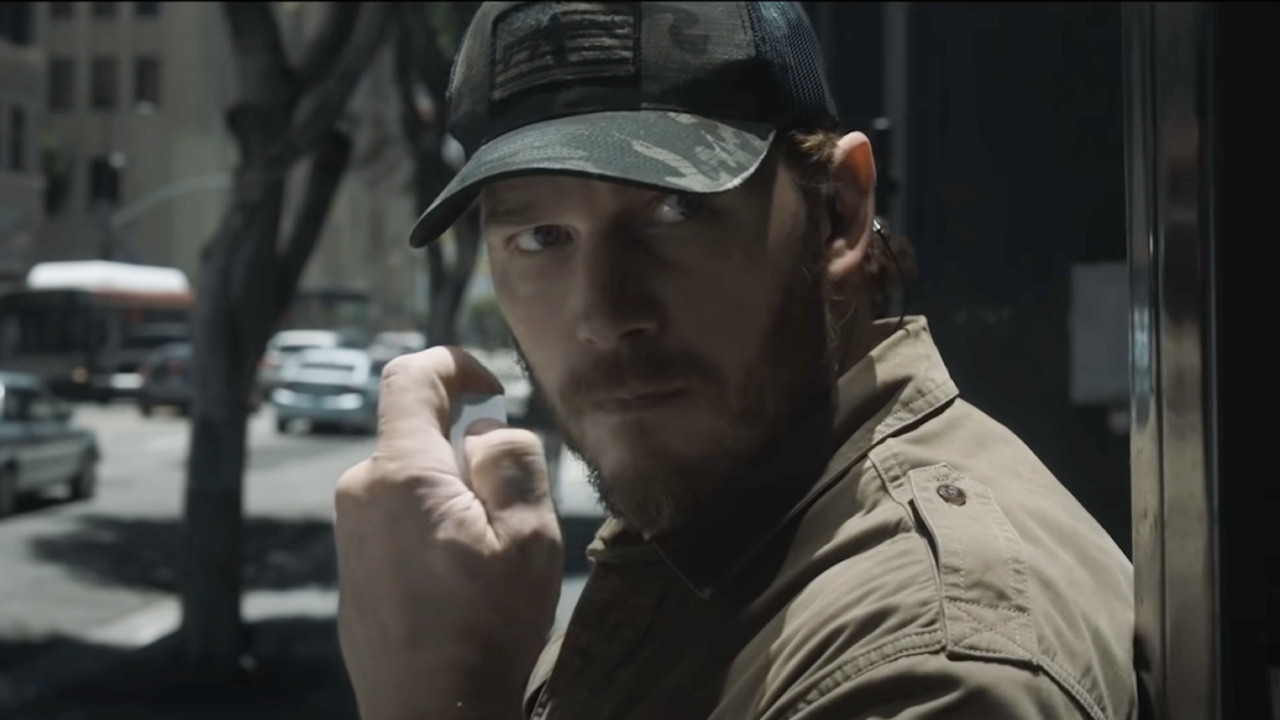

The action bonafides are pretty solid for “The Terminal List,” a paranoid Big Conspiracy thriller now on Amazon. It’s based on a novel by Jack Carr, series creator David DiGilio scripted TV’s “Traveler,” Antoine “Training Day” Fuqua directed the pilot and Sylvain White (“The Losers”) directed two episodes.
It begins with a special op that goes awry in Syria and its path towards revenge takes it into the lawless “Sicario” corners of Mexico.
But whether or not you decide to invest in its starts-fast/turns-slow unraveling — eight hours worth — probably depends on your devotion to, tolerance for and acceptance of Chris Pratt as the veteran SEAL commander on this quest.
It’s not his first camo-clad role and far from his first time in action. But the guy I labeled “the last and least of the Chrises” in my upcoming review of “Thor: Love and Thunder,” is adequate, at best, leaving an emotional and action heroic void at the center of the series.
Pratt is Lt. Commander James Reece, on the trail of a Syrian chemical weapons mastermind when he and his team are trapped in the ancient sewers of, I guess what is supposed to be Tartus, Syria. Where else could Navy SEALS be smuggled ashore and access generic “It’s a TRAP” tunnels that seem to date from the Crusades?
When he gets home, his debriefing has holes in it. Reece’s memory seems faulty. “Headaches.” He’s had a concussion. Twelve comrades died in the ambush. Reece becomes convinced that they were “set up” and that the set-up is ongoing. The Navy is understandably leery of that, yet determined not to think of Reece as being at fault.
After all, he’s 40 and still “tip of the spear.”
But it’s hard to figure out why he isn’t taken into custody after his family (Riley Keough plays his wife) is murdered with his service firearm. He’s sure he’s being watched and hunted by sinister forces. A cynical reporter (Constance Wu) wants his story, but perhaps not the version of it he’s telling.
Only his old comrade/now-CIA buddy Ben (Taylor Kitsch) has his back. And maybe the Secretary of Defense (Jeanne Tripplehorn).
With NCIS on his case, shady characters revealed, one at a time, and more and more frequent headaches, Reece is up against it trying to get to the bottom of things.
Pratt isn’t very good at all at suggesting concern that “this is all in my head,” so that’s abandoned early on. Pairing him up with Kitsch and Wu just throws his limited range into sharp relief.
The action beats include an assault mid-MRI, kidnapping and “enhanced interrogation” of this lead or that suspect.
We’re treated to more comically degrading situations for Sean Gunn, forever known as director James Gunn’s actor brother, here playing a gauche, abrasive functionary of whoever or whatever is mixed up in this Plot to Get Reece.
Reece’s first attempt at a big speech is meeting this guy, and Pratt lands flat in playing it.
“There’s evil in this world. It’s our job to look it in the eye cause most folks don’t have the balls…All you’ve got to do is pay your taxes and stay out of our way.”
Yawn.
I’ve never been much of a Pratt hater. He was OK in some of the supporting roles that preceded his unlikely “Guardians of the Galaxy” jackpot. But as a star, he’s never amounted to anything outside of that franchise, where he’s a decent comic foil for Dave Bautista and Bradley Cooper as a foul-mouthed raccoon, an unlikely love interest for franchise queen Zoe Saldana.
A couple of fight scenes kind of let us see the fight choreography at walk-thru speed. Even Joey King as “The Princess” was able to disguise that, most of the time.
As for the plot, there’s no “sizzle until it fizzles” because the story never really gets off the ground, never gets up and running.
After that opening firefight, there’s not much action to lift us above rich guy golf tourneys, strip club scenes, clandestine reporter meetings and the like.
It’s established that Wu’s journalist is a gambler, and she’s more colorful in that poker game moment than most of the scenes surrounding her ever is. And Kitsch carries himself like a man with a back story so well that every shared scene makes you wish the casting had been reversed.
Sad to say, if the fanboys ever tire of “Guardians,” that’s exactly where Pratt could land — second banana again. Well, maybe not on TV.
Rating: R, violence, nudity, profanity
Cast: Chris Pratt, Taylor Kitsch, Constance Wu, Jai Courtney, Sean Gunn, JD Pardo, Jeanne Tripplehorn and Riley Keough.
Credits: Created by David DiGilio, based on the novel by Jack Carr. An Amazon Prime release.
Running time: Eight episodes @ 1:00 each.
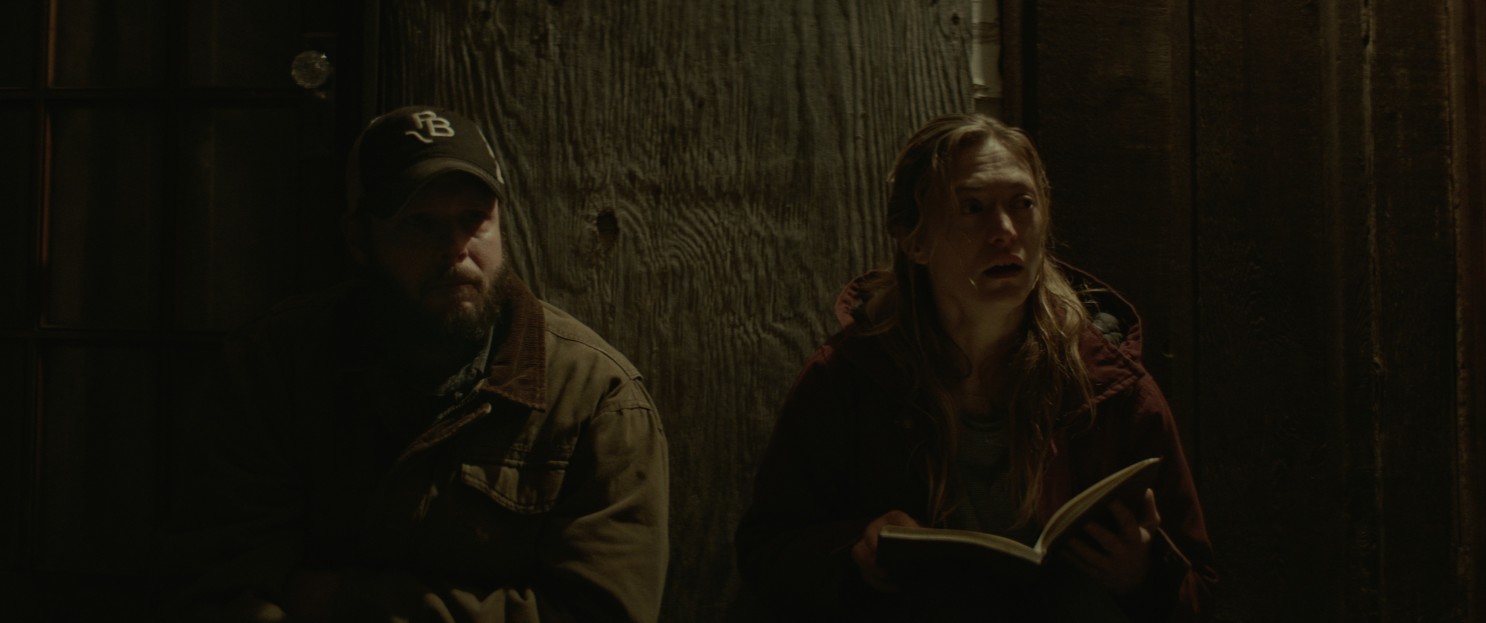
“The Dark and the Wicked” is a quietly gloomy thriller that wraps a number of horror tropes up in a tidy, compact package.
Writer-director Bryan Bertino (“The Strangers”) keeps his effects simple, his shocks few and his tone funereal in this story of menace visiting a rural Texas farm.
But what sells it is the buy-in. A good cast totally commits to acting “the moment,” letting us see the journey from “This can’t be real!” denial to “Why is this happening?” all the way to “Is escape even possible?”
And what’s the cardinal rule of horror? If they believe it, we believe it.
Marin Ireland of “The Irishman” and TV’s “Umbrella Academy” is Louise, a child of the farm who’s come home to comfort her mother and watch her father die. Just a few spare words of dialogue suggest life hasn’t worked out the way she’d hoped. There’s resignation in this homecoming.
And her mother (Julie Oliver-Touchstone) isn’t making it easier, starting with “I told you not to come.” Mom is trapped in the routine of the place, testy and embittered.
Her son Michael (Michael Abbott Jr., just seen in “Peace in the Valley”) is no comfort, either.
“It’s gon’be OK, Mama.”
“WHAT’s gonna be OK?”
Her husband is catatonic, in bed with a home health care nurse during the day. But at night, she’s there alone. And something creepy is going on inside, with the creaking doors and floorboards, and outside with their sheep.
As the siblings get a fresh dose of “I TOLD you not to come” just often enough to renew their regret that they did, first one and then the other recognizes that something above and beyond an impending death is going terribly wrong here.


Bertino keeps the menace mostly off-camera, building towards the shocks that come from knives, gruesome makeup, simply-staged apparitions and the like.
“Security” for the sheep is a string of bottles, horseshoes and other pieces of metal that rattle if anything comes to get at their flock. It rattles, and it’s not the wind doing the rattling. We never see what’s coming for them, but Bertino keeps his camera in tight on the alarmed, confused reactions of the sheep to let us know they do.
A shadow looming behind a character rises up behind her. A ghost appears outside, reappears inside and reappears again — instantly behind the person wondering why the bedroom light keeps switching on by itself. Smiles from seemingly benign characters curl into Joker grins.
That’s never a good thing.
Through all of this Ireland and Abbott give us a slow-to-pass denial at what they’re seeing and a slower-to-realize that they can’t remove the threat by putting “daddy in the hospital.”
There’s self-blame in all of this, a family that’s grown up without religion and without hugs of comfort that seems to exacerbate the confusion, limit their options and amplify the agony.
“The Dark and the Wicked” tone is established early and maintained throughout. But the film’s general helplessness can be frustrating, and some characters — Xander Berkeley plays a creepy priest, Tom Nowicki an old family farmhand — get short shrift, making their scenes perfunctory.
I had few memories of this film from first reviewing it a couple of years ago. But its shortcomings remain the same, even if my appreciation of the performances has grown.
Few recent horror movies have gotten more out of less that this one, and that all comes down to the cast. Ireland and Abbott give us different takes on how one might respond to evidence of a supernatural menace. Each actor believes what their character is seeing and feeling. They make us believe it, too.

Rating: unrated, graphic violence
Cast: Marin Ireland, Michael Abbott, Jr., Julie Oliver-Touchstone, Xander Berkeley and Tom Nowicki
Credits: Scripted and directed by Bryan Bertino. An RLJE release on Shudder.
Running time: 1:35
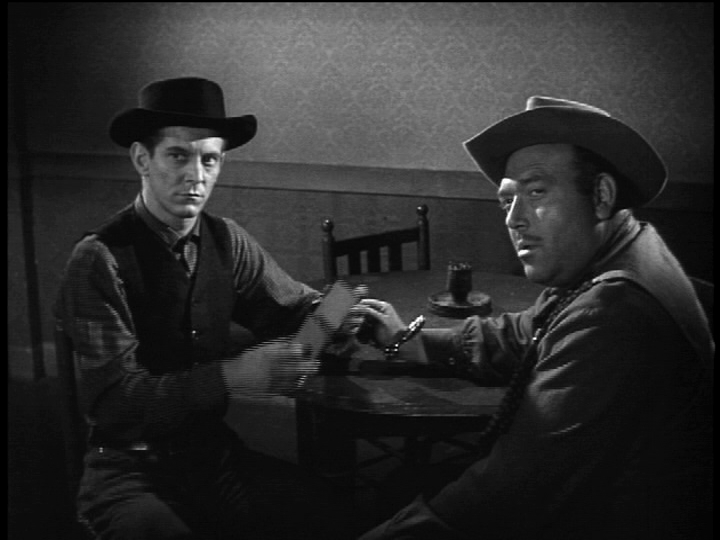
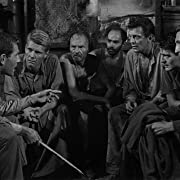
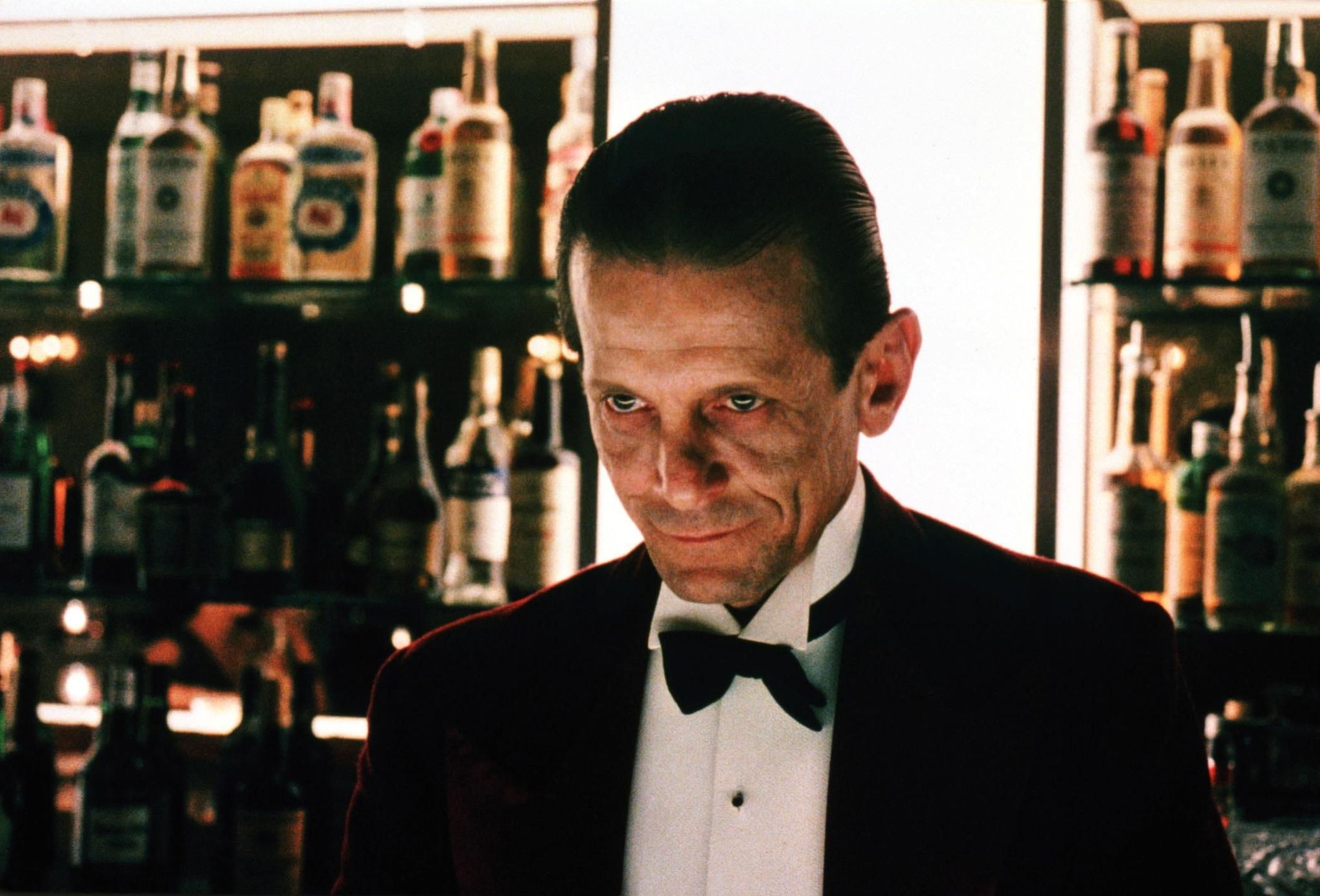
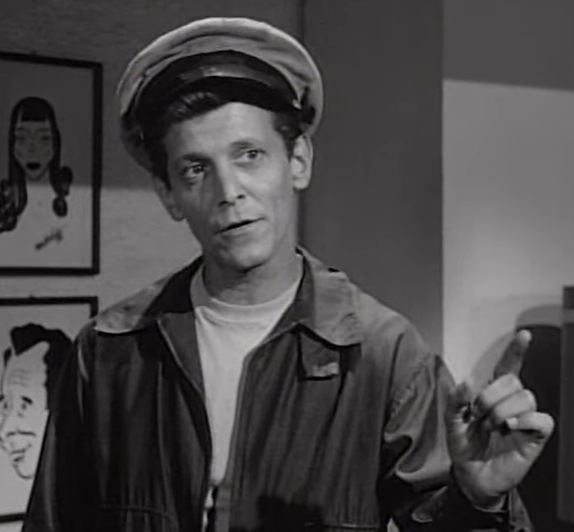
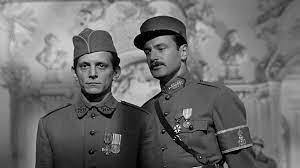
Joseph “Joe” Turkel of Brooklyn, New York, made well over 100 appearances on film and TV, more if you add in video games.
He died last week at the ripe old age of 94, a character actor who appeared in six decades of films, only five of TV, and that’s only because when Joe Turkel started out, there was no television — none to speak of anyway.
I stop short whenever I channel surf by old TV shows and suddenly, there he is — a German officer in “The Rat Patrol,” a GI in “Combat!,” a gangster on “The Untouchables,” “Bonanza.” Hell, there he is on “The Andy Griffith Show.”
But he owes his screen immortality to four films — two of them, really — and the deep-dive enthusiasm of film buffs. We know he was a favorite of his fellow Brooklynite Stanley Kubrick, and that Ridley Scott cast him because Stanley had. We’re the reason he ended up at fan conventions and film festivals, a coveted interview subject, right to the end.
He was unforgettable as the inscrutably menacing bartender Lloyd in “The Shining,” drink-mixer and confessor to Jack Nicholson’s Jack Torrance.
Kubrick completists recognized Turkel from a chewy supporting role as a soldier doomed to be arbitrarily executed in “Paths of Glory.” And every time we’d watch “The Killing” after that, we’d see him. He was hard to miss, even in a bit part in that earlier Kubrick outing.
“Blade Runner” was the sci-f magnum opus TV commercial director-turned-filmmaker Ridley Scott made with his “Alien” clout. What better way to underscore his change in status than adding a Kubrick mascot to his epic? Turkel plays the mysterious oligarch behind everything that’s going wrong with replicants in the hellscape LA of the future.
Turkel’s vulpine look conveyed menace and untroubled wisdom in his two biggest films. It’s always startling to see him in another guise, showing off real range as an actor beyond the iconic roles we remember him for.
Memorize that face. Keep an eye out for it every time you channel surf. He never had a headliner, above-the-title career. But for a character actor, Joe Turkel’s brand of screen immortality is the gold standard.
Ask Joey Pants, Buscemi, Tim Blake Nelson, Giancarlo Esposito or Jeffrey Wright. They know.

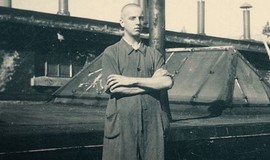

As World War II ground to its brutal conclusion, Germans and their occupied country collaborators hastily burned, blew up and buried as much of the evidence of “The Final Solution,” their mass internment and murder of European Jews, Gypsies, homosexuals, Slavic POWs and other “undesirables.
But the evidence of Nazi crimes against humanity lived on. Survivors in liberated and not-yet-destroyed camps bore witness. Some German records survived in the chaos. And after a hard rain at Auschwitz-Birkenau, Dachau, Ravensbruk and other camps, you can still see the white fragments of bones, the product of the mass murder hiding crematoria, expelled from the soil where they were buried.
The rarest direct proof of what happened, what the camps looked like during the war, filled with inmates in the middle of civilization’s worst crime, are photographs taken by those trapped in what we’d later label The Holocaust.
Christophe Cognet’s “From Where They Stood” celebrates the six photographers who found a camera and found a way to get pictures in 1943-44, hide the celluloid and save it for posterity, not just “evidence” but grim, grainy reminders of the nuts and bolts operation of these murder factories and what those enslaved there went through.
The pictures are a frame or two here, a couple of others there, some of them blown up for various memorials or museums at the site of the death camps. Furtively-snapped with cameras either from the camp’s photographic department, or purloined from the storage house nicknamed “Canada” in one camp — where the final possessions of Jews and others interred there were stashed — every photo was dearly bought under the riskiest of conditions. Every photo tells a story, not just of the subject, but of how hard it was to get, and how brave the photographer had to be to take it.
That’s what Cognet’s film is about. He visits archives, interviews experts and blows up negatives that he can then take to the site and figure out how, when and exactly where the shots were obtained.
One photographer smuggled images, and even samples of human skin that the German Army’s S.S. had preserved in grisly in-camp museums, “traces of S.S. crimes,” out. Another wrapped his camera in a newspaper, taking secret snaps with a primitive Brownie style camera, carefully avoiding detection by the guard towers.
Another got inside a gas chamber and photographed out a window, detailed a field covered with bodies to be burned. Cognet and the experts (and translators) he takes with him on camp sites determine the time of day, the season of the year, the location of this shot or that one, with a magnifying glass, a lot of deductive reasoning and a little speculation.
That makes for an unusually forensic “Zapruder Film” take on a subject that is most often documented via gripping, wrenching interviews with the ever-shrinking pool of aged survivors.
This or that shot was later “retouched” to erase inmates lying on the fenced lawn in front of a crematorium, numb to the death all around them,” or to add definition to the blurred faces of nude women stripping to enter “the showers.”
Portraits of “human guinea pigs” showing us their injuries are mixed with simple looks inside an infirmary, a glance at emaciated prisoners, even of the photographers themselves “taking ownership of their image” in the face of this dehumanizing horror, are seen and deconstructed.
But for all the power of its subject and the rarity of its images, Cognet has made a dry and almost defiantly artless movie about these images and their provenance.
He uses no music, makes no effort to create striking compositions and even the editing of the sometimes hand-held explorations and zoom-ins on images is done without dissolves, that original motion picture “special effect.”
If he wants to show a location as it is now, with ruins or recreated buildings, juxtaposed with what the photographer saw back then, he shoots through a blown-up negative to physically lay one image over the other. He scrambles through overgrown, unrestored sites (Mittelbau-Dora) to try and mimic the shot the often long-dead photographer framed up, never daring to manipulate emotions with music or words or emotional reactions to what was captured, at the greatest possible risk, almost 80 years ago.
That makes for a documentary that is grimly clinical, as if the viewer, like the filmmaker, is holding that blow-up transparency at arm’s length over a scene to recreate it and imagine the horror that went on there.
“From Where They Stood” lacks the pathos or the damning condemnation of the best Holocaust documentaries or of the Spanish drama about one such in-camp witness, “The Photographer of Mauthausen.” It plays like a piece of scholarship and forensic evidence for the next “Holocaust Denier” trial.
Yes, this happened. Here are the photographs confirming survivor testimony and validating the production design of the many cinematic treatments. And here are the stories of those who took the photos, half a dozen men and women, risking their lives to capture images that would prove what happened to them, even if they didn’t survive.
Rating: unrated
Cast: Christophe Cognet, Pamela Castillo Feuchtman, Harry Stein, Corinne Halter, Tal Bruttman and Albert Knoll.
Credits: Scripted and directed by Christophe Cognet. A Greenwich Entertainment release.
Running time: 1:55
Steve Carell gave away the game about “Minions: The Rise of Gru,” during his interview with Seth Meyers the other night. It’s not just a movie for kids and their parents, but “grandparents” might give some thought to volunteering to take the grand-tykes to this one.
It’s set in the ’70s. The Minions have always gotten laughs by singing their screwball gibberish versions of “original hits.” See the above clip from “Despicable Me 2.” As in the earlier films, most of the needle-drop musical moment laughs in it come straight out of that garish, dopey, “classic rock” era. And they can be hilarious.
These songs have become enduring motifs that cross generations, with even “OK, Boomer” 20 year-olds recognizing, or almost recognizing them. Some have been used in scores of movies and are so omnipresent that they’re in our DNA.
What’s that melody that’s a ’70s Minions version of “Whistle While You Work?” It’s this one, only sung in gibberish.
The setting of “The Rise of Gru” is ostensibly 1976. Disco! “Funkytown” time, K.C. and the Sunshine Band have their moment, as does this unlikely hit from a mirror-ball/polyester era.
The ’70s were a great era in soul music, generously sampled in the background and foreground, often played for ironic laughs. “Hollywood Swingers,” Miss Diana Ross…
Like many of the songs slapped in there, Universal and Illumination used cover versions. Most of us prefer the originals.
And what’s a classic rock era comedy without some actual classic rock? Credence Clearwater Revival, “Black Magic Woman,” “Cat Scratch Fever,” Steve Miller and hell’s bells, this little taste of Bowie and Mott the You-Know-Who.
There’s a lot of music that doesn’t fit the era, “Sabotage” by Los Beastie Boys, And RZA playfully plays a Hendrix look-alike biker who figures in the plot, so his “Kung Fu Suite” features in the score. This one is covered on the soundtrack, but begins in its original Karen Carpenter alto in the film.
A cover of “Instant Karma” here, a Minions-gibberish funeral ballad there. This song first popped up in that context, sung by the original bad boys of rock, way back in the Boomer classic, “The Big Chill.” It’s still sad in such a setting, but the gibberish makes it amusingly ridiculous.
“Rise of Gru” has those tunes, and more, used mostly for laughs. Fold in a few hundred sight gags, manic action, jokes and punchlines.
“Don’t CHEESE me, bro!”
The payoff is, as I called it, “a film of demented genius,” and that Variety rightly labels “the funniest movie of the year.”
OK, Boomers. What’re you waiting for? Sure it’s a cartoon, but you don’t need the grandkids to have an excuse to go. OK, maybe you do, so here it is — that excuse.


