
Great White? Maybe a she, maybe a he.
Aug. 26, “Maneater” makes chum out of a lot of young swimmers.
Great locations. Australia? Just beautiful. Except for the blood, of course.
Great White? Maybe a she, maybe a he.
Aug. 26, “Maneater” makes chum out of a lot of young swimmers.
Great locations. Australia? Just beautiful. Except for the blood, of course.
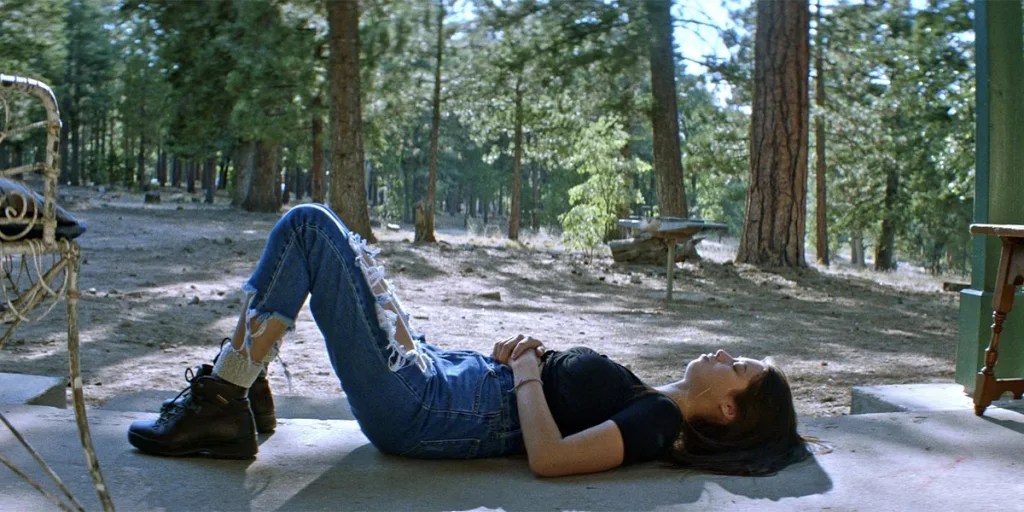
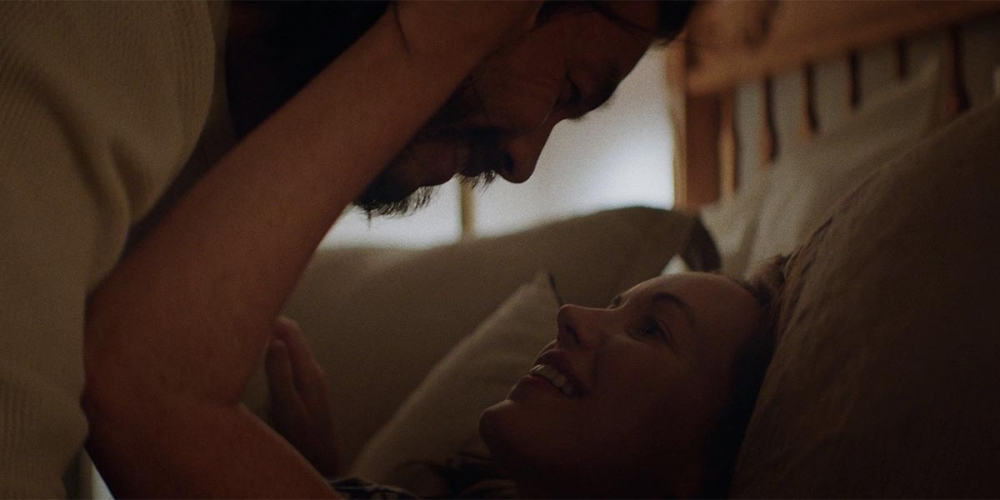
At certain points, relationships can develop their own momentum, careening headlong towards affirmation or collapse. And heaven help anybody trying to stall the inevitable, put the brakes on or turn “The Wheel.”
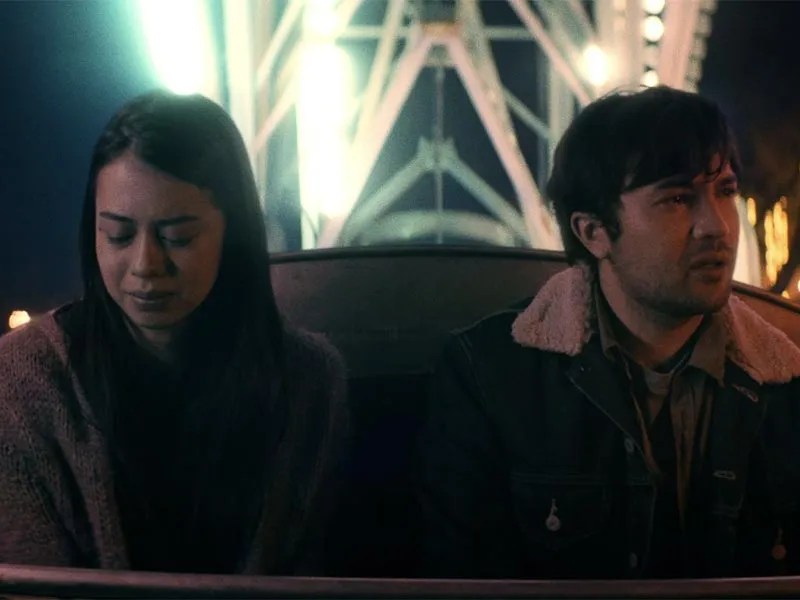
Albee and Walker are hurtling towards the abyss when we meet them in Steve Pink and screenwriter Trent Aktinson’s intimate indie dramedy. Or rather she is. Walker (Taylor Gray) is grasping at straws, dragging Albee (Amber Midthunder) out for a romantic weekend getaway at an AirBnB. Albee is resigned to “this sh—y thing” she’s agreed to do, and she never lets him or us forget it.
Walker has this plan, consult a self-help book he picked up for little or nothing — “Seven Questions to Save Your Marriage.” They’ll spend a weekend, “four questions today, three on Sunday,” and sort things out.
Question one? “What was the first thing that drew you to me?”
They’re very young, their hostess Carly (Bethany Anne Lind) notices. And yet they’ve been married eight years.
“We were 16,” Walker blurts. “It was Texas.”
Maybe they’ll hit that Ferris wheel they drove by on the way up, Albee tells Carly, “if we’re not divorced.”
They’re both given to blurting.
“The Wheel” is about that marriage about to break up, and co-owners Carly and Ben (Nelson Lee), who are about to marry, trying to intervene. Well, she wants to intervene. He’s picked up on toxic Albee acting like “a monster.”
“Maybe they’re not supposed to be together,” he reasons. “She doesn’t need help. She needs an exorcist!”
“Bad relationships are contagious,” he adds as a warning.
Over the course of the weekend, both couples will be tested. Revelations will explain characters — some more than others — the marriage and the desperate way it began. And we watch and shake our heads and wonder if this plunge over a cliff can be averted, or even should be.
The intimacy of this movie seems to raise the personal stakes among the four. Aussie TV writer Atkinson makes up our minds for us about this character or that one, and then upends those formed opinions.
Midthunder (TV’s “Roswell”), affecting a sort of cruel-cloying Aubrey Plaza vibe, is perfectly believable as a 24 year-old aspiring actress out to sabotage this marriage, come hell or high water. Gray (“Walt Before Mickey”) comes off as that all-in very young guy who can’t imagine life without Albee, mainly because he has no perspective.
Prospects don’t look good, and seeing the waves Albee makes in the about-to-marry couple, we don’t dare hope for any sort of happy ending for “The Wheel.” With this cleverly unassuming script, anything could happen, no matter where the momentum is taking them and us.

Rating: unrated, profanity
Cast: Amber Midthunder, Taylor Gray, Bethany Anne Lind and Nelson Lee.
Credits: Directed by Steve Pink, scripted by Trent Atkinson. A Quiver release.
Running time: 1:23
“He’s only dating you for the ‘WOKE’ points!”
Fighting words in this Billy Porter (TV’s “Pose”) art school romance, with one character transitioning. July 22 on Amazon.


National foundation myths are dearly held, but the more recent the “foundation,” the trickier it is to get a myth out of the cold hard facts.
On its surface, “Image of Victory” is a piece of Israeli agitprop, a triumphalist/martyred take on one corner of the first Arab-Israeli War, the one fought when Israel declared its independence as a “Jewish state” in 1948.
But in framing its story within an Egyptian journalist’s memory of the battle for the coastal Nitzanim kibbutz, writer-director Avi Nesher (“The Matchmaker”) pays just enough lip service to the opposing points of view about this conflict to make it interesting.
Israeli actor Amir Khoury, who played a terrorist in “Seven Days in Entebbe,” is Hassanni, an aged Egyptian journalist embittered at the news of the Camp David Accords, furious that his president, Anwar Sadat, has signed a treaty with “the enemy.”
Hassani thinks back to the decades of strife and slaughter, the lives lost “in vain.” Oddly enough, it’s a defiant Israeli Jew from that kibbutz battle he covered that sticks in his mind.
“It’s her I cannot forget.”
Back in 1948, Hassani was summoned to a new gig, as the reporter sent along with a cameraman to film newsreels for Egyptian cinemas. A hardcase producer wants him on the ground, covering the strife between the new kibbutz (Israeli communal settlement) and the neighboring Palestinian village of Hamama, many of whose poor farmers lost their land when the landlord sold it to well-financed Jewish settlers.
With Cairo street agitators preaching (in Arabic) that “These foreigners colonized our sacred land in order to expel (our) brothers,” and raging at Egypt’s playboy King Faruk’s impotent reaction to the mass Jewish migration to Palestine, this is the story of the hour.
Hassani and his photographer embed in the village, watching the locals, with a little training from a professional soldier, undertake sniper attacks on settlers planting orchards.
Platoons of Jewish convicts were brought in as soldiers to help protect Nitzanim.
The film limits its depictions of the Egyptian and Palestinian Arab point of view to Hassani having to learn to toe the propaganda line, universal dismay at Faruk and annoyance by the local fighters at being filmed — in “our humiliations” and even possible “triumph.”
That’s why “Image of Victory” is an ironic title. Hassani may have visions of Frank Capra’s “Why We Fight” documentaries, humanizing conflict with these films, and bucking up Egyptian morale. Events and censorship might not allow that.
Most of the movie is about life inside that kibbutz, the toughness of the new or newish settlers, some with concentration camp numbers tattooed on their arms. None is tougher than the one Hassani “cannot forget.”
Mira (former child actress Joy Rieger of “The End of Love”) is an earthy true believer of the kibbutz “way,” the mother of a small boy (who sleeps in the communal “children’s barracks”) who has no more use for the boy’s father.
If Mira takes a shine to the new army brigade captain (Tom Avni), her less butch not-quite-ex had best just step aside.
We hear the chatter of many languages, not just Hebrew, as new settlers come from all over Europe and engage in group sing-alongs, communal swims at the beach, bickering over the group showerhouse, gathering around the radio to hear Israel declare its independence at the end of the British Palestine mandate.
There’s even lip service paid to the touchiest subject at hand, then and now — land and land-ownership and the intentional displacement and violence it brings — in one of the communal (some are communists, many are socialists) debates.
“All lands in the world used to belong to someone else,” a political commissar huffs. “When we crawled out of the crematoria chimneys,” he fumes, “we paid the landlord good money” and that settles that.
Yes, that’s glib, and I was reminded of the shock I had watching a documentary about Israel’s founding a while back, with British officials expressing concern in correspondence — in 1919 — of Jewish migration and settlement strategy that seemed like “apartheid.” No, former President Jimmy Carter wasn’t the first to label the efforts of the “monoethnic state” of Israel to separate, sequester and disenfranchise Palestine’s Arabic majority that way. It’s been the plan from the start.
The combat sequences are straightforward and well-handled, with the settlers having the upper hand with a machine gun, mines and professional soldiers (and ex-convicts), then the Arabs gaining an artillery battery, with the climax a final assault that gives Hassani his memory “I cannot forget.”
Nesher can be praised for at least attempting to show two views of that fateful founding back in 1948. This isn’t “Exodus” or “Cast a Giant Shadow,” Hollywood’s celebrations of Israeli statehood and the blood that was spilled to gain it.
But I dare say this lopsided, somewhat factual take on Israel’s founding myth won’t show up on most Middle Eastern streaming services. Even at its “fairest,” this “Image of Victory” is always viewed through Israeli Haganah binoculars.
Rating: TV-MA, violence, nudity
Cast: Joy Rieger, Amir Khoury, Eliana Tidhar, Tom Avni, Meshi Kleinstein, Ala Dakka,
Credits: Written and directed by Avi Nesher, based on a true story. A Netflix release.
Running time: 2:08
You had me at “Irish.” And Olivia Colman. And “Joyriding.”
This has some sort of regional distributor for that corner of Europe, no US one listed yet. They don’t even have Euro release dates.
But again, Olivia Colman, Oscar winner, Irish and “road trip.” Throw in a cute car thief and a wee babe and a ferry ride. Come on, SOMEbody will pick this up in for North America.
The perfect, timeless tune that outlived Bond villains, Bond films and Bonds
RIP, Monty Norman.
Four girls find a body, and try to figure out who he is and what they should do about it over one magical/mysterious and “troubling” summer, in which they “come of age.”
NOT a Stephen King take of the “Stand By Me” variety. Not much, anyway.
Hard to get a bead on “Summering” from the trailer, but Ponsoldt is one of my favorite filmmakers, so I’m guessing it’s good.
Aug. 12, limited release.

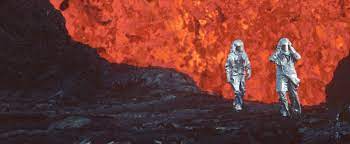
The trailers to the documentary “Fire of Love” play up the weirdness, the “obsession” of the husband and wife French vulcanologists Katia and Maurice Krafft, and suggest that they were dilletantes who died doing something they loved but perhaps didn’t fear as much as they should have.
It’s a “Grizzly Man” styled come-on for a movie that doesn’t need that sort of hype, and a couple who don’t deserve to be taken that lightly — at least in the advertising. All that does is remind us that Werner Herzog (“Grizzly Man”) already made a movie (“Into the Inferno”) about these two, also using their footage and narrating it in that distinct, nihilistic Herzog style.
Sara Dosa’s new film about the Kraffts, who died in 1991 doing what they loved and dedicated their lives to — studying volcanoes, up close and with cameras — doesn’t take that tack. She and editors Erin Casper and Jocelyn Chaput dive into the Krafft’s decades of volcano footage, with the “co-stars” of this movie listed as “Mana Loa, Nyiragongo, St. Helens, Una Una” and others. We hear the Kraffts in samples of their many TV interviews over the years.
And Dosa hired comic actress Miranda July to deliver a deadpan, almost forlorn voice-over narration of the Kraffts, the mystery of their romance.
“In this fire, two lovers found a home,” July intones. “As in love, there are mysteries” about them, how they met and what connected these near-neighbors from Alsace from the 1960s into the 1990s.
Perhaps the answer to those “mysteries” is “You fall for what you know, and for what you don’t.”
Their (European) TV-friendly career that allowed the Kraffts to stay funded and continue their work while others might be left stranded by a lack of grant financing.
The Kraffts came along in the middle of the “plate tectonics revolution,” when understanding of the Earth’s crust, fault lines and the volcanoes and earthquakes along those boundaries was changing overnight. They pitched in, the chemist Katia and the geologist Maurice each doing the science as well as taking the film footage that both made them famous and is probably their lasting contribution to the field.
This footage, rough and tumble — amateurish at times, playful at others — can be breathtaking. And in holding takes of pyroclastic floes, eruptions and steam and smoke venting out of volcanoes for long stretches, “Fire of Love” lets us see why they became transfixed by this deathly-dangerous beauty, mesmerized by the awesome, timeless power they had the privilege of witnessing.
We get a feel for the “ecstasy and loneliness” that drew the Kraffts to each other and to this dangerous work, studying “the archives of the Earth.” And we see the odd moment of recklessness that suggests that yes, maybe they took one, two or three risks too many, some probably just for the cameras.
Animal kingdom fanatic Steve Irwin could have learned from their example.
As beautiful and intimate as “Fire of Love” often is, the sometimes grating, flat and precious narration makes one long for this material to have been folded into Herzog’s superior “Into the Inferno.” Romantic “obsession” is kind of his thing, and there’s not enough new here to warrant expanding on it.
Rating: PG
Cast: Katia Krafft, Maurice Krafft, narrated by Miranda July.
Credits: Directed by Sara Dosa, scripted by Shane Boris, Erin Casper and Jocelyn Chaput. A Neon/National Geographic release.
Running time: 1:33
Amandla Stenberg, Maria Bakalova, Lee Pace and Rachel Sennott.
Aug 5 and 12, theaters, then streaming platform, then that one.
From A24. Need I say more?
Trigger warning. F——g Pete Davidson’s in it.
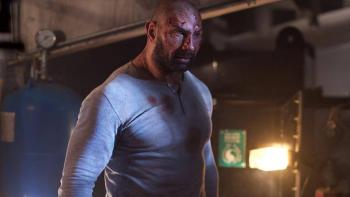
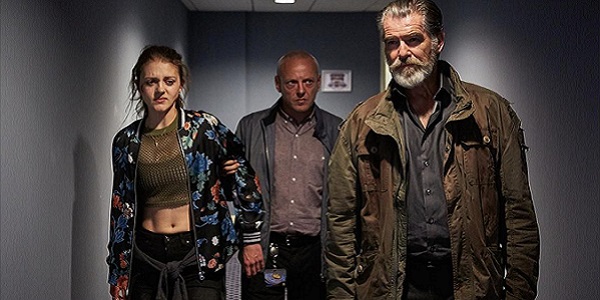
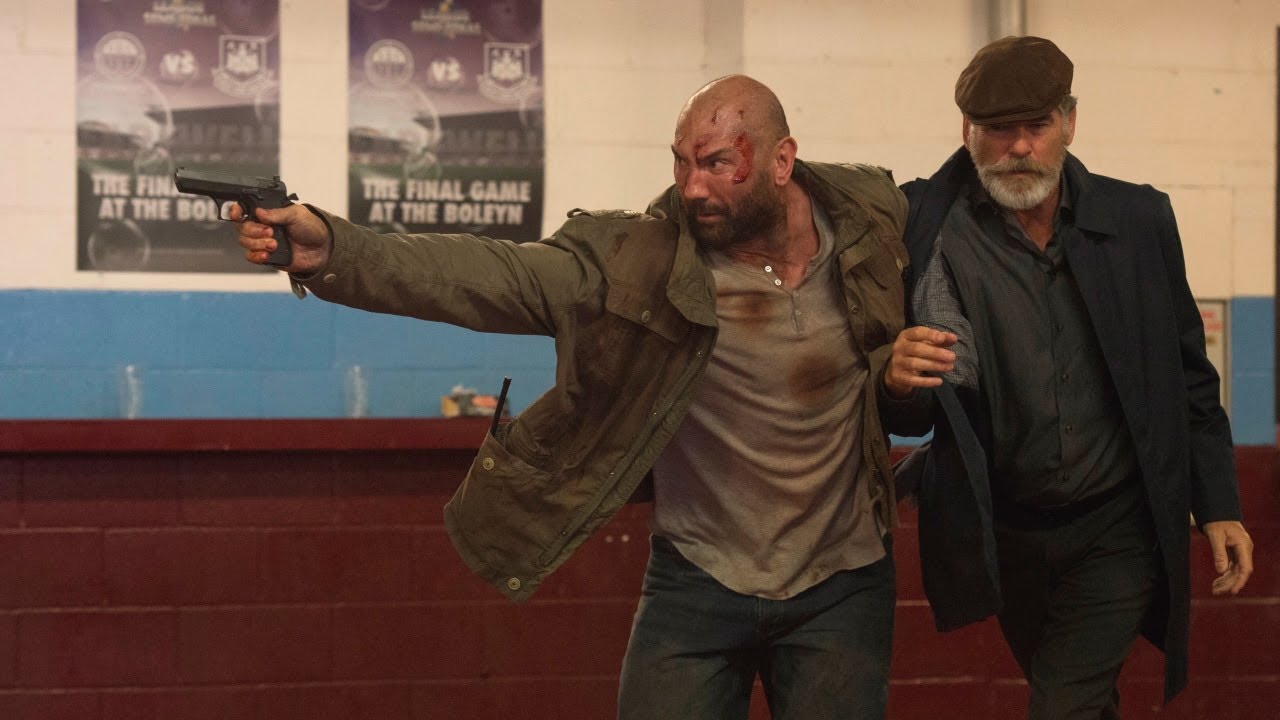
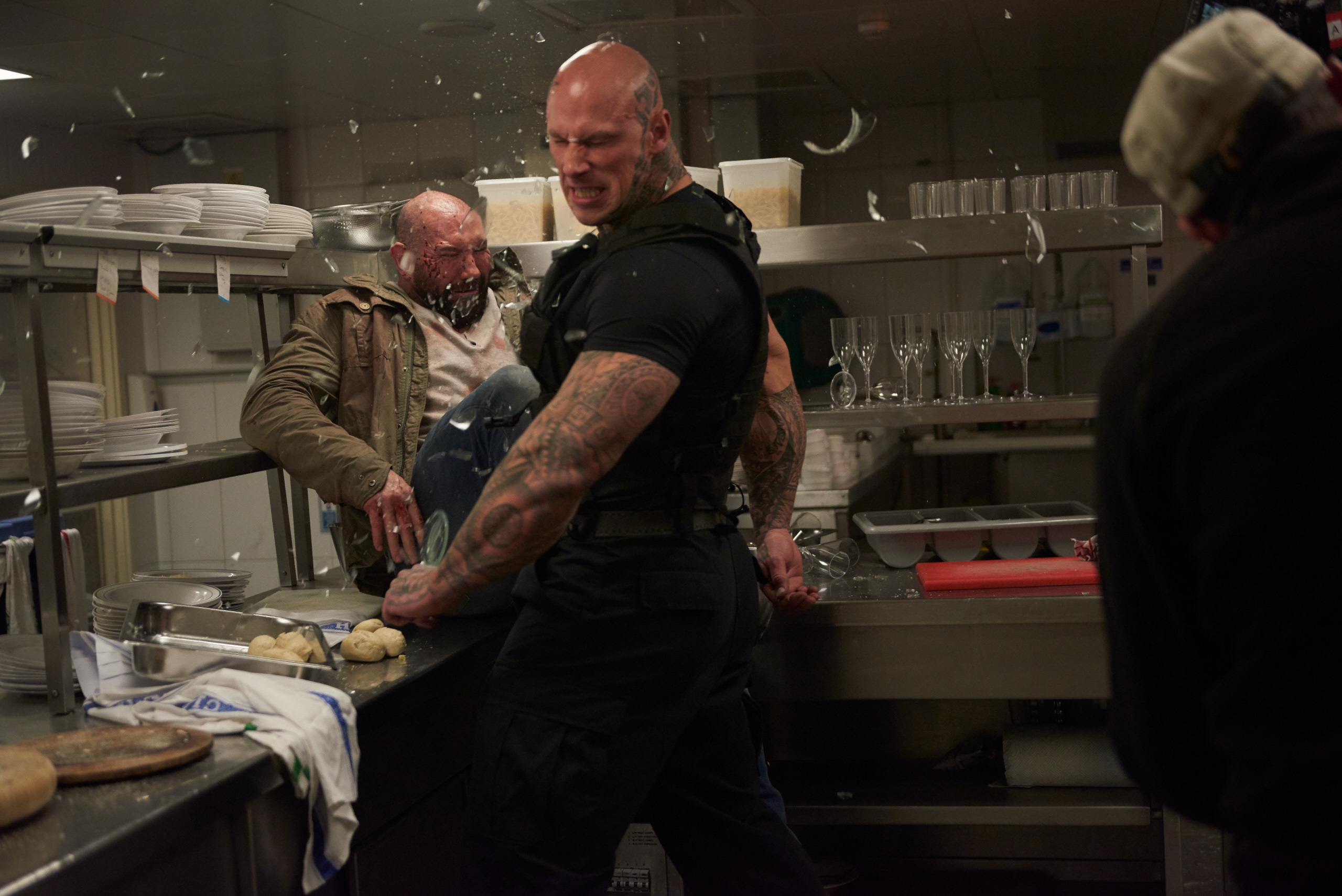
A quick shout out here to the unheralded hero of many a movie, the casting director.
That person is responsible for populating the background faces in group scenes, and in bringing in the right folks for smaller supporting roles.
Not an easy job for a bloke like Colin Jones, charged with finding villains big enough to be menacing to that round mound of muscle, Dave Bautista.
Sure, veteran heavy Ray Stevenson towers over most mere mortals. But rounding up monstrous gym rats like Martyn Jones was a must for “Final Score,” a Dave-against-Terrorists tale set in a soccer stadium.
This 2018 release tapped into the ongoing repression/invasion politics of Putin’s Russia for a sort of “Sudden Death” remake with “football” instead of hockey and Van Damme instead of Bautista –“”Die Hard’ on the Soccer Pitch.”
It’s got some cool action beats and epic brawls, the occasional clever bit of work-the-problem life-or-death situations, and one of the funniest third act racial gags in the history of action cinema.
The story? Could’ve been written by a cheap phone app.
Bautista plays an ex-military chap who constantly checks in on the family of a fallen London comrade. Teenaged Danni (Lara Peake) has braces and a passion for tantrums and rash decisions and could use a little “Uncle Mike” father figure help.
So, a little bonding at the West Ham vs. Russian champs “Dynamo” match it is. Until Danni sneaks off to be with her jerk boyfriend, and Mike’s gimlet-eyed attention is diverted by the beefy guys and gal in too many tattoos and Eastern European accents who seem to be everywhere they shouldn’t be in the stadium.
There’s a dastardly plot, a lot of explosives, some seriously fanatical terrorists and a hunt for Pierce Brosnan (taking a shot at speaking Eastern European) in the stands, with a stadium in lockdown and the hapless cops outside slow to figure all this out.
As if anybody hasn’t seen “Die Hard.”
Stevenson plays the mastermind, accenting his way through “Clearly you are a man of skeel and talent. I yam a man of WEEL. Do not TEST me!”
Amit Shah is the stadium security employee “Faisal” who deals with BREXIT racists every day, but a terrorist incident and the “lone hero” out to stop them on this one special day.
The violence is next-level when it comes to a savage fight in an elevator, a brutal beatdown in a kitchen and a ground level to rooftop motorcycle chase.
Helicopters, and “Take the SHOT!” are involved. Not that the stadium crowd ever notices a thing. Those Brits and their football.
Director Scott Mann did the all-star but little-seen “Heist” a few years back, and wrings what he can out of this tired plot. For me, the picture started with a bang, leveled off and then gently nose-dived in the third act. A few fun bits, only one truly funny line (It is a DOOZY.) and a couple of decent performances are what recommend this.
And again, kudos to the casting director, the guy who gave us hulking villains, a believably awkward punk teen or two and sadly a whole lot of cops and “SAS” folks who wound up making almost no impression at all.

Rating: R for strong violence and language throughout
Cast: Dave Bautista, Ray Stevenson, Lara Peake, Alexandra Dinu, Amit Shah and Pierce Brosnan.
Credits: Directed by Scott Mann, scripted by Keith Lynch, David T. Lynch and Jonathan Frank. A Saban Films/Lionsgate release on Netflix.
Running time: 1:44

 Movie Nation