Movie Review: A plausible disaster film? “Greenland”

Just our luck. We finally get a decent disaster movie, and it arrives in the middle of a pandemic.

Some people saw it, but most theaters were closed, so the vast majority of us missed the apocalyptic effects, high tension and narrow escapes of “Greenland.” At least now it’s coming to home video.

Gerard Butler, a sturdy presence in larger-than-life spectacles, anchors a good cast in what one has to say is a most topical and grimly plausible “end times” thriller. He plays an Atlanta-based structural engineer who must save life, limb and family when Comet Clarke comes calling.

But there’s trouble at home, problems in his marriage to Allie (Morena Baccarin, “Deadpool’s” better half). Seven year-old Nathan (Roger Dale Floyd) is concerned, but perhaps more worried about this fragment-filled comet that’s heading for Earth.

When the emergency alert message comes in that John, Allie and Nathan “have been selected,” ordering them to Robbins AFB in Warner-Robbins, the background noise the adults haven’t been locking in on hits home. Things are about to get “real.”

The film is about their quest to get there, or find alternative transport to Greenland, where the government set up a survival bunker after watching “Deep Impact” and “Armageddon,” and we first heard the phrase “planet killer.”

“Angel Has Fallen” director Ric Roman Waugh, who took over this STX production when Neill Blomkamp backed out, keeps “Greenland” in motion and the script (by Chris Sparling, who “Buried” Ryan Reynolds) keeps our characters in peril.

If it’s the death raining from the skies, it’s the Darwinian response Americans expect when the chips are down. Separate the family to increase the number of obstacles — the xenophobic, the conspiracy-minded — with everybody’s inner-goon coming out with doom hanging over them.

Those “we were selected” wristbands create a short term class war. Tearful pleas from neighbors, chaos at the various departure points and periodic rains of fire all stand in their way.

The level of organization, the duty-bound military sticking to their jobs, the NASA briefings (heard, not seen), all create a texture in Waugh’s tapestry of gloom and doom.

The most chilling moment comes early as John and Nathan turn their eyes to see what everybody is gawking at skyward. It’s an air armada, the first signs of an evacuation that nobody has been told about…yet. It reminded me of that scene in “The Day After” when a crowd at a Lawrence, Kansas football game stares at missiles heading skyward. A real “Uh oh” moment.

The best movies in this genre feed us dread, dangle hope and hit us with pathos. Scott Glenn provides that as Allie’s aged father, an old man on the farm with The End in sight.

Pictures like this have their formula and are careful to leave no trope unturned. Why? Because the formula works and we know that. We wait for those tropes, like comfort food. “Earthquake” to “2012,” “Deep Impact” to “The Wave,” from bloated and dumb to plausible and smart, disaster filmmakers defy our expectations and cravings at their own peril.

“Greenland” doesn’t often surprise, but it never disappoints.

MPA Rating: PG-13 for intense sequences of disaster action, some violence, bloody images and brief strong language 

Cast: Gerard Butler, Morena Baccarin, Roger Dale Floyd, Scott Glenn, Andrew Bachelor and Hope Davis

Credits: Directed by Ric Roman Waugh, script by Chris Sparling. An STX film, a Universal Home Video release.

Running time: 1:59

Posted in Reviews, previews, profiles and movie news | Comments Off on Movie Review: A plausible disaster film? “Greenland”

Movie Review: Boxing in Japan before the cherry blossoms are “In Full Bloom”

One hundred and twenty-seven years of boxing pictures, and a little indie film comes along and shows us the ring in ways we haven’t seen before.

“In Full Bloom” is a patient, simple post-war parable of fighters — cultures in collision, dreams and disappointment.

It’s set in Japan and is filled with beautiful images of a fighter training in a snowy Japanese winter, another reason I always say “I’ll watch anything set in Japan. Anything.” It traffics in more boxing film tropes than you can count. But it is the film’s dreamy “big fight” climax that sells it, light heavyweights going at it in a pool of light in a darkened arena, a blur of close-ups, slo-motion, the whooshing of wind and the gasps of exertion.

The fight has been set up to give Japan’s champion, Masahiro (Yusuke Ogasawara, making his film debut) another win as champ. The American Clint Sullivan (Tyler Wood, also a screen newcomer) has taken some losses, something the Japanese press pounces on at their joint press conference.

“Masahiro is a great warrior and an honorable man,” Clint says, tactfully and humbly, as if he knows the culture. Maybe he does. In flashbacks, we see Clint spent some time in uniform, fighting the Japanese with his Thompson submachine gun.

But it’s not long after World War II, and “The Hope of Japan” cannot let the home crowd down. That’s Masahiro went into the north, into the mountains to find the famed reclusive trainer Tokugawa (Hiroyuki Watanabe).

“Americans are like dogs,” the champ says (in Japanese with English subtitles). “All bark and no bite.”

The sage Tokugawa sets him straight. He makes the champ catch fish with his bare hands for reflex training, and spar in the snow, trying to land a blow on the wily old “master” as he does. He keeps slapping Masahiro in every exchange.

“The only way to kill a fighter’s pride,” the old man intones, “is with a good bitch slap!”

There’s a lot of “intoning” here, with much of the dialogue taking on a theatrical gravitas. Voice-over narration about the allegory of cherry blossoms — like life — short-lived and sweet, isn’t quite eye-rolling. But it comes close.

The Yakuza (Japanese mafia) have an interest in the fight. Clint has gnawing doubts and personal issues. Will he be up to the challenge of Masahiro’s unconventional training? Will the Yakuza accept anything other than a Masahiro victory?

“They won’t let you win,” Clint’s manager (S. Scott McCracken) informs him.

“Well it’s not up to them!”

The training sequences have the barest hint of novelty to them. But the fight, when the bell finally rings, is a fascinating exercise in watching first-time feature directors problem-solve, block, stage and light a fight, and serve up a fascinating “long count” hallucination, in ways we haven’t seen before.

They pull that off, and that goes for the movie, too. I’ll not oversell this here. It’s still a genre picture and hard-pressed to serve up much that’s fresh. But they find some interesting touches and make it work.

MPA Rating: unrated, bloody violence

Cast: Tyler Wood, Yusuke Ogasawara, Hiroyuki Watanabe, S. Scott McCracken

Credits: Scripted and directed by Reza Ghassemi, Adam VillaSenor. A Dozo release.

Running time: 1:29

Posted in Reviews, previews, profiles and movie news | 1 Comment

Documentary Review: Armenian-American rocker speaks “Truth to Power”

Serj Tankian is one of those rock stars who has decided to use his fame and his voice to speak out on political issues he finds important. The lead singer for the LA metal band System of a Down is one of those guys “with a chip on his shoulder,” his bandmates admit.

Sometimes that comes through in the lyrics to anti-Iraq War songs like “B.Y.O.B.” and “Boom.” And sometimes he interrupts his often-screamed lyrics, sung over the din of drums and electric guitars, to talk about geopolitics, genocide, freedom of speech and human rights.

“Truth to Power” is a documentary-length profile of Tankian’s activism, about “using the power of celebrity to get real political change.” He is, his friend and fellow rocker-activist Tom Morello (Rage Against the Machine) says, one of those guys “moving the goalpost of the ideas that you can talk about in popular music.”

And the main idea Tankian wants to talk about is the Armenian genocide of 1915-16, getting the world and especially the Turks — who committed it — to admit that it happened.

“Truth to Power” is too brief to get deep into that issue, or even that deeply into Tankian’s life (we don’t meet his family). But it does present an interesting portrait of an artist speaking out, stepping into it every now and then, sometimes irking bandmates and fans with his outspokenness.

At one point he reads the critical comments from the band’s website from fans wishing he’s put a sock in it and get busy on a new album.

Garin Hovannisian’s film has Tankian give a history of the band, their “discovery” by producer/sage Rick Rubin and explosion in popularity on the cusp of 9/11. Rubin appears here, urging his star to speak his truth and keep at it, no matter the blowback.

And as you’d expect, when you’re broaching controversial subjects in the Middle East, there is blowback. We can guess why we’re not seeing Tankian’s wife and son. When you criticize Turkey and its Recep Tayyip ErdoÄŸan, there will be threats.

As he and his bandmates talk about their music and their impact, anecdotes about business arrangements with Atlantic Records that fell through because of founder Ahmet Ertegun‘s philanthropic support of Turkish genocide-denial organizations, and radio conglomerate bans of their music come up.

The bracing thing in this story is how this alt-metal act handled that Dixie Chicks treatment. Tankian pushed the release of their song “Boom,” protesting the impending invasion of Iraq, as a music video — directed by Michael Moore. In your face? You bet.

“Truth to Power” gives us a bit of Serj lobbying Congress and recalling his publication of a thoughtful, heartfelt and ill-timed 9/11 “reasons it happened” explainer that led to a Howard Stern bulldozing as he tried to defend himself. And we see him get himself involved in Armenian politics in Armenia itself, despairing at the country’s anti-democratic turn, reveling in the people power of the country’s “2018 revolution.”

Fans of System of a Down already know a lot of this, I dare say. For everyone else, “Truth to Power” never gets much beyond giving us a brief primer Tankian’s activism, a sampling of their songs and a taste of his solo passions — writing a musical, performing with a jazz band and an orchestra, painting.

Despite his dabbling in many indulgences, Serj Tankian doesn’t come off as shallow or particularly superficial here. But this documentary almost does.

MPA Rating: unrated, profanity

Cast: Serj Tankian, Rick Rubin, Shavo Odadjian, Daron Malakian,  John Dolmayan and Carla Garapedian

Credits: Scripted and directed by Garin Hovannisian. An Oscilloscope Labs release.

Running time: 1:19

Posted in Reviews, previews, profiles and movie news | Comments Off on Documentary Review: Armenian-American rocker speaks “Truth to Power”

Movie Review: Flawed Lady, Flawed Bio-pic, “The United States vs. Billie Holiday”

A compelling lead who looks a little like Lady Day and sounds a lot like her, even when she sings, and a story with all the pathos built into it makes for a generally compelling screen biography of jazz icon Billie Holiday.

Lackluster direction and a shambolic script won’t make anyone forget “Lady Sings the Blues” or the recent documentary “Billie.” But “The United States vs. Billie Holiday” takes an original tack, making the case for her as a Civil Rights martyr persecuted by racist, vindictive Federal drug enforcement. That’s both a draw and a major drawback of this latest mixed-bag movie from Lee Daniels (“Precious,” “The Butler”).

In basing the script on a non-fiction history of the War on Drugs, “Chasing the Scream,” Daniels and actress-turned-screenwriter Suzan-Lori Parks (“Girl 9,””Their Eyes Were Watching God”) avoid spending rights money on the many fine Holiday biographies or scholarly history of the anti-lynching ballad “Strange Fruit” that Lady Day made famous. Cheaping-out resulted in a seriously disorganized, disjointed jeremiad that makes an impression and makes its points almost in spite of itself.

Grammy nominee Andra Day is Billie, and comes close to perfecting the intonation and affectations of Holiday’s singular voice — that timing, the little hiccups she twisted into the lyrics. This is a Billie who rarely looks the heroin-addled wreck barely keeping it together long enough to be a legend that is common in Holiday portraits. Her Billie seems sober enough, has a temper, isn’t shy about reminding us of the emotional scars that keep her abusing drugs and bouncing from one abusive relationship to another.

Flashbacks reinforce that, sketches of a childhood of abuse and coercion into prostitution.

The framework of the story is that most exhausted device, an interview, this time with a flamboyantly gay fan (Fictional?) radio interviewer (Leslie Jordan).

Lady Day half-retraces her career in this interview, building this narrative not around the major abusers in her life, husbands (Erik LaRay Harvey) and managers (Tone Bell), but around the Federal narcotics agent (Trevante Rhodes of “Moonlight”) who dogged her footsteps for years. Jimmy Fletcher gets out of the Army at the end of World War II, goes to see Holiday in concert, tries to get close to her and eventually does.

She figures out he’s a Fed, but falls for him (in this story) as he in turn recognizes that his racist boss, Harry Anslinger (Garrett Hedlund) has a vendetta against her and that the entire Federal government is out to stop her from singing “Strange Fruit.”

That’s more truth than fiction, but not remotely the literal truth.

The film skips back and forth in time, tracing the postwar decade-and-a-half of Holiday’s life and career, using drugs and misusing her band (Tyler James Williams plays her most famous accompanist, Lester Young), having a fling with movie star Tallulah Bankhead (Natasha Lyonne) and falling in and out of an affair with the Fed who may have her back, or may be hellbent on putting her away.

“Be careful with this feeling. This love right here, baby, it won’t love you back. I promise.”

Love eludes her, something that impacts even her sexual appetites. “God Bless the Child,” one of her most famous numbers, wafts through the score in scene after scene, underlining how alone she is and how “got his (or her) own” is what matters.

The downward spiral is gradual, only truly evident near the end. But the persecution, the arrests and warnings about “that song,” are ongoing.

Day is quite good in a performance that de-emphasizes histrionics (mostly) and plays up Holiday’s self-preservation instincts. Her band is constantly griping about getting paid, as is her costumer (Miss Lawrence) and hairdresser/personal assistant (Gabourey Sidibe of “Precious”).

There’s some graphic drug abuse, some raw sex and a lot of music in the film, with “Strange Fruit” as the one number that Day performs, start to finish, in the third act. You can feel that this was what all involved wanted to be their organizing principle to the narrative, that song. But it isn’t.

Daniels is a seriously miss-or-hit filmmaker, and when he misses, he reaches for explicit sex and sexuality to save him. See “The Paperboy.” Or better yet, don’t. “Billie Holiday” treads lightly on Lady Day’s bisexuality and wallows in “likes it rough” nudity to make an obvious point about her inability to love.

That renders “United States vs. Billie Holiday” a movie you can appreciate on its own terms, especially if you know her story well enough to do the organizing Daniels and Parks don’t. But it’s a bio-pic that keeps its brilliant, sultry, complicated subject at arm’s length.

This was talked up as an Oscar contender, purely by virtue of its subject and star. It isn’t.

That doesn’t mean this fascinating performance and defensible if not wholly coherent message and point of view isn’t worth seeing. It is.

MPA Rating: unrated, violence, drug abuse, explicit sex, nudity, profanity, smoking

Cast:  Andra Day, Trevante Rhodes, Garrett Hedlund, Gabourey Sidibe, Tyler James Williams, Natasha Lyonne, Tone Bell, Leslie Jordan and Erik LaRay Harvey

Credits: Directed by Lee Daniels, script by Suzan-Lori Parks, based on a book by Johann Hari. A Hulu release.

Running time: 2:10

Posted in Reviews, previews, profiles and movie news | Comments Off on Movie Review: Flawed Lady, Flawed Bio-pic, “The United States vs. Billie Holiday”

Netflixable? Manic “Misadventures of Hedi and Cokeman” — drug-fueled French foolishness

What fresh MERDE is this?

A manic, gasping coke-fueled farce, “The Misadventures of Hedi and Cokeman” is the French anti-stoner comedy.

As in, Cheech & Chong and Harold & Kumar never ever got this worked up.

Raging, guffawing, punching and tumbling, insulting and slapsticking, it’s about two loser druggies who finally get the chance to make bank via drug dealing. But little in their half-assed, semipro experience in the trade has prepared them for this.

I mean, you name yourself “Cokeman” (Nassim Lyes, who co-wrote the script), bounce around as if you’re one-toot-shy-of-an-overdose and venture out in public in a stocking cap, fur coat and urine-stained untidy whiteys, it’s not like the cops aren’t going to notice.

Cokeman is the sort of maniac who blusters and threatens and flips-out on everybody who comes to his door. Are you…the COKEman?

“C’mon over here, aardvark face!” is funny, in French or in English subtitles. Drugs? Sure, lemme scrape a little white paint off my fridge. Are you high yet, “expert?”

Dude’s nose is bleeding, he’s hallucinating and has no idea he’s just snorted paint. Is it supposed to be like this?

“Quit THINKING, bro. It’s bad for your high.”

His always-beaten-up, hapless Franco-Algerian pal Hedi (Zappa-nosed Hedi Bouchenafa) drops in and they’re off to his “gold digger” sister Zlatana’s (Nina Kepekian) wedding to a rich drug lord, Arsène van Gluten (Fred Testot). Zlantana bullies her new spouse into giving the boys a gig.

They’ll move his weed for him. But not that weak Zeub Zebi stuff. Noooo. “Mojo Mango,” Zlatana insists.

What can go wrong? Pretty much everything. But as they get more chances to make this work, recruit street-corner dealers to work for them, get a little money and get greedier for more, we know they’re headed for a fall because we just know they Paris police are going to notice.

“Van Gluten won’t be ‘sticking’ around for long!'” as one Caruso-loving cop crows.

“Misadventures,” titled “En Passant Pécho: Les Carottes Sont Cuites” in French, is just exhausting. But as it pounds away at one-liner insults, drug consumption gags, sight gags (Tommy Chong-sized blunts) and slapstick — a blind dude with a beef comes after them with an RPG — as Lyes’ maniac laughs grow louder and more insistent, as Viagra-fueled violence enters the fray, it wears you down.

It even wears down the cast. One hilarious bit has veteran character actor Testot, as a drug lord who employs singing, dancing “Zulus” as his security, just snapso.

“Why did I AGREE to this stupid movie? I’m so ASHAMED.”

Not that this gets him off with his “Zulus.” They don’t like being called “Zulus,” for starters. This movie isn’t paying them enough to take that racist crap, they will have us know.

As characters “break the fourth wall” and break up a police raid, “Misadventures” takes on the air of many a “no rules” comedy that came before it — “Kentucky Fried Movie” all the way back to “Hellzapoppin.” Not that it’s in their league, just in their style.

Wearing it may be, but a dozen chuckles and half a dozen big laughs make this French farce almost worth the subtitles.

MPA Rating: TV-MA, lots and lots of drugs, violence, profanity

Cast: Hedi Bouchenafa, Nassim Lyes, Fred Testot, Julie Ferrier, Thomas Guy

Credits: Directed by Julien Hollande, script by Julien Hollande, Nassim Lyes. A Netflix release.

Running time:

Posted in Reviews, previews, profiles and movie news | Comments Off on Netflixable? Manic “Misadventures of Hedi and Cokeman” — drug-fueled French foolishness

Series Review: “Allen v. Farrow,” beyond a reasonable doubt?

We’ve had decades to make up our minds about the scandalous Woody Allen-Mia Farrow split, with its horrific allegations of child sexual abuse.

Newsweek, “60 Minutes” and others helped us come to a conclusion about all this right after the scandal went public in 1992 — by interviewing and profiling the “press-shy” Woody.

Allen suddenly started publicizing his films for the first time in decades. Journalists like me got access. I interviewed him several times between the mid 90s into the 2000s. Shy. Deer-in-headlights at times. Disarming. But a pedophile?

Mia Farrow’s memoir “What Falls Away” showed us rage, neediness and just a touch of airy-fairy second-generation Hollywood ditziness. Still, she revealed Allen’s cultivated “intellectual” and “simple genius” image-management efforts. His pricey but intentionally rumpled wardrobe? A pose. He’d don one of his many shapeless (tailored) overcoats and “carelessly” floppy hats and slip into his chauffeured Rolls Royce.

The documentary “Wild Man Blues” captured Allen on tour in Europe, somewhat candidly, showing us a Soon Yi who is her own woman married to a flakey fussbudget who might change hotels over the location of the shower drain.

Allen’s own memoir, “Apropos of Nothing,” takes pains to further dissect, discredit and explain away the allegations in detail. Decades have passed, memories fade. He takes advantage of that. Sure, there’s a hint of smugness in Allen’s dismissals. Does that mean he isn’t telling the truth?

A flattering Soon Yi Allen “Vulture” profile assails Farrow’s parenting and alters our perception of her. Her adoptive brother Moses, now a family therapist, writes a blog post eviscerating Farrow’s parenting and and endorses the idea that his sister Dylan, the alleged victim, was “coached” into making the original accusation.

Back and forth it goes.

Is “Allen v. Farrow,” HBO’s four-part series on this cringe-worthy scandal just another swing of the pendulum? Or are we presented with the last word, the damning evidence that “cancel culture” got its man when Dylan Farrow kept repeating and reviving her charges, finally with famous journalist brother Ronan Farrow amplifying them?

Directors Amy Ziering and Kirby Dick (“Outrage,” “The Hunting Ground”) turn over stones, reveal long-concealed documents and tapes, revisit the couple’s history (Allen appears reading from the audio book version of his memoir) and dig into the specifics and legal particulars of what happened.

What they don’t do is give any credence to Allen’s deflections and counter claims. So if we’re watching a “trial” here, what we get is only the prosecution’s side. You keep waiting for the Allen “side” to be presented, even though he makes his case in his book on tape readings.

Several Farrows, starting with Mia, her sister and adoptive daughter Dylan, dominate the four-plus hours of screen time. Farrow “family friends” such as Carly Simon, a former French tutor for the kids, all weigh in.

If you only watch the first two episodes of “Allen v. Farrow,” you might notice that even the reporters, young film critics and “freelance writers” fleshing out Allen’s career and reputation and telling this supposedly two-sided story are almost to a one all women.

And if you’re listening to the accounts, you realize a lot of what we’re being served is third hand, “hearsay.” Some actual eyewitnesses recall things they say, that seemed “off” about Allen’s “obsession” with a little girl Farrow had adopted and Allen adopted himself shortly thereafter. But there’s a grating sense that a lot of what we’re seeing is people opining about things they don’t know first hand or which lie beyond their pay grade.

A writer for Vox and another for The Paris Review, a freelancer here and a freelancer there, aren’t given screen credentials that explain their presence or expertise. Where are the many Woody Allen biographers? You know, real experts? Were the journalists who appear here “cast” just to say what the filmmakers wanted to hear?

Can we really psychoanalyze the man via his movies? As Farrow herself wrote, there’s a lot of “pose” there. But maybe we can. Looking at his screenplay drafts and abandoned projects in his collected papers at Princeton show some disturbing obsessions. And if “Manhattan” doesn’t make you cringe, well…

What Dick and Ziering do — with all this court evidence, all these tape recordings Allen made of his phone arguments with Farrow after the Soon Yi nude photos and Dylan assault, all the court papers, the “Yale New Haven” hospital “report” commissioned by the Connecticut State Police but which the doctor in charge, John Leventhal, released to Allen, allowing him to hold a press conference on the hospital steps claiming “exoneration” — is attack Allen’s central threat to Farrow, the one that’s battered her for decades.

The truth is less important than “perception,” he sneered or inferred in their phone conversations. So the filmmakers unleash a tsunami of legally proven truth, as well as the circumstantial evidence and hearsay, that utterly drowns Allen’s “plausible deniability,” his professed outrage over the charges, the laughed-out-of-court “custody battle” counter suit he launched to bend public opinion.

The threatening phone calls we listen in on are damning all by themselves. Allen comes off as a rich, powerful, publicly-adored creep telling poor Farrow what was going to happen to her when he got done with her. And damned if he didn’t make it come true.

Allen went back to making his movies, living his life of comfort, fame and wealth, summoning his pick of actors and actresses, winning Oscars for actresses with his films. He even returned to visiting (British) chat shows, joking about how “unlikeable” he’s always been, so “nothing’s changed.”

Lionized, feted, and then came that 2014 night at the Golden Globes, where Diane Keaton, Emma Stone and others sang Allen’s praises as he was honored with the Cecil B. DeMille Award, pretending nothing had ever happened. Dylan Farrow and Ronan decided to start reminding everybody what Hollywood and the rest of us were forgetting.

Child. Molester. Dylan was just seven years old when it happened.

“Allen v. Farrow” does a decent enough job with the context of the times — all of the times, the 1992-93 eruption, the more recent #MeToo era that revived the charges, which were never taken to trial. And it’s great at getting at the outrageous parts of this story, the sense that justice was denied, that New York and Hollywood and the media in general just didn’t want to believe, charge or do anything at all about this.

It’s helpful hearing how the relationship between Allen and Farrow began, and seeing home movies of Farrow’s ever-expanding brood is explained if not understood.

In setting out to get their man, Ziering and Dick leave a lot out, much of it the source of decades of understandable doubt in the media and public mind about the charges and the “bizarre” family dynamic that might have provoked our skepticism. Moses Farrow isn’t here, merely his brothers Fletcher and Ronan refuting Moses’ charges about Mia.

But Ziering and Dick have Ronan Farrow dissect how Big Time PR can twist a narrative, discredit accusers and punish journalists, film people and others for not toeing the line. And he should know, having fought the Harvey Weinstein machine to the death.

As with many series like this, there’s repetition and overkill. Mia Farrow speaking for herself silences much of the image-smearing she’s endured. But the long sampling of home movies reinforcing her reasons for her many adoptions don’t remove the nagging notion that “How did she give them attention?” and with so many kids, “What was she missing that was going on?”

Who is Ronan Farrow’s real father? And is the magazine gossip about Farrow and Allen’s sexual adventures early in the relationship true? Because it might be germane. I don’t get the impression any Farrow was asked a question they weren’t eager to answer here.

Bloated or streamlined, unbalanced or “She said, he said,” and even with a “Let culture off the hook” equivocated ending, “Allen v. Farrow” still manages to do what Connecticut and New York justice didn’t. The provable lies we hear Allen tell, the evidence that we either never heard or don’t remember reading about, leave no doubt.

Yes, he’s canceled. And yes, the old creep still got off too easy.

MPA Rating: TV-MA

Cast: Mia Farrow, Dylan Farrow, Carly Simon, Fletcher Previn, Tisa Farrow, Rosanna Scotto, Maureen Orth

Credits: Directed by Kirby Dick and Amy Ziering. An HBO release.

Running time: Four episodes @55-1:15 each

Posted in Reviews, previews, profiles and movie news | Comments Off on Series Review: “Allen v. Farrow,” beyond a reasonable doubt?

Movie Review: A murder unsolved, a romance tested — “The Violent Heart”

The final act of a thriller is where the payoff lies.

We’ve invested in the characters and relationships. We fear for them, and as we do, the suspense should build to the point where it weighs on you.

“The Violent Heart” has that weight about it right from the start. And if the climax seems wanting, perhaps one twist too many, it still doesn’t spoil the mystery we see unfold and the solutions we have time to consider over its 100 or so minutes.

A 13 year-old gearhead (Jordan Preston Carter of “Shaft”) trouble-shoots his motorbike, and wonders why his sister (Rayven Symone Ferrell) has turned all clingy on him.

She doesn’t seem that thrilled when their Marine officer Dad comes home on leave. Later that night, Daniel follows Wendy when she sneaks out with a suitcase and slips into a stranger’s car. He trails her and her lover into the woods, hears shots, and stumbles into the grave that the man he just saw embracing her dropped her into.

Years later, Daniel (Jovan Adepo of “Fences” and “Watchmen”) is a quiet, sad-faced and withdrawn 24 year-old mechanic with dreams of following his Dad into the Corps.

So when the cute high school senior Cassie (Grace Van Patten of “The Wilde Wedding” and The Meyerowitz Stories”) with a busted serpentine belt begs a ride off him, he’s wary. When she calls him later that night, he’s leery. Beyond leery.

“Why ISN’T it a good idea?” she wants to know.

“It just isn’t.”

Daniel has a past we’ve seen, and more past that we haven’t. Cassie has no idea about either of these two big pieces of who he is. And Daniel, cautious as any young Black man would be about the attentions of a blonde teen in rural Tennessee, doesn’t know what happened to Cassie at school.

She caught her English teacher-dad (Lukas Haas) locked in his class after hours with a colleague. Mom (Kimberly Williams-Paisley) doesn’t know. Is Cassie acting-out by being all flirty and forward? Was she interested in Daniel before this?

Writer-director Karem Senga (“Trigger Finger,” “The First Girl I Loved”) takes a decent shot at misdirecting us here and there. But we know the trauma of Daniel’s childhood will come back up, and we might have a clue how.

Adepo plays Daniel as focused but damaged. The attentions of a very pretty and, as she bluntly suggests, of legal consent, young woman are a distraction he’s never had.

Van Patten makes Cassie naive to the point of reckless. We get no hint of guile or revenge against Dad in this sudden interest in a handsome mechanic, but we wonder.

Haas comes off as the doting Dad from the start, a bit rattled by what his daughter almost walked in on, or thinks she walked in on.

And Mary J. Blige brings gravitas and compassion to Nina, Daniel’s mother, a woman struggling to get him on the right track and correct the other kid under her roof, Aaron (Jahi Di’Allo Winston) before he makes a wrong turn.

Senga’s film is overcast and grey, first scene to last, which contributes to a downbeat tone, an unease that isn’t shaken by the illusion of this ray of light that’s come into Daniel’s life. We never buy it, and truthfully, as nice as the chemistry is, that relationship seems more a plot necessity than anything with serious cost-benefit value to either character.

But if you’re willing to take teenage-impulsiveness at face value, let it slide. Even the twists at the end don’t deviate from the message, a burden Daniel’s carried his entire life.

“Anger is tricky…You carry it around with you long enough, you stop noticing. You become an angry person.”

MPA Rating: unrated, violent, sexuality

Cast: Jovan Adepo, Grace Van Patten, Lukas Haas, Jordan Preston Carter, Rayven Symone Ferrell, Kimberly Williams-Paisley and Mary J. Blige

Credits: Scripted and directed by Karem Senga. A Gravitas Ventures release.

Running time: 1:42

Posted in Reviews, previews, profiles and movie news | Comments Off on Movie Review: A murder unsolved, a romance tested — “The Violent Heart”

Classic Film Review: “Ruby in Paradise” (1993) is re-released

Quiver had already announced it was re-issuing Ashley Judd’s breakout film, “Ruby in Paradise,” long before she had a near-disastrous accident in the Congo that put her in the news.

Thankfully we can dive back into “Ruby” not as a funereal tribute, but just as an exercise in how a “Star was Born,” thanks to an indie cinema icon and a role that showed she was much more than the Judd who doesn’t sing.

Yes, her Momma and sister had made the surname famous before Florida filmmaker Victor Nunez cast her in his reflective, feminist run-off-to-a-beach-town-to-find-myself melodrama. But the least-famous Judd made a dazzling impression in a rare, quiet, female-centered story from the glory days of American Independent Cinema — the early ’90s.

Set in Panama City Beach, it’s about a Manning, Tennessee 20something who runs off with her boyfriend’s or her daddy’s 1970 Malibu (That’s unclear.), getting out of town “before I got pregnant or beat up,” she declares as a point of honor.

“Ruby” follows her on a job hunt, finally landing off-season work at one of the scores of beachside tourist tchotchke shops, Chambers’ Beach Emporium.

The boss (soap opera veteran Dorothy Lyman, who got a career boost from “Ruby” too) is kind enough to give her work when she’s laid off most of her staff for the winter. But she’s got “one rule” for all her employees.

“Don’t date my son.”

Rochelle (Allison Dean), an employee headed back to school, seconds this warning.

But when “hunk in the trunk” Ricky (Bentley Mitchum) shows up, bats his eyes and comes on to her like he’s entitled to her attention, Ricky’s suggestion is the one Ruby listens to.

“Might as well get it over with.”

Ruby muses about her choices, her life and her future in a journal she starts keeping in the biker-friendly trailer park she moves into. This is the filmmaker’s (a longtime Fla. State film professor) homage to Jane Austen’s “Northanger Abbey,” which he has cited as his inspiration.

She came to Panama City because this corner of the Fla. coast — which Floridians call “Florabama” both for its geography and redneckery — was the destination of “the one vacation I remember” as a child when she was 10.

The film follows the repercussions of her affair with Ricky, and the attraction she feels to a plant nursery clerk (Todd Field, who got a nice career bounce out of “Ruby,” and then became a famous director), even if he’s a tad pretentious.

“It’s been a long time since one kiss made my lips hum,” she narrates for her journal.

“Ruby” has an ambling “slow cinema” quality to it long before that term was ever coined. Not a whole lot happens, but what does is parked firmly in one woman’s reality. She job hunts, takes tougher work at a local laundry, but never seems to develop a life plan for herself.

The voice-over narration of her journal entries can feel disconnected from Ruby’s day to day life.

“Wonder if I’ll ever feel just what I am?”

That’s a writerly indulgence of the screenwriter-director.

And with Nunez as my witness, I don’t remember the strip club scene, a prurient staple of 10,000 generic films a lot less interesting than “Ruby in Paradise.”

Judd went on to sparkling career of mostly thrillers (“Heat,””A Time to Kill,””Kiss the Girls”) and more recently TV (“Berlin Station”) and married a famous race car driver.

Nunez’s Florida-centric indie career peaked with “Ulee’s Gold,” which resurrected Peter Fonda and made Florabama Tupelo honey a fascinating backdrop for a seriously conventional thriller.

But for film history buffs, “Ruby in Paradise” is the one most fondly-remembered. It is indie cinema as regional cinema, a post-“sex, lies and videotape” declaration of independence from Hollywood that pointed the way for any filmmaker who didn’t want to travel West and “take meetings” and “notes” all day to get a movie made.

And for generations of actors, Judd’s gamble — find a smart project with a plum role and a filmmaker you believe in — became a model worth emulating and a path to success that has proved itself time and again in the decades since.

MPA Rating: R for some sexuality and language

Cast: Ashley Judd, Todd Field, Allison Dean, Dorothy Lyman and Bentley Mitchum

Credits: Scripted and directed by Victor Nunez, loosely based on Jane Austen’s “Northanger Abbey.” A Quiver re-release.

Running time: 1:56

Posted in Reviews, previews, profiles and movie news | Comments Off on Classic Film Review: “Ruby in Paradise” (1993) is re-released

Netflixable: “Finding ‘Ohana” is the PG “Goonies” riff kids didn’t know they wanted

Somewhere in the bowels of Mousewitz in deepest, darkest Burbank, a Disney executive is streaming Netflix’s “Goonies Lite” kid-pic “Finding ‘Ohana” and weeping into her Hermes clutch.

Take some consolation in the fact that it gets lost in the whole “treasure hunt” hook that sucks up the last half of the movie and makes it drag past two hours if you want. But this is a cute Hawaiian hoot of a comedy, too much “Indiana Jones” is a small price to pay for that.

“Goonies,” “Raiders,” “Pirates of the Caribbean,” Keanu Reeves and “Drunk History” were the filmmakers’ reference points and source of running gags. They and a cast of mostly-unknowns brings wit and representation to burn in a movie about Hawaii and Hawaiians, starring a lot of Hawaiians and people of Polynesian descent.

New Yorkers Pili (Kea Peahu), brother Ioane or “E” (Alex Aiono) and nurse-mom Leilani (Kelly Hu of “Nash Bridges) are pulled back to Hawaii because Grandpa Kimo (Branscombe Richmond) is having trouble keeping out of the hospital and keeping up with the old homestead.

Pili has to miss out on geocaching camp, Ioane misses out on New York high school girls and Mom has no clue how much her Dad has fallen behind on…everything. And Kimo? He’s appalled at how little Leilani has taught his grandkids about Hawaii, how to speak and live Hawaiian.

Yes, he peppers his speech with his native tongue, talking about “wailua (spirit) and serving Spam delicacies, leaving the kids a little lost.

At least “E” has lovely local Hana (Lindsay Watson) to unimpress. And thank Lani that geocacher Pili finds an old pirate’s journal that her Grandpa has been studying for years.

All she needs is a walking encyclopedia, pale and named “Casper,” redheaded and nicknamed “Ginger Stark” by Pili’s brother, to help her solve the puzzle and find a lost treasure.

“Drunk History” kicks in with some amusing Pili-translated/narrated scenes of the pirates’ history — acted out in flashbacks starring Mark Evan Jackson, Ricky Garcia and Chris Parnell.

“Keanu” comes into play as the name of Casper’s too-handy walking stick, and in E’s irritation at trying to get New Yorkers to learn his name. “Keanu” is the “only Hawaiian name anybody knows. And he’s the WORST.”

“Keanu’s a HAWAIIAN TREASURE,” Hana shouts back. “The sadness just makes him...hotter!

I love the inclusion of bits of Hawaiian myth (“Nightmarchers”), traditions and scenery. A visit to the scenic Kualoa Ranch Nature Preserve, a favorite filming location (“Jurassic Park,” a TV series or three) sets up a “Who comes all the way to Hawaii to see where they filmed ‘Lost?'” bit, an evisceration that only an island-dwelling nerd could deliver.

Young Miss Peahu may hit her Brooklynese a tad too hard, but she’s got spunk and screen presence. Youtube singer and actor Aiono is amusingly clutzy, and none of the cast lets the side down.

The “Goonies/Indiana Jones” cave stuff is pro forma, a real paint-by-numbers job. And it goes on for far too long. But there are jokes between the pre-ordained obstacles (spiders, cave-ins), and even a Meghan Trainor sing-along, to break up the recycling.

And as overlong as this is, in the end, here’s a final tip that contradicts that. Stay through the credits.

MPA Rating: PG, a little profanity, a smidgen of peril

Cast: Kea Peahu, Alex Aiono, Lindsay Watson, Branscombe Richmond, Owen Vaccaro, Kelly Hu and Chris Parnell

Credits: Directed by Jude Weng, script by  Christina Strain. A Netflix release.

Running time: 2:03

Posted in Reviews, previews, profiles and movie news | 1 Comment

Movie Review: A dull thriller that is to cinema what “Dead Air” is to radio

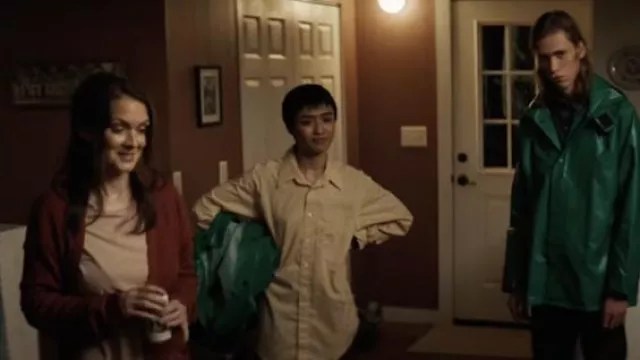
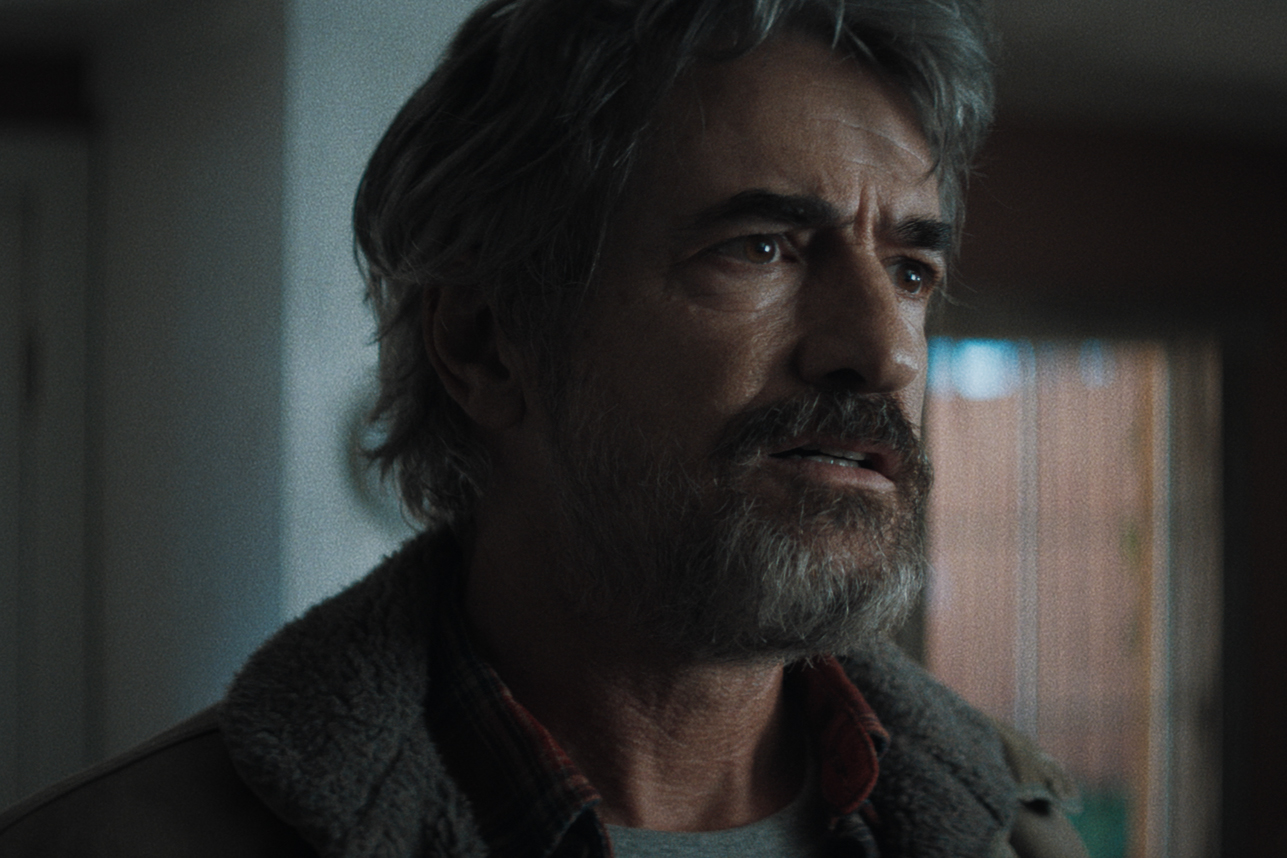
Rarely have still photos from a film so perfectly captured that indie horror thriller so well that a review seems redundant.

“Dead Air” is as dazzling, chilling and spine-tingling as the two photos posted above.

Get the picture?

A “Frequency” story of HAM radio conversations traveling through time, it is tedium itself — deathly dull.

Scene after scene of bland, “therapeutic” chats between a guy (director Kevin Hicks) trying out his dad’s old HAM set, and an older woman (screenwriter Vickie Hicks) who goes by “Melder Girl.”

“Melder” is German for “reports,” by the way.

As Will is in 1984, and this “Ava” “Melder Girl” is using the occasional archaic English term, has never heard of “agoraphobia” or “shrinks,” well — see where this is going?

All these conversations, some of them “drunk,” with two dullards who aren’t even amusing drunks, can’t hide their long-delayed final destination from us.

I’m talking about the characters. But as they’re played by the pair who wrote and directed this, they might take that personally. Go nuts, kids.

This story, as it crawls ever-so-slowly towards its mysterious “AHA,” interrupts the sleep-inducing radio chats with Will’s visits to a psychotherapist (Chris Xaver) where he undergoes hypnosis in an effort to regain lost memories.

He goes under. We go under watching him go under.

Unwatchable.

MPA Rating: unrated, profanity

Cast: Kevin Hicks, Vickie Hicks, Chris Xaver

Credits: Directed by Kevin Hicks. Script by Vickie Hicks. A Chinimble release.

Running time: 1:30

Posted in Reviews, previews, profiles and movie news | Comments Off on Movie Review: A dull thriller that is to cinema what “Dead Air” is to radio