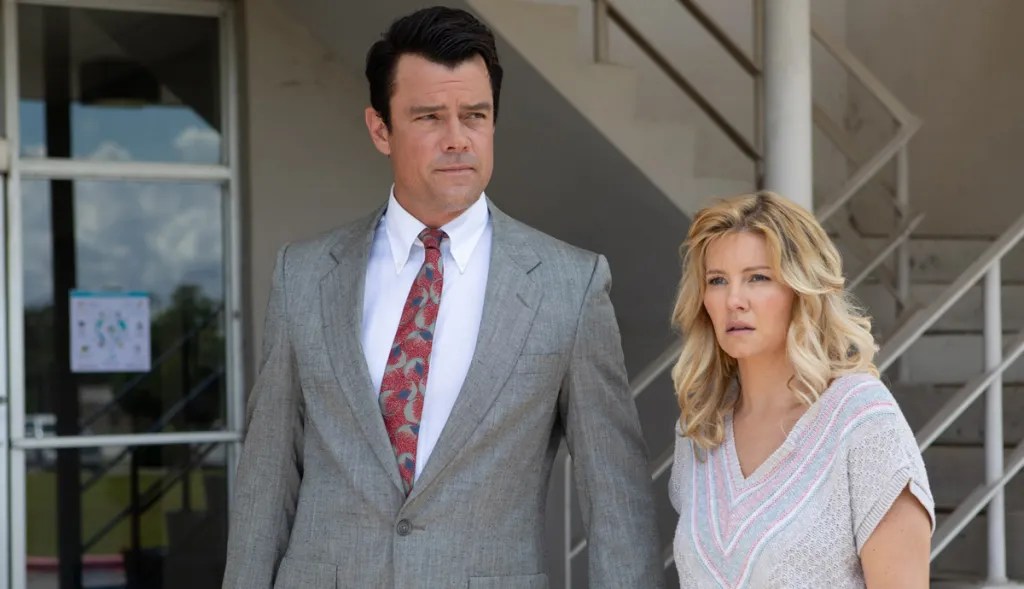
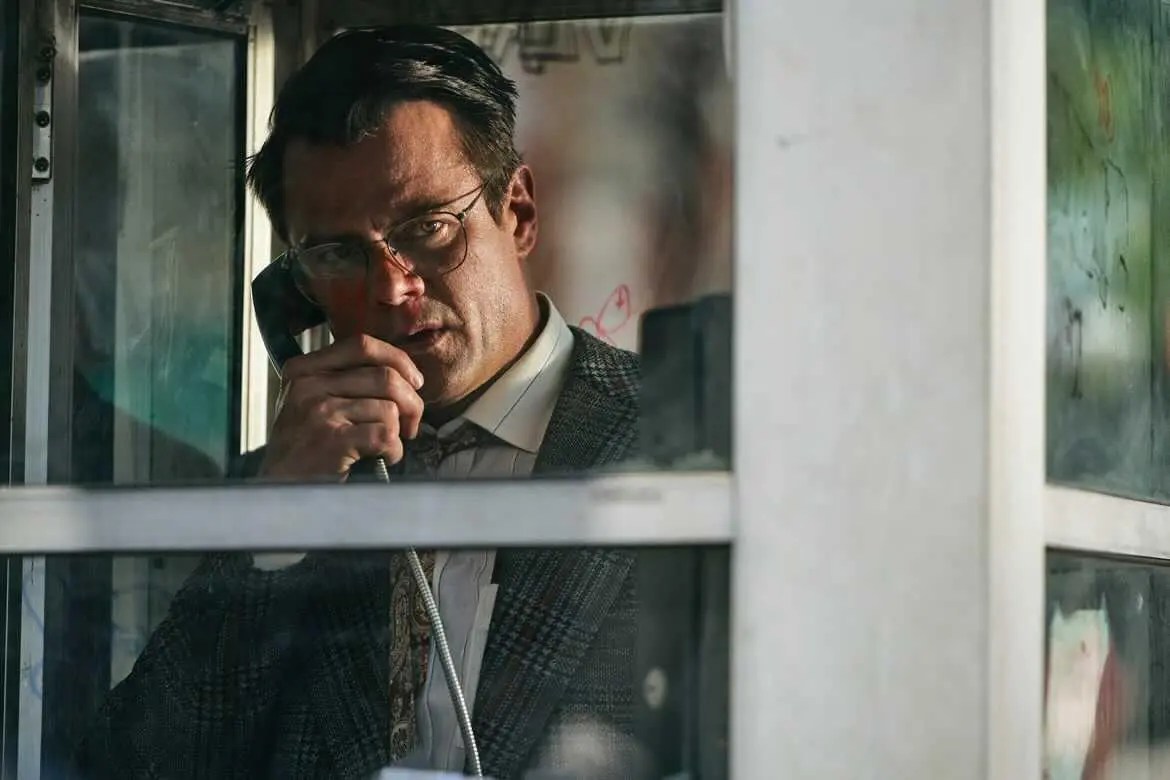
Josh Duhamel & Co. teeter along the fine line between “heist picture” and “caper comedy” with “Bandit,” a Canadian production about the Michigander who gained lasting Canadian fame as “The Cross Country Bandit,” or “The Flying Bandit,” depending on which Canadian newspaper you were reading in the ’80s.
It’s a long “true story” that folds “How I robbed banks and jewelry stores” tutorials into a sometimes cutesy account of this spree that relies on Duhamel’s charm, and the bandit’s passion for disguises. And even if it bogs down in the middle acts — seriously bogs down — and has missing pieces of the story puzzle even as it takes pains to show us what would be his downfall, this Allan Ungar dramedy plays. More or less.
Framed by the heist that brought him down, we meet young Gilbert Galvan in a Detroit “top five courtroom I’ve ever been in…I mean, look at those crown moldings!” He’s a smart aleck adrenalin junky with a yen for voice-over narration.
“Two of my favorite words? ‘Minimum security.’ But my top three? ‘Welcome to Canada!”
In a flash he’s escaped from prison, crossed the border and struggling to “go straight” in Ottawa. But that’s a struggle. When he takes up with the monitor (Elisha Cuthbert) of the homeless shelter where he has to rough it, “Robert Whiteman,” his purchased “identity,” has to get back into the life.
His brilliant idea? He’ll rob banks “Out West,” Vancouver and environs. He takes makeup classes from a local acting troupe and starts to wear wigs, fake noses and hard hats for his heists. When he’s boarding the plane with a suitcase full of cash, he’s business class, all the way.
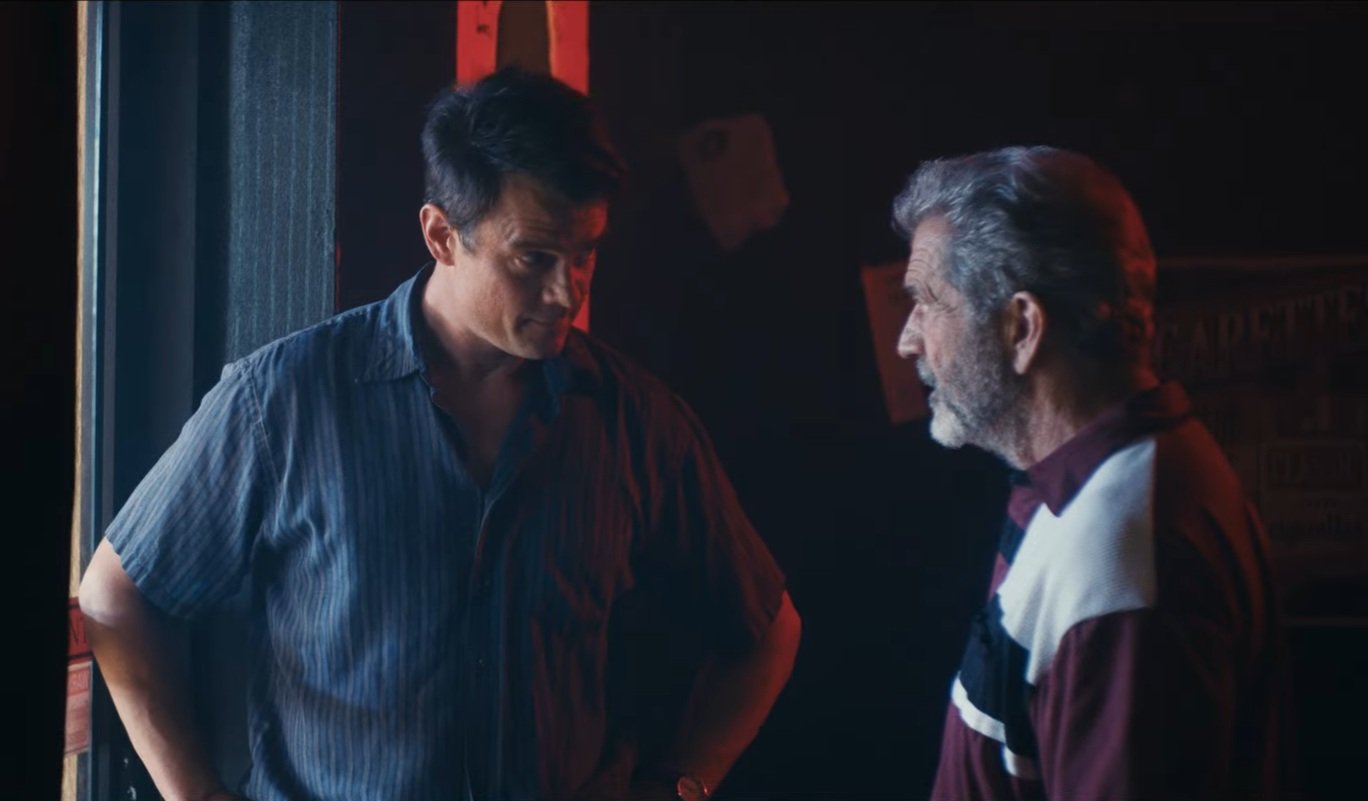
Fun fact. “The average bank job only nabs about $20,000.” He burns through that in a flash, every time. If he wants to score big, he’ll have to do lots of bank jobs. He’ll need a local strip-club owner/fence (Mel Gibson) to stake him. And he’ll need to start robbing jewelry stores, too.
Nestor Carbonell plays a cop obsessed with bringing down the fence who adds this “cross country bandit” we see in headlines to his obsession. One thing we don’t see if how the cops figure out this guy is flying cross country for armed robberies. The girlfriend-turned-wife transitions from “gullible” to “accomplice” in a cinematically sloppy way.
North Dakota native Duhamel wears this fellow’s guise easily, an American used to working around armed bank guards in the U.S. reveling in Canadian security guards — “John Candy with f—–g mace.”
Gibson smokes and twinkles in his dimly-lit strip club, commenting on Boy George the person and the pop music of the day in phrases that you’d imagine Mel Gibson would have uttered back in the ’80s.
The soundtrack, packed with upbeat pop, rock and a little downbeat soul, contributes to a generally jaunty air.
The capers have this or that original touch, but showing us bits of scores upon scores of them, they grow repetitive and as domestic life, police turf struggles and routine settle in, the middle acts drag “Bandit” to a halt. The finale is drawn out as well.
Still, if you like Duhamel and aren’t boycotting Gibson’s un-canceled career, it’s worth a look.
Rating: R for language throughout and some sexual material/nudity.
Cast: Josh Duhamel, Elisha Cuthbert, Nestor Carbonell, Olivia D’Abo, Keith Arthur Bolden and Mel Gibson
Credits: Directed by Allan Ungar, scripted by Kraig Wenman, based on a book by Robert Knuckle. A Quiver release.
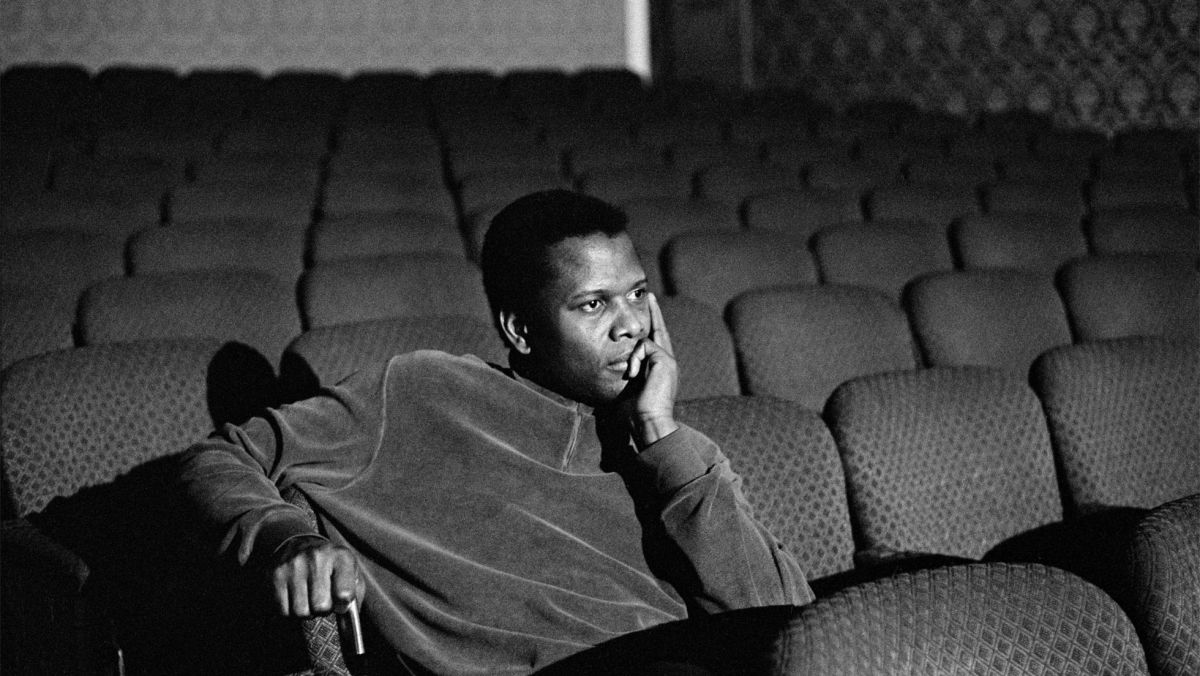
Oprah Winfrey gets choked up and breaks down when remembering her inspiration, advisor and friend, the Black screen icon Sidney Poitier. No big surprise there.
But then you hear a little catch in the voice of Oscar winner Morgan Freeman, who doesn’t do sentiment unless he’s getting paid to fake it. And you take notice.
“I think of Sidney as this ‘big ass lighthouse,’ a bright light on a promontory,” Freeman says in the new documentary celebrating “Sidney.” “I spent my career focusing on that light.”
“Sidney” is instantly one of the great documentary love-ins in a year that has already produced “The Last Movie Stars,” focusing on Poitier’s contemporaries and one-time co-star, Paul Newman and Joanne Woodward. Hollywood knows how to celebrate its own. And Reginald Hudlin, one of the legions of Black filmmakers (“House Party” to “Marshall”) who followed in actor, director and role model Poitier’s wake, more than does justice to a singular figure in Hollywood and American Civil Rights history.
Hudlin, with screenwriter Jesse James Miller and producer Oprah Winfrey, take us through a life of “firsts,” honors and praise as we hear from family, contemporaries, historians and those who followed Poitier through the show business doors that he opened in this warm, moving and pretty thorough accounting of his long life and career.
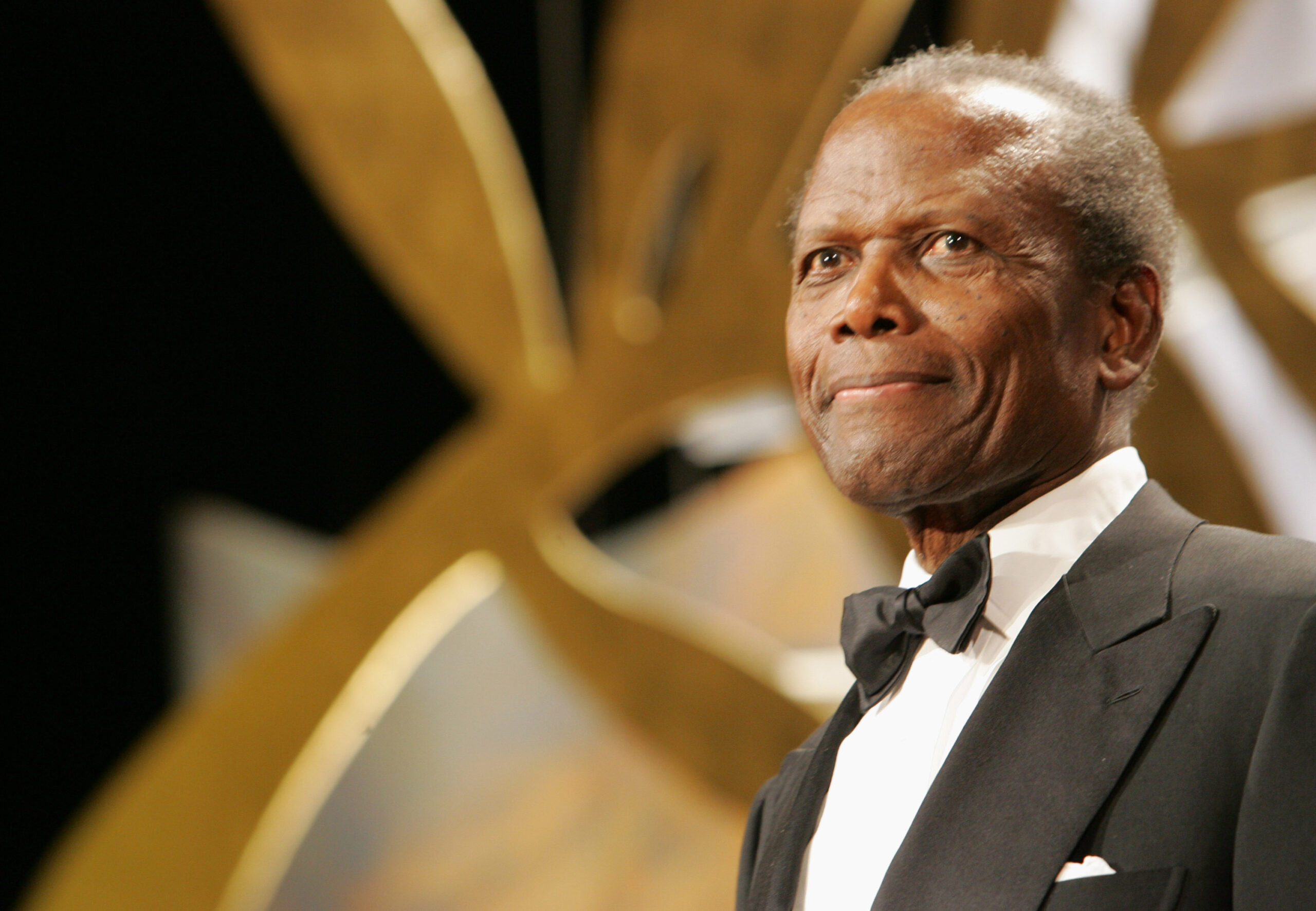
Poitier passed away earlier this year at the ripe old age of 94, one of the most honored and most beloved figures in Hollywood history. He sat for interviews for this film, reads from his autobiography and appears in clips from his many movies.
From “No Way Out,” playing a Black doctor treating a racist inmate (Richard Widmark) in a stunning debut, to “The Defiant Ones” and the Oscar-winning “Lilies of the Field,” on through “In the Heat of the Night” and “Guess Who’s Coming to Dinner,” smoothly stepping away from the spotlight, then returning as an actor and director in the ’70s and ’80s, Poitier rarely made a wrong move and never lost the affection of an adoring public.
“The movies changed the day he hit the screen,” cultural critic Greg Tate says, without hyperbole.
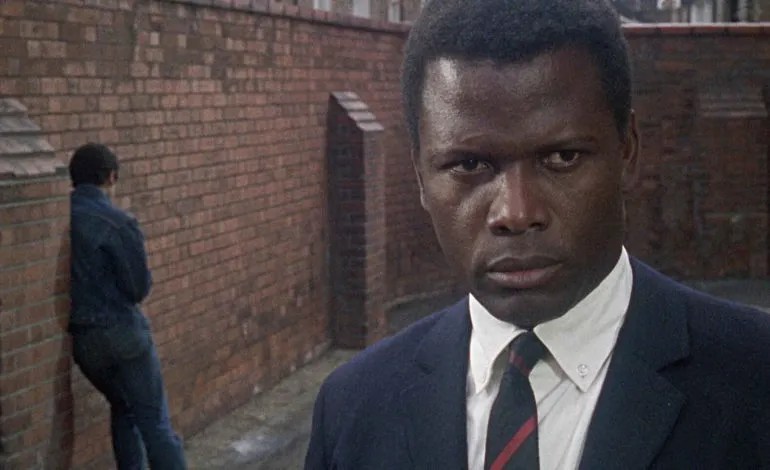
The blow he struck a rich, white Southerner who’d just hit him became “the slap heard around the world,” thanks to “In the Heat of the Night.”
He was “the noble Negro of white liberal fantasies” during his “Sir Sidney” years — playing roles in white shirt and tie that let him “humanize and normalize blackness,” Oprah opines.
But as the film makes clear, it didn’t come easily. He grew up not knowing what indoor plumbing was in a house with no electricity on Cat Island in the Bahamas, got his first taste of racism when he moved to Miami as a teen, didn’t really become a good reader until he moved to New York and a waiter at a restaurant where he washed dishes helped him with that, and didn’t shake his accent until “I spent $14 on a radio” and started imitating the speech of 1940s newscaster Norman Brokenshire.
This was after he’d spent his first weeks in New York working as a porter or dishwasher, sleeping in a men’s room stall at a bus station, after he’d blown his first audition with Frederick O’Neal at the American Negro Theatre, Poitier says, his formidable memory never failing, right up to the end.
The film delights in detailing what daughter Sydney describes as the great “bromance” of his life, with acting contemporary, singer, the Jamaican/American Harry Belafonte. They met as rivals for roles in the New York theater of the ’40s, and carried on, as collaborators and best friends with sometimes long “falling outs, like a married couple” as Sydney puts it, all through their lives.
The rivalry/bromance made for great TV, as a funny “Dick Cavett Show” joint appearance reminds us.
“They kept playing that stink eye,” is how Morgan Freeman puts it. They once pulled it on me in a joint interview, warily sizing me up to see if I’d get the joke before starting in, vigorously and affectionately poking at each other. Belafonte never let Poitier forget that he owes his career to the night Harry got called into work as a New York garbage man, and his understudy in a play they were doing took the stage and Poitier was “discovered.”
We hear how Poitier chose roles based on his father’s sense of “the true measure of a man,” picking pictures that had “something of value” beyond a payday and simple entertainment.
And we revisit his human foibles, a married man who fell in love with Diahann Carroll making “Paris Blues,” perhaps caught up in what one critic calls “the most beautiful couple in screen history,” an affair that ended his first marriage and went on for years before he met and married a much younger white co-star, “the love of my life,” making “The Lost Man.”
Hudlin uses split screens to convey the bustle of the New York and Hollywood Poitier burst into in the ’40s and ’50s, and has historians and cultural critics provide the context for how Earth-shattering his rise to stardom was.
And Barbra Streisand, who with Newman and Poitier founded the First Artists film production company, brings it all back down to Earth.
“He was beautiful. What SMILE is like that? Maybe Brando’s? Come on!”
Robert Redford saw him as “a great example of what manhood should look like and feel like.”
His daughters from two marriages marvel at the efforts he went to in order to give them “one big happy family” childhoods, his ex-wife Juanita remembers the early years and her business advice that put him on a no-budget picture that won him and Oscar, and gave him profit participation that pretty much set him up for life — “Lilies of the Field.”
Poitier and Belafonte went to school on their forebear, the actor, singer and activist Paul Robeson’s experience of being red baited and blackballed. But when the civil rights movement was at its peak, they were down South, risking their necks to further the voter registration and equal justice cause. And they led Hollywood to join Dr. Martin Luther King’s March on Washington, joined by Brando and Lancaster, Garner and Heston in the audience at the Lincoln Memorial in 1963.
We hear about the down years, with Poitier labeled “a house Negro” and “Uncle Tom” for his films, which seemed made for white audiences (true enough) and designed to present an idealized Black man who could “normalize” the idea of an integrated America.
If “Sidney” has a failing, it’s in the way it mentions the years when Poitier went out of favor with the African American and avoids any connection of the Black audience reacting to his taking up with white woman as playing a part in that.
Denzel and Oprah fondly recall Poitier’s career advice, director Spike Lee remembers his defiance and civil rights activism and Lulu recalls the “very smart agent” who not only got her cast in “To Sir With Love,” but landed her the title tune, which she sings and chokes up as she recalls the message conveyed in that song.
That 1960s film, like “Guess Who’s Coming to Dinner?” and “In the Heat of the Night,” were building blocks for white acceptance of a smart, principled and talented Black man who not only made movies, but shouldered the burden of “carrying other people’s dreams”
Hudlin’s embracing film reminds us that there was a lot of history that unfolded around this one man, and a lot of change came about thanks to this one extraordinary life of achievement and humility, grace and principled defiance.
Rating: unrated
Cast: Sidney Poitier, Oprah Winfrey, Spike Lee, Halle Berry, Robert Redford, Barbra Streisand, Nelson George, Juanita Hardy, Denzel Washington, Lulu, Louis Gossett Jr. and Morgan Freeman
Credits: Directed by Reginald Hudlin, scripted by Jesse James Miller. An Apple TV+ release.
Posted inReviews, previews, profiles and movie news|Comments Off on Movie Preview: An afterlife thriller comedy — “Next Exit” with Rahul Kohli, Katie Parker, Rose McGiver and Karen Gillan
The top-of-his-class screenwriter Tony Gilroy wrote that film, and “Michael Clayton,” and he created “Andor,” the story of how Cassian Andor (Diego Luna) became radicalized enough to get involved with the rebellion and risk his life to steal those Death Star plans “A long time ago, in a galaxy far away.”
Punching through four episodes of the new series — which has already been green-lit for a second season of 12 episodes after this first 12 — I got glimpses of what I so loved about “Rogue One.”
The stakes are terminal. Killing and deaths have consequences. That’s what puts a price on Cassian’s head, murdering two guards at a corporate mining/salvage operation run by Pre-Mor. Monolithic corporations are but an extension of the Imperial megalopoly, and an officious, fanatical Javert figure Syril Karn (Kyle Soller) is the villain of the early episodes, a corporate police commander determined to find this scrapper, thief and smuggler who killed his two corporate guards.
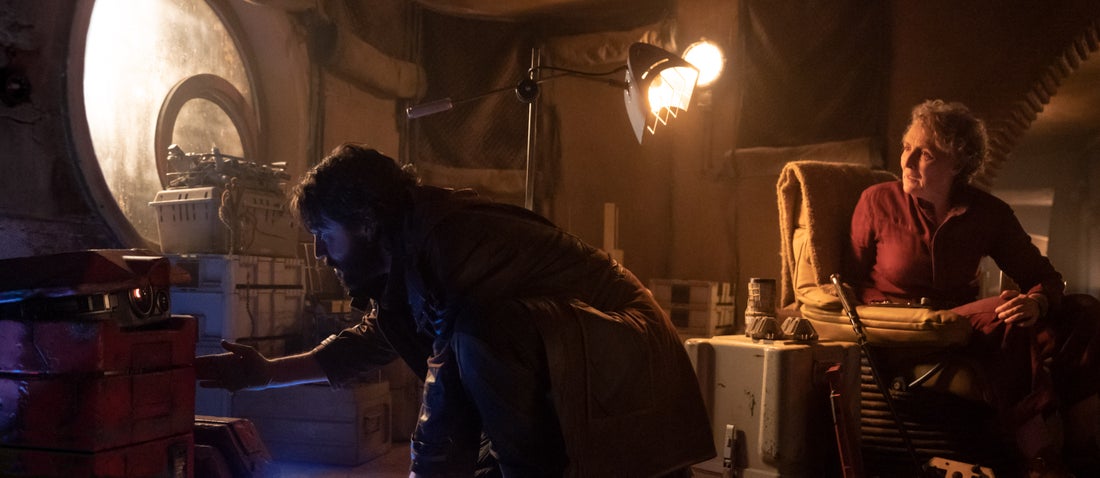
Another “Rogue One” virtue was its tactile sense of place. The “world creation” of most “Star Wars” films and series is vivid, although there’s been a tendency to set as much of this derring-do as possible in deserts. Here, we’re in a damp world of brick structures, rusting, ruined spaceships and breaking yards as well as glossy corporate and “imperial” settings, a stunning new bar and a more verdant planet where primitive, blowgun-armed natives fill in the backstory to this backstory of a backstory.
Gilroy and his brother Dan wrote most of the scripts for the first season, so we’re assuming they can keep all that straight. More or less.
And the third great selling point of “Rogue One” was its best-in-series cast. Felicity Jones and Luna, Donnie Yen and Forest Whitaker, Mads Mikkelson, Riz Ahmed, Jimmy Smits, Genevieve O’Reilly and Ben Mendelssohn were featured, with veteran character players surrounding this stellar ensemble. Luna, O’Reilly and Whitaker return for this series (in later episodes) withStellan Skarsgård, Fiona Shawand Adria Arjona (“Father of the Bride,””Morbius”) adding new luster.
The narrative begins, as “Rogue One” did, in media res, as Cassian has already stolen something that leads to him having to kill to keep his secret and his liberty. His mechanic-pal Bix (Arjona) isn’t really privy to what he’s up to, nor is his mother (Shaw). But his cute, stammering rusty robot, B2EMO, can keep a secret.
“I can lie. I hu-hu-have adequate power reserves!”
Cassian is scrambling, right from the start, to lie low and make his sale (Skarsgård plays a “buyer”), dodge Syril Karn and his minions and just get a little breathing room.
As in “Rogue One,” the story starts with urgency and the pacing at least gives the illusion of brisk. Streaming storytelling is a drip drip drip affair, and this series doesn’t escape that with opening episodes that have brief bursts of action and a desire to slow revelations and plot twists to a crawl.
The dialogue touches on the “arrogance” of the Empire and its corporate stooges, the motivations of the opposing parties and the stakes each sees in the struggle. It’s “When the risk of doing nothing (about lawbreaking) becomes the greatest risk of all” and “The best way to keep the blade sharp is to USE it” vs. “Don’t you want to fight these bastards for real?”
Not all the threads of the story are introduced in the first four episodes, and even so, one wonders how they’re going to get more than one season out this “rogue” hero’s journey. The back story to the back story business doesn’t have any obvious point — yet.
But with this cast and these writers, we can be sure they’ll think of something sinister and exciting and hopefully engrossing enough to carry us along the way, even without Baby Yoda around.
Rating: TV-14 (violence)
Cast: Diego Luna, Adria Arjona, Fiona Shaw, Kyle Stoller, Genevieve O’Reilly, Kyle Soller, Forest Whitaker and Stellan Skarsgård
Credits: Created by Tony Gilroy. A Disney+ release.
The problem solving, the “gags” used to put characters in jeopardy and extract them from this or that life-threatening jam, is pretty sloppy in “Dig,” a grimy desert Southwest kidnapping thriller starring Thomas Jane, Emile Hirsch and Jane’s daughter, Harlow Jane.
Some situations seem as corny as the drawl Hirsch slings as a bad hombre in a black cowboy hat who takes a subcontractor dad and his daughter hostage on a work site.
But miss this solid-if-sometimes-lacking B-thriller and you’ll be cheating yourself of a few laughs, some of them in the darkly funny dialogue, and a couple of over-the-top villainy turns by Hirsch (“Into the Wild”) and his mean girl with a sherbet green pistol accomplice, vamped up by Liana Liberato (“The Beach House,” TV’s “Light as a Feather”).
A prologue introduces us to a father with anger management issues trying to rein in an out of control 16 year-old daughter. One furious phone-tracked pursuit of Miss Acting Out ends with Mom dead, daughter deaf and so traumatized she won’t talk anymore. Father and daughter are now survivors but crippled by guilt.
A cochlear implant idea has Dad considering a big bucks house demo offer from the shadiest character ever to drift into his business in dusty Joshua Tree country. He ends up dragging the kid he still calls “Squirrel” — but now in sign language — to a remote work site. And that’s where things go really wrong for the second time in their lives.
It turns out this is a “stash house.” And whatever they’re supposed to knock down and salvage, they have to do it in a hurry, as the land is being redeveloped. One mistake later, blood is spilled and we wonder just what it is that they needed to bring all this gear to “Dig” up, or bury.
Director K. Asher Levin, who did a two for one deal with Jane (“Slayers” opens in Oct., and Jane got his daughter a nice film credit in “Dig”), delivers a brisk, tense shouting match prologue that climaxes with a shooting. The thriller that follows doesn’t live up to that opening.
But the players have their fun, with Hirsch trotting out that drawl, referencing kids’ cartoons and ancient mythology in his self-help speak about “net positive” experiences, and insult-the-hostages patter.
“Ain’t you a Cassandra, now?”
Jane Senior always delivers fair value, even in B-movies. And his daughter’s not bad either.
But Liberato, as a tattooed, halter-topped, trigger-happy trollop, practically steals the picture. Yeah, she did time on “Sons of Anarchy” as a young teen. Here’s where that pays off.
“Why’re we MONOLOGUING? Let’s just TAP’em!”
The logic of it all is shaky enough early on, but it breaks down further in the third act. By then the players having us on are the characters who have us hooked. Give this crew a tighter, more logical script and this genre pic could have been something special, or at least a thriller that comes closer to working.
Rating: R, violence, drug abuse, sexual situations, profanity
Cast: Thomas Jane, Emile Hirsch, Liana Liberato and Harlow Jane
Credits: Directed by K. Asher Levin, scripted by Banipal Ablakhad and Benhur Ablakhad. A Saban release.
Dainty, dopey and pokey, “223 Wick” is a silly Satanic thriller about a troubled priest and a demonically-associated address.
As short as it is, it’s still an hour of life you don’t want to waste.
Father Jonathan (Alexi Stavrou) is a teacher at St. Vincent Seminary, and a man haunted by voices and dreams. He has “theories.” He’s doing “research.” Not that we see much of that.
Being “troubled,” his dean (Jack Dimich) ships him off to another parish. But on the way, the good father blurts out an address, and his rideshare drops him at 223 Wick, a building the priest has seen in his dreams.
As the guy who opens the door (Greg Pierot) looks a lot like Frank Zappa, Harry Connick-look-alike Father Jon can’t say he wasn’t warned. The owner (Dawn Lafferty) welcomes him, relates the story of her grandfather and how his “secret society” used to meet here, another clue the Good Father ignores.
He starts sprinkling Holy Water around and digs into the demonic goings on at…duh-duh-DUMMMMmmmm, “223 Wick.”
The effects are a disembodied demonic voice, an eye painting that keeps opening and closing and this milky explosion in water visual, with a little dining on human flesh and maskwork eating up the makeup budget.
No frights, tepid acting, a “script” barely worthy of the label, all hallmarks of a very short movie that starts slowly and slows down as it goes.
Rating: unrated, some gruesome horror imagery, profanity
Cast: Alexi Stavrou, Dawn Lafferty, Jack Dimich, Sergio Myers II, Eric Vaughn and Greg Pierot
Credits: Directed by Sergio Myers, scripted by Jess Byard and Melanie Clark-Penella. A Gravitas Ventures release.
“Swamp Lion” is an overly patient, not-quite-meandering melodrama about a Texas trucker who gets mixed up in smuggling to try and pay for his son’s cancer treatment. This indie film, starring Michael Ray Escamilla, has touching moments and a seriously tense third act that bely its sleepy opening scenes.
It’s a decent showcase for the Texan Escamilla, who was in “A Night in Old Mexico” and TV’s “Snowfall” and “The Big C.” It’s also a bittersweet one, as he died last year, shortly after finishing this and a couple of other projects.
In an opening that plays as a straight-up prologue, we meet Jimmy and his younger brother Stan (Luis Bordonada) after a night where alcohol was consumed and somehow, Jimmy ended up with a fat lip. His sometime girlfriend Bre (Bre Blair) shows up, pulls him aside, and announces she’s pregnant.
“We’ve gotta change,” she tells him. “I’m gonna take care of you,” he promises. The movie’s about how the first assertion might not come true, but perhaps the second one could.
Because years later, he’s keeping them afloat with a truck driving gig and she’s got a waitress job or some such.
But nothing that they have coming in pays for enough insurance to cover the brain tumor that’s revealed when their tweenage son (Jack Elliot Ybarra) has a seizure in the middle of a game of catch. “Experimental” treatment in Boston costs $250,000. They aren’t related to anyone nor do they know anyone who can round up that much cash. After a bout of panic and heated arguments with relatives, trucker Jimmy talks to the sketchy brother Bre doesn’t let come around any more.
“I know some people,” Stan says. “They’re not nice people.”
Danish writer-director Torben Bech (“Nuummioq”) wanders through plenty of early scenes that help set up the rhythms of the family and the slow pace of the picture, but could probably stand some trimming. He compensates for that dawdling by barely sketching in the details of this tense across-the-border smuggling operation.
The logistics of the crime, like a long argument scene with Bre’s parents, isn’t essential to understanding the story or making it work.
Suffice it to say that Jimmy makes dirty money, payments are made for the treatment, and he gets careless. And when it all starts to come undone, we — like the quiet, unhurried Jimmy — are jolted by what’s happening. The camera follows him at shoulder height as he springs into urgent action, not-quite-panicked, but in a hurry for the first time in the movie.
Escamilla gives Jimmy an unflappable air that almost nothing can shake, letting us underestimate him. Blair is the one allowed to get worked up, get loud and get mad. Whatever made Jimmy the way he is, her character’s back story is more fraught, and we get it.
“Swamp Lion” takes its title from a story Jimmy tells to his son each night, and the fairytale and its title convey little more than the fact that this father dotes on his son. It also captures the sleepy-time air the picture opens with and doesn’t lose until over an hour has passed.
Leaden pacing hampers the movie, but as Bech is attempting to cast some sort of spell over the proceedings, I get why he tried it. But there’s not enough here to justify this run-time. He’s got a tight 95 minute thriller buried in a 110 minute melodrama.
Rating: unrated, violence, sex, nudity
Cast: Michael Ray Escamilla, Bre Blair, Jack Elliot Ybarra and Luis Bordonada
Credits: Scripted and directed by Torben Bech. A 1091 release.
“The Enforcer” is filmed-proof that the difference between a C-movie and a straight-up, watchable B-picture is Antonio Banderas. Ask first-time director Richard Hughes. He’ll tell you.
The Aussie Hughes was behind the camera for this tale of finding a single virtue in Miami’s vice, a moral ex-con who makes it his business to save a street kid kidnapped into the sex trade.
It captures the lurid underbelly of M-town — the movie version of it, anyway — and promotes it in a mentor-mentee story of “collecting” work and the hard men who do it. The saving grace of this latest spin on “The Debt Collector” trope is that this time, Banderas is the star, not the C-movie king who made two tales with that title.
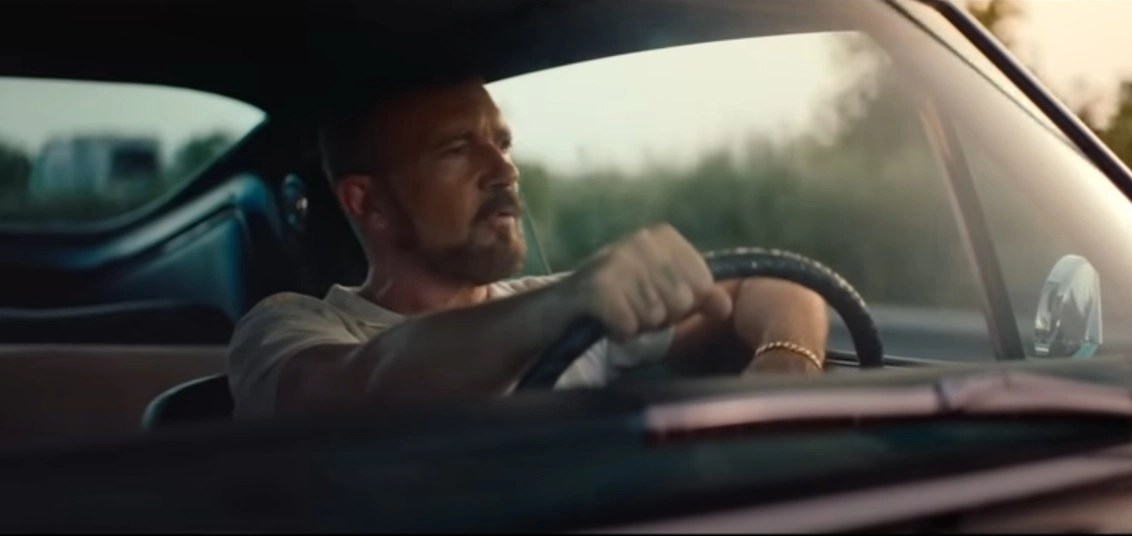
Banderas is “Cuda,” nicknamed that thanks to the ’68 Plymouth Barracuda he cruises South Beach in. He’s tougher than tough, but he’s over 50, fresh out of the joint, and the boss (Kate Bosworth, expanding her repertoire and getting away with it) has him train a new recruit whom he also uses as “muscle.”
Stray (Mohean Aria, not bad) is a yard fighter who picks up cash in bareknuckle brawls in the toughest part of town. He goes for a ride, does his part, and finds himself at a driving range in the middle of the night.
“Goooolf,” Banderas/Cuda purrs between swings, “is about patience, timing, keeping your COOoooool. Obviously, you lack all of these qualities.”
That’s about it as far as “training day” goes. Because Cuda has this teen daughter who isn’t interested in reconnecting after his prison stint. So he takes on another “stray,” 15 year-old Billie (Zolee Griggs) from Atlanta.
When his protection doesn’t save her from trafficking, Cuda must track her down and have his moment of truth with boss Estelle and a drugs-and-sex-trafficking underling played gangsta-to-the-hilt by the rapper 2 Chainz.
The picture begins with the young Stray’s story, and doesn’t totally lose track of him throughout, but he’s the sideshow here. There are cliches, continuity issues and the odd attempted grace note — the ex-con in the classic muscle car staring, in disbelief, at the drifting car culture that blew up while he was in prison.
Mostly “Enforcer” is content to be just a somewhat efficient march through a formula. So I’m not saying it’s all that good.
What I am saying is that Banderas, filmed and showcased like the great leading man and simmering man of action he still embodies, makes “The Enforcer” worth watching all by himself. Again, ask director Hughes. He knows where the money is and he never strays far from it, or him, in this just-lean-enough debt collector thriller.
Rating: R for strong/bloody violence, language throughout, sexual content, nudity and drug use.
Cast: Antonio Banderas Mohean Aria, Zolee Griggs, 2 Chainz, Alexis Ren and Kate Bosworth
Credits: Directed by Richard Hughes, scripted by W. Peter Iliff. A Screen Media release.
His movies aren’t even distributed in the US, not in ways most of the country hears about or sees.
He lost his fastball years ago and his breaking stuff hasn’t gotten by of late.
And then there’s the whole matter of the child molestation allegations that will have a prominent place in Woody Allen’s obituary.
Now, in Spain, he’s announced that his next planned film, “Wasp 22,” will be his last.
And just a little while ago, he tried to walk this “end with my 50th film” declaration back. He needs to get a hint. I’ll be shocked if he actually gets this one done.
Eighty-six is a little late getting the memo, Wood man. “Writing,” will be your focus now? No doubt there are still publishers who will put out whatever you write. As to whether anyone will read it…










 Movie Nation