
Pun titles are just the best, right? Harbour and John Leguizamo and Cam Gigandet in a story of Santa stopping an attempted kidnapping by mercenaries. Nice and nuts.
Dec. 2
Pun titles are just the best, right? Harbour and John Leguizamo and Cam Gigandet in a story of Santa stopping an attempted kidnapping by mercenaries. Nice and nuts.
Dec. 2



We’ve had plenty of time, thanks to the many scenes that precede it in “Last Flight Home,” to get used to the idea of how Eli Timoner plans to shake off this mortal coil. But a line, casually spoken by his rabbi daughter, still packs a gentle jolt.
“Daddy, on March 3, when you die…”
Documentary filmmaker Ondi Timoner’s latest film — after works on controversial artist Robert Mapplethorpe (“Mapplethorpe), gadfly comic Russell Brand (“Brand: A Second Coming”) and the musical era that the Dandy Warhols came out of (“Dig!”) — is a 100 minute home movie, Watching Daddy Die.
It’s an idealized depiction of what “death with dignity” can look like in a culture where that’s still a rare gift. Timoner, her siblings, nieces and nephews and mother, all talk to and comfort patriarch Eli Timoner as he resolves to make the March of his 92nd year his last one.
Timoner tells his daughter “I’m just waiting to die” when she calls. He tells others, including his future widow, “I just want to be in the ground…Are we gonna end it today?”
They don’t push back. They know he’s been miserable, a very successful man who ran one big and two huge businesses who then spent the last 40 years of his life paralyzed by a stroke, so he’ll need help, which is allowed in California, where he lives. When he says “I want it to end,” his rabbi daughter takes it seriously.
“If you’re saying this is what you want, we’re all behind you.”
“Last Flight Home” is a film of reminiscing phone calls and tearful final farewells, a story of preparations for the end and a celebration of a big life that shrank, and the “shame” the man who lived it felt about that.
It’s sometimes moving and sometimes simply indulgent. Because it takes some effort for anybody to see this privileged exit as something “universal” that could be replicated in their own lives, with their own loved-ones. Timoner’s film can feel like a too-rich-for-my-blood/too-intimate-to-relate-to home movie at its worst, an affectionate tribute and curtain call for a life well-lived at its best.
A phone call from talk show hostess Rachel Maddow? Not something every fan gets when he’s about to end his life.
And it isn’t every clan that gets to hear the “shame” their patriarch carries to his grave, that he didn’t sell some stock when his first hugely succession company went public,” $40 million pissed away,” Eli mutters on his deathbed.
That was for the huge Florida-based roofing concern that he took national, his second great business success.
“Last Flight Home” takes its title from Eli Timoner’s most famous company, Air Florida. When Ondi asks Eli for a list of “people you want to say ‘good-bye to,'” a lot of the Zoom calls are with pilots and other employees of that “world’s fastest growing airline,” a late 1970s phenomenon made possible by airline deregulation.
It also points to a major omission in “Last Flight.” Eli Timoner had his stroke (his wife blames a “neck crack” during a massage) six months after the infamous Air Florida crash into the Potomac in Washington, D.C. in 1982. He was forced out of the airline after the stroke, “disability discrimination” Eli says and his family agrees. But the airline was gone within two years of that brand-killing disaster, and it’s absurd and dishonest to leave out something much more likely to lead to his ouster and for that matter, to his debilitating stroke — stress, and “guilt,” whether warranted or not.
And seeing that left out makes you wonder what other sops to “hagiography” Ondi Timoner made, omitted and embellished?
Any documentary that points to a way out of the agonizing, expensive, life-extending trap of “The American Way of Death” is worth a look. This one, affectionate and atypical, poignant and privileged, grates almost as often as it moves.
It’s not every end-of-life film that makes you envious of the way this family produces, edits and choreographs that finale, seemingly by design.

Rating: unrated, some off-color humor
Cast: Eli Timoner, Ondi Timoner, many others
Credits: Scripted and directed by Ondi Timoner. An MTV Films release.
Running time: 1:41
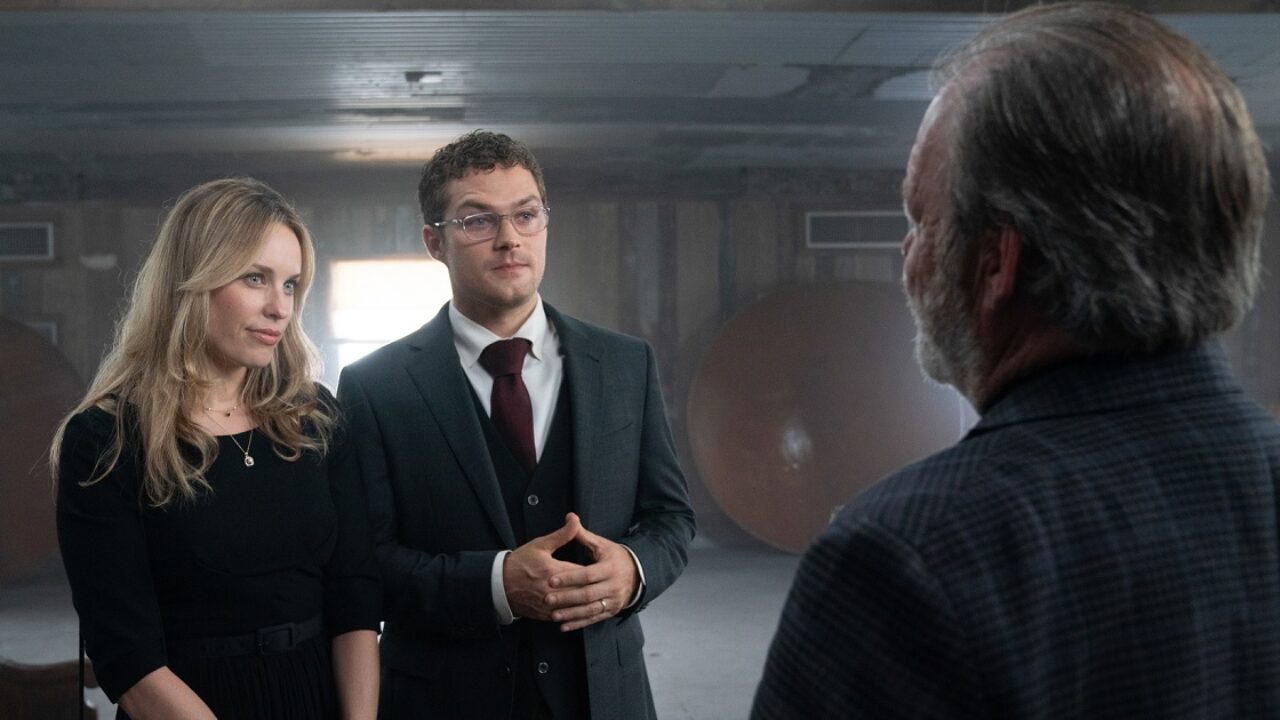
“The Visitor” is a Southern Gothic horror tale of modest ambitions and equally modest frights and delights. A polished production from Blumhouse TV for Paramount, with Epix TV its ultimate destination (in Dec.), it’s a film that delights in quaint Tennessee Williamsisms applied to a horror formula that treats “Rosemary’s Baby” as its Ur text.
Finn Jones, a “Game of Thrones” alumnus (like every other Brit) and one of the stars of the new “Swimming with Sharks” TV series is Robert Burroughs, a Londoner who moves with his wife back to her ancestral home in the drawling, Spanish moss-bedecked Deep South after the death of her father. The place seems welcoming enough, until Robert starts noticing old paintings and Civil War era photographs with his face in them.
Wife Maya (Australian Jessica McNamee, who was Margaret Court in “The Battle of the Sexes”) is “the prodigal daughter” who returns to sleepy Briar Glen, welcomed by one and all — especially the florid, MO-lasses-accented preacher, Rev. Otis Ellis. He’s played with a growling, tipsy twinkle by Dane Rhodes, who seems to be having more fun than anybody else in this picture.
Maya is settling back in, but Robert is poking around and having nightmares. When a local slips him a note, he starts finding folks — an antiques dealer (Donna Briscoe), a wild-eyed local character (Thomas Francis Murphy) who urge him to “Run back to London and don’t EVER come back!”
He wants “the truth,” but as you might guess, he can’t HANDLE the truth.
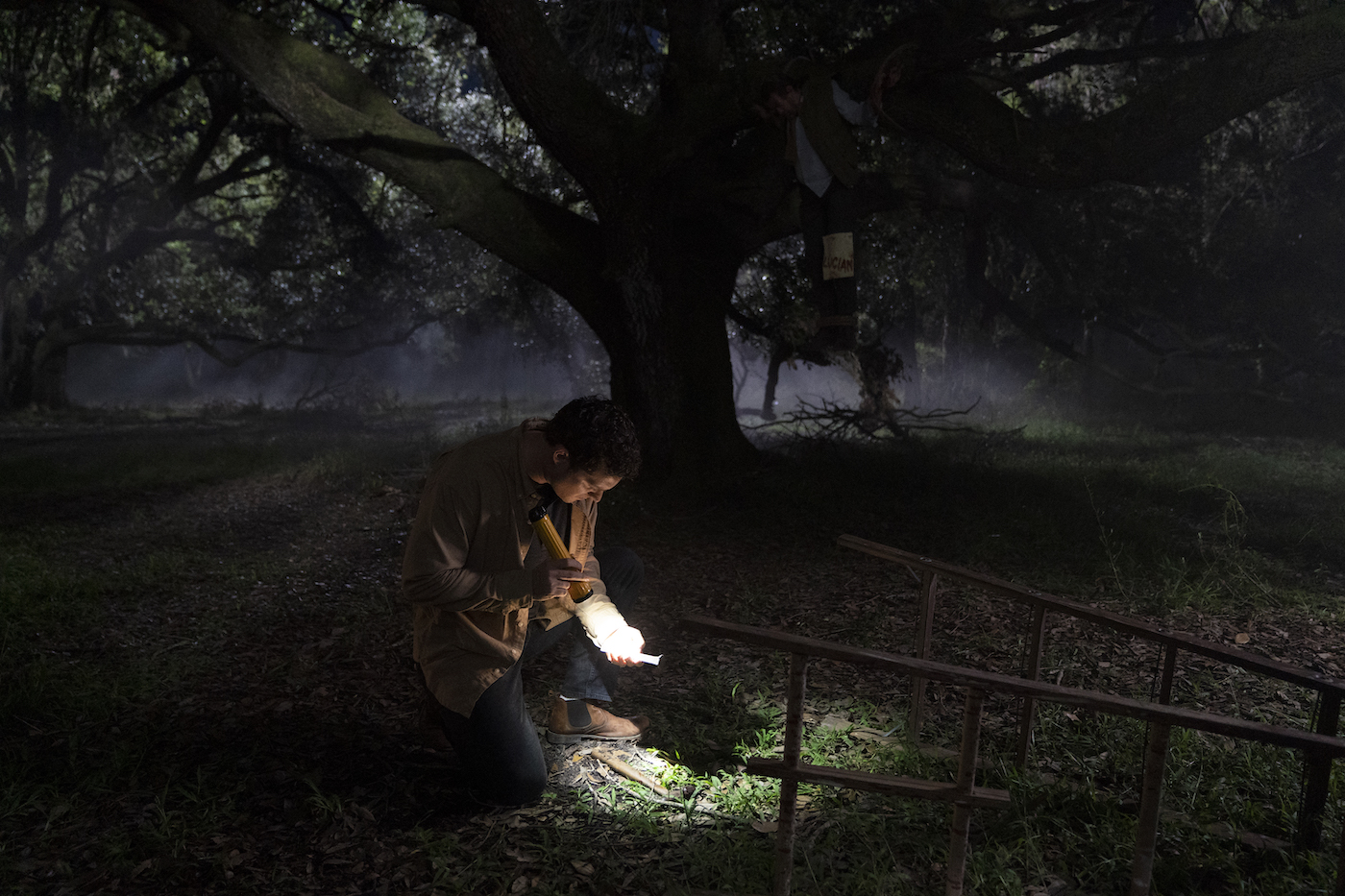
As a native Southerner who lost his accent long ago, I always get a kick out of thespians who get off their Delta flight from wherever and start extemporizing like Foghorn Leghorn the moment the assistant director bellows “ACTION.”
“In the town of Briar Glen, suh, you ahhh NEVAH alone!”
Aside from that, there’s not much to grab hold of, here. “The Visitor” fights a losing battle with over-familiarity, sauntering through horror tropes that predate 24 frames-per-second era celluloid.
I’d love to see a five year ban of horrific occurrences punctuated with “It’s only a dream,” “You were just having a nightmare” if the screenwriter’s particularly lazy.
At least no one states anything that obvious in “The Visitor.” That’s small consolation for a movie that has little for genre fans, little star power and not nearly enough drawling drowned in moonshine to turn camp, I do declare.

Rating: unrated, violence, profanity
Cast: Finn Jones, Jessica McNamee, Donna Briscoe, Thomas Francis Murphy and Dane Rhodes.
Credits: Directed by Justin P. Lange, scripted Simon Boyes and Adam Mason. A Blumhouse production, a Paramount release.
Running time: 1:29
A hint of the supernatural washes over the trailer to this chilly film from Sebastian Lillo.
Nov. 16, on Netflix.
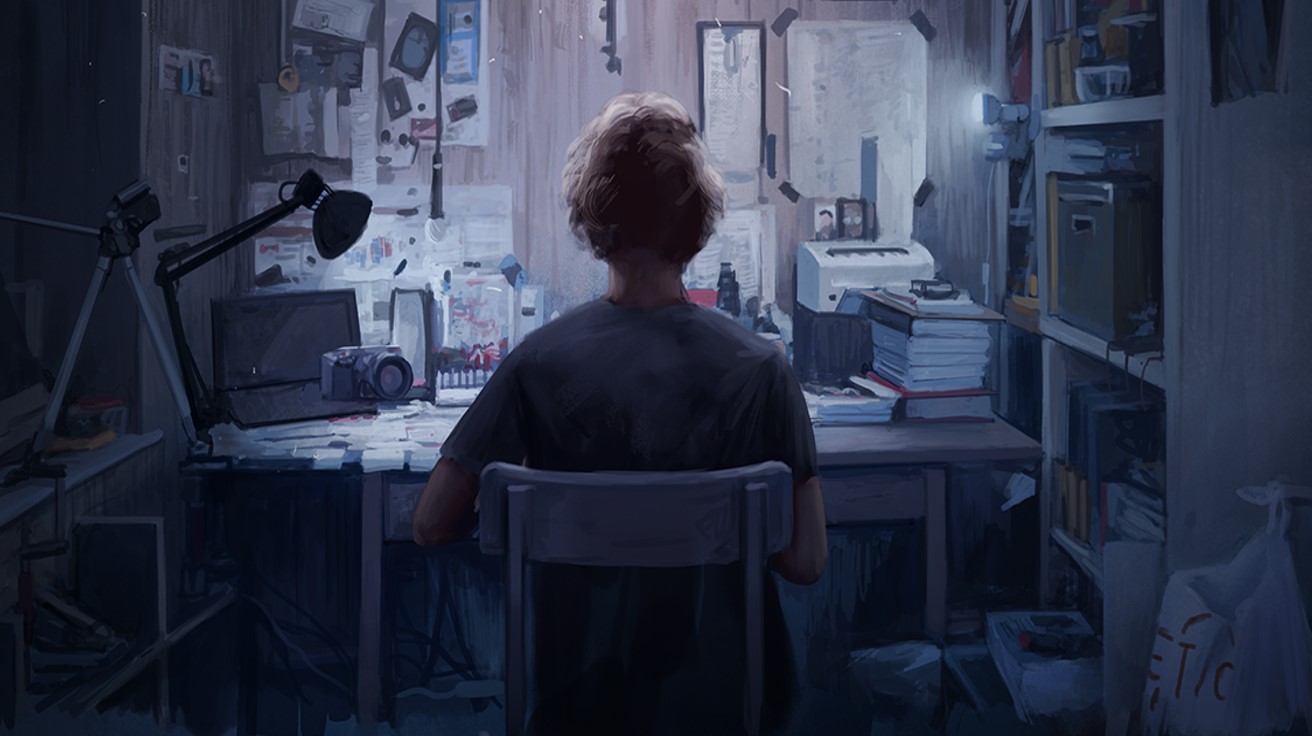
“Masking Threshold” a fascinating experiment in intimate, minimalist horror, showing just how far a filmmaker can go with an idea, a camera, a single setting and a simple premise — showing a man’s psychological collapse documented via an online video diary.
Filmmaker and star Johannes Grenzfurthner gives us mere sections of his face and parts of his body, only seen full-on from behind as his unnamed character “experiments” on his maddening tinnitus and takes us along for his “research” in a self-narrated descent into madness.
In a montage of extreme closeups of what our stricken, misanthropic and gay University of Central Florida alum and miserable Apopka, Florida recluse sees, reads, dissects, eats (jam toast) and trims (his toenails), we see how his world has closed in around him.
Grenzfurthner hired actor Ethan Haslam to ramble, criticize, fume and fuss over his efforts to “cure” the hearing condition that has utterly consumed him and is turning him into a misanthropic loner.
“Tinnitus,” he reminds us, is “the hearing of sound that has no external source.” Something happened to this one time physics student at school that put a noise in his head that will not go away.
And as “the miserable have no medicine but hope (slightly misquoting Shakespeare),” he decides to do his “own research” — questioning, reading, dabbling in chemicals and bizarre bursts of sadism in search of some means of curing himself.
“Masking Threshold” is a term from auditory research about relative sounds, the louder one being that which the ear can discern and concentrate on.
Our anti-hero rages at “ignoramuses,” his boss (“leadership skills of a squirrel”), his work, his mother and even at his new neighbor (Katherina Rose) as he spirals down that rabbit hole and the myriad detours his mind takes him into along the way.
He boils this or that in a bunsen burner, rants about religion, quotes composer John Cage on “silence,” and fumes at how little help the various hearing and acoustics forums are online.
“It seems the only way to get the right answer on the Internet is to post the WRONG answer.”
Long before we see him fiddling with slugs and worms, “experimenting” on parakeets and beheading mice, we’ve figured out he’s lost his Apopka-picking mind. He lets slip that he’s been in therapy, insists he’s attempting “unconventional and yet solid approaches” to his problem. There’s no way he’s making “progress,” but he’s adamant that he is and that it’s publishable.
“My research will NOT end up as epistemological road kill!”
What emerges is a thorough and thoroughly disturbing portrait of a man built from snippets of speech (he’s very articulate and smart), glimpses of body parts and filmed actions ranging from reading and grooming to putting jam on toast, fingering the scars his abusive combat veteran father gave him.
It’s a narrative experiment (not unlike Derek Jarman’s “Blue”) that makes the point that sometimes, you don’t have to see someone’s face to paint in every detail and figure everything you need to know about him or her.
“Masking Threshold” isn’t for everybody, or even every horror fan. I found it occasionally repellent, and mesmerizing in a droning-on to-the-point-you-tune-out way. But even at its most unpleasant, it’s never less than fascinating

Rating: bloody violence, implied animal abuse
Cast: Johannes Grenzfurthner, Katherina Rose and the voice of Ethan Haslam
Credits: Directed by Johannes Grenzfurthner, scripted by Samantha Lienhard and Johannes Grenzfurthner. A Drafthouse Films release.
Running time: 1:31
A spot of Brit horror, what what?
Good cast. RLJE is releasing this one Nov. 4, on to Shudder shortly afterward.



Digital animation has progressed far enough that we can safely assume we’re going to get reasonably convincing naval combat footage on screen, be it ancient Greek (“300: Rise of an Empire”) or World War II (“Midway,” “Greyhound”).
So that’s not a significant worry of “Operation Seawolf,” an ahistorical thriller about a late WWII effort to launch V-1 buzz bombs from U-Boats against the American coast. The worries are a screenplay that is stale cheese, situations that are worn-out tropes and performances that range from perfunctory to eye-rolling.
It’s a B-movie WWII actioner that sinks into C-movie more often than you’d like.
Dolph Lundgren plays a drunken, veteran U-Boat skipper given a boat and leadership of a pack aiming to sink ships on the way to surfacing off New York and buzz-bombing it, a last stab of vengeance in the last days of the war.
“I will not disappoint you. Do not disappoint me!”
There’s strife on the boat — a second officer (Andrew Stecker) who was sure this would be his command — and careless risks.
“VEre iss de captain?” “Passed-out again.”
Facing off with them an Atlantic Fleet desk jockey (the ever-unshaved Frank Grillo) who has the decoded information of the V-1 attack and is scrambling to track down and sink the Germans.
“Checkmate! CHECKMATE!”
The action beats are passable, but every second in between them is just a groaner — clumsy acting, corny dialogue.
“Did ve ever haff a chance to vin?” “No.”
Then there’s our introduction to Captain Kessler (Lundgren), a long LONG scene of Lundgren staggering around a Norwegian hotel room (in a late April snowstorm), drunk and sharing a tender moments with a sex worker one third his age.
So let’s focus instead on two things of note here. First, we’re shown a U.S. destroyer crewed and captained (Hiram A. Murray) by African Americans. The command detail is incorrect, but it’s interesting that they put one of the two mostly-African American crewed destroyers of WWII in the movie.
And then there’s writer-director Steven Luke’s homage to 1965 WWII movie “Battle of the Bulge.” In that film, a German panzer division commander played by Robert Shaw mutters about the “boys” and cast-offs he’s being sent into battle with, and the men burst into “The Tankmen’s Song” to show their eagerness for combat.
Here, it’s the green sub crew that serenades Captain Kessler with a Nazi submariners song, almost a shot-for-shot homage to Bond-film veteran Ken Annakin’s film, without any of the pathos and “patriotic” fatalism of the original.
Aside from that, nothing much to see here that isn’t digitally animated.
Rating: unrated, violence, alcohol abuse
Cast: Dolph Lundgren, Andrew STecker, Cody Fleury, Hiram A. Murray and Frank Grillo.
Credits: Scripted and directed by Steven Luke. A Shout! Studios release.
Running time: 1:27
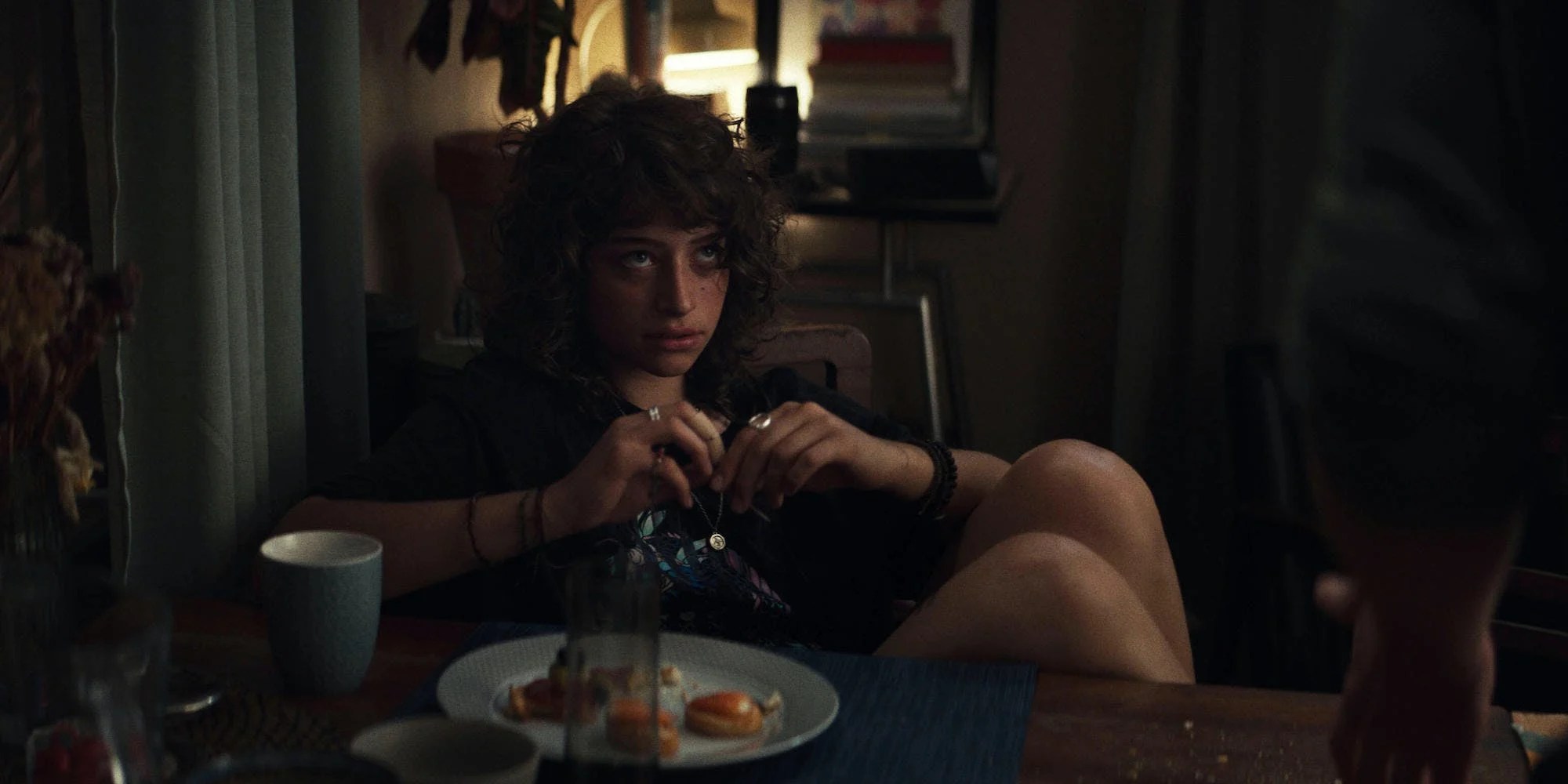


The question you have to ask when making a reboot is how much of the earlier incarnations of the story you’re setting out to tell anew do you include in your new “origin story?”
In “Hellraiser,” the eighth film spun out of the horrific works of Clive Barker, they decided “None at all.” Two credited screenwriters and director David Bruckner (“The Night House”) just throw a new victim into Pinhead’s sights, give us a new spacesuit/swimsuit-edition Pinhead (Jamie Clayton) and leave out explanations of this ancient and murderous puzzle.
Was the word “cenobites” ever used? Not that I caught it. I’ve seen several of the earlier “Hellraisers,” but it’s been a minute as this franchise drifted off the big screen and into direct-to-video and streaming, where this new one resides (Welcome to Hell, Hulu!). I kept wondering why self-absorbed junky Riley (Odessa A’Zion, not bad) wasn’t more than shocked at all the supernatural mayhem erupting around her when she and her latest squeeze (Drew Starkey) burgle a warehouse and all they find is this baroque Rubik’s Cube looking thing.
You’d think the underneath that unruly Janet Joplin mop-top, our heroine who gets lots of other people killed in excruciating ways might have “questions.”
Oh. Right. “Junkie.”
The basics of the franchise remain the same. You get the ever-shape-shifting oblong, hexagonal or whatnot metallic puzzle, it stabs you in your hand and you’re doomed. Pinhead or her minions come to you in a dark and gloomy corridor and tell the stabbed, “If not you, bring us another.”
Riley gets her hands on a book, but its explanations are not cut and dried, not enough to help her, her lover, her brother (Brandon Flynn), her brother’s lover (Adam Faison) escape their doom.
The ones with answers might be the evil owner of the box (Goran Visnjic), or at least his amoral lawyer (Hiam Abbass). But cracking into Voight’s metal latticework-caged mansion only brings bloody consequences to Riley and anybody unlucky enough to try and help her.
“Your suffering has barely begun!”
These pictures have always been about the pitiless, unemotional murdering machine with pins in its face, their sinister tone and the increasingly gruesome means of death — skin flayed, hooks and knives and pins and the like. Bruckner delivers in that regard.
But at this point, the only real novelty is making Pinhead a (voice-altered) female and limiting the credit passed on to Barker. There’s not enough that’s new to merit raising this corner of hell all over again.
Rating: R for strong bloody horror violence and gore, language throughout, some sexual content and brief graphic nudity.
Cast: Odessa A’Zion, Jamie Clayton, Brandon Flynn, Adam Faison, Drew Starkey, Hiam Abbass and Goran Visnjic.
Credits: Directed by David Bruckner, scripted by Ben Collins and Luke Piotrowski, based on the novel by Clive Barker. A 20th Century release on Hulu.
Running time: 2:01

It isn’t the few jolts, the horror shocks that get you in “Smile.” It’s the stress. Here’s a thriller that creates unease and does a decent job of sustaining it even as it takes its sweet time in reaching the obvious resolution.
And it’s not the gruesome, self-injuring, self-skinning, blood-letting effects that make the sale. It’s the cheapest horror effect ever, every “victim” about to pass on her or his victimhood breaking into a demonic, Nicholson in “The Shining” or Malcolm McDowell in “A Clockwork Orange” grin.
Sosie Bacon of “Mare of Easttown” stars as Dr. Rose Cotter, a shrink at the Emergency Psychiatric Unit at Newark’s Mount Pleasant hospital. Emergency cases are sent her way to determine if they’re a danger to themselves or others. She may be petite, but she never hesitates to sit down, alone, in a room with people experiencing crises and exhibiting the most deranged behavior.
We hear her refer to one frequent patient as “harmless,” and we worry that she’s read him wrong, if she’s experienced enough to make that call and if she’s put herself or the staff in jeopardy in the process.
But it’s babbling, shrieking Laura (Caitlyn Stasey) who really rattles Dr. Rose and us.
When Laura says “I’m seeing things no one else can see but me,” she shouts it. When Laura declares “It’s LOOKS like people, but it’s NOT a person!” we buy it. And when she warns “It causes s–t to happen around me,” we wish Dr. Rose could appreciate the threat, not that she’d be any more able to reason her way out of it than we would, in that office with her or sitting in a seat in the safety of a cinema.
Laura proceeds to kill herself in the most gruesome fashion imaginable right in front of the stupefied psychotherapist she just met.
As you gathered from the number one movie in America’s TV commercials and trailers, when you see that demonic smile, you’re a goner. It’s a madness passing from one person to the next. “Smile” is about Rose’s search for medical, mental or supernatural reasons for this to be happening, and a way to escape the fate that’s seemingly been given her.
Writer-director Parker Finn, turning a short film into his feature filmmaking debut, gives us a thriller of austere, quiet settings, extreme closeups and pin-your-ears-back scares. And Bacon ably leads us through a health care professional’s traumatized and increasingly desperate efforts to explain the “symptoms” of what happened to Laura which are now happening to her in a way that doesn’t make her seem crazy, too.
As she’s seeing things — Laura’s smile, and others wearing that same smile — things that she’s sure are “corporeal” and not just in her head, Rose panics. As reality bends and her fiance (Jessie T. Usher), her cop ex-lover (Kyle Gallner), her irritably self-absorbed sister (Gillian Zinser) and her own psychotherapist (Robin Weigert) don’t seem to “get it,” we invest in her quest and try to puzzle out an escape clause with her.
The chilly minimalism of “Smile” limits that viewer investment, keeping events on the screen at a sort of clinical arm’s length. The casting is more”gets the job done” solid than compelling, affecting or empathy building. While Finn takes care to give his players close-ups that they dress up with gestures, tics, looks and “bits of business,” I can’t say any of the deaths here moved me.
But there’s no denying that this works as a thriller, that “Smile” is a well-crafted fright delivery system even as it slows to a crawl and stumbles into an ending we’ve seen coming for the past hour.
Rating: R for strong violent content and grisly images, and language.
Cast: Sosie Bacon, Jessie T. Usher, Kyle Gallner, Caitlyn Stasey, Robin Weigert and Kal Penn.
Credits: Scripted and directed by Parker Finn. A Paramount release.
Running time: 1:55
This November release takes us back to the early days of the Korean War, when the propeller driven WWII vintage F4U Corsair fight bomber was still the Navy’s go to weapon for close ground support, and even air superiority.
Integrating the military was another mission of the US military, and that’s the story of this Nov. Release.

 Movie Nation