Movie Review: “Bad Detectives,” worse movie

There’s a competence that borders on professionalism in some of the settings, camera placement and whatnot in “Bad Detectives,” a murder mystery that started life as “Year of the Detectives.”

That was to be a play on Chinese zodiac year animal labels, which is about as sophisticated and/or clever as this stiff gets.

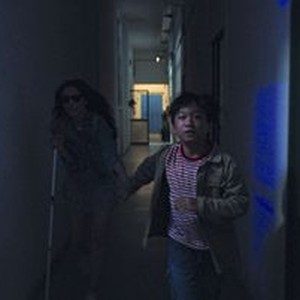
Miscast and weighed down with amateurish performances, laughably illogical and inept screenplay, a “mystery” only in its publicist’s delusions, this is the surest way to make your life 72 minutes shorter with nothing to show for it.

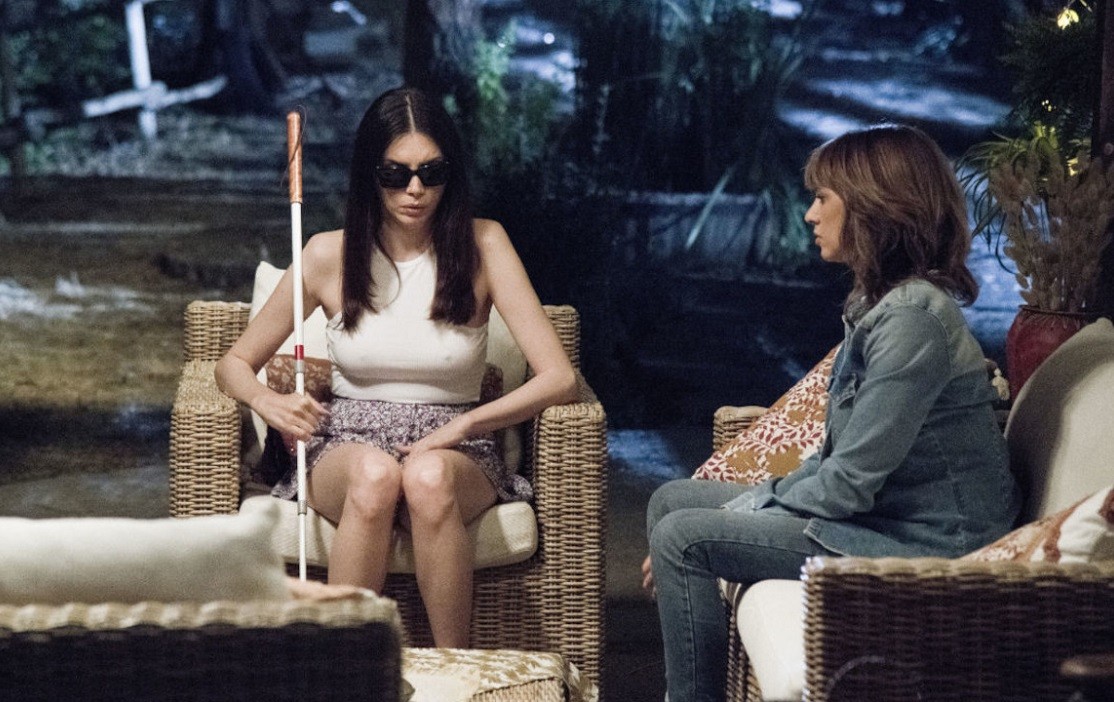
Freya Tingley and Dralla Aierken play two former friends, granddaughters of LA private eyes who died in a mysterious double tumble off the roof of the building they co-owned and which housed their agency. Two granddad detectives on a roof in the dark.

The script doesn’t find a clever way to interest the granddaughters, Army vet Nic (Tingley) and “office job” Ping Liu (Aierken), in “finding out the truth.” They just are. They had a falling out sometime ago, and they both team up on this “case” and compete every chance they get, as if they were the same tweens they used to be.

Real estate in “hurried foreclosure,” an inscrutable Guanyin statue, a “shadow emperor” running things in the old neighborhood, an “I’m sorry it had to end like this” here, a “Break it and I break you” threat there.

The leads have no chemistry, fail utterly to animate their lines in any way that doesn’t like like a “bot,” play dress-up once and are still slightly less embarrassing than some (not all) of the supporting cast.

This wasn’t worth releasing, but here it is.

MPA Rating: unrated, violence, profanity

Cast: Freya Tingley, Dralla Aierken, Stephen A. Chang, Jim Meskimen, Ping Wu and Paul Rae

Credits: Directed by Presley Paras, script by Chris Johnson. A Mutiny release.

Running time: 1:12

Posted in Reviews, previews, profiles and movie news | Comments Off on Movie Review: “Bad Detectives,” worse movie

Netflixable? Yakuza learns Never Go Against “A Family.”

Writer-director Michihito Fujii puts the “sag” back in “saga” with his soapy, melodramatic mob movie “A Family,” originally-titled “Yakuza and the Family.”

It has plenty of the sorts of characters and plot elements you expect when you hear a film described as a Yakuza movie. Lots of Japanese mobsters, laughing too loud, bellowing threats even louder — whole torso tattoos, knives and clubs and the occasional firearm wielded without pity, turf wars with bloody violence, “old men” being told “Your time is finished.”

These are tropes of mob movies, from Sicily to the Jersey Shore, Odessa to Little Odessa to Osaka.

But here, they’re mostly in the first act. “A Family” then takes a shot at showing the trap of “the life,” the price of this loyalty you give to someone, a boss, who may or may not be a blood relative. The picture has little momentum even as its forward motion takes us through the rise and fall of a young gangster, born into “the business” even if he wasn’t born into this particular family.

Gô Ayano is “Lil Ken,” Kenji Yamamoto, and we meet him after his father’s death. “Lil Ken” is his most flattering nickname. “Yamamoto’s brat” is another.

He’s a blond mop-topped motor-scooter punk when we meet him in 1999, a fashion statement in white jeans, shirt and North Face jacket. He’s got boys he runs around with, but the mob life isn’t for him, rejecting his father’s business, as it were.

An impulse robbery of a low-level drug dealer changes that. A moment of bravado, interrupting a hit on mob boss Shibasaki (veteran character actor Hirosihi Tachi, who was Admiral Yamamoto in “The Great War of Archimedes”), cements that change.

When the rival Kyoyo-tai clan takes out him and his boys for stealing their drugs, covering Lil Ken and his all-white ensemble in his own blood, a business card from Shibasaki is what saves his life.

“A Family” follows Lil Ken from his “drink from the family cup” initiation, into mob intrigues some years later and finally takes us to 2019, where he’s now an ex-con, trying to rejoin a society that won’t let yakuza have legit jobs, rent apartments or sign up for bank accounts.

There’s a woman, a “hostess girl” (Machiko Ono) from one of the gang’s clubs, and a relationship that starts with bullying and somehow softens into 20 Questions — “Why do yakuza wear sunglasses at night?”

And there’s a kid, warned as a toddler so that he won’t “turn out like us,” but who (Hayato Isomura) pops back into Lil Ken’s life like a 2019 version of himself (Tommy jacket instead of NorthFace).

The acting is quite good, with Ayano (of “The Promised Land” and the recent “Humunculous”) a charismatic lead. The mob brawls and chases early on are visceral enough to pull you in.

But Ono lets the air out of the balloon of even the action sequences entirely too quickly. The “family” material is less interesting, the “relationship” perfunctory and even acts of vengeance seem rushed so that we can get back to the boring stuff.

Which unfortunately eats up most of the 136 minute run time of “A Family.”

MPA Rating: TV-MA, graphic violence, sex, nudity, smoking

Cast: Gô Ayano, Hiroshi Tachi, Machiko Ono, Yukiya Kitamura and Kosuke Toyohara

Credits: Scripted and directed by Michihito Fujii. A Netflix release.

Running time: 2:16

Posted in Reviews, previews, profiles and movie news | Comments Off on Netflixable? Yakuza learns Never Go Against “A Family.”

Free popcorn at your local AMC Cinemas?

They’re calling it “Cinema Week.” AMC Theatres is Offering All You Can Eat Popcorn as it unfolds.

https://t.co/y9Dw3NvGHl https://twitter.com/Variety/status/1407112014384730112?s=20

Posted in Reviews, previews, profiles and movie news | Comments Off on Free popcorn at your local AMC Cinemas?

Movie Review — “F9: The Fast Saga”

Here it is, at long last, the looniest tune in this “car toon” saga.

More characters, more “Bugs Bunny physics,” more epic stunts, more spectacular nonsense, “F9” roars into theaters the perfect marriage of “fan service” and “character service.” Everybody gets a funny line, everybody gets a close-up or three.

They added another Oscar winner to the line-up, Dame Helen Mirren. They brought in more beefcake — John Cena.

And Universal’s ever-expanding “Fast and Furious” universe brings back most everybody who’s ever gotten behind the wheel in these loopy action extravaganzas, which makes for an insanely cluttered, ungainly movie with a lot of guys, more than a few gals, and a whole lot of cars.

There are supercars and hyper-cars, a few with badges most people will recognize (Toyota, Acura, for instance. Ever heard of an Apollo?). But the only wheels that matter are Dodge Chargers, a Pontiac Fiero and a lowly Chevy Nova .

Alas, There is Only One Jeep. OK, there’re two, but I just wanted to use the line.

Anything to avoid talking about the plot, which involves more supervillainy, a stolen gadget, a satellite, trips to Central America and Edinburgh, London to Tbilisi, car chases out of “Speed Racer” and action beats out of bad Bond films.

“Moonraker,” are you blushing?

There’s more back story on the importance of “family” to Dom Torreto (Vin Diesel) in an opening flashback where we see the day his dad died on the track.

“It’s not about being the stronger man, it’s about being the bigger one.”

Nobody’s bigger than Diesel, although Cena makes a fitting foe, throw-weight wise. A paler version of The Rock.

Dom’s always telling biker brawler Letty “Be careful.” Letty (Michelle Rodriguez, the emotional and acting “heart” of this franchise) always laughs that off.

“Careful’s when you get HURT!”

Tyrese Gibson‘s Roman states the obvious, that nobody on their team ever gets “so much as a scratch” in these movies. “We’re not NORMAL.”

He’s leaving out the fact that nobody — almost nobody — ever dies in the damned movies. Villains (Charlize Theron) never go away, dead characters (Sung Kang is back on the payroll, and back among the living as Han) rarely stay dead. And if there was a way they could bring Paul Walker back to life, they sure as shooting would.

Ludacris is back as tech-nerd Tej, bouncing jokes and ideas off of Roman.

Jordana Brewster returns, and Tokyo drifter Lucas Black, and on and on it goes. Which is literally the case in a movie with all these characters, all these closeups and little “real” action in the middle acts. Even fans who can’t get enough will be tested at this leaden-not-lead-footed running time.

Like the lesser Bond films, there’s little point in beating this up for having mediocre acting, a crap script but wonderful stunts and chases. “F9” is what it is.

I laughed at some of the lunacy, found myself checking my watch by the third act’s inevitable overkill. But if you can’t see the fun in Helen Mirren taking the wheel of a purple Noble supercar and one-handing it — backwards — through the darkened streets of Olde London Towne, this isn’t for you.

As they must have taught her at the New College of Speech and Drama in London, or in St. Bernard’s High School for Girls, “Drive it like you stole it,” sister.

MPA Rating: PG-13 for sequences of violence and action, and language

Cast: Vin Diesel, Michelle Rodriguez, John Cena, Charlize Theron, Tyrese Gibson, Ludacris, Jordana Brewster, Helen Mirren and Kurt Russell.

Credits: Directed by Justin Lin, script by Daniel Casey and Justin Lin. A Universal release.

Running time: 2:25

Posted in Reviews, previews, profiles and movie news | Comments Off on Movie Review — “F9: The Fast Saga”

Movie Review: Polish Exercise Influencer learns the perils of never letting them see you “Sweat”

Sylwia Zając, by any reasonable measure of this cliche, appears to “have it all.”

She is young, beautiful, blonde and famous. And thanks to her choice of career, she’s insanely fit.

That career — as an exercise guru and social influencer — means products are given to her to endorse, so she gets mountains of free stuff and is paid for using it. She is a Polish celebrity, largely self-made, a one-woman social media “brand” (“Sweat”) on the rise.

But there’s “a dark side” to this, Sylwia (Magdalena Kolesnik) hints in her more private moments, as if she has many of those. She’s practically living her live via vlog posts and selfies.

Her off-camera workouts, getting in shape to lead her smiling, affirmation-filled exercise classes in malls, on TV or wherever, are brutal. She may preach “Work with the body you have, not the one you want,” but the one she “has” she pushes until she’s in near-agony.

It’s a cutthroat business, where every TV morning show booking is fought over, every appearance fraught with brand-damaging dangers.

She’s lonely, has no one to really confide in. Even the mother (Aleksandra Konieczna) she spoils with pricey birthday gifts lets her down, lets her see that she doesn’t approve of her daughter’s “job” or sympathize with her problems.

And she could use a confidante, a mother to cry to. Because she’s just figured out she has a stalker.

Writer-director Magnus von Horn (“The Here After”) dances around the edges of melodrama in “Sweat’s” story of the downside of Internet fame. We get a sense of Sylwia’s isolation, with only her Jack Russell and her online “loves” for company. We see her vulnerability and maybe fear for her safety.

But von Horn isn’t inclined to follow that pervert-in-a-Volvo-wagon threat down a predictable path. He’s more interested in what all this is costing Sylwia, her self-aware acceptance that she could “shut down my Instagram” account (in Polish, with English subtitles) and “no one would really miss me.”

The perfectly made-up blue eyes, stunning exercise ensembles and pasted-on smile may prep her for “work,” which includes simple random encounters with fans. But it leaves her alone, unsocialized, with only B-movie ideas of how one deals with a stalker.

Kolesnik’s performance is perfectly superficial, but she gives us an idea that Sylwia understands the illusion any stalker, including hers, lives with. She knows she’s entirely too “perfect” to be real.

There’s not much more to “Sweat” than that, a perfectly-toned prime specimen of Western standards of beauty seeing that there’s not much more to this life than the superficial one she creates for her “followers,” whom she calls “My loves.”

Coming to a too-obvious conclusion aside, if there’s a better minimalist parable for “living on line,” I’m hard pressed to think of it.

MPA Rating: unrated, violence, sexual situations

Cast: Magdalena Kolesnik, Aleksandra Konieczna and Julian Swiezewski

Credits: Scripted and directed by Magnus von Horn. A MUBI release.

Running time: 1:47

Posted in Reviews, previews, profiles and movie news | Comments Off on Movie Review: Polish Exercise Influencer learns the perils of never letting them see you “Sweat”

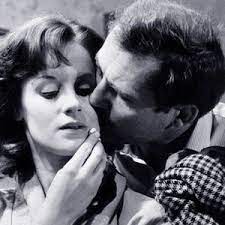
Classic Film Review: Glenda Jackson, Oliver Reed and early Michael Apted — “The Triple Echo” (1972)

Context is everything in taking in the oddest film in British director Michael Apted’s career, this early drama from the TV director (transitioning to film) who went on to director “Coal Miner’s Daughter,” a Bond film, movies in most every genre under the cinematic sun.

Apted, who died this past January, was already making his name through his landmark “Seven plus Seven” (later “28 Up,” “42 Up,” etc.) documentaries dissecting British lives, expectations, class foibles, etc. But here was a film, made for British television, that was part of this “discovering alternative sexualities” that were all the rage in the UK thanks to the plays of Joe Orton (“What the Butler Saw”) and others, and films like “Sunday Bloody Sunday;”

“The Triple Echo” even cast Glenda Jackson and Oliver Reed, two of the stars of Ken Russell’s notoriously homoerotic “Women in Love” (1969). The story told in “Echo” toyed with gender identity and toxic masculinity in a World War II setting, part of Britain’s post-war obsession with “their finest hour.”

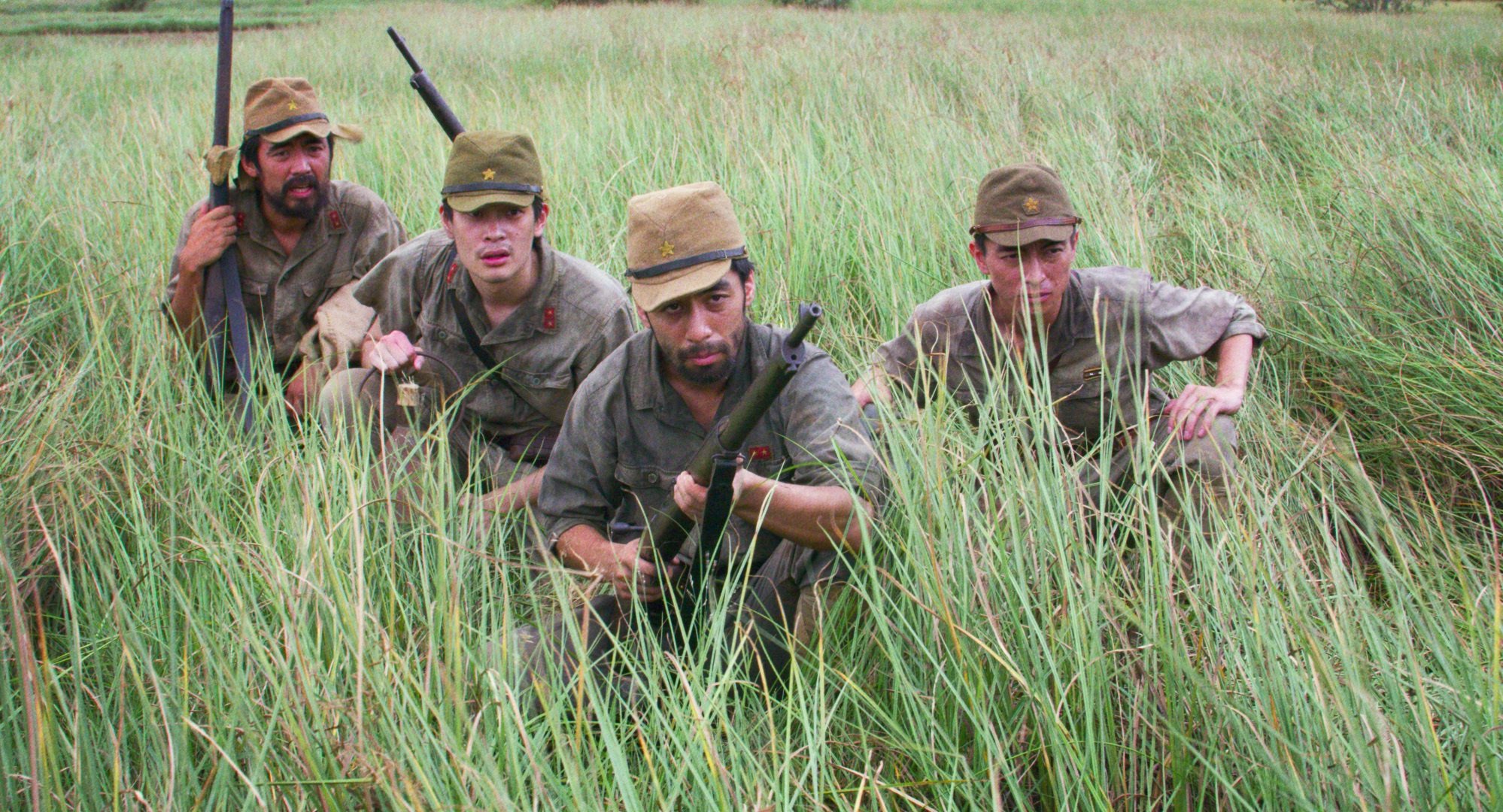
Before we get too impressed in “ahead of its time” and all that, though, it’s worth recognizing that it makes rather a hash of things. A tale of a married farm wife (Jackson) whose husband is a POW, captured by the Japanese in the Far East, who meets, befriends and takes as a lover a young recruit (Brian Deacon) whom she convinces to dress as her sister after he decides to go AWOL, it has comic elements that never play as funny, melodramatic touches that deliver eye-rolls and a tone that never matches the absurdity of its scenario.

God only knows how Brits took it at the time. Sure, “Monty Python’s Flying Circus” was reveling in comical cross-dressing. But this wasn’t “Dad’s Army,” after all. And it wasn’t exactly “The Crying Game” either.

Jackson, already an Oscar winner for “Women in Love,” on her way to winning another for “A Touch of Class” (1974), was the biggest female star in Britain, a sexy/smart/flinty presence which made her well-suited to Alice. A stiff-upper-lip, self-reliant farm wife keeping calm and carrying on even though her husband — probably captured at Hong Kong or Singapore — might never come home, she meets the rambling Barton as she’s shouldering a shotgun, hunting rabbits.

Barton is young, handsome, handy and not the sort that she’d perceive as a threat. A friendship of the “nice to have a man around the house” turns serious when they become lovers and he decides to abandon his Army training and desert. Out of the blue, she decides that he needs to grow his hair, wear her clothes and pass for her sister, just in case anybody drops by.

He puts up little resistance as he “reluctantly” agrees. What drives her insistence is something she sees in him, we can surmise. He may be able to fix her tractor, but he’s entirely too delicate for Army life. She can sense it.

Things take an even odder turn as a passing tank crew stop by, and its gruff and bullying Sgt. (Reed) takes an unwelcome interest in the “sister” he barely glimpses and the POW widow someone with scruples would have respected and left alone.

He drags a mate along as he proceeds to barge in — literally — uninvited and unwelcome. Alice tries to brush off these advances, and finds herself alone, forced to confront brute masculine force with “sister” in her room with a “sore throat.”

Every turn that comes along is a lot more predictable today than it would have been in 1972, but there’s a lot of “come on, now” about the entire plot.

Jackson displays nice pluck as Alice, the person who takes the lead in her illicit affair, unrattled at the danger these intruding soldiers represent to her, Barton and their little mid-war idyll. But at least she recognizes it.

Reed is perfectly loathsome, imposing his will, misreading every situation.

Apted, working from a Robin Chapman script, gets at the coarseness of a time romanticized by Britain’s Greatest Generation, the sexual mores of soldiers and the nuts-and-bolts of hiding someone in a time of food rationing in a village of busybodies with a soldier who could face the worst consequences if they’re found out.

“The Triple Echo” has an R-rated edge, but looks like what it is — a TV movie. The visuals are washed-out, with natural “documentary” lighting, inside and out. The performances have a perfunctory quality, although Reed sinks his teeth into his villainy the way only he could.

The “triple echo” of the title is literal — the sounds of a shotgun echoing through the hills — and symbolic. Hints of other lives, false lives and consequences live in it.

But as a lifelong fan of Apted, a cinematic generalist who excelled at documentaries, got Sissy Spacek her Oscar and did a passable Bond pic as well as “Thunderheart,” “Amazing Grace” and “Enigma,” and finished his career with “63 Up,” capping the finest human potential/human life documentary series ever, I have to say “The Triple Echo” doesn’t work.

The performances have a flatness we don’t associate with Jackson. There’s no “heat,” and the central situation never loses the air of “absurd.” Not that there weren’t men who put on dresses to escape service.

In the context of its time, I am sure it was daring. Not today. And its resolution was entirely too of-its-day, when anyone who strayed from the straight-and-narrow, sexually, seemed to welcome their on-screen doom as if it was their due.

Still, Apted managed to give us a strong sense of a place and a time and held his own (more or less) with top-flight actors. His curiosity about people and their “roles” in his society would find other outlets.

And he would go on to bigger and better things, and keep making his “Seven Up” films every seven years, exploring human lives predestined by class to play out within the narrow confines his culture laid out for them.

MPA Rating: R, sexual situations, violence, profanity

Cast: Glenda Jackson, Brian Deacon and Oliver Reed

Credits: Directed by Michael Apted, script by Robin Chapman, based on a short story by H.E. Bates. A Hemdale film on Roku.

Running time: 1:30

Posted in Reviews, previews, profiles and movie news | Comments Off on Classic Film Review: Glenda Jackson, Oliver Reed and early Michael Apted — “The Triple Echo” (1972)

Movie Review: Horror fan stuck among serial killers, all in “Vicious Fun”

It’s hard to think of a movie, short or feature-length, a TV show or a play that, setting out to ridicule the critic profession, hasn’t landed a few sucker punches and body blows.

Jon Lovitz, paunchy and animated for TV, always reviewing movies in T-shirts studios give out to advertise their movies, Bob Balaban’s owlish, self-serious impersonation of Stephen Faber in M. Night’s dog, “Lady in the Water” — on the money and I might add, “Ouch.”

If you want to see criticism at its most ridiculous, Tom Stoppard’s comic play “The Real Inspector Hound” delivers the death blows — smug, glib, not-so-secretly-imagining themselves in the “hero’s” role, crushing on the leading lady. That’s a bullseye.

Alas, the horror fanboy opining for a self-published horror ‘zine (it’s 1983) in “Vicious Fun” isn’t in their league. The most recognizable and amusing trait this guy (Evan Marsh) trots out is the certitude that he can lecture a Joe Dante look-alike about “what he’s doing wrong.” That, and his Incel status.

Joel is a classic “guy who needs a chloroform rag and panel van to get any action” type. “A touch, a touch, I do confess,” as the Bard put it. Again, “Ouch.”

Jealousy of his “friend zone” roommate’s (Alexa Rose Steele) latest date sends Joel on a stalk with Mr. Camaro and Members Only jacket (Ari Millen), then on a bender. Which is how he wakes up in a closed Chinese restaurant that’s playing host to a self-help support group. They confuse Joel for somebody else, so he ad libs his way in.

Turns out this group, led by Zachary, is supporting each other in their serial killing hobby. Sure, we knew that the moment we saw Zachary was played by edgy/obnoxious funnyman David Koechner, but “on the nose” casting can pay dividends.

Joel trots out his dream serial killer profile, “a taxi driver,” which the group of “types” (Amber Goldfarb,  Sean Baek, Robert Maillet, Julian Richings) buys into.

Until, that is, “Bob” (Millen) shows up and does what any half-sentient horror screenwriter might do with the whole “perfect serial killer” idea — shreds it.

Joel is trapped in a room of seriously accomplished serial killers. Is he smart enough to reason, fight or scheme his way out?

Remember. He’s a “critic.” Rim. Shot.

The killers’ various MO’s — this one kills on “the third date,” that one hunts for remote cabins or summer camps “filled with sorority girls,” and those are the least icky — are amusingly on-genre. Millen and Goldfarb are the standouts in the cast, like Koechner, just the right amount of “over-the-top” to work as characters who are equal parts frightening and camp.

The assorted deaths in this long, dark night of a horror fan’s soul are well-handled, with some of the fights suspenseful enough to work. Director Cody Calahan (“The Oak Room,” “Let Her Out”) has some fun with the gore.

But actual laughs? Not really. A few smirks is all the “Fun” “Vicious” manages.

Our lead strikes the right tone, but seems to lack the spark required of a comic straight man. And his function, as a surrogate for the horror fan in a wish-fulfillment fantasy, is somewhat muddled.

So what we have here is a tolerably efficient horror title — not scary, not that suspenseful, just gory — that fails to deliver on the promise that casting that rascal Koechner makes. Not bad, but not exactly good, either.

MPA Rating: unrated, graphic violence

Cast:  Evan Marsh, Amber Goldfarb, Ari Millen, Sean Baek, Robert Maillet, Julian Richings and David Koechner.

Credits: Directed by Cody Calahan, script by James Villeneuve. A Shudder release.

Running time: 1:41

Posted in Reviews, previews, profiles and movie news | Comments Off on Movie Review: Horror fan stuck among serial killers, all in “Vicious Fun”

Netflixable? “Silver Skates” is a lovely bore set in Tsarist Russia

Let’s coin a new phrase, one any movie lover will instantly “get” thanks to the state of cinema in the Netflix/Amazon/Hulu/Disney+ era.

What’s a movie we’d describe as “streaming length?” It’s one that could stand editing, but run on and on because there’s no studio exec saying “You’re overdoing it,” no cinema chain enforcing efforts to maximize the number of showings a day, because moviegoers aren’t avoiding or getting up and leaving tedious, under-edited, over-indulged “director’s cut” films before the credits roll.

“Silver Skates” is a lush Tsarist melodrama with Dickensian touches and a PBS Dickensian running time. It staggers along, drunk on costumes, sets and vodka, a 90 minute formulaic historical romance skating and stumbling through St. Petersburg snow in a 137 minute gift wrap.

It’s “The Nutcracker” without sugar plum fairies, “Doctor Zhivago” on skates, “Reds” without genuine Reds, a perfectly passable but utterly plodding period piece romance.

The forbidden love crosses classes, here, a young delivery skater (Fedor Fedotov), forced to join a gang of artful skating dodgers (pickpockets) falls for a proto-feminist daughter of the aristocracy (Sonya Priss).

Matvey (Fedotov) needs cash to send his tubercular lamplighter father to Baden Baden for the cure. Thus, he takes up with “rob from the aristocracy and bourgeoisie” pickpocket gang led by Alex (Yuriy Borisov).

“THEY’RE the ones we punish!” (in Russian, with subtitles, or dubbed into English).

Alisa (Priss) is a “modern” woman, waiting for the new century (the 20th) to begin, hoping to get her ultra-conservative aristocratic father (Aleksey Gubskov) to allow her to go to college and study science. Not bloody likely.

“The rot set in when we stopped flogging our kids!”

And there’s also this social climber/Army officer (Kirill Zaytsev) who has eyes for Alisa and an idea for how to combat skating pickpockets — skating soldiers with truncheons.

It’s a very Russian film, soft-selling its proto-communism, its feminism and its decadence.

“Oh? Is patriotism back in fashion?”

“This century will be even better than the last! Hurrah!”

I can imagine fighting the urge to check my cell phone for the time, messages, tweets and Words with Friends as this tedious tale unfolded in a theater. Very rude, so fight the urge I would.

But streaming? You walk away, take a beer, bathroom or borscht break, come back to it and nah, you haven’t missed much. Not when you know where it’s going.

MPA Rating: TV-MA, violence

Cast: Fedor Fedotov, Sonya Priss, Yuriy Borisov, Kirill Zaytsev, Aleksey Guskov, Cathy Belton

Credits: Directed by  Mikhail Lokshin, script by Roman Kantor. A Netflix release.

Running time: 2:17

Posted in Reviews, previews, profiles and movie news | 2 Comments

Classic Film Review: A WWII escape via “The Passage”

Nothing in all your or my years of watching movies prepared me for the utter glee Malcolm McDowell expresses the moment of his “big reveal” in the 1979 WWII action pic, “The Passage.”

As an SS sadist chasing a runaway scientist and his family, he’s as tickled showing off his swastika-bedecked jock strap as we are at seeing it.

Sure, he was playing the latest variation of his Madman Malcolm roles of the ’70s, which started with “A Clockwork Orange.” But he was also having a laugh. He knew, they all had to know, that by the time this one rolled around, director J. Lee Thompson was a long way from “The Guns of Navarone” and a lot closer to bad “Planet of the Apes” sequels, Charles Bronson slaughterfests and garbage like “The Greek Tycoon” and “White Buffalo.”

“The Passage” also stars Oscar winners Anthony Quinn and Patricia Neal, three time Oscar nominee James Mason, horror legend and Mr. “Should Have Been Given an Honorary Oscar” Christopher Lee, and as a Nazi bit player with no lines — future Oscar winner Jim Broadbent.

And if you’ve never heard of it, you’re not alone. It’s a loopy, long-in-the-tooth formula film about smuggling that outspoken scientist (Mason), his wife (Neal) and two adult children (Kay Lenz of “The Great Scout & Cathouse Thursday,” and Paul Clemens) from Occupied France into “neutral” fascist Spain.

McDowell tackles his part with the sort of “give’em their money’s worth” villainy that would become a trademark in later films such as “Blue Thunder.” But everybody else is earnest, if a bit old to be engaged in the bravado we see on display here.

Quinn was in his mid-60s, playing “The Basque” shepherd who apparently established his heroic bonafides during the Spanish Civil War just a couple of years before. He keeps his sheep and his dogs in the same one-room farmhouse, high in the snowy Pyrenees in the north of Spain, and it takes a lot of money for a French Resistance organizer (Bond villain, “Ronin” rescuer and “Jackal” hunter Michael Lonsdale) to get him to leave it.

The Basque takes on the job, gripes about the unwieldy, unathletic and feeble family (a post-stroke Neal was a high-mileage 53 when this came out) he must hike up and over the mountains, and does that derring do that Anthony Quinn had been doing since the 1930s to save them.

“They will all die,” he complains, time and again.

“One hears the most terrible things about the Basques,” the daughter wonders.

“They’re all true,” he grouses.

The Basque must outwit and ambush Gestapo thugs, Wehrmacht regulars and that nasty SS goon on their trail. A train will blow up, a partnership with The Gypsy (Lee) will prove fraught and people will be captured, tortured and murdered — sacrifices will be made, willingly and unwillingly.

And McDowell? He’ll do a lot of that murdering, and raping and torturing. A kitchen cooking lesson is carried out in which he wears his Iron Cross on his chef’s apron.

“You French have NO interest in other people’s cooking!”

It’s a bad bordering on terrible movie, but the action is handled well enough, the French village and Pyrenees locations are stunning. Quinn always gave good value even as he walked the fine line between Larger than Life and Mexican jamon. Mason soldiers through it and Neal has a couple of decent moments.

McDowell? He wears the leather, black hat and the cigarette holder as if he’s sure he’ll start a new fashion trend, at least in camp cinema circles.

MPA Rating: R, violence, sexual assault, nudity

Cast: Anthony Quinn, Malcolm McDowell, James Mason, Patricia Neal, Michael Lonsdale, Christopher Lee and Jim Broadbent.

Credits: Directed by J. Lee Thompson, script by  Bruce Nicolaysen, based on his novel. An MGM release.

Running time: 1:38

Posted in Reviews, previews, profiles and movie news | Comments Off on Classic Film Review: A WWII escape via “The Passage”

Movie Review: Canadian teen wants to keep her secret, and the baby she sees as “Les Notres (Our Own)”

A reminder to parents who might consider checking out the suspenseful Canadian drama “Les Notres” in a cinema. It’s rude to throw things at the screen, and not great manners to shout at it. But variations of “Oh COME on!” are a perfectly understandable response to the outrage depicted in Jeanne Leblanc’s film.

A girl (Emilie Bierre) who lost her father in a tragic accident years before is pregnant. Her harried and often furious widowed-mother (Marianne Farley) is pleading and demanding answers. Magalie snaps at her to “calm down” (in French with English subtitles).

“You don’t get to TELL me to ‘calm down,’” mother Isabelle barks. But that’s where she leaves it. “I don’t want to talk about it” and “I don’t KNOW” who the father is and “Leave me ALONE” and Magalie stomps off to check in on her social media and swap messages with the babydaddy.

Isabelle just…takes it. And Mags? She is thirteen years old.

Not sure how they do things in Quebec, but here in America we take AWAY cell phones over such offenses. Well, we, we ASK for them to be handed over, at least.

“Les Notres” explores the circle of suspicion, the small town of Saint Adeline’s feeble attempts at social shaming and lets us see, as babydaddy puts it, “The situation is a little complicated, you know?”

There’s a social worker wanting to know “Did someone hurt you?” Isabelle is outraged at the question. The Central American teen the next door neighbors adopted seems sweet on Mags. That puts Isabelle’s close friendship with the ever-supportive Chantal (Judith Baribeau, who co-wrote the script).

As we’re figure out who did what and how it happened, we can’t help but lean into “Les Notres,” waiting for the mushroom cloud explosion whose shock waves could ripple from house to house, class to class, if and when this ugly secret gets out.

Leblanc wisely focuses on the three women at the heart of the story, and builds suspense in as to which one will give away the game or which one will figure out the mystery, and how.

A good thriller will make you impatient for that resolution, and Leblanc, a veteran second-unit director (“On the Road,” “X-Men Apocalypse”) making her second feature (“Isla Blanca” was the first) keeps us impatient.

Hell, she all but invites us to hurl popcorn and deprecations at the screen. We’re seeing some pretty lax, bend-over-backwards parenting here. And no, the fact Mags’ daddy died doesn’t explain why mom doesn’t rein this wayward barely-a-teen in. At all.

Chantal’s kid-gloves handling of her adoptive son (Léon Diconca Pelletier) is similarly maddening. The fact that he’s the target of taunting and racist abuse at school over this just compounds his misery and makes his mother’s passivity that much more vexing.

But the kids, Bierre and Pelletier, make this scenario come off. Bierre is the very picture of the hard-to-handle, sullen teen — still every bit the child, stuck in a situation that she is entirely too young to have much of any responsibility for. The power imbalance is alarming, and suggestions she’s just now learning about “consequences,” as one of the mothers offers, can seem laughable. She’s lost, but she’s done some of the math, too. Lives will be disrupted far and wide if she does any version of “the right thing.”

It’s not a script that stands up to a lot of scrutiny. What, nobody thinks to serve up a prenatal DNA test?

Give Leblanc credit, though. Any time you make a movie with well-played characters who compel the audience to want to shout at the screen, you’ve accomplished something.

MPA Rating: unrated, explicit sex, sexual situations involving an underage girl

Cast: Emilie Bierre, Marianne Farley, Judith Baribeau 

Credits: Directed by Jeanne Leblanc, script by Judith Baribeau, Jeanne Leblanc. An Oscilloscope Labs release.

Running time: 1:43

Posted in Reviews, previews, profiles and movie news | Comments Off on Movie Review: Canadian teen wants to keep her secret, and the baby she sees as “Les Notres (Our Own)”