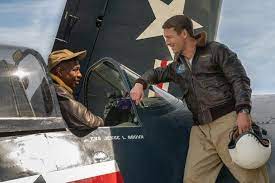
Movie Review: Navy Fliers test limits of “Devotion” over Korea

The first thing that pops out of “Devotion,” the new Korean War Naval aviators action biopic, is how far digitall- animated aircraft and aerial combat have come since the first films to lean heavily on that technology — “Flyboys” and “Red Tails.”

This is another big step beyond “Midway,” as in-flight/in-cockpit real plane/digital plane footage is seamlessly integrated to create moments that are impressively realistic. I’d say the digital Jeeps in the film are more obviously animated than the F8F Bearcats and F4U Corsairs depicted here.

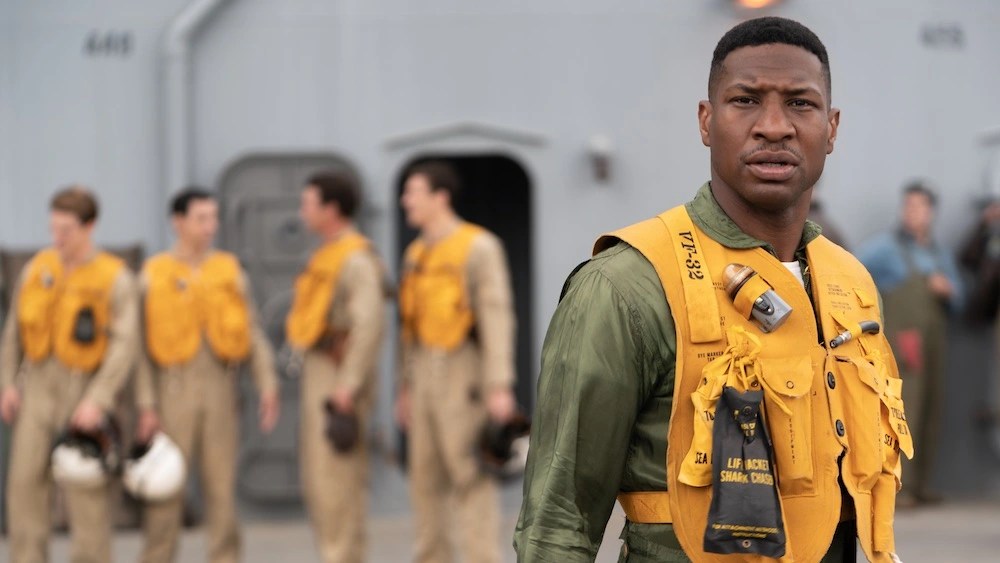
Director J.D. Dillard’s film, “inspired by” the “true story” of Jesse L. Brown, a color-barrier-breaking pilot for the U.S. Navy, may be a straight up B-movie, from its lesser known cast to story beats that flirt with war movie tropes and over-the-top hokum. But it sure looks like an A-picture.

Jonathan Majors of “Lovecraft Country” and “Da Five Bloods” plays Brown, whom we meet when a new Annapolis grad, Lt. Tom Hudner (Glen Powell of “Top Gun: Maverick” and “Hidden Figures”), checks in to their Rhode Island Naval Air station in 1950.

Ensign Brown is the lone African American pilot with the squadron, a man who makes it a point to be the last out of the locker room before training missions. He stares into the bathroom mirror and repeats racial slurs and insults to his skills, intelligence and lineage, just to get his game face on.

Hudner is assigned as his wingman, and seems at ease with supporting role, despite Brown’s standoffishness and a hint of “colored pilot” prejudice from their fellow pilots.

In the movie’s version of this first Black Naval combat aviator story, one has to go the Marines to find the bigger bigots.

The Ensign tests his new wingman, and declines to get friendly. At first. It takes a while in such movies for the touchy Black man to trust the entitled white one, and a little longer before Hudner meets Brown’s wife (Christina Jackson) and little girl.

There’s an earnestness of intent here that kind-of/sort-of wins you over. When your picture’s as pokey as this one, wearing you down is a part of the bargain. You’ve got the time.

Cold War headlines give us a taste of the tensions of the day — Soviet acquisition of the atomic bomb, communist aggression, reconnaissance plane shoot-down — with our Navy pilots moving up to the much heavier “big nosed” FU4 fighter-bomber, learning to land them on their assigned carrier, the U.S.S. Leyte before deploying overseas.

The film takes us through 1950’s run up to The Korean War, sampling the rules of engagement and the fraught early missions, into the winter of the Chosin Reservoir battle.

But before that, there are more bonding experiences — shore leave at Cannes, invited to the casino by then-eighteen-year-old Elizabeth Taylor (Serinda Swan), no less, and a bar fight.

Through it all Hudner learns bits and pieces of what a struggle Brown has endured, how it has scarred him so that he can’t be sure he can even trust the landing signal officer on a carrier, fearing a racist waving those flags might direct him into a crash that will kill him.

Hudner is sure accidents happen due to carelessness. “Do what you’re told and you won’t get killed.” Brown opens his eyes to the realities of segregated America and its barely-integrated military.

“You can’t always do what you’re told.”

The screenplay doesn’t go much beneath the surface of either character, which in Brown’s case seriously limits the scope and emotional depth of the film. The odd touching moment seems to land almost in spite of itself, with Majors’ performance veering between his loner “squadron of one” hostility and mistrust, and quick tears at the different expectations and rules he has live by.

Powell’s getting labeled “handsome” in too many films for his own good. We still haven’t seen what he can do when bigger demands are put on him.

Including how the African American sailors on board the Leyte root for and revere Brown like he’s “Jackie Robinson about to steal home” is probably accurate, but handled in the same chilly way as other big emotional payoffs here are.

Once you’ve decided to include scenes with the potential to be maudlin, stopping well short of a big, obvious tug at the heartstrings is something you do at your own peril.

The script so flattens out the trials of Brown and the “Devotion” of these two for one another that we find ourselves thinking, “Well, I guess we have to take their word for it.” But whatever the closing credits tell us, that’s the missing heart of this promising B-movie, a tipping point it never quite crosses.

Rating: PG-13 for strong language, some war action/violence, and smoking.

Cast: Jonathan Majors, Glen Powell, Christina Jackson, Thomas Sadoski, Serinda Swan and Joseph Cross

Credits: Directed by J.D. Dillard, scripted by Jake Krane and Jonathan Stewart, based on a book by Adam Makos. A Sony/Columbia release.

Running time: 2:18

Posted in Reviews, previews, profiles and movie news | Comments Off on Movie Review: Navy Fliers test limits of “Devotion” over Korea

Netflixable? Swedish skiers look for second chances at love “Off Track (Ur spår)”

You take the cute with the not-nearly-so-cute in the Swedish rom-com “Off Track,” titled “Ur spår” in ABBAland.

It’s about a coupling or two, and people destined to bump into each other at the annual cross country Swedish ski race, “The Vasa,” or “Vasaloppet,” And one way you can tell this film was meant for domestic consumption is the lack of explanation of that race, its place in Swedish history and lore and connection to Gustav Vasa, the king regarded as The Founder of Modern Sweden.

Let me just say, Swedes, that no American film would use say, the Iditarod as a backdrop and not explain the race’s historic origins. And when your movie’s as pokey and slow as this one, there’s no sense arguing “We didn’t have time.”

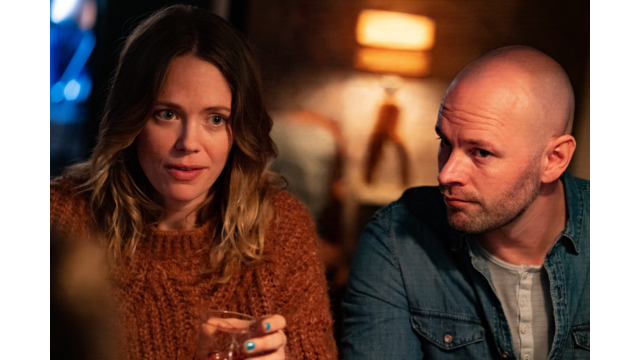
Lisa (Katia Winter) is a newly-divorced drunk whom we meet in the early stages of a bender at a bar known for being the pick-up spot for divorcees. Actually, she’s so clumsy and tipsy that she’s shown up at the bar next door to the bar sure to get her “laid laid LAID.”

She will be hit on by younger men, whom she insults, and get so blasted she gets tossed (and injured) by a bouncer, only to wind up in the drunk tank. A very tolerant cop (Ulf Stenberg) takes her home the next day because she’s supposed to pick up her kid (Kelly Flogell) for shared custody time.

In just that one scene, we see her irresponsibility, her cavalier entitlement (treating a cop like a chauffeur) and lax child-rearing.

It’s no wonder that child welfare is on her case in a flash. An unasked and unanswered question might be “Who ratted her out?” The ex (Peter Perski) or the cop? That matters because the policeman figures further in our story.

A laundry accident wrecks her apartment, which is how she ends up staying with her personal trainer/skier brother Daniel (Fredrik Hallgren). He and his wife (Rakel Wärmländer) are secretly making every effort to have a baby. But he’s also training for another run in the Vasa, so that’s adding to their stress.

With child welfare breathing down her neck, no visible means of support, “depressed” and about to lose custody, Lisa decides her way out of rock bottom is the ski the race, too. And sobering up.

Meanwhile, policeman Anders (Stenberg) has learned from his jerk brother that he’s been drafted to be the one who will accompany their competitive but older and just-had-a-heart-attack mother (Chaterarina Larsson) in her attempt to achieve “legend” status by racing the Vasa one more time.

The race is, of course, the climax of the movie. But it’s woven into the film in a way that implies everybody does it, “like a cult” as Lisa says. Her brother, his wife, even her social worker are skiing it.

Lisa? She’s the only Swede who doesn’t know how to “snowplow” to a stop.

Maria Karlsson’s script tries to slow-juggle a lot of balls in the air for this comedy — fertility clinic visits and arguments over hormone shots and sperm delivery, an alcoholic trying to sober up, a cop bullied into things by his older sibling, a neglected child not all that happy staying with dad, and so on.

There’s little pace to it all, but there are flashes of wit that show us what director Mårten Klingberg could have gotten out of this with clever editing and maybe streamlining the script before shooting.

Fortyish Daniel is so into the ski training that he hires a cabbie (Leif Andrée) who delivers his sperm sample — yes, we see Daniel uh “create” that sample — insisting the guy keep it “warm” by stuffing the bottle down his pants as he drives kilometers and kilometers to the clinic where wife Klara angrily waits.

Lisa meets Anders at the race site, and neither can figure out how they met.

Anders’ aged mother won’t wait for him to catch up, “used the wrong wax” she hisses when asked where the slowpoke is.

And at the pre-race warmup for the mob of skiers awaiting their 90 kilometer test, their limbering up calisthenics are choreographed to the PA system blasting “Hooked on a Feeling.” Remember the “ooogah chugga” band that recorded that? Blue Swede.

That’s…adorable.

Maybe this film played as quick and warm and fun in Sweden. But for me it just lumbered and stumbled along. Perhaps Klingberg, seen on skis in the closing credits, used the wrong wax?

Rating: TV-14, adult sexual conversations

Cast: Katia Winter, Fredrik Hallgren, Rakel Wärmländer, Ulf Stenberg, Chatarina Larsson, Peter Perski, Kelly Flogell and Leif Andrée

Credits: Directed by Mårten Klingberg, scripted by Maria Karlsson. A Netflix release.

Running time: 1:48

Posted in Reviews, previews, profiles and movie news | Comments Off on Netflixable? Swedish skiers look for second chances at love “Off Track (Ur spår)”

Classic Film Review: There is but one Thanksgiving Movie — “Pieces of April” (2003)

Twenty years after its release, it’s about time to acknowledge what has been obvious since the day it came out. Once upon a time, Peter Hedges, Katie Holmes, Patricia Clarkson, Derek Luke, Oliver Platt, Isaiah Whitlock Jr. and Sean Hayes made the best damned Thanksgiving movie ever.

“Pieces of April” is a little movie — a tiny one, really. It’s about a Thanksgiving dinner, the prodigal daughter who isn’t very enthusiastic about cooking it, and the family that’s even less fired-up about traveling to visit her and eat it. But this slowly unfolding domestic disaster, set in New York’s Greenwich Village, is funny and bittersweet and as emotionally satisfying as any holiday movie. The writer of “What’s Eating Gilbert Grape?” makes his writer-director debut a charmer of mild surprises, heartfelt laughs and genuine humanity.

Katie Holmes stars as April, the problem child who left home to start anew as a struggling actress in New York city. “I’m the first pancake,” she says — the first pancake, the one you throw out.

That’s what her mother did with her. April’s mom, given a vivid, irked and lived-in feel by the peerless Patricia Clarkson (“Far From Heaven,” “She Said,” “The Station Agent”), no longer speaks to her daughter. Her Dad (Oliver Platt) is hoping for the best from one and all, and for one and all.

But he’s always burdened by the weight they all carry, the significance attached to this sad but hopeful meal. And he’s the one April should be more concerned with impressing. He’s still willing to give his screw-up daughter one more chance.

“God-dammit, April.”

April’s meal preps go awry. Her oven dies and she must introduce herself to one strange neighbor after another to find another stove she can use for the turkey.

She meets the cliched cross-section of New York life — the understanding and culinarily savvy black couple (Lillias White and Isiah Whitlock Jr.), the prissy snob with the state-of-the-art stove (Sean Hayes), recent Chinese immigrants, a belligerent vegan.

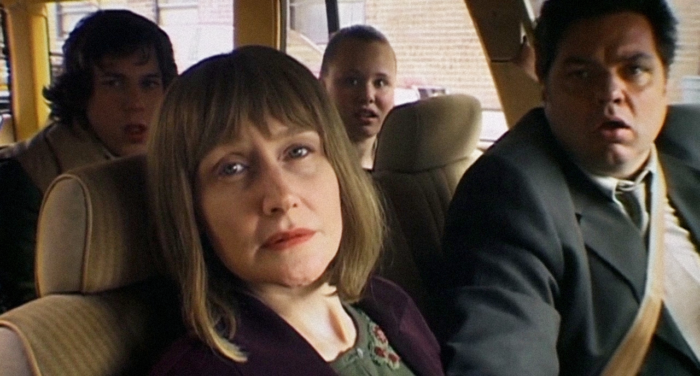
And all her family’s functioning dysfunction — Alison Pill plays the snotty, eager-to-impress April-bashing little sister, John Gallagher Jr. is her more forgiving brother, whom Mom relies on to roll her medical marijuana joins, and Alice Drummond is the mildly-demented grandmother dragged along — stuffed into a station wagon, rattling its way toward the confrontation to come.

Mom’s hostility blasts through at every turn. She’ ‘s sarcastic about the ways they’ll have to hide their revulsion at April’s cooking. And she insists they all gorge on Krispy Kremes, a comment on what she thinks of her oldest daughter’s domestic skills. “

“We’re going to have a very nice time,” April’s embattled dad keeps telling her mother and her siblings. As played by Platt, not even Dad seems to believe that. But he’s determined to make the effort.

And April’s beau, played by Derek Luke, seems more worried about the meal and making an impression on her parents by decorating the apartment than she is.

“They don’t deserve decorations,” she snaps. “You don’t really believe that,” he fires back.

The men in Peter Hedges’ scripts are often the peace-makers. Think of “Gilbert Grape,” “Dan in Real Life” or Hedges’ adaptation of “About a Boy.” Here, April’s ill-tempered struggles and mom’s mood swings play out like an impending Western showdown, “High Noon” with canned cranberry sauce.

“Pieces of April” — which takes its title from a song Three Dog Night made famous — has all these cliched holiday situations — a disastrous meal in the making, cranky relatives, damaged characters, old wounds and grievances, assorted stock type neighbors. And yet somehow Hedges makes it work. The cliches are turned on their ear. We buy into the tale and allow ourselves to be surprised when things don’t play out the standard Hollywood way.

Thank the actors for that. Holmes is a revelation, firmly establishing a surly yet likable and complex big-screen presence after too many years on “Dawson’s Creek.” Clarkson makes her mother compelling, hateful, understandable and even lovable. And Platt’s turn as a long-suffering spouse with the weight of the family on his shoulders is nearly pitch-perfect.

“Pieces of April” won’t change the world or conquer the box office. But its story of grudging reconciliation will touch you, maybe even break your heart, if you let it. It seems better with every viewing, and grows in stature as Thanksgivings pass by, decade after decade.

And with the holidays coming, a little well-placed sentiment seems just what the movie doctor ordered every year at this time.

Rating: PG-13, profanity

Cast: Katie Holmes, Patricia Clarkson, Derek Luke, Lillias White, Isaiah Whitlock Jr., Sean Hayes and Oliver Platt.

Credits: Scripted and directed by Peter Hedges. An IFC release on Tubi, Amazon, et al.

Running time: 1:20

Posted in Reviews, previews, profiles and movie news | Comments Off on Classic Film Review: There is but one Thanksgiving Movie — “Pieces of April” (2003)

Documentary Review — “Salvatore: Shoemaker of Dreams”

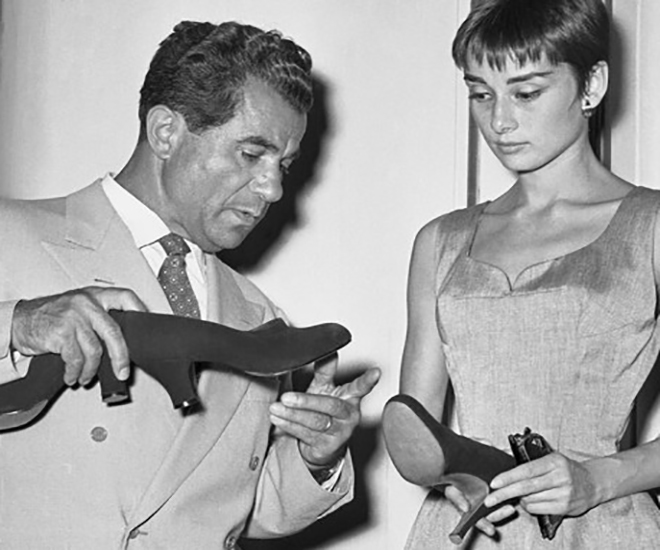
An iconic haute couture footwear brand’s origin story is told in sometimes inspiring strokes in “Salvatore: Shoemaker of Dreams,” Luca Guadagnino’s story of the life and work of Salvatore Ferragamo.

Fashionistas, fashion historians, film historians, modern shoe icon Manolo Blahnik, Ferragamo and family members tell his tale, sing his praises and marvel at his many innovations, which revolutionized shoe design and construction and covered the feet of movie stars on and off sets from the silent era onward.

Ferragamo himself is heard in an interview that amounted to an oral history, relating his Southern Italian childhood poverty and early fascination with feet, that first pair of shoes he made for his little sister and the apprenticeship from age 9, into setting up his first business in tiny Bonita, east of Naples, before he reached his teens.

The soothing, almost comically-whispered narration by Michael Stuhlbarg fills in around the edges as he reads Ferragamo’s words, and almost hint at places this film might take us.

“I looooove feet! They talk to me” takes on an almost kinky, popophilia tease that the film never shakes nor explores.

But film buffs will perk up at Ferragamo’s American years, when a small-time Neapolitan shoemaker gambled it all and came to America to start over — at 17 — working briefly with a brother at a Boston shoe factory (“I was not interested in mass production.”) and quickly convinced his siblings to move to the west coast with him in 1915.

No, he didn’t go to Hollywood or even Hollywoodland. Los Angeles’ status as film capital was not yet established. Scenic and more tony Santa Barbara was where he opened shoe repair and custom-made shoe shop that was quickly embraced by the thriving local film community.

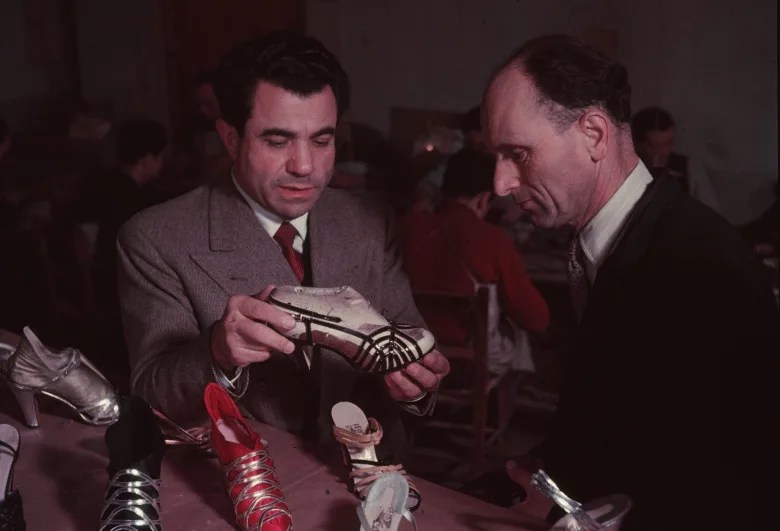
Making stylish, fashionable and above-all-else comfortable shoes for film productions had stars from Lillian Gish, Pola Negri and Douglas Fairbanks to every Pickford in film demanding and wearing his footwear. Cecil B. DeMille insisted on Ferragamo shoes for all his movies, Biblical spectacles included, and never walked onto a set unless he was wearing Ferragamo boots.

Italian-American filmmaker and Ferragamo shoe fan Martin Scorsese and others weigh in on this right-place/right-time part of the shoemaker’s history, the association that made him and the future Ferragamo brand.

When all of filmdom migrated to Hollywood, Ferragamo went with them, after first taking anatomy classes at UCLA to complete his understanding of the musculature and bones of the foot, allowing him to master the ability to design shoes both pedestrian and exotic that would fit, function and be comfortable to wear while dazzling any set of eyes that deigned to look down at the wearer’s feet.

By the mid-1920s, Ferragamo was famous — the subject of newspaper and magazine profiles — and flush with cash. There was nothing for it but to expand, and the only place to do that was where artisanal shoemaking still flourished.

It’s here that “Shoemaker of Dreams” stumbles in the telling of the tale. Clocking in at a generous two hours when it made the film festival rounds, trimmed to 1:50 for theatrical release, the film’s most glaring omission has to be obvious to all but the most fashion-obsessed viewer.

Ferragamo returned to Florence in fascist Italy in 1927. He struggled to set up his “Made in Italy” worldwide brand there, and even went bankrupt in the process in 1933. But he didn’t stay bankrupt, and skimming over his years living well under an authoritarian dictatorship, dismissing World War II with a blithe “It was not the happiest of times in Italy” may be the most grating euphemistic treatment of a war since Southern Americans took to calling the Civil War “the late unpleasantness.”

Yes, he continued “innovating” when leather and raw material shortages set in under a totalitarian dictatorship and its blundering wars of aggression. Glibly skipping over who the shoemaker catered to under nearly 20 years under this regime and its nattily-attired leader, its labor implications and the like in a nearly two hour film about a man who only lived from 1898 to 1960 is damned near unforgivable, even if he, the filmmaker and this film’s audience is only interested in “the shoes.”

But the shoes were his glory, and the ooing and cooing over this breakthrough, that elegant “Thief of Bagdad” slipper and the like gives us an interesting if seriously superficial grasp of the man who made fashionable footwear famous.

Rating:  PG for smoking and a suggestive reference

Cast: Salvatore Ferragamo, Manolo Blahnik, Grace Coddington, Suzy Menkes, Deborah Nadoolman and Martin Scorsese, narrated by Michael Stuhlbarg.

Credits: Directed by Luca Guadagnino, interviews conducted and scripted by Giuppy D’Aura and Dana Thomas. A Sony Pictures Classics release.

Running time: 1:50

Posted in Reviews, previews, profiles and movie news | Comments Off on Documentary Review — “Salvatore: Shoemaker of Dreams”

Movie Preview: Willem Dafoe is an Art Thief trapped “Inside” a mark’s mansion

This looks good.

Focus can be one of those “Witness Protection Program” distributors, movies you can never find largely because of anemic promotion budgets and efforts, but I’d love to see Dafoe in this guise.

Posted in Reviews, previews, profiles and movie news | Comments Off on Movie Preview: Willem Dafoe is an Art Thief trapped “Inside” a mark’s mansion

Movie Review: A Spielbergian Childhood, aka “The Fabelmans”

.

As he approaches his 76th birthday in December, Steven Spielberg can safely be assumed to be in the “memoirs” stage of his life and celebrated career. But as a filmmaker always more comfortable with the language of cinema, it’d be a shame if he tried simply telling that story on the page.

And no mere chronology of “how I came to be” would do, either. With “The Fabelmans,” he goes for a lightly fictionalized “fable” version of the upbringing that shaped and made him, the influences, encouragements and life events that drove him to succeed.

It’s a magical movie memoir of the making of a movie-maker, with Spielbergian sparks of delight and inspiration, and heaping helpings of Spielberg sentiment. Through it, we come to understand the man who gave us so many broken or breaking families, so many plucky on-my-own kids, so many sad heart-tugging moments undercut with wit, warmth and humor.

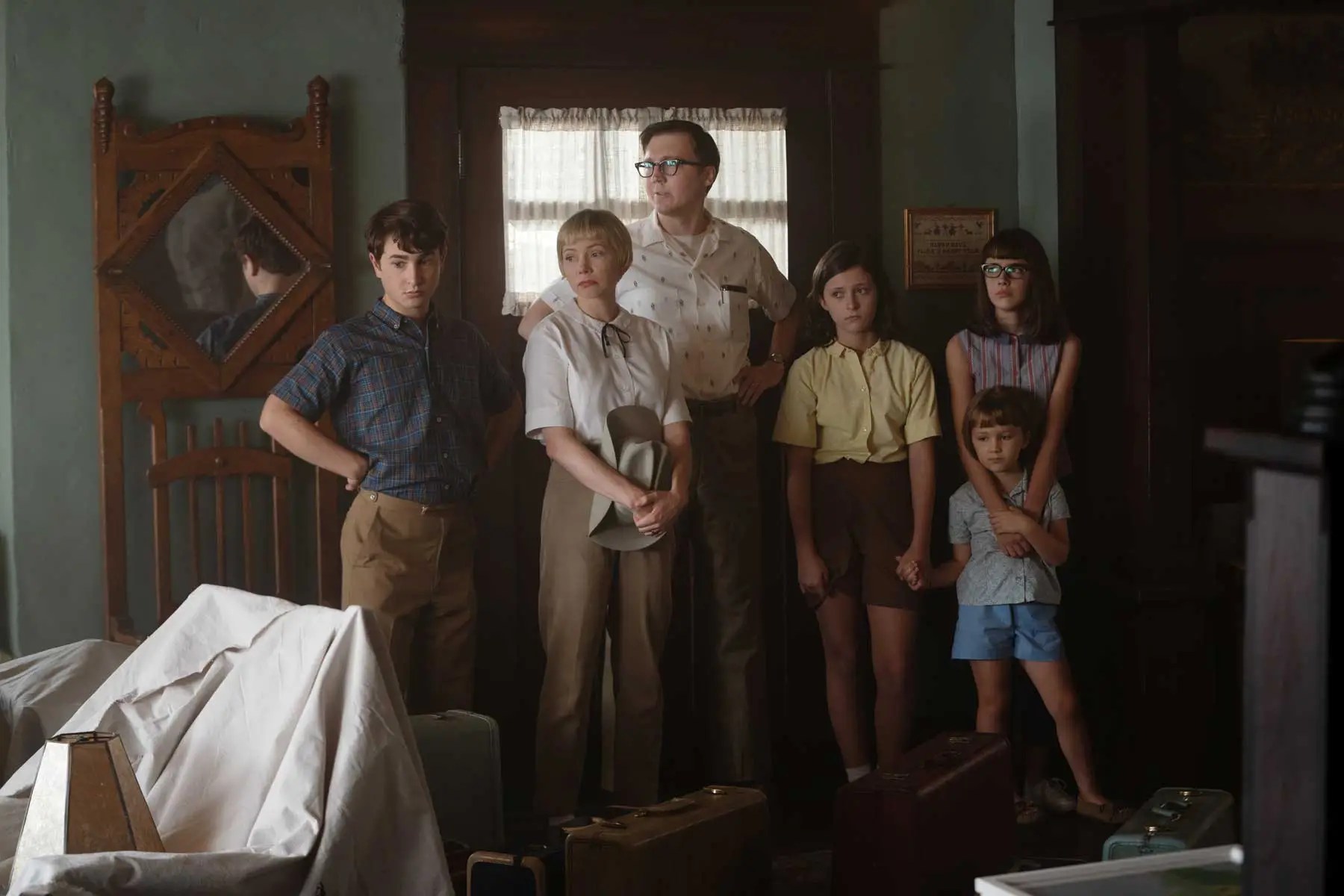
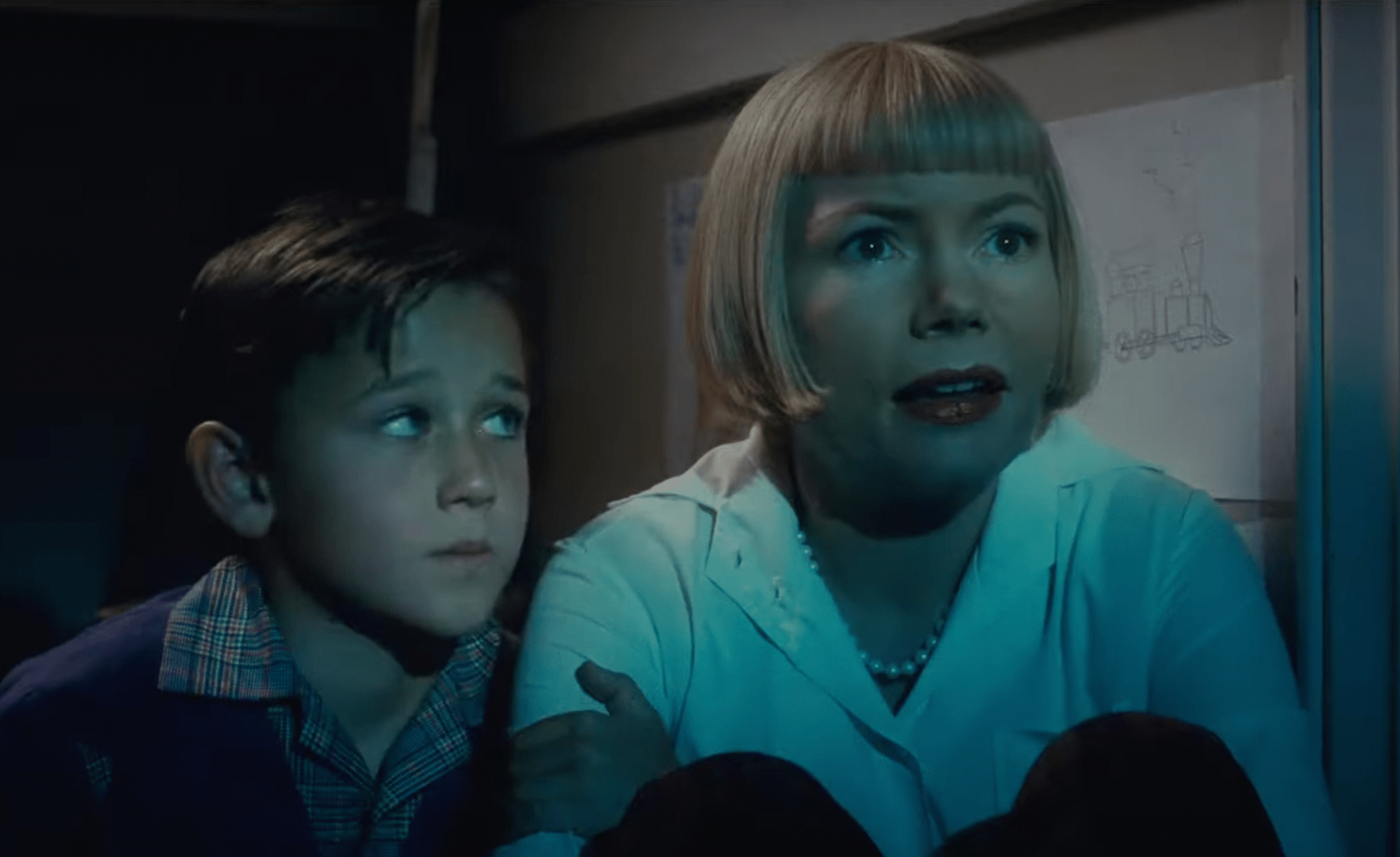
It’s a movie-lovers night at the cinema, taking us from his “first ever movie,” his mercurial, musical Mother (Michelle Williams) passing on her enthusiasm, his pedantic engineer Dad (Paul Dano) patiently explaining the “giants” they’d see on the screen are just images captured on celluloid, projected with light and blown-up to enormous size.

From the moment six year-old Sammy Fabelman (Mateo Zoryon Francis-DeFord) sees that spectacular train crash effect in “The Greatest Show on Earth” (1952), he is hooked. But it’s not just the train that grabbed him and caused his father to give him one railcar or locomotive or set of tracks per day during the following Chanukah.

Little Sammy liked to see things crash and blow up.

And when Mom swipes Dad’s 8mm film camera, Spielberg lets us see what makes Sammy run…to the photo shop, home from school to enlist family and friends in his little movies, to the notebook whose drawings become storyboards by the time he’s old enough for the Boy Scouts.

That Sammy (Gabriel LaBelle, a bit player in movies and in TV since 2013) is the one who uses his Phoenix, Arizona BSA Troop 275 as cast and crew in movies he’s learned to storyboard, shots he’s learned to frame, effects he’s ingeniously figured-out how to fake for silent films that have a beginning, middle and end, and a helluva lot of entertainment value.

That Sammy would be shushing his fellow girl-crazy Scouts when they get too rowdy at a theater showing “The Man Who Shot Liberty Valance,” and that Sammy will write letters and knock on Hollywood doors after high school, and in the film’s climax, meet one of his movie making idols, uncannily brought back to life by another legendary director.

“The Fabelmans'” odyssey, from New Jersey to Phoenix and California, following Dad’s career as an RCA then GE and eventually IBM electrical engineer, make up the movie’s more conventional and melodramatic middle acts.

It was a troubled marriage. The family was more observantly Jewish when the grandmothers were around, and when the holidays popped up. Grannies would show up for Mom’s elaborate dinners served on paper plates with plastic forks, all of it tossed with the paper tablecloth when the meal was over.

Mom’s musical side — she is a concert pianist who gave it all up to raise three daughters and a son — would come to the fore, singing Hebrew duets with Dad. “Uncle” Benny, Dad’s work pal (Seth Rogen) would come in and be the “fun uncle” only not a “real” uncle at these gatherings.

And Sammy’s adoring, spirited sisters would not have to be his extras and crew for once, and could lose themselves in the festivities.

Judd Hirsch comes off as a kvetching stereotype in the brief snippet he’s glimpsed in the movie’s trailer. In the film itself, he is an earthy, warm and no-nonsense “circus” (and silent film) veteran, the uncle who comes to mourn his sister, one of their grandmothers, and impresses on young Sammy the tug-of-war his life will be in the arts, yanked between family obligations and life-responsibilities, and “the heart.”

Williams turns this mother into a fragile, impulsive free spirit, piling the kids in the car to chase the first tornado any of them ever saw. Dano was born to play a prototype “computer nerd” who sees a lot of himself in his artsy but technocratic craftsman kid.

Comical young love, the first serious blasts of anti-Semitism Sammy faced in a new school, a smart-aleck who takes a bloody nose as a small price to pay for a withering comeback, this third of the film has been in a thousand other coming-of-age tales before, and often done better. Still, there’s an earnestness to these scenes that counts for something.

Tony winning playwriter (“Angels in America”) and “Munich” screenwriter Tony Kushner came on board to give this story shape, to make “The Family’s Dark Secret” pay off.

But it’s all the things that have become the director’s trademarks that lift “The Fabelmans” into Spielberg Fable status. The fractious, playful scenes with the siblings, the noisy but enthusiastic mob of Scouts needed to create a silent 8mm World War II drama “Escape to Nowhere,” the “Eureka” moments when young Sammy figures out this effect or has his first moment “directing” a performance are brimming with heart and that “gee-whiz” fun.

As for the rest, the Oscar winning icon may hint at the emotional turmoil of a home life with a somewhat manic, frustrated “artist” and the workaholic engineer who takes forever to stop calling what Sammy does with a camera, an editing table and celluloid “a hobby.”

This loving tribute to them and everything that he and they went through and how it informed his art suggests they did something very right along the way.

Rating:PG-13 for some strong language, thematic elements, brief violence and drug use.

Cast: Michelle Williams, Gabriel LaBelle,Mateo Zoryon Francis-DeFord, Seth Rogen, Paul Dano and Judd Hirsch.

Credits: Directed by Steven Spielberg, scripted by Steven Spielberg and Tony Kushner. A Universal release.

Running time: 2:31

Posted in Reviews, previews, profiles and movie news | Comments Off on Movie Review: A Spielbergian Childhood, aka “The Fabelmans”

Movie Preview: Olga Kurylenko is a chef hoping to bring the “High Heat” to Don Johnson

A Mid December comic thriller.

Could be cute. And violent.

Posted in Reviews, previews, profiles and movie news | Comments Off on Movie Preview: Olga Kurylenko is a chef hoping to bring the “High Heat” to Don Johnson

Movie Review: Croatia’s hope for an Oscar — A screenwriter fights for and with his suicidal brother in a “Safe Place (Sigurno mjesto)”

There’s no shouting and very little pleading in “Safe Place,” Croatian writer, director and star Juraj Lerotić’s debut feature.

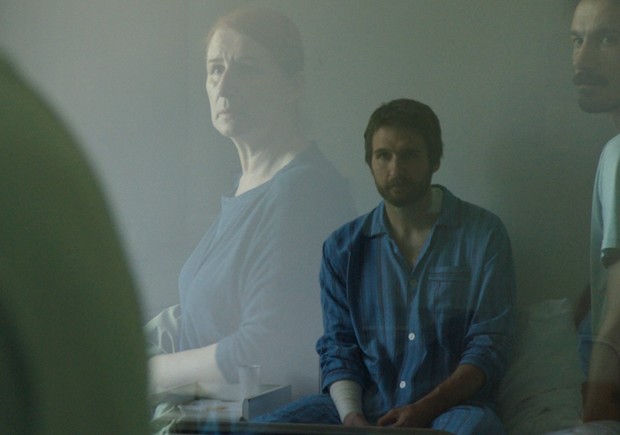
That can be misleading, as the film is about a brother and his mother’s frantic efforts to keep a sibling and son, who has just tried to kill himself, from finishing the job. It’s a fraught 24 hours for all involved, with a depressed and perhaps schizophrenic patient who won’t stay in his hospital room and is compelled to make more sad-eyed confessions about hospital staff who “are going to kill me,” and the like, and family struggling to understand it and fighting indifference at every turn.

Lerotić casts a spell and serves up life lessons in a sort of parable about those who are ready to go and want to go, and the loved ones determined to stop them.

A long, static opening shot sees Bruno (Leroti) dash through a street scene of placid quiet, desperate to break the door open in a weathered high rise, more desperate to break down the door to brother Damir’s apartment after he does.

Damir (Goran Markovic) is bleeding from the wrist, and calm enough to be in a stupor. Bruno plunges into manic efforts to get an ambulance and impatient annoyance with the police who show up at the hospital, demanding that Bruno come back to the apartment — immediately — and explain why he busted doors and ask “Who cleaned up the blood?” as if they have any doubts that the glowering man on the gurney did this to himself. And then there’s the shockingly rude, unprofessional and disinterested psychotherapist who resents any questions about treatment or the medications he’s prescribing.

“You don’t trust us,” he smirks, in Croatian with English subtitles. And to Bruno and Damir’s mother (Snjezana Sinovcic Siskov) “You’re a strange woman.”

A couple of things we pick up almost in passing. Bruno is a screenwriter. And telling your brother, in a hospital bed with his wrist bandaged, that “You can only state lines I write for you to say,” is not something you’d expect to hear, not in the real world or the reality Lerotić presents here.

His film is partly autobiographical, and we can take it as an experiment in narrative or as an exercise in self-help, a way of letting himself and his mother off the hook for what they didn’t pick up on in Damir’s state of mind and a way of getting back at unconcerned, unhurried officials, healers and administrators who cannot see or make themselves care about what this event has done to everyone close to the person who attempted it.

Either way, “Safe Place” makes for a beautifully subtle portrayal of guilt, fear and grief, the stress a loved one’s actions bring to those who love them and the acknowledgement that whatever they could have done, odds are it probably wouldn’t have changed the course of history.

Rating: unrated, suicide as subject matter, smoking

Cast: Juraj Lerotić, Goran Markovic and Snjezana Sinovcic Siskov

Credits: Scripted and directed by Juraj Lerotić. A Pipser release.

Running time: 1:43

Posted in Reviews, previews, profiles and movie news | Comments Off on Movie Review: Croatia’s hope for an Oscar — A screenwriter fights for and with his suicidal brother in a “Safe Place (Sigurno mjesto)”

Movie Review: Disney gets lost in the animated doldrums in “Strange World”

 The actor Rainn Wilson recently changed his name to Rainnfall Heat Wave Extreme Winter Wilson as a way of protesting America’s indifference to the growing climate crisis facing the planet.

Young activist Greta Thunberg has devoted her life to challenging world leaders to do something, inspiring millions to emulate her and earning the ire of climate change deniers and those who financially back them the world over.

So if Disney decides the hour is getting late and there’s no sense in sugar-coating an animated parable about our pigheadedness in the face of imminent peril, and serves up a generally humorless and heavy-handed cartoon about an environmental crisis like “Strange World,” they’re not going to get criticized by me for their intent.

The film’s stumbling unoriginality, cliched characters and joyless jokes that land like flops from a constipated greenhouse gassy cow, however earn every ounce of ire I can summon.

I didn’t realize the screenwriter and co-director wrote “Raya and the last Dragon,” which was also a bust in my book, and in a lot of the same ways. Like this, it was overloaded in representation, underwhelming in story and dialogue.

I couldn’t make out Dennis Quaid‘s cleverly-disguised voice in the trailer. There was a lot that hit me out of the blue about this one, because there’s been zero buzz for it. Disney knows what they have here. Talking it up won’t help. So they haven’t.

Quaid plays a legendary explorer from a fantasy civilization trapped in a valley, surrounded by high mountains that he and his son (Jake Gyllenhaal) attempt to conquer in the opening sequence.

But Jaeger Clade is hellbent on carrying on when things turn disastrous. And son Searcher decides to head back to backward Avalonia with the electrically-charged berries from the Pando plant (Hey, Disney owns Pandora now, too!) he’s just discovered, which can help Avalonia even more than finding out what’s “beyond the mountains.”

Dad Jaeger goes missing. Searcher comes home, marries (Gabrielle Union), has a son (Jaboukie Young-White) builds a thriving Pando plantation, which in the intervening years has revolutionized their world. Floating cars, airships, electric light, all thanks to energy berries from a plant they’ve become positively addicted to.

But the plants are dying, and the leader (Lucy Liu) is intent on going out beyond the edges of their world, beneath it even, to find out why. Events conspire to put everybody in Searcher’s life on that airship with him and her — stow-aways included — all of them wrapped-up in solving the mystery of why the plants they need to fuel their civilization are going away.

On the way, they find Searcher’s long lost dad, who hasn’t changed. Can son and father evolve, with the help of one’s wife and the other’s grandkid, and learn to accept each other and figure out the solution to the Big Problem they discover?

I mean, the kid’s got this world-building video game he’s great at, and that could help.

I’d quote some funny lines from “Strange World,” but honestly, I didn’t hear any. A cute and helpful underworld creature they nickname Splat is meant to provide sight gags. As is the family mutt. But nah. Nothing doing.

The animation isn’t bad, in a “shades of ‘Avatar'” sort of way. And the “message” comes through, loud and clear. Will little kids figure out the allegory? Not without Mom and Dad explaining it to them, I fear.

But as I stopped taking notes — not proud to admit that at some point I wrote in HUGE type a four-letter expletive that rhymes with “QUIT” all the way across my notebook page — I picked up on where the laughs really are in this animated environmental comedy.

It’s a movie that’s about our addiction to something that’s killing us, which the Koch Brothers and their minions have brainwashed a third of the country into pretending isn’t happening.

The folks triggered by anti-consumerist “Wall-E” are going to have coronaries over this.

It’s built around a family with A) an interracial couple that’s not shy about showing affection, two loving farmers raising a B) gay teenager whom they adore and wholly support and treat as normal because that’s what loving, intelligent people do.

Heck, they even have a three-legged dog.

And when they’re given information about something they’re doing that’s endangering civilization, they adapt and repent.

I dare say the belligerent runt who picked a fight with Disney in Florida this past year, and his mouth-breathing minions are going to lose their rhymes-with-quit over that. So there’s that.

The movie? Not one of Disney’s best. One of its weakest in many years, I’d say.

Rating: PG for action/peril and some thematic elements

Cast: The voices of Jake Gyllenhaal, Dennis Quaid, Gabrielle Union, Lucy Liu and Jaboukie Young-White

Credits: Directed by Don Hal and Qui Nguyen, scripted by Qui Ngutyen. A Walt Disney Animation release.

Running time: 1:42

Posted in Reviews, previews, profiles and movie news | 6 Comments

Movie Review: B-Movie Stars fight to the Last Man — “Battle for Saipan”

One of the bloodiest and most important struggles of World War II in the Pacific is given a loopy, ahistorical B-movie treatment with loopy, B-movie actors in “Battle for Saipan.

It’s loosely based on the real-life “banzai charge” at the climax of the battle, when thousands of surviving Japanese troops charged vainly at Marine and Army positions, overrunning them at first but wiped-out, almost to the last man, eventually.

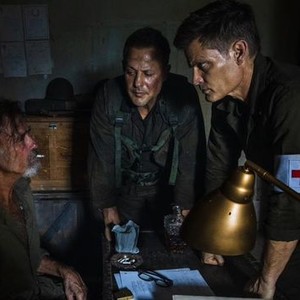
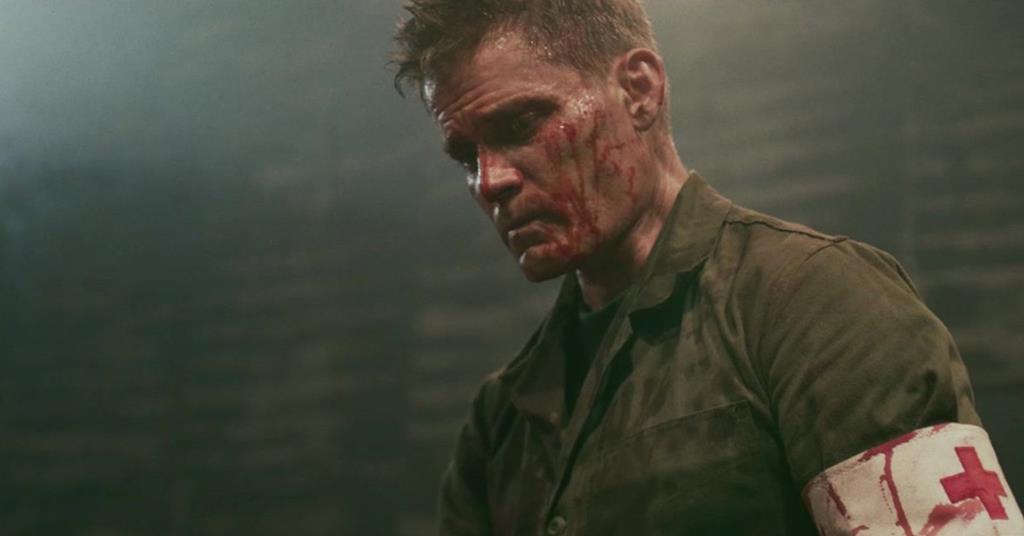
Writer-director Brandon Slagle (“Frost,””Crossbreed”) uses that fact for a fictional “last stand” story set in a military hospital, with doctors and nurses having to pick up weapons to fend off bayonets, machine guns and samurai swords.

Setting it in a hospital also allows Slagle to make his WWII movie coed, so that he could cast his muse — Devanny Pinn — something he does in every film of his I cared to look up. Isn’t that sweet?

The movie, filmed in Thailand, has Louis Mandylor as a major whose patrol is ambushed at the beginning of that July 7 Japanese counter-attack. Major Porter is from Staten Island, a fact that’s an endless bone of comical contention when he drags the one other survivor from his unit to the hospital, where Dr. Vic (Casper Van Dien) presides.

Vic is from Brooklyn. Staten Island might as well a Canadian province.

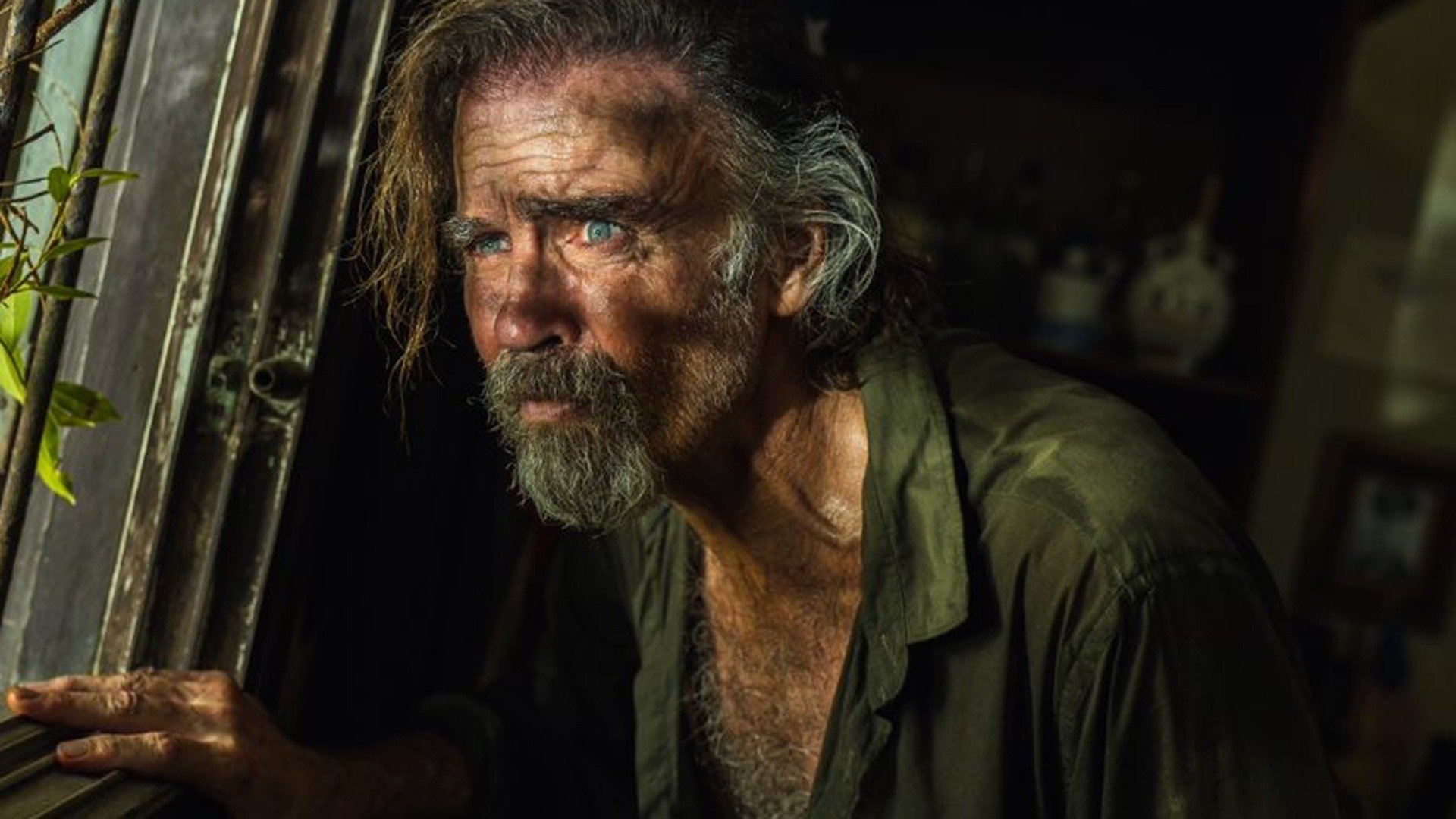
Porter is taken to “the general,” played by Jeff Fahey in full Col. Kurtz/”Apocalypse Now” mode. He’s sweaty, goateed, long-haired and drunk. And he’s supposedly in charge. Guess it’s up to the major to organize a defense.

“Do you hide beyond your scalpel and syringe of morphine all day?”

Everybody in the place, doctors, nurses to patients — including the guy we see lose his arm (graphically) in a surgery scene — has to fight for their lives as freshly-laundered Japanese infantry and officers infiltrate the place, generally in groups of two or three, making them easier to handle.

There’s no urgency to the situation. A Cold War era tank meant to be Japanese blows a hole in the building, and all the ward of patients and nurses can do is shrug and ask “What the hell was that?”

The fights are reasonably well-staged, with the odd ludicrous touch.

But this is weak directing of bad writing with a lot of actors — one of them apparently the director’s lady friend — getting a working vacation in Thailand for their trouble.

There are epic tales about this bloody battle waiting to be told. One, “Windtalkers,” was turned into a movie. Making this one up seems all the more pointless seeing as how poorly it turned out.

Rating: R for strong violence, bloody images and some language

Cast: Casper Van Dien, Louis Mandylor, Devanny Pinn, Jennifer Wenger, Natalia Nikolaeva, Randall J. Bacon and Jeff Fahey.

Credits: Scripted and directed by Brandon Slagle. A Saban Films release.

Running time: 1:33

Posted in Reviews, previews, profiles and movie news | Comments Off on Movie Review: B-Movie Stars fight to the Last Man — “Battle for Saipan”