BOX OFFICE: Another “Wakanda” wipe out, “Strange World” Bombs

“Wakanda Forever” has yet to have a steep STEEP drop-off in interest and ticket sales. But if $55 million is all it manages over the five day “Thanksgiving” weekend, it’s easy to see it won’t be setting any serious” “all time” box office records, pre or post-pandemic. It will still have cleared $400 million by next weekend.

But that’s not the BIG story this weekend.

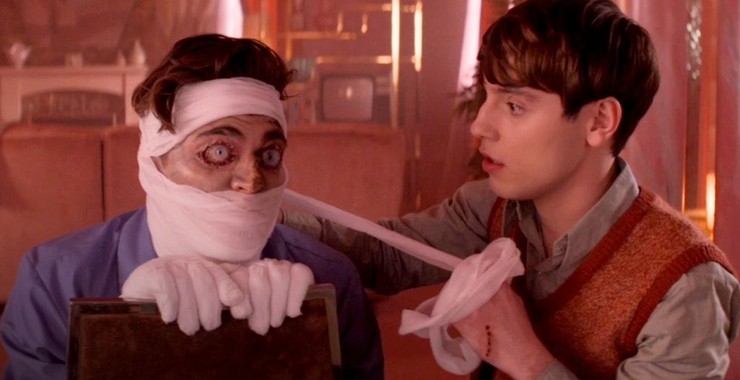
With “Strange World,” Disney Feature Animation has delivered a bomb for the ages, an $18-23 million opening, less than half of what lesser Disney and Pixar fare typically delivers…during a THREE day weekend. Considering the film’s $180-200 million, that’s disastrous.

How’d that happen? As I mentioned on this site as I headed into the screening, this movie’s pre-release profile was almost invisible, unless kids were seeing the trailers on Disney+ et al.

Were those trailers “selling” it? No, they weren’t. No, they didn’t.

Disney knew what it had, and didn’t figure it was worth more cash to promote it. Even streaming it exclusively means they’d have had to eat its entire budget, because nobody is signing up for Disney+ just to watch this.

Keep an eye and an ear out for your more openly racist and homophobic conservatives laying this at the feet of how “woke” the film is. Yes, it’s got a diverse cast telling an environmental parable story. And yes there are times Disney focuses on that and loses track of storytelling basics.

That seems to be the Achilles heel of co-director and screenwriter Qui Nguyen, who may have been getting lots of studio exec/marketing “notes” about who and what to include, just as he must have for “Raya and the Last Dragon.” I’d hate to lay this at his feet because of what we don’t know about how straightjacketed he was, but from where I sit, that’s two crap scripts Disney has committed to film in some pursuit of perhaps “excluded” audiences that haven’t had their stories told on screen before. And this is the guy who wrote them.

Diversity has to be a given, but once you’ve accomplished that, the real work is making this inclusion melt effortlessly into a compelling story. “Strange World” is a cut-and-paste adventure tale built on an environmental parable, and there’s barely an exciting or amusing moment in it. Inclusive or not, it flatlines from the get-go.

“Glass Onion” may put $12-13 million or so in Netflix’s pockets from its theatrical opening this 5-day weekend. It comes to the streamer next month.

I caught “Devotion,” the race-and-the-Korean War drama which Sony put out without press screening in most markets, at a matinee with an elderly Black Vietnam War era vet the only other soul in the theater. It’ll make $9 million over five days.

“The Menu” serves up another $7 million, rolling out wide but not getting a huge amount of live.

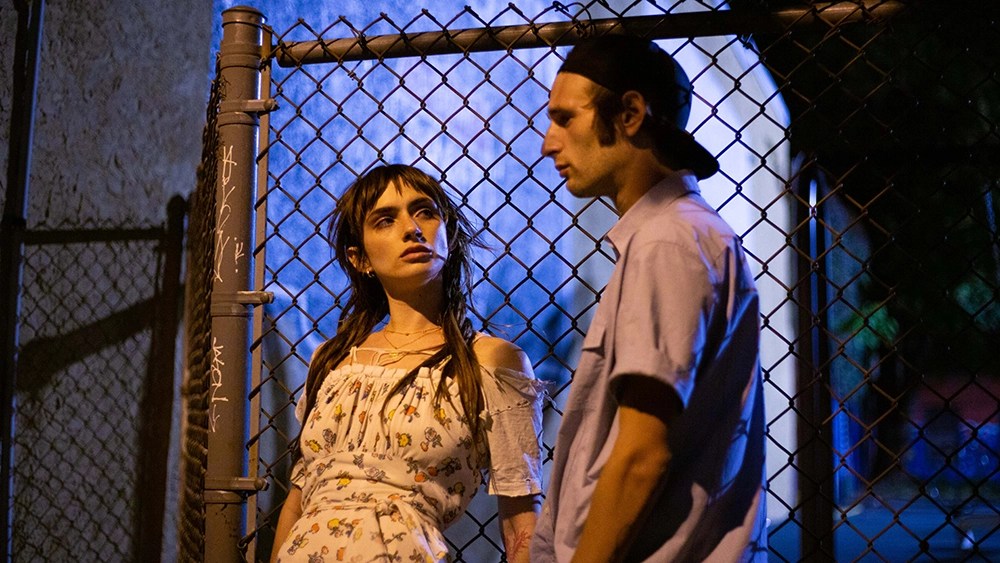
Shockingly, Cannibalism: A Love Story, aka “Bones & All,” isn’t making much over America’s favorite EATING holiday weekend — $3.4.

“The Fabelmans” is on almost 700 screens at this stage in its platforming release, a decent per-screen average will give this Spielberg visit to his childhood about $3.4 million by midnight Sunday.

“She Said” is proving its hard to find an audience for an expose of how women reporters broke a sensational Hollywood sexual abuse scandal, earning just $1.4 million this weekend.

UPDATED. Here are the weekend (not five day) takes courtesy @boxofficepro

Posted in Reviews, previews, profiles and movie news | 4 Comments

Netflixable? “The Noel Diary” barely breaks the Hallmark Holiday Formula

The characters are always alone and lonely, the leads are always lovely but bland, the settings snowy and the “secrets” nothing to summon gentleman detective Benoit Blanc over.

But holiday romances of the Hallmark school — a market Netflix has gone after with a vengeance — make for scenic cinematic comfort food at this time of year. Never spicy, rarely surprising, they’re romance novels sprinkled with tinsel and filmed in a flash, every one of them.

That includes “The Noel Diary,” a pleasant (ish) nothing from a director decades removed from his “Baby Boom/Father of the Bride/Parent Trap” heyday. Charles Shyer, who co-wrote this with a Netflix house hack (“Dangerous Lies”) blows too many of his shots at “charming,” never quite nails down the “romance” and dithers away the “mystery” in this flavorless variation on formula.

Justin Hartley, a bit player promoted to stardom via “This is Us,” is Jake Turner, our hunky, perma-stubbled star novelist pretty enough to be a romance novel cover model. He fends off flirts at his very-popular book signings with “got to get home to Ava.”

And who wouldn’t? Ava’s his beautiful Australian Shepherd, friendly and wise and almost smart enough to drive his vintage Land Rover, which is how Jake gets to and from his modernist McMansion in the Woods.

Jake’s rugged. You can tell by the stubble.

The cliched call-from-a-lawyer is how he learns his mother has died. Nothing for it but to motor out to Connecticut, tidy up her affairs and deal with her “hoarding.”

By the way, if you’ve ever dealt with a hoarder or watched TV’s “Hoarders,” let’s just say “Noel Diary” gives us a (that label again) “Hallmark version” of this illness.

Jake was estranged from his mother. Loner Jake is big on “estranged.”

But his mother’s pleasant longtime neighbor (Bonnie Bedelia, in fine form) gives him encouragement. And there’s this strange, beautiful woman staring at him from across the street. It turns out she has a connection to this house. Rachel, played by Barrett Doss of the Chadwick Boseman Supreme Court bio-pic “Marshall” and TV’s “Station 19,” is looking for a woman who used to work for Jake’s family.

That woman was their nanny. As we’ve heard this nanny reading from her diary in voice-over, we know that young woman was pregnant. And Rachel, as it turns out, is the daughter she had and gave up for adoption at 17.

No, Jake doesn’t remember the nanny. But a little sympathy and a hint of attraction means he’ll take Rachel out to dinner and send the dog to chase her car down the street when he has a belated idea about “someone who might know” as Rachel is driving away.

By the way, the smart dog chasing the Prius is the highlight of the movie.

As the snows settle in and the holidays loom, just-engaged-Rachel finds herself spending a lot of time on this quest with rich, famous and handsome Jake as we discover how many languages she speaks, tragic things about his past and whether or not she’s about to marry the right guy.

It’s so hard to approach stories like this with a fresh set of eyes and directorial enthusiasm, so it’s almost understandable that Shyer would brush past the various steps in the holiday romance recipe in a sort of “get on with it” regimen.

He blows the “meet cute,” and perfunctorily drops the elusive “diary” right into our laps because he and his fellow screenwriter can’t be bothered to make that a “Eureka” moment, or even an emotional one.

James Remar is brought in as the father Jake is also estranged from. Even though he’s built a career, from “The Warriors” and “48 Hrs.” onward, out of characters with edge and bite, there’s nothing remotely interesting about this sappy detour into syrup country.

The leads don’t have much in the way of chemistry, save that which can be almost manufactured with close-ups and sympathetic editing.

Shyer and co-writer David Golden don’t give Rachel any real romantic “choice” here — as her fiance is only glimpsed in a Facetime call. Once. All we learn from that is that she might be “settling” for a guy who “complements” her, and that she might leave one white guy for another white guy.

Shocking.

Not as shocking as noticing that fourth stringer critics from the New York Times and LA Times endorsed this room-temp treacle as something worth watching. But perhaps they’re new to the genre.

Rating: TV-PG

Cast: Justin Hartley, Barrett Doss, Bonnie Bedelia and James Remar.

Credits: Directed by Charles Shyer, scripted by David Golden and Charles Shyer. A Netflix release.

Running time: 1:39
Posted in Reviews, previews, profiles and movie news | 6 Comments

Movie Review: Another Variation on “Girl with a Gun”

There have been several films titled “Girl with a Gun” or something very near that.

It’s catchy, alliterative and tells you what you think you need to know in just a couple of words.

There’s an attractive younger woman, and something in her life has forced, caused or tempted her into picking up a gun and taking matters into her own hands.

The title also builds in expectations, of pistol packing mayhem, epic shootouts, maybe a female-with-firearms learning curve.

That’s where this latest “Girl with a Gun,” written and directed by Kevin M. White, filmed and set in Louisiana, lets us down.

It’s got the beautiful young woman — Ronni Hawk, an alumna of the girl-growing up TV series “Stuck in the Middle.” We meet her at the firing range (in a different hair color), riddling a male target’s crotch with her pistol.

But it’s pretty bad, right from the start. The non-actors with her at the range don’t know how to marvel at her accuracy, or amusingly act intimidated by it. Nothing else is done with the scene — no compliments, crude come-ons, zilch.

That’s followed by a non-actor/ bad-actor packed argument, threat and pick-up vs. ATV chase involving a lot of shooting by guys who never hit what they’re shooting at. The ATV hurtles down a road, and never is used to its get-away advantage, OFF road.

Our practice range princess, Tomi (Hawk) then gets a call at her job tending bar in (I guess) New Orleans. Momma’s shot Daddy, then shot herself. As we’ve seen the threats and the murderously corrupt local sheriff (John Swider) already, we know better.

Writer-director White then proceeds to dawdle and fritter away the next hour on an emotion-free “sad” homecoming, dull reconnecting with assorted locals — the family friend (Ben Martin Williams) who called her with the bad news, the drawling neighbor who brings over “my world famous” hot dish, the loyal employee (Jeremy London) in the family crawdad business, assorted toughs.

The setting promises “bayou” but never gets that swampy.

And the big finale isn’t so much shoot-outs as executions with the bad guys getting the drop on our shorts-and-belly-shirted leading lady time after time and miraculously never finishing the job. It’s as if our filmmaker, like his villains, gets lost in his dreamy leading lady and forgets to TCB.

You make a promise when you title your movie “Girl with a Gun.” That’s a promise this version of that title never keeps.

Rating: TV-MA, violence

Cast: Ronni Hawk, Jeremy London, Ben Martin Williams, John Swider and Armando Leduc

Credits: Scripted and directed by Kevin M. White. A Tubi release.

Running time: 1:24

Posted in Reviews, previews, profiles and movie news | Comments Off on Movie Review: Another Variation on “Girl with a Gun”

Netflixable? Syrian Refugees try to make it to the West, and the Olympics — “The Swimmers”

“The Swimmers” is an old-fashioned against-all-odds sports drama set against the dramatic backdrop of Europe’s Middle Eastern refugee crisis. Director and co-writer Sally El Hosaini makes this conventionally unconventional “feel good” story of the Mardini sisters‘ trials and triumphs entertaining, if perhaps not nearly as dramatic as their real experiences.

Sarah Mardini and younger sister Yusra were upper middle class Syrians trained by their swimmer dad to seek Olympic glory.

“You aren’t a true athlete unless your aim is the Olympics,” he lectures them (in Arabic and English).

Sarah (Manal Issa) may be older, but Yusra (Nathalie) is the one where the family’s true hopes lie. Dad never made it to the Olympics, because, well, there’s a reason Syria isn’t known for swimmers. Lack of water, mainly.

But they train and compete and share the occasional “I HATE you,” because they’re sisters. Bossy, independent Sarah ducks out of Yusra’s “surprise” birthday party — after ruining the surprise — to watch online videos of The Arab Spring coming to Syria. It’s 2011.

It takes a while this turmoil to devolve into civil war, and to touch the Mardinis. An air raid interrupts one of their meets, with a small bomb landing right in the pool, mid-race.

Luckily, it doesn’t explode.

The good life in secular Damascus is over, and the family starts planning their escape. Dad’s priority is getting the two oldest children into Europe. Because OLYMPICS. He gets together cash, and their DJ cousin Nizar (Ahmed Malek) is convinced to escort them to Germany, where they hope to work the system to get the rest of their family out.

The most fascinating third of the film is their long, tortuous escape, by plane and bus, boat and car and truck and foot, hiring one sketchy “coyote” after another, facing arrest, deportation, rape and/or death at sea, and not in that order.

The dread El Hosaini builds into their boat crossing ordeal is real edge-ofyour-seat suspense filmmaking. Just as interesting are the ways these tests reveal the sisters’ characters.

Sarah is a born leader, assertive, compassionate and organized. Yusra is faster in the water, but more of a follower.

The film’s third act puts them in Germany, stateless, longing to get into the pool and fulfill their father’s dreams. Matthias Schweighöfer plays a young coach who reverses his quick dismissal to take an interest in their plight and take them on.

That’s a pleasant over-arching theme of this formulaic film. Greeks may be unwelcoming as their coast is overrun with undocumented foreigers, and Hungarians downright alarming. But kind, helpful people from country after country stood up and pitched-in when millions of Syrians and others from the Middle East and Africa flooded north in the 2010s and a modern crisis — conflict and climate-change driven — was born.

The Issa sisters, both seasoned performers, make these young woman plucky and convincingly athletic, to say nothing of the sibling rivalry that requires no real acting. The real Mardinis, like their actress counterparts, are beautiful young women and one wonders what the film does not — how much of a role their telegenic qualities played into their attention and refugee-status “stardom.”

And their tougher real-life stories don’t necessarily correspond to the film’s convenient and upbeat stopping point. But with her second feature — after the British street gang thriller “My Brother the Devil” — the Welsh-Egyptian filmmaker Hosaini proves you don’t have to film in Hollywood to cook up a decent “Hollywood Ending.”

Rating: PG-13, sexual assault, combat

Cast: Nathalie Issa, Manal Issa, Matthias Schweighöfer, Ali Suliman and Ahmed Malek

Credits: Directed by Sally El Hosaini, scripted by Jack Thorne and Sally El Hosaini. A Netflix release.

Running time: 2:16

Posted in Reviews, previews, profiles and movie news | Comments Off on Netflixable? Syrian Refugees try to make it to the West, and the Olympics — “The Swimmers”

Movie Review: Serbia’s bid for an Oscar? Claiming Bosnian War victimhood in “Darkling”

“Darkling” is a grimly disturbing drama about grief, psychotic stubbornness and paranoia set in the murderous ethnic strife of the 1990s Bosnian War.

A Serbian farmer (Slavko Stivac) is hole- up on his rural Kosovo farm, barring the doors and covering the windows at night, vigilantly standing watch with his shotgun. His sleeplessness is to no avail. He awakens one morning to the sounds of his frantic milk cow and the sight of her calf, dead and tangled in barbed wire.

U.N. Peacekeepers from Italy are summoned, and dutifully fill out a “report,” with farmer Milutin ranting the entire time (in Serbian, and sometimes Italian), about intruders, about being one of the last Serbs holding out here, and how “I’m not leaving until my son and son-in-law” return, or the U.N. can tell him what happened to them.

But he’s not alone this paranoid enclave he’s made for himself. His increasingly distraught daughter (Danica Curcik) is trapped with him, and no amount of flirting and asking for help (charging her cell phone) with the Italians offers her any sort of escape. And then there’s Vukica’s tweenage daughter Milica (Miona Ilov).

She’s the one with only the family dog for comfort, cowering in the dark most nights due to threats real and imagined. She has custody of the family whistle, which the U.N. has futilely handed-out to the surviving Serbs so that they can call for help even if their electricity is cut off and they can’t make a phone call. She’s the one the Italians load into they lumbering armored personnel carrier each morning as they pick up the last Serbian kids in this region to take them to school. There are just six of them left.

And Milica is the one whose letter we hear her compose, an essay for a contest written to “the president of our country” laying out the state of life here and her limited hopes for the future. The winning letter will be read on the floor of the General Assembly at the United Nations.

We see the unfolding tragedy of her family, with lots of foreshadowing as increasingly unhinged grandpa starts booby-trapping the farm to fend off the intruders, who are methodically killing off all the livestock in the area to chase the ethnic-cleansing Serbs out, and thus ethnically cleansing the ethnic cleansers.

Writer-director Dusan Milic reaches for a kind of murky civil-war-is-all-around-us/unseen evil metaphor in this story, and builds towards a fine, unblinking climax.

The viewer knows what the daughter and granddaughter do not, because Grandpa isn’t sharing his assorted security measures with them. A bear trap buried here, a grenade left for him by the Italians there. The women don’t know what perils he’s planted on property which they have to live on, too.

Curcik and Ilov make their characters easy to empathize with, and Stivac ably gets across the murderous stubbornness that so informed this, the biggest European war since WWII, until Putin invaded Ukraine.

We hear lots of griping here about ineffectual U.N. “reports,” see a local (Serbian) official encourage the holdouts to stay because “I need you here,” and can read between the lines about possible ethnic partitions in this bloodily divided land. A priest has even been placed there to help stiffen their revolve, or so it would appear.

But for the victims here, the innocent woman and her daughter, there is nothing but trauma and fear and ever-shrinking possibilities as their plight first this and then that turn for the worse.

It helps to remember some of the history of this war as you pick up on what feels like an agenda, especially in the film’s closing titles. Bosnian Serbs started the shooting and “ethnic cleansing.” Most of the convicted war criminals from this war were Serbian.

So cry me a river over how many churches got burned, as Milic points out in that closing credit. But in a conflict this internecine in nature, the “good guys” “bad guys” lines were blurred and blurred again. All any Serb, Croat or Bosnian who took up arms in this mess succeeded in doing was staying alive, maintaining some stake to possessing and governing this vastly depopulated region of the former Yugoslavia.

“Darkling” reminds us that objective “truth is the first casualty of war,” and “reason” might be the last, and that “innocence” and “sanity” go by the boards somewhere in between.

Rating: unrated, violence, frightening images

Cast: Miona Ilov, Danica Curcik and Slavko Stivac.

Credits: Scripted and directed by Dusan Milic. An Art Vista release.

Running time: 1:49

Posted in Reviews, previews, profiles and movie news | Comments Off on Movie Review: Serbia’s bid for an Oscar? Claiming Bosnian War victimhood in “Darkling”

Movie Review: A Quebecoise killer? “Confessions of a Hitman”

Hollywood turned serial killers into urbane sophisticates, monsters who appreciate a good “chianti” with their murders, or geniuses who enjoy making a “game” out of their crimes to toy with the cops.

Fact — most serial killers, the vast majority of them, are truck drivers. And at any given time, a couple of them are on the roads, murdering prostitutes by accident or for an added thrill in their truckstop transactions.

Hitmen are similarly glamorized by the movies and TV. They dress well, live lives of wealth and comfort and overuse the word “professional.” This goes back at least as far as Clint Eastwood’s turn in “The Eiger Sanction,” a contract (government) killer who collects art with his blood money.

Another fact — contract killers are rare birds, and to a one, they’re amoral morons, easily able to tune out any hint of conscience, anything in their dark, myopic souls that will complicate their ability to do a dirty job and not get caught doing it. They’re almost all some variation of “The Iceman,” a creep whose second most valuable skill is his or occasionally her ability to compartmentalize.

“Confessions of a Hitman” is a fictionalized account of the life and murders of Gérald Gallant, a French-Canadian killer still in prison for his years of “executions.” As portrayed by director and star Luc Picard (“Audition”), Gallant sees himself as “a soldier,” helping his Quebec gang contain the threat of incursions by the Hells Angels, among others. He’s really just a mug who likes the extra cash that comes with every hit.

He’s got to supplement his armed robbery/breaking and entering income somehow.

Picard wears “the banality of evil” in this careful but not clever, compartmentalized but wholly corrupt man who admits, in the film’s police interrogation framing device, that “I’ve hurt a lot of people,” in French with English subtitles.

“Confessions” takes us through part of Gallant’s career, and seeks to “explain” him by introducing his harridan of a mother (Louise Portal), who was no comfort during his bullied childhood. Reading the letter from his school at the family dinner table, revealing that the school has measured Gerald’s “below average” intelligence, with an IQ of 88, is a humiliation that lasts a lifetime.

Gallant stutters, and if we’re more compassionate than he’s ever been, we might wonder if the school didn’t use that as an excuse to write him off. Picard, if anything, plays down just how dense and dull this fellow most certainly is.

In his 50s, after a heart attack, he takes up cycling and somehow, rough as he looks and acts, has enough game — as an unhappily married man — to pick up a younger and prettier cyclist (Sandrine Bisson) via their shared hobby.

The narrative skips around in his life as his interrogator (Emmanel Charest) tries to piece together how his gang worked, just how many people he’s killed and who helped him do it.

The Quebecoise gang is as colorlessly criminal as Gallant, with only the newly-released ex-con Dolly (David La Haye) standing out. Why? He’s gay. Prison, he jokes, wasn’t the worst experience for him in that regard. He even cross-dresses as a disguise when he and Gallant are stalking one particular “patched” biker they execute in a Quebec diner.

Gallant acquires two pistols for every hit, has a favorite hiding spot for them in his late model Lincoln, and shops in the discount clothing store for his “uniform” for each assassination. He buys clothes he disposes of as part of every getaway – a non-descript shirt and jacket and a black baseball cap.

So I guess John Cusack did his homework before deciding on his “uniform” for his run of contract killer roles.

The murders are mundane moments, with no effort to explain who the victims were other than pawns in the “Biker Wars” of Montreal and environs. Every now and then one shooting gets messy or more complicated than the others, but rarely in a particularly interesting way.

We meet Gallant’s wife (Éveline Gélinas) and buy into his insistence that she didn’t know his “real” work — just that he was part of a criminal gang. And we wonder about what made his cycling paramour, Jocelyn (Bisson) take an interest in him, then an interest in his work, crossing over into “accomplice” at some point.

Picard has a bit of Bob Odenkirk in his grizzled, high-mileage visage and hangdog demeanor in this role.

But there are dramatic hazards in bringing this sort of character down to his proper level, as more contemptible than interesting, utterly dull save for this heinous thing he does for cash. Gallant is boring even when the cops finally catch him and they try to get an expansive “confession” out of him that will clear a lot of murders off their books and implicate his fellow mobsters.

This portrayal seems more accurate than riveting.

But you know what they say. It’s the dullards you really have to watch out for.

Rating: unrated, violence, sexual situations, profanity

Cast: Luc Picard, David La Haye, Sandrine Bisson, Éveline Gélinas and Emmanuel Charest

Credits: Directed by Luc Picard, scripted by Sylvain Guy, based on a book by Félix Séguin and Éric Thibault. A Film Movement+ release.

Running time: 1:49

Posted in Reviews, previews, profiles and movie news | Comments Off on Movie Review: A Quebecoise killer? “Confessions of a Hitman”

Netflixable? Aimee Garcia and Freddie Prinze Jr. consider “Christmas with You”

Any rom-com with “Christmas” in the title is bound by law to have a stale whiff of “Hallmark” about it, and Netflix hasn’t been shy about trying to grab that audience.

So any cute or touching moments in “Christmas With You” will have to come from stars Aimee Garcia (TV’s “Lucifer”) and Freddie Prinze Jr., whose rom-com heyday was the ’90s. They manage a couple of “awwws,” but making a mark in any movie designed to have most of the rough edges of life rubbed off is always going to be an uphill battle.

Garcia plays a pop star famous enough go by one name — Angelina. But like Britney, Mariah, J. Lo and even Beyonce, there’s a wall staring her in the face at 40 and her record label’s chief (Lawrence J. Hughes, amusingly callous) isn’t making any bones about it.

Talented bombshell or not, when you’re looking to “the past” and your “greatest hits,” he’s looking to the future. He yanks her planned mag cover appearance and tells her to come up with a Christmas song — “get in touch with your ‘Holly jolly,” — and quick, for a Thanksgiving New York showcase.

That’s one thing her confessor/manager (Zenzi Williams) can’t help her with.

Cristina (Deja Monique Cruz) is a cute teen in some snowy town out in the provinces, a Latina about to turn 15 and have her quinceañera. Widowed dad (Prinze), the music teacher at her school, is pulling out all the stops for the party. But Cristina’s idol, and her late mom’s favorite singer, was Angelina. A heartfelt plea to meet and “get a selfie” with Angelina is posted online. And one of the 20 people to see it is the singer.

Yeah, it’s gotten that bad. Not-really-dating a telenovela star-influencer (Gabriel Sloyer) hasn’t helped Angelina’s social media decline.

On an impulse, the star and manager Monique take the Escalade into the country, just for a pop in to make a fan’s day. As no good deed goes unpunished, a blizzard sets in and Angelina and Monique are trapped, staying with their “biggest fans.”

I’ll bet there’s a Christmas song in that.

Like any romance of the Hallmark genre, there’s sadness underneath the cute and cuddliness. The audience demands it, because everybody is going through something. This script attempts such tugs at the heartstrings, but never hard enough to pay off.

The rare light touches — Angelina almost seriously sexing up a 15 year old’s “Baile de Sorpresa,” Cristina’s abuela’s efforts to “Dios, mio” this visitor out of her “lettuce diet” because she’s too skinny — play, but are played-out.

Garcia sings and dances like this could be a new genre for her to make her mark in, and one always admires professionalism in these movies. It might serve her well, just as it didn’t do Lindsay Lohan any harm in her Netflix debut.

Prinze takes to the “dad” role easily enough. But he’s rusty at generating that romantic sparkle and the script doesn’t give him much to do.

Because there’s always another worn out cliche or trope of the genre to get to. When the goal is TV comfort food, you can forget the idea that anything will be spicey, or that dessert will offer anything more than empty calories.

Rating: TV-PG

Cast: Aimee Garcia, Freddie Prinze Jr., Deja Monique Cruz, Zenzi Williams, Gabriel Sloyer and Nicolette Stephanie Templier

Credits: Directed by Gabriela Tagliavini, scripted by Paco Farias and Michael Varrati. A Netflix release.

Running time: 1:29

Posted in Reviews, previews, profiles and movie news | Comments Off on Netflixable? Aimee Garcia and Freddie Prinze Jr. consider “Christmas with You”

Classic Film Review: Sellers and Sommer, Lom & Sanders take “A Shot in the Dark” (1964)

One of the first movie-going memories from my childhood was my parents taking me to see “A Shot in the Dark,” probably at our small town drive-in, because in that corner of Virginia, the downtown cinema never stayed open for more than a year or three at a time.

All I can be certain of recalling was my father’s endless amusement at the wonky sound a French paddy wagon made every time it arrested and hauled off the film’s bumbling hero, Inspector Jacques Clouseau of the Paris Sûreté. But there is zero doubt about its impact on me.

My first movie star obsession spun out of the film — no, not of bombshell starlet Elke Sommer, but of comic genius Peter Sellers. Years of Sellers movies led to decades of British comedy mania, from the former Goon to Monty Python, Douglas Adams, Rowan Atkinson and Ben Curtis and ever onward.

It was the first movie Blake Edwards made about the character, as he and future “Exorcist” author William Peter Blatty adapted Hollywood screenwriter/playwright Harry Kurnitz’s play and turned it into a Sellers/Clouseau vehicle.

Sellers and his mustachioed bungler were supporting players in Edwards’ “The Pink Panther,” which was filmed second but released first — in 1963 — and that’s how the “franchise” that came out of all this lunacy was titled and is remembered to this day.

If you love Peak Sellers and the string of classic comedies, dark and light, that spun out of his “Doctor Strangelove/The Millionairess/Lolita/The Magic Christian” 1960s, it’s essential viewing, even if comedy ages rather less well than other genres for a variety of reasons.

I’ve seen it often enough to figure I have it memorized, but memory always rearranges the order of scenes. I seem to remember the nudist colony highlight of the film as its climax, but of course there’s an evening of nightclubbing assassination attempts and that Agatha Christie-ish gathering of murder suspects that must wrap it all up.

Much of the genius of Sellers, his ability to invent based on what was on the set in front of him, was laid out beautifully in the cable TV film “The Life and Death of Peter Sellers,” which starred Geoffrey Rush and recalled the ways Blake Edwards saw the man making funny out of whatever prop was at hand on the set.

A globe in Clouseau’s office becomes a finger trap, a pool cue rack a fitting nemesis, a blown line something worth repeating — if Sellers could avoid cracking himself up during the take.

Sellers was notoriously difficult to work with, “only good for one take” many filmmakers and acting collaborators would say, from Kubrick onward. Edwards would work with him time and time again — “The Party” and “Pink Panther” sequels aplenty. Blake Edwards knew funny.

The running gags of the “Panther” series were established in “A Shot in the Dark” — the trench coat, the manservant/martial arts trainer Kato (Burt Kwouk, hilarious and a very good sport, too), the long-suffering sidekick Hercule, the eye-twitching boss and nemesis whom Herbert Lom turned into a comic icon all his own.

“Give me ten men like Clouseau and I could destroy the world.”

The plot is very proto-“Clue,” a daft murder mystery/low farce that could never have been one of the inspirations for Rian Johnson’s “Knives Out” movies.

Staff members at an estate outside the city start dying off. The shapely maid, Maria Gambrelli (Sommer) is the dead-to-rights suspect, as she always is caught with the murder weapon in her hand.

But a smitten Clouseau won’t hear of it, and keeps finding reasons to let her go so that she can be followed and he or his aide Hercule (Graham Stark) can find out who she’s covering for.

“Facts, Hercule, facts! Nothing matters but the facts. Without them the science of criminal investigation is nothing more than a guessing game.”

But it’s “do as I do, not as I say,” in this case. The facts pile up against her. Clouseau can’t tear his eyes off her, or her décolletage.

Meanwhile, we viewers suspect her oily employer, Monsieur Ballon (the ever-droll George Sanders), and others.

Clouseau’s boss Chief Inspector Dreyfus (Lom) is exasperated, but as the rich and powerful Ballon prefers to be investigated by the “idiot,” there’s nothing for it but to channel his outrage into tics, twitches and a cascading series of accidents which Dreyfuss can only share with his analyst, the audience and eventually his worst detective.

“What you’ve said, Clouseau, qualifies you as the greatest prophet since Custer said he was going to surround all those Indians!”

Watching the film anew I was struck by utterly soundstage-bound it is, with only second unit footage of Paris (those wailing police vans) and a snippet of a British estate meant to be the Ballon mansion glimpsed.

Parlors or parks and Paris offices with a view, a greenhouse, a nudist colony with a lake — all of it faked on MGM’s London soundstages. A Jaguar peels out, a Radford Mini deVille roars into a scene, all of it soundstaged.

I paid much more attention to Sanders this time around, watching him keep his composure no matter what Sellers got up to in the hunt for laughs in a take. Did Sellers annoy the hell out of him? I have read every Sellers bio I could get my hand on, but I can’t recall.

And that’s the way it looks, a nearly-unflappable suspect played by an actor hiding his fury at whatever take they were on as Sellers finds a new way to destroy a billiards room.

The nudist colony sequence was a lot naughtier then than it comes off now, but there is still fun in all the efforts to hide the stars’ bits and pieces. Mike Myers has named Sellers as a big influence, and the “Austin Powers” movies riff on Sellers’ turn as James Bond (“Casino Royale”) and his appearances as Inspector Clouseau.

For all its faux French setting and “Continental” attitudes towards sex, marriage and nudity, and its American production team, it plays as quintessentially British and of its time — class-conscious Clouseau and Dreyfus, a winking attitude towards “those French” and their sex and Citroens and Renaults and chic Paris clubs where one can travel from Spain (flamenco) to Russia and beyond, all in a single night of pub-hopping.

The folk guitarist/bouncer “Turk” who blocks a fully-clothed Clouseau from entering the grounds of Camp Sunshine was played by Bryan Forbes, an actor, screenwriter and director who gave the world the first cinematic “Stepford Wives,” the loopy satire “The Wrong Box,” “International Velvet” and “The Madwoman of Chaillot.”

And while that comical espionage music that Henry Mancini cooked up for this cat-and-mouse detective comedy would live on in other films of the series and the TV cartoon based on this character titled “The Inspector,” and still never be as famous as his saxophone-heavy “Pink Panther Theme,” there is an Easter egg in this movie that you won’t read about anywhere else.

Mancini famously handed off his baton to the animated Pink Panther in the credits to one of the later films in the series. But watch as Clouseau enters Camp Sunshine and tries to “fit in” with the happy, naked naturists. We hear that theme being played by the buck-naked house band as Clouseau strides past them.

Say, over there on the left side of the frame. Who IS that tall, balding and shirtless Italian-American sax player jamming with the band?

No, “A Shot in the Dark” is not as hilarious as it was when it was fresh and new. But it still lands laughs even as it ages into a sort of comic mayhem-in-a-murder-mystery Ur text, its star one of the most mercurial ever to step in front of the camera and turn a blown take into a gem that still tickles through time.

 “And I submit, Inspector (sic) Ballon, that you arrived home, found MIG-well (Miguel) with Maria Gambrelli, and killed him in a rit of fealous jage!”

Rating: PG, violence, nudist colony nonsense

Cast: Peter Sellers, Elke Sommer, George Sanders, Burt Kwouk and Herbert Lom

Credits: Directed by Blake Edwards, scripted by Blake Edwards and William Peter Blatty, based on the play by Harry Kurnitz.

Running time:

Posted in Reviews, previews, profiles and movie news | Comments Off on Classic Film Review: Sellers and Sommer, Lom & Sanders take “A Shot in the Dark” (1964)

Netflixable? Kid Cudi’s “Entergalactic” album tie-in romance is an animated jewel

One of the best animated efforts by Netflix this year isn’t for kids. Not very young ones anyway.

“Entergalactic,” inspired by and paired with Kid Cudi’s latest album, didn’t even need to be animated. It’s an utterly conventional young Black New Yorkers on the rise romance that somehow required five screenwriters to conceptualize the artsy not-quite-Buppy lovers and invent seriously mundane obstacles to their love.

But first-time feature director Fletcher Moules, who counts “Lego Star Wars: The Padewan Menace” among his credits, and production house DNEG give the characters a rough, chiseled Lego-ish look and movement. Production designer Robh Ruppel turns Manhattan into a lurid, splashy Skittles-scape. Animating “Entergalactic” lights this story up and expands its possibilities, from anime-inspired flashbacks, to trippy (stoned) dream sequences and an artist hallucinating his break-through creation to life.

We meet Jabari (voiced by Scott “Kid Cudi” Mescudi) as he is moving into a swank loft that suggests the young man has made it. Sure, he still scoots around town on his “pegs,” his Mongoose BMX bike. And he’s still tagging the city with his “Mr. Rager” graffiti, stark, sharp-edged and stylized images of a blacker-than-black avenger/hep cat.

In his dreams and more edible-or-joint-flavored moments, he can even hear the guy and his demonic laugh. Of course Mr. Rager sounds like Keith David. And of course Jabari is moving on up, because he’s sold the character to a comics publisher where he’s working to bring Rager to book form.

Jabari stumbles into his gorgeous ex Carmen (Laura Harrier), who is instantly over whatever “Forget You” impulse might have driven the split, seeing as how he’s now a man with possibilities.

His boys, Ky (Ty Dolla $ign), Jimmy (Timothée Chalamet) and Downtown Pat (Macaulay Culkin), might endorse second chance love or whatever the kids are calling “hit it and quit it” these days. But Jabari isn’t falling into the new “Chill Carmen,” who is plainly still Miss High Maintenance, not if he can help it.

Can he? Help it? Because now that he’s Uptown, he’s got a head-turner of an artist neighbor Meadow (Jessica Williams). And all the “Never f–k your neighbor” advice in the world isn’t likely to stop the attraction.

Meadow spends her days taking street pictures and her evenings either at art openings or getting an R-rated earful from her hormonal, pregnant and down for Meadow getting down bestie Karina (Vanessa Hudgens).

Can young, hip, monied 20somethings find love and happiness in the big, impersonal and never-more-colorful city?

The “Young, Gifted and Black” story is broken into chapters which don’t take their names from the titles of tunes on the Kid Cudi LP. We get cute scenes where Jabari sweeps Meadow off her dressed-to-impress feet from an art world party that bores her.

“You know I came here in a Maybach, right?”

“Well, you’re leaving on a Mongoose!”

The courtship feels natural, organic. He insults her taste in music (they meet when her latest party goes too late and too loud), she tricks him into vegetarian burgers, which he’s just mocked, by asking “You trust me?” at her favorite diner.

And the banter with “the boys” has a nice snap, even if the script leans heavily on the street argot of the moment, something that always has a whiff of “trying too hard to be hip” and instantly dates any film — animated or otherwise.

It’s the look that sells this film, and it’s visually arresting, a movie inspired by an album that benefits from a vast array of smart choices — from voices to production design, color palette to comic book flashbacks.

I can’t say the dreamy Kid Cudi hip hop that inspired the movie helps or hurts the storytelling. It’s just there, pleasant enough but indistinct background music, I thought. The movie’s more memorable than the LP.

Rating: TV-MA, drug use, sex, profanity

Cast: The voices of Kid Cudi, Jessica Williams, Laura Harrier, Vanessa Hudgens, Ty Dolla $ign, Timothée Chalamet, Macaulay Culkin and Keith David.

Credits: Directed by Fletcher Moules, scripted by Ian Edelman, Maurice Williams, Esa Lewis, Sidney Schleiff and Judnick Mayard, story based on an album by Kid Cudi. A Netflix release.

Running time: 1:33

Posted in Reviews, previews, profiles and movie news | Comments Off on Netflixable? Kid Cudi’s “Entergalactic” album tie-in romance is an animated jewel

Movie Review: Horses and Snow and Gunslingers So Slow — “The Desperate Riders”

Sometimes, it seems to me that what we’ve labeled “Westerns” in fiction and on film or TV over the generations really should have been called “Southwesterns.” Because that’s the geography that became iconic in the genre.

The combination of arid, less usable and therefore less developed land, parks and wilderness meant that “The Searchers” could be set in Texas when we could plainly see it was the sandy, dry, unfarmable Monument Valley, Arizona. Almost every film and TV show was parked firmly in tumbleweed, sand and bare rock country, so much so that the occasional departure — “Shane,” in Big Sky Country, “True Grit” in mountainous, green Colorado, “Jeremiah Johnson” in the prettiest parts of Utah — could be refreshing.

The recent John Cusack Western “Never Grow Old” was set in the Pacific Northwest and filmed in Ireland. “The Sisters Brothers” was set in Oregon, but filmed in Romania, and that different look and feel made for fresh takes on the law-of-the-gun genre.

“The Desperate Riders” is a low-budget Western that Roku bought from Lionsgate, a film of damp and fog and snow.. It’s a little disorienting, even if the occasional trope of the genre makes an appearance — a saloon that doesn’t quite look like anything Miss Kitty would run, a mansion that plainly predates what one character takes pains to describe as “The War of Northern Aggression.”

Wherever the fictional “territories” setting, it was filmed in Tennessee, full of trees and forests and the cabins made from the logs of those trees. Fair enough, as I used to live there and often thought “Somebody ought to set and film a post-Civil War Western here.”

The dialogue is plenty flinty, a baseline requirement for any horse opera.

“I don’t think I’mo let you boys kill a kid today.”

“Ma’paw says th’only thing more important than a man’s gun is his humility!”

But the entire enterprise was shot between 9:40 and 9:45 am, the harshest and least filtered light of the day. The cast could have been costumed at their local Western outfitters outlet, with hats from The Halloween Store.

The cast has a couple of “names,” but it’s not like anybody expects country singer and Wounded Warrior Project champion Trace Adkins to get better, the more films he does.

Tom Berenger plays a not-to-be-trifled-with dentist/bullet wound surgeon, the most credible character (a Texas combat surgeon decades before) and most credible actor playing a part.

The gun-slinging has a “first take, first time I ever picked up a six-shooter” feel and speed. This holds true all the way through the cast, in scene after shootout scene. Why you’d make every confrontation a quick draw contest when nobody in your cast can fake his way through that is beyond me.

And the plot — with blood feuds, a teenage card sharp/gunslinger (Sam Ashby), kidnapping and pursuit — is a tried and true, but trite here. Adkins plays the heavy, who kidnaps a woman related to a family that landed him in prison. A loner in a duster (Drew Waters) decides to make this his business, so he and a lady sharp shooter (Vanessa Evigan) are determined to save her.

Michael Feifer, a prolific producer-director of TV fare ranging from Hallmarkish (“12 Pups of Christmas”) to horror (“Psycho Sweet 16”) and pretty much everything in between — including the odd (ahem) Western (“A Soldier’s Revenge”) — has no feel for the genre. None.

All of which is a far bigger hindrance to “The Desperate Riders” coming off than the pretty, rustic and yet decidedly non-Southwestern locations. Planning your shoot so that you can film horses in snow is all for naught when the script is crap, nobody good enough to expect a decent paycheck will sign on and the director is probably better at filming puppies.

Rating: PG-13, gun violence

Cast: Drew Waters, Vanessa Evigan, Victoria Pratt, Sam Ashby, Cowboy Troy, Trace Adkins and Tom Berenger

Credits: Directed by Michael Feifer, scripted by Lee Martin. A Roku TV release.

Running time: 1:30

Posted in Reviews, previews, profiles and movie news | Comments Off on Movie Review: Horses and Snow and Gunslingers So Slow — “The Desperate Riders”