Movie Review: Lush, cryptic and entertaining, “Chess Story” aka “The Royal Game”

The early 20th century Austrian novelist Stefan Zweig has had a pretty good run when it comes to adaptations of his work into film.

His novella, “Letter from an Unknown Woman” became one of the great screen romances and one of the loveliest films ever shot in black and white thanks to Max Ophüls’ 1948 treatment. Scores of his books and stories have become films, his play “Volpone” has been filmed several times, and Wes Anderson gave him a deserved “inspired by” credit for his glorious “Grand Budapest Hotel.”

When you write compact, moving and atmospheric novels filled with pithy dialogue, filmmakers will beat a path your door.

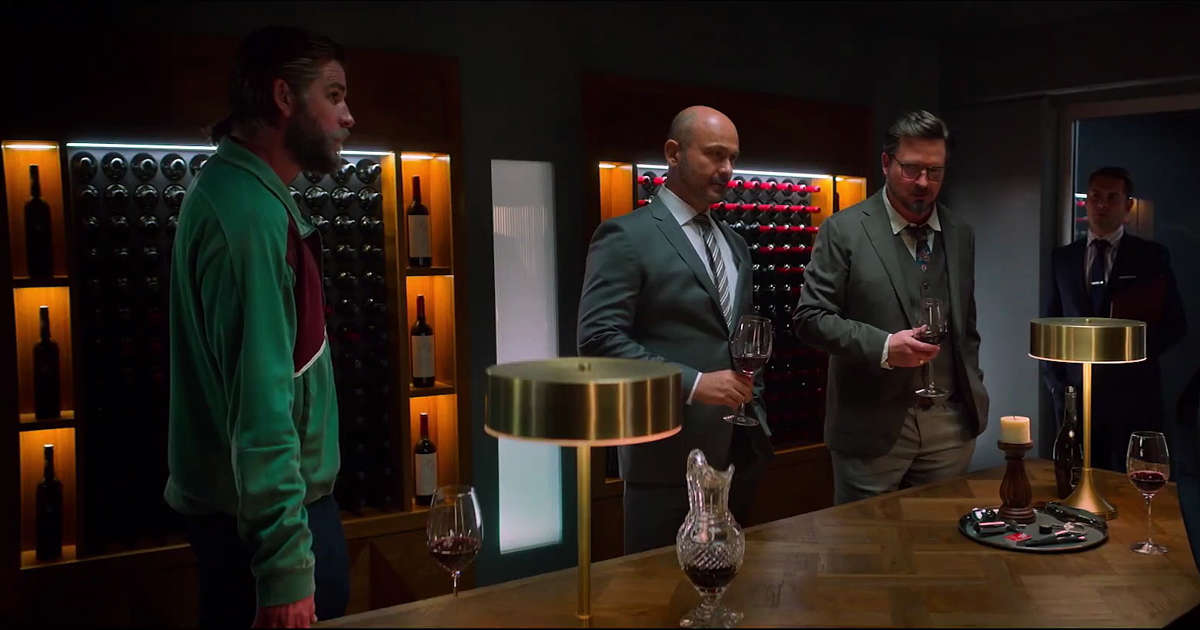
His symbolic and moving psychological drama “Chess: A Novel” was filmed as “Chess Story,” titled “The Royal Game” when it was released in Europe. It’s a showcase of the film-friendly glory that was Zweig, a lush period piece about Vienna as the Nazis takeover, a cryptic story of money, character, guilt and chess. And as our hero, the Viennese Dr. Bartok lets us hear, it is damned quotable.

“As long as Vienna keeps dancing, the world can’t end,” he purrs in (subtitled) German to his wife, Anne, on the ballroom dance floor. “Vienna survived the Turks. It’ll survive the Germans.”

Dr. Bartok, played by Oliver Massuci of “Look Who’s Back,” a Hitler-mocking comedy, and a member of the “Fantastic Beasts” universe, is a rich, entitled man headed for a great fall. But even after all he goes through, he retains his wit.

“You must be either very proud or very wealthy,” a stranger wonders.

“I used to be both.”

The framing device is an ocean voyage, passengers boarding a liner from Rotterdam, bound for America. A shellshocked Bartok meets his loving wife (Birgit Minichmayr) as they’re about to clear customs. She prattles on but he has a hard time summoning anything to say.

“How was it ‘back then?'” he asks, and she reassures him of the glories of pre-war Vienna. Their fellow passengers appear to be swells, the “dress for dinner” type. But in their spartan cabin, Josef, traveling under the name “Max,” is taken back to 1938, the day of The Anschluss.

Josef’s newspaper headlines a call for everyone to vote “No” on the referendum to be held that week on merger with Germany. He and Anne dress for a gala, but the drive to the grand ballroom is fraught as their Mercedes limo is surrounded by torch carrying, marching Nazis, screaming their contempt at the rich, a rabble who needs “someone to blame for their hunger,” Josef notes.

But surely they’re not the majority. Surely Austria won’t vote…

Bartok’s friends and associates that night all call him by his nickname, “The Notary,” as he and his circle of peers — many Jewish, it is implied — joke about the Nazi regime and its leaders.

But one friend (Lukas Miko) warns him of the dire things to come, and within hours. “The Notary” is in the act of burning his papers when he is taken.

We learn what that nickname means when the urbane, well-dressed goon (Albrecht Schuch) takes him into custody at Vienna’s finest hotel, with Bartok still in his formal wear.

The good doctor is an asset manager, the son another of such advisor/investor. The fortunes of Vienna’s most fortunate are in secret accounts abroad in his care, and only Bartok can tell the Germans how to get to them.

Meanwhile, on the ship, Bartok as “Max” is making a scene, drinking too much and interfering in a series of speed-chess matches with the “world champion,” a bearded, disheveled and illiterate mute from Hungary, his manager insists. Somehow Bartok, who once dismissed the game his interrogator asked him about as “a pastime of bored Prussian generals,” found the time to master it.

“Chess Story” is how that came to be, and how it will figure into this voyage.

“Chess Story” was directed by Philipp Stölzl, the Bavarian filmmaker known for such period pieces as “North Face” and “Young Goethe.” He was entrusted with turning Noah Gordon’s popular novel of Medieval Europe and a medically curious young Westerner who poses as a Jew to study at the feet of a famed Persian physician, and made a gorgeous Ben Kingsley/Stellan Skarsgaard showcase, “The Physician” out of it. This story is in safe if not exactly the most-celebrated hands.

Here, he and screenwriter Eldar Grigorian maintain a disorienting sense of mystery as to what’s really going on. Bartok is kept in that Hotel forever. The later sea voyage seems oddly out of time, literally so, as Bartok seeks clocks spinning backwards.

And the chess that he loses himself in is as much a mark of madness — in melodramas like this — as it is genius.

Masucci cagily plays Bartok as a broken man with flashes of sentient outrage in the shipboard scenes, and as a man of principles and stubborn loyalty in the flashbacks, not quite haughty, but someone used to dismissing lesser lights that trouble him, with or without those damned armbands.

The novelist Zweig isn’t necessarily parked on some pedestal of great 20th century literature, but he produced cleverly-plotted entertainments populated by flawed romantic heroes and heroines.

That’s what “Chess Story” is, mournful and just cryptic enough to leave you guessing what you just saw, but touched, engaged and intrigued by it, comfortable in realizing that over-explaining is not necessary and would spoil some of the fun.

Rating: unrated, violence, sex

Cast: Oliver Masucci, Birgit Minichmayr, Albrecht Schuch, Lukas Miko and Rolf Lassgård

Credits: Directed by Philipp Stölzl, scripted by Eldar Grigorian, based on a novel by Stefan Zweig. A Film Movement release.

Running time: 1:52

Posted in Reviews, previews, profiles and movie news | Comments Off on Movie Review: Lush, cryptic and entertaining, “Chess Story” aka “The Royal Game”

Movie Preview: Christopher Nolan’s “Oppenheimer” Cillian Murphy, Emily Blunt and The Bomb

All those small to practically cut-out-of-the-film sized roles Nolan gave to Cillian Murphy pay off for the “Peaky Blinders” star in his chance to headline a blockbuster torn from the pages of history.

This is the trailer attached to “Avatar: The Way of Water” showings.

Very impressive, and in my mind at least, exactly the sort of film Nolan should fill the rest of his career with.

Summer release.

Posted in Reviews, previews, profiles and movie news | Comments Off on Movie Preview: Christopher Nolan’s “Oppenheimer” Cillian Murphy, Emily Blunt and The Bomb

Next Screening? Antonio Banderas is…”PUSS-in-Boots!” one more time

I love the voice acting in these kid comedies. Banderas really REALLY brings it. I mean, Oscar worthy voice acting.

Salma and Ray Winstone SINGS and Florence Pugh and Oscar winner Olivia Colman and John Mulaney and Da’Vine Joy Randolph flesh out the voice cast.

Good times. Opens Friday

Posted in Reviews, previews, profiles and movie news | Comments Off on Next Screening? Antonio Banderas is…”PUSS-in-Boots!” one more time

Movie Review: A Transplant Creates a Vietnamese Superhero — “Head Rush”

Vietnamese American filmmaker Victor Vu has made dramas that Vietnam has submitted as Best International Feature Oscar contenders — “Dreamy Eyes” and “Yellow Flowers on the Green Grass.”

But his latest is a straight-up B-movie, a sci-fi action pic about what happens after a Vietnamese surgeon-researcher masters the tricky business of head transplants. Its Vietnamese title is “Lôi Báo,” but for North American import, they cut straight to the point — “Head Rush.”

And you thought Switzerland was famous for its cheese.

It’s a somewhat slack thriller notable for the novelty of its locations and some top drawer fight choreography. Veteran stuntman Vincent Wang made his mark in “Bourne” films before choreographing the action in films such as “The Great Wall” and “Now You See Me 2.”

The story? Well, it’s got comic books, comic book movie action, rich villains who want to live longer, a femme fatale and super-secret head transplants managed on what look like stripped-down tanning beds.

Tam, played by the Costanza-named Cuong Seven (“Tracer,” “The Immortal”), is an aspiring graphic novelist working on a super hero fantasy as his wife Linh (Tran Thi Nha Phuong) keeps him and their son Bu afloat running a coffee shop. His helpful Uncle Ma (Hoang Son) is always around to offer advice and literary criticism.

But we can’t help but notice Tam’s operatic cough. And what’s an operatic cough mean in the first act? In operas, it’s usually tuberculosis. In infamously cigarette-crazed Vietnam, it means “lung cancer,” even if “I’m not even 30 years old,” though we never see Tam or anybody else lighting up

Our hero’s prognosis is dire, and he races through Kubler-Ross’s stages of grief in death-and-dying, lashing out at Linh, madly trying to finish up his years-in-the-making book. But Uncle Ma offers a second opinion. Visiting his little farm and its greenhouses, Tam is shown secret beds that “are for growing humans, not just strawberries.” Uncle Ma has been doing transplant research.

Tam would rather run into the woods and hang himself, but as Uncle Ma finds him in the forest just as he’s failed, a gang shoot-out and chase stumbles by. And what does that provide? A handy fresh corpse, a brawling brute we learn is called Nghia (Vu Tuan Viet).

Next thing we know, Tam is wearing a lot of turtlenecks — to cover the gruesome scar, y’see — and has the strength to lift cars off of crash victims, parkour up the sides of buildings to rescue fire victims and punch out purse snatchers.

His kid figures dad is a new superhero

But there are memories of people as well as physical training in his new body’s cells, Uncle Ma theorizes. And those folks from that body’s past see the dude in the news and start to wonder if their old quarry Nghia has survived his shooting and had plastic surgery.

The action beats here are fun, with wirework backflips, “bullet-time” slow motion and epic gunplay, fisticuffs and knife fights thrown into the mix.

Vu includes sequences that play out wild and wacky action from Tam’s comic-book-in-progress, and there’s even a mythic action fantasy sequence that’s animated as a story Linh relates to their little boy at bedtime.

But there’s no getting around how dopey this all is, right down to the B-movie cliches that make up much of the dialogue.

“Come down and PLAY,” a henchman taunts our hero, as every hoary thriller trope save for tying his wife to the railroad tracks is trotted out.

The picture practically stops in its tracks as the middle acts limit our action to a lot of talk and a few acts of minor derring do.

With a movie like “Head Rush,” you come for the action, but usually you hope for the cheese that comes with it to be a little better than this.

Rating: unrated, violence

Cast: Cuong Seven, Tran Thi Nha Phuong, Hoang Son, Ngoc Anh Vu, Vu Tuan Viet and Quach Ngoc Ngoan

Credits: Directed by Victor Vu, scripted by Doan Nhat Nam, Kay Nguyen and Victor Vu. A Glass House release.

Running time: 1:47

Posted in Reviews, previews, profiles and movie news | Comments Off on Movie Review: A Transplant Creates a Vietnamese Superhero — “Head Rush”

Cinematic Seasons Greetings from Tom Cruise, on the set of “Mission U Know What”

Just Cruise being Cruise, thanking “Top Gun” ticket buyers and doing his own badass stunt.

Posted in Reviews, previews, profiles and movie news | Comments Off on Cinematic Seasons Greetings from Tom Cruise, on the set of “Mission U Know What”

Netflixable? The Good, the Bad and the Excessive — “Blonde”

Of all the projects Netflix hurled a ton of money at “for your consideration” this awards season, “Blonde” has to be the most troubling misfire. And thanks to Netflix’s deep pockets and lax supervision, it had plenty of competition.

I’ve liked Kiwi filmmaker Andrew Dominik’s other work. “Killing them Softly” and “The Assassination of Jesse James by the Coward Robert Ford” were two of the most interesting films Brad Pitt has lent his talent to over the years.

And who doesn’t adore Ana de Armas, the “Knives Out” breakout star?

But it’s obvious, from the two hour and 47 minute bummer that Dominik serves up, exposing and over-exposing de Armas in all her accented-but-looks-sort-of-right courage, that neither of them was right for this.

Still, “Blonde” is too ambitious and too important a cinematic subject to dismiss out of hand. Wildly uneven, misguided, bluntly exploitive at times, it also has moments of wrenching pathos and a mournful tone that will never let a film fan look at a Monroe movie the same way again.

So, well done there.

Perhaps the problem is relying on Joyce Carol Oates’ novel “Blonde” as its source material. Nobody would really want a straightforward Monroe biography, ticking off the red letter dates of the shooting star nature of her brief career, without insight, analysis and symbolic “understanding” of this fragile, damaged woman transformed into a sex symbol without peer. But Oates’ fictionalization goes too far, as does Dominik’s choice of what to emphasize and how to play it up. He begins with the moving trauma of an abused, orphaned childhood to being “discovered” and raped by Darryl F. Zanuck, beaten by husband Joe DiMaggio and cruelly and coarsely misused by John F. Kennedy.

“Daddy Issues” is the connecting thread and might be the most believable element to the film. But blending in fiction with fact — wasting all this screen time on a fictional long-running menage a trois with the bisexual sons of Charlie Chaplin and Edward G. Robinson — feels wrong, like one last act of Marilyn abuse. Is Dominik pandering to the polyamorous audience? Cut that fiction out altogether and you’d have a shorter, sharper and at least more defensible version of who she was, and why she was.

The opening act, with Lily Fisher playing the little girl who never knew her father, and trapped in the care of a psychotic mother (Julianne Nicholson) is the most heartbreaking thing I’ve seen on a screen this year. Mom’s madness in the midst of one of those disastrous LA fires, trying to drown the child her lover wanted her to abort, you watch this and marvel how anyone survives such trauma.

It’s also brilliantly conceived and filmed, a child’s eye view of Hell, literal and figurative.

The movie skips past Norma Jeane Baker’s orphaned childhood and her first marriage and treats her pin-up girl years — nude modeling included — mostly in montage. Her meeting with “Mr. Z” (20th Century Fox chief Zanuck) implies a quid pro quo audition that becomes a rape. It could’ve happened, but Zanuck was famous for hating her and only hiring her to keep another studio from snapping her up. T

Inserting de Armas as Marilyn into “All About Eve,” the first film most people noticed her in, and later into her comic classics, “Gentlemen Prefer Blondes” and “Some Like it Hot,” is accomplished with technincal ease. Vanessa Lemonides does the singing of “Diamonds are a Girl’s Best Friend” and other Monroe signature tunes. Playing up the little-seen “serious” breakthrough film “Don’t Bother to Knock” is insightful, as the alluring and dangerous baby-sitter Monroe plays had to be triggering to a survivor of childhood trauma.

Two casting master-strokes pay off. Bobby Cannavale brings much more personality and volatility to seemingly courtly and shy suitor and husband Joe DiMaggio. Cannavale is downright electrifying when “Daddy” flies into rages over Monroe’s nude photo past and the blatant and eager exploitation that publicly filming her skirt-billowing-over-a-subway-grate scene in “The Seven Year Itch” entailed.

And Oscar-winner Adrien Brody brings a touching soulfulness to the playwright Arthur Miller, Monroe’s last shot at marriage, a man of art and literature and letters who is shocked, upon meeting “Norma Jeane,” at how the world is underestimating her.

That’s one of the running themes of “Blonde,” that Monroe weren’t the dizzy “sexpot” that the films that made her forced her to play. She was disturbed but in analysis, probably more skilled at character analysis than anyone gave her credit for and both a brilliant comedienne and an empathetic lead in dramas, at least the ones that let her tap into her personal tragedies.

Calling her husbands “Daddy” seemed more innocent at the time, but takes on sad undertones here. And the theme of lost childhood spilling over into lost babies (an abortion, miscarriage, grief and guilt) is played up, perhaps overplayed.

Jumping back and forth from black and white to color is kind of a wasted effect here. Dominik would have been doing the viewer a favor by lightening the mood with such shifts, or lightening the mood literally anywhere. The film’s cardinal sin is how relentlessly downbeat it is. We get little sense of what made her special. No, it wasn’t just her sex appeal.

Yes, she became too delicate to handle in her post-stardom films — calling in sick, not knowing her lines (not shown here), demanding retakes, flying into crying jags or rages. But surely there had to be tender moments when some of this sudden stardom and fame could be fun.

“My Week with Marilyn” wasn’t a lie, after all. And rewatching the adorably-dated “golddiggers at sea” romp “Gentlemen Prefer Blondes” you can’t tell me the friendship that developed with co-star Jane Russell on and off screen in that production didn’t produce affectionate laughs. Jane would’ve made sure of that, and the evidence is on the screen, even if “Blonde” chooses to play up how misused Monroe felt at earning her contract minimum for a blockbuster like that, while Russell had her biggest payday.

Dominik instead accentuates the negative, making the tragedy of Monroe’s end seem inevitable. The fact that he has de Armas nude in most of the decline-and-fall third act gives the lie to some of Dominik’s protests that what Americans want and expect from a Monroe biography don’t reflect her reality.

The New Zealander didn’t “get” her, not all of her, anyway. And indulging his desire to exploit her by over-emphasizing and fictionalizing and stylizing (the NC-17 JFK encounter) the way Hollywood and America exploited her doesn’t excuse the ugliness he wallows in as he mistreats an icon who deserved better.

Rating: NC-17, violence, explicit sex, nudity, profanity

Cast: Ana de Armas, Lily Fisher, Julianne Nicholson, Bobby Cannavale and Adrien Brody, with the singing voice of Vanessa Lemonides.

Credits: Scripted and directed by Andrew Dominik, based on the novel by Joyce Carol Oates. A Netflix release.

Running time: 2:47

Posted in Reviews, previews, profiles and movie news | Comments Off on Netflixable? The Good, the Bad and the Excessive — “Blonde”

Netflixable? An Exceptional “True Crime” drama from Down Under — “The Stranger”

“The Stranger” is an Australian mystery that peels away its layers slowly and ever-so-deliberately. A film of sad, gloomy foreboding, it makes the viewer reach for details and wait for answers in the most elegantly calculated way.

The sense of a slow immersion in the known is so delicious that it’s almost giving away too much by even revealing the genre writer-director Thomas M. Wright is working in. But there’s no getting around the “true crime” nature of this picture, and no describing it without dipping into the police procedural tropes it leans on. Knowing that does nothing to break its spell.

Two strangers meet on a cross country bus in the dead of an Outback night. They come off as different versions of the same “type” — sketchy, down-and-out guys with pasts. But Paul (Steve Mouzakis) is somewhat more outgoing. Eventually, he gets the name “Henry” out of the bearded, soft-spoken and beady-eyed bloke opposite him.

Henry, played by the Brit character player Sean Harris of the “Mission: Impossible” movies and the Timothee Chalamet Henry V drama, “The King,” is guarded, fatalistic about how much longer a smoker with inhaler-worthy breathing problems can continue to survive by working with his hands, as he does.

Paul says he might have a hook-up. That’s how Henry meets Mark (Joel Edgerton), a bluff, all business type whose ponytail and beard and suspicious nature scream “underworld.” Henry isn’t put off by this unsolicited offer of “a bit of work” doing “a job for some people” secrecy.

“I don’t do violence,” is his only proviso.

Henry does ride-alongs with Mark, meeting people who need things, picking up a blank passport, making deliveries, accepting cash. And along the way, they strike up guarded conversations that, drip by drip, give us information on who they are and eventually what this is all about.

Actor-turned-director Wright — he did the “Acute Misfortune” Aussie artist’s bio-pic of a few years back– adds points of view as he ever-so-carefully doles out information. We hear faint and sometimes rising ringing sounds, loud enough to be remarked about by characters in the scene. We meet layers of mob hierarchy as we pick up who and what everyone is most interested in.

The police are involved, and one particular policewoman (Jada Alberts) has become obsessed with her latest case, an investigation which involves a staggering commitment of manpower and resources.

And Mark? He’s a divorced dad seriously disturbed by everything that’s going on.

Edgerton is quite good at conveying a man on the edge, trying to keep it together and not wholly succeeding. And Harris, who is right up there with Ben Mendelsohn and Dominic West when it comes to playing characters who could be anything, but deliver a creepy vibe on sight, is deliciously quiet and disturbing, letting the unkempt grey beard and shifty eyes do all the work.

But this is Wright’s show as he conjures up a movie whose every dark or overcast shot, every quiet conversion and every revelation contributes to the rising tension and the inescapable gloom tinged with grief that follows this “Stranger” — up close, and from a distance — from beginning to end.

Rating: TV-MA, smoking, profanity, violent subject matter

Cast: Sean Harris, Joel Edgerton and Jada Alberts

Credits: Scripted and directed by Thomas M. Wright. A Netflix release.

Running time: 1:57

Posted in Reviews, previews, profiles and movie news | Comments Off on Netflixable? An Exceptional “True Crime” drama from Down Under — “The Stranger”

Austin Butler reminds Oscar voters not to Forget The King

With a little help from “SNL,” singing farewell to Cecily Strong.

Posted in Reviews, previews, profiles and movie news | Comments Off on Austin Butler reminds Oscar voters not to Forget The King

Classic Film Review: Tarantino-approved Spaghetti on the Trail — “The Hellbenders (I crudeli)” (1967)

Sergio Corbucci might have faded into obscurity if Spaghetti Western fiend Quentin Tarantino hadn’t reimagined his most famous character, Franco Nero’s “Django,” as an ex-slave avenger in “Django Unchained.”

Corbuccci made over 60 films, from sword and sandal fare of the early ’60s to 1980 genre trash like “Super Fuzz.” But he found his steadiest employment with Westerns, filmed on Spanish locations and Italian soundstages, blood-spattered action fare with looped sound, Italian actors, sometimes an American lead or two, occasionally even a German (Klaus Kinski).

The costumes, firearms and rolling stock was always just a little off in Spaghetti Westerns. Pre-Internet, there was only so much research a director of Italian quickies could do. That fake electronic-whistling gunshot sound effect is an instant give-away that you aren’t going to see any sagebrush, cactus or tumbleweeds in this particular film. Because while Spain might have had its share of weathered cantinas and vaguely European wagons and coaches, the flora and fauna is quite different.

“The Hellbenders,” titled “I crudeli” in Italian, was highlighted at a Tarantino-curated film festival and made it onto the “Hateful Eight” and “Django Unchained” director’s Top Ten Westerns list some years back.

It’s a post-Civil War massacre and robbery tale about unreconstructed Confederates led by the great Virginia-born character actor and Orson Welles chum Joseph Cotten. The film is best appreciated for the unsentimental view of the Confederacy it presents, something Hollywood was still avoiding in such contemporaneous fare as John Wayne’s “The Undefeated.”

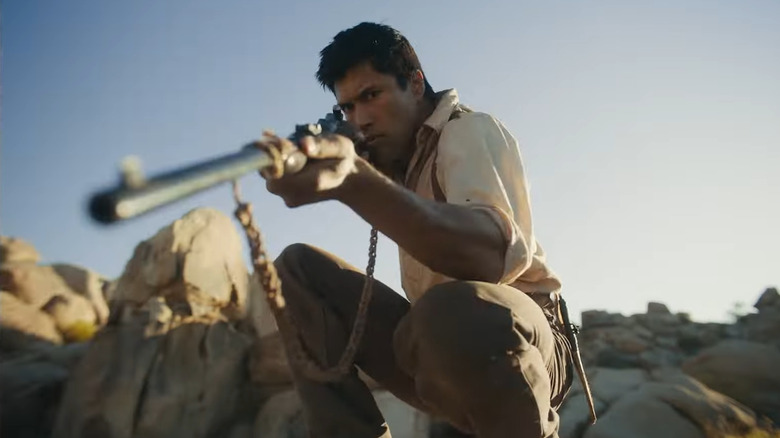
The movie is a simple villains’ odyssey, get the cash and get it “home” to the South, and fend off Yankee cavalry, a nosey posse, Mexican bandits, a lone bushwhacker and Indians as they do. The siblings in Col. Jonas’s “Hellbenders” (named for a salamander) will fight over the mission, the money and the women they get to play a grieving widow escorting her late husband’s coffin to wherever they expect to bury him. And Col. Jonas will sound positively Falwellian in his mission to create his “new Confederacy of states created under God.”

But, about that mission. Does anybody think a lone coffin could hold enough greenback dollars to “reorganize the Confederacy, attack the Union and win back the South?” Confederates were never very good at math, then or now.

The one son of the colonel who seems savable might be Ben (Julián Mateos), the one who has to recruit a fresh “widow” (Norma Bengell) when their first one, a brassy, weepy drunk (María Martín) gets herself killed. Ben had a “different mother” from the other two (Gino Pernice and
Ángel Aranda), who are drooling savages. Ben is almost humane.

Corbucci puts on a staging, filming and editing a shootout tutorial in the film’s first set-piece, the ambush in which the cavalry escorting a load of worn out currency to a mint where it can be destroyed is wiped out.

There’s a cornball game of cheater’s poker in a Denton, Texas saloon, a borrowed Sergio Leone plot-point (treasure in a coffin to be dug up) and a less-than-Leone feel in the dialogue, the cheap costumes, too-tidy makeup, the looping and the not-Morricone score.

The film doesn’t dawdle between the way stations on this quest. But it lacks urgency, and even the fanaticism seems blase.

Critics at the time noted this was not one of Cotten’s better performances, and it most certainly isn’t. But one can appreciate the callous fanaticism for the Lost Cause, his dismissal of the slaughtered, foe and friend.

“Don’t fret about them, son. We’re not kin.”

But I’m not all-in on this film, which has its moments, just not enough to overcome the grating shortcomings Italy’s finest brought to America’s greatest gift to genre cinema.

When it comes to Spaghetti Westerns, there’s Chef Leone, and everybody else — Corbucci included — is just pasta in a can.

Rating: unrated, violence

Cast: Joseph Cotten, Norma Bengell, María Martín, Julián Mateos, Gino Pernice and
Ángel Aranda

Credits: Directed by Sergio Corbucci, scripted by Ugo Liberatore, José Gutiérrez Maesso, and Albert Band. An Embassy Pictures release on Tubi, Youtube, etc.

Running time: 1:32

Posted in Reviews, previews, profiles and movie news | Comments Off on Classic Film Review: Tarantino-approved Spaghetti on the Trail — “The Hellbenders (I crudeli)” (1967)

Netflixable? Turkish rom-com “Private Lesson” follows the International Formula

The new Turkish rom-com “Private Lesson” was filmed and set in Istanbul. But with its fashionable college kids on the make, sexy consenting adults flirting and showing a little skin, tech touches and the like, it could be set in Milan, Mumbai, Madrid, Mexico City or Miami.

Western culture and Hollywood mores have spread far and wide. And one of the reasons we take these trips Around the World with Netflix is to see how much alike world cinema, if not the world itself, reflects that. Watching these films just builds on my thesis that Netflix is Hollywoodizing global filmmaking faster than any big studio franchise.

With Netflix approving the projects and signing the checks in Spain, Uruguay, Italy, Poland, France or Indonesia, we’re seeing local versions and local customs imprinted on time-tested Hollywood formulae.

“Private Lesson” — the title has a Hollywood raciness because of what that implies in most every Western film that’s used it — is about an Istanbul influencer and makeover artist, a gorgeous young woman who teaches girls and young women in a secular corner of the Islamic world how to get what they want.

So there’s a little “What a Girl Wants” about it, with stakes that every now and then tip us off to Middle Eastern morals and dire or at least unpleasant Islamic consequences.

When “I want to be noticed” is a coed’s fondest wish, the midriff baring hotties at World University consult with Azra (Bensu Soral), who isn’t really enrolled there any more, but is still young enough to pass for a super-stylish grad student mingling with her peers.

She teaches them how to attract a man’s attention, how to place herself within his field of view at the right parties or clubs. She will call this school dean or that other responsible adult in her clients’ lives, pretending to be a teacher or a parent, just to provide cover for where they’re going tonight, trips they might take or dance classes their conservative parents wouldn’t approve.

But it’s a secret. The last thing Azra wants is several popular girls blabbing about her services in the restroom and having the university chancellor’s niece overhear them.

Hande (Helin Kandemir) is a studious bore, cosplaying as Afife Jale as she tries to sign classmates up to her “Imo” club on activities day. I mean, who wouldn’t want to meet and talk about “Immortal Literarians?”

But Hande lusts after the popular hunk Utku (Rami Narin). She blackmails Azra into taking her on. First lesson? Enough with the “comfortable” clothes!

“You don’t need ‘comfortable. You can be ‘comfortable’ when you’re old!”

Let’s start with lingerie shopping. And if you didn’t realize Turkey produced romantic comedies before now, you certainly won’t see that coming.

Hande learns “Men and women aren’t equal. We’re in balance.” That sounds almost traditional.

Another lesson? “What was Cinderella’s biggest mistake? She picked a guy interested only in appearances.”

A lot of these “rules” seem to contradict themselves — be a lady, dress sexier, “learn to say no” but sure, I’ll call and make an excuse so that you can hit this or that party.

In the tradition of scores of such mentoring comedies, Azra is thrown off her game when a bare-chested, cocky and self-centered fashion photographer (Halit Özgür Sari) moves into her apartment building and rudely imposes on her life.Burak becomes more attractive when he helps out with Hande, who falls into the “tequila shots” trap on her first night clubbing.

Director Kivanç Baruönü, who did the sci-fi comedy “Arif V 216,” doesn’t so much strike a balance between Westernized values and Islamic Conservatism here as normalize the sorts of things one sees in scores of North and South American and European rom-coms — many of them released by Netflix — for a Turkish audience.

Likewise, he and screenwriters Murat Disli and Yasemin Erturan are putting a palatable “tolerant” and quasi-feminist face on Turkey with films like this. As I said at the outset, hit the dubbed translate button on your Netflix settings and this film could take place literally anywhere that The Gap, Forever 21, H & M or Urban Outfitters is spoken. There’s no hint of ancient Istanbul about it.

That makes “Private Lesson” too generic to recommend. It’s too tame, trite and formulaic (there’s even a hip hacker called in to save girls from a nude-photo date predator) for Western tastes.

But like other Turkish rom-coms Netflix has released and I have reviewed, it’s a promising start.

Rating: TV-MA, adult situations, profanity

Cast: Bensu Soral, Halit Özgür Sari, Rami Narin and Helin Kandemir

Credits: Directed by Kivanç Baruönü, scripted by Murat Disli and Yasemin Erturan. A Netflix release.

Running time: 1:30

Posted in Reviews, previews, profiles and movie news | Comments Off on Netflixable? Turkish rom-com “Private Lesson” follows the International Formula