
I don’t recognize the players here, but making the main effect a simple trick of eye color and the magical time travel gimmick a chrome colored pill is a novel B or C-movie approach.
Jan. 17, feast your eyes on “The Tomorrow Job.”
I don’t recognize the players here, but making the main effect a simple trick of eye color and the magical time travel gimmick a chrome colored pill is a novel B or C-movie approach.
Jan. 17, feast your eyes on “The Tomorrow Job.”

Sub-freezing temps and high winds covering much of North America are doing a number on the second weekend of “Avatar: The Way of Water.”
With a holiday weekend, decent word of mouth that’s kept the take high all week (It has the best Wednesday of 2022), one might have expected the super-expensive 20th Century/Disney release to come closer to matching its $134 million opening weekend. Nothing doing. It’s down about 60%, with a $55 million weekend, $82 million through Monday take, per Deadline.com.
“Puss in Boots: The Last Wish” is seriously underperforming, as smart parents know better than to freeze their kids in this weather. A $3.8 million Friday (It opened Wed.) points to an $11 million or so weekend. Ouch.
“I Wanna Dance with Somebody,” the Whitney Houston bio-pic, is angling for a $6 million weekend, maybe as much as $10 million by midnight Monday.
“Babylon” opened wide this weekend, and this long-as-“Avatar” Hollywood history lesson will be lucky to make it to $3.5 million by Sunday night, $5 million by Monday night.
“Violent Night” is racking up another $3 million this weekend.
And “The Whale,” an Oscar contender opening wide-ish, cracks the top 10 with a $1 million or just under three day weekend opening.



“Luckiest Girl Alive” might be the best “Lifetime Original Movie” ever, certainly the best one of those Netflix has made.
Yes, that label is both descriptive — a film that has a female protagonist overcoming obstacles or some horrific event — and pejorative.
Lifetime Original Movies, even versions of them made for Netflix, are soapy and empowering and chatty. Rare is the genre outing that isn’t about a woman overcoming some monstrous thing a man or men in general have done to her.
Mila Kunis has her best dramatic role in years thanks to Jessica Knoll’s adaptation of her best-selling novel. And British TV director Mike Barker (“Broadchurch,” TV’s “Fargo”) manages an uneven film in which the trauma is palpable, the surprises deftly hidden and his star has the room to give a star turn.
Kunis plays New York glossy mag “trend” journalist Ani Fanelli, an editor-pleasing author of journalism “skanky” enough to “keep the lights on.”
Salacious listicles like “60 Handsfree Ways to Get Him Off” sell “The Women’s Bible,” and editor Lolo (Jennifer Beals, quite good) knows it. That’s why she’s trying to wrangle jobs for them both at the New York Times.
Ani is about to marry into money, and insists that the handsome Luke (Finn Wittrock) “knows all my secrets, and still loves me.” But Ani has a huge trauma in her past, something her interior monologues won’t let her forget. Registering for knives at a posh Manhattan cutlery emporium triggers her.
“Snap OUT of it, Psycho!” her inner voice tells her.
Whatever happened, happened at a prestigious private school in Pennsylvania. Whatever happened made national news. Whatever happened, Ani, who went by “Tiffani” back then, survived. And whatever happened, another survivor has built a publishing and activist career out of it, one in which he labeled Ani “complicit” in the crime.
Nearly two decades later, she may be six weeks from her dream marry-up wedding, which thrills her gauche “Real Housewives of PennyTucky” mother (Connie Britton, terrific) more than her. But all that ugliness is coming back into her life thanks to a persistent documentary filmmaker (Dalmar Abuzeid) who wants the “survivor who has never spoken out” to talk for his film. And even though he’s also talking to her chief tormenter, he’s full of assurances about not victimizing her again, “keeping her safe” in the film, which makes him either diabolically disingenuous, or laughably naive.
“Luckiest Girl Alive” is about all the juggling women must do — career, marriage, money — with trauma a whole new set of balls Ani must keep in the air as her interior monologues debate whether or not to do the documentary, whether or not to follow her husband-to-be to his new job in London and whether any of this will help her decide to confront the past.
“What’s the point of punching above your weight if you’re not fighting?”
Continue reading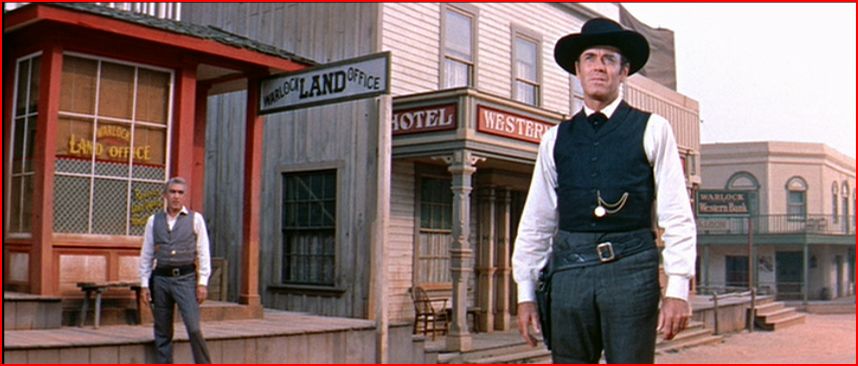
You think you’ve gotten around to most every Western worth its spurs, the ones directed by the Four Masters of the genre; John Ford, Howard Hawks, Henry Hathaway and Henry King.
You figure saddling up for the Anthony Mann/Jimmy Stewart collaborations, and even the more twisted takes on the genre by Nicholas Ray and surely you have Westerns covered.
And then somebody talks up “Warlock,” a title I’ve skipped by dozens of times, despite the cast of favorites and the colorful support.
It’s a “town tamer” tale with a heaping helping of “My Darling Clementine” about it. Warlock’s a town being bullied by murderous cattle thieves. Their deputy is chased off, humiliated. Let’s bring in the gunman Henry Fonda and, instead of a gambler/gunslinger played by Victor Mature, trade up for the great Anthony Quinn.
Instead of a Clementine, we’ll sub in the righteous, church-going mine heiress, played by Dolores Michaels, who sees something noble in the hard man who makes his living killing goons and the brutes who employ them.
This Edward Dmytryk film is a morally ambiguous Western, as one might expect from the director of “The Caine Mutiny” and “The Young Lions.” The town named Warlock might have summoned and hired a town tamer to be their marshal working “outside the law.” But they pay lip service to being conflicted over killing that comes at a terrible social cost and fails to solve the problems that simplistic thinking, to this very day, thinks it’s supposed to.
The aged, hobbled “judge” (Wallace Ford) rants about the dangers of such men, of “any man who sets himself above others,” above the law, above lives of those he’s allegedly protecting.
And Fonda’s veteran town-tamer Clay Blaisedell is experienced enough to know the life cycle of the job, when folks figure he’s gotten “too powerful,” which always happens when the big trouble is over, and ask him to leave.
Richard Widmark is a conflicted member of the “San Pablos” boys, a cattle operation out on dusty range and this film’s version of the Clanton family or its scores of genre imitators. They’re led by Abe McQuown (Tom Drake), a hard case fond of using numbers, lots of men with guns, to intimidate the town and run the old deputy out.
He’s also big on projecting. Nobody talks about “back shooters,” the lowest of the low in gunfighting, more than McQuown. Nobody’s quicker to resort to such deadly cheating. That makes him a law unto himself. What kind of man is he?
“Worse than he oughta be,” Johnny Gannon (Widmark) admits. “Gettin’ worse all the time.”
Johnny’s come to a fork in the road with this outfit. And even though his hotheaded kid brother (the famous comic and TV “Batman’s” Riddler Frank Gorshin) is remaining, Johnny opts to ask for the newly-open deputy job.
That sets him up in opposition to the new mercenary marshal, and gets the attention of the newcomer-to-town, the sometime prostitute Lily (Dorothy Malone, quite good). She’s a witness to the robbery and murder that sets this story in motion, and it turns out she’s been tracking Blaisedell and her ex-lover Morgan across the West, hunting for revenge and the man who might give it to her.
Continue reading

The promo photos and plot description make “Seoul Vibe” out to be a Korean “Fast and Furious” film. At the very least, we have a right to expect lots of action and wild car stunts performed by characters played by a good-looking young cast.
But call it a letdown, a not-quite-there-yet thriller or a 65 minute movie asleep in a 140 minute time-suck, any one of which give away that I think “It’s a bust.” The plot is dull, the pacing uneven and the get-aways, while decent, are mostly saved for the third act. So, wake me when you get to that, right?
A hot young driver, Dong-Wook (Yoo Ah-in) and his partner-in-car parts Joon-gi (Seong-wu Ong) are freshly home from arms-running in Saudi Arabia.”The best driver in the world” has dreams of Daytona and his hype-man pal dreams of going with him.
But no sooner have they landed at Gimpo Airport when they’re spotted by Men in Suits. They barely have time to reunite with their crew (Lee Kyoo-hyung, Park Ju-hyun, Go Kyung-Pyo) before Prosecutor Ahn (Oh Jung-se) shows up ready to arrest the lot of them.
“Priors,” you see.
It’s 1988, and Seoul is bracing for the Olympics. The country’s politics are the usual pre-or-post-attempted-coup mess, and Ahn wants them to get the goods on the corrupt goons keeping a disgraced leader well-financed. Madame Kang (Moon So-ri) and the amusingly “Dukes of Hazard” ranked General Lee (Kim Seong-gyoon) are into something that’s yielding lots of Yankee greenbacks. There’s this “ledger” that the prosecutor wants.
Go undercover, become drivers for their smuggling operation, get that ledger, and he’ll clear everybody’s record and hook up those with American racing dreams with visas.
That’ll entail passing a hairy (not really) cross-town driving test dreamed up by the villains, and keeping their motives secret from people who won’t hesitate to kill them if get wind of their plot.
Hyundais and other local rolling stock must be modified, all cars from that boxy era that produced the Nissan Skyline in Japan and K-Cars and Cavaliers and the ugliest Ford Mustangs in history in the U.S.
The drivers, Dong-wook’s biker-babe little sister (Park Ju-hyun) and others with dreams of being “spies” take on a mission wondering if Prosecutor Ahn will be there for them when the chips are down.
The profanity-peppered dialogue isn’t much, either in Korean with subtitles or dubbed into English.
“You think this is a movie? Cars don’t blow up that easily!”
Novel ways of getting cars on two wheels, physics-defying sequences in chases and dopey bits of out-smarting the armed and dangerous bad guys — who of course take a hostage — will figure into the action, which as I say, is weighted heavily towards the third act.
Which is entirely too late to justify the sleep inducing vibe this picture manages up to that point.

Rating: TV-MA, violence, torture, profanity
Cast: Yoo Ah-in, Lee Kyoo-hyung, Park Ju-hyun, Go Kyung-Pyo, Seong-wu Ong, Oh Jung-se, Kim Seong-gyoon and Moon So-ri
Credits: Directed by Hyeon-seong Moon, scripted by Sua Shin. A Netflix release.
Running time: 2:20
The son of a clairvoyant joins an Icelandic gang in this Jan 9 release.
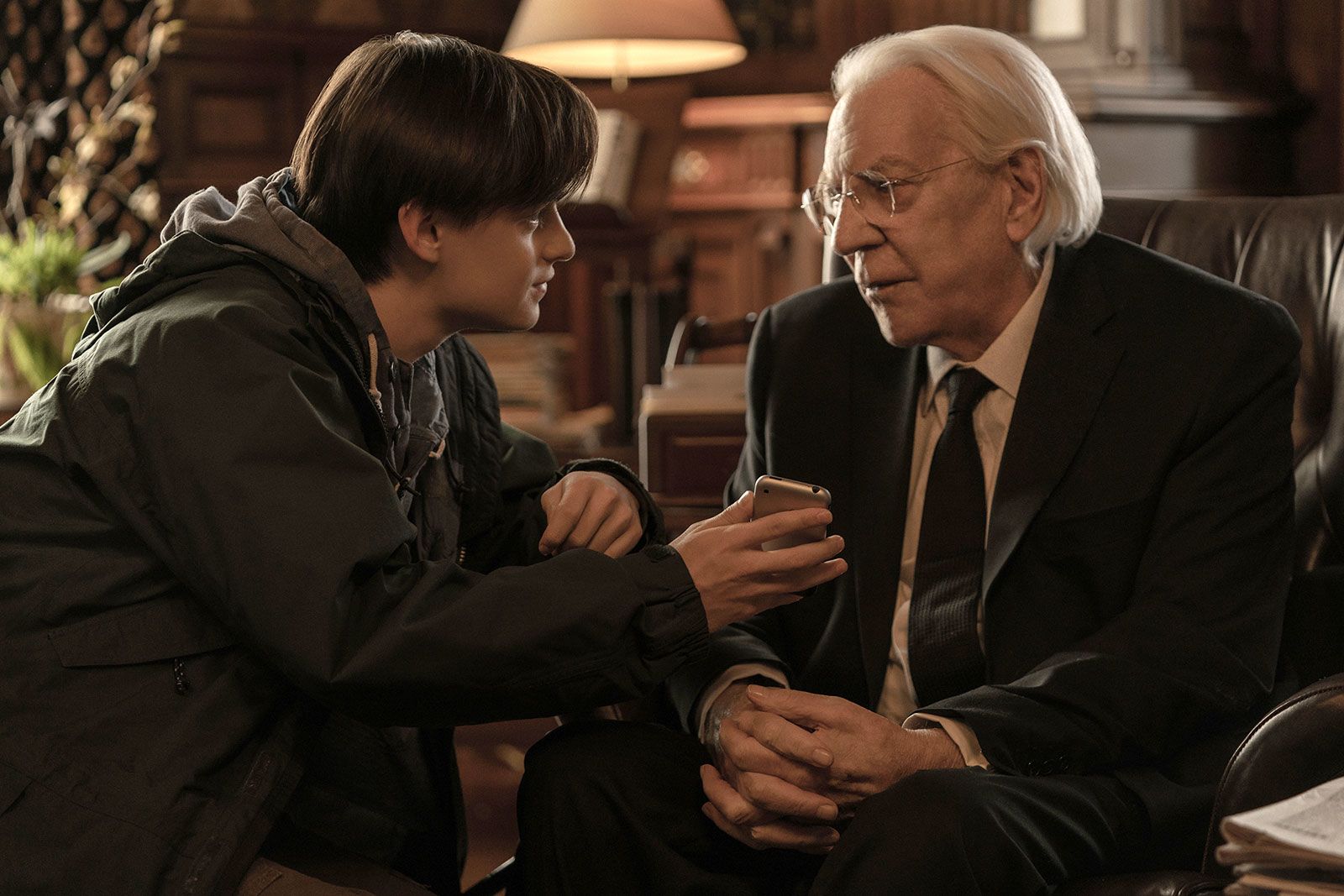
“Mr. Harrington’s Phone” is a Stephen King adaptation that’s more fun for King fans to deconstruct and psychoanalyze than to experience as a movie.
The tale is in expert filmmaking hands, and “Blind Side” and “Saving Mr. Banks” writer-director John Lee Hancock renders a kind of bookish, old fashioned comfort food version of a mildly spooky and seriously derivative story. But it is noting all the King obsessions, personal history and soap boxes within it than make it worth watching.
It’s a story with bits of autobiography about it, an appreciation of great literature, the hominess and gloom of King’s beloved small town Maine, a testy prophecy about the great distraction of modern life — cell phones — with a distracted driver who gets his just deserts only to have someone he wronged realize, as a Robert Palmer song once taught us, “that revenge does not taste sweet.”
In it, a child (Colon O’Brien) shines when called upon to read in church, which gets the notice of a rich old man (Donald Sutherland) in the small town congregation. The kid’s newly-widowed father (Joe Tippett) agrees to let the boy come to Mr. Harrington’s Victorian mansion to read to him.
Years pass and the boy reaches his teens. Craig (Jaeden Martell of “It” and “St. Vincent”) has had quite the education, just reading Joseph Conrad, Charles Dickens, Upton Sinclair and Dostoyevsky and D.H. Lawrence’s “Lady Chatterley’s Lover” to Harrington, who often finishes such sessions by asking the boy what he got out of the book.
The kid, in turns, asks questions about Harrington’s solitary life, his life in finance and his “secrets.” Harrington passes on advice Thoreau gave, which he hasn’t really followed himself — “We don’t own things. They own us.”
Which is why he’s leery of accepting the gift of this new gadget, an iPhone, when the kid comes into some money thanks to Harrington’s largesse. Harrington has just enough time to get iPhone addicted, and inveigh against the addiction and all that the “free information” the online future portends, and to urge Craig to “dispatch enemies with haste” in whatever endeavor the aspiring teen screenwriter decides to pursue, before he dies.
He was old. He saw it coming, as did we. And the fact that the country music-loving millionaire got Craig to use “Stand By Your Man” as their ring-tone “handle” so that the kid knows he’s calling is something we can see from several miles off, as well.
This is a “phone calls from the dead” story. And that Tammy Wynette tune promises to be perfectly creepy when it signals a call from the grave.
Continue reading
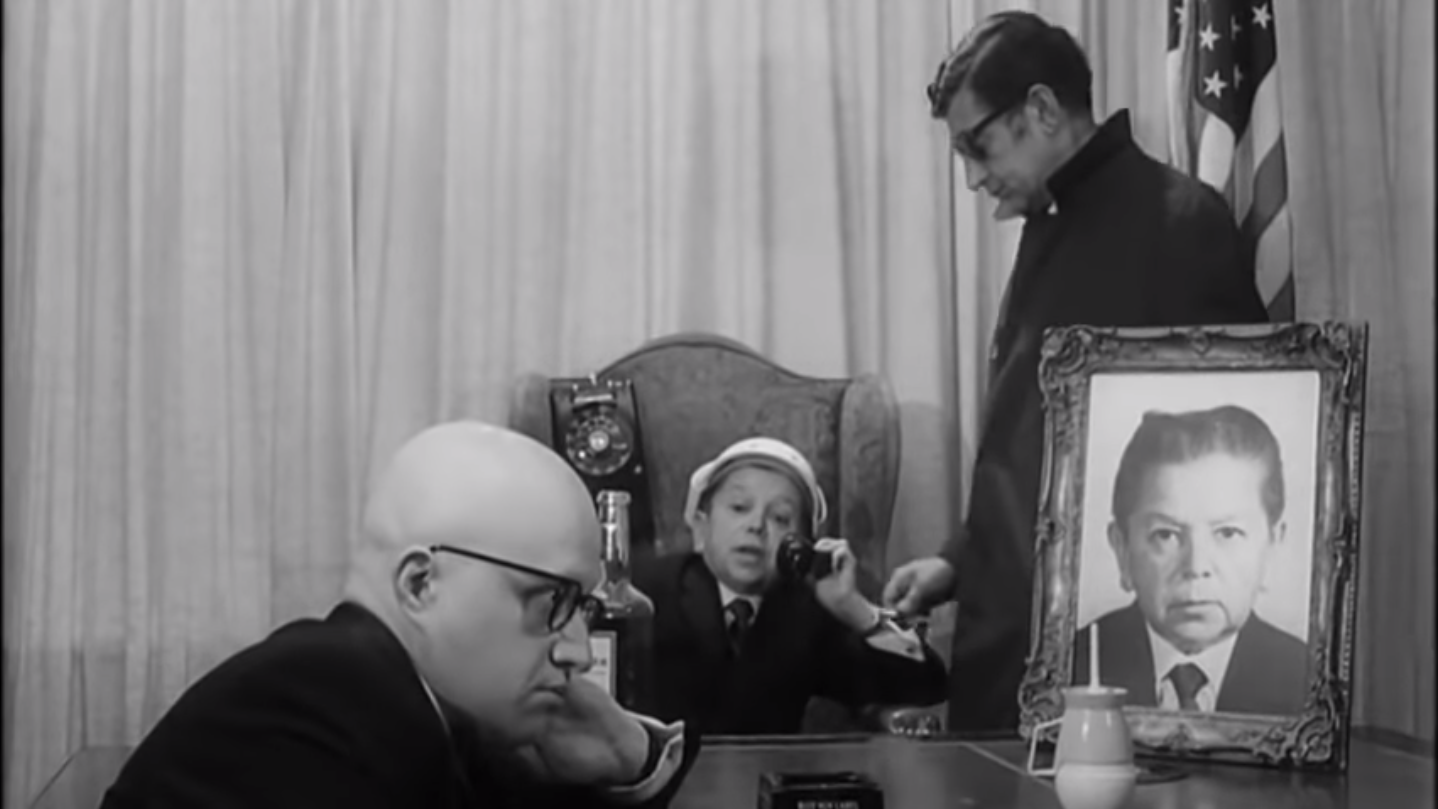
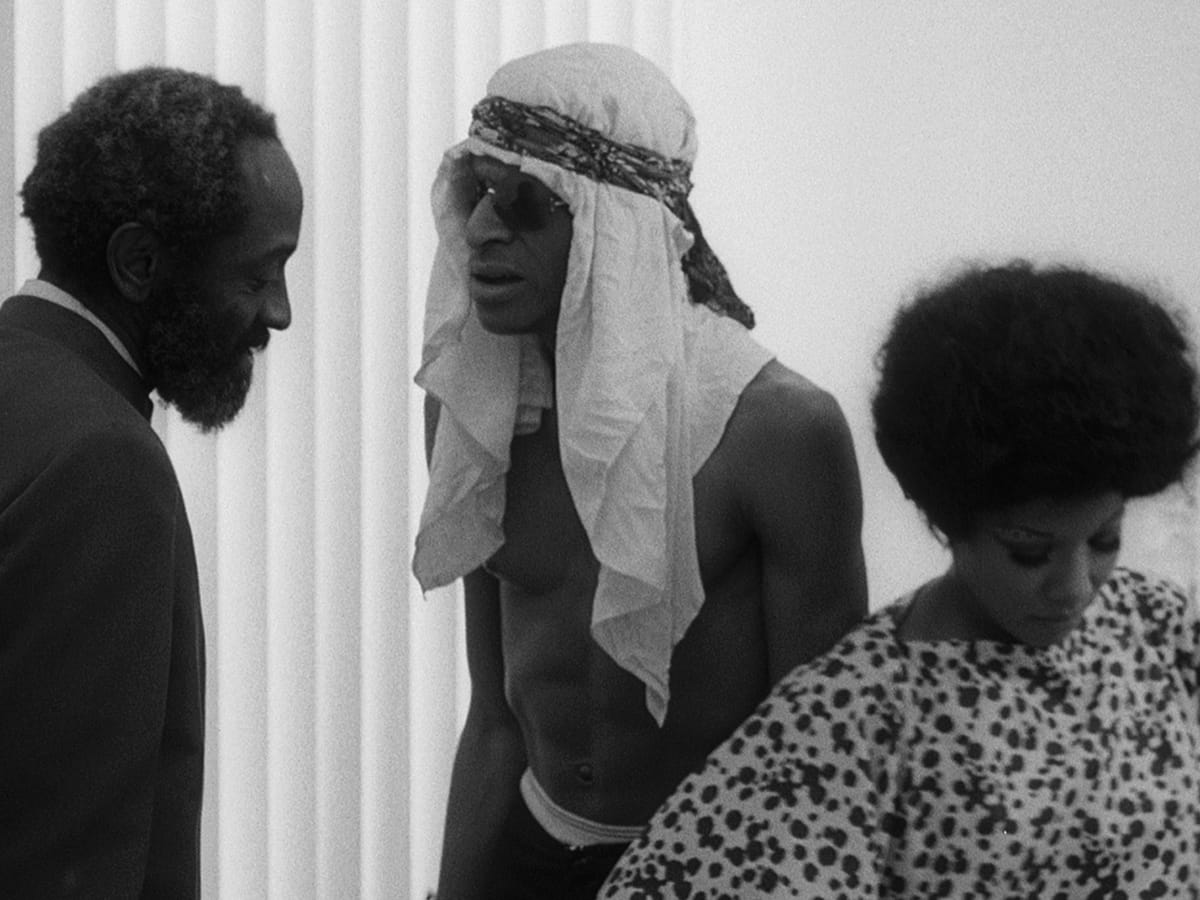
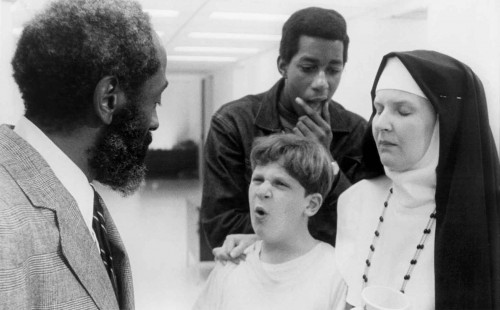
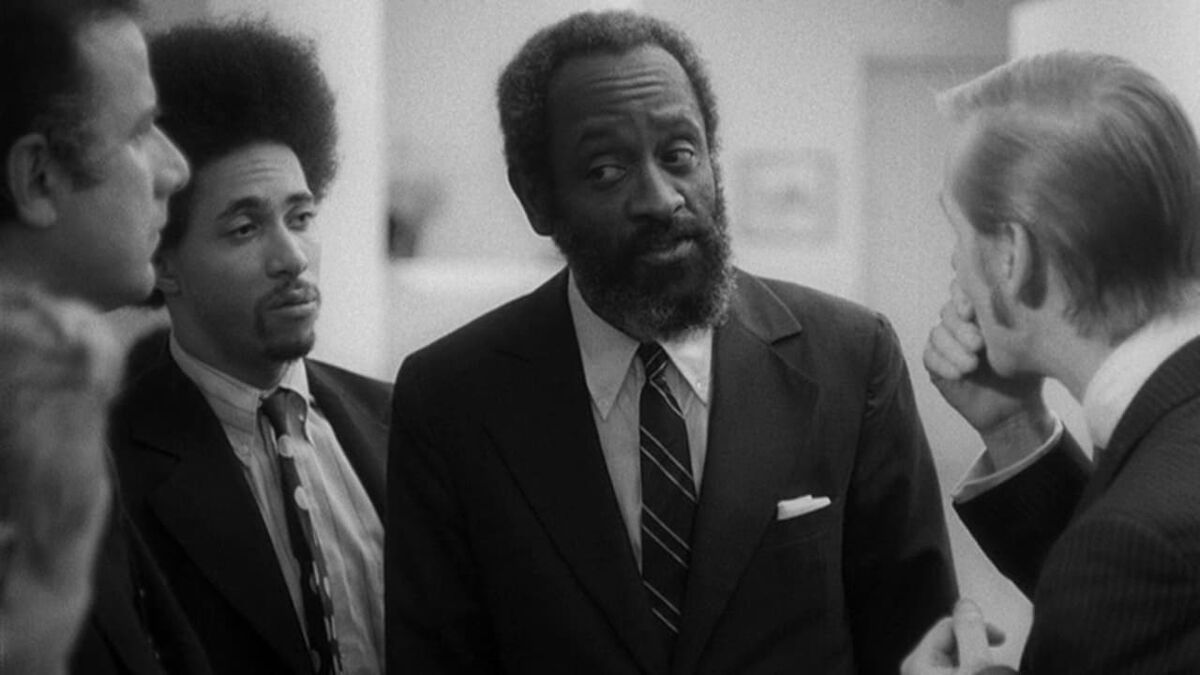
I remember seeing “Putney Swope” with an audience once, and I remember it landing laughs.
As that audience was at a whiter-than-white midwestern university film society, and this was some years ago, perhaps that’s telling. Robert Downey Sr.’s silly, broad and crude swipe at racism and Madison Ave. plays as an inside joke for insiders who are by and large outsiders of the experiences celebrated and skewered in it.
Seen today, what was funny in this energetic and flippant 1960s satire is occasionally still amusing. But the picture’s crude craft — part of its underground energy and appeal back then — just looks sloppy, glib and unknowing now.
The core concept is a clever one, although not as original as it is given credit for. Mainstream Hollywood films were always sending up “Mad Men” in the ’60s, generations before “Mad Men” became something worth taking more seriously. If a spoof made its way into a Tony Randall or Rock Hudson rom-com, you’re hardly dancing on the cutting edge.
It’s the racial component to this send-up that makes the film important.
The opening shot is bracing — a biker-vested white-haired geezer makes his NYC entrance by helicopter, skull and crossbones and Confederate flags flying from the open chopper door. He and his briefcase are escorted into the Elias agency and a board meeting. It turns out this freak is an academic consultant, a Ken Kesey “Merry Prankster” type.
“Beer,” he tells the ad-men, “is for men who doubt their masculinity,” which is why they consume so much of it in public, at sporting events.
That insight isn’t likely to help the Mad Men sell “the worst beer on the planet,” one of their clients. But there you go, thousands of dollars for a consultant, and this is what you get.
The agency’s aged founder (David Kirk) shows up, reminds them all of their job to “manipulate the consumer,” strokes out and dies. One subordinate keeps bellowing “How many syllables, Mario?” He thinks the seizure is a game of Charades.
While Elias’s corpse is still on the board room table, the power grab begins. Will the top job go to the senior man (Stan Gottlieb), to the son of the founder (Allen Garfield), somebody else? The bylaws say it has to be put to secret ballot vote. And that’s when this sea of white men outsmart themselves. Lots of them vote for the “token” Black man in their ranks (Arnold Johnson) thinking “no one else would vote for him.”
Thus does Putney Swope, formerly the firm’s music consultant, take over a giant agency and proceed to upend advertising. His promises not to change “much” notwithstanding, he immediately bans cigarettes and “war toys” advertising.
“Deny a young boy the right to have a toy gun, and you’ll suppress his destructive urges,” the agency man in charge of those accounts whines. “And he’ll turn out to be a homosexual. Or worse.“
The ad-men’s banter is peppered with gay slurs, tapping into the public attitudes of the day.
But next thing we know, the newly-renamed “Truth & Soul” agency has run off most of its white execs. Let word be passed to Boss Putney that “there’s a bunch of lilies shooting a commercial in our studio,” and Putney brings the palace guard and half the office (almost all Black now) to storm in and stop whatever deceptive nonsense they’re committing to film.
Antonio Fargas, later to find fame as a pimp/informant to those ’70s hip cops “Starsky & Hutch,” is the office’s resident ranter, “The Arab.”
“Get on out! Yeah, no more taking pictures of no jive cans and jive bottles and skinny-legged broads with stockings on them. Get on out of here! We’re gonna have some greasy fingers and some chicken and all the beautiful things that people have – who have it! And you ain’t got it!”
Truth & Soul proceeds to upend advertising, mostly based on the gut-reactions and whims of its mercurial, Dick Gregory-as-Black-Revolutionary leader. Swope repurposes a foul-smelling window cleaner that they can’t sell as “a ghetto soft drink,” and lays down the law to clients, who line up in the agency entrance to beg for the Truth & Soul touch.
“We don’t need your ideas. We don’t need your advice. And we don’t need no ‘lames’ in the hallway!”
Downey sends up the high-handedness of white culture imposing itself on “The People” via advertising by having this crackpot “genius” flip the script and impose his off-color, off-topic commercials on the masses.
“Putney is confusing originality with obscenity,” one of his own Black executives admits.
There’s a bit of The Beatles movies of the era in the crackling banter of Q&A sessions with the Rolls-Royce driven Swope facing down a rabid press corps.
“Mr. Swope, did you sleep with your wife before you were married?”
“Not a wink.”
Continue reading


A hormonal kid sees his parents and baby brother hauled off by the police and relies on his equally clueless peers and a phone sex operator for guidance in the unlikely one-night odyssey “1-800-Hot-Nite.”
It’s not exactly a breakout film for second time feature director Nick Richey (“Low, Low”), but it’s a gritty and sometimes surprising “coming of age” outing, if anything that momentous can happen in a single night. It’s a step up, and the kids are engaging actors and characters, and it leaves you will a little hope, always a nice way to finish.
Pals Tommy, O’Neil and Stevie are latchkey kids, wandering the night in a corner of SoCal where the working poor live within sight of the folks with pools and possibilities.
Tommy (Dallas Dupree Young) has gotten his hands on a credit card and has maybe the last phone booth in that time zone all picked out. They’re calling that sexy lady in all the free weekly back pages ads, Ms. 1-800-Hot-Nite.
Half-brothers O’Neil (Gerrison Machado) and Stevie (Mylen Bradford) crowd into the booth, all of them in a 12-14 age range. They don’t know how to use a credit card, much less how to talk to a phone sex operator. Not to hear them tell it.
“If there was a chick here right now, I’d…”
Yeah? You’d “what?”
Tommy struggles through a “ninety-nine cents a minute” conversation before the other two blow their cover. Their lack of game, and cluelessness about that lack, is obvious when they try and peep in on some local teen girls they know taking a hot tub break. Of course they’re “caught.”
The boys share stolen Vicodin, but in their plans to up the ante with some stolen beers Tommy finds himself bargaining with his equally irresponsible Dad (DaJuan Johnson) for the brews before bearing witness to a police raid that grabs all the guys at their poker game, including Tommy’s hated stepmom (Nicole Steinwedell).
Tommy and his “57 Posse” pals hot-foot it rather than letting Tommy fall into a welfare worker’s clutches. They’ve got a credit card, access to cash via one kid’s paper route money, big appetites and that 1-800-Hot-Nite number should they wonder how to proceed with the night, with a prospective romance or just with life.
Continue reading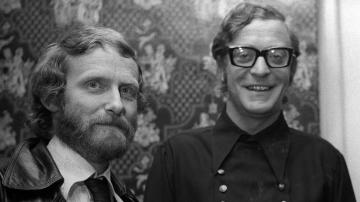
Mike Hodges, a British filmmaker of some repute who made key films in the careers of Michael Caine (“Get Carter”) and Clive Owen (“Croupier”) has died at the ripe old age of 90.
He did “The Terminal Man” and “Flash Gordon” and “Black Rainbow” and wrote screenplays and theatrical plays, a soft spoken man of letters who made some pretty hardboiled pictures.
Here’s a shot of him with Owen, and below, an interview I had with him at the Toronto Film Fest in the early 2000s.
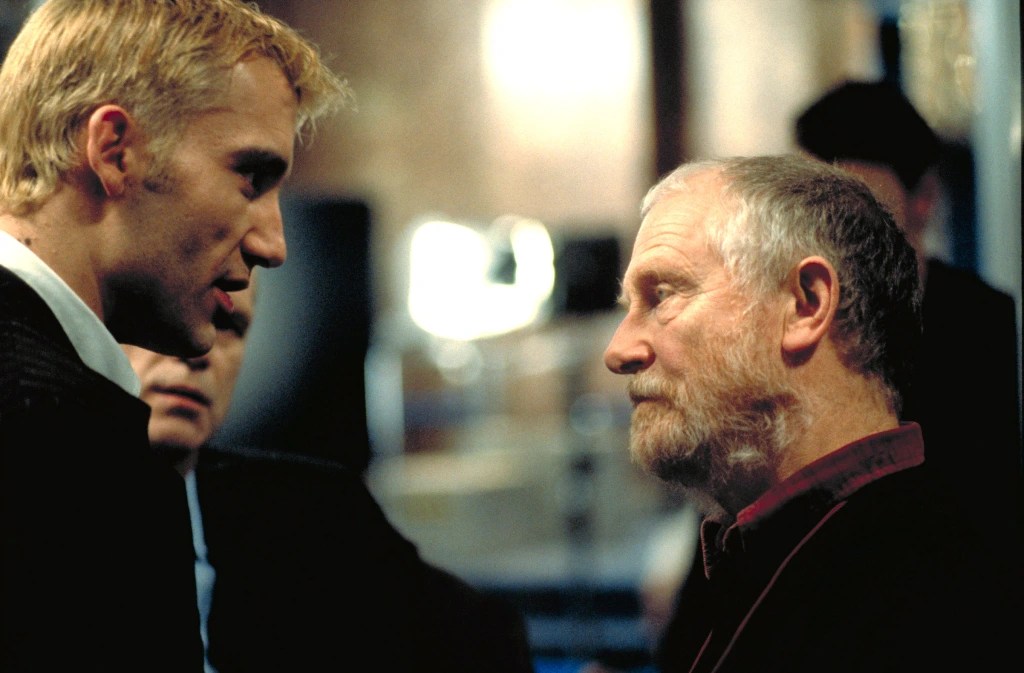
TORONTO — The courtly, elderly gentleman who opens the door to his hotel suite and promptly offers “Tea?” is not at all what we’d expect of the director of “Croupie”r and the down-and-dirty, new-to-video crime drama “I’ll Sleep When I’m Dead.”
Mike Hodges may be 72. But for some reason, you expect cigarettes, black leather sports coats and whiskey from a director with his track record. Instead, he’s in tweed for this late afternoon chat — tweed with a vest.
But there’s still a touch of the criminal underworld about him. The veteran British director — he had his big-screen big break with the gritty Michael Caine mobster vengeance piece, “Get Carter,” back in 1971 — has had a storied career, with both acclaimed films and ugly twists.
The studios came calling after “Get Carter,” which was recently named “Best British Film Ever” by the British Total Film magazine. But he quit “Damien: Omen II” in mid-production in 1978. He bad-mouthed “Flash Gordon” (1980) on its release, calling it “the only improvised $27 million movie ever made.” He turned down the cult hit “Miami Blues” and was relegated to TV in this country, before heading home to make the occasional low-budget drama in Europe (“A Prayer for the Dying,” 1987).
Until, that is, he “discovered” his friend Clive Owen, the star of Hodges’ comeback, 1998’s gambling-world film noir “Croupier,” who also stars in “I’ll Sleep When I’m Dead.”
Hodges’ “Croupier” made Owen a star. The director saw in his actor something he first saw in Michael Caine 30 years earlier.
“He’s got a real quality of stillness, like Eastwood, or Michael. Clive has this great analytical quality. He goes after scenes in a way that allows him to be that still. That’s an immense asset to have.”
In “I’ll Sleep When I’m Dead,” Owen plays Will Graham, the ex-gangster who left “the life” and dropped out of sight as a wandering laborer. His brother is murdered, and he comes back to find out why.
“It’s an older man’s picture than ‘Get Carter,'” Hodges says. “They have the same structure but a different outcome. I see the world differently, now. Carter doesn’t flinch from revenge. Will does.”
Hodges confesses to working a world-weary tone into his later work. He sees the end of his working career. He has his home in the country, a comfortable reputation and maybe the chance to do one or two more movies before he retires.
“I spent the entire ’80s making films I didn’t particularly want to make, just to survive,” he says. “You want to make something you believe in.”
Reviews of “I’ll Sleep When I’m Dead” have been mixed, with serious-minded critics, older ones especially, finding things to relish in its “autumnal essence,” as Andrew Sarris put it in The New York Observer.
“People will either love it or hate it,” Hodges says with a shrug and a smile. “I still trust the audience, trust their curiosity. Most filmmakers don’t.”

 Movie Nation