It isn’t the black and white cinematography that gives away the fact that “Lenny,” Bob Fosse’s film about the life, career and decline of comedian Lenny Bruce, is of a different era. It’s the patience.
This 1974 film, based on a stage play by Julian Barry (who adapted it for the screen), almost does a disservice to one of the most influential stand-up comics of all time simply by taking forever to get going.
But cinema was a rarified entertainment back then. You couldn’t watch a movie, distracted by commercials or text messages on the cell phone or tablet you might now be watching it on. You had to sit in the dark and watch this dark movie slowly unfold. You had to pay attention.
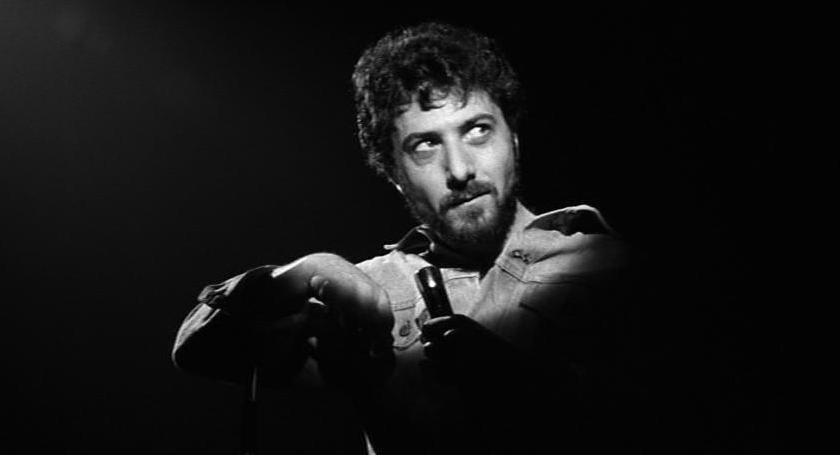
“Lenny” introduces Bruce — real name Leonard Schneider — near the end of his career, in his bearded, hipster deep dives into the veneer of American culture, censorship and his own persecution for violating “decency” standards with the words he used in his act.
The structure portrays Lenny’s ex-stripper ex-wife (Valerie Perrine), his retired-comic mother (Jan Miner) and his agent (Stanley Beck) being interviewed about him, intercut with snippets of his act, at the end and at the very beginning of his stand-up life.
The long flashbacks that give us more of his story come later. But the film opens when Bruce had ceased being funny, literally reading his obscenity trial transcripts in his last years, and showing us what a terrible, derivative, worn-out-joke hack he was in his early days, following his mother’s career path into the Borscht Belt resorts and venues, the smoky strip clubs and and dives of the early 1950s.
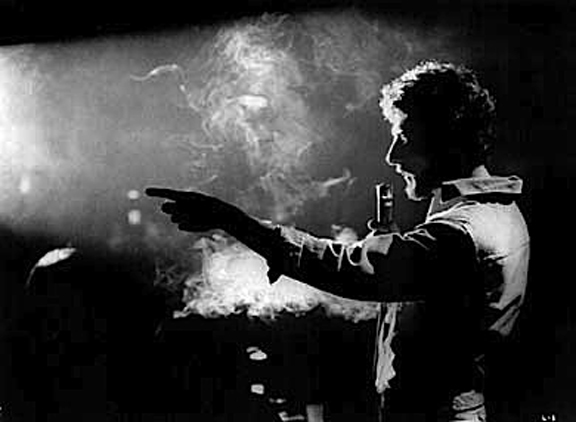
The viewer can be tricked into thinking “What’s the big deal? This “nepo baby” wasn’t the least bit funny.” The film, shot in grainy, dark black and piercing white as an aesthetic choice, is arresting right from the start. Bruce, played by Dustin Hoffman in what could be his finest performance, is onstage in tiny pools of light amidst the inky darkness and general silence (there’s no laughter from the audiences), hunting for laughs or at least pithy observations.
But the lack of laughs and monochromatic film stock set a tone. This is a history lesson. This will document a performer and thinker who transcended punchlines and shtick and talked about sex, race, violence and the grim unspoken truths of The American Experience and The American Way. Even when Bruce hits his stride, becomes the hot and happening stand-up embraced by “the in-crowd, he’s going to be pointing his humor at the maladjusted psyche and arrested development of the land of his birth.
“Now dig,” he’d say, before zeroing in on some insight about “uptight” America’s prudishness about sex, sex acts, venereal disease, the Kennedy Assassination or racism. Our biggest hang-up, he said then in an opinion that resonates today, is our desire to “not start talking about it.”
He was the first mainstream comic to get into “doing it,” “the dirtiest thing we could do to each other.” Bruce was the original “f-bomber,” talking casually in a big city street argot that would shock “Ed Sullivan Show” America, even in San Francisco, where his act really found its improvisational groove and its most appreciative audience.
“What is dirty and what is clean?” he’d ask. And then he’d open up the Life Magazine issue that broke down the frame-by-frame analysis of The Zapruder Film on declare this these were the real “dirty pictures,” the gruesome violence of the assassination of President Kennedy captured on a home movie camera. And that would lead him into the country’s way of sanitizing its myths and hiding the truth.
No, the shocked Jacqueline Kennedy wasn’t trying to retrieve part of her husband’s head that had been shot off, the way “history” remembers it. She was “fleeing” a car being targeted by a murderous sniper.
The film’s most breathtaking stand-up sequence is Bruce going off on race by asking if there were any Black members of the audience. He used the N-word to make that query, and you could hear a pin drop. He singles out people here and there, and starts his head-count, identifying this Jewish patron by an ethnic slur and that Italian, Hispanic or Irish one similarly. He basically excuses generations of comics who followed by insisting that banning such utterances from the culture wouldn’t change hearts and minds. Only the appropriation and overuse of them would defang the slurs and rob them of their power.
That still hasn’t quite come to pass.
Continue reading →







 Movie Nation