
If you’re old enough to remember the first attempt to put “Mario” in a movie…
Stick around until April 7 to see if this animated take on the timeless video game is a cast improvement.
If you’re old enough to remember the first attempt to put “Mario” in a movie…
Stick around until April 7 to see if this animated take on the timeless video game is a cast improvement.



Dave Stevens is one of those names whispered in awe among comic book cognoscenti. Because the people in the know know — his peers, collectors, the most fanatical fans.
He was “a once in a lifetime artist,” an exemplar who showed his corner of art “what a refined comic could look like.”
He’s best known for the exquisitely drawn, inked and colored “The Rocketeer” comics that inspired one of the most charming films that medium has ever produced. But when Dave Stevens took on inking duties for the newspaper comic version of “Star Wars,” you could see Carrie Fisher, Harrison Ford and Mark Hamill’s photo-real faces, vivid in expression, emotional in the eyes.
He drew storyboards for films like “Raiders of the Lost Ark” and Michael Jackson’s landmark “Thriller” video, stunningly-detailed illustrations that are as beautiful and collectible as Norman Rockwell or Maxfield Parrish. He did pin-ups that brought 1950s icon, model and actress Bettie Page back to life and cultural prominence. And his comics, lovingly re-issued in hardcover collections, are eye-popping, so vivid, playful and full of life, yet exacting down to the tiniest detail, that there’s no mistaking him for anybody else.
“Dave Stevens: Drawn to Perfection,” is an adoring portrait of an artist who gave his medium “more work than comic books deserve,” as his friend and peer Jim Silke puts it. “Comic books are not made to be fine art pieces.”
But that’s how Stevens treated them. Sure, “It’s a trash medium” we hear him relating in an archived audio interview. “Newsprint” is as flimsy as “toilet paper, with watered down color and ink.” Stevens went to extremes, blew deadlines and worked and reworked materials for $150 a page, starvation wages that made him the quintessential “starving artist” in a medium where the real riches didn’t arrive until just before his death in 2008.
Friends, colleagues and collaborators — one of whom, Kelvin Mao, directed this film — grin and laugh at their frustrations in trying to get him to finish something — the final panel in a comic that is simply a seated bulldog, with Stevens obsessing over how one leg looked, a feminine curve here, a shadowy grimace there.
“Dave’s favorite drawing tool was his eraser,” one notes. His pieces that went public were “polished, like a diamond,” another adds. And you “don’t rush” the guy polishing a diamond.
He is humanized, a man who “loved beauty” and the female form — and women. The film tells us about Stevens’ upbringing, early promise and breakthroughs, his inspirations and his mentors and his frustrations with the limitations of comics and the aggravation of dealing with Hollywood.
Disney scrubbed Bettie Page — a real person turned into actual sexpot comic book character — out of the comics in making the film, but otherwise got “The Rocketeer” right. Emerging star director Joe Johnston, screenwriter Danny Bilson and Stevens ensuring that the comics’ “gee whiz” 1930s vibe survived the transition to the screen, and two cast members, Jennifer Connolly and Alan Arkin, later won Oscars. The 1991 movie lacked the action sizzle of the our era’s comic book blockbusters, but lives on as a cult and cosplay favorite.
Of course, it’s all very “inside baseball.” But if you’re into comics, “Drawn to Perfection” will illuminate for you one of the greatest artists the medium has produced. And if you’re not, you’ll still be bowled over by the quality of the work, the life in the drawn figures and the wicked, inviting sparkle in their eyes that made Stevens the standard which every artist since has had to measure herself or himself against.

Rating: unrated, nudity
Cast: Dave Stevens, Bruce Timm, Brinke Stevens, Danny Bilson, James R. Silke, Adam Hughes, William Wray, Joe Johnston, Olivia de Berardinis, Kelvin Mao and Thomas Jane.
Credits: Directed by Kelvin Mao. A Samuel Goldwyn release.
Running time: 1:39

Sad state of affairs, reviewing any Bruce Willis film these days. You sit with pen poised, waiting to hear if they give him a single line of dialogue.
He’s going out with a quickie “instant” trilogy, most of which won’t make it into a theater near you. Did you miss “Detective Knight: Rogue?” Me, too. But “Detective Knight: Redemption” is now upon us, so let’s accentuate the positive. For a bit, anyway.
Hand it to Aussie writer-director Edward Drake. He made “Gasoline Alley,” “American Siege,” “Cosmic Sin” and these three “Detective Knight” films (“Detective Knight: Independence” is due out next year) with Willis in his fading aphasia years. He’s getting the hang of how to make use of an iconic actor with a serious language disorder.
“Presence” counts for something. So Drake emphasizes that.
Willis, whose LA cop character went “Rogue” in the first film and shot up a lot of folks, is seen in prison at the beginning of this, the middle film of the trilogy. He doesn’t have a line for the film’s first 26 minutes.
His one-liners — when they come — are pithy, short and if necessary, pieced together from different takes.
“I killed bad guys. It was a good day,” he says to the NYPD captain (Miranda Edwards) who comes to ask for his help with a murderous gang of ex-con bank robbers terrorizing The Big Apple over the holidays. “I own what I did.”
He was “inside” and met the leader of that prison gang, the messianic Conlan (Paul Johansson of TV’s “Van Helsing”). Maybe he can…help her and NYPD out? Knight has some thoughts, and Captain Shaye isn’t going to like them.
“You said to ‘do whatever it takes.’ This is what it takes.”
We can see some of the work-arounds and accommodations made to Willis as this film plays out — his character masked so that somebody else can do a stunt or three — tossing a grenade, for instance. Every actor he shares a scene with does almost all of the talking, with Willis’ Knight feigning interest or contempt, depending on the situation.
Spare your “name” star so he’ll have enough in him to threaten to “shove a Christmas tree” just where a Bruce Willis character would shove it.
The movie piled-up around this deference and accommodation? It’s kind of “Die Hard” meets “Dark Knight,” bleak and bloody and political, with some wingnutty cultish craziness, cop worship and corrupt politicians not worth the badge these “desecrate the oath” types wear.
In a story told out-of-order, Johannson plays an ex-con and prison chaplain who busts out scores of inmates that he can dress in Santa suits with blood-stained Santa masks to go on his crime crusade attacking “corporate” Christmas and “the one percent” in New York’s banks, “Where you worship your money,” he preaches at the trapped hostages.
One of the escapees is the guy (Beau Mirchoff) who shot Knight’s partner (Lochlyn Munro) in “Detective Knight: Rogue,” who is now on the case, even though he is still LAPD and even though he’s now in a wheelchair.
Rhodes, the convict who shot him, has a wife and kid, which makes him…sympathetic?
The gangsters are “the Real Saints of Christmas,” murderous goons who kill guards, hostages and bystanders in a comic-book-sized slaughter spree that might bring the city to its knees.
Your move, Knight.


I liked seeing how this film was conjured out of everything Willis can still manage to pull off. The preaching and speechifying around him gets WAY out of hand, but Johansson needed to go over-the-top, to flesh out a movie around a star who is still charismatic but who can’t really deliver the goods or carry a film any more.
But there’s no sugar-coating how much of a comedown these films are, or the fact that Willis has been churning out these godawful B-pictures for 15 years, now.
It’d be nice if his handlers and family had found him something more bittersweet and smart, and not violent and crypto-fascist, for him to use as his curtain calls. That wouldn’t have been on-brand, wouldn’t have been “him” and would not have attracted his aged, shrunken reactionary fan-base.
Ask Mel Gibson how this sort of diminished stature works in an aged-out action star.
One just hopes The Once and Future John McClane was well-compensated, and that his retirement is as comfortable as he’s earned, even if this is nobody’s idea of “Redemption.”

Rating: R for violence, language throughout and a sexual reference
Cast: Bruce Willis, Paul Johansson, Miranda Edwards, Lochlyn Munro, John Cassini and Beau Mirchoff.
Credits: Scripted and directed by Edward Drake. A Lionsgate release.
Running time: 1:38


“Christmas with the Campbells” is a soft-and-squishy Christmas rom-com that tries ever-so-hard to be “edgy” when it oh-so-obviously isn’t.
Yes, there’s amusement in seeing that effort. Some. I mean, Justin Long attempting a folksy drawl as the outdoorsy nephew to his randy aunt (Julia Duffy) is cute.
“Gawd, if you were two years younger we’d have to try NOT to get pregnant.”
Duffy, playing up the elderly hair-dresser determined to keep sex on a schedule with her retirement-ready accountant husband (George Wendt) but getting into this banter with the nephew, is just as cute.
“That Wrangler butt’a yours is driving me NUTS!”
The M.O. here is to take your typical sappy snowy holiday romance, park “Pitch Perfect” Brittney Snow in it as put-upon and just-dumped by a vulgarian (“SNL” and “Home Economics” vet Alex Moffat) damsel, and have her pursued by his more down-to-Earth cousin (Long), throw in a lot of off-color remarks and jokes at it to see what sticks.
Vince Vaughn is one of the credited writers here, so the dialogue’s flip and profane when it isn’t being all sad and stiff. But one wonders if, along with the f-bombs dropped for shock value, Moffat’s little out-of-nowhere stunt-fart was in that script.
The set-up — Jesse’s a Chicago photographer and Petco part-timer hooked up with accountant on the make Sean (Moffat) who dumps her right after his mother’s renewed her invitation to Christmas in Ketchum, Idaho. Sean’s ready to move to New York and move on, with his no-big-deal spiel all worked out.
“We kept the fights clean and the sex dirty, and neither one of us were unfaithful — as far as you know…”
But Mrs. Campbell adores her antiquing, cooking and kvetching buddy Jesse and insists she come to Idaho anyway. Her nephew from out of town (Long) shows up, with his pick-up and his adorable Australian shepherd. They’re all set to get tongues to wagging in this gossipy small town when Sean changes plans and shows up as well, not knowing Jesse’s there.
AWK-ward. But not really that funny.
And yet Long, sounding as if he’s improvising a lot of his cornponespeak, goes for it.
“No need to hang your laundry out here in front of me. That’s YOUR Dairy Queen!”
Complimenting Jesse’s sparkly party dress — “You like like a disco ball made sweet love to a shootin’ star.”
Why, it’s enough to make a gal blush.
Everybody here has been around long enough to create personas that they lean into even as they try to mix things up a bit. The twist here is that the oversexed Idahoans are the ones who put the “Ho” into “Ho Ho Ho,” and the city gal and the nephew are the outsiders a tad rattled by that. But it doesn’t really play or pay off with big laughs or light tugs at the heartstrings.
Still, I suppose nothing says “Christmas” like a lot of “small town” folks, including the 70somethings, flirting and propositioning and nagging each other about sex in the most explicit fashion. To some people anyway.
Rating: unrated, lots of profanity and sex talk
Cast: Brittany Snow, Justin Long, Julia Duffy, George Wendt and Alex Moffat.
Credits: Directed by Clare Niederpruem, scripted by Barbara Kymlicka, Dan Lagana and Vince Vaughn. An RLJE release.
Running time: 1:28
A24 picked up this writing and directing turn from Eisenberg after it made a splash at Sundance.
A kid seeking online “validation,” a mother feeling cut off.
“When You Finish Saving the World” hits theaters in late January.
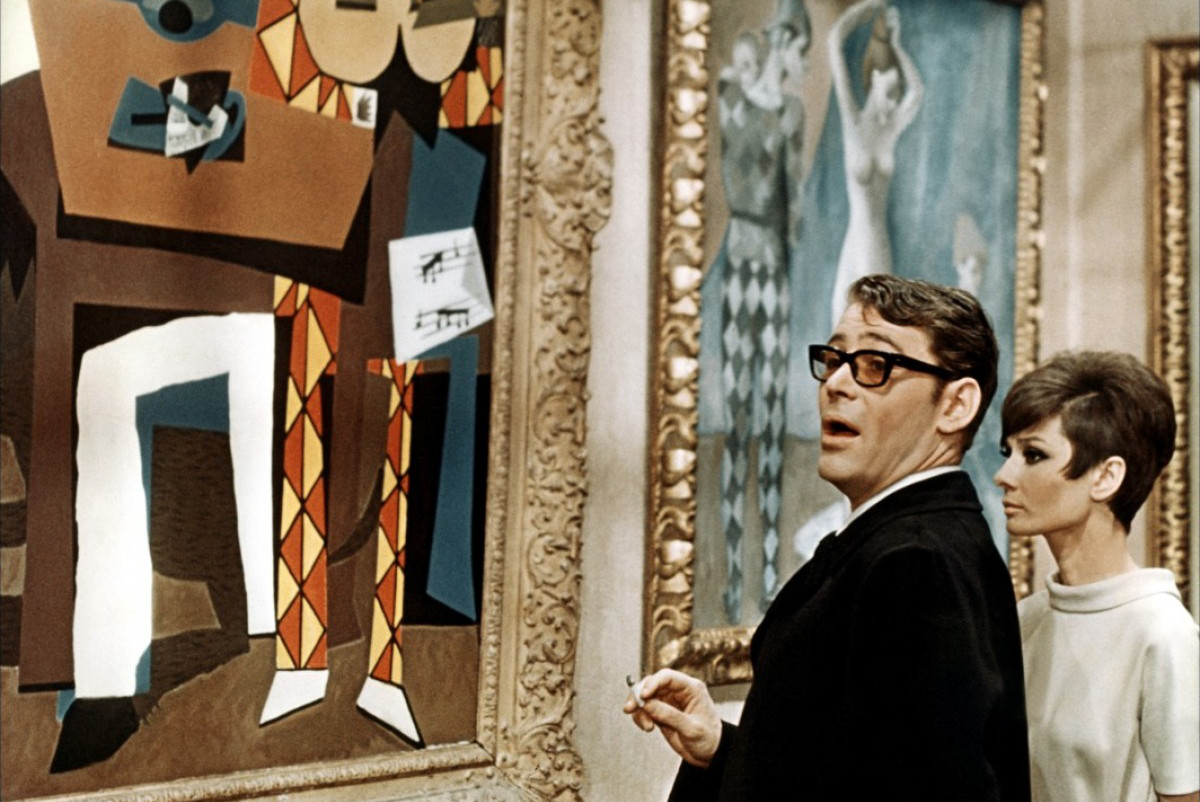
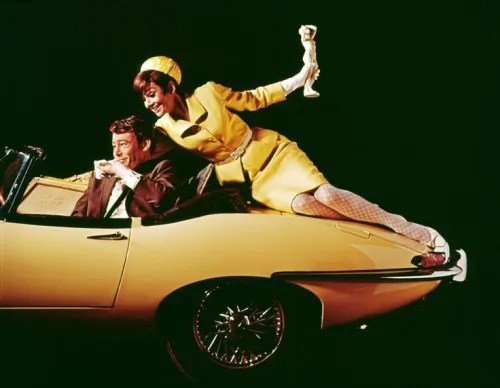
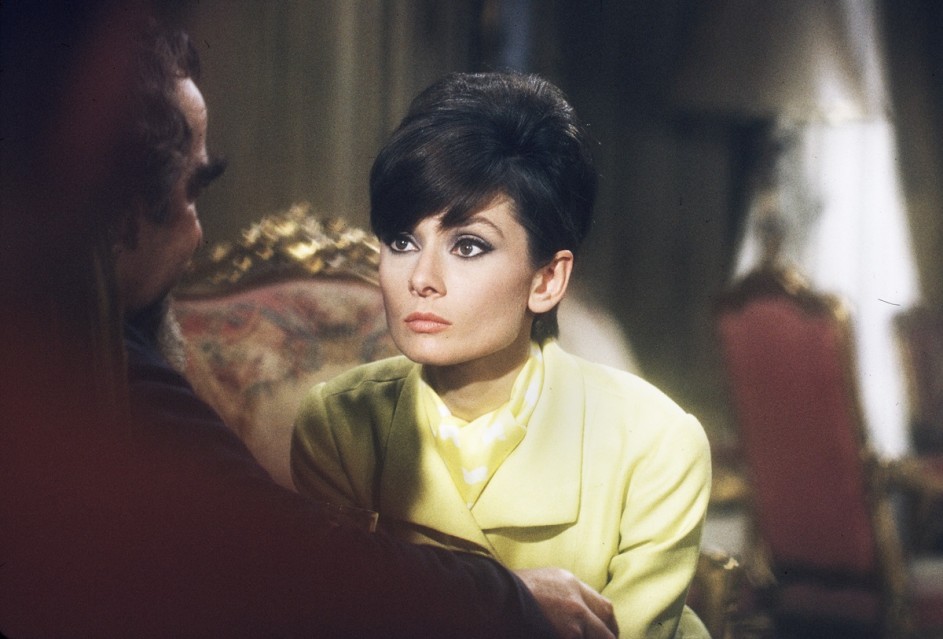
The great gamine, fashion icon, UNICEF ambassador and oh-by-the-way, film star Audrey Hepburn never worked with Alfred Hitchcock. Not blonde enough, I guess.
But she came close, flirting with Hitchcockian thrillers in “Wait Until Dark,” flirting with Cary Grant in a murderous comic thriller “Charade,” and carrying on with Peter O’Toole in the Paris of Earthly delights caper comedy “How to Steal a Million.”
The first joke that works in this William Wyler mid-60s wonder has Hepburn, in bed reading a paperback biography of “Hitchcock,” a sly dig that notes that while she never worked with “The Master of Suspense,” she did work with Wyler (“Ben Hur,” “The Best Years of Our Lives,” “The Big Country”), one of the great directors of his era, and not just once.
Together, they’d made Gregory Peck light and charming in “Roman Holiday,” and here, they reunite late in Wyler’s career to make a straight-up caper comedy/romance. “How to Steal a Million” is both adorably old-fashioned and a not-quite “swinging ’60s” time capsule that puts mid-60s Paris, fashion, wit and style under glass for future generations to marvel over.
Caper comedies were all the rage after “The Pink Panther,” and as Peter O’Toole had shown that he could be light and funny in the generally unfunny “What’s New Pussycat?” why not pair him with Hepburn and see what sparks they set off?
She’s Nicole Bonnet, the well-turned-out daughter of an art forger, played by the jolly character actor Hugh Griffith (“Start the Revolution Without Me” might have been his finest hour, but he was a larger-than-life Arab chieftain and horse lover in Wyler’s “Ben-Hur”). O’Toole is a thief she interrupts while stealing one of her father’s (fake) Van Goghs. She accidentally shoots him with one of her father’s antique (flintlock) dueling pistols.
“Well, it was pitch dark and there he was…Tall, blue eyes, slim, quite good-looking… in a brutal, mean way, Papa. A terrible man!”
She drives this “wounded” fellow, who goes by Simon Dermott, home to the Ritz in his “stolen” Jaguar — “I can’t drive a STOLEN car!” “Same principle, four gears forward, one reverse.” Eventually, when she realizes her father is about to be exposed as a forger, Nicole commissions the dashing Brit to help her steal a forgery from an ever-so-secure Paris museum to spare Papa from Prison.
“Why must it be this particular work of art?”
“You don’t think I’d steal something that didn’t belong to me, do you?”
“Excuse me, I spoke without thinking.”
The banter just sparkles here, and Wyler — not known for comedy — keeps it coming and keeps it coming at a sprint. The costume-designer turned screenwriter, Harry Kurnitz, wrote “Hatari,” the reincarnation comedy “Goodbye, Charlie” and the stage play which Blake Edwards and William Peter Blatty turned into “A Shot in the Dark.” He knew enough about comedy for the both of them, and Wyler had the good sense to do what he did best — get great takes and turn them into great performances, giving us a couple with crackling chemistry evident in all the antics they get up to trying to “steal a million.”
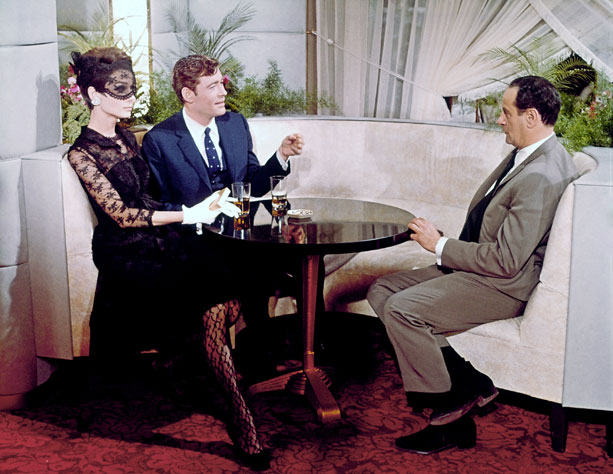
Eli Wallach plays a boorish American millionaire new to art collecting, hellbent on buying Papa’s forgeries and determined to have Nicole for his very own.
“Made up my mind. Man of action! Snap judgment. I bought a fleet of tankers that way once. One of the best deals I ever made.”
“But I’m not a fleet of tankers and I’m not getting engaged to a man I barely know.”
“Well, you’ll get to know me. Look me up in Who’s Who, Dun & Bradstreet!”
It’s so dated as to make you wince in a “#TimesUp” way.
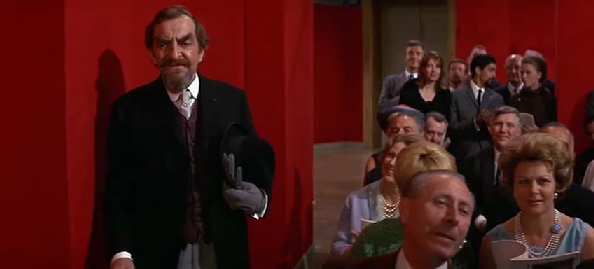
Other complications include Simon’s secret agenda (that plummy-voiced “Gaslighter” Charles Boyer figures into the story), and the great French actor Marcel Dalio (“The Rules of the Game”) who fled to Hollywood to a lesser career in character roles (he was the croupier in “Casablanca”) turns up as an art-loving Spaniard.
There are infrared sensors (a new thing) to be foiled, art auctions to visit, nightlife and cafe society to be sampled and Chanel fashions and instant classic cars to be ogled.
And it’s all so light on its feet. Sure, it’s slight and entirely too long. But rarely have two rom-com hours skipped by as merrily as this, a comedy that’s what “we” mean when we say “They don’t make’em like this any more.”
Rating: “approved” (PG, a shooting)
Cast: Audrey Hepburn, Peter O’Toole, Hugh Griffith, Eli Wallach, Marcel Dalio and Charles Boyer
Credits: Directed by William Wyler, scripted by Harry Kurnitz. A 20th Century (Fox) release, now on Amazon, Tubi, Movies! etc.
Running time: 2:03
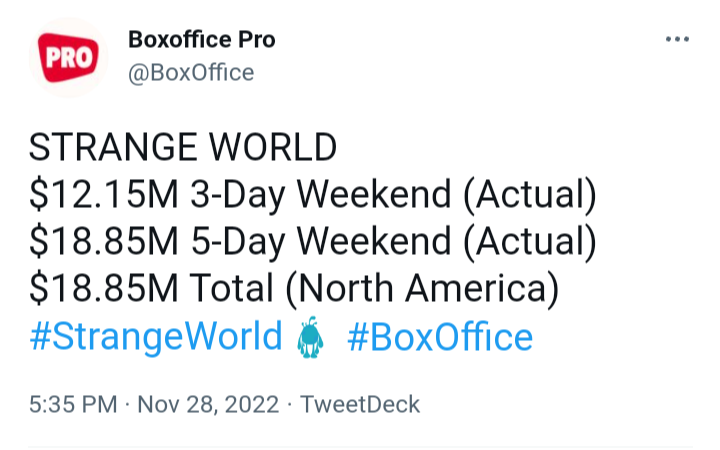
It was one of the BIG factors in this being the “worst Thanksgiving box office weekend ever.”
A Steven Spielberg movie opening with about $3.5 million over FIVE days is kind of unheard of, too.
A half-decent (but only half) Korean War movie, “Devotion,” pulled in a respectable $9 million.
But take away the $64 million or so “Wakanda Forever” pulled in, and theaters could have stayed closed and saved on electricity.
What a mess. Is there anything opening between now and Christmas that isn’t destined for Netflix and thus destined to make little if anything?
Bad news for theaters. Better hope “Violent Night” delivers the horror, the horror — and the fans. Seeing that one Tuesday night.
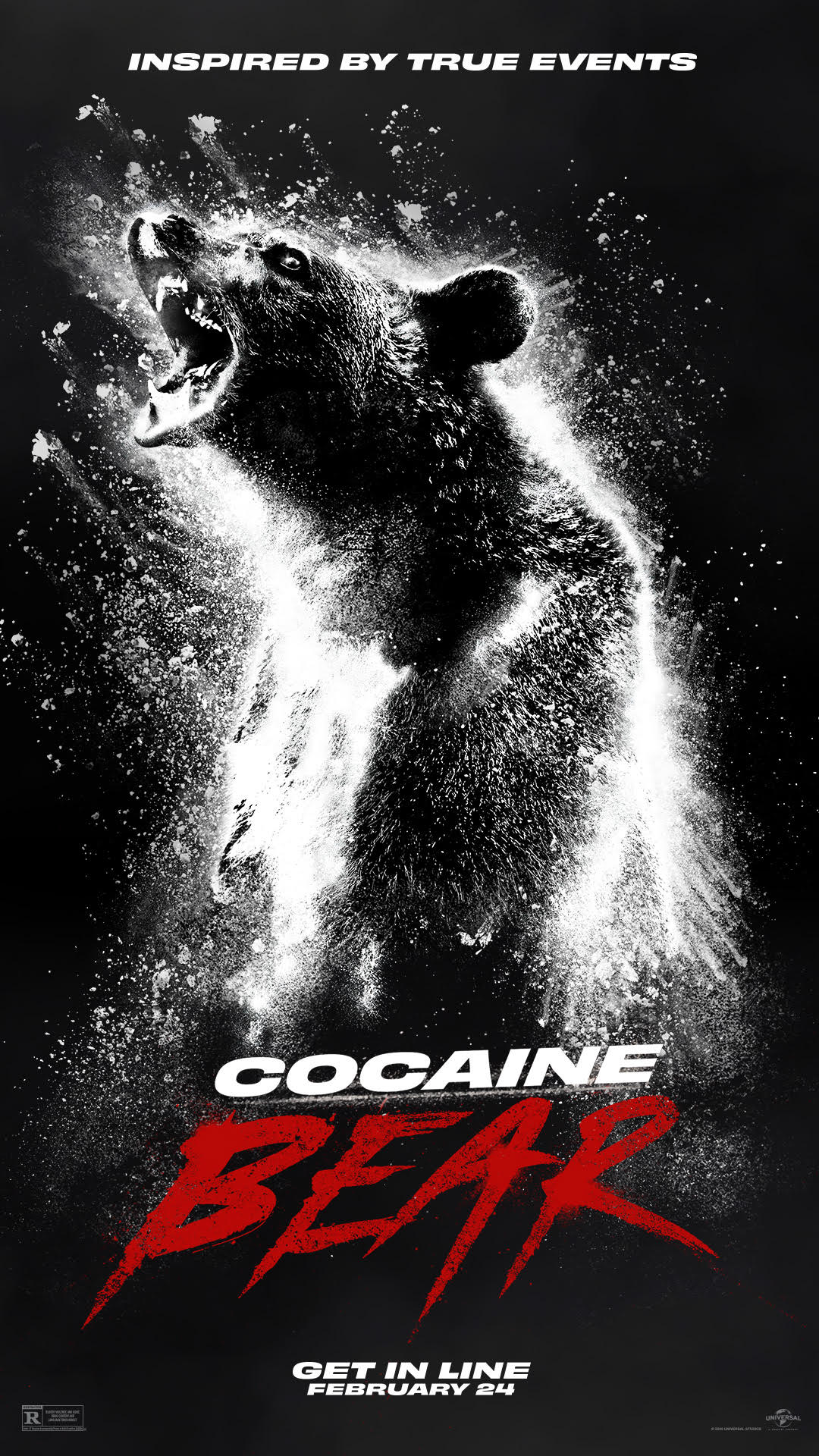
It takes a special kind of “creativity” to see this news story and think, “That smells like BOX OFFICE.”
How it took 38 years to make it to the screen is anybody’s guess.
Feb. 24.

“Reviewing” entails watching a movie, taking notes on it and then using those notes and your memory, your tastes, your idea of touchstone performances, screenplays, directing, editing and production design, to form an opinion of the film and its many components.
But that model kind of goes to pieces — or at least gets a thorough shaking — when you’re plowing all the way through the film and asking yourself “What the hell is going on?” and “What the hell is this about?”
So once again, we doff our hat to the Dutch master of misdirection, Alex van Warmerdam. The director of “Borgman” and “Schneider vs. Bax” lures us into “Nr. 10,” makes us ponder everything from what the title means to a beyond-abrupt third act turn that had me jotting down “Wait, what the hell just happened?” And then he leaves us with one of the more delightfully nasty shots at The Mother Church ever filmed.
I am sorely tempted to simply repeat my blurb for my review of “Borgman” and leave this at that.
“Maddeningly inscrutable, but it gets away with not playing by the rules. Somehow.”
“Nr. 10” breaks even more rules, most importantly the one in which we expect our screen storyteller to “play fair.” It’s not remotely as visceral an experience as “Borgman,” probably not as cerebral, either. It’s certainly more frustrating and less satisfying.
The opening acts are about a new play being rehearsed and kind of coming to pieces as it does.
Leading man Günter (Tom Dewispelaere) is somewhat at odds with distracted, older co-star Marius (Pierre Bokma). We’d feel sorry for Marius, who can’t remember his lines, because Günter and director Karl (Hans Kesting) are messing around with the blocking to put poor Marius in one “inferior” and submissive (overshadowed) position on stage after another. But we’ve seen Marius dismiss his dangerously sick wife’s concerns at being left at home alone.
Acting is a profession that lures the self-absorbed, and amplifies that absorption, after all.
Then we note that leading lady Isabel (Anniek Pheifer) has told her director/husband she needs alone time for “preparation,” and that’s she’s staying elsewhere until opening night. Turns out, she’s motor-scootering straight into Günter’s bed.
And self-involved Günter wants to keep this selfish affair from everyone, especially his adult daughter Lizzy (Frieda Barnhard), for reasons we can’t quite figure out.
Get used to that feeling. It’s van Warmerdam’s calling card.
Marius is about to up the stakes in his war with Günter by telling Karl what’s going on. Karl starts to spy on Isabel. Lizzy is following her dad around to see what Günter is up to.
Karl proceeds to sabotage his own absurdist play, yanking lines to punish this player and perhaps reward that one.
“There are no parts any more, just lines,” he declares (in Dutch with English subtitles). “It’s not a play, it’s a collage…an abstract collage without logic!”
The cast panics.
And there’s a spy in the company who is reporting back to this sports-addicted Catholic bishop (Dirk Böhling) who seems to want to know everything about everyone in this stage fiasco-in-the-making. He is pulling strings to manipulate one and all in service of some grand scheme that, as the headline to this review suggests, has more than a whiff of Kurt Vonnegut about it.
If you react to how this backstage backbiting builds towards something, and then is suddenly abandoned, with a “You have got to be kidding me,” you won’t be the first.
Warmerdam isn’t so much building a puzzle that he’ll solve, or invite us to solve, as grafting two wholly-formed, partly over-lapping long short films together and daring us to make sense of it all.
The third act’s turn towards theological debate seems utterly illogical, no matter how much about a character’s true past is explained and back-engineered. Mysterious strangers whispering mysterious words in your ear is nothing you want to burn through bandwidth on if you’re being forced to learn all new lines with opening night rushing at you so fast you’re sure to snap.
The theater scenes are so cleverly conceived — theater companies are notorious for such “Noises Off” shenanigans — and so well-acted that the film can only become a disappointment when this setting and story thread are abandoned.
As much as I like the challenge van Warmerdam’s satiric experiments always are, including this 1992 film I got into earlier this year, I found “Nr. 10” less coherent and much less satisfying than anything of his that I’ve seen.

Rating: unrated, violence
Cast: Tom Dewispelaere, Frieda Barnhard, Hans Kesting, Anniek Pheifer, Dirk Böhling, and Mandela Wee Wee
Credits: Scripted and directed by Alex van Warmerdam. A Drafthouse release.
Running time: 1:39

“EO” is an odd animal’s life odyssey that takes the point of view of its mute, occasionally-braying title character, a donkey. It’s a picaresque adventure never far from the dark shadow that hangs over domesticated animals in the service of humans.
Mistreatment, abuse and even death are often the grim realities of their short lives.
This Cannes award winner makes for a fine curtain call for its 84 year-old filmmaker, Polish writer-director Jerzy Skolimowski, still best known outside of Poland for his 1982 Polish emigres in Britain drama “Moonlighting.” He and his camera crew take a shot at seeing what a donkey would see, and letting the viewer imagine donkey memories, donkey depression and donkey reasoning as they do.
If 2022 is the year of cute donkeys in the movies, “The Banshees of Inisherin” probably takes the prize for the cutest. But as with that film, “cute” is no guarantee of a happy life, a treasured life or a particularly kid-friendly film, which this most certainly isn’t.
We meet EO in strobing darkness, an attraction of the tiny Cyrk Orion, a Polish circus where he is his co-star Kassandra’s (Sandra Drzymalska) pride and joy. But in between shows under the big top, EO is a draft animal used to haul scrap by a cruel Polish carny struggling to supplement his income.
And then the circus goes bankrupt and the animals are sold off. Just like that, EO’s torn from his performing mistress and packed off, staring out the window of the equine hauler at the thoroughbreds cavorting in vast pastures.
EO has landed in a great situation, or so we think. But all the animals work — horses training for equestrian events and shows day and night, rarely cavorting, mostly confined to a big stable and training facility. One wrong move by EO, who is used for both draft work and calming the skittish show horses, and he’s sent off again — this time to a sanctuary farm/petting zoo where donkey trail rides are part of his duties.
Skolimowski emphasizes several things about domesticated animals’ existence in “EO,” among them the drudgery of routine and the pull of memory. EO still dreams of Kassandra.
Before this tale is done, EO will be rescued from a horse and donkey “meat wagon” and exact revenge on an employee at a fur farm. He will heeHAW at just the right moment to throw a soccer match, and be lauded by one team’s players and brutally abused by the losers.
“EO” has a message, and it’s somewhat bleak and generally told in a decidedly oblique fashion. There is a linear narrative, but it is filled with blips and gaps, as if the donkey doesn’t exactly remember how he ended up in the hands of a murderer or waking up in a large animal veterinary hospital.
Seemingly random images — upside down shots of night skiing — break the spell that this is a donkey’s eye-view of his life and Europe today. A third act spent briefly in the company of Isabella Huppert seems more a distraction than a source of essential truths. Nevertheless, this film is quite affecting and touching at times.
The earlier films this downbeat drama brings to mind are “White God,” a Hungarian drama about a girl separated from her dog, Spielberg’s adaptation of “War Horse,” the Turkish street dog documentary “Stray,” Andrea Arnold’s revelatory and myopic documentary “Cow” or going much further back, Robert Bresson’s donkey’s life tale “Au Hazard Balthazar.”
All of these films, even the ones that allow for sentiment, impress upon us the inconvenient truths about human/animal relationships. Anderson Cooper’s dog may love him, but at the end of the day, this co-dependency cuts both ways only because we insist that it does, until it’s no longer “practical.” And then the relationship, the commitment and even one of the two lives involved ends, or is ended.

Rating: unrated, violence, animal cruelty
Cast: Sandra Drzymalska, Michal Przybyslawski, Lorenzo Zurzolo and Isabelle Huppert
Credits: Directed by Jerzy Skolimowski, scripted by Ewa Piaskowska and Jerzy Skolimowski. A Janus Films release.
Running time:

 Movie Nation