Actor turned writer-director Jesse Eisenberg‘s feature directing debut turns out to be just the sort of film you’d expect from the “Social Network/Now You See Me” star.
“When You Finish Saving the World” is smart and articulate. It’s flippant. There’s a hint of idealism, a heavy dose of “not fitting in,” and an earnest desire to do right clashing with some self-mocking narcissism.
Sweet, but brittle. Deep, but kind of twee. You can pick up on that just from the title. And it works, because Eisenberg has a good ear, a good eye and good intentions.
In Ziggy Katz, whose tale Eisenberg originally wrote as an Audible audio drama, Eisenberg has scripted an ambitious, over-compensating, insecure but exhibitionistic teen and thrown him into conflict with his idealistic, “woke” do-gooder mother, a social worker/counselor who runs the local women’s shelter.
It’s a “skips a generation” parable, a kid rejecting the values of his parents, exploiting them to live the way he wants. And it’s a send-up of “Mother Knows Best,” because Mom needs to be paying attention for that to be the case.
Ziggy (Finn Wolfhard) is growing up in a liberal household in a college town — Bloomington, Indiana. He’s got this online “business,” writing “classic folk rock” for this compensated musical vlog that has a whiff of “Fan’s Only” about it. Fans all around the world subscribe and tune in to Ziggy Kills, which he figures is his ticket to fame and glory.
“I’m going to be rich and you’re going to be poor,” he taunts his mother, Evelyn (Oscar winner Julianne Moore).
Ziggy’s self-absorbed and self-delusional. He’s not really picked-up on the mix of introverted teen girls and uh, adults who log into his Zoom meeting style presentations. They might be more interested in the model-cheekboned mop-top sharing a little face time with them.
His parents are tuned-out. Dad’s apparently a retired professor who reads, shops and cooks and frets about “living with two narcissists.” Mom keeps her responses locked on “empathy without emotion” and her face an impassive blank. She’s dealing with trauma and sad stories from women and children in crisis all day long, and a city reluctant to keep her “business” funded. So she’s wrapped up in her own world, too.
She has no idea what she’s walking in on when she ducks her head into Ziggy’s room. He has little interest in her life and work. She’s just a daily SmartCar ride to school, as far as he’s concerned.
But then he finds a new crush, the activist/le-ist Lila (Alisha Boe). Maybe he’s been a little hasty in rejecting his mother’s picket-lines-and-passion-for-causes upbring. Or maybe he’s not self-aware enough to see how needy, self-promoting and shallow he comes off when he brags to Lila about subscribers, ratings and his online “certified” status.
Mother Evelyn is also facing a crisis of confidence. There’s a new teen (Billy Byrk) staying with his mother in her shelter. He is sensitive, studious and possesses “a special heart,” she assures him. Maybe, she thinks, she can alter his life’s path in ways that foul-mouthed backtalker Ziggy never took to. The fact that he’s good-looking may figure into that.
Eisenberg and his stars do a grand job of creating conversational duologues. Neither parent nor child really knows where the other is coming from because they’re talking and not listening. He’s looking for ways to learn to be more tuned-in, and she’s judging this shallow capitalist she barely recognizes for trying to “take a shortcut” to get the attention of a cute leftist “Union Maid.”
He could take the one piece of advice she offers, “listen” and pay attention to the world. She could recognize that she doesn’t need a “guide my son to share my values” do-over. The one living under her roof is still malleable, if she’d just see it.
Eisenberg writes some funny scenes, lightly mocking the leftist club Lila goes to where she can perform her environmental protest poems, see civil rights puppet shows and hear labor movement classics like “The Internationale” sung, a cappella. Ziggy cannot read a room for the life of him.
And the Evelyn/Kyle scenes come right up to the edge of troubling, letting us question motives and wonder just how deep into an R-rating this slight, breezy and yet thoughtful film will go.
The major shortcoming of “When You Finish Saving the World” is its own incompleteness. It feels unfinished. No one life is examined in any real depth. Evelyn’s marriage, Ziggy’s afterthought of a friend-at-school, Kyle’s unwillingness to judge his abusive father, all add up to meat that would flesh out this gentle stor into something more insightful and consequential.
It’s still a promising directing debut from an actor we always assumed was sitting on sets, wide-eyed watching and listening and taking notes between scenes, even when he was just starting out.
Rating: R, for profanity, discussions of spousal abuse
Cast: Julianne Moore, Finn Wolfhard, Alisha Boe, Billy Bryk and Jay O. Sanders.
Credits:Scripted and directed by Jesse Eisenberg. An A24 release.
I’ve reviewed scores of these “Man…is the most DANGEROUS game” to hunt thrillers. And I’m wholly prepared to call this heartless, pulse-free corpse about creating corpses “The Stalking Fields” the worst of the lot.
Let me cut to the chase to save you all of the “What the hell is this all about?” muddling and muttering I had to do trying to make sense of the scatterbrained, nonsensical opening act.
There’s this company, AmaCorp, that’s going out, researching and kidnapping Americans with police records or bad tendencies, and then setting them loose to be hunted by disturbed government killers of the SEAL/Special Forces variety.
Cut the doomed loose in “The Stalking Fields,” send a team out to lead our mentally broken (PTSD) assassins back into the fold by generating an easy “kill” or two.
The one mass shooter/super-soldier (Sean Crampton) is a guy the government really wants back.
“Doing good doesn’t feel good any more,” he confesses. But let the Col. in the field (Richard O. Ryan) and the amoral Israeli designer of the program (Rachael Markarian) have a go at him. Round up some not-quite-randoms.
Kill some not-so-innocent “innocents” and he’ll Woodman will be as good as new.
The plot points are common to the modern version of this century-old genre. Yes, the victims are trapped in a fixed “game.”
The sets are a forest, and plastic-sheets hung on walls meant to simulate the “base” all this murderous nonsense is planned from. There are middling murders and a cliched flashback or two.
Terrible movie, dull and heartless and drably-acted by actors whose agents have no souls, the proof being they “booked” the poor players for this unthrilling thriller about hunting humans, “the most dangerous game.”
Rating: unrated, violence, profanity
Cast: Sean Crampton, Taylor Kalupa, Rachael Markarian, Adam J. Harrington, Ryan Marsico, Kevin Pasdon, Richard O. Ryan, Nora Garrett
Credits: Directed by Ric Maddox, scripted by Sean Crampton, Jordan Wiseley. A Gravitas release.
What, again with the incantations, the pentagrams, the “protective circle” of ashes?
Another ancient text turns to flames when you say the wrong thing?
Another horned demon skittering up the walls? Oy!
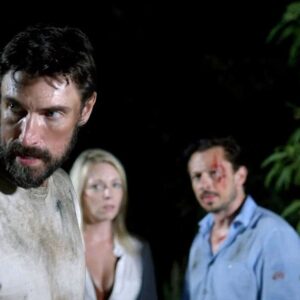
“The Offering” is a New York Jewish trip through horror tropes, an everything-but-real-frights thriller about this “taker of children” demon who comes after a pregnant woman who has joined her husband for a visit with her Ultra Orthodox father-in-law, who has been estranged from his son because the lad married a “shiksa.”
Then again, maybe Art (Nick Blood) was just trying to burn that bridge so that he wouldn’t be trapped in that ancient Brooklyn brownstone, in that family, in that tradition-obsessed culture and in his father’s business.
Father Saul (the superb character actor Allan Corduner) is a mortician, catering to the specific requirements of his faith and those who share it. Steady work and lucrative it may be. But it ain’t for everybody.
Art’s a real estate broker who needs something from his father. Wife Clara (Emily Wiseman) doesn’t know about that, and just seems relieved to have this rapprochement with her father-in-law.
Saul’s toothpick-chewing, judgmental assistant Hemish (Paul Kaye) sees through the son. But when father and his assistant decide to stick Art with handling a fresh corpse that’s come in, their “Don’t mess up,” seems, at the very least, disrespectful, even if Art used to do this work before leaving home.
Considering all that follows, it’s a big mistake on a lot of levels. An elderly, widowed scholar (Anton Trendafilov) died under supernatural circumstances. We know this from the film’s opening scene. Saul, Heimish and especially hapless Art have no idea. That knife the guy supposedly stuck in his own chest? That blue pendant around his neck? They have significance that Art has no clue about.
Uh. Oh.
The effects are good, if nothing we haven’t seen scores of times before. The acting is competent, if unaffecting, and that’s more a product of direction.
The plot’s confusing “taker of children” features allusions to missing kids and a girl demon, but seems thinly developed and sloppy.
What’s unusual and fascinating about “The Offering” in this Ultra Orthodox setting, with its exotic terminology, “ancient” lore and promise of something resembling a Jewish exorcism. I’m not sure how much of this is built on the foundations of real tradition and how much is screenplay invention, but there are indicators that this could work and the thrills could “play.”
Yes, the characters are horror tropes — consulting the “expert” on these things, a scholar whose real job is in the diamond district, the pregnant prey — as are the situations and frights. But setting them in a funeral home, in the midst of mourning (Cover that mirror or else!) is a novelty.
The bar for this version of “J-Horror” is high (“The Vigil,” “The Possession”), but not so high that “The Offering” couldn’t have managed something fresh and more interesting and at least more sensible than this.
The movie never establishes the love and devotion of the marriage, the ache of loss or the terror of Clara facing an unknown threat in an alien community that hasn’t wholly accepted her.
This “Offering” climaxes with a half-shrugged, half-shouted “Yeah, AND?”
Rating: unrated, violence
Cast: Nick Blood, Emily Wiseman, Paul Kaye and Allan Corduner
Credits: Directed by Oliver Park, scripted by Hank Hoffman. A Decal release.
The movies that matter in your life burn into the memory that first encounter with them.I saw “Chariots of Fire” at a preview in Charlotte, N.C., with local college and high school track teams in attendance, at a now long-closed cinema near now-renamed UNC-Charlotte. And I remember getting downright teary over just how beautiful this lovely period piece unfolding before me was.
It’s not just the stunning images of “Out of Africa,” “Moonstruck” and “Memphis Belle” director of photography David Watkin, or the crystalline synthesizer score of Vangelis Papathanassiou. There’s the immaculate period-perfect production design, the world of weathered stone and inherited, poshly-turned-out privilege it depicts.
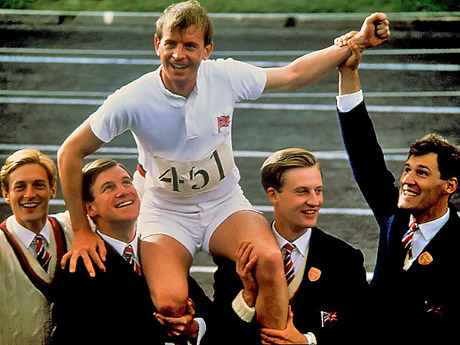
The cast, a blend of the fresh-faced and the legendary, is remarkable. Lump them in the with stars of the PBS import “Brideshead Revisited” and you could feel a tidal wave, a whole generation of British actors about to wash over world cinema thanks to what the Brits would spend the ensuing decades proving that they do best — recreating their recent and distant past. And the synthesizer wasn’t the only music in it. There are lush sacred choral works, snippets of the operettas of Gilbert & Sullivan, bagpipes and bands laced throughout. The story is a flashback within a flashback. In the “present,” we sit in on a 1978 memorial service for the Elder Statesman of British sport. Through that, we drift into that iconic image of the film, young track athletes training by running down a Scottish beach (Fife) just before the 1924 Olympics.
One of their number, Aubrey Montague (Nicholas Farrell) writes a letter home, taking us back to 1919, when he met the great sprinter Harold Abrahams (Ben Cross) as they enrolled in Trinity College in Cambridge. “Monty” and we see the intensity of the Jewish Abrahams, and his prickliness. It is just after World War I, and disabled veterans are all about, as is anti-Semitism. Abrahams is determined to stand out, win and shave their snobbery up their noses.
“I’m forever in pursuit and I don’t even know what I am chasing.”
John Gielgud and the great British director and sometime narrator and actorLindsay Anderson (“If…,” “Oh Lucky Man,” “The Whales of August”) play the high-born “masters” of their respective colleges, anti-Semites from birth.
“Academically sound. Arrogant. Defensive to the point of pugnacity,” the Master if Caius (Anderson) intones.
“As ‘they’ invariably are,” Mr. Master of Trinity (the Oscar-winning Gielgud) sneers. Abrahamson means to win an Olympic medal a few years down the line, and his determined push for personal glory rankles the higher-ups.
Meanwhile, to the north in Scotland, the saintly Eric Liddell (Ian Charleson) is a star rugby player, the son of missionaries who grew up in China, and a man whose own mission is preaching and returning to China to spread the word of God. He is a naturally gifted runner coaxed into changing his focus, if only for a while.
“I believe God made me for a purpose, but he also made me fast. And when I run I feel His pleasure.”
Abrahams figures out he’s going to need a “professional” coach to best Liddell and chase a gold medal and hires the even-more-outside outsider Sam Massabini (Ian Holm). He’s also distracted by the transcendent beauty Sybil Gordon, a singing stage actress played by South African Alice Krige
Nigel Havers plays the Oxbridge dandy, renamed Lord Lindsay in the film, a “natural” athlete of title and impeccable breeding who puts down his cigarette to sprint and dash through the low-hurdles, which he masters by parking glasses of champagne on each one, vowing to “not spill a drop” as he gallops through them.
He’s meant to be adorably insufferable, and he is, although most viewers might embrace him as the embodiment of noblesse oblige and the privilege “amateur” athletics set out to test and honor.
The “villains” of the Olympics are the always-to-be-feared American Olympians, with two famous sprinters, Charles Paddock and Jackson Scholz, played by peaking stars Dennis Christopher and coiled, compact walking muscle Brad Davis (he was in producer David Puttman’s “Midnight Express”).
Location after lovely location for this film captures the place and recreates the time in glorious detail.
Some of the loveliest scenes in “Chariots of Fire” are slow motion reveries on the track. But terrific tracking shots takes us through the pell-mell that first day at Cambridge, and an intimidating peek at the American team training in Paris, all business. Note Christopher’s choice of leg warm-ups, on his back, mock-pedaling a bicycle.
Whatever the film and filmmakers’ politics, “Chariots of Fire” is an inherently conservative enterprise, never wholly mocking the high born, never wholly embracing the outsiders and most fervently celebrating the pious and divinely-inspired Liddell.
No one “brings down” the system. Abrahams merely infiltrates it and comes to be accepted as both “a gentleman,” a patriot and “one of us.”
“Chariots” exists in a few versions, so be certain to choose the longest you can find, as sequences are omitted by this one, and a trickier opening can be seen in that one. Otherwise, you might miss Kenneth Branagh and Stephen Fry in crowd and ensemble scenes, with Fry one of the singers in the finale of a production of H.M.S. Pinafore the students mount. Michael Lonsdale, already a star thanks to “Day of the Jackal” and as a Bond villain in “Moonraker,” is allegedly in here somewhere, but I’ve never noticed him. Among the men of this male-dominated cast, I’d say Farrell, the embodiment of privilege and also-ran pluck who outlives most of his teammates in “Chariots,” had perhaps the most durable career, in supporting roles in the decades that followed. There he was in “The Iron Lady,” here he is in “Munich: The Edge of War.”
The Scot Charleson, who peaked with “Chariots” and a plum supporting part in “Gandhi,” died of AIDS less than ten years after “Chariots.”
Cross had a long if less stardusted than one might have hoped career. I just reviewed the last film he appeared in, a horror tale, “Prey for the Devil.”
Holm’s lovely twinkle in “Chariots” was a nice contrast to the heartless android he’d played in “Alien.” He’d eventually achieve fantasy film immortality with the “Lord of the Rings” films, returning to Tolkien as adorable Bilbo after first playing Frodo in the definitive BBC/NPR radio series back in 1979.
But Krige, who emerged from “Chariots” as a not-quite-name star, quickly established herself in horror (“Ghost Story”) and who became a fan favorite in the “Star Trek” universe, is the one player in the enterprise (ahem) who became an icon. She acted in period pieces, romances and thrillers. She was the Witch in the brilliant “Gretel & Hansel” and the title role and magnetic presence at the heart of “She Will,” she has the kind of fame that films confirm and fan conventions render immortal. Actor turned screenwriter Colin Welland went on to adapt the South African and the “Lord of the Flies” parable “War of the Buttons.” Director Hugh Hudson aslo peaked with “Chariots,” with “My Life So Far” and his last film, “Finding Altamira” far from atoning for the big budget disasters “Greystoke: The Legend of Tarzan,” “Revolution,” in which he failed to wrestle America’s founding into a movie and “Lost Angels.”It was Oscar-winning producer David Puttman who went on to preside over years of prestige pictures such as “The Killing Fields” and “The Mission,” taking a shot at turning Columbia Pictures into a prestige studio in the ’80s. He failed. One common thread in stories from film magazines and trade publications from that era seemed to me, as a budding critic back then, and how resented and disliked the folks behind “Chariots” were by mainstream Hollywood. Like Harold Abrahams in “Chariots,” they were seen as “brash” and “arrogant” outsiders by the Old Guard. The notion of what “snobs” they were turned up in profiles of Puttnam and Hudson, pouring out of the pages of “Fast Fade,” a quickie “biography” of Puttnam that came after his brief run at Columbia. You can see it on the IMDb bio of Hudson, accurately labeled an “Etonian” as if that shorthand (entitled upper class Brit) could be missed by anyone. But there’s no escaping the impact of their landmark film, a game-changer for British cinema and a piece of Thatcher-era triumphalism that shifted Britain’s place in the world of film, a moment worth heralding as moment of returned glory in Sam Mendes’ semi-autobiographical “Empire of Light.”
Seen today, with all its striking, dated synthesizer music and stuffily-tolerated British classism, it’s still glorious, the sort of dreamy memory that provokes Pavlovian tears in a film fan who remembers what a stunning moment it recreates and what a wonder that the film itself was when first seen.
Rating: PG
Cast: Ben Cross, Ian Charleson, Alice Krige, Nigel Havers, Nicholas Farrell, Ian Holm, Nigel Davenport, Brad Davis, Lindsay Anderson and John Gielgud.
Credits: Directed by Hugh Hudson, scripted by Colin Welland. A Warner Bros. release on Vudu, Apple TV, Amazon, Youtube and PositivTV
Projections from Deadline and others were that “Avatar” would fall under $40 million this weekend, that “M3GAN” would open under $30, that “Puss in Boots” would manage about $10 and that “A Man Called Otto” wouldn’t clear $4.
All of those predix were torn asunder by a big, beefy Saturday (no college football, decent weather) heading into a decent Sunday.
Box Office Pro has the Top Five call and the illustration below (@boxofficepro).
“Under Her Control” is a surrogacy-gone-wrong thriller wrapped in a “Devil Wears Prada” package.
This Spanish melodrama starts slowly and lumbers towards a Big Finish that isn’t nearly big enough to atone for the tedium that precedes it.
First-time feature director Fran Torres gets a few hot sex scenes into his debut, and spills some blood in the finale. But the middle acts are one long siesta thanks to a low-stakes script (by Laura Sarmiento Pallarés) dependent upon not a whole lot happening.
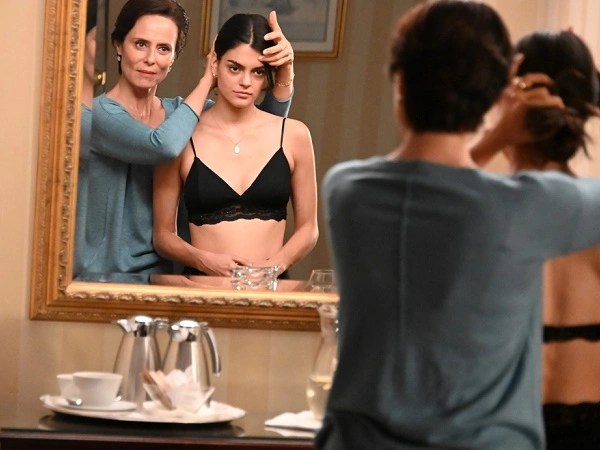
Cumelen Sanz plays Sofia, an ambitious sales clerk at a Madrid bargain fashion store with dreams of interning and then working for the great Beatriz Gaya (Aitana Sánchez-Gijón) a self-made Madrileña fashion tycoon.
Sofia is a devout, superstitious Catholic from Colombia not shy about dropping in on her Colombian beau, Nacho (Alex Pestrana) at the various rental properties he shows to prospective renters.
It’s not just siestas that Spaniards take over the noon hour.
Sofia’s fervent prayer comes true and she lands the internship as Beatriz’s assistant. But just as she’s learning the ropes and starting to get her ideas “out there,” all that unprotected sex comes home to roost.
She can’t tell Nacho. The priest she consults just shames and threatens her that “There is no worse crime than spilling the blood of the innocent!”
Meanwhile, single, 50ish Beatriz has figured out that her careerism and years of “swipe right” level relationships have run out her biological clock.
“By the time you know what you want, you’ve no time left,” she sighs (in Spanish, or dubbed into English) to her OB-GYN (Vanessa Rasero).
All it takes is her picking up on Sofia’s “condition” and the young woman’s desire to get out of it for Beatriz to spring into action, and enlist her gyno-pal and her lawyer (Pedro Casablanc) in the scheme.
They will manipulate and bribe Sofia, tricking her out of an abortion, plotting to separate her from Nacho during the pregnancy, keeping everything secret so that the baby can be passed off as belonging to Beatriz.
For all their machinations, they should take heed when Sofia brazenly asks for double their offer and a contract guaranteeing future employment. She’s not some naive waif, fresh off the boat from South America.
But she finds herself “Under HER Control” when Beatriz parks her in a country estate with no phone, where CCTV cameras will watch her every move and her health regimen will be strictly monitored.
And then the pregnancy progresses, hormones kick in and the real games begin.
The plot has dopey, obvious contrivances designed to make all of this plausible, which they don’t.
The performances are on low simmer as the characters turn towards sinister or allegedly desperate, and do nothing to engage us in the proceedings.
And the payoff is flat, with even the violence failing to up the heartrate as it supposedly ups the ante.
Rating: TV-MA, violence, sex, nudity
Cast: Aitana Sánchez-Gijón, Cumelen Sanz, Vanesa Rasero, Pedro Casablanc and Alex Pestrana.
Credits: Directed by Fran Torres, scripted by Laura Sarmiento Pallarés. A Netflix release.
The sort of simple, indulgent reveries you could find on TV variety shows back in their Golden Age, turning over the camera and six minutes of your show to Orson Welles to improvise his way up to Sir John, Shakespeare’s lines long committed to memory. This is from about 1968, a few years after Welles’ Falstaff film, “Chimes at Midnight,” one of the many Welles TV appearances preserved on Youtube.
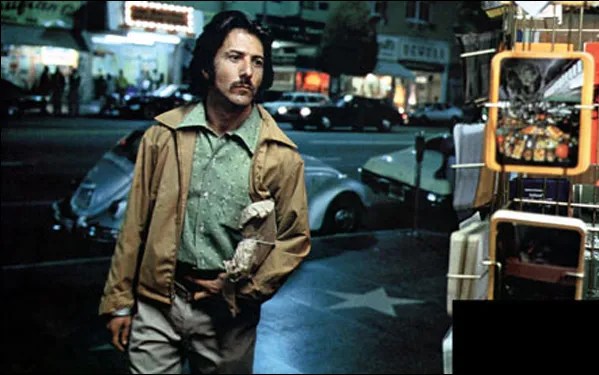
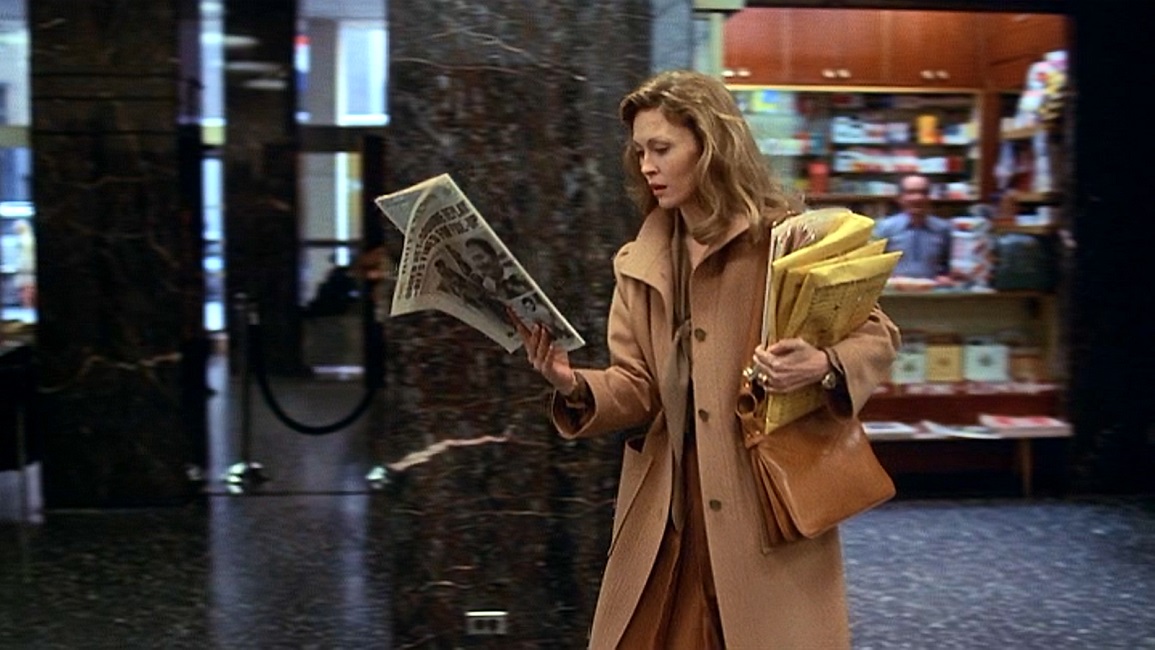
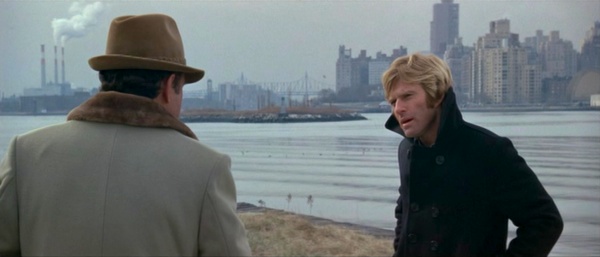
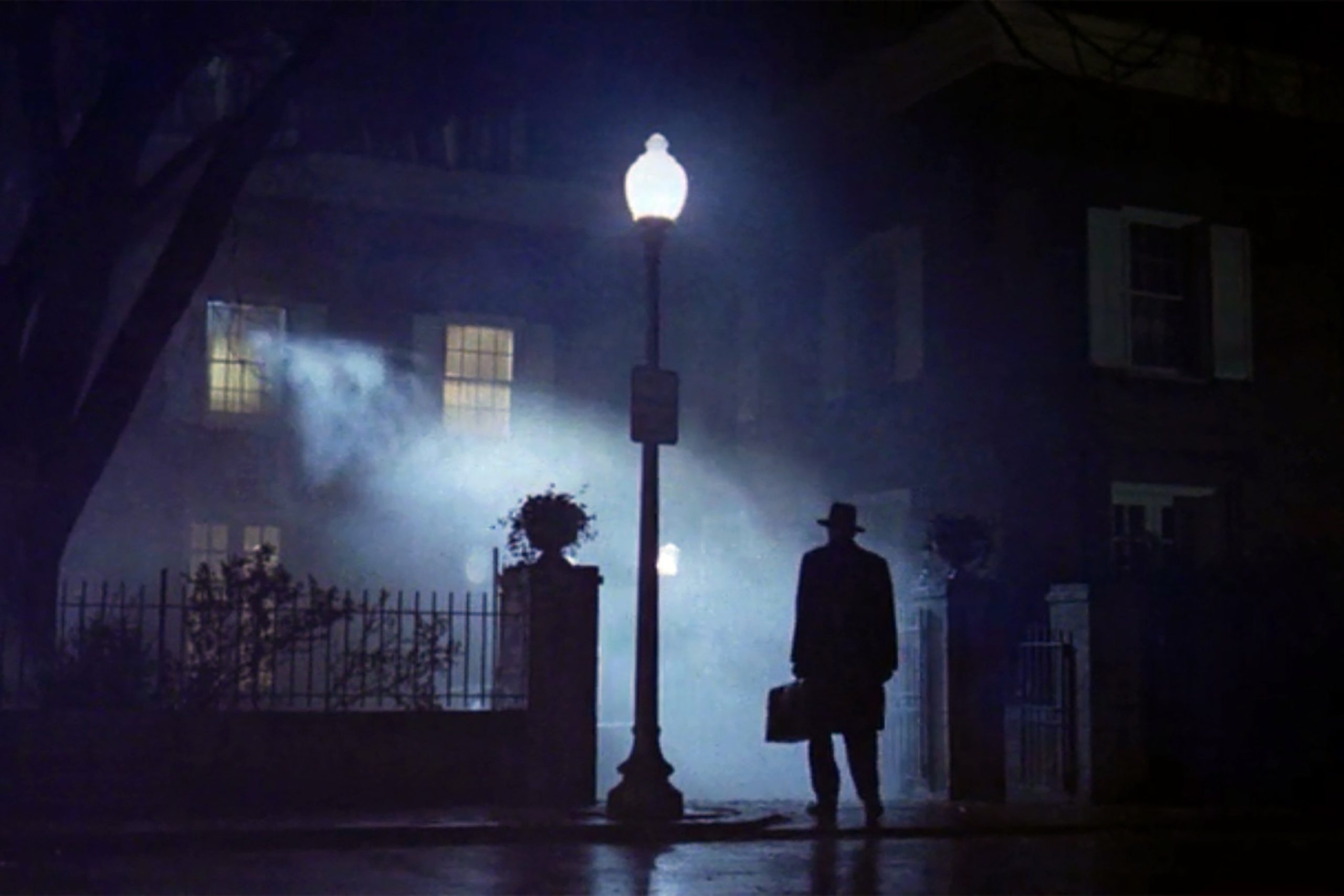
You didn’t have to grow up in the ’70s, travel to America’s major cities back then to know what the decade looked like. And that was largely due to films lit and photographed by Owen Roizman.
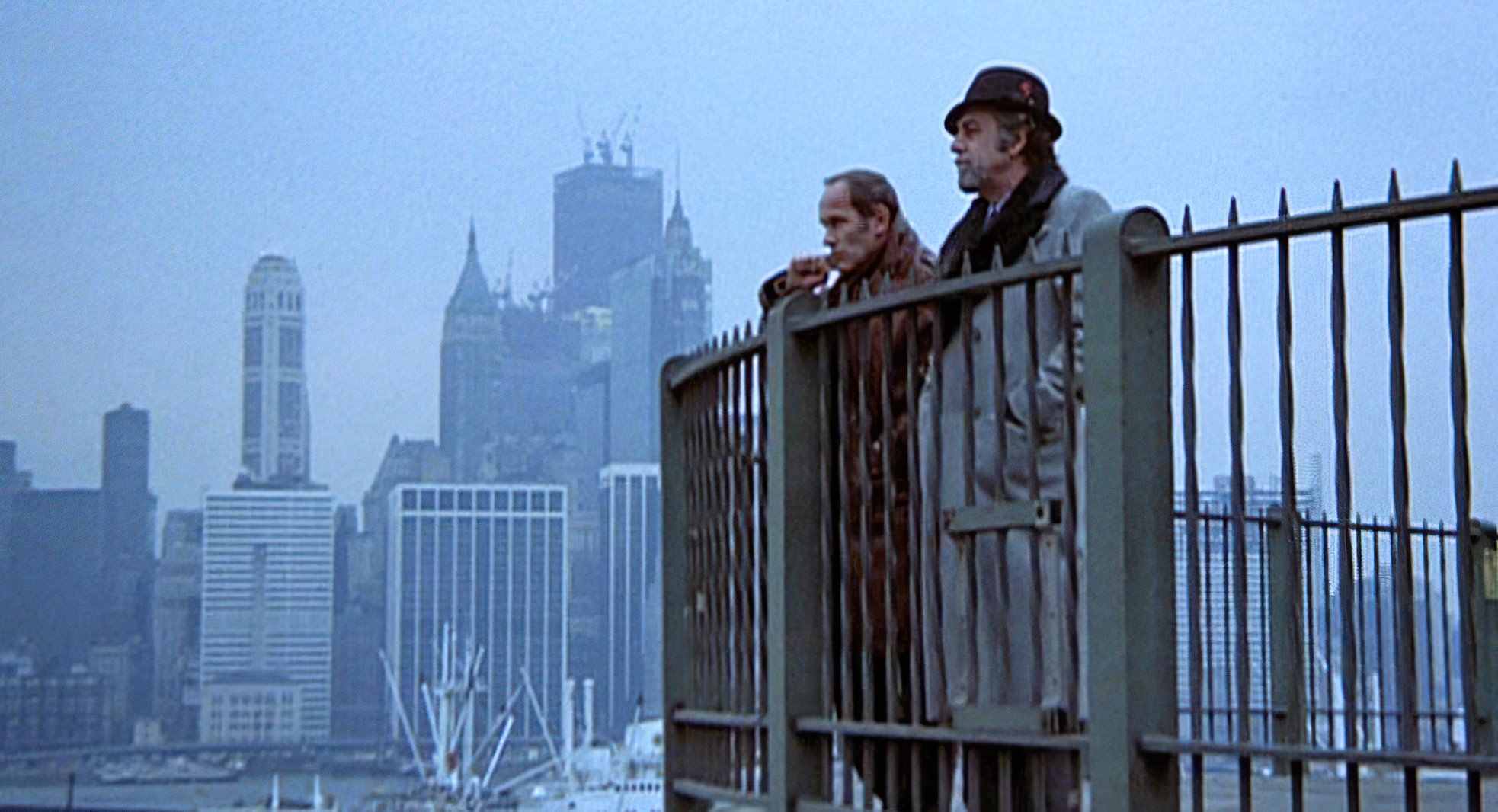
The director of photography of the overcast natural-light-fixated “French Connection,” the malaise and gloom of “Network,” the existential fear of the dark of “The Exorcist,” the gaudy showbiz “West” of “The Electric Horseman,” the seedy side of SoCal of “Straight Time,” — “Black Marble,” “The Taking of Pelham One, Two Three” — he practically defined the on-screen look of the decade.
And when the “national malaise” mood was shifted by the delusional optimism of the ’80s, he was right there lighting it — “Tootsie,” “True Confessions,” “Absence of Malice,” “Vision Quest.”
He worked with Lawrence Kasdan on comedies and “Grand Canyon,” shot Westerns (“Wyatt Earp”) and musicals (“Sgt. Pepper’s Lonely Hearts Club Band”).
Roizman’s the guy the cinematographer-turned-director Barry Sonnenfeld trusted to know the right “funny lens” to use for “The Addams Family.”
Roizman was one of the great ones, and never won an Oscar. Nominated five times and never won. You don’t always know who is defining the light, look and tone of a decade on Eastmancolor (Kodak), Fuji, Afga when they’re doing it.
Roizman made it to the ripe old age of 96. Well done all around, sir.
Egyptian action auteur Peter Mimi is no stranger to Hollywood blockbusters. You don’t have read or watch interviews with him to have that confirmed. It’s right there on the screen.
The latest from the director of “No Surrender” is a robot-as-revenge thriller that takes from “The Terminator” and imitates, in ways both obvious and subtle, the story beats, action tropes and trendy vehicles popular in La La Land action cinema of the moment.
“Mousa” is about a meek, bullied engineering student named Yehia (Kareem Mahmoud Abdel Aziz) who can’t even summon the courage to stand up to the thugs who break in, beat and rob his engineer-turned-clockmaker father (screen veteran Salah Abdullah) and set fire to their house, killing his father.
But Yehia is clever enough to design and build a nearly-unstoppable metal man to carry out his dead father’s post-mortem wish, via a vision.
“One of us had to get burned so he could light the way for the other,” father counsels, in Arabic with English subtitles. “Avenge me!”
It doesn’t matter that Yehia was kicked out of engineering school by an intemperate, classist professor (Eyad Nassar) who didn’t like the kid showing him up. It’s not important that Yehia can’t make much in the way of eye contact, especially with the opposite sex. And fighting? He’s the Cairo version of the proverbial “98 pound weakling.”
But let him slip on the telepathic VR helmet he uses to control the robot he named after the stillborn older brother his parents lost, and thugs, child-trafficking organ thieves and terrorists had better watch out.
This story, framed within an interrogation that comes after an opening image stripped from the film’s action climax, loses track of logic, characters and the plot in the third act. It goes completely off the rails, train-crash pun intended.
No, we never really connect the hero to his crush (Sara El Shamy) or even his more badass soulmate (Asma Abul-Yazid) for reasons that seem more due to sloppy screenwriting than Muslim cultural mores. I rewatched the last third of the film repeatedly, trying to figure out how this character turned-up in that location, that robot got on a train or who the heck this or that figure is and how they become part of what is largely a loner’s revenge-on-the-world story.
The plotting may be clumsy, the pace too slow at the start and too disorganized at the end, and the morality simplistic in the extreme. But the acting isn’t bad.
The effects are spectacular and would pass muster in any Hollywood release. If “RRR” showed the world that Indian CGI was on a par with America’s best, “Mousa” is an impressive ad for farming out some of that work to Egypt.
And then there’s what a North American might get out of watching Egyptian sci-fi action via “Around the World with Netflix.”
Mimi pays homage to “The Terminator” in several ways, including cribbing the skeletal robot walking through fire. But it’s the silly Hollywood trends and tropes that tickled me.
What do I fixate on regularly in this space, movie fans? “Cars with character.” And what does rich girl Rieka (Abul-Yazid) show up with to transport this Mousa robot to places where he’s needed — fires, so that he can rescue kids, human trafficking warehouses, etc? It’s not a Chevy Nova. No. It’s a Pontiac Ventura. That’s the Pontiac version of the Nova.
What does the college professor, whose story sidetracks the film for a bit as he has an even darker side, drive? The same thing college professors have driven in generations of Hollywood films — a Volvo.
The contortions of “Mousa’s” third act make one fret that Mimi has visions of a “franchise” on his hands, ands maybe let that distract him from a half-decent movie that loses its way at the end.
Either way, I’m looking forward to what he comes up with next. It’s obvious where he’s getting his inspirations from, and hit or miss, I for one am totally down for seeing how genre pictures and action tropes look through an Egyptian lens.
Rating: TV-14, violence
Cast: Kareem Mahmoud Abdel Aziz, Eyad Nassar, Asma Abul-Yazid, Sara El Shamy and Salah Abdullah
Credits: Scripted and directed by Peter Mimi. A Netflix release.

















 Movie Nation