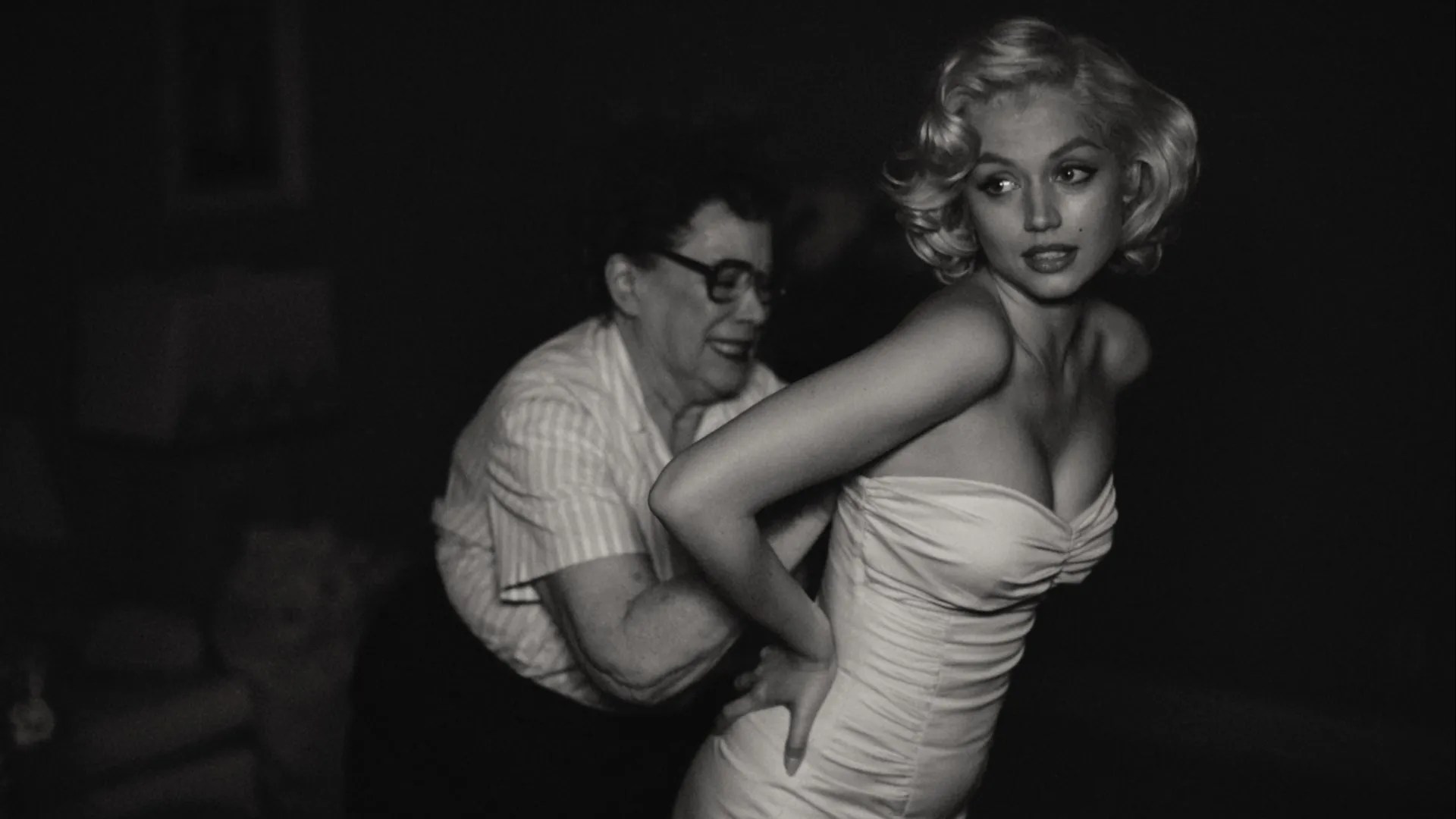
Of all the projects Netflix hurled a ton of money at “for your consideration” this awards season, “Blonde” has to be the most troubling misfire. And thanks to Netflix’s deep pockets and lax supervision, it had plenty of competition.
I’ve liked Kiwi filmmaker Andrew Dominik’s other work. “Killing them Softly” and “The Assassination of Jesse James by the Coward Robert Ford” were two of the most interesting films Brad Pitt has lent his talent to over the years.
And who doesn’t adore Ana de Armas, the “Knives Out” breakout star?
But it’s obvious, from the two hour and 47 minute bummer that Dominik serves up, exposing and over-exposing de Armas in all her accented-but-looks-sort-of-right courage, that neither of them was right for this.
Still, “Blonde” is too ambitious and too important a cinematic subject to dismiss out of hand. Wildly uneven, misguided, bluntly exploitive at times, it also has moments of wrenching pathos and a mournful tone that will never let a film fan look at a Monroe movie the same way again.
So, well done there.
Perhaps the problem is relying on Joyce Carol Oates’ novel “Blonde” as its source material. Nobody would really want a straightforward Monroe biography, ticking off the red letter dates of the shooting star nature of her brief career, without insight, analysis and symbolic “understanding” of this fragile, damaged woman transformed into a sex symbol without peer. But Oates’ fictionalization goes too far, as does Dominik’s choice of what to emphasize and how to play it up. He begins with the moving trauma of an abused, orphaned childhood to being “discovered” and raped by Darryl F. Zanuck, beaten by husband Joe DiMaggio and cruelly and coarsely misused by John F. Kennedy.
“Daddy Issues” is the connecting thread and might be the most believable element to the film. But blending in fiction with fact — wasting all this screen time on a fictional long-running menage a trois with the bisexual sons of Charlie Chaplin and Edward G. Robinson — feels wrong, like one last act of Marilyn abuse. Is Dominik pandering to the polyamorous audience? Cut that fiction out altogether and you’d have a shorter, sharper and at least more defensible version of who she was, and why she was.
The opening act, with Lily Fisher playing the little girl who never knew her father, and trapped in the care of a psychotic mother (Julianne Nicholson) is the most heartbreaking thing I’ve seen on a screen this year. Mom’s madness in the midst of one of those disastrous LA fires, trying to drown the child her lover wanted her to abort, you watch this and marvel how anyone survives such trauma.
It’s also brilliantly conceived and filmed, a child’s eye view of Hell, literal and figurative.
The movie skips past Norma Jeane Baker’s orphaned childhood and her first marriage and treats her pin-up girl years — nude modeling included — mostly in montage. Her meeting with “Mr. Z” (20th Century Fox chief Zanuck) implies a quid pro quo audition that becomes a rape. It could’ve happened, but Zanuck was famous for hating her and only hiring her to keep another studio from snapping her up. T
Inserting de Armas as Marilyn into “All About Eve,” the first film most people noticed her in, and later into her comic classics, “Gentlemen Prefer Blondes” and “Some Like it Hot,” is accomplished with technincal ease. Vanessa Lemonides does the singing of “Diamonds are a Girl’s Best Friend” and other Monroe signature tunes. Playing up the little-seen “serious” breakthrough film “Don’t Bother to Knock” is insightful, as the alluring and dangerous baby-sitter Monroe plays had to be triggering to a survivor of childhood trauma.
Two casting master-strokes pay off. Bobby Cannavale brings much more personality and volatility to seemingly courtly and shy suitor and husband Joe DiMaggio. Cannavale is downright electrifying when “Daddy” flies into rages over Monroe’s nude photo past and the blatant and eager exploitation that publicly filming her skirt-billowing-over-a-subway-grate scene in “The Seven Year Itch” entailed.
And Oscar-winner Adrien Brody brings a touching soulfulness to the playwright Arthur Miller, Monroe’s last shot at marriage, a man of art and literature and letters who is shocked, upon meeting “Norma Jeane,” at how the world is underestimating her.
That’s one of the running themes of “Blonde,” that Monroe weren’t the dizzy “sexpot” that the films that made her forced her to play. She was disturbed but in analysis, probably more skilled at character analysis than anyone gave her credit for and both a brilliant comedienne and an empathetic lead in dramas, at least the ones that let her tap into her personal tragedies.
Calling her husbands “Daddy” seemed more innocent at the time, but takes on sad undertones here. And the theme of lost childhood spilling over into lost babies (an abortion, miscarriage, grief and guilt) is played up, perhaps overplayed.
Jumping back and forth from black and white to color is kind of a wasted effect here. Dominik would have been doing the viewer a favor by lightening the mood with such shifts, or lightening the mood literally anywhere. The film’s cardinal sin is how relentlessly downbeat it is. We get little sense of what made her special. No, it wasn’t just her sex appeal.
Yes, she became too delicate to handle in her post-stardom films — calling in sick, not knowing her lines (not shown here), demanding retakes, flying into crying jags or rages. But surely there had to be tender moments when some of this sudden stardom and fame could be fun.
“My Week with Marilyn” wasn’t a lie, after all. And rewatching the adorably-dated “golddiggers at sea” romp “Gentlemen Prefer Blondes” you can’t tell me the friendship that developed with co-star Jane Russell on and off screen in that production didn’t produce affectionate laughs. Jane would’ve made sure of that, and the evidence is on the screen, even if “Blonde” chooses to play up how misused Monroe felt at earning her contract minimum for a blockbuster like that, while Russell had her biggest payday.
The New Zealander didn’t “get” her, not all of her, anyway. And indulging his desire to exploit her by over-emphasizing and fictionalizing and stylizing (the NC-17 JFK encounter) the way Hollywood and America exploited her doesn’t excuse the ugliness he wallows in as he mistreats an icon who deserved better.
“The Stranger” is an Australian mystery that peels away its layers slowly and ever-so-deliberately. A film of sad, gloomy foreboding, it makes the viewer reach for details and wait for answers in the most elegantly calculated way.
The sense of a slow immersion in the known is so delicious that it’s almost giving away too much by even revealing the genre writer-director Thomas M. Wright is working in. But there’s no getting around the “true crime” nature of this picture, and no describing it without dipping into the police procedural tropes it leans on. Knowing that does nothing to break its spell.
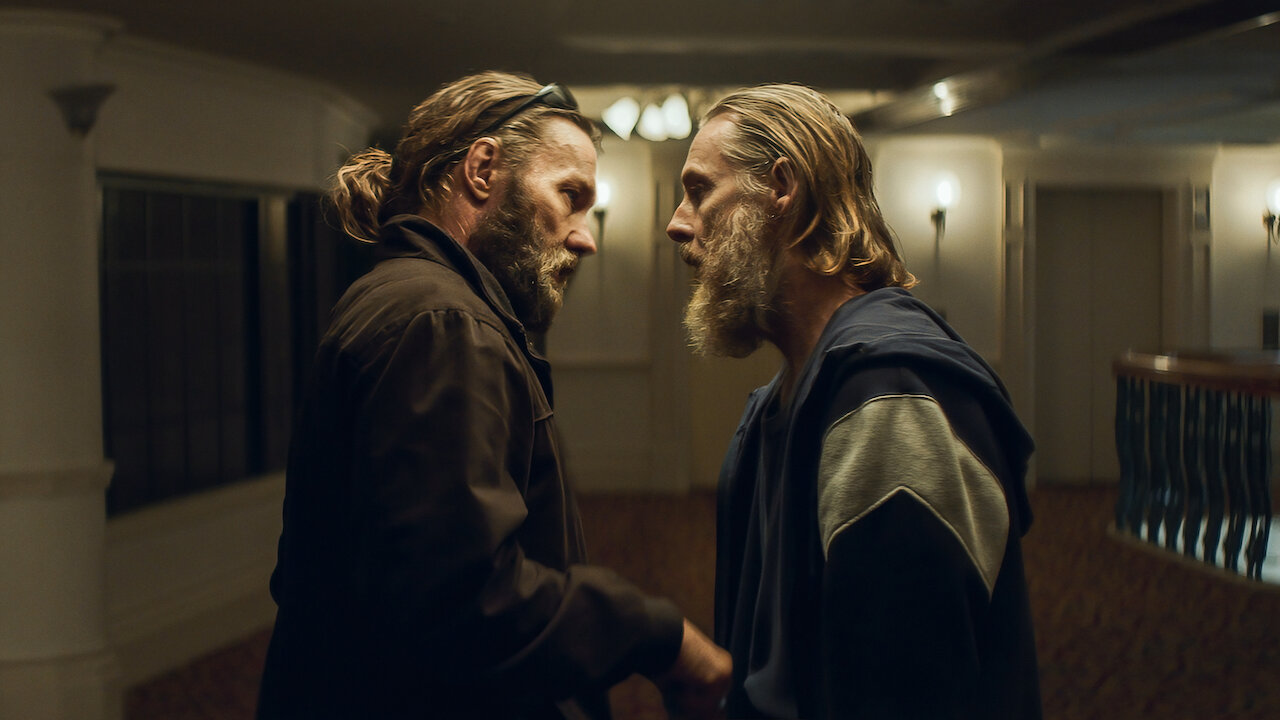
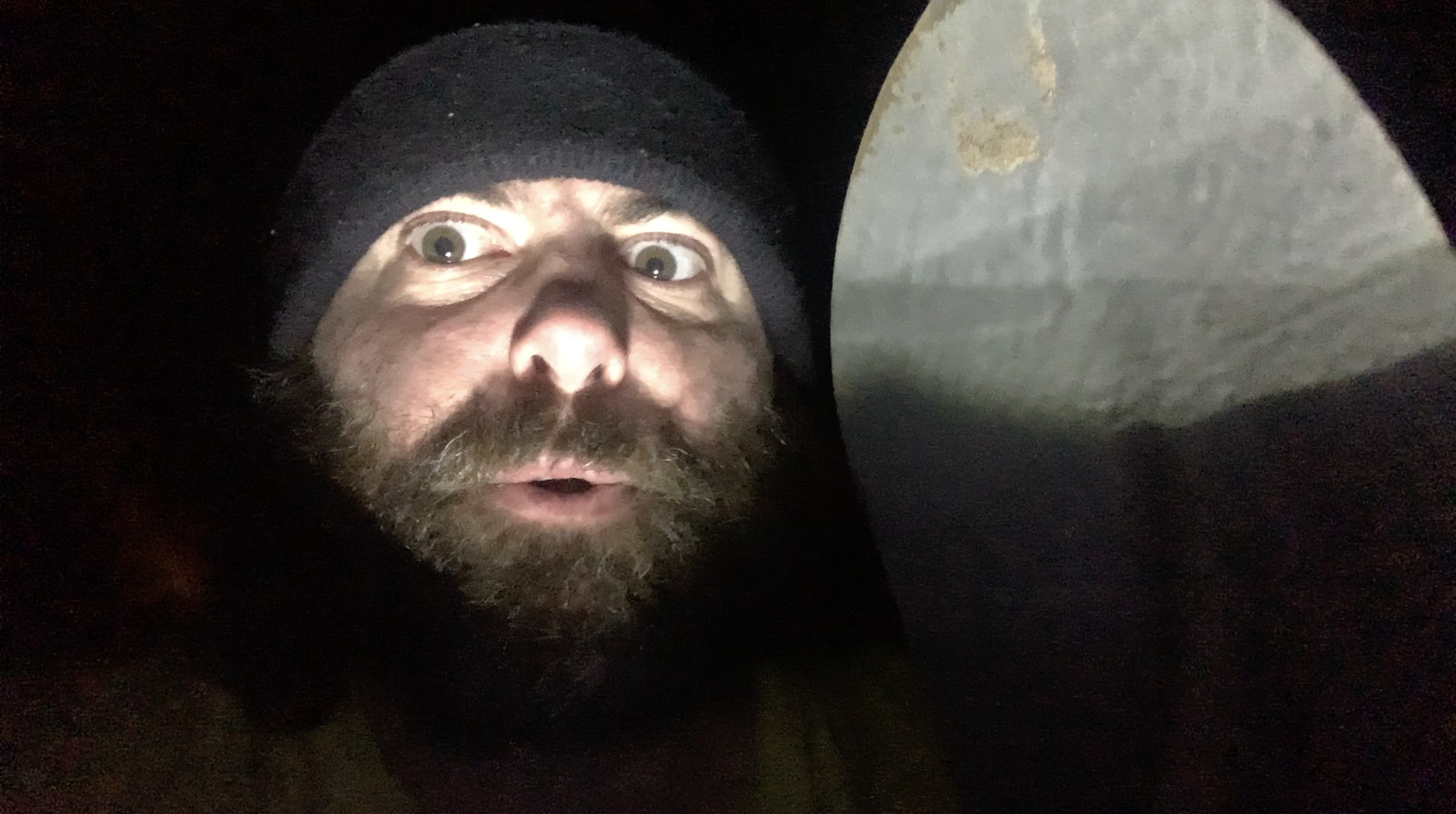
Two strangers meet on a cross country bus in the dead of an Outback night. They come off as different versions of the same “type” — sketchy, down-and-out guys with pasts. But Paul (Steve Mouzakis) is somewhat more outgoing. Eventually, he gets the name “Henry” out of the bearded, soft-spoken and beady-eyed bloke opposite him.
Henry, played by the Brit character player Sean Harris of the “Mission: Impossible” movies and the Timothee Chalamet Henry V drama, “The King,” is guarded, fatalistic about how much longer a smoker with inhaler-worthy breathing problems can continue to survive by working with his hands, as he does.
Paul says he might have a hook-up. That’s how Henry meets Mark (Joel Edgerton), a bluff, all business type whose ponytail and beard and suspicious nature scream “underworld.” Henry isn’t put off by this unsolicited offer of “a bit of work” doing “a job for some people” secrecy.
“I don’t do violence,” is his only proviso.
Henry does ride-alongs with Mark, meeting people who need things, picking up a blank passport, making deliveries, accepting cash. And along the way, they strike up guarded conversations that, drip by drip, give us information on who they are and eventually what this is all about.
Actor-turned-director Wright — he did the “Acute Misfortune” Aussie artist’s bio-pic of a few years back– adds points of view as he ever-so-carefully doles out information. We hear faint and sometimes rising ringing sounds, loud enough to be remarked about by characters in the scene. We meet layers of mob hierarchy as we pick up who and what everyone is most interested in.
The police are involved, and one particular policewoman (Jada Alberts) has become obsessed with her latest case, an investigation which involves a staggering commitment of manpower and resources.
And Mark? He’s a divorced dad seriously disturbed by everything that’s going on.
Edgerton is quite good at conveying a man on the edge, trying to keep it together and not wholly succeeding. And Harris, who is right up there with Ben Mendelsohn and Dominic West when it comes to playing characters who could be anything, but deliver a creepy vibe on sight, is deliciously quiet and disturbing, letting the unkempt grey beard and shifty eyes do all the work.
But this is Wright’s show as he conjures up a movie whose every dark or overcast shot, every quiet conversion and every revelation contributes to the rising tension and the inescapable gloom tinged with grief that follows this “Stranger” — up close, and from a distance — from beginning to end.
Sergio Corbucci might have faded into obscurity if Spaghetti Western fiend Quentin Tarantino hadn’t reimagined his most famous character, Franco Nero’s “Django,” as an ex-slave avenger in “Django Unchained.”
Corbuccci made over 60 films, from sword and sandal fare of the early ’60s to 1980 genre trash like “Super Fuzz.” But he found his steadiest employment with Westerns, filmed on Spanish locations and Italian soundstages, blood-spattered action fare with looped sound, Italian actors, sometimes an American lead or two, occasionally even a German (Klaus Kinski).
The costumes, firearms and rolling stock was always just a little off in Spaghetti Westerns. Pre-Internet, there was only so much research a director of Italian quickies could do. That fake electronic-whistling gunshot sound effect is an instant give-away that you aren’t going to see any sagebrush, cactus or tumbleweeds in this particular film. Because while Spain might have had its share of weathered cantinas and vaguely European wagons and coaches, the flora and fauna is quite different.
“The Hellbenders,” titled “I crudeli” in Italian, was highlighted at a Tarantino-curated film festival and made it onto the “Hateful Eight” and “Django Unchained” director’s Top Ten Westerns list some years back.
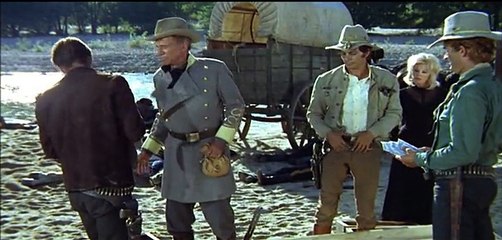
It’s a post-Civil War massacre and robbery tale about unreconstructed Confederates led by the great Virginia-born character actor and Orson Welles chum Joseph Cotten. The film is best appreciated for the unsentimental view of the Confederacy it presents, something Hollywood was still avoiding in such contemporaneous fare as John Wayne’s “The Undefeated.”
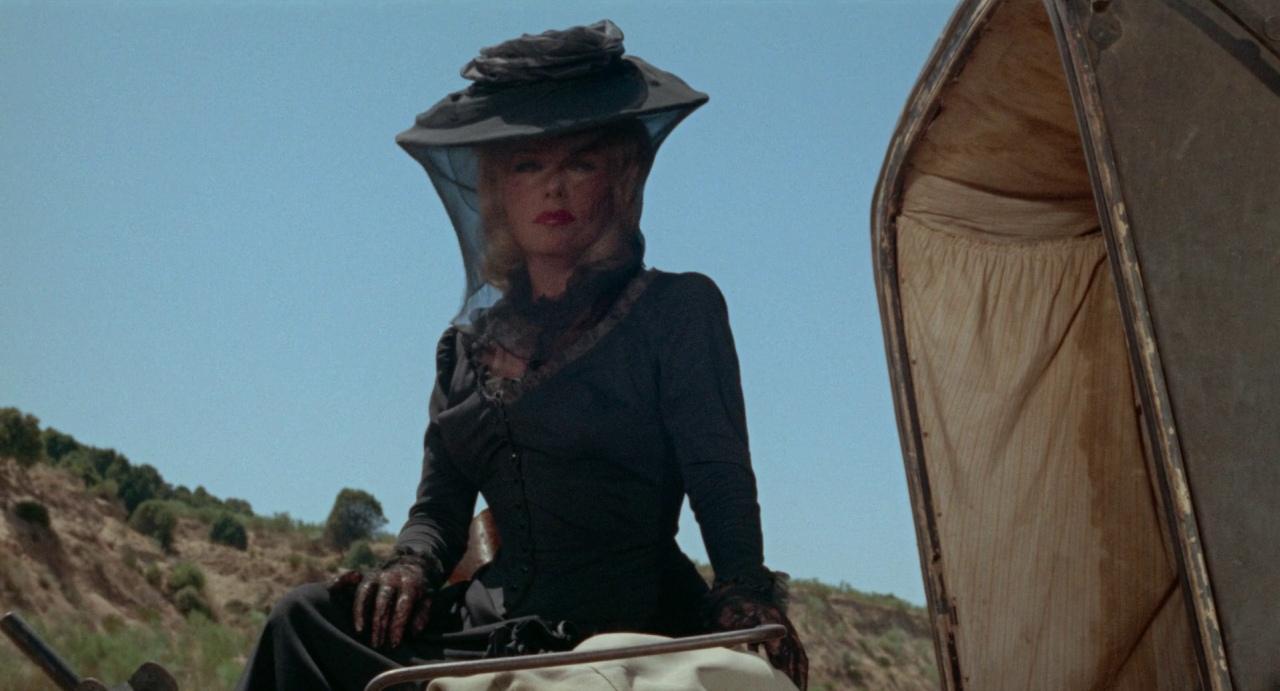
The movie is a simple villains’ odyssey, get the cash and get it “home” to the South, and fend off Yankee cavalry, a nosey posse, Mexican bandits, a lone bushwhacker and Indians as they do. The siblings in Col. Jonas’s “Hellbenders” (named for a salamander) will fight over the mission, the money and the women they get to play a grieving widow escorting her late husband’s coffin to wherever they expect to bury him. And Col. Jonas will sound positively Falwellian in his mission to create his “new Confederacy of states created under God.”
But, about that mission. Does anybody think a lone coffin could hold enough greenback dollars to “reorganize the Confederacy, attack the Union and win back the South?” Confederates were never very good at math, then or now.
The one son of the colonel who seems savable might be Ben (Julián Mateos), the one who has to recruit a fresh “widow” (Norma Bengell) when their first one, a brassy, weepy drunk (María Martín) gets herself killed. Ben had a “different mother” from the other two (Gino Pernice and Ángel Aranda), who are drooling savages. Ben is almost humane.
Corbucci puts on a staging, filming and editing a shootout tutorial in the film’s first set-piece, the ambush in which the cavalry escorting a load of worn out currency to a mint where it can be destroyed is wiped out.
There’s a cornball game of cheater’s poker in a Denton, Texas saloon, a borrowed Sergio Leone plot-point (treasure in a coffin to be dug up) and a less-than-Leone feel in the dialogue, the cheap costumes, too-tidy makeup, the looping and the not-Morricone score.
The film doesn’t dawdle between the way stations on this quest. But it lacks urgency, and even the fanaticism seems blase.
Critics at the time noted this was not one of Cotten’s better performances, and it most certainly isn’t. But one can appreciate the callous fanaticism for the Lost Cause, his dismissal of the slaughtered, foe and friend.
“Don’t fret about them, son. We’re not kin.”
But I’m not all-in on this film, which has its moments, just not enough to overcome the grating shortcomings Italy’s finest brought to America’s greatest gift to genre cinema.
When it comes to Spaghetti Westerns, there’s Chef Leone, and everybody else — Corbucci included — is just pasta in a can.
Rating: unrated, violence
Cast: Joseph Cotten, Norma Bengell, María Martín, Julián Mateos, Gino Pernice and Ángel Aranda
Credits: Directed by Sergio Corbucci, scripted by Ugo Liberatore, José Gutiérrez Maesso, and Albert Band. An Embassy Pictures release on Tubi, Youtube, etc.
Running time: 1:32
Posted inReviews, previews, profiles and movie news|Comments Off on Classic Film Review: Tarantino-approved Spaghetti on the Trail — “The Hellbenders (I crudeli)” (1967)
The new Turkish rom-com “Private Lesson” was filmed and set in Istanbul. But with its fashionable college kids on the make, sexy consenting adults flirting and showing a little skin, tech touches and the like, it could be set in Milan, Mumbai, Madrid, Mexico City or Miami.
Western culture and Hollywood mores have spread far and wide. And one of the reasons we take these trips Around the World with Netflix is to see how much alike world cinema, if not the world itself, reflects that. Watching these films just builds on my thesis that Netflix is Hollywoodizing global filmmaking faster than any big studio franchise.
With Netflix approving the projects and signing the checks in Spain, Uruguay, Italy, Poland, France or Indonesia, we’re seeing local versions and local customs imprinted on time-tested Hollywood formulae.
“Private Lesson” — the title has a Hollywood raciness because of what that implies in most every Western film that’s used it — is about an Istanbul influencer and makeover artist, a gorgeous young woman who teaches girls and young women in a secular corner of the Islamic world how to get what they want.
So there’s a little “What a Girl Wants” about it, with stakes that every now and then tip us off to Middle Eastern morals and dire or at least unpleasant Islamic consequences.
When “I want to be noticed” is a coed’s fondest wish, the midriff baring hotties at World University consult with Azra (Bensu Soral), who isn’t really enrolled there any more, but is still young enough to pass for a super-stylish grad student mingling with her peers.
She teaches them how to attract a man’s attention, how to place herself within his field of view at the right parties or clubs. She will call this school dean or that other responsible adult in her clients’ lives, pretending to be a teacher or a parent, just to provide cover for where they’re going tonight, trips they might take or dance classes their conservative parents wouldn’t approve.
But it’s a secret. The last thing Azra wants is several popular girls blabbing about her services in the restroom and having the university chancellor’s niece overhear them.
Hande (Helin Kandemir) is a studious bore, cosplaying as Afife Jale as she tries to sign classmates up to her “Imo” club on activities day. I mean, who wouldn’t want to meet and talk about “Immortal Literarians?”
But Hande lusts after the popular hunk Utku (Rami Narin). She blackmails Azra into taking her on. First lesson? Enough with the “comfortable” clothes!
“You don’t need ‘comfortable. You can be ‘comfortable’ when you’re old!”
Let’s start with lingerie shopping. And if you didn’t realize Turkey produced romantic comedies before now, you certainly won’t see that coming.
Hande learns “Men and women aren’t equal. We’re in balance.” That sounds almost traditional.
Another lesson? “What was Cinderella’s biggest mistake? She picked a guy interested only in appearances.”
A lot of these “rules” seem to contradict themselves — be a lady, dress sexier, “learn to say no” but sure, I’ll call and make an excuse so that you can hit this or that party.
In the tradition of scores of such mentoring comedies, Azra is thrown off her game when a bare-chested, cocky and self-centered fashion photographer (Halit Özgür Sari) moves into her apartment building and rudely imposes on her life.Burak becomes more attractive when he helps out with Hande, who falls into the “tequila shots” trap on her first night clubbing.
Director Kivanç Baruönü, who did the sci-fi comedy “Arif V 216,” doesn’t so much strike a balance between Westernized values and Islamic Conservatism here as normalize the sorts of things one sees in scores of North and South American and European rom-coms — many of them released by Netflix — for a Turkish audience.
Likewise, he and screenwriters Murat Disli and Yasemin Erturan are putting a palatable “tolerant” and quasi-feminist face on Turkey with films like this. As I said at the outset, hit the dubbed translate button on your Netflix settings and this film could take place literally anywhere that The Gap, Forever 21, H & M or Urban Outfitters is spoken. There’s no hint of ancient Istanbul about it.
That makes “Private Lesson” too generic to recommend. It’s too tame, trite and formulaic (there’s even a hip hacker called in to save girls from a nude-photo date predator) for Western tastes.
It seems as if every film conceived and shot during the COVID lockdown found one novel way to turn the restrictions, claustrophobic stir-craziness and isolation conditions into an asset.
“7 Days” got the most out of the least. But if you cast two funny people with chemistry, that “lockdown happens during their first date” two-character romance can work.
“Stop and Go” took the lockdown on the road, two friends traveling to rescue one’s grandmother, who won’t be able to survive with closed stores and no contact or help from the outside world.
“Family Squares” got laughs out of the Zoom call split screen gimmick. “The Same Storm” drew a bigger cast and got more humor and a lot of pathos out of lives reduced to contact via Zoom. It’s the best of the lot.
And the farcical “The Disappearance of Toby Blackwood” manages a snappy Facetime cell phone montage of interviews with crackpots, the “subscribers” of a missing Youtube survivalist whose disappearance is investigated, from the comforts of their own homes, by a just-dumped guy who went to middle school with the missing nut, and a pal who is amped-up just to have something to do during lockdown.
The writing and one would assume improvising opportunities drew the biggest names in the cast in for quick-and-dirty cell phone questioning cameos that offered the chance to go down the rabbit hole of crackpot conspiracies played for breathless, ranting laughs.
“It’s the reptilians. It’s ALWAYS the reptilians!”
Here’s comic Maggie Maye, veteran character actor Luiz Guzman downloading this or that crazy theory. Joseph Russo and Jeremy Luke play sketchy, wired cousins worried and threatening anybody who might name them as “suspects” in this disappearance.
And is that Brit-accented loon with the beard really Simon Pegg?
Director, star and co-writer Joe Ahern has done a lot of things in front of and behind the camera for TV and film. He plays just-dumped Wes, who learns that nobody’s heard from this old friend who went nuts and got popular for it as the host of hundreds of insanely-stupid survivalist episodes of “Take Charge with Toby.”
“Always assume everybody’s out to get you.,” Toby Blackwood (co-writer Doug Mellard) preaches. “And that’s how you start a fire with spicy mustard and tin foil,” he says on another episode. “Remember, you’re gonna need a LOTTA gasoline, and matches!”
Among all his supportive get-together-on-Zoom friends, the one Wes listens to is the always-drinking or lighting up a pipe Luke (Grant Harvey), who has gotten into Toby’s videos and is bored enough to become obsessed, egging Wes in joining him for a social-distanced investigation while sheltering in place.
Depressed Wes starts wondering if Toby’s crank fans, his crackpot girlfriend (Dana DeLorenzo) or those sketchy cousins had something to do with his disappearance.
Then again, maybe he took on a “mission” to find the “real” Area 51, “where Bill Gates INVENTED this pandemic” and the vaccine, “which plants microchips” in everyone who takes it, helping facilitate some Amazon oligarchy global takeover.
Todd Giebenhain scores points as a private eye they consult whose chief training for the gig might have been watching “Cagney & Lacy” as a kid and who dresses like a thousand down-and-out TV gumshoes, the ones based in Florida retirement communities.
“Toby” himself is a funny creation, although the dopy videos he’s made, interspersed throughout the movie, lose their comic sting thanks to over-exposure.
“Disappearance” is a movie that begins with a little promise, peaks with that long montage of “sheeple” hating conspiracy nuts early on, and kind of sputters and limps to the finish line.
The leads are amusing in tiny doses, but even the funniest lockdown screenwriting wouldn’t have given them screen presence or a charismatic pop to the their punch-lining.
Like most make-work-with-our-down-time pandemic film projects, “Disappearance” is a sketch comedy idea that overstays its welcome, a short film that feels too long because it lacked enough top flight comic talent to make it come off.
Rating: unrated, a bloody injury, drug abuse, drinking and lots of profanity
Cast: Joe Ahern, Grant Harvey, Doug Mellard, Dana DeLorenzo, Natasha Hall, and Todd Giebenhain, with Luiz Guzman, Maggie Maye, Joseph Russo and Simon Pegg
Credits: Directed by Joe Ahern, scripted by Joe Ahern and Doug Mellard. A Gravitas Ventures release.
Running time: 1:17
Posted inReviews, previews, profiles and movie news|Comments Off on Movie Review: Friend Leads a Comic Lockdown Missing Person Hunt — “The Disappearance of Toby Blackwood”
I made a resolution not to bother with reviewing anthology films a few years back.
Basically, they’re a way of getting critics to review short films, which whatever their value in teaching filmmakers, helping them polish their craft and creating proof to agents and producers that they know what they’re doing with actors, crew and a camera, the audience for them is tiny. The audience for reviews of them consists of the filmmakers and their families (often the people who paid for the movie) — even tinier.
Considering how labor intensive they are for a critic — scores of names of actors, writers and directors to list and attach to each “short” — it’s much easier to use the four-letter word “pass” when they’re pitched.
Not that “The Seven Faces of Jane” is an anthology film, not like movies such as “Paris, J’taime” and “vhs.” It’s a tag team tale that the filmmakers describe as a filmed version of the Exquisite Corpse Game, usually done by having many hands draw on a sketch or group-effort painting.
Eight directors and eleven screenwriters would take one character — Jane, played by actress, writer and director Gillian Jacobs — and put her through a series of scenarios over the course of a day in which she drops her daughter off at camp. I like Gillian Jacobs (“Ibiza”). Let’s take a look.
Jacobs would write and direct the framing scenes that open and end it, and sequences by others would envision Jane driving her new hatchback around getting mixed up in mischief at a surreal coffee shop where her doppelganger works, getting “called in” by a long-dormant Svengali-like agent for an audition at a mausoleum and catching up with a former lover (Chido Nwokocha) as his Black friends and his Black Afro-funk ensemble and dance troupe play on a beach.
Joel McHale plays another almost-ex whom she bumps into, takes a hike with and has something like a tearful epiphany about paths not taken and high school reunions one might have been better off skipping.
Jane picks up an exotic hitchhiker (Emanuela Postacchini) in the desert on that oft-filmed lonely road outside of Joshua Tree. They dish on men as Jane gives off an “escaped” from a mental institution, possibly suicidal and behind the wheel vibe. Later she meets and tries to buck up a very unhappy Latina teen (Daniela Hernandez) who has stormed out of her quinceanera in this big, fancy dress which she hates and heels she can’t handle.
Look at the credits below and you can see some famous folks (Jacobs and Dr. Funnyman Ken Jeong) and some famous film surnames (Coppola, Cassavetes) that collaborated on this.
The segments of “Seven Faces” are competently shoehorned into this “corpse” of a narrative. But no, “Jane” doesn’t work as a feature. It’s the sort of indulgent bauble that might make the rounds of film festivals, where audiences will check out and appreciate short films and “experiments” or “games” like this.
Having a few famous names on board would help sell tickets, but again, only in a film festival.
Like too many films of this not-quite-genre, “Seven Faces” is both uneven and close to nonsensical. Like most of them that I’ve seen — mostly in film festivals — there are one or two stand-out segments strong enough to turn into a feature film.
Here, that’s the quinceanera segment. Jane turns about to be a Los Angeles native who spent a year studying abroad in Spain, who speaks Spanish and knows the 15th birthday coming out party tradition, knows a good Mexican food joint in the neighborhood where she stumbles into Rose, and is nothing but helpful and supportive of this unhappy girl having a very bad “special day.”
The hook? Rose lost her mother when she was young. She’s being raised by grandparents who are from Albuquerque, originally, who don’t necessarily connect to this culture either, but force it on her. Rose doesn’t even speak Spanish.
She “hates” the dress, which was her late mother’s. “I hate this neighborhood,” hates what her grandmother is forcing her to do, hates the Mexican food granny makes her cook.
That’s a script-flipping comedy pitch if I’ve ever heard one, the seed that could sprout into a full, funny and charming. No, I don’t know who wrote and/or directed it and have no interest digging any deeper into this to find out. Even the credits to this Frankenstein’s monster are tedious.
The rest of “The Seven Faces?” I liked the Afro-funk. And uh, I didn’t realize Ford was making Mustangs in hatchbacks again.
The folks involved wanted to play a game making a movie. Maybe next time sign up for “The 48 Hour Film Project” so that you’re not wasting a lot of people’s time on this experiment that failed. I’m not saying it’s a complete waste of time. I am saying it’s not worth one more second of mine.
Rating: unrated
Cast: Gillian Jacobs, Joel McHale, Sybil Azur, Chido Nwokocha, Daniela Hernandez, Emanuela Postacchini and Joni Reiis.
Credits: Directed by Gillian Jacobs, Gia Coppola, Boma Iluma, Ryan Heffington, Xan Cassavetes, Julian Acosta, Ken Jeong and Alex Takacs, scripted by Julian Acosta, Xan Cassavetes, Ben Del Vecchio, Ryan Heffington, Tran Ho, Boma Iluma, Nick Itwataki, Gillian Jacobs, Antonio Macia, Alex Takacs and Kaydee Volpi. A Gravitas Ventures release.
Uruguayan filmmaker Israel Adrián Caetano gives an old Hollywood formula a fresh workout in “Togo,” a tale of a homeless old man that the local toughs underestimate at their own peril.
This Around the World with Netflix title is a tight, downbeat story as compact as its seaside Montevideo location. And while its ending may seem revenge-thriller cut and dried, we’re left wondering as the closing credits roll.
Whatever he used to be, Togo (Diego Alonso, quite good) has let his world shrink to a single city block, “my block,” in which he collects tips for directing shoppers into the compact parking lot of the local supermercado. The security guard at the market and a lot of neighbors feed him, as well. To them, he’s “looking out” for their barrio, keeping an eye on things.
He sleeps in between the roots in a tiny park that consists of a single tree, right across the street from the beach. He walks with a cane, moving slowly. But with this little bit of cash coming in, the donated meals and folks looking out for him, Togo’s got the day-to-day living business down, sharing his tips with the more organized fellow in a wheelchair who handles the next block over.
The delicate balance of their lives is tipped over when the local drug dealers kill one of their own on his block. And then there’s the apparently well-cared-for teen who shows up, drunk, slumming it as “homeless” by choice.
There’s a lot of symbolism in her name, Mercedes. Plainly she (Catalina Arrillaga) is somebody’s child, somebody fairly well off. And now her acting out against her disinterested parents has brought her under foot, a nuisance Togo can’t shake, but can’t abandon.
“I live here and I work here,” he protests. When she says she could do his “work,” they make a bet, which he assumes will get rid of her. “Everything I have” vs. everything she has to prove she can’t “guide cars” into the parking lot without screwing up.
Of course she loses, and then tries to limit what she’s paying out. Nothing doing. But as he goes through her backpack, he stuffs the money she just gave him back into it, notices everything else in it, and scolds her.
“Why do you want to live on the streets? You even have a credit card!”
“Togo” is about him finding out about her and us finding out about him, his tragic story, his secret, and the ways he will be tested when the drug dealers aren’t satisfied with killing one of their own. They want this block for themselves, as cover for their dealing.
Caetano, a veteran of Uruguayan TV, paints his picture with local color and casts this relationship in mournful tones. A neighbor dies in his apartment, alone, and the only way anybody realizes this is the smell.
“He needed her more than she needed him,” Togo says of the man, whose wife left him some time earlier. When a shocked Mercedes does what teens do when confronted with death, asking Togo if he’s ever thought of killing himself, she’s asking for we viewers as well.
“You don’t talk about dying when there’s death around,” Togo counsels.
The third act of this film turns more towards straight Hollywood revenge melodrama, but as predictable as it is, it still plays. The villains are well-cast and the fighting-back action beats scripted, shot and edited with professional flair.
With “Togo,” Caetano and his veteran South American cinema bit-player tell an intimate redemption tale with just enough turns away from formula to make it interesting, and a setting North Americans almost never see on screen — Montevideo by the sea.
Rating: TV-MA, violence, drug abuse
Cast: Diego Alonso and Catalina Arrillaga
Credits: Scripted and directed by Israel Adrián Caetano, A Netflix release.