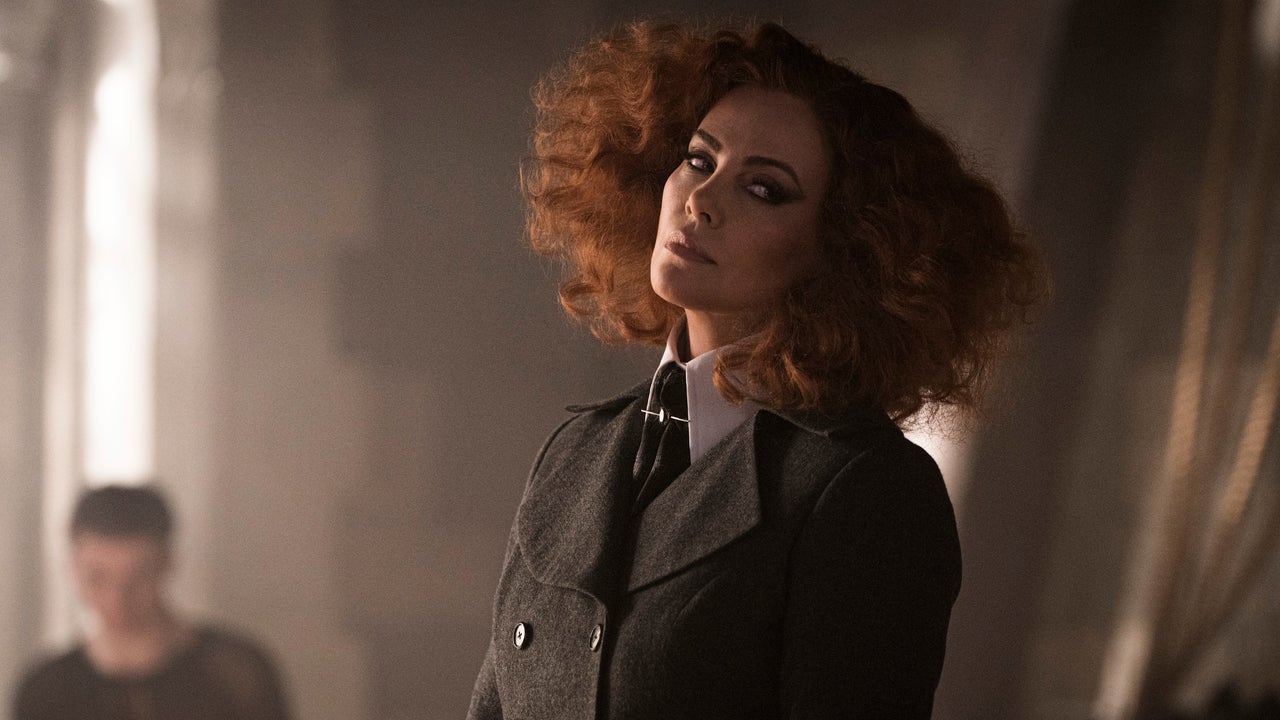
“Lamya’s Poem” was pitched as an Oscar contender and did not make the cut.
It still has topicality, ambition and promise, and streams Feb. 21.
“Lamya’s Poem” was pitched as an Oscar contender and did not make the cut.
It still has topicality, ambition and promise, and streams Feb. 21.

“Coven of Sisters” is a tight, tense Argentinian period piece set in witch-hunting, Inquisition Era Spain.
It’s clever enough to play around with the root reasons for witch-hunting — patriarchal control via terror — and so quick to make its exit that it feels incomplete. But what’s here is pretty harrowing and damned believable.
Sometime just before or after the Spanish Armada set sail, a traveling “judge” and his retinue of soldiers and aides reaches a coastal village in Basque country. They’re traveling from town to town, persecuting young women they can accuse, convict and burn for making demonically merry on a Witch’s Sabbath.
Prosecutor Salazar (Alex Brendemühl) and his advisor or “consejero” (Daniel Fanego) and sketch artist roll in and demand and receive the immediate cooperation of the local priest (Asier Oruesagasti) in their witch-hunting. Any strange behavior, young women carrying on, cavorting in the woods?
“Nothing is more dangerous than a dancing woman,” Salazar hisses (in Spanish, or dubbed into English).
Half a dozen friends and sisters are thus grabbed after merely being “seen” in the woods. They are shackled, tossed into a group cell and questioned one-by-one.
They’re in their teens, and once their initial terror fades a bit, they’re sure their innocence will be obvious and these strange men will recognize and admit their mistake. But as they’re interrogated and tortured one by one, coming back to the cell battered, punctured and shorn of their hair, Ana (Amaia Aberasturi) is the first to figure out they’re in a rigged game.
These men are hunting high and low for “signs” of corruption and wayward Christians, evidence of local “Satanic sects” and towns cursed — wells running dry, sheep giving no milk. And where there’s corruption there are sure to be wayward women causing it.
Ana is the one to figure out they’re timing these visits to phases of the moon, like the fishermen of each village, who depart and return on lunar tides. Damned if these theocratic creeps aren’t showing up when there are no men in town to protest and fight back.
But if the “sisters” tell the pervy prosecutor and his team what they want to hear, each acting out and stretching their tale out to last a day, they’ll run out the clock, the Basque fishermen will return and the Catholic Castilians won’t dare start burning local girls on suspicion of something they can’t prove.
I love that set-up, a “ticking clock thriller” conjured out of a witch-trial.
The meat on this script might have been the tales the girls tell, some of which are glimpsed here. More could have been done with this, showing us that the girls realize the stakes, even if some of them are reluctant to lie and blaspheme to save their necks.
The behavior of the inquisitors is monstrous and historically-defensible. They use soldiers as their muscle, cover their captives with hoods lest their eyes “bewitch” their accusers, and carry out interrogations that include nude physical examinations and flesh-rending “tests” that are nothing of the sort.
They’re superstitious sexists carrying out a war against women as a means of controlling the people.
The older women in the Basque village — an important distinction, as this is historical Spain’s most defiant and militant region — empathize with the girls and know this persecution for what it is.
“Men have always been afraid of fearless women.”
With sexism and misogyny basically a party platform of ultra conservative groups around the globe and across the religious spectrum, “Coven of Sisters” isn’t just another “bruja” (witch) tale set in witch-crazy Spain. It’s a horror story in which the real horror is but a metaphor for what women are up against, seemingly everywhere.
This tale ends somewhat unsatisfactorily. But the girls — Aberasturi, Yune Nogueiras, Garazi Urkola, Jone Laspiur, Irati Saez de Urabain and Lorea Ibarra — make compelling, believable figures running the gamut from defiant and laughing off the threat to terrified and cowed.
The men are so recognizable you see versions of them all over the evening news, no matter where you tune in.
Rating: TV-MA, violence, sexual subject matter, profanity
Cast: Amaia Aberasturi, Yune Nogueiras, Garazi Urkola, Jone Laspiur, Irati Saez de Urabain, Lorea Ibarra, with Asier Oruesagasti, Alex Brendemühl, Daniel Fanego
Credits: Directed by Pablo Agüero, scripted by Katell Guillou and Pablo Agüero. A Netflix release.
Running time: 1:30

Seriously?
This is how you want to go out? A plotless, sexually-neutered piffle of a stripper movie, barely-scripted, with hardly enough “film” to fill a trailer, much less close to two hours of screen time?
No, I didn’t like it. No, it doesn’t appear that Steven Soderbergh was all that crazy about it, either. At least his lunkheaded “Logan Lucky” had a funny character or two, and was stupid enough that it dared to offend.
The third and final “Magic Mike” movie is just stupid. What “Staying Alive” is to “Saturday Night Fever,” “Last Dance” is to the gritty, sexy, hustling beefcake that was “Magic Mike.”
If Soderbergh was a musician, we’d call this a “contractual obligation album” and shake our heads about the money we just wasted supporting his “art.”
Even Channing Tatum seems a little embarrassed by all this by the time the third act rolls around.
It begins with Mike Lane, back to Miami bartender-for-hire gigs, his furniture business having bitten the dust, his dancing days behind him.
But the newly-separated and rich philanthropist, played by Salma Hayek and given the most idiotic name a tipsy screenwriter could type up — “Maxandra” — takes an interest. Somebody at her charity fundraiser mentions they recognize Mike as the dude, dressed as a cop, who rocked her world at a sorority party or some such.
“Max” wants some of that. Mike’s $60,000 quote (probably his debt) is a bit high, but $6k buys her a lapdance so erotically-charged they needed a stunt double to pull it off…and put it back on again.
Enjoy it. Revel in it. It’s the highlight of the movie, and it comes in the opening scene.
Next thing he knows she’s invited him to London to take over a show at an historic theater that will be a bone of contention in her divorce settlement. He’s to turn a stuffy period piece hilariously mistitled “Isabel Ascending” into a cutting edge beefcake dance revue, “revenge” against Max’s cheating ex.
The dancers — recruited from auditions, Youtube videos from Rome, parks and street corners — are given no names and no personalities. That points to how little Warner Brothers wanted to spend on a supporting cast.
The dance scenes aren’t bad…at first. Folding them all into a “show” for the finale is something of an unwatchable debacle.
The obstacles they must overcome — their feelings for one another, the colorless ex and his Very British way of cutting Max’s legs out from under her, the gods of dance who’re offended by all this — don’t amount to a hill of fava beans.
At one point, the screenplay decides to let Max’s aspiring novelist 14 year-old daughter — mentioning her by name constitutes child actress child abuse — voice-over narrate this tale as if it’s a novel she’s basing on the real life “phase” her adoptive mother is going through.
Thandiwie Newton was originally slated to play Hayek’s role, and while Salma is no slouch and comes away from this unbruised, you have to wonder what the testy and triggered Newton was thinking when she signed on in the first place, and what she saw that made her flee the way everyone else should have.
Feminist lip service in the finale? Sure. Hell, at one point Soderbergh tries to slap a little “case the joint” caper comedy “Ocean’s Eleven” in this, he’s that desperate.
When Mike makes a suggestion about one particular number he’s dreaming up for his dance event, that it needs to be “stripped, oiled-down and spanked,” the dude is talking about this movie, which buries a franchise so thoroughly you wonder if director and star will be able to crawl out of the grave they and this idiot screenwriter dug for themselves.
Rating: R for sexual material and language.
Cast Channing Tatum, Salma Hayek, nobody else you ever heard of.
Credits: Directed by Steven Soderbergh, scripted by Reid Carolin. A Warner Bros. release.
Running time: 1:50
Que horror!
March 10, GKids unleashes this Spanish language animated…thriller?

The distributing studio elected not to preview this anywhere in Florida outside of Miami. Even though the original story was set in TAMPA.
Smaller cheaper cinemas along the NC/Va border are fearful of what message a movie about dudes who do their situps sends. They aren’t booking it.
So here I am, in Chapel Hell amongst the Tarholes, paying premium Research Triangle Park prices to see this thing.
Impress me, Soderbergh, Tatum and Hayek.
A lady with a bone to pick about the villainous role history has assigned Richard III, thanks in large part to Wm. Shakespeare, decides she can find out where the fellow is buried.
Stephen Frears re-teams with Steve Coogan, his “Philomena” partner, for another tale of a plucky lady and her seemingly hopeless quest. Coogan co-wrote and co-stars in this one.
Harry Lloyd plays the ghost of Richard III, killed on Ambion Hill at the Battle of Bosworth Field, guilting our put-upon researcher (Sally Hawkins) into locating just where he might be buried.
IFC has this, which means we’ll get a good chance of seeing it in a cinema on this side of the pond. March is its US opening date.


By the time somebody on screen finally acknowledges that somebody else in “Somebody I Used Know” is doing “some Julia Roberts ‘My Best Friend’s Wedding’ s–t,” we’re already way ahead of her and this movie.
That halfway-mark give-away is amusingly-late and amusingly-obvious in this slightly-raunchier-but-no-edgier riff on the classic “I gotta break up ‘Mister Right’s’ nuptials” rom-com.
That’s the last time I get to use “amusingly” in this review. The film, cooked up by the wife-and-husband team of Allison Brie and Dave Franco, embraces its source material, even mimicking the whole “disrupt a wedding but face no consequences” flaw at the heart of “My Best Friend’s.” It’s just that the laughs are few and far between and the “heart,” so important to a good rom-com, is left out altogether.
The ever-engaging Brie plays a dogged reality TV producer-hostess who has mastered the art of using silence in post-show interview segments to get cast members of “Dessert Island” to weep and confess their heart’s desires and their unhappiness at not achieving them.
Ally has just finished another season of the sex-and-sinfully-good-desserts “contest” series when network brass (Zoe Chao and Sam Richardson) shows up to cancel it. Her agent (Amy Sedaris) is little comfort.
There’s nothing for it but to traipse home, to her single mom (Julie Hagerty) whom she has neglected back in touristy, scenic Leavenworth, Washington, a bit of the Swiss Alps in the Pacific Northwest.
Ally is “Miss Hollywood” to the locals who remember her. It turns out, her ex-beau (Jay Ellis) is one of those who remembers her. And in a big way. A magical night of getting reacquainted ends when Ally stumbles into Sean’s family, getting ready for his wedding.
Damn. No, his “My bad” or its equivalent doesn’t excuse it.
But after chatting up the groom’s caring-but-goofy brother (Brie’s “Community” co-star, Danny Pudi), she starts to think she has a chance, that despite what brother Benny insists, “It’s NOT too late.”
“I need to see this through!”
Kiersey Clemons plays the punk-rocker, non-binary bride-to-be, the one who makes that “My Best Friend’s Wedding” accusation. So, it’s “game on” with each muttering “That bitch” at the other’s moves and counter moves.
The “karaoke scene” from “Wedding” is reprised here as a dare that forces Ally to show everyone her way of rapping/singing DIY songs about a current situation, mentioning by name everybody in that moment with her.
It’s clever and cute — with Brie improvising new lyrics to “Semi-Charmed Kind of Life” by Third Eye Blind — even if it never comes close to the heart-touching delight of that “Wedding” moment. That kind of goes for the entire film.
Haley Joel Osment plays another sibling of Sean’s mostly-adopted family, a married goofball who’s all into dated Hollywood references (“The Office,” etc). He finds a laugh or two, as does Hagerty, playing a mom who has taken a lover and doesn’t interrupt their couplings just because her neglectful, self-absorbed adult daughter is visiting.
Everybody else? A lot of usually funny people are in this, but nobody has anything all that amusing to say or do. Wasting Chao, Richardson and Sedaris this way is a criminal offense.
Even Brie, leaning HARD into a sort of lovelorn-and-clueless Kristen Wiig characterization, has as much trouble finding laughs as she does grabbing hold of the heart of the movie.
The best scenes involve Ally questioning, deceiving and then bonding with Clemons’ “Cassidy.” That’s kind of sweet, but concentrating on that relationship at the expense of your supposed love connection, Sean, is a sign that you’ve pretty much missed the point. Or miscast.
And no, a big nude scene or two doesn’t “patch” this hole in the heart of your romantic comedy.
Rating: R for sexual content, graphic nudity, language throughout and brief drug use.
Cast: Allison Brie, Kiersey Clemens, Jay Ellis, Haley Joel Osment, Julie Hagerty and Danny Pudi.
Credits: Directed by Dave Franco, scripted by Allison Brie and Dave Franco. An Amazon Studios release.
Running time: 1:44
This Nike Air Jordan success story is slated for the first weekend in April, after March Madness, just as the NBA playoffs get rolling.
And yes, the trailer suggests it pushes all the right buttons. April 5, Be Like Mike.


It bowls the viewer over with ham-fisted, theatrical excess, a grandiose exclamation point on the tail end of the Golden Age of screen satire.
Peter Barnes sees to it that his class-eviscerating theatrical talk-a-thon “The Ruling Class” makes it to the screen with the dagger still bloody, although the blood’s somewhat dry on the blade.
On the stage three years before Monty Python’s hilarious and pointed “Upper Class Twit of the Year” contest, on the screen a year or so after that was telecast, director Peter Medak’s not wholly stagebound, ever-so-quotable film version feels stodgy and stale, half a century later.
It’s not the content, the idea of sending up the inbred Etonian/Oxbridge/House of Lords Brits whose “born to rule” privilege is still with us, even though Britain is once again questioning those Hanoverian “Windsors” and the ermine-caped and coddled DNA’s “divine right of kings.” Barnes’ play earned a Nicholas Hytner/James McAvoy revival just a few years back.
The “classic” film? It’s something of a stiff. Built around a madness, heavy makeup and Bloody Marys turn by Peter O’Toole, it finishes with a savage flourish. But the two hours-plus bore that precedes that remains, as they say in the UK, “a bit much.”
Lord Gurney (Harry Andrews), a widowed, titled nobleman and army veteran, dies during an accident that would have exposed the way he got his jollies, had that sort of thing ever become public. His autoerotic asphyxiation while in his dress uniform and cap — and a ballet tutu — goes awry. And just as he was planning to remarry and sire a fresh heir.
Why? The idea of his “mad” son inheriting the title, the seat in the House of Lords and the magnificent pile (Harlaxton Manor was the filming location) and estate is unthinkable to his brother Charles (William Mervyn), and Lord Gurney himself had to give some thought to protecting the family’s bloodline-based privilege.
But the lord gets-off in mysterious ways, and dies, with a big chunk of cash going to charity, a bigger one to his faithful manservant Tucker (Arthur Lowe), and everything else going to wayward Jack.
A man who has worn a monk’s habit, his hair and beard long and a beatific glow about his face for nearly ten years, who thinks he is Jesus “Mark II,” will become Jack Arnold Alexander Tancred Gurney, 14th Earl of Gurney.
Just don’t call him (O’Toole) “Jack.”
With Uncle Charles, his wife Lady Claire (Coral Browne), their nob of a son (James Villiers) and the obliging local C of E bishop (the great Alastair Sim) present, let the debate about the new lord’s “fitness” for his inheritance begin. How does his know he’s truly the Father, Son and Holy Ghost?
“Simple. When I pray to Him, I find I am talking to myself.“
But but but…surely this cannot stand! Even having “Jack” explained to them by his “foreign” doctor (Michael Bryant) and others, can’t lessen the blow.
“Remember he’s suffering from delusions of grandeur. In reality he’s an earl, an English aristocrat, a member of the ruling class. Naturally, he’s come to believe there’s only one person grander than that: the Lord God Almighty Himself.”
This Jesus naps upon a cross and beams when he talks of love and blessings, the wonders of “His” world. He fails utterly to inspire his relatives to evolve into better people, or to give up their schemes to displace him, or at least marry him off so that another “heir” can be produced and he can be sent back to the “looney bin.”
“We think you should take a wife.”
“Who from?”
The manservant Tucker, more “outspoken” but still on the job after receiving his newly-won wealth, just shrugs at this latest upper class twit.
“Yes, he’s a nutcase. Most of these titled fleabags are. Rich nobs and privileged arseholes can afford to be bonkers. They’re living in a dreamworld, aren’t they, sir? Life’s made too easy for ’em. They don’t have to earn a livin’, so they do just what they want to.”
Director Peter Medak, a refugee from communist Hungary, may have had insights on this “Bolshie” satire of class and privilege. But he shows little flair for comedy or comic blocking. The film never breaks free from that “stagebound” feel. Every scene runs past its payoff with most of the first two acts playing as an endless succession of “let’s not get to the point/the good stuff just yet” prevarications.
There are occasional wacky breaks for a little song and dance, “The Varsity Rag,” public school songs and the like. They’re rather blandly translated to the screen.
The “He thinks he’s Jesus” joke is campy enough, but flogging it to death is a sin. What we stick around for is the fading hope that eventually this nutter will be “accepted” because “We understand each other perfectly. Breeding speaks to breeding.” Jack is just “a little eccentric, perhaps.”
And when he’s “accepted” we doubt he’ll have any trouble fitting in with his fellow “eccentrics” in the House of Lords.
With rank having its privileges, no effort will be spared to provide Jack with a “cure” via a fellow headcase who bills himself as “The High Voltage Messiah” (Nigel Green),.Charles’ mistress (Carolyn Seymour) will be persuaded to marry him.
Madness will be shrugged off, a murder will be covered-up thanks to great wealth’s ability to hide behind the Church and school connections and class. If that sounds dispiritingly “present day,” that’s kind of the point.
The film divided critics and awards groups in its day, but there’s no denying its impact. It was a flop. O’Toole would enter his own “years in the wilderness” that even the cult hit “The Stunt Man” couldn’t end. It would take “My Favorite Year” to truly begin his own third act.
Medak would never be entrusted with anything of this scale again. He’d go on to film “The Krays” and “Romeo is Bleeding” and a lot of American TV.
The movie they left behind, a production launched — mid-bender — when O’Toole secured the rights and could add it to his “Man from La Mancha” schedule, remains a curious and endlessly quotable artifact.
If the play’s as timeless as Hytner maintained it is, it’s a pity the director of “The Madness of King George” didn’t take a crack at making a film using his West End production as a jumping off point.
But perhaps he figured out what O’Toole, Medak and Barnes didn’t, way back when. This sort of talky, madcap-but-myopic satire only works on the stage, where the many pauses allow the many pithy punchlines to become laughlines and the live audience helps carry the load.
Rating: PG, innuendo, scatological humor
Cast: Peter O’Toole, Alastair Sim, Carolyn Seymour, Arthur Lowe, Coral Browne, William Mervyn, James Villiers, Michael Bryant and Harry Andrews.
Credits: Directed by Peter Medak, scripted by Peter Barnes, based on his play. An Avco Embassy release on Tubi, Amazon, etc.
Running time: 2:33
The names have been changed, but the PBS painter/mesmerizer and womanizer is plainly the inspiration for this one.
And if there is a comic actor who more embodies the phrase “Happy little clouds” (probably copyrighted, almost certainly not in the film), I’ve not seen him.
“Coming soon” from IFC.