
Rhea Seehorn, Tony Shalhoub and Michael Ian Black also star in this odd, dreamy comedy.
Feb. 24 this one comes to theaters.
Rhea Seehorn, Tony Shalhoub and Michael Ian Black also star in this odd, dreamy comedy.
Feb. 24 this one comes to theaters.
This paranoid thriller with a supernatural twist has a shot at showing us WWI on a budget.
Feb. 24, we find out if it works. As if there wasn’t enough to be terrified of in the trenches.


“World weariness” is a given in any film noir about a mystery somebody’s trying to solve.
It’s in the sleepy eyes of the mystery-solver, be he or she a gumshoe, a relative or just “a friend” of the missing person. That’s underscored by voice-over narration, the tried-and-true way a detective or whoever lets us know how wearing this all is to him, how jaded this world has made her, how resignation’s the only appropriate response when “No one gets out alive” is the only hard and fast truth in life.
It doesn’t just hang over actor turned actor-writer-director Avan Jogia‘s debut feature, “Door Mouse.” It’s ladled on and laid-on thick. The whole tale doesn’t take place after dark, but it could have, and the smokier and foggier the better. The action is confined to short bursts, and damned few of those.
Nobody speaks in anything but a monotone, as if they’re imitating our heroine and narrator, the spanker/stripper by night– “horror porn” comic author by day nicknamed for her distinct Minnie Mouse hairstyle.
“It was a full packa cigarettes sorta night,” she narrates.
“You’re lookin’ down deep wells, little Door Mouse,” she’s warned.
“You can only crawl on the ground so long before the dirt starts stickin’ to ya.”
Jogia, who’s turned up in supporting roles in lots of film and TV series since graduating from the teen hit “Victorious,” has crafted a consistently-moody noir parked firmly in the underbelly of Toronto, and a film that taps into comic book imagery to create transitions between scenes, illustrate the artist-heroine’s frame of mind and jazz up the action.
Because that’s necessary. Because even the action beats are muted. Nobody raises her or his voice. And that flat, just-above-a-whisper monotone that was star Hayley Law’s choice of “How to Noir” just smothers the movie.
The “Riverdale” star sets the tone and the volume, and “Door Mouse” kind of dozes off because of it.
“Mouse” narrates her life, “Every morning I wake up in the afternoon,” takes a hit of coffee, sucks down a cigarette and draws away at her “bi-monthly horror porn” comic “Whoreific,” which nobody buys.
By night she burlesques at Mama’s, a club where bustiers and paddles for spanking are all part of the show, which “Mouse” and Doe Eyes and Irish “Riv” deliver and regulars like Eddie (Donal Logue) lap up. “There are worse ways to make a living,” Mouse admits. But it keeps the owner, Mama (Famke Janssen, on the money) in fishnets.
One night Doe Eyes doesn’t show up, and Mouse resolves to go figure out what’s happened to her. Her dutiful “silver spoon” lapdog Ugly (Keith Powers) tags along. And that’s the “deep well” our heroine slow-walks into, a sordid world where fetching young women disappear and nobody seems to give a damn.
I like the plot here, a mystery that Mouse doesn’t want help solving, but that forces her to hit up her dealer ex-boyfriend (writer-director Jogia) and figure out ways to infiltrate whatever world made Doe Eyes disappear.
But there’s no urgency to any of this, not the Doe hunt, not the scheming up ways to get into this high-tone hotel which may have some answers, not the mysterious stranger who may or may not know what happened to Doe Eyes, and thus must be chased.
The comic book connecting scenes work, and the violence, when it comes, is a shocking contrast to the low-energy/low-heat movie surrounding those moments.
Whoever advised Law to play the part this quiet and “cool” to the point of chilly should sit down and watch a few Bogart noirs. Characters may narrate or converse in even tones, but every now and then somebody gets worked up — a cornered suspect, a mark, a desperate victim and/or the hero/heroine who has just about had enough.
It’s human nature. And it’s a must in a movie that otherwise is in danger of turning into a nap before we figure out what Door Mouse figures out and decides what needs to be done.

Rating: Unrated, violence, sexual situations, partial nudity
Cast: Hayley Law, Keith Powers, Avan Jogia, Michela Cannon, Nhi Do, Donal Logue and Famke Janssen
Credits: Scripted and directed by Avan Jogia. A Gravitas Ventures release.
Running time: 1:41
Yes, there’s officially now a subgenre of horror tales built on Jewish traditions, religious practices and demonology.
Throw in a little same sex romance, and...”That’s CO-pen-HA-gen!”
This Danish production in (mostly) English comes to Shudder Feb. 9.
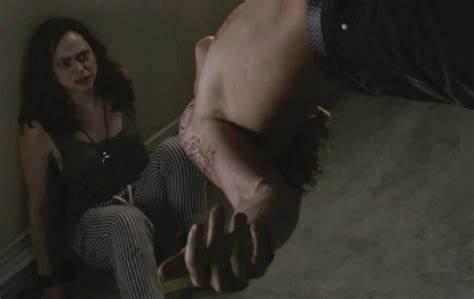


The “yank’em out of the frame” horror movie effect has been beaten to death in the twenty or so years since it became commonplace. So it’s always refreshing when someone comes along and turns demonic creatures — young women, usually — into wall-skittering crabs (“The Ring” movies) or something else new.
In the Malaysian/South Asian production “Don’t Look at the Demon,” a “gifted” hostess of a haunted house TV series, and her production crew, stumble across an actually-“haunted” house, with a demon who lifts victims off the floor and drags them from room to room.
That’s new. So a tip of the hat to Dhrutiranjan Sahoo and the effects team for adding that to their repertoire for this Fiona Dourif West-Meets-Eastern demonic thriller. It’s a loud, in-your-face tapdance through horror tropes that passes muster as a slick production even if it isn’t the most original thing I’ve seen this month.
Dourif, who appeared in the recent “Chucky” TV series with her dad, horror icon Brad Dourif (He’s the voice of Chucky.), plays a young woman haunted by her first encounter with the supernatural as a child. That “summoning,” with the pentangle, the ritual, all that jazz, got her sister killed.
Now Jules is “getting paid” for what she went through back then as hostess of “The Skeleton Crew,” a touring reality ghost-hunting reality show. When we encounter her, producer Matty (Jordan Belfi), camera crew brothers Wolf and Ben (Randy Wayne, Harris Dickinson) and new translator Annie
(Thao Nhu Phan), they’re in Thailand, witnessing a monk (Konglar Kanchanhoti) torture a young woman via her elaborate back tattoo.
Well, that’s what Jules thinks. The monk sets her straight, and lets her know that he knows what she is. Or was.
“Even if you can no longer see,” he lectures her, she has to know that “there is no evil, only ignorance.“
“Easy for YOU to say!”
“The Skeleton Crew’s” MO is to solicit video suggestions from online viewers, with Jules taking a look and deciding, by instinct or insight, which are legit enough to check out.
That’s how they come to the house of Martha and Ian (Malin Crépin and William Miller). They’re expats living abroad, and they’re not getting any sleep.
We know from the quick way Jules and then Matty decide that this couple isn’t REALLY being assaulted by spirits that any second now, they’re going to video record something that makes them change their minds.
Jules’ “Come to Jesus” moment hits when the lights black out — for only her — she hears voices no one else does and SOMEthing brushes up against her.
“I can’t HAVE them touching me,” she informs her producer, partner and lover-protector Matty.
That’s triggering, considering her past. But no matter. It makes good TV.
“Don’t Look at the Demon” is about most everybody in that house being assaulted in some way or other by a foul-mouthed English speaking demon who must have seen “The Exorcist,” who takes different human forms, and whom we’ve seen identified by its Thai name in an opening credit.
The jolts are pretty solid and measure up against most B-movie horror. But the story is kind of all over the place, giving “Demon” a slack, meandering quality. Dourif is a sturdy, committed presence at the center of the film, when director Brando Lee remembers it’s all about her. That comes in and out of focus and contributes to the feeling that one never gets a sense if Dourif — despite her many credits — is any good, or just a nepo baby cashing in on her surname’s horror bonafides.
The nature of the demon and how it is confronted is so trite you’d flunk a student film for trotting out the pentagram everything that goes with it.
But speaking of chalk, chalk this movie down as one where the spectacular, knock-you-backwards effects impress a whole lot more than the story, and a bit more than the good-not-great reactions to seeing the impossible from the cast.
Rating: unrated, violence, profanity
Cast: Fiona Dourif, Jordan Belfi, Malin Crépin, Randy Wayne, Harris Dickinson, William Miller and Konglar Kanchanahoti
Credits: Directed by Brando Lee, scripted by Alfie Palermo. An Outsider release.
Running time: 1:36

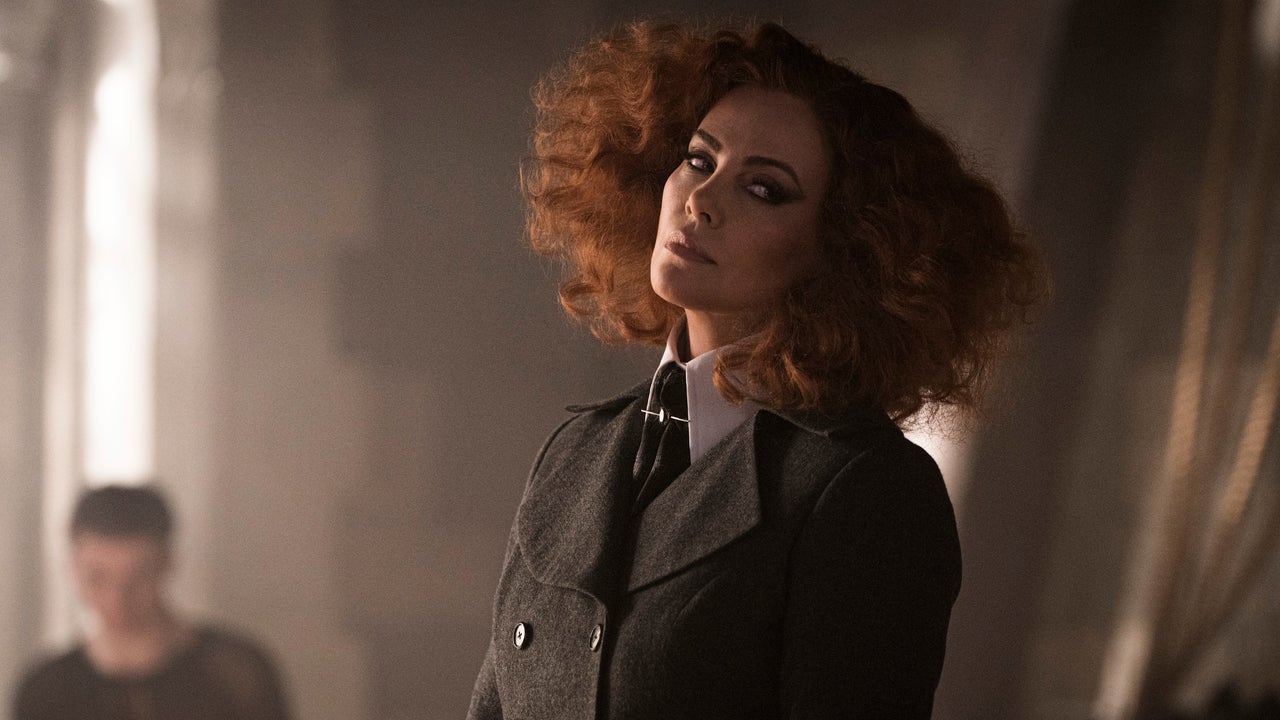

The real test of a screen actor’s mettle isn’t a coveted turn in an awards-bait role, or even an ambitious chance to “stretch” and do something you’ve never done as a performer.
It’s showing up for something that, whatever your original hopes, you have begun to realize is a big budget, high profile stinker.
So kudos to Oscar winner Charlize Theron, Emmy winner Kerry Washington, Oscar nominee-to-be Michelle Yeoh and screen icon Laurence Fishburne for not phoning it in on “The School of Good and Evil.”
Whatever the Netflix suits were thinking when they threw a ton of money at Paul Feig to co-write and direct this fantasy spoof — based on a novel by Soman Chainani — this much is clear. It’s been a LONG time since “Bridesmaids” made the TV’s “Freaks & Geeks” creator Hollywood’s hottest comic property. And every passing year has made that one look like more and more of a Feig fluke.
There’s this two-campus school in the land of stories, where “villains'” are educated to be “pure evil” and heroines and heroes instructed in the ways of good, “true love’s kiss” and all that.
One school is run by Theron, the other by Washington. Guess which on-the-nose role each landed.
Two BFFs, cast when Feig decreed he only wanted “to see women named SOPHIA for this” (Sofia Wylie and Sophia Anne Caruso) are fetched from their provincial town not far from the one Belle in “Beauty and the Beast” grew up in, and enrolled in the school.
But Agatha (Wylie), the girl the townsfolk all assumed is a witch, because her mother raised her to be one, is sure she’s been mistakenly plopped into the airy fairy School for Good with all the pretty-mean-girls-who-want-to-be-princesses are. And her vain blonde pal (Caruso) named Sophia — just to keep it straight — is certain she was meant for the School for Good, yet is for some reason parked in the School for Evil.
As The Schoolmaster (Fishburne) “never makes mistakes,” whatever will our young ladies do? After they get makeovers and start their lessons on how to experience “true love’s kiss” and maybe find their prince (Jamie Flatters)? After, of course, ridiculing the no-nonsense (and not at all funny) voice-over narrator, the “Storian” (Cate Blanchett).
“You know we can HEAR you, narrator! You weirdo!“
So there’s a lot of Hogwarts and a little “Enchanted” and a whiff of every wisearsed take on fairytales in the plot, and a taste of “Fantastic Beasts” in the impressive effects and exotic if not exactly interesting or amusing magical creatures. And there’s just a hint of “Bridesmaids” in the attempted tone and that one moment when Professor Anemone (Yeoh) blurts out an s-bomb.
These two and a half hours of tedium have a childish and girlish target audience as the film tries to both reinforce to “get dolled up and attract a mate” “princess” trope and flip it or at least ridicule it at the same time.
This was probably crap from its inception, but I didn’t read the book and couldn’t pick out novelist Soman Chainani’s cameo (he plays a teacher at the school) and get an idea of how sheepish or embarrassed or “Just glad that check cleared” he looked.
But Theron and Washington vamp this monstrosity up and almost never let on that they know this project didn’t really work out. That sets an example for the many younger players in the cast, who do their best to play more than this scene’s stunning costume.
Good for them. And let’s hope Netflix rewards that loyalty with a better project next time, although Theron might consider steering clear, considering her luck with this and that dog “The Old Guard” that Netflix built around her. Unless she needs the money.

Rating: PG-13, profanity, violence
Cast: Charlize Theron, Kerry Washington, Michelle Yeoh, Laurence Fishburne, Sofia Wylie, Sophia Anne Caruso, Jamie Flatters, Patti Lupone and the voice of Cate Blanchett
Credits: Directed by Paul Feig, scripted by David Magee and Paul Feig, based on the novel by Soman Chainani. A Netflix release.
Running time” 2:29
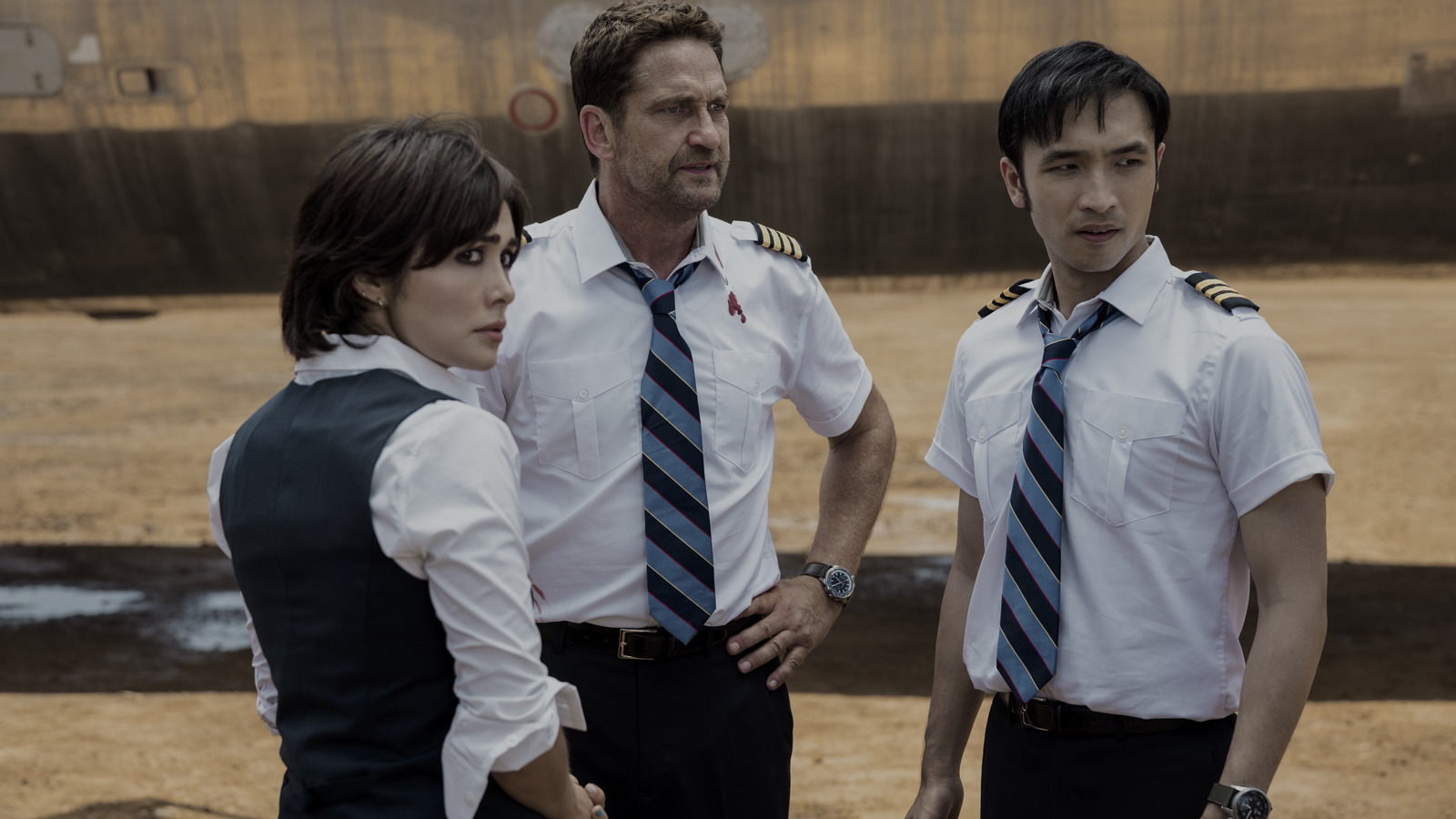
That Gerard Butler has more movie career lives than a damned cat.
Every time you figure “It’s time to pack your bags for the C-movie express,” Gerry B. shows up in a dumb thriller that somehow “plays.” He buys in, and we buy in — up to a point. And somehow, the thrilling edges out the silly and Paisley, Scotland’s finest brings that clumsy beast home.
“Plane” is almost as plain as its title. It has ludicrous plot points, comically-contrived back story elements, Milan runway-ready womenfolk and villains who are just “The Other” — Filipino separatists who don’t really have a point of view save for “Let’s take some hostages, and shoot as many as we don’t need.”
Directed by the Frenchman who gave us the criminal career of “Mesrine” on the screen, “Plane” is the quintessence of “a really dumb movie that plays.”
Butler’s Capt. Brodie Torrance, a TrailBlazer Airlines pilot for a nearly empty and “old” (per the college girl passengers) 727 to fly from Singapore to Tokyo and on to Honolulu just in time for New Year’s.
Widowed, with a college student daughter (Haleigh Hekking) waiting for him in Hawaii, he’s rushed — no time to shave — and ready to get this show on the road.
A storm changes all that, and in the film’s harrowing first act, we see a more or less by-the-book response to a lightning strike forced landing from high altitude. Capt. Torrance and Hong Kong native co-pilot Dele (Yoson An) somehow get the plane low enough to spy an island, stumble across a road, and land that rear-engined beast by the stubble of Torrance’s chinny chin chin.
That’s when the trouble really begins. They don’t know where they are. Their airline back in New York doesn’t either. This corner of the vast Philippine Archipelago is under the control of “gangsters, thugs, separatists.” And the guard escorting a murder suspect (Mike Colter) to Toronto for trial was one of those killed in their encounter with the storm.
There’s nothing for it but for the captain to take the guard’s gun, and the walking-muscle of a suspect, and hike out to look for help.
I know, right?
Of course our pilot has some “background” that will pay dividends in this scenario. Of course our suspect has “special skills.” And no, the script does damned little to create suspicion and wariness between the two men. They’re chummy, almost straight off.
Because “Plane’s” got bigger fish to fry.
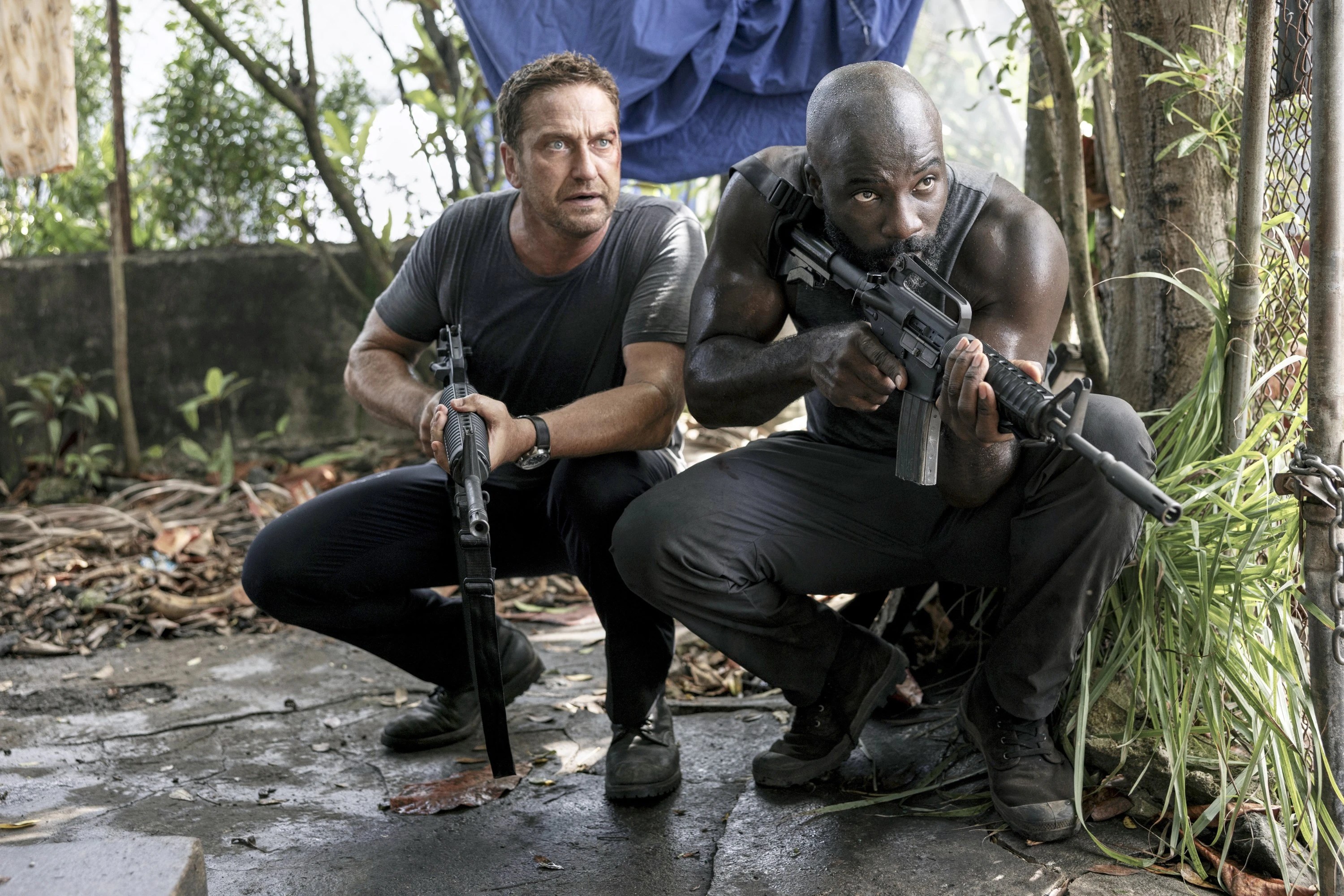
The violence in “Plane” is sudden, shocking and damned personal, as director Jean-François Richet keeps his camera tight and hand-held on the hand-to-hand combat sequences, and he stages the shootouts on a “unruly mob vs. professionals” level.
Butler has perhaps his best onscreen brawl-to-the-death since “300.” Colter (TV’s “Luke Cage”)? Look at him. What goon with a gun would have a prayer against him?
The “professionals” here are the “private assets” (mercenaries) commissioned by the airline’s freelance crisis manager (Tony Goldwyn) to extract these stranded travelers from the clutches of Southwest the separatists.
That’s a whole different point of view in the film, “crisis managing” a lost airplane, with the airline’s chief (Paul Ben-Victor) at odds with fellow who manages — in a PR and search and rescue sense — such disasters for a living. Not making Goldwyn’s character a cynical heavy in all this is a bit surprising.
“Plane” is, in many ways, a classic January or August film, a movie destined for a low-attendance dumping-ground month on the movie release calendar. But every January or August produces an overperformer or two, dumb genre movies that defy lowered-expectations and connect with audiences.
And even though we already have one of those this January — “M3GAN” — and even though Butler’s fanbase has aged into its nickname (“GerryAtrics”), he’s got another visceral, involving action pic that’s not great, but works well enough to make us forget “Last Seen Alive” and his last few flops, if only for the month of January.
Rating: R, violence, profanity
Cast: Gerard Butler, Mike Colter, Daniella Pineda, Yoson An, Evan Dane Taylor, Remi Adeleke, Paul Ben-Victor and Tony Goldwyn
Credits: Directed by Jean-François Richet, scripted by Charles Cumming and J.P. Davis. A Lionsgate release.
Running time: 1:47



I had to catch a preview of “Plane” last night, which is a handy excuse for not watching something I gave up on years ago.
The best way to experience the Golden Globes is like the best way to watch most sports these days — via highlights collected on Youtube. I switched on Mike White’s tearful “White Lotus” speech when I got home, saw that Regina King — perhaps tipsy — went off on Kevin Costner for not being there, and that Eddie Murphy brought it all home at the end.
That’s enough. The long-corrupt, racist and doddering Hollywood Foreign Press Association isn’t worth any more of my time, and doesn’t get a “pass” just because the desperate network that gave us Matt Lauer, Chuck Todd, Andrea Mitchell and Trump says they’ve “cleaned up their act.”
The Globes’ role as Oscar predictor has faded quite a bit in recent decades, thanks to the Academy’s moves to minimize these clowns’ ability to rig the Oscars.
Cate Blanchett, Michelle Yeoh, Colin Farrell and Austin Butler won the big movie acting prizes, “Black Panther’s” queen Angela Bassett (Oh, is that considered an Oscar worthy Best Supporting turn?) and “Everything Everywhere All At Once’s” Ke Huy Quan, another sentimental favorite, took the supporting prizes.
Is anything figuring Spielberg’s a leading contender for the best director Oscar for “The Fabelmans?” That “Fabelmans” is at the top of the best picture conversation?
It could be so, but I’m scratching my head at that, and at a bit too much of the rest of the Globes to care.
Oscar nominations are due out Jan. 24. That’s when we’ll see what really was deemed memorable in a year that saw the Globes dumped on a weeknight and perhaps nobody watched (5.4 million, smallest audience in 30 years) and those who did mostly shrugged. Apparently.
Feb. 21, we see if these Grimsby wankers score, right?
Oy!
If you think of the fascist conditions in Brazil at the time this was made, you have to appreciate the guts it took to get “The First Fallen” made.
Seems tougher minded than most Hollywood looks back at that epidemic.
Feb. 10 this opens in theaters, streaming later in Feb.

 Movie Nation