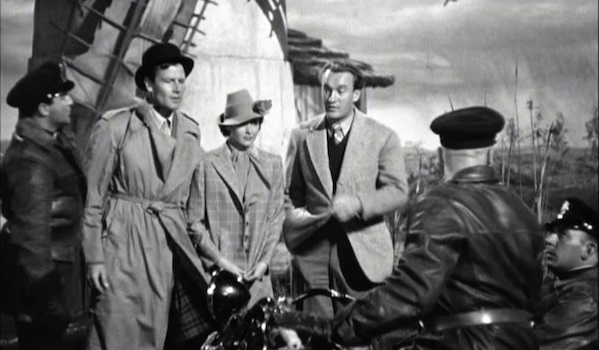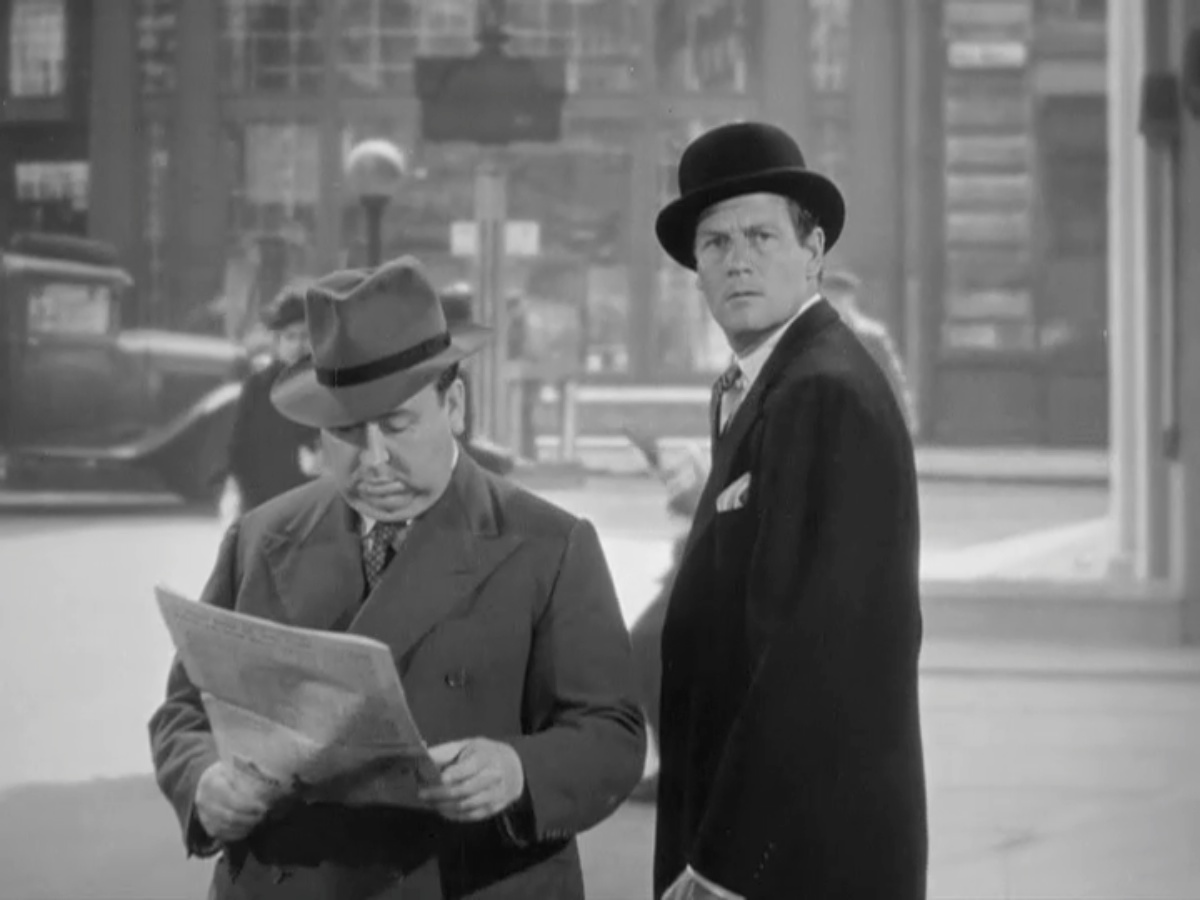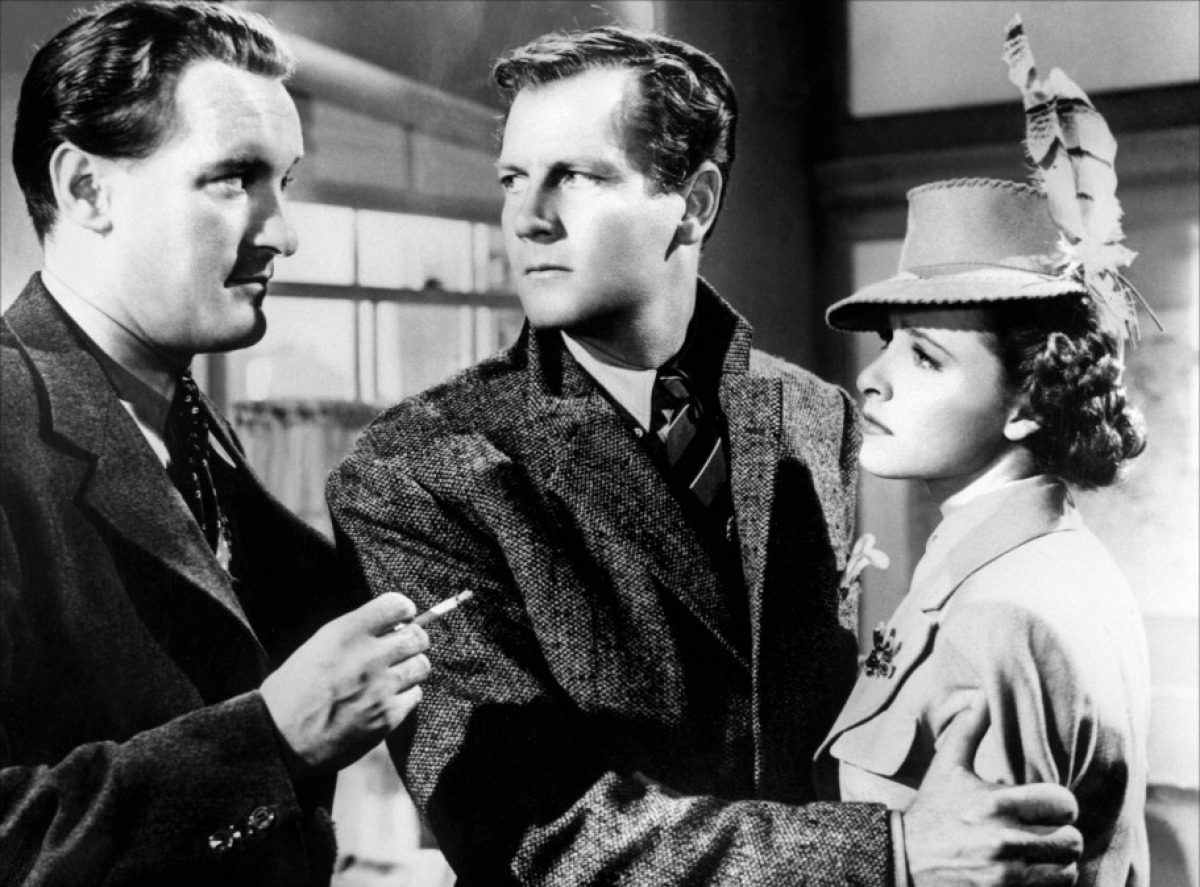
Freeman plays the expert consulted by the cop (Hauser) tracking this bizarre, multi-continental murderer.
March 10.
Freeman plays the expert consulted by the cop (Hauser) tracking this bizarre, multi-continental murderer.
March 10.


I don’t think the Japanese title of “Re/Member” is as clever a pun as it is in English.
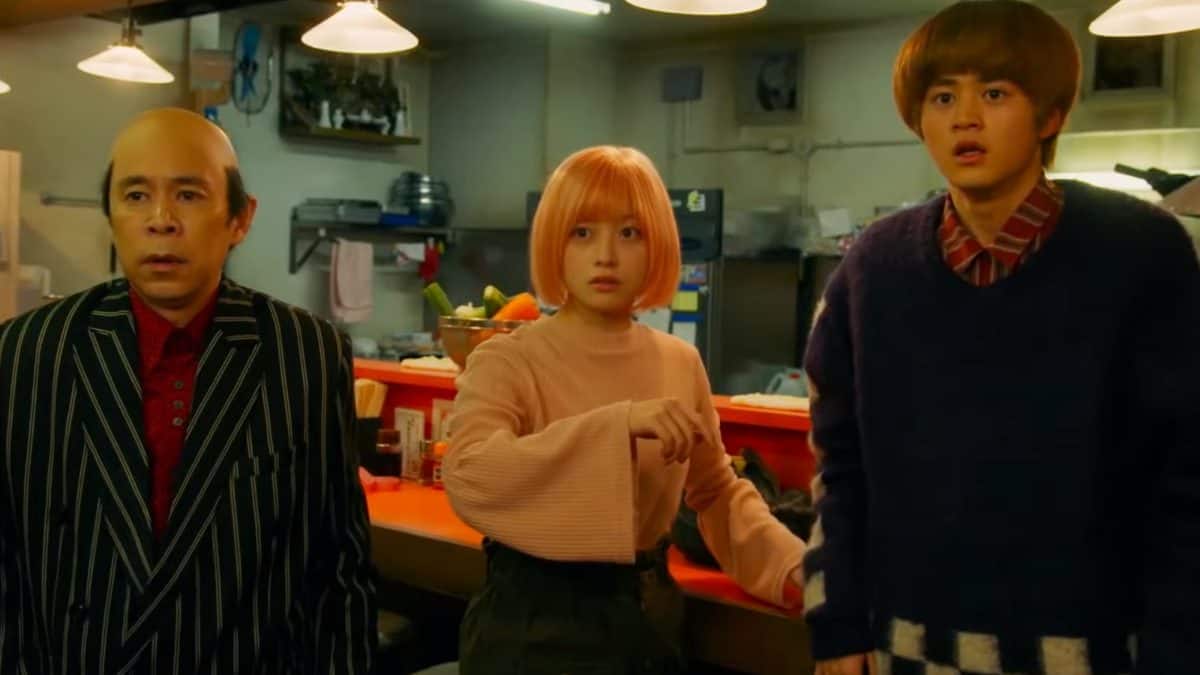
As this is a horror tale of high school kids trapped by a ghost, doomed to search for and re-assemble the dismembered body parts so that the spirit will rest in peace, “Re/Member” is amusing truth in advertising that “Karada Sagashi,” translated as “Remember Member,” never will be.
The hook here is a sort of “Before I Fall,” “Edge of Tomorrow,” “Groundhog Day” variation. Six high school kids are summoned and assembled by a ghostly “red person” dragging around a knit doll she had the day she was murdered in the film’s opening scene.
The teens find themselves trapped, sucked into the school each midnight to complete their quest, recovering body parts.
“Until the body search is complete,” nerdy Shôta (Kotarô Daigo) reasons — in Japanese or dubbed into English — “this is our ONLY day.”
Shôta, like our heroine Asuka (Kanna Hashimoto), is an outcast. She’s “invisible” and “a loser” to her classmates. He’s bullied, blamed for crimes he didn’t commit.
But super-popular super-jock Takahiro (Gordon Maeda) “saw the dead girl,” too. So did class hottie Rie (Mayu Yokota) and popular chatterbox Rumiko (Maika Yamamoto).
Sad and sullen truant Atsushi (Fûju Kamio) finds himself forced to show up and pitch in when they’re stuck in this time-trap, with the possibility of being “erased” from existence if they don’t succeed.
You know the “Groundhog” drill. Every night, they have to figure something new out. These kids, mostly strangers to each other, have to team-up to work the problem. As in “Edge of Tomorrow,” a nightly slaughter, one by one, is their reward for failure.
They compare notes each morning — with the last to die the night before filling in the new data for Miss “Honestly, we got killed off pretty early” and the others.
Honestly, “Re/Member” could use more of that “Tom Cruise got killed AGAIN” comic energy. While the script does a good job of showing us how these new associations could change the trajectory of that one hellish day — a stray cat who keeps getting run over — and their high school lives, it lets down the plucky players in a lot of other ways.
The body parts aren’t so much “discovered” in a logical hiding place, as “presented.” If the ghost knows where they are and can move them, why pester teenagers with that?
After seeing a child chased into the forest in our opening scene, there’s nothing done to add pathos to the original victim. She’s just another “Ring” style wild-haired Japanese girl/demon.
The nightly deaths are gruesome and creatively-handled, reminding us that “J-Horror” is a genre for a reason.
But the third act turn towards giving this quest meaning — over-explaining, the Achilles heel of many a thriller — is a dud. And much of what comprises the climax will have you shouting at the screen as it is dragged out by SOMEbody not taking care of that one piece of business, obvious to everyone but her.
“Re/Member” does just well enough by a killer concept to merit a Hollywood remake, because this version stumbles here and there, and simply fails at the finish.
Rating: TV-MA, graphic violence
Cast: Kanna Hashimoto, Gordon Maeda, Maika Yamamoto, Fûju Kamio, Mayu Yakota and Kotarô Daigo.
Credits: Directed by Eiichiro Hasumi, scripted by Harumi Doki. A Netflix release.
Running time: 1:42


Broadly speaking, China’s World War II began before anybody else’s, and ended with the conclusion of the long off-and-on Chinese Civil War that preceded it and postdated it.
Any trip down the rabbit hole of the various Sino-Japanese wars, considered a sideshow of the global conflagration by Westerners, is going to be messy and feature various alliances, “war lords” as war leaders, collaborators and the Japanese trying to swallow a divided nation many times their size through conquest, treachery and outright barbarism.
As China’s military record in the field was nothing to wave a big red flag over, combat movies from a Chinese perspective are more propagandistic fantasies than anything truly historic — even the ones that don’t feature Bruce Willis. Safer ground for filmmakers seems to be tales of espionage, intrigue and resistance.
“Cliff Walkers” and “The Message” went that route, and that’s where writer-director Er Cheng takes his moody, murky thriller “Hidden Blade.”
It tells the story of the war years through the eyes of spies who work for the the nationalist Kuomintang of Chiang Kai-shek, the collaborationist “We just want peace” government of “President” Wang Jingwei and the communists, whom everyone else — occupiers and resisters — figures are the “real” threat.
There’s an “it’s never too late to change sides” ethos among most, and that even goes for the cynical Shanghai-based Japanese intelligence officer (Hiroyuki Mori) who’d rather be in the first conquered corner of China, Manchuria, “the fortress” against Soviet invasion, or so the Japanese believed at the time.
It’s interesting that Cheng, who did the gangland WWII tale “The Wasted Times,” takes pains to show the Japanese point of view, the “How do you win a war without a goal?” realization of some who figure their island empire has bitten off more than it can chew in its “land war in Asia” blunder.
But “Hidden Blade” has many characters and points of view, from sketched-in “honey trap” female spies ( Xun Zhou, Jingyi Zhang, Shuying Jiang) to government functionaries, Japanese troops in the field committing atrocities and a bomber co-pilot who keeps his dog, “Roosevelt,” in the cockpit with him on missions.
Cheng’s narrative flips back and forth in time, from early war interrogations to late conflict walks along a river delta littered with the corpses of Japanese invaders. So it’s a little hard to follow thanks to his needlessly untidy storytelling.
It still immerses us in uncertain, nerve-wracking times as we follow well-dressed and well-fed city spies, officers and officials down the corrupt, back-stabbing road towards communism’s triumph. And it features just enough action, including a couple of the most savage brawls in recent screen history, to deserve its “war movie” label.
Hong Kong acting legend Tony Leung (“In the Mood for Love,” “Red Cliff,” “Chungking Express”) is Mr. He, a smiling, silky-smooth debriefer/interrogator who surfs the shifting currents of China’s struggle but sees the safest ground in the employ of the collaborationist Wang regime.
But even the ruthless Mr. He has his blind spot. Yes, it involves a woman assassin (Xun Zhou) working for the communists.
Sino-Korean boy-bandmate and TV actor Yibo Wang gives a breakout performance as the brooding Mr. Ye, an agent so pretty that our first and second impressions are that he’s romantically involved with his partner and constant dinner companion Mr. Tang (Chengpeng Dong). But Ye also has a woman he is trying to save from this slaughter.
The women are this spy war’s philosophers, intoning truisms that hold for any civil war or violent political divide.
“It’s easy to forgive an enemy, impossible to forgive a friend.”
Real history skips back and forth underneath this ebbing and flowing narrative, with the Japanese in China certain that they’re about to join Germany in invading the U.S.S.R. (Their dictatorship was most terrified of a war with Russia, throwing Toyota-tanks against real armor. But Stalin was also obsessed with a Japanese stab in the back.). There are scenes that capture the round-up of foreigners in Shanghai depicted in “Empire of the Sun,” mentions of The Rape of Nanking, an anti-spy raid that goes wrong and an everyday atrocity in the countryside, summary executions and a mass “punishment” of locals accused of fouling a well.
They are buried alive as a concrete foundation is poured for a new grain elevator.
As you can gather, there’s a lot to get in and a lot to take in, and Cheng’s storytelling doesn’t make absorbing it any easier. You’d think he watched “Inglorious Bastards” a few too many times, the way he stages every interrogation as a long string of soliloquies, characters giving monologues to each other that pass for conversation.
But Leung is terrific, and Wang holds his own and dazzles in a couple of epic fights. The women characters are secondary, but there’s room to play around with their degrees of fanaticism. The Japanese officer Watanabe (Mori) is almost sympathetic thanks his delusions and disillusionment. Watch how he sees a raid go wrong and gets out of his car and pulls out his samurai sword and to salvage it. Listen to how he takes the news that a Japanese prince has been assassinated on duty in China.
“I guess I’ll have to disembowel myself to apologize.”
I found the whole “Hidden Blade” rather less satisfying than its individual component parts. The many characters, myriad plot points and points of view and added complications with the narrative timeline clutter things up.
But scene after immaculately-realized, quietly-menacing scene pays off. The violence is shocking even when it’s not sudden and the messaging is less heavy-handed than typical Chinese fare set during WWII. Whatever went wrong for China on the battlefield, the secretive men and women hiding their politics and taking the measure of all their many enemies were a real success story, even if they’d never recognize the oligarchical, class-conscious “People’s Republic” of today.
Rating: unrated, graphic violence
Cast: Tony Leung, Yibo Wang, Xun Zhou, Jingyi Zhang, Shuying Jiang and Hiroyuki Mori.
Credits: Scripted and directed by Er Cheng. A Well Go USA release.
Running time: 2:10


A melancholy Chinese romance of love-unconfessed and much else left unsaid, writer-director Luyi Zhang’s “Yanagawa” takes its title from its Japanese setting. But that title, like the film’s “love triangle that might be a quadrangle,” is somewhat ironic.
The canal-laced seaside city described as “The Venice of Japan” didn’t dazzle the director of “The Quiet Dream.” He sees what we see — a quiet, working class water town that just happens to have sturdy, workboat-style gondolas poled by gondoliers through a water world more like Thailand than the Italian coast.
And memories of teenaged crushes don’t stand up to the film’s scrutiny as we hang out with two brothers who follow that girl who left them and Beijing behind twenty years before to this Rising Sun Venice.
We meet Li Dong (Luyi Zhang) just as he’s breaking Chinese custom and decorum, bumming a smoke off a lady outside of the Beijing U. hospital, over-sharing by admitting he’s just learned he has “Cancer, stage four” which chases her away in a flash.
That’s almost the last big “share” that Li Dong undertakes as the introvert in this quiet drama. He doesn’t tell his arrogant, boorish brother, Li Chun (Bai Qing Xin), even over drinks.
Married-and-over-it Li Chun is a bit of a bully, and a conversation hog. He wonders what’s up with his brother, who deflects by deciding that the house he inherited from their task-master dad should go to the Li Chun and his family.
They’re a family that is only comfortable leaving things unsaid and leaving out details of this “inheritance” and reasons for it. Any complaints they have about each other, the culture and the world are answered with their father’s pet expression — “Whatever happened to morality?”
Speaking of that, Li Dong says, we should go away for a few days, head over to Yanagawa to see the sights and see if they can locate the lovely Liu Chuan, whom the never-married Li Dong has been hunting down and pining for.
She’s a singer there. And whatever crush he and his brother shared over her 20 years before, he’s wondering if she might have been the only girl he ever loved.
To this end, Li Dong has learned Japanese. Li Chun sets the tone for their trip by marveling at this, and ridiculing it. His constant put-downs betray his insecurity. And matters only get worse when they go into the bar where Chuan sings breathy, wistful torch songs to the somewhat appreciative Japanese audience.
Perhaps the audience is there for the same reason as the brothers. Liu Chuan (Ni Ni) is a long-haired beauty in her late ’30s, never married and trilingual since she spent time in London and settled in Japan. She finishes a tune, walks up to their table and sits down as if they never parted.
A dynamic is re-established. Nerdy Dong is mostly silent, save for the odd shy remark about how things were (at least in his imagination) when they were younger. Chun dominates the conversation, openly comes-on and flirts, married-or-not, a cocky, self-assured vulgarian whom Liu Chuan either indulges in the most coarse way, or brushes off.
Chun flirts with xenophobia, mocking all things Japanese and any Japanese customs his brother or the woman he still calls “Chuan’er” abide by. The world knows a stereotypical Japanese tourist and the classic “ugly American” image abroad. Chun is a modern traveling stereotype himself, a brash Chinese blow-hard.
Dong just tries to stay in the conversation and not give away his morbid secret.
And if that’s not romantically complicated enough, the Japanese landlord who rents the siblings a room (Sôsuke Ikematsu) also has a crush on Chuan, but even he has trouble expressing that as they converse in his second language, her third — English.
Lu Zahng, few of whose films (“Chingqing” and “Scenery”) have played in North America, doesn’t deliver much in the way of big emotions or major revelations here.
“I really like you” (in subtitled Mandarin “Pekingese” or Japanese, or English) is about as open as these crazy repressed Asians get.
There’s a bit going on beneath the surface, and perhaps more going on with Liu Chuan than either of the three men pursuing her pick up on.
Is she sleeping around? Is she even interested in any of them?
That’s not altogether clear, nor is the fact that Chuan realizes she’s met the teen daughter of her youngest suitor, Nakayama (Ikematsu).
So much is left hanging, unsaid or unresolved, even in the finale.
But “Yangawa” still makes for a fascinating Asian variation of cultures and ideas of love and romance in collision, even if it’s no “Four Weddings and a Funeral.”
Rating: unrated, adult situations
Cast: Ni Ni, Luyi Zhang, Bai Qing Xin and Sôsuke Ikematsu
Credits: Scripted and directed by Lu Zhang. A Film Movement release.
Running time: 1:52

“Marlowe” is a vamp, a bunch of 60somethings playacting hardboiled 40somethings. I’m OK with that, for obvious reasons.
The light isn’t right. This is the first filmed-version of Raymond Chandler’s famed LA gumshoe shot in Barcelona and Dublin, which explains that.
Characters don’t talk like real people, but the way we wish real people talked — flinty, florid fulminations over “assignations” with “femme fatales,” missing persons, gangsters, cops and others all up and down the spectrum of corruption.
“I’m more harmless than I look.”
“I’m sorry that it was ultimately uninteresting to talk to you.”
“When you’re getting to be an old man, it’s OK to get out alive.”
And for once, Philip Marlowe is forced to consider the first person to have that famous surname, the playwright who scribbled “Dr. Faustus.”
“Why this is hell, nor am I out of it,” an Angelino recites upon meeting “the big man.”
“That was his one good line,” Liam Neeson’s Marlowe growls in recognition.
I’d call this thriller — directed by Neil Jordan, who won an Oscar for writing “The Crying Game,” and scripted by William Monahan, who won his for “The Departed”– a fun, bad movie. But it’s not bad, just arch and over the top and all attitude and genre tropes and cliches.
And if you can’t find pleasure in seeing how tickled Oscar winner Jessica Lange is to be swapping pithy, punchy lines with an actor worthy of her stature, of watching grizzled Colm Meaney pass on old cop’s advice to a high-mileage private dick, if you can’t bask in the juicy tete a tetes Neeson shares with Danny Huston, Ian Hart and Alan Cumming, perhaps there’s a movie about a superhero the size of an ant that may be more your speed.
Diane Kruger plays the femme fatale who wants to know “How private, exactly, are your investigations, Mr. Marlowe?”
Claire Cavendish’s lover (François Arnaud) is supposedly dead, but she’s not convinced.
She’d rather her husband and her retired screen siren mother (Lange) not know about this digging around. Cop pals Hart and Meaney aren’t keen on this “investigation.” The “exclusive club” manager (Huston) who supposedly witnessed the death is more interested in obfuscation and World War I stories about how corpses don’t phase guys like himself and Marlowe.
“You’re my age. Perhaps you were there. Perhaps you know how it was and therefor is.“
Cumming is the mob boss whose gift of the gab and quoting of the writer’s Bible, Strunk & White’s “The Elements of Style,” rubs off on his bodyguard/driver (Adewale Akinnuoye-Agbaje).
“I’m a generic name, an eponymous ‘trademark!'”


“Marlowe” is set in 1939-40, with “I’ll Be Seeing You” seemingly on every Victrola and radio. It takes place for on “the periphery” of the movie business, and dips into the drug trade in a world of Irish “Colleens” of the screen, and “mick” cops, Mexicans on the outside starting to look in, sex workers and secrets, which every mystery thrives on.
The mystery isn’t all that engrossing, and the picture devolves into some CYA third act over-explaining to compensate for that. It can be a bit much, and more often than not. So OK, maybe it is a bad picture that’s still fun.
But it’d be hard to imagine this cast, with Neeson reuniting with his “Michael Collins” director and his “Kingdom of Heaven” screenwriter, not giving something resembling fair value.
The ambition alone is a real step up for Neeson, still making two-fisted action pictures, but this time in a literary-minded period piece package.
With “pearls before swine” quips and banter about Christopher Marlowe’s alleged authorship of Shakespeare’s plays, if this “Marlowe” isn’t Raymond Chandler’s “The Big Sleep/Farewell My Lovely” hero, he’ll do until some younger fellow fit to fill his gumshoes comes along.
Rating: R for language, violent content, some sexual material and brief drug use
Cast: Liam Neeson, Diane Kruger, Jessica Lange, Danny Huston, Alan Cumming, Daniela Melchior, Adewale Akinnuoye-Agbaje, Ian Hart and Colm Meaney.
Credits: Directed by Neil Jordan, scripted by William Monahan, adapted from the novel by John Banville, based on Raymond Chandler’s character, Philip Marlowe. An Open Road release.
Running time: 1:49
Disney and director Rob Marshall give us Halle Bailey “Under the Sea,” and the cackle of one Melissa McCarthy as Ursula…
May 26.
Your daily dose of weird?
Recreating the meeting of two infamous “bad boys,” just before filming “Going South” together.
A bit of a goof starring Jamie Costa doing the Jack Drawl, and Sandy Danto as Belushi in full “Samurai Co-Star” mode. Blitzed.

There’s a difference “cute” and “cutesy.” But until the Mexican road comedy “All the Places (A todas partes),” I’d never tried to split hairs between “cute-ish” and cutesy.
It’s about two semi-estranged siblings who mend fences by taking a cross-country motorcycle trip to see “all the places” they’d wanted to go as children, when they first negotiated such an odyssey.
The travelogue value of their journey is given short shrift. And even the scenes that play a little funny have a sitcom Ross-and-Monica in “Friends” energy about them. They’re a bit winded, a lot of “seen that before.”
Mauricio Ochmann plays Fernando, the jet-setting workaholic who has lived in Singapore for years and who gripes that “(expletive) Mexico” (in Spanish or dubbed into English) is why he missed their father’s funeral — inefficient airport, unhurried cabbie.
But that’s just a fresh grudge to add to other grievances for Gabriela, whom Fernando insists on calling “Gabo” (Ana Serradilla). He left her and the family behind, and missed their stress-inducing father’s transformative last years, his death and his funeral.
To Gabo, “Fer” is an exemplar of Dad’s old saying — “If the coffee lacks color, it’s clear.” Fernando has shown everybody his priorities.
An evening of steady pressure for her to cut him a little slack climaxes in a game of ping pong lubricated with tequila shots. That’s how they laugh again, and how they stumble into their teen map and travel book, in which they vowed to cross the country to Acapulco on their motorcycles, binging on every hotel’s “entire menu,” to see “A todas partes” from the seats of their Carabela motorcycles.
They’re tipsy when they dust off the long-unused bikes, and helmet-free as they motor to the city square in San Miguel de Allende. But when they sober up, Fernando is frantic to get back home, back to the client who has been blowing up his phone.
Nope. Gabo won’t hear of it, and they’re off down winding desert mountain roads, stopping at a Fiesta de Vino y Queso (wine and cheese), hitting Tlaxcala and Mexico City, flirting with strangers, trotting out their childhood tapdancing routine, picking up hippies who help them trip with mushrooms and getting into a cantina fight over a ping pong match along the way.
Yes, I know it’s a dated reference, but come on. “Friends.” Ross and Monica. You see it, right?

Just a couple of scenes manage any comic payoff, and only one finds the pathos that this sentimental journey promises.
We get precious little in terms of local sights, people or cuisines, although there are a couple of binge eating scenes.
The whole “work pressure” subtext is forgotten as Fernando slips back into Mexican priorities — family, vacation, wine and tequila — almost leaning into stereotypes.
How “dangerous” such a trek would be is only addressed comically, as the hippies want to see some ID and take selfies with them before they’ll chance a hitchhike ride from these squares. Even the notorious local police are reduced to doofuses overly proud of their hometown, quick to harass the condescending strangers.
There’s a nice friction between the foul-mouthed, combative leads that suggests the movie this might have been.
But back the entire affair with syrupy, colorless Muzak and no one will mistake this fluff for “Motorcycle Diaries” or those charming “Long Way” motorcycle-travel documentaries of Ewen McGregor and Charley Boorman.
The makings of a charming formula road picture are here. But director Pitipol Ybarra and screenwriter Adriana Pelusi abandoned too many ingredients for “All the Things” to come off.
TV-MA, sexual situations, drinking and motorcycling, mild violence, profanity
Cast: Ana Serradilla and Mauricio Ochmann
Credits: Directed by Pitipol Ybarra, scripted by Adriana Pelusi. A Netflix release.
Running time: 1:37
June 9.
A Porsche Transformer. Yay.


In Oliver Stone’s 1991 film “JFK,” Donald Sutherland played a character only identified as “X,” the “explainer” who downloads most of the suspect government and government officials’ actions in the days surrounding the Kennedy Assassination in 1963.
It’s a strange and in retrospect amusing way of throwing everything behind Stone’s thesis in the film at the wall at once in a single mesmerizing third action monologue.
Imagine a whole movie of such monologues, with more than one version of such a connect-the-dots character.
“88” is a political thriller by the one-named Nigerian/British/American filmmaker Eromose (“Legacy”), a two hour sermon on white supremacy and dark money and how America got to where it is today. It’s never less than interesting, even as its dramatic urgency wanes due to the monotony of its message and the over-the-top “thrills” this thriller never bothers to provide.
Brandon Victor Jackson plays Femi, a numbers guy who works in accounting in the fundraising office of candidate Harold Roundtree, a pre-Iowa (oopsie) “front-runner” for the 2024 presidential nomination, mainly thanks to huge infusions of cash from assorted non-profit political action committees.
Femi spots an odd thing about these donations, their bizarre numeric amounts that add up to some incarnation of the number “88.”
As he passes this info on to his senior campaign staff bosses (Amy Sloan, Michael Harney), he continues to dig and brings in a Jewish pal (Thomas Sadoski) whose “investigative” skills he can tap into. And Ira sees something straight away. Those numbers, “88?” That’s white supremacist code for the eighth letter of the alphabet, repeated.
“HH…’Heil Hitler.'”
“88” takes these two, and Femi’s pregnant activist/wife Maria (Naturi Naughton) and that campaign through a round of digging and soul-searching over the latest “chosen one” candidate, a great communicator with all the right education and background and a sketchy tie to one big non-profit PAC, the one he ran right up to the day he announced, “One USA.”
We meet the candidate who inspires Femi and convinces the veteran political operatives on the staff that he’s a winner via a long interview Roundtree has with a tough-minded, challenging journalist.
Our writer-director lets us know how to write “names” into your low-budget film’s cast, by putting the movie’s two most famous actors onto basically a single TV interview set (no background, just darkness behind them) for a series of scenes intercut into the action, scenes that might have taken just a couple of days to shoot.
Orlando Jones (“Drumline”) is surprisingly affecting and Obama-esque as Roundtree, and William Fichtner (TV’s “Mom,” “The Perfect Storm”) gets to ask the uncomfortable questions as a bulldog TV interrogator who brings up “race,” a topic our candidate dodges, Big Money in politics and white supremacy, including Abraham Lincoln’s thoughts on the matter.
Femi’s quest takes on “Marathon Man” intrigues (without violence), “follow the money” “All the President’s Men” plotting and “JFK” warning phone calls and “visits” from those who either want to expose the truth, or want to ensure Femi doesn’t reveal it.
“There’s a storm coming, Mister Jackson! Stay out of the way!”
Eromose gives us primers on lynching and global racist politics and even an animated “Schoolhouse Rock” style explainer on how “rich people buy elections” thanks to the infamous Citizen’s United case.
“88” is informatively watchable, thanks to all these in-story tutorials. What it lacks is high drama and a sense of the stakes, which never feel as murderous as you might expect. All this backstory about Femi’s AA membership and wife Maria’s boycott-armed activism against her own bank’s lending policies and the “plantation owners” of the National Football League and debating Black Lives Matter vs. Stop Asian Hate clutters up the film and ignores the very basic lessons of “All the President’s Men.”
“Follow the money,” and “What did the (candidate for) President know, and when did he know it?”
It’s possible to be a bit awed by the “JFK” ambition of “88,” even if the execution waters down Eromose’s message to the point where we wonder if he’s simply lost his nerve.
Rating: unrated, profanity
Cast: Brandon Victor Jackson, Naturi Naughton, Amy Sloan, Michael Harney, Thomas Sadoski, William Fichtner and Orlando Jones
Credits: Scripted and directed by Eromose. A Samuel Goldwyn release.
Running time: 2:01