
The Hitchcock films that draw me back in, time and again, are the lighter-hearted ones. As much as I relish “Strangers on a Train,””Vertigo,” “Rear Window” or “Notorious,” it’s the murderous, mysterious larks that hold up best for me.
I can’t channel surf past “Saboteur,” “The Trouble with Harry,” or the greatest Hitchcock romp of them all, “North by Northwest,” without stopping and mumbling, “Well, there goes this afternoon/evening/planned bedtime” etc.
“Foreign Correspondent” might be the very lightest, largely because of its sense of play and the defiant optimism built into it. Filmed during the darkest days of World War II, with Hitchcock returning to Britain from America just as the “Blitz” was coming to the skies over 1940 London, the Master of Suspense was determined to do his patriotic duty, even if he was based in Hollywood.
And his duty was to get America ready for the idea of intervening in Europe with a film. There aren’t many similarities with Michael Powell’s similarly-intentioned “The 49th Parallel,” which came out in 1941, but the one important one is tone. Like Powell and his screenwriters, Hitchcock figured the cleverest way to send his “You need to be in this fight” message was in a jaunty, adventurous, fast-moving travelogue with murderous Nazis — the only kind — and their encounters with plucky, human rights-loving anti-fascists of every stripe.
Unlike the darker travelogue “Saboteur” (1942), this time the emphasis would be on optimism even as Hitch’s titular hero, given the All American George M. Cohanesque name “Johnny Jones,” is learning just how evil and treacherous fascist Germany and its treasonously proud fanboys had become.
And if you wanted to print “American Optimism” in large, friendly letters up on the movie marquee, you couldn’t do much better than casting Joel McCrea, just then achieving the stardom that would make him a screen immortal, thanks to his work in the title roles of “Foreign Correspondent” and the next year’s “Sullivan’s Travels.”
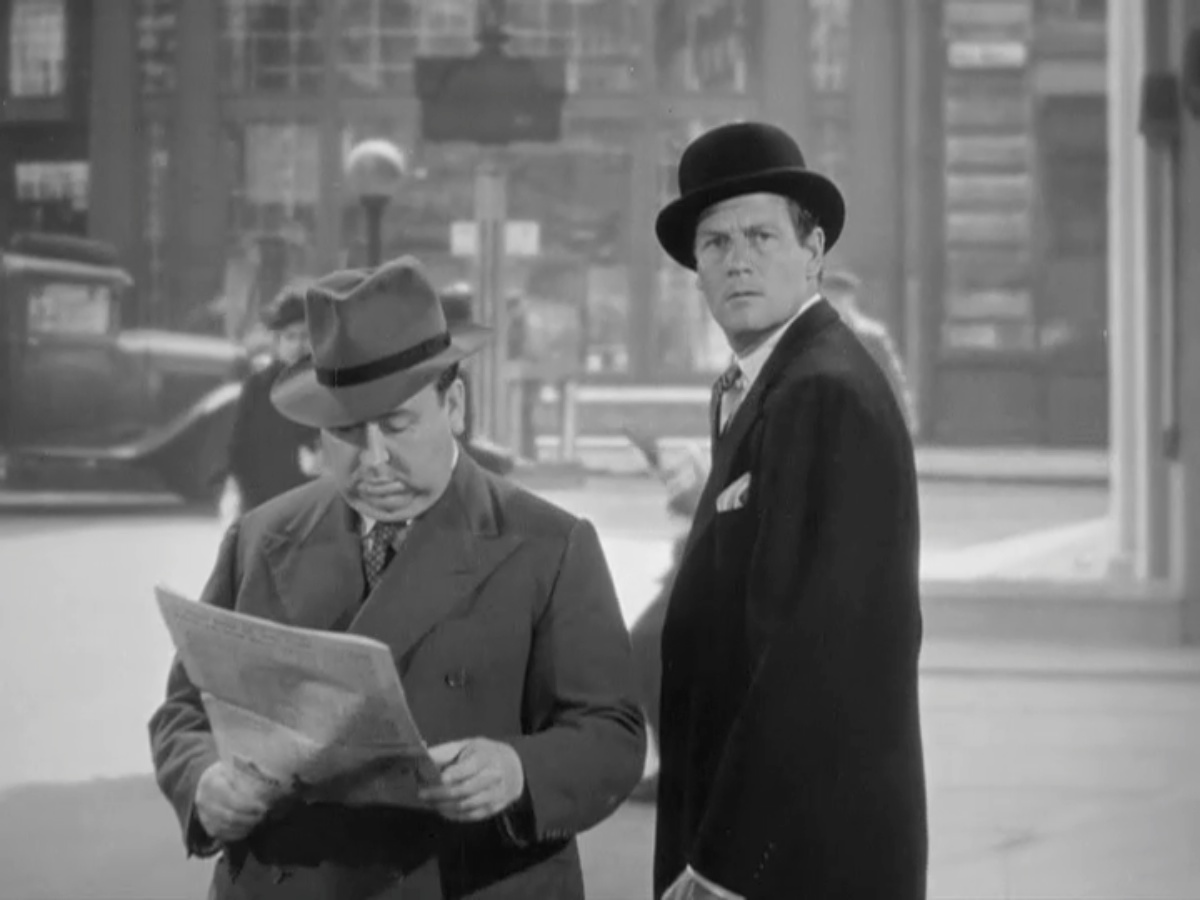
McCrea would play the reluctant American, a city reporter unconcerned about events “over there,” a guy who regarded the job of “foreign correspondent” much the way his editor/boss (Harry Davenport) does, as over-educated swells too delicate to get the ‘real’ story.
— “Foreign correspondent! I could get more news out of Europe looking in a crystal ball…I don’t want any more economists, sages, or oracles bombinating over our cables. I want a reporter!”
Thus is our “crime” reporter summoned and sent, against his will, into the diplomatic thick of things. He wants instructions, and gets almost none. Jones wants to know who he should interview. And that tone Hitch was going is given away in that very scene.
— “Well how about Hitler? Don’t you think it would be a good idea to pump him? He must have something on his mind.”
That’s our movie, an American smart aleck abroad, fretting over this famous diplomat (Albert Basserman) he just happens to run into and the world of secret treaties, intrigues, war plans and assassinations that spin around him.
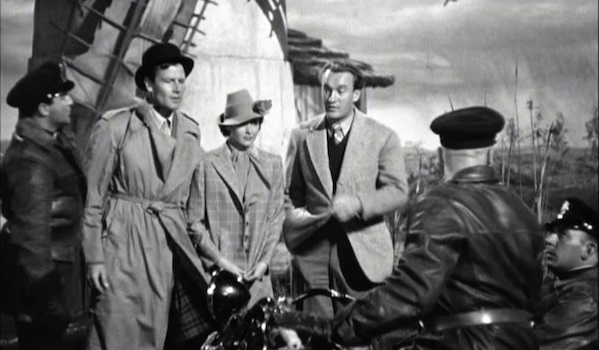
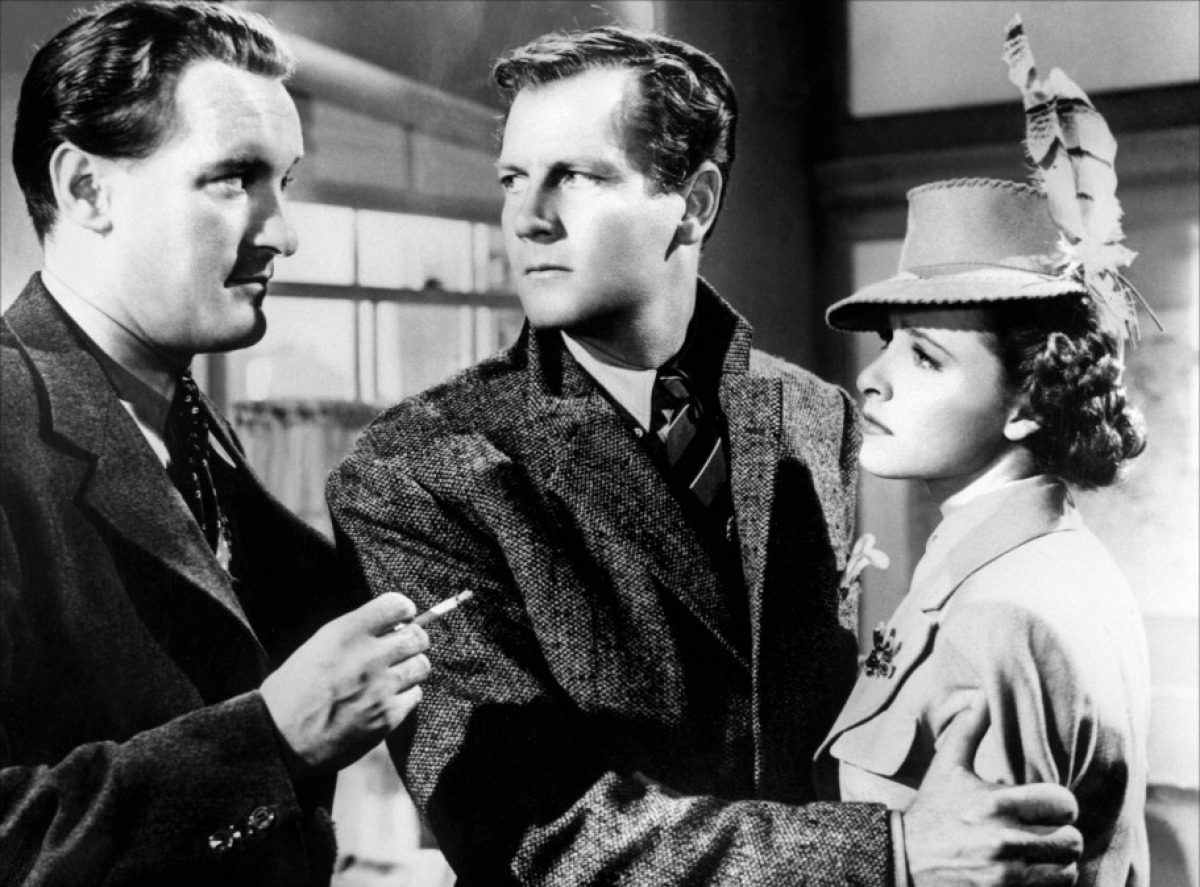
Laraine Day, most famous for this film but who worked into the “Murder, She Wrote” era, plays Carol, the daughter of the head of the Universal Peace Party. She is with our correspondent, who figures he needs a bowler hat and high-class moniker — “Huntley Haverstock” — for this new assignment, and a British reporter friend she knows when that pivotal assassination happens and the murderously merry chase begins.
That British “reporter friend” of Carol’s is an ever-so-suave, too-too-droll Continental whom Haverstock/Jones throws in with when the chips are down. I’d love to know which credited (or uncredited) writer had the brainstorm of naming George Sanders’ character “Scott ffolliott.”
— “I don’t get the double ‘F.'”
— “They’re at the beginning. Both small ‘F’s.”
— “They can’t be at the beginning.”
— “One of my ancestors was beheaded by Henry VIII. His wife dropped the capital letter to commemorate it. There it is.”
Sanders all but steals the movie with that pre-“All About Eve” snide British savoir faire. Every word out of his mouth has something amused and amusing about it, as if he’s in on the joke and “Look here, you Yanks. You don’t want to miss out on all the fun!”
Stumbling into a nest of spies, ffolliott offers to sell them life insurance policies.
“Now look, I’ll just sit here and you carry on with whatever you were doing. Don’t mind me, I sometimes sit like this for hours.“
Continue reading









 Movie Nation