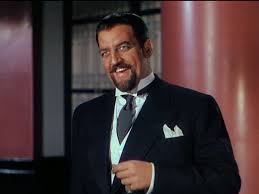
The Killer Bit that Got “Colbert” canceled?

It was this. Not the Turkish mustache business. “The Big Fat Bribe” rant.

Paramount will rue the day it didn’t simply pay out on his contract rather than have him sticking around for more months, bad-mouthing Skydance, Paramount and their apparent Big Daddy, Trump.

Posted in Reviews, previews, profiles and movie news | Comments Off on The Killer Bit that Got “Colbert” canceled?

Movie Review: A COVID/BLM Protests/Trumpism-Conspiracy allegory set in “Eddington,” New Mexico

There’s a veritable NRA convention of ordnance discharged in “Eddington,” Ari Aster’s All American parable of “How did we get here?

But the one weapon not discharged is the most apt metaphor for the latest from the writer/director of “Midsommar,” “Hereditary” and the Joaquin Phoenix puzzle “Beau is Afraid.” “Eddington” is a shotgun of a movie, aiming at many targets and trying to hit them with all the randomness of a 12 gauge shell full of pellets.

It’s kind of a mess, but an ambitious one hitting on themes Aster’s fans will recognize as his favorites. And as Aster scores points on conspiracy-obsessed America, cultish America, gun-fetishizing America, virtue signalling America and the limits of “back the blue,” he’s pretty much earned the right to be heard out, if not the benefit of the doubt.

The microcosm of society here is a tiny, dying New Mexico town where the longtime sheriff (Joaquin Phoenix) has come up with a laundry list of reasons why he won’t wear a mask as the country shuts down and the “mask to stop the spread of COVID and save lives” vs “I ain’t maskin’ cuz FREEDOM” divide opens up.

Sheriff Joe Cross (subtle) defies the statewide mandate in front of Mayor Ted Garcia (Pedro Pascal) and others, a version of the last straw between these two locals who have history, which is connected to Cross’s fragile, conspiracy-crank wife (Emma Stone).

Not many people respect the sheriff. We’ve seen a crazed homeless man (a nearly unrecognizable Clifton Collins Jr.) drop him and evade capture in front of a city council meeting at the mayor’s closed-by-COVID bar. And we’ve met the last deputies (Michael Ward and Luke Grimes) who will work for Cross, and let’s just say they’re not exactly White Sands test-facility job candidates.

The mayor’s gay punk son (Matt Gomez Hidaka) and others like live-streaming the sheriff as he stumbles through his duties and tries to control his temper and hide his cluelessness. Popularly elected or not, the town has grown jaded on him, and one suspects the mask thing is about more than “I have asthma.” He’s ready to run for mayor on a “How did we get here?” anti-mask, “There IS no COVID in Eddinton” platform.

His “getting better” but dark web-obsessed wife and her even crazier mother (Deidre O’Connell) have fallen in with a charismatic “How the world REALLY works” cult leader (Austin Butler).

There’s a big data processing facility that promises to “bring jobs” and suck the local aquifer dry as it makes crypto-dolts temporarily rich. That’s another issue in a Cross “campaign” run by attacking everyhing the mayor is for, and by enlisting his two county-payroll deputies (there is no dispatcher) as campaign workers.

He’s decorated his Sevilla Co. sheriff’s dept. SUV with print-shop misspelled slogans, an effort that takes an even darker turn a we see the suspicious bursts of violence inserted into nationwide Black Lives Matter protests which Fox News, the sheriff and the old and white electorate insist are “George Soros backed…antifa terrorists.”

National TV coverage will bleed into Eddington’s politics and everything we saw in Minneapolis, Portland and elsewhere will play out on a smaller scale in this not-quite-empty town on the edge of an Indian reservation which has tribal/pueblo police jurisdiction issues with the law-unto-himself sherrif.

Blood will be spilled and the viewer will be jolted at how quickly and how wide the schism between the “free-dumb” crowd, and the “woke,” sane and often annoying virtue signallers — from the unseen governor on down to high school white guilt agitator Sarah (Amélie Hoeferle), whom Brian (Cameron Mann) obsesses over, whom his gay bestie Eric the mayor’s son (Hidaka) toys with and who has “history” with one of the deputies.

If that reads like a LOT of plot and characters and agendas, it is. Aster has as much keeping them straight as we do.

So it’s almost natural that the third act descends into bloody first-person-shooter video-game styled mayhem, with under-identified outsider-snipers, the pueblo police, the sheriff and others caught up in it.

There’s nothing like raid-a-gun-shop wanton slaughter to thin out a cast and simplify a plot contrived to show America along its fault lines.

Phoenix is settling into middle aged man roles well enough, and he makes this simple man with the power of life and death over everybody alarmingly his own. Cross seems depressed, barely holding it together. And he’s armed and like all law enforcement, knows just what he can get away with. Pascal gives a shallow, shiny political sheen to the mayor that makes a nice contrast.

Stone and O’Connell border on parodies of conspiracy cranks, a group beyond parody. The younger players play up the fickle nature of “politics” among teens just learning to be outraged, sometimes just to attract the cute girl who’s outraged herself.

And Collins staggers through the picture, the personification of that insoluable problem no one wants to deal with or see. The mentally ill homeless? Sure. But he could also be a stand-in for victims and perpetrators of violence or for a schizophrenic country that’s lost its collective mind, and its way.

Making sense of it all on Aster’s behalf is hard enough. But “Eddington” runs up against a challenge even he can’t have forseen. It’s just unlikeable, with unpleasant characters, unpunished wrongs and wanton violence as a shortcut to unraveling any quandary or mystery.

Holding up a mirror like this was never going to win a lot of friends. Aster so stuffs that mirror with ugliness that “Eddington” is harder to take than it is to decipher.

If he knew more about firearms, he’d have recognized these targets as more suitable to precision — sniper rifles — and not his shotgun-hope-I-hit-something approach.

Rating: R, graphic violence, explicit nudity, profanity

Cast: Joaquin Phoenix, Pedro Pascal, Emma Stone, Deidre O’Connell, Michael Ward, Luke Grimes, Matt Gomez Hidaka, Amélie Hoeferle, Cameron Mann, Austin Butler and Clifton Collins, Jr.

Credits: Scripted and directed by Ari Aster. An A24 release.

Running time: 2:25

Posted in Reviews, previews, profiles and movie news | Tagged , , , , | Comments Off on Movie Review: A COVID/BLM Protests/Trumpism-Conspiracy allegory set in “Eddington,” New Mexico

Classic Film Review: Weir, Ford and McGillis make The Greatest Romantic Thriller of the ’80s — “Witness” (1985)

The barn-raising scene in Peter Weir’s masterpiece, “Witness,” is one of the most perfect pieces of pure cinema the movies have ever produced.

Beautifully conceived, shot (by future Oscar winner John Seale), edited (by Oscar winner Thom Noble) and scored (by three-time Oscar winner Maurice Jarre), it informs, moves and underscores the dilemma and love triangle dynamic at the heart of this classic almost without words.

Looks are exchanged between the on-the-lam cop (Harrison Ford) “passing” for Amish, the wide-eyed Amish widow (Kelly McGillis) and her more suitable suitor (dancer/actor Alexander Godunov) from her rural Pennsylvania community. Disapproving scowls are glimpsed from her stern and elderly father-in-law (Jan Rubles). And screen newcomer Viggo Mortenson gapes and grins and takes it all in, a balletic trio acted-out in stares of longing, staredowns and smiles between saw-strokes, hammer blows and twists of the hand drill.

It’s so perfect that this single scene can’t fail to produce tears, not just for the romance-that-should-not-be or should-be, but for “community,” the earnest generosity of people pulling together for a common goal.

When we talk of movies in “They don’t make’em like that anymore” terms, we’re not just speaking of epic productions of the past and their “cast of thousands.” “Witness” captures a great filmmaker in his prime and a star coming into his own depicting an Amish community that has changed much in the intervening decades and an America that has changed as well.

But we can go back and watch that barn-raising scene and at least hope the community connections, values, the urge to do the right thing and find fulfillment, happiness and justice can stage a comeback.

A couple of veteran TV writers specializing in Westerns such as “Gunsmoke” and the series version of “How the West was Won,” Earl K. Wallace and William Kelley, conjured up this Oscar-winning story of an Amish family and a police detective who run afoul of murderously corrupt cops and must lay low in Amish country.

A St. Paul-quoting “Come out from among them and be separate” culture with no phones, no cars and little connection to the world of “The English,” as they call America in the film, it was a stroke of genius realizing that these people would make a great hiding place for a child witness (Lukas Haas, amazing) to a murder and a cop wounded as he tries to protect that Amish boy and his mother (McGillis, in her breakout film role).

Weir, fresh off of “The Year of Living Dangerously,” keeps the romance on low-to-high simmer with scene after scene of McGillis drinking in this tough, heroic and manly cop like a widow dying of thirst. And he handles the many set-pieces — action and otherwise — with a surehanded skill that should be taught in film school thriller classes.

The child is unlucky witness to a murder in the Philly train station bathroom, and this sheltered boy’s gaping shock and plucky, think-on-his-feet reaction becomes one of the signature moments of the movie. Likewise, when Haas’s Samuel wanders the police station where John Book (Ford) and his partner (Brent Jennings) show him police line-ups and mug-books of photos, only to have the child spy a photo commemorating the murderous cop (Danny Glover made great villains back then) is another piece of acted, shot and edited perfection.

The boy stares at Book across the room and silently points at the photo, with Ford slowly taking the kid’s hand and balling up that accusing finger because they don’t know if they can trust anybody in that precinct.

“Witness” covers familiar police procedural ground in violent bursts — Book and partner rousting a bar and mashing a suspect’s face against a police car window — and mesmerizing pauses, just like that moment of recognition.

The betrayal and violence that send Book and Rachel and young son Samuel on the run puts them back on the farm where she lives with her father-in-law ends with a slow-motion crash between a bleeding-out-Book in his sister’s VW Squareback and a huge birdhouse on a pole.

What follows, as Book is nursed to recovery and takes stock in what options he has, is a gentle culture clash comedy with serious undertones. He learns to milk a cow. He revives his latent carpentry skills. And he tries not to fall in love with the young widowed mother who fears the influence of a “man with guns” given to “whacking” people over her son, but who is plainly smitten by the decent person he seems to be — profane and tempermental or not.

The tall, lean and charismatic Russian defector/dancer Godunov almost steals the picture as the stoic but good-humored neighbor who comforts Rachel with an eye towards courtship and another eye on the “Yankee” she has staying with her under her roof.

“You look plain, Book. Very plain.

But barn-building or not, Book’s headed for a reckoning with the world he left behind. And when it comes, “old ways” and community will face off with violence and the pitiless men with guns and badges who wield it.

Weir, already proven as a filmmaker at home with drama, action with lighter moments and “communities” in his films, would trot out that mastery here and later with “Green Card,” “Master and Commander: The Far Side of the World,” “The Truman Show,” “The Way Back” and “Dead Poet’s Society.”

He makes “Witness” a movie of grace notes, grim violence and touches of humor. Book is wary and wry about the “quaint” Amish, and Weir lets us see bits of bawdiness in this tightknit, Bible-based enclave.

We see the wind breezing through the barley, hear Harrison Ford sing along with Sam Cooke on “What a Wonderful World” and catch Godunov’s Daniel showing off for Rachel and Samuel, racing his wagon beside the train they’re leaving on, striking a heroic pose as he does.

Patti Lupone makes an earthy sister who takes in her cop brother’s “witness” and his mother, Josef Summer puts a disarming, grandfatherly face on cunning cop corruption at the higher levels, Glover is pure menace and Czech actor Rubes pulls off stern, with a touch of humor, judgemental but wise.

Old Eli’s heartfelt lecture to young Samuel, who is fascinated with Book’s bravado and especially his service revolver, becomes a grace note for the ages.

“What you take into your hand, you take into your heart,” Eli warns, wary of the cult of the gun.

The Oscar-winning “Witness” became one of those cultural shorthand film phenomena of its day, with “You look plain” (a high Amish compliment) becoming a punchline and eventually the inspiration for a Weird Al Yankovich song and movie parody.

Weir, like other members of Australia’s 1970s “New Wave,” became “go-to” director, with the credits of a star filmmaker who had his pick of great projects to attempt.

The Juilliard-trained McGillis would follow up this film with the blockbuster “Top Gun,” and had a nice run of decent roles before interrupting her career for a second marriage that produced two children and a Key West restraurant infamous for its terrible service. Thankfully, she got back to acting.

“Witness” was and remains Harrison Ford’s best shot at an Oscar.

If The Academy gets its act together and serves up a much-deserved lifetime achievement award for him, “Witness” won’t be the only picture they show clips from, but it’s the best, a classic from a decade that produced as many of those as the much-more-praised 1970s.

star

Rating: R, violence, nudity, profanity

Cast: Harrison Ford, Kelly McGillis, Lukas Haas, Alexander Godunov, Jan Rubes, Patti Lupone, Brent Jennings, Josef Sommer and Danny Glover.

Credits: Directed by Peter Weir, scripted by Earl W. Wallace and William Kelley. A Paramount release on Pluto, Amazon, other streamers

Running time: 1:52

Posted in Reviews, previews, profiles and movie news | Tagged , , , , , , , | 2 Comments

Movie Review: Spielberg’s Daughter Directs “Please Don’t Feed the Children”

Many an aspiring filmmaker looks to horror as her or his way of launching a career in Hollywood. Get your hands on a generic script, finance a thriller on the cheap, deliver a shock or two and show’em what you’ve got.

Of course, not every filmmaker taking that first shot has A Magic Surname like Spielberg. Whatever “nepo babies” complain about being labeled thus for following a parent into show business, the leg-up they get in a brutally competitive profession is undeniable. Doors are opened and “name actors” are lured in, because there’s always a chance Daddy or Mommy will appreciate that and remember those names when a bigger project they have in mind comes along.

“Please Don’t Eat the Children” is a post-apocalyptic cannibalism thriller directed by sometime actress/first-time director Destry Allyn Spielberg. It is a competently filmed but utterly unsurprising tale of a group of imperiled kids trying to make it south, across the border to escape their fate in an America that hates, fears and imprisons them for either spreading the “cannibal virus” or for reminding them of the promise the surviving adults once had to live normal lives, with family, meaningful careers and the like.

Generic unoriginality aside, the picture features “Downton Abbey” star Michelle Dockery as the villain, someone whose clutches these Lost Boys and Girls fall into, and Giancarlo Esposito, one of the most accomplished character actors of his generation as a lawman.

That’s what “Spielberg” will get you. The skill, talent, flash and watchability you have to come up with on your own.

Zoe Colletti is Mary, a haunted teen fleeing the authorities as she makes her way south. She has nightmares about the kid sister she couldn’t protect. Deep in the southwest, she throws in with a blustering tween (Dean Scott Vasquez), a self-described “master thief” who drags her into his “Oliver Twist” gang of artful dodgers.

But with soldiers and law enforcement hunting kids like them, the others (Regan Aliyah, Andrew Liner, Emma Meisel and Joshua Melnick) are beyond wary at what this new face, new unwanted attention from the authorities and new mouth to feed represents.

Sure enough, they have to flee their production designed to death hideout/clubhouse and hit the road. And that’s how they come upon that big, remote farmhouse and Clara (Dockery), the guarded and untrusting “nurse” when tends to one’s wounds but proves to have her own agenda.

“I’m not supposed to take in children,” she protests in the sketchiest manner possible. Sure, she drugs them. And when one of their ranks doesn’t wake up locked in the basement with them, “Where’s Seth?” earns the stock, not-that-cagey reply.

“You’ll be joining him soon.”

Colletti’s Mary is the ostensible “star” here, but whatever the script and occasionally the direction do to verify that, she comes off as too passive to carry that weight. The other kids are so thinly drawn as to barely register as “stock types.”

The work-the-problem elements of the script are lazy to the point of half-baked. And the shocks only serve to remind us of what set off this apocalypse in the first place.

There’s little flair to the compositions and shot selection and little that the editing and the acting — Dockery turns it up when necessary — can do to cover up that.

Did filming this 2022-23 movie earn Dockery a role in Spielberg pal Robert Zemeckis’s “Here?” That didn’t really pay off either, did it?

I wasn’t going to dwell on the “famous” named filmmaker element of this picture. But nothing else about it merits discussion.

With so little to recommend this outing, the real nepo baby test will come if Destry Rides — and directs — again. Most first-time directors get only one shot at proving they’ve got the goods.

Rating: TV-MA, graphic violence, profanity

Cast: Michelle Dockery, Zoe Colletti, Regan Aliyah, Andrew Liner, Dean Scott Vasquez, Emma Meisel, Joshua Melnick and Giancarlo Esposito.

Credits: Directed by Destry Allyn Spielberg, scripted by Paul Bertino. A “Tubi Original” on Tubi.

Running time: 1:

Posted in Reviews, previews, profiles and movie news | Tagged , , , , , , | Comments Off on Movie Review: Spielberg’s Daughter Directs “Please Don’t Feed the Children”

Movie Review: A French bull-“racer” starts finds empathy with the “Animale”

“Animale” is an intriguing French body horror thriller set in Camargue, the bull fighting capital of France.

The first local woman to enter the ring with the young men who tempt, chase and are chased by local bulls starts to see things from the bulls’ perspective as bulls go “rogue” and started goring and stamping the locals in the dark of night, long after the audience — mostly tourists — for some events has left.

Writer-director Emma Benestan (“Fragile”) uses this setting and set-up for an allegory about women in a man’s world, animal cruelty and the guilt our heroine feels about the “sport” she’s determined to get into.

The Camargue style of bullfighting is non-fatal, a lot less bloody and far and away a more humane and “even” contest and is thus referred to as “bull racing” by the locals, who enter the ring — basically unarmed and on foot — and try to snatch cash-prize tokens attached to the bull’s scalp.

Nejma (Oulaya Amamra) is the daughter of a cattle man, now breaking the gender barrier working for the otherwise-traditional bull-breeder Leonard (Claude Chaballier). She’d like to use her understanding of bulls, picked up during roundups, branding and the like, to get in the ring with the other local cowpokes — razateurs — who dress in white, chase and are chased by a bull in their efforts to win prizes.

Her fellow ranch hands seem more tolerant of this invasion of their “traditional” space than we might expect. The boss’s gay son (Damien Rebattel) encourages her, and other cowhands help train her.

Razateurs need to be fit, nimble and gutsy. Nejma may not be the fastest or most muscular. But lean and able to scramble up the sides of the ring matter more here. She doesn’t make an utter fool of herself her first time out, which she reluctantly takes as a “win.”

“You did great for a girl!” (in French with English subtitles) wasn’t what she was looking for.

But something happens the night the ranch hands spend celebrating their feats of bravery. Out harassing the bulls in the swampy pastures, Nejma is “attacked.” She’s bloodied and injured, and she doesn’t remember what happened.

As she struggles to recover and figure out what’s going on in her head, she starts to see things from the bulls’ point of view. This isn’t Spain, with its more brutal and far less “sportsmanlike” ritualized bullfighting. But maybe it’s bad enough, if you’re looking at branding, beating and taunting through the animal’s eyes.

Benestan uses effects that turn Amamra’s eyes wide and black when she’s staring down/connecting with a bull, and has her see her toes transforming into hooves.

Our writer-director draws a parallel between how men treat livestock and how they treat women, but she soft-sells that analogy. One can only imagine how much more piggish the male cowhands might come off in other hands.

“She’s the first girl,” the lads chortle in their shared dressing room before a bullfight. “Can’t we hit on her?”

As Nejma spirals into madness, we realize before she does what’s really going on — with or without supernatural repercussions.

Amamra is more physically convincing in the part than emotionally. And she and Benestan do a better job of announcing Nejma’s inner turmoil than actually portraying it.

But with a striking setting, menacing music scoring gloomy shots of bulls running through swampland in the fog and an up-close look at this unusual variation of bullfighting (it’s barely explained), “Animale” puts us in the mood for a fright even if it’s slow to deliver one.

Rating: unrated, graphic violence, animal cruelty

Cast: Oulaya Amamra, Damien Rebattel,
Claude Chaballier, Vivien Rodriguez and Marinette Rafai

Credits: Directed by Emma Benestan, scripted by Emma Benestan and Julie Debiton. A Film Movement+ release.

Running time: 1:38

Posted in Reviews, previews, profiles and movie news | Tagged , , , , | Comments Off on Movie Review: A French bull-“racer” starts finds empathy with the “Animale”

Documentary Preview: A Chip off the Old Icon — “It’s Never Over, Jeff Buckley”

A singer songwriter, son of a famous died-too-soon singer-songwriter, wrestles with every bit of that legacy.

This doc about Tim Buckley’s son Jeff Buckley is filled with testimonies to the kid’s talent and legacy and opens in August.

Posted in Reviews, previews, profiles and movie news | Comments Off on Documentary Preview: A Chip off the Old Icon — “It’s Never Over, Jeff Buckley”

Movie Review: Israeli history as remembered by “Shoshana” and her British lover

The director of “Welcome to Sarejevo, ” “A Mighty Heart” and “The Road to Guantanamo” reaches for another hot button topic with “Shoshana,” a historical thriller about the bloody birth of Israel.

With global condemnation and outrage over Israel’s apartheid regime diving headfirst into Gaza genocide, this film about the Jewish zionist factions — socialist/egalitarian vs. violent, intolerant and “fascist” — that have struggled for primacy in founding and governing a Jewish state in “the Promised Land,” could not be more timely.

Michael Winterbottom tackles the last years of the British Mandate that governed Palestine as seen through the eyes of an idealistic Russian Jewish immigrant. Shoshana Borochov was the daughter of Russian Zionist Socialist Ber Borochov, a woman who emigrated to Israel in the 1920s, a few years after her father’s death.

She narrates this history she was a witness to, noting the “zionist” leanings of the Herbert Samuel, first British High Commissioner for Palestine, a Jew who opened the doors to a huge influx of people who altered the demographics and enraged many in the Arab majority in what had been a “sleepy backwater in the Ottoman Empire” until World War I ended that empire.

In 1938, Shoshana (Irina Starshenbaum of the Russian sci-fi thriller “Attraction”) is an office employee of the Histadrut trade union and a member of the banned Haganah zionist paramilitary organization. But even the Brits who “banned” it recognize it as the more moderate of the armed groups — including the terroristic Irgun — trying to lure and protect Jewish immigrants to Palestine, and squeeze out the Arabs already there.

Douglas Booth (of “Mary Shelley” and “Pride and Prejudice and Zombies”) is Tom Wilkin, one of the British Detective Constables added to the Mandate’s police force to try and keep the peace as Palestine lurched towards the 1917 Balfour Declaration’s stated goal — a Jewish state within the historical/Biblical boundaries of ancient Israel.

Wilkin works the beat in the new Jewish city of Tel Aviv, which is how he meets and becomes smitten with Shoshana, as famous “for her beauty” and she is “her political passions.” She’s carrying on the “Let’s set up a socialist state where Arabs and Israelis can get along” beliefs of her father, who historians note figured the Arabs would “assimilate” and be overwhelmed by the “superior” European Jewish immigrants flooding in.

Wilkin tries to track down Jewish caches of weapons and hunts Jewish bombers, who dress in Arab garb to go plant their explosives among the civilians in the Arab towns and cities (Jerusalem included) in the tit-for-tat terror campaigns that the Balfour Declaration set off. Wilkin, who has learned Hebrew, is nothing if not diplomatic.

To the north, Detective Constable Geoffrey Morton (“Harry Potter,” “Pale Blue Eye” and “Old Guard” alumna Harry Melling) is stationed among the Arabs. He’s more ruthless in his running of informers, and seemingly more trigger happy as he quells the after shocks of the latest “Arab revolt.”

As matters in and out of Tel Aviv get out of hand and Britain struggles to keep the peace there while fighting the Nazis in Europe, with officers and officials of the British police force assassinated by Jews, Morton is brought in “to treat the Arabs and the Jews equally.” That spells even more trouble for the brittle romance between Shoshana and Wilkin as Palestine simmers, ready to explode and both lovers’ loyalties are tested.

It’s sometimes hard to reconcile the director of those delightful “Trip” comedies with Steve Coogan and Rob Bryden with the political hot potato-grabbing filmmaker who spent “Eleven Days in May” of 2021 filming Israel bombing and killing civilians by the hundreds in Gaza.

Palestine is a dreadfully complicated subject, something more appreciated when you see how many footnotes you have to include to make a simple review come off fair and have it make sense.

Imagine Winterbottom’s challenge.

But he makes this filmed-in-Italy romantic thriller work, even if the romance plainly takes a back seat to the politics, especially as far as Shoshana is concerned.

What’s sobering here is the depiction of Zionist violence predating the Holocaust victimhood that sort of got all that shoved under a rug in Hollywood celebrations of the Birth of Israel — films such as “Exodus” and “Cast a Giant Shadow.”

“Shoshana” shows fewer Arab provocations, jokes that “Arabs aren’t very good shots” and focuses instead on the precursors of the Israeli Defense Force carrying out assassinations, bombings, reprisals and judge-jury-and-executioner murders of those deemed “traitors” to the cause within the Jewish immigrant population.

Filmed in and around Taranto, Italy, which is dry and rocky but not nearly dry and rocky enough to pass for Palestine, with a Russian star and a lot of Brits (Ian Hart plays the head of the Mandate government, Robert Chambers, which appears to be the name of an academic/author who wrote about Palestine in that era) in supporting roles for a movie that lacks Israeli or Hollywood support, Winterbottom gets at the difficulty of examing the root causes of this not-that-ancient conflict.

But he kind of/sort of pulls it off. In an era of both rising Anti-Semitism and a soaring use of that term to shut down criticism of an Israeli fascist government that has ended any semblance of pluralistic democracy in that country and has played a role in ending American democracy and hobbled politics in other Western democracies, that’s no mean feat.

I watched this piece of little-covered Israeli history and found myself remembering the elementary school music classes where kibbutz songs about Israeli statehood were a part of the curriculum, for reasons only Golda Meir and Nixon could explain.

The narrative of “Shoshana” is simple in structure but complex in its politics, and it’s a credit to Winterbottom’s years of experience dealing with material like this that it plays as well as it does, and that it comes off.

The love story doesn’t deliver. But everything historically referenced, explored and explained that keeps it from being the emotional heart of “Shoshana” does. And if ever we needed to understand the difference between a “Zionist” and a “fascist/nationalist/terrorist,” that time is now.

Rating: unrated, graphic violence, sex, nudity

Cast: Irina Starshenbaum, Douglas Booth, Harry Melling, Aury Alby, Oliver Chris and Ian Hart.

Credits: Directed by Michael Winterbottom, scripted by Laurence Coriat, Paul Viragh and Michael Winterbottom. A Greenwich Entertainment release.

Running time: 2:02

Posted in Reviews, previews, profiles and movie news | Tagged , , , , | Comments Off on Movie Review: Israeli history as remembered by “Shoshana” and her British lover

Movie Review: As “Indie” as they come — “AJ Goes to the Dog Park”

“AJ Goes to the Dog Park” is a cheerfully cheesy semi-surreal indie film about what one dopey chihuahua owner will go through to get his dog park back.

It’s twee in the extreme, with the occasional sophisticated effect — “No need to cry CG tears!” — and a lot of DIY ones. There are stuffed dogs double for the “real” ones, a windblown inflata-guy meant to be the “hero” getting blasted by a prairie breeze in the screwball Fargo (lots of models of the city) to go with inside joke “landmarks” and a pirate on an across-the-state-line-from-North Dakota Minnesoooooota lake.

This is a goofy version of the Fargo the locals know, a Fargo of their mind — not the Coen Brothers’ minds. And that Fargo has its charms.

AJ (AJ Thompson) is a cubicle drone perfectly content to keep his entry level tech job and not accept a promotion from the boss. As the boss is his dad (Greg Carlson) who’d like to prep the lad into taking over the family business, you’d think that’d be a problem. But not for AJ.

He’s got dinners with dad and “Stewp” (“Soup that’s a stew,” donchaknow) with his married pals (Morgan Hoyt Davy and Danny Davy) and his dogs, Biff and Diddy. And best of all, he’s got a dog part to take them to.

“AJ Goes to the Dog Park” is about what happens to AJ’s contentment when a moronic mayor (Crystal Cossette Park) converts the Dog Park to a Blog Park, “no dogs allowed.”

AJ’s life unravels, and he must challenge the mayor via the tenets of “ancient Fargo law” to unseat her and get his park back.

He must catch a bigger muskie than the mayor ever did. A Minnesotan (Jacob Hartje) turned small craft warning in a pirate hat will be his “Yarrrrrr” coach.

AJ must be tougher than the mayor, learning to wrestle from the coach turned hazelnut tycoon (Jason Ehlert) who moved into Morgan and Danny’s house when they fled North Dakota.

And he must evade the mayor’s Fargoans in Black, two goons in black suits and Raybans who would do anything to save the mayor’s job — anything.

Writer-director Toby Jones, with other directors filming the sometimes animated flashbacks that most every character trots out at some point, melds sketch comedy, comic book and student film style visuals and shtick for laughs, occasionally letting some of the infamous quirkiness of the Northern Plains in on the joke.

“Need I say much more?”

AJ misquotes the Bible, gets ticketed for waving while bicycling and learns to tap/sap trees as he loses track of the forest, the park and those two dogs for those trees.

What all involved have committed to — the film looks like a summer shoot, with a call-back for a taste of Fargo’s winters — and conjured up is a classic “film festival film,” a movie too twee, precious and amateurish to live outside of North America’s film fest circuit. Film buffs at such events tend to cut a lot of slack to plucky little comedies with no budgets and non-professional casts. Groupthink sets in as unassuming little comedies like this offer a contrast to the much more polished film fare on display — foreign and art films.

There are about 30 minutes worth of fresh (ish) ideas and about ten chuckles in “Dog Park.” Like many a festival film before it, the cold hard truth about “Dog Park” is it can’t thrive on charm alone, not without more laughs.

At least the guy playing the pirate seemed to be having a grand time of it.

Rating: unrated, mock violence, a moment of profanity

Cast: AJ Thompson, Crystal Cossette Knight, Greg Carlson, Morgan Hoyt Davy, Danny Davy and Jacob Hartje

Credits: Scripted and directed by Toby Jones. A Doppelgänger release.

Running time: 1:19

Posted in Reviews, previews, profiles and movie news | Tagged , , , , , , , | Comments Off on Movie Review: As “Indie” as they come — “AJ Goes to the Dog Park”

Classic Film Review: Verhoeven showcases Hauer as his WWII Dutch “Soldier of Orange”(1977)

Long before “Robocop” made him a household name and “Basic Instinct,” “Showgirls” and “Starship Troopers” made him infamous, Dutch director Paul Verhoeven gained international acclaim for a few films in his native Holland, the most enduring of which is his jaunty/bloody/sexy World War II “true story” resistance thriller “Soldier of Orange.”

And when he needed a comeback after studios and audiences tired his overripe, oversexed style, he went back there for an even more violent, more suspenseful and sexier WWII Resistance thriller “Black Book.”

Verhoeven got Hollywood’s attention with 1977’s “Orange,” which came after his “Turkish Delight” breakout. Both films star his early muse, the formidable Rutger Hauer, who enjoyed a long Hollywood career that took him from “Blade Runner” to “Hobo with a Shotgun.”

“Soldier of Orange,” or “Soldaat van Oranje” in Dutch, is a thriller that doesn’t so much celebrate The Netherlands’ partisan fighters of WWII as appreciate them. We see their clumsy, cavalier and under-committed early recruitment, note their fence-straddling about whether to throw in against the Nazis before the tide turned, and their necessity.

Like the French and Norwegians, Dutch people could keep their heads held high after the war because of the few who fought back, didn’t collaborate, fraternize or sell-out to their German occupiers. Verhoeven shows us treachery, treason, the “cruelty is the point” that draws so many to fascism even today and the love-the-one-you’re-with immediacy of a deadly world war where who knew if you’d be around tomorrow?

The lens we see all this through is class, the upper crust college boys who meet in ’38 and go on to sign up or delay enlistment with Europe in mortal peril, only to get involved when it meant adventure, risk and more chances to wear black tie and tails than you’d think.

Hauer is Erik, a boyish freshman who endures hazing at Leiden University where the imperious and rich Guss (future Bond villain Jeroen Krabbé) rules the roost, at least as far as hazing underclassmen is concern. A self-described “prick,” Goss goes overboard abusing Erik and that bonds them for life.

All the lads know that only John (Huib Rooymans) is really concerned about “the Nazis” and the threat they represent. One and all dismiss that because he’s “The Jew” in their crew.

When the shock of war comes, Erik and Guss can’t enlist on the spot, and The Netherlands hastily surrenders for reasons given — Rotterdam is badly reduced by bombing — and the ones the script suggest. Their military was totally unprepared, falling for pranks, bungling the military call-up and generally lost when it came to who the fascists were in their midst, and of course blamed “the politicians” for selling them out.

Over the course of the war, some will collaborate, some will flat-out join the Dutch contribution to the Nazi war machine, some will resist and many of the young will float along on whatever impulse or opportunity presents itself to them.

Get away to England? SURE. Not this time? Maybe later, then.

Hauer and Krabbé compete to see who has the best swagger, with Guss right on the edge of upper class twit when it comes to thinking things through and Erik Mr. Indecisive in most matters that aren’t sexual.

Nico (Lex van Delden) was “Mr. Particular” in college, the detail-oriented guy you’d want running your resistance cell. Robby (Eddy Habbema) is the motivated radio operator with a Jewish fiance (Belinda Meuldijk) who is sweet on Erik.

We see most of this through Erik’s eyes, as the film’s opening sees him in uniform, tucked into newsreel footage of Queen Wilhelmina’s triumphant return to her palace at war’s end.

The genius of the film, the script and Hauer’s performance is the ambivalence and devil-may-care reminder that youth — especially upper class young people seemingly insulated from some of the harsh realities to come — can be slow to take up a “cause.” But adventure, risk and sex? Where’s the Resistance rave/hook-up this weekend?

“A spot of war would be exciting,” Erik cracks (in Dutch with English subtitles) early on, and that’s what Verhoeven is both reminding us of — that nobody in Europe was foolish enough to name people who had this situation land in their laps “The Greatest Generation” — and sending up.

One hilarious set-piece has Hauer’s Erik dragged onto the dance floor by an old classmate (Derek de Lint) who’s gone Russian Front Dutch SS, a formal, threatening same-sex gavotte that Erik has to somehow exit in time to save a mission from betrayal.

The spycraft of Resistance work is far better covered in “Black Book,” as are the preps for the violence one must master to fight back.

But Verhoeven brilliantly handles the suspense of all this, people living through “interesting times” with no notion of living through them, even joking about “suicide pills” that are an option if they face capture, as if anybody in this lot thinks that far ahead.

And “Soldier of Orange” — the title comes from the royal family’s color of choice — still zips by, a sober, sexy and even silly WWII adventure that spends two hours and forty five lively minutes underscoring that “heroes” aren’t born to it or always trained and hardened to rising to the occasion. Oftentimes they’re lucky, in the right place and willing to take the right action at the right time, even if they never really give it a lot of thought as they do.

Rating: R, graphic violence, sex, nudity, alcohol abuse, smoking

Cast: Rutger Hauer, Jeroen Krabbé, Belinda Meuldijk, Susan Penhaligon, Lex van Delden, Dolf de Vries, Derek de Lint, Eddy Habbema,
Rijk de Gooyer, Huib Rooymans, Andrea Domberg and Edward Fox.

Credits: Directed by Paul Verhoeven, scripted by Kees Holierhoek, Gerard Soeteman and Paul Verhoeven, based on a book by Erik Hazelhoff Roelfzema.

Running time: 2:45

Posted in Reviews, previews, profiles and movie news | Tagged , , , , , , | Comments Off on Classic Film Review: Verhoeven showcases Hauer as his WWII Dutch “Soldier of Orange”(1977)

Netflixable? Tyler Perry’s Back in Drag for “Madea’s Destination Wedding”

You just know that what few conditions Netflix probably had in the big fat contract it gave the prolific Tyler Perry, one of them was “Give us a Madea movie every now and then.”

Because even if his hilariously outspoken drag alter ego had run her course with a paying theatrical movie audience, there are plenty of people who can’t get enough of the wit and wisdom of the two-fisted, foul-mouthed font of great granny giggles that Madea serves up.

And you knew that his farewell tour with the character, “Madea’s Farewell Play” was not the last we’d see of her, her curmedgeonly cuddle bunny Joe (Perry as well) and that vast extended family of insult-slinging slaptstickers, including The Browns.

“Madea’s Destination Wedding” is like all of the recent Madea movies — scribbled in haste, with dashes of improvised insults and the like by Perry and his repertory company — Cassi Davis as the teetering bowling pin Aunt Bam, David Mann as bad, broad and loud Leroy Brown, Tamela J. Mann as as Cora, etc.

His debut feature, “Diary of a Mad Black Woman” had some edge. But as Perry went to the Madea well time and again, the formula boiled down to the bare basics — find a situation to put her in — Jail, Christmas, a Funeral, Halloween — and turn the heffer loose in the china shop, bitching, threatening, swaggering and insulting until the closing credits.

So the set up here is a “Destination Wedding” at a (product placement) Bahamas resort, with that great grandniece Tiffany (Diamond White) rushing into marriage with a model-pretty cornrowed creep named Zavier (Xavier Smalls).

He rubs her divorced dad (Perry as Atlanta DA Brian) the wrong way. You KNOW great grandma Madea and granddad Joe (Perry and Perry) are going to get their backs up about the hastily arranged wedding (by Tiffany’s sketchy mom, Debrah (Taja V. Simpson).

Zavier likes casually dropping the “n” word on his prospective in-laws.

“We don’t SAY n—a in THIS house, n—a!”

Madea’s got to fret about overseas travel and the prospect of a passport.

“I am ILLEGAL in 92 countries!”

Brian’s bright but indulged, childish 19 year old son (Jermaine Harris doing an Urkel homage) puts Joe in another “You need to beat the kid’s ass” for this, that and the other, otherwise, Brian’s just “a little bitch” of a parent.

The Bahamas trip has airport hijinks, flight gripes and on arrival, a chance for Madea to dig into the “real” reasons for this rapid coupling and Joe to hit the card tables in a “charge it to the room” spree.

There’s a lot less of Madea’s odd word-mangling and a bit less of her, frankly, in this latest iteration.

A few laughs turn up, but everything seems played with only the novelty of rageaholics Madea and Joe, and Brown, Bam and Cora reacting to the same nonsense of a thousand other wedding comedies, trials of travel and family fracus farces.

This stuff doesn’t write itself, but it does seem as if Perry’s put the whole enterprise on autopilot, and his supporting “family” can’t riff or improvise much that’s funny into the worn out formula. He may not be as ambitious as he once was, but Madea has long been a “safe” space for him renew his popularity when the melodramas, thrillers and more challenging stories he tries to tell don’t work or connect with an audience.

I dare say this won’t be the last “Madea” Netflix comedy. But what we’ve got here is a not-really-trying model for all the Madeas from here on out.

Rating: PG-13, violence (Madea style), drug jokes, sexual jokes and profanity

Cast: Tyler Perry, Cassi Davis, David Mann, Tamela J. Mann, Taja V. Simpson, Diamond White, Jermaine Harris and Xavier Smalls.

Credits: Scripted and directed by Tyler Perry. A Tyler Perry Studios release on Netflix.

Running time: 1:44

Posted in Reviews, previews, profiles and movie news | Tagged , , , , , | Comments Off on Netflixable? Tyler Perry’s Back in Drag for “Madea’s Destination Wedding”