
Netflixable? Norwegian Merchant Mariners weather WWII — “War Sailor”

“War Sailor (Krigsseileren)” is a Norwegian Tale of Two Sailors. It’s a somber World War II sea saga of sorrow, sacrifice and everything that can go wrong when you sail your merchant ship repeatedly into harm’s way.

Writer-director Gunnar Vikane (“Trigger,” “Vegas”) expertly tells us a grim, reality-based, sometimes melodramatic story of the unique fate of sailors in the Norwegian merchant marine during the war. In three installments, he takes us from 1939, when friends Freddy (Kristoffer Joner of “The Wave”) and Sigbjørn (Pål Sverre Hagen of “Kon Tiki”) put to sea, all through the perils they faced as their country was occupied by the Germans and Norwegian sailors were pressed into service with the Allies for the duration.

In brisk, claustrophobic and impressionistic strokes, Vikane takes us through almost everything such unsung heroes of the war experienced — homesickness to losing comrades, a sinking and a near sinking — traveling from New York to Britain, Malta to Halifax, Nova Scotia in U-Boat infested waters, facing air raids as well any time they approached German-occupied Europe.

We also catch glimpses of life in occupied Norway as Freddy’s wife (Ine Marie Wilmann, who played Sonja Henie in “Sonja: The White Swan”) and three children struggle on, without his income, bartering for food and trying to maintain some semblance of normality in the Laksevåg corner of suburban Bergen until their husband and father comes home.

“The fog of war” is never mentioned or referenced, but it’s here from the start as Vikane’s script accurately limits what every character and any civilian at that time knew and didn’t know. Nobody could tell how long this would last. No letters got through, even though Freddy writes (and narrates) them from every ship they’re posted on, from every port of call.

Wife Cecilia gets Sigbjørn to make a promise about Freddy as they depart, pre-war. He will “look after him and bring him home,” Sigbjørn vows (in Norwegian with subtitles, or dubbed into English).

But the nature of the service and Freddy’s unique gifts at managing the crew as a mate (and union steward) mean that he’s the one looking after engine-room mechanic Sigbjørn much of the time.

They’re traumatized by survivors of other sinkings that they’re not allowed to stop long enough to pick up. And when they do get a survivor on board, both men make keeping young, illiterate orphan Aksel (Leon Tobias Slettbakk) alive. He started work at 14, never learned to swim and is only useful as galley labor with the cook, Hanna (Alexandra Gjerpen), the lone woman on board when the ship is pressed into service, with Norwegian government in exile permission, to feed and arm Britain to fight on alone against the fascists.

That’s one big fact that this Around the World with Netflix series reveals to the world at large. These seamen had no choice and no respite. They had no home to go home to, would be treated as “traitors” if they jumped ship, even moreso if they actually made their way back to Norway. They were working for shipping concerns most of them had learned not to trust, organizations that held their pay and their combat bonuses pretty much throughout the war.

These were ordinary men and boys, with some 100 women among them, according to a graphic in the series, who were basically galley slaves, undecorated combatants trapped on board helpless floating targets for six years.

The performances are understated for the most part, appropriately desperate and at times, the very emobidment of knee-buckling grief at others. Vikane and his players don’t spare us the consequences of combat — grievous wounds seen in close-up, bodies suspended beneath the surface of the sea, children’s corpses gently carried away from a bombed school.

In the slow-to-get-going first installment, we meet and get to know our protagonists and invest in their fates. Episode two is when the terror becomes most real, with air raids, “TORPEDO!” alarms, a catastrophic bombing on the shooting-gallery journey to British Malta in the Mediterreanean, and the grim realization that they’ve got to get off their latest ship as the war has tested and run through all of their luck. They know it’s time to go when they’re assigned to make the deadliest, least-survivable voyage of all — to Soviet Murmansk, northeast of Iceland, due east of the farthest point north of Norway.

And episode three doesn’t let the viewer off the hook, as we take in the anticlimactic “end” to the war and the PTSD aftershock of everything everyone went through.


One of the things being a global streaming service has taught Netflix is the sorts of titles each culture’s national cinema creates that travel best and translate most easily abroad. We’re treated to Spanish sex farces, rom-coms and dramas, French and Polish thrillers, Korean and Vietnamese action and horror, Chinese and Taiwanese period pieces, dramas and ghost stories, Italian sex comedies, and from Scandinavia — movies or series about a corner of World War II that the rest of the Netflix world knows little about.

“War Sailor” joins Denmark’s “The Bombardment” and Norway’s “Navik” as Netflix gems that bring the broader scope of World War II in Europe home to the parts of the world that shipped food, weapons, soldiers and sailors to save. These aren’t “forgotten” episodes so much as simply history that’s not public knowledge outside of their home countries.

And Vikane, using hand-held cameras to take us into the chaos of air raids on board ship and in occupied Norway, does a fine job of putting us in the manic middle of it all. Parallel editing makes such raids coincide, with Cecilia frantically rushing to fetch her children as Freddy dashes from bridge to deck to engine room shouting “Alarm!” because there was no intercom, no klaxon of warning on board the often-aging and despairingly disposable merchant ships and the men and women who sailed them.

Rating: TV-MA, violence

Cast: Kristoffer Joner, Pål Sverre Hagen, Ine Marie Wilmann, Alexandra Gjerpen and Leon Tobias Slettbakk.

Credits: Scripted and directed by Gunnar Vikane. A Netflix release.

Running time: 3 episodes @:56 minutes each
Posted in Reviews, previews, profiles and movie news | Comments Off on Netflixable? Norwegian Merchant Mariners weather WWII — “War Sailor”

Next screening? ILLUMINATION! It’s “Super Mario Brothers” time

I keep telling myself I’m not the target audience for this, as if that’ll help.

But if could be kiddie catnip, encouraging a whole new generation of gamers.

This puppy opens in mere days.

Posted in Reviews, previews, profiles and movie news | Comments Off on Next screening? ILLUMINATION! It’s “Super Mario Brothers” time

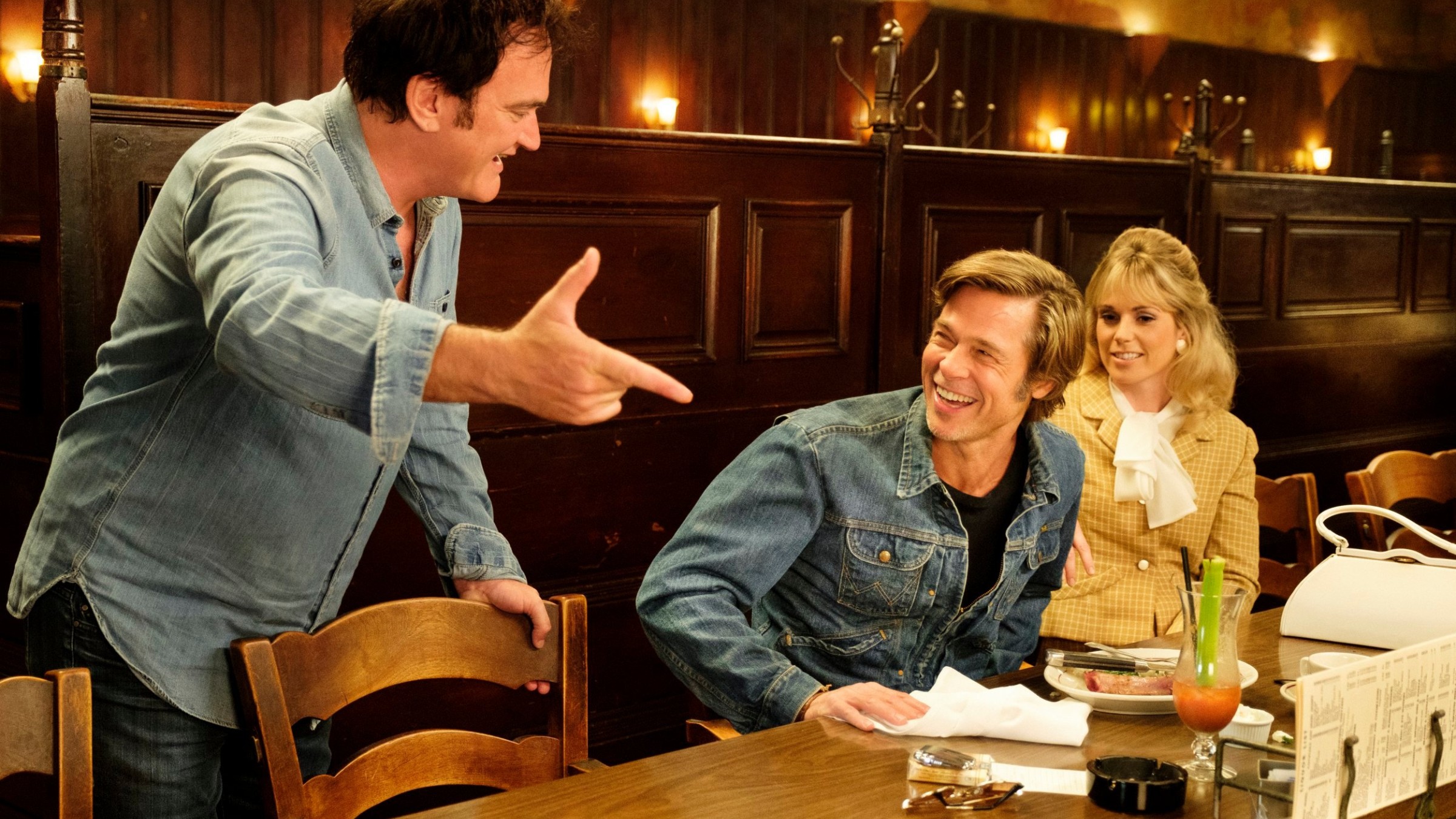
Tarantino makes it Official — “The Tenth Film By QT” will be his last. At least he’s making it about a Movie Critic

You’re never happy when a great booster of the cinema, a genuine film enthusiast, hangs it up.

But if we’re to take Quentin Tarantino at his word, the just-turned-60 Oscar-winning director of “Pulp Fiction,” “Jackie Brown” and “Once Upon a Time…in Hollywood” is keeping to a promise he made to finish up his film career at 60.

Yes, Hitchcock, Lean and Ford made fine films right up to the edge of their dotage. Scorsese has added a few exclamation points to his career post Social Security age. Scorsese made “The Wolf of Wall Street,” “Gangs of New York,””The Aviator” and won the Oscar for “The Departed,” all after his 60th birthday.

But QT wants OUT.

He confirmed this, calling today’s cinema “a creative wasteland,” on a French radio program transcribed by a helpful blogger at World of Reel. Is cinema dead? Tarantino’s kind of leaning that way. And we all know what he’s talking about without the word “Marvel” or the letters “DC” ever crossing his lips.

“I think that’s how it is in cinema, it’s cyclical in Hollywood, it comes and goes. In my opinion, things will change, for the better. I’m not saying throw everything away. You could say that in a decade that’s considered a creative wasteland, there are still a few films that break through the glass ceiling, that don’t conform to the norm. That makes them even more valuable.”

And he’s going out by taking another trip back into the Tarantino past, back to a sort of Golden Age of film criticism, something he rightly sees as vanished in the Tomatometer/post “thumbs up” era.

In days of yore, critics had names and practiced their craft with carefully considered and typed words polished by editors, reviews with sweep and scope, swooning in fulsome praise or burning in sulfuric take-downs scripted in lashing, acrid truth bombs.

It’s worth noting that some of us are still trying to do that.

In the ’70s, Tarantino’s most formative decade, critics weren’t cheerful, performative podcasters and under-scripted Youtubers. He’s paying homage to those great wordsmiths by making a period piece set in the ’70s, supposedly titled “The Movie Critic,” supposedly starring Cate Blanchett and reportedly NOT about the most famous critic of that era, Pauline Kael.

And he’d never lie, right? About this being his last film, about not using Kael — an iconoclast and curdmudgeon who held grudges, made personal attacks and got her proteges — “Paulettes” — appointed to film reviewing positions? Kael even sold out and went to work in Hollywood, briefly, after letting Warren Beatty turn her delusional head. I mean, she’s still the likeliest and most colorful candidate from that era, if QT is looking for inspiration.

But is it time for QT to bail? Is the cinema “dead?” Marvel and Disney own EVERYTHING and the audience’s appetite for men in tights doesn’t seem to be fading. Yet.

Tarantino’s last film was certainly his greatest box office and critical triumph. And what was it about? “Once Upon a Time” was set in a Hollywood at the end of the pre-blockbuster era, Hollywood at the end of the long, well-past-its-expiration-date heyday of TV Westerns.

Maybe Tarantino’s said what he has to say. Hard to see how he’ll make something violent and edgy out of film criticism and film critics, but hey, we’re a pretty dangerous lot when we’re cornered. And that departure from his “style” is the point. Will he cast aside some of his crutches for this one? Will he give up on the idea that anybody wants to see a movie about a movie critic, even if it is “The Tenth Film of Quentin Tarantino,” and thus an event? Because he says so?

“Jackie Brown” was my favorite Tarantino Exercise in Nostalgia. Great to see Pam Grier and Robert Forster relevant again.

I got a charge out of “Death Proof,” liked “Once Upon a Time…in Hollywood” and abhored “Inglorious” and “Django” and that half-assed “Hateful Eight.”

I wasn’t overwhelmed with “Pulp Fiction,” the movie that put his name in capital letters. Seeing it at a Manhattan critics’ preview way back in the day, I had my first serious exposure to “group think.” A jumbled, indulgent, kind of childish genre romp on speed, the breathless hype my peers were burbling as we exited the screening room sealed his fate.

This guy was going to be a star director in an age that wasn’t producing very many of them. They were all talking themselves into that as they headed out to type out their fealty to The New King.

Interviewing him a couple of times over the years, you could be impressed with his encyclopedic knowledge of genre films, ’70s cinema, ’60s and ’70s TV and pop music, and yet walk away wondering if any of that translated to “good taste.” He has an aesthetic, but like a lot of fanboys of his demographic, it celebrates the obscure, too often the deservedly obscure. A lot of my critic/contemporaries got the same vibe, that we were talking to an enthusiastic peer trying to persuade us to see the cinema the same way he did.

This fondness of the “cool,” the verbose and juvenalia did Tarantino no harm as we entered an era of arrested development in film fandom, adults who never let go of childhood obsessions — comics, Saturday AM TV and the Great Reruns of ’60s and ’70s television, nerd lit and genre nerd cinema. He was the successful version of Kevin Smith, taken seriously, foot fetish be damned.

Tarantino’s now talking about doing TV in this new Golden Age of Streaming, maybe some theater (I’ve seen Fringe festival versions of “Reservoir Dogs”), certainly a book or three. He’ll be a natural at the TV stuff, if nothing else.

Whatever he puts on the screen, we’ll almost surely see more “comeback” ’70s actors trotted out in cameos, hear more ’70s TV theme music and hear manic OCD pages of pop-culture-aware fanboy-friendly monologues.

I don’t know why he’d bother with another film, with the state of streaming today. Take every idea you loved but never finished and filed away and trek over to Netflix, Hulu, Amazon, HBO or whoever. Take that blank check and burn through as much footage as you’d like. It’s not like they’ll make you cut it.

But it’ll be interesting to see a critics’ darling’s take on the people who made him their darling before he rides off into the Netlix sunset. And as she proved in “Tar,” Cate Blanchett can play cultured, snobby and ominipotent with her eyes closed. She’d make a helluva movie critic.

Tarantino? He wouldn’t have been bad at it either, a champion of “acquired taste” cinema.

Posted in Reviews, previews, profiles and movie news | 2 Comments

Netflixable? “Kill Boksoon” serves up the tests facing a Korean Killer for Hire

On screen hit men and women have had a code — “rules” — going back at least as far John Woo’s “The Killer,” which folded into the early films of Luc Besson (“Nikita,” “Leon: The Professional). Besson added the idea that this unsavory profession required an infrastructure — “cleaners” who did the killing, with others summoned to “clean” the mess they made, safe houses, middle men, etc.

“John Wick” director Chad Stahelski and his writers added a hotel for hired killers, and borrowed that interantional guild of killers idea from the old movie “The Assassination Bureau.”

None of this resembles the real thing. You have to track down “The Iceman” to see how haphazard this “work” is and what dimwitted, psychologically-damaged mugs real killers-for-hire are like.

But those tropes and more are trotted out in “Kill Boksoon,” a Korean thriller about a lady hired killer on the Peninsula. It’s built around some epic fights, brawls extended because our titular heroine anticipates how this or that strategy, move or weapon will work against this foe’s “weakness” in any given situation. We see how things might go if she chooses wrong, and how the fight actually turns out.

Gil-Boksoon, played with a wary, timeworn resolve by Jeon Do-yeon — she was in “Emergency Declaration” — knows her business and has her code, which we see in a dazzling opener which has her dispatch a big cheese yakuza, giving him his Katana sword so that it can be a fair fight.

She’s the single mom of a secretive, somewhat rebellious teen (Mim Si-a). Mom’s high-paying gig allows the 15 year-old to go to a pricey private school, dropped off by Mom in her G-wagon. “Event planner” is what Jae-young thinks Mom does for a living.

Mom belongs to a Korean guild of contract killers, an organization we see set up, years before, in flashback. Various crews, including Gil Buksoon’s MK agency, run by its killer chairman (Sol Kyung-gu) and his creepy, smirking sister (Esom), set all this up so that amateurs, “the unemployed,” can’t sully their professionalism.

As if.

They use movie-making jargon to describe their work. A “show” is a contract, a person to be killed. The location of the hit is “the set,” etc.

Their rules? “Never kill anyone underage.” “Only take ‘shows’ sanctioned by your company.” And “You must accept ‘sanctioned’ assignments.”

There’s no calling in sick, no sudden attacks of morality are allowed. When that parchment assignment arrives under a wax seal, that’s your fate.

“Kill Boksoon” is about — you guessed it — running up against those “rules,” as Gil Boksoon tries to stay alive, please her boss. She must overcome office politics, proteges vying for her “A class” killer status, professional jealousy and the unique challenges of every assignment or attempted betrayal. That’s a lot.

And by golly, she must be a better parent, with a better mix between work and homelife

What this movie doesn’t have is “pace.” The intervals between brawls have some intrigue, a few attempts at parenting, and a growing sense of “stalling for run time” as they add a little to the story but are more notable for greatly testing the viewer’s patience.

The fights themselves are epic flurries of fists, tzinging blades and whizzing bullets.

Boksoon brings a “hatchet I bought online” (in Korean with subtitles, or dubbed into English) to a swordfight, anticipates blades getting knocked out of her hand, mid-fight, so that she can pluck them from mid-air to continue the tussle, or end it with a slice or a stab.

Writer-director Sung-hyun Byun (“Kingmaker”) gets all wrapped-up in world-building, showing us a crowded school for hired killers, having Boksoon put on a stage demonstration there, hearing her call “the cleaner” to tidy up a mess.

There are colleagues who are rivals and co-workers who are lovers, actually both at once.

And then there’s the parenting that’s being neglected as her daughter struggles through first love, school bullying and a chip-off-the-old-block gift for violence.

As this movie climaxes in a specialty hotel, it begs comparison with the “John Wick” films. But while the fights are terrific, they aren’t as epic as anything Keanu & Crew do, and they aren’t next-nevel furious, something Indonoesian and Thai thrillers and the Vietnamese “Furies” achieved.

I found the interludes tedious and the many different “versions” of how this or that fight comes out — anticipating the foe’s “weakness” and “next move” the way Robert Downey Jr.’s “Sherlock Holmes” did — cool, but confusing and a bit of a cheat.

Kill her off, or don’t. This isn’t “Edge of Tomorrow.”

There’s a joke, here and there amidst the mayhem, and a tendency to shift points of view a bit too freely.

One gets the feeling, re-watching this sequence to see what “really” happened or clock-watching through that interval awaiting something original, new or surprising to pop up, that there’s a better movie in this footage, if only there’d been less of it.

A tight 100 minutes is better than a slack 137, even if you need time to tell your daughter you don’t care who she loves.

Rating: TV-MA, graphic violence, sex, some nudity

Cast: Jeon Do-yeon, Lee Yeon, Esom, Hwang Jung-min, Mim Si-a and Sol Kyung-gu

Credits: Scripted and directed by Sung-hyun Byun. A Netflix release.

Running time: 2:17

Posted in Reviews, previews, profiles and movie news | Comments Off on Netflixable? “Kill Boksoon” serves up the tests facing a Korean Killer for Hire

Got your tickets to see John Cusack at the Florida Film Festival yet?

April 21, the Florida Film Festival will play host to An Evening with John Cusack, a screening of his Cameron Crowe teen romance classic “Say Anything,” followed by a Q & A moderated by yours truly.

If you live in greater Orlando, you need to be there. Tickets? Here.

If you can’t make it and have a question for this generational talent and screen icon, a question you want me to ask, post it as a comment here.

I’ve interviewed him a few times over the years. Fascinating guy. Don’t miss this chance!

Posted in Reviews, previews, profiles and movie news | Comments Off on Got your tickets to see John Cusack at the Florida Film Festival yet?

Movie Preview: The “Final” “Guardians of the Galaxy 3” trailer?

Hell, who can keep these straight? “Final trailer,” I mean.

Pratt and Saldana and Cooper and Dave and Vin Groot and this week’s villain? OK.

May 5.

Hard to top this one, tho. It’s got period-appropriate fanboy service pop in the score.

Posted in Reviews, previews, profiles and movie news | Comments Off on Movie Preview: The “Final” “Guardians of the Galaxy 3” trailer?

Movie Review: Abraham’s story aimed at the Easter audience — “His Only Son”

Writer-director David Helling introduces and adds a filmed postscript to his first feature film, “His Only Son,” something not wholly unheard of in mainstream cinema, but not that unusual in faith-based films.

He talks down the film’s budget and talks up the crowd-sourced wide release efforts of this account of the moment when Abraham became the father of the Chosen People, tested by the “new” god Jehovah who ordered him to make a blood sacrifice of Abraham’s “Only Son,” Isaac.

Whenever I’ve seen this sort of huxtering done with a Hollywood film, it smacks of “let’s change the subject,” as in “Let me talk about this movie’s earnest intent rather than its quality.” For faith-based films, it’s prostheltyizing, urging the faithful to rally to a movie as a cause. In Helling’s case here, there’s a bit of both in play.

Yes, churches and donor “angels” got the movie into thousands of theaters. And alas yes, the actual film is strictly straight-to-video quality — not amateurish, but somewhat cut-rate, and more importantly, flatly scripted and acted, a 100 minute cure for insomnia.

Helling got his movie cast and made, and chose that little-touched corner of desert California that generations of Hollywood Bible films have conditioned us to accept as the Ancient Middle East.

So it looks right, if malnourished, a narrow story requiring little more than a handful of actors (less than two-handfuls), a donkey, a couple of horses and robes and military gear that can easily pass for that of assorted states of pre-Roman Palestine.

But the story is boiled down to tedium, its action beats limited and its finale pre-ordained and thus under even more of a burden to produce something that the preceding 95 minutes have not.

Abraham (Nicholas Mouawad) is a very old man when we meet him, someone with a military background, it is suggested (Helling makes sure to mention his own Iraq service altar call), and someone who hasn’t heard the voice promising him that he would father a great nation and great people in a new land in a very long time.

When he first heard that voice, he was known as Abram, descendent of Noah. And his very complicated (half-sister, possibly already-married) wife Sarah (Sara Seyed) was named Sarai.

But that was ages ago, something something Sarah reminds him of this when he starts talking about that Covenant that Jehovah promised, and going north to the mountains of Moriah to offer a sacrifice, as Jehovah has instructed. Sarah, who had so much trouble conceiving that she supposedly suggested Abraham father a child with their Egyptian handmaiden, can’t be told what or who is to be sacrificed. And she can’t come along.

“Isaac,” their son, “and I will go alone,” Abraham decrees. “Because the Lord commands it.”

Son and very old father set out on the quest, with a couple of traveling companions. They’re on foot, with a donkey loaded with everything they’ll need for a blood sacrifice — save for the lamb usually used in such offerings. It’s a slow journey, allowing much time for flashbacks, to when Abram and Sarai were young, the earlier tests of “This god has led you iright into a famine, into ” a “barren land” where his wife fears she, too is “barren.”

Soldiers are encountered on the way, and a victim of the soldiers’ predations is met. Injuries are suffered, but Abraham — taking his time with good reason — and Isaac eventually make it to their destination, build an altar and you know the rest.

That’s one thing that would hang over this movie, even if it had a big budget and “name” actors who set off sparks on camera. As we know where it’s going, we need things to enliven the journey and spice up the proceedings, and Helling finds that impossible to achieve with this rather bland cast.

Impatience is sure to set in, with this being one of the most famous stories from the Bible and thus well-known throughout the Western world for millenia.

There are modest effects achieved with lighting (Daniel da Silva is The Lord) and ancient cities and battlements are added to the scenery through the haze (Digitally? Optically, with painted glass camera backdrops or miniatures?).

But by the climax, you realize why the filmmaker was cheerleading his finished film at the opening, and promising a”story by story” series of tales from the Old Testament. This is weak tea indeed. Helling’s begging us to grade it on the curve, as it were.

It’s great that Helling was able to spearhead a self-funded/crowd-funded theatrical release, something only Billy Graham was able to do with movies produced under his banner in an earlier era. No doubt “His Only Son” will be make a profit in fairly short order, especially as Helling makes the connection between Abraham’s planned sacrifice and that of Jesus 2000 years later overt, and just in time for Easter.

But the movie is what it is, and what it is isn’t very good, very engrossing, involving, enlightening or entertaining. One should never make a Biblical epic without remembering the Bible’s great hook as literature. The stories in it, passed from generation to generation, have drama and pathos and hope and triumph rising out of despair and hardship.

There’s a reason others have filmed the Abraham/Isaac story, but always left it as merely a chapter in the larger narrative of “The Bible…In the Beginning” or “The Greatest Story Ever Told.” It’s just a vivid but short anecdote, not material for an epic.

Rating: PG-13, violence

Cast: Nicolas Mouawad, Sara Seyed, Edaan Moskowitz and Daniel da Silva

Credits: Scripted and directed by David Helling. An Angel Studios release.

Running time: 1:43

Posted in Reviews, previews, profiles and movie news | 10 Comments

Netflixable? Stressed Spanish lives interlocked, desperate and “On the Fringe”

“On the Fringe” might be the most stressful film on Netflix right now.

A great cast makes this Spanish drama of desperation and quiet heartbreak not so much hard to watch as unhealthy to internalize. These are portraits of interconnected lives being pummeled by economic turmoil, an inflationary eviction crisis that hits the young, the old and the newly-arrived almost equally in actor-turned-director and co-writer Juen Diego Botto’s sober, unblinking story.

Botto’s feature-directing debut hides its cards, its interpersonal connections and the very roles — employment, marriage and otherwise — these disperate characters play in this crisis which threatens home and heart, jobs and marriages on a financial and existential level. Hiding those facts just adds to the stress, as we’re wrong-footed, confused and anxious for people we’ve just met on the screen.

Oscar-winner Penélope Cruz is Azucena, tearful and frazzled and defiantly taking her six year-old to school so that she can join a huge protest at a bank.

Luis Tosar (“The Vault”) is Rafa, rattled by a constantly-ringing phone, a wife (Aixa Villagrán) who complains “You should have told me I’d have to deal with this pregnancy alone (in Spanish with English subtitles)” as her “the amneocentesis is this afternoon” goes in one distracted ear and out the other.

Rafa has one early day errand — deliver his teen stepson (Christian Checa) to school for a long-planned excursion. But first, he needs to drop off some cooking gas for someone who needs it. And on that detour, he sees the aftermath of a police knock-and-take-into custody of a little Arab girl (Salma Naim Annassi).

Rafa didn’t see the badgering, barking, barely making an effort to be gentle and nice cop bullying his way into an illegal immigrant’s apartment, how his abrupt early-morning pounding on the door startled Selma and made her cut her hand as she was preparing her lunch for school. Mom left for work earlier.

Rafa’s frantic reaction sets the tone for “On the Fringe (En los márgenes).” He chases the cops on foot. He drags is stepson into the car — which he distractedly always leaves the keys in — and sets off on a reckless street chase.

Rafa is, it turns out, a lawyer with an immigration/social services agency. He knows if this child is shoved into “the system,” her nightmare is just beginning.

Stepson Raúl’s school trip? Out the door, with the kid bribed into spending the day, dismayed and enraged, passively resisting and openly hostile to Rafa and his latest “emergency.”

Rafa keeps introducing “my son.” Raúl keeps correcting him in front of colleagues and strangers. “STEP father.” But Raúl is one character — learning about protest organizing, finally grasping empathy — who has an “arc” here. He will journey from “I wouldn’t ruin my life for ANYone” to understanding Rafa’s “When you see (injustice, someone in crisis), you have no choice. You’re INVOLVED.”

Elderly Teodora (Adelfa Calvo) spends the day leaving forlourn and increasingly despairing messages for day-laborer son Germán (Font García), who gets an earful from his home demo-for-the-day colleague Manuel (Juan Diego Botto, also the film’s director) about not taking his mother’s calls.

This long day will test marriages, other family and professional relationships and virtually every character’s peace of mind, start to finish. Housing insecurity, impotent rage at what banks can do to you at your worst moment, the tightening jaws of an insensate state “system” among lives lived without a net, where one miscalculation, one mistake or one setback simply out of your control can be fatal all contribute to how uneasy and discomfitting this film is.

There’s cold reassurance that this financial/inflationary/housing/workforce “crisis” is worldwide, no matter how much the conservative media portray it in domestic terms in the U.S. What’s distressing is the sense that one and all are so overwhelmed they’re focusing on the band-aid needed right this moment, and not the severe injury it may portend.

Its quality is so refined that one can imagine “On the Fringe” playing in cinemas and not on a streamer. But what would you put on the poster? “Come to the movies, stress yourself out?”

Still, there’s no denying its power and the affecting performances, with Cruz, Tosar and Calvo standing out, and Annaassi’s little girl so helpless, frightened and upset she will haunt your dreams.

Rating: TV-MA, some violence, profanity

Cast: Penélope Cruz, Luis Tosar, Christian Checa, Adelfa Calvo, Aixa Villagrán, Font García, Juan Diego Botto and Salma Naim Annaassi.

Credits: Directed by Juan Diego Botto, scripted by Juan Diego Botto and Olga Rodriguez. A Netflix release.

Running time: 1:45

Posted in Reviews, previews, profiles and movie news | Comments Off on Netflixable? Stressed Spanish lives interlocked, desperate and “On the Fringe”

BOX OFFICE: “Dungeons” vs. “John Wick 4,” neck and neck on a brisk pre-Easter weekend

As of early Saturday, Deadline.com was calling the box office race this weekend too close to call.

The jaunty newcomer “Dungeons & Dragons: Honor Among Thieves,” did $16 million via Wed and Thursday previews and daytime ticket sales Friday, a probable $40 million take by Sunday night. The weekend looks like a $30 million winner.

But it may not be. The winner, I mean. There’s this little blockbuster, “John Wick 4,” on its second weekend, and also seems en route to $30 million three day take. Considering how enthusiastic the audience seemed last weekend, that number could be low. It opened at over $70 million, and should clear the $125 million mark by midnight Sunday.

The faith-based historical drama “His Only Son” might open at $6 million.

“Creed III” is holding audience better than “Scream VI.” The boxing picture looks to add another $5 million or so.

“Scream” should scare up another $4.5.

SUNDAY update from Box Office Pro below, three day weekend figures. “Dungeons” managed $38 and change since Wednesday.

Posted in Reviews, previews, profiles and movie news | Comments Off on BOX OFFICE: “Dungeons” vs. “John Wick 4,” neck and neck on a brisk pre-Easter weekend

Netflixable? The Vulgarians Rise Again — “Murder Mystery 2”

Is “Murder Mystery 2” worse than 2019’s “Murder Mystery?” Tough call. Mainly because I don’t remember anything about the original save for the reunited of Jennifer Aniston and Adam Sandler, that “Just Go With It” version of Tracy and Hepburn, for a violent caper comedy.

Hey, you didn’t actually expect me to endorse this garbage, did you? I barely got over throwing up upon hearing Sandler forever devalued The Mark Twain Prize by being honored with it when this meringue-flavored merde dropped into my Netflix queue.

“Murder Mystery 2” is another violent and vulgar and seriously half-assed action “mystery” built around the not-really-private-eyes couple of Nick-the-ex-cop Spitz and his smarter hairdresser wife Audrey, played by less-funny-by-the-year Aniston and Sandler.

They’re debating Nick’s reluctance to read up on how to be a private detective so that he can be licensed by the state — this after he never quite “made detective” with the NYPD — when a wedding invitation jets them to Asia.

It’s a resort nuptials for their rich Indian pal Vik, the Maharah (Adeel Akhatar, not funny) to a stunning Paris “shop girl” he recently met (Mélanie Laurent, classing up the joint). The cast is doing “The Welcome Dance” (a touch of Bollywood) when they’re interrupted by their tycoon host and groom being kidnapped.

Look at the photo above. All of the “suspects” in this inside job are in that shot. Guess who did it?

Assorted exes, siblings and hangers-on could be accused. But just as the Spitzes are about to dive in, this ex-MI6 bloke (Mark Strong) shows up, takes over and slows their roll and yet must tolerate them as the kidnappers request the Spitz dolts be the ones they negotiates with.

“You know what? You’re gonna hurt your back!”

You know what would hurt my back? A knife sticking through it!”

That’s the way the dialogue goes. As for story arc, let’s add another working vacation as enticement for the leads. Let’s exchange the Big Cash Payout for kidnapped Vik in Paris, shall we?

That gives the film the chance to bring back the French Inspector Delacroix (Dany Boon, almost funny), to go along with players including Sophie Turner-Smith, Enrique Arce and Kuhoo Verma, and whatever other random hires are paid to show up in pointless roles (Jillian Bell and Tony Goldwyn).

Sure, it’s mercifully free of the Sandler hangers-on that were a staple of his succession of increasingly awful Hollywood comedies. But one almost wishes somebody with at least a little experience landing a laugh was featured in the supporting cast.

Chemistry between the leads? Not really, but then, the characters have been married for 16 years, so maybe that’s just “realistic.”

Director Jeremy Garelick pays more attention to action beats, including a merrily violent van chase through Paris, a helicopter stunt and vigorous work-outs from Sandler’s and everybody else’s stunt-doubles.

I think I chucked twice, once when Strong lets fly a “Huzzah!”

Rating: PG-13 (Suggestive Material|Bloody Images|Strong Language|Smoking|Violence)

Cast: Jennifer Aniston, Adam Sandler, Mélanie Laurent, Adeel Akhtar, Jillian Bell, Jodie Turner-Smith, Tony Goldwyn and Mark Strong

Credits: Directed by Jeremy Garelick, scripted by James Vanderbilt. A Netflix release.

Running time: 1:30

Posted in Reviews, previews, profiles and movie news | Comments Off on Netflixable? The Vulgarians Rise Again — “Murder Mystery 2”