There’s a lot more editing in the stunts — jumps, tumbles, fights, mounting and dismounting a horse. For the first time in his movies, we can guess where we’re seeing the stunt man and when we’re seeing the “star.”
Yes, even Jackie Chan, martial arts comic beloved the world over for letting us see the amazing things his movies had him do, and see the outtakes of when stunts went wrong at the end, got old. He turns 69 the day his new movie, “Ride On,” opens in China and North America – April 7.
If you’ve ever been a fan of Jackie Chan, here’s a curtain call movie you won’t want to miss. It’s not that this meandering, maudlin trip down memory lane is all that good. It isn’t. Even the outtakes at the end are but ghosts of his greatest hits. But there’s an appreciation of what he’s meant to the cinema and just enough montages of Jackie’s Greatest Hits (and falls) to give his fans the warm fuzzies.
“Ride On” is a last roundup return to formula for Chan, who tried a trip to the dark side with the thriller “The Foreigner” a few years back, as if this imp could morph into every other aged action hero — just an old man with a grudge and guns.
“Ride On” is a deathly slow if generally affectionate homage to what he’s done for a living and the formula that he brought to decades of light thrillers and seriously funny martial arts comedies. “Fight,” but rarely to the death. Not “get the girl” but “save the girl” cousin, sister, friend or in this case “daughter.”
He plays a legendary, mostly-forgotten Hong Kong stuntman — quite the stretch — fending off debt collectors and struggling to get by by doing tourist photos and mascot appearances for small businesses with a horse he raised and trained.
Master Luo, like the actor who plays him, is second banana to an amusingly demonstrative horse named Red Hare.
Luo is in debt to a loan shark (Andy Oh), which could cost him his and Red Hare’s living quarters, an old stable/soundstage from the Hong Kong’s cinema’s past. And then his pride and joy, the horse he talks to, “Daddy” to child, has issues come up about his ownership. A “collector” wants to add this equine wonder to his stables.
Money talks in the kleptocratic Chinese oligarchy.
Luo needs legal help. He’s estranged from law school daughter Bao (Haocun Liu). She may want nothing to do with him. But her boyfriend (Guo Qilin) just finished law school, and his parents want to meet her one living parent. A deal is informally struck.
Meanwhile, Dami the Loan Shark and his goons have made one two-fisted attempt to collect too many, and Luo and his too-smart and pugilistically-inclined horse have foiled them — again. But this time they “go viral,” and all of a sudden the stunt work comes back.
The “old man” of the “brotherhood” of stuntmen is back in demand, mainly because of the dangerous stuff he’s willing to put the horse through. Luo is dismayed at the CGI “cartoons” that pass for stunts in the modern cinema.
“No one ‘falls’ for real these days,” a director assures him (in Mandarin with English subtitles). Luo does. So does Red Hare.
“You’re too old for big stunts,” his daughter complains. And the horse? “He isn’t a stunt man,” able to make his own decisions about the ever-rising risks Luo exposes him to.
Our story points Luo and Red Hare toward a reckoning, and Bao and Luo towards reconciliation.
Flashbacks show us not just Luo doing the impossible on film after film going back decades using vintage Jackie Chan clips, they tell us the story of the failed marriage and the bitterness the daughter carries into adulthood over the father who was “never there.”
The non-slapstick comedy here is contrived and clumsy. Luo comes off cocky, dumb and gauche when he “meets the parents,” for instance.
The fights between father and daughter have a similar abrupt, plot-device feel to them.
The stunts set up for the movies within the movie, even the ones that are allegedly part of the same film production, seem randomly costumed and conceived — anything to put Luo/Jackie Chan on a (sometimes fake, thank heavens) horse in the middle of a brawl, in ancient cavalry charges, jumping off cliffs and over steps.
The best scenes have Chan chatting up, cajoling and consoling the horse, who plainly has a big personality, even if that’s largely a product of the editing.
Take “Ride On” for what it is, Chan’s attempt at a graceful bow to the inevitable, and an affectionate remembrance of all the crazy stuff he’s done, the risks he’s taken and the bruises and broken bones he’s suffered when dangerous stunts go dangerously wrong.
A less-contrived, more streamlined script would have allowed more time for more clips of Jackie’s Greatest Hits and made for a more logical sampling of blasts from his past, and a more fun movie.
But there’s enough here to make any longtime fan nostalgic over the seat-of-the-pants pictures this screen legend conjured out of legions of foes and obstacles ranging from simple ladders and convenience stores to trains, sailboats and hovercraft all the way up to skyscrapers and the biggest “obstacle” of all, Chris Tucker.
Rating: Unrated, violence, largely slapstick
Cast: Jackie Chan, Haocun Liu, Guo Qilin and Andy On
Credits: Scripted and directed by Larry Yang. A Well Go USA release.
Running time: 2:06
Posted inReviews, previews, profiles and movie news|Comments Off on Movie Review: Jackie Chan’s Sentimental over his Horse, We’re Sentimental over Jackie Chan — “Ride On”
“Praise This” is a cheerful Gospel music “praise team” variation on every singing and/or dancing competition movie, from “Bring it On” to “Pitch Perfect.” It’s a star vehicle built around Georgia singer, composer and actress Chlöe, aka Chloe Bailey, and much of its screen time is spent showcasing pop group-styled singing and dancing choires competing to become National Praise Team Champions.
It’s so formulaic you can see many of the story’s twists coming, with each sequence and trope rigidly marching towards the next pre-ordained highlight. But “cheerful” counts for something, and the tunes, the often-broadly-drawn characters and the sassy, nasty/churchy trash talk, all in a Black Protestant churchgoing in Atlanta setting, make it watchable.
“Baby, try JESUS, do NOT try me!” That’s the tone, here.
Bailey plays a rebellious Angelino taken to Atlanta by her widowed dad in the hopes that his psychologist brother and their “churchy” and “bougy” family can straighten her out before she goes seriously wrong.
Sam is hellbent on becoming a famous singer, and was hanging with the wrong crowd to achieve her goals in LA. In Atlanta, she becomes the answer to her nerdy, sightly-off-key cousin Jess’s dreams. Jess (Anjelika Washington) always wanted a sister, so “sister/cousin” it is.
“Cousins, sisters — it’s the South. Doesn’t matter.”
Jess’s all about acclimating the sullen Sam to her new environment. “This is Atlanta. Sunday means CHURCH.”
That’s where Sam meets the corny praise choir that Jess sings and performs with, stuck with rich donor’s daughter Melissa’s (Birgundi Baker) dated R & B arrangements of Gospel classics such as “Break Every Chain” or “Leaning on the Everlasting Arms.”
Their upstart abandoned “factory” church doesn’t stand a prayer against the Champions megachurch Champions praise team. They hired ringers to dominate this competition.
But Pastor PG (Tristan Mack Wilds) won’t lose faith, and “first lady,” his wife Natalie (Crystal Renee Hayslett) won’t let Sam’s “I don’t DO church,” “no relationship with God” attitude deter them.
“God used fish, donkeys, even ho’s to get His word out,” Natalie chirps, smiling and proseltyzing while judging Sam’s manners, choice of skin-baring attire and language.
Sam uses her LA connections to get into a party at local rapper-producer Ty’s (Quavo) studio and crib. The “fish out of water” comedy changes fish as she drags naive, virginal Jess with her.
“Oh God, he SEES us! I’m pregnant.”
Sam gives us the feeling that she’d do anything to get a music break. But her “break” just might come from that praise team, where her ability to “flip any song you’ve got for the Lord” will be tested.
As Gabrielle Union used to say in her cheer costume, “Bring it on.”
A few elements work better than others. A couple of the praise team members (Drew “Druski” Desbordes) have a moment or two.
And a couple of loud-mouthed “Muppet Show” styled hecklers are relentless in their off-stage ridicule of every sour note or cheesy dance turn.
“You’re goin’ down…ALL the way to Hell! Don’t LET the Devil win again!”
They’re the ones who lay out the parameters of what we’re seeing, performances that would’t pass muster with The Southern Baptists, for all sorts of obvious reasons. The borderline twerking nature of the shows are designed to “take it ALMOST to the club…the DOOR…But DON’T go in.”
Bailey’s a confident, charismatic stage performer and that informs her offstage presence as well. Washington may be playing a “Shut the hockey puck UP” innocent,” but she’s amusing at it.
The assorted mean girls and “Bless your heart” not-as-mean patronizing competitors score a grin here and there.
Not really enough amuses or dazzles, and attempts at giving us something emotionally “moving” or religilously inspiring fall well short of the mark. But for a middling-at-best movie, “Praise This” isn’t bad, even if it isn’t all that praiseworthy.
Rating: unrated, some profanity
Cast: Chlöe Bailey, Anjelika Washington, Tristan Mack Wilds, Crystal Renee Hayslett, Birgundi Baker, Michael Anthony, Quavo and Drew ‘Druski’ Desbordes
Credits: Directed by Tina Gordon, scripted by Camilla Blackett, Brandon Broussard and Tina Gordon. A Peacock release.
Running time: 1:52
Rating: unrated, some profanity
Cast: Chlöe Bailey, Anjelika Washington, Tristan Mack Wilds, Crystal Renee Hayslett, Birgundi Baker, Michael Anthony, Quavo and Drew ‘Druski’ Desbordes
Credits: Directed by Tina Gordon, scripted by Camilla Blackett, Brandon Broussard and Tina Gordon. A Peacock release.
Whatever “The Super Mario Bros. Movie” does at the box office, and it’s projected to open big, Illumination wants to tease us into getting ready for their big holiday cartoon.
“Migration.”
Not enough here to see how good it might be, but I like the concept. A “road comedy” set among migrating geese et al?
He’s officially waaaaaay past “boyish,” and he no longer has that cop show set in Hawaii.
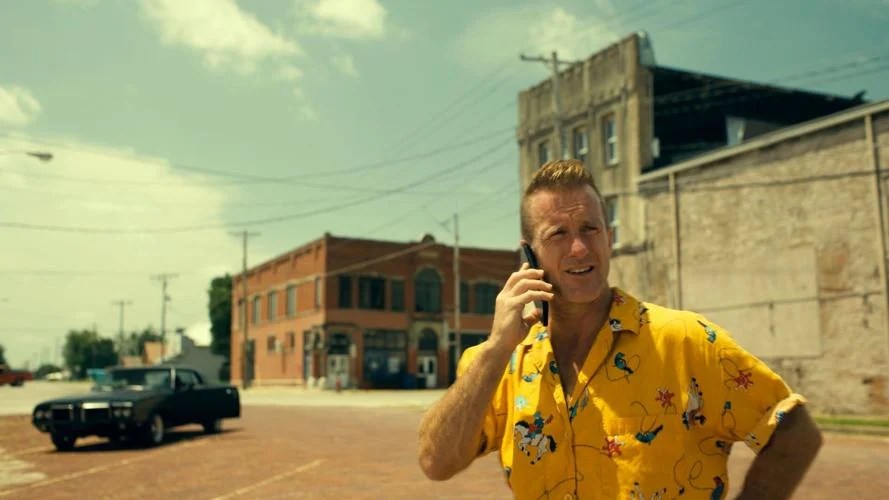
But here is high mileage Scott Caan, Hawaiian shirt open to show off his still cut abs, playing a first time hit man in a dead town In the middle of nowhere in the American West. Strutting when he walks, head thrown back, he’s almost the spitting image of his old man.
And in his new movie, a violent, somewhat gritty but lighthearted thriller, all he and his character want is “One Day as a Lion.”
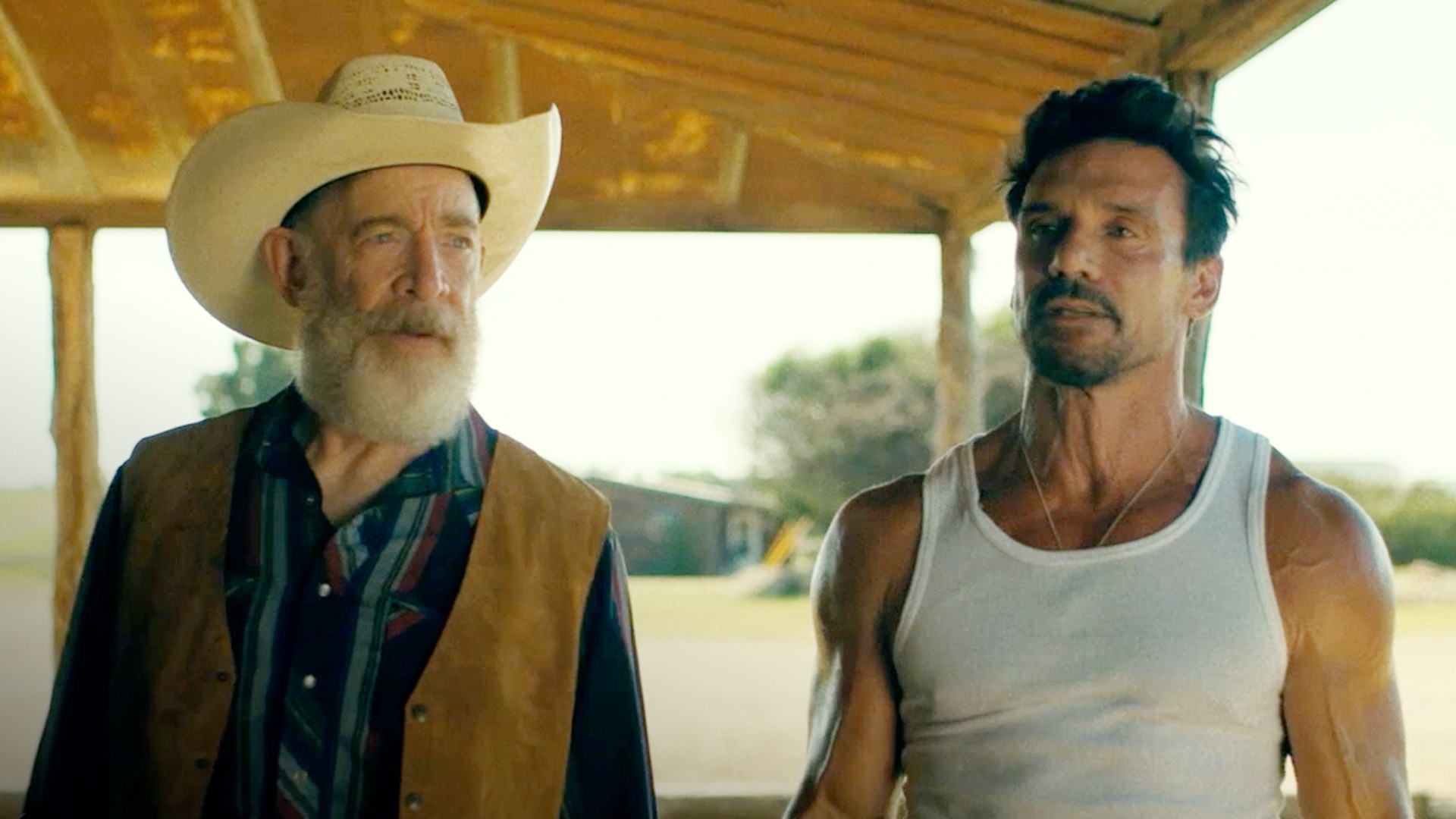
Caan scripted himself a fair to middling tale, had the clout to line up J.K. Simmons, Frank Grillo and Virginia Madsen as supporting players and the good sense to talent-scout Oklahoma-based director John Swab, of “Ida Red” and the Frank Grillo star vehicle “Little Dixie.”
And though it takes a while to serve up that “buy in” moment, damned if Caan, Swab & Co. don’t hit it and exit with a feel-good flourish. Swab’s steadily sharpening thriller skills and Caan’s need to establish himself as a laconic, witty B-movie anti-hero occasion a happy movie marriage-of-convenience.
Jackie is a mug and ex-pug who’s trying to talk himself out having to do this “job” when we meet him. He owes Dom (George Carroll) something. And Dom owes Pauly (Grillo). And the dude Jackie is assigned to whack owes Pauly big-time.
But the gristle-and-sinewy “dude” rides up to his morning diner in BFE, Oklahoma in a saddle.
“You can’t kill a guy on a horse!”
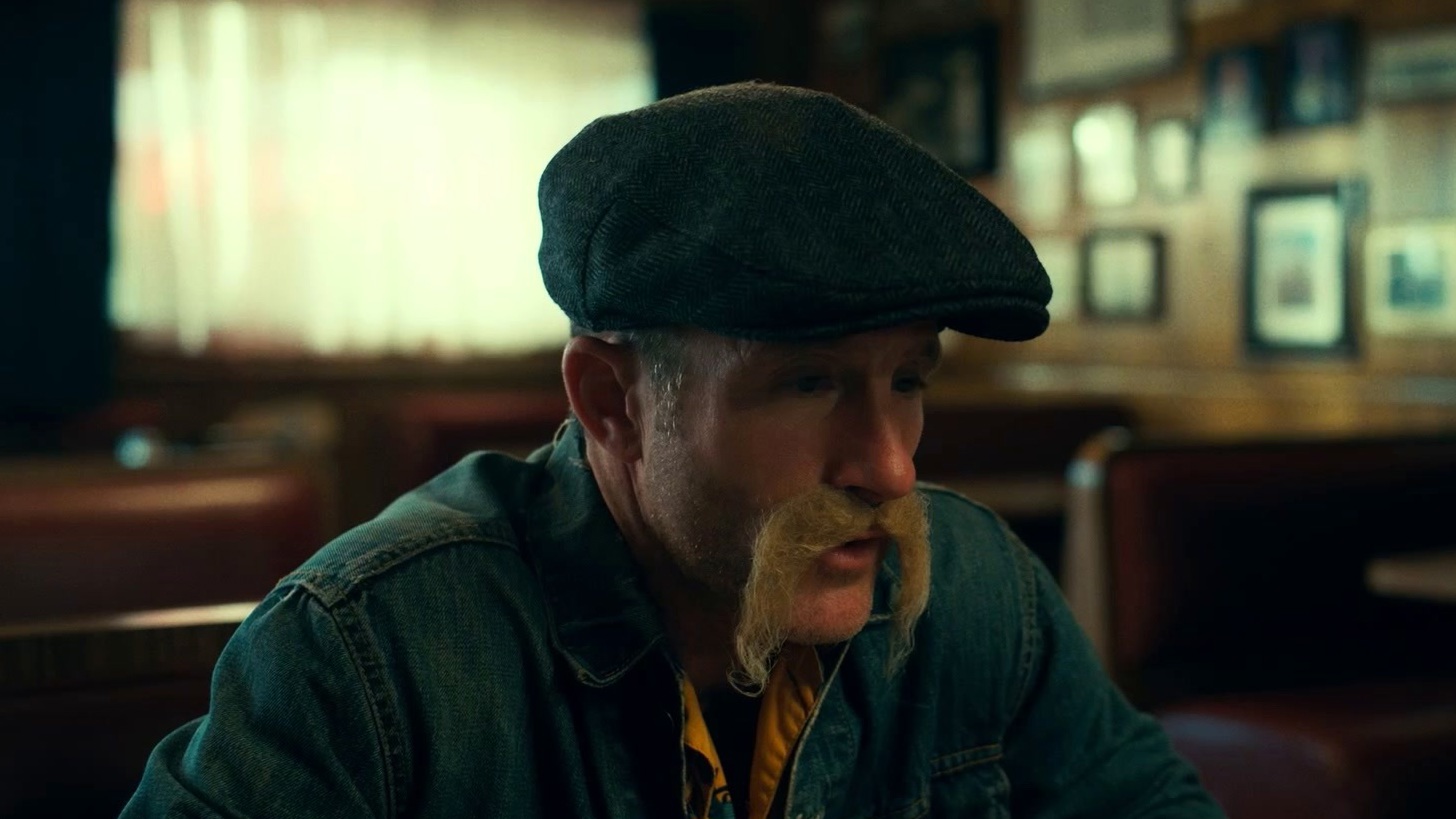
City boys, am I right. But there’s no getting out of that, just get out of your 1970 Olds 442, put on a ridiculous mustache and silly hat and take care of business, boy.
As “Walter,” the target, is played by J.K. Simmons at his flintiest, we know this won’t go well. Walter escapes in a shoot-out. Jackie accidentally shoots the diner-owner, kidnaps irate waitress Lola (Marianne Rendón), and before he can come up with a plan-B, damned if some local hasn’t stolen the muscle car.
“I’m either curreently wanted for murder, or uh, yeah I’m GONNA be murdered by the guys who hired me to murder the guy I didn’t murder.”
Tricky. Luckily, world-weary Lola has some ideas.
Swab lets Caan’s script saunter along a bit too leisurely after a brisk opeing. But that gives this short, sweet and to the bloody-point action pic a time to introduce complications — the gunman’s jailed son (Dash Melrose, now THERE’s a stage name), Jackie’s ex-wife (Taryn Manning of “Orange is the New Black”) and Lola’s bitter, rich and dying “black widow” mother, given a cynical flourish by the great Virginia Madsen.
Grillo dons his wife-beater T-shirt and looks tough and almost amusingly perplexed and Simmons is immovably ornery in their two chewy scenes together.
“This isn’t me scared, boy. This is me pissed off.”
The shootouts are realistically innacurate and ill-conceived — by the shooters. Caan’s a credible brawler and Rendón, of TV’s “Imposters,” gives Lola’s bored to sarcastic to embittered journey layers of hurt and defiance.
I do love me a solid B-movie, and this one, after it finds its footing, delivers. Still not sold on adding Oklahoma to my bucket list, though. But Swab might be getting me there.
Rating: R for pervasive language, some violence and sexual references
Cast: Scott Caan, J.K. Simmons, Marianne Rendón, Taryn Manning, Frank Grillo and Virginia Madsen
Credits: Directed by John Swab, scripted by Scott Caan. A Lionsgate release.
The plastic kiddie toy production design, the cheesy innocence, the embracing and mocking of all the different races/looks with the same name and vapid personality — “Barbies” all — except for the gender neutral “Kens” — the winking innuendo, Greta Gerwig goes all the way with this one.
Gosling and Issa Rae, Will Ferrell and jillions more surround that specialist of special effects, Margot Robbie in this July 16 release.
“Paint” is a deadpan comedy that takes its best shot at sending up the magic, the mellowness and the messiness of a PBS icon.
Mister Rogers was the only true rival to Bob Ross as a mainstay of early public broadcasting, legendary for his longevity as well as his soothing, unfussy on-camera demeanor as he was for the simple, instructive and almost meditative program he hosted, “The Joy of Painting.”
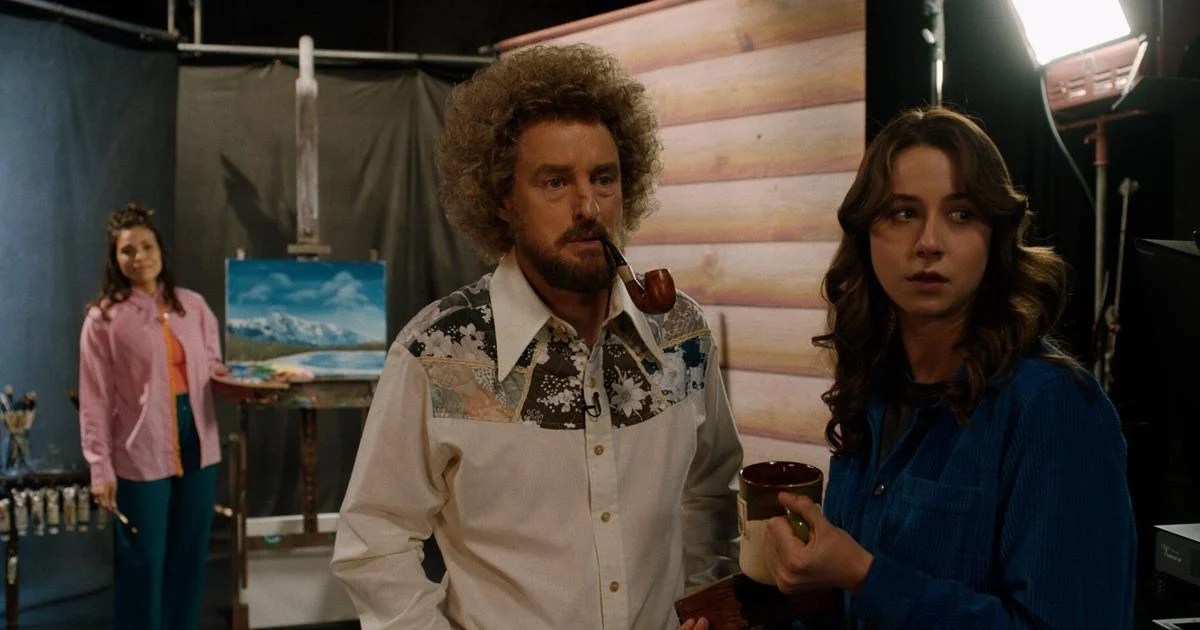
Brit McAdams, a writer and director for the gone and mostly-forgotten “Tosh.0” comedy series, takes the recent Bob Ross documentary that got into the “sex symbol” and “messiness” and cutthroat side of Ross’s life and legacy as his inspiration. McAdams keeps the guy’s bushy hair and beard and soft-spoken air, but changes his name to Carl Nargle and cast Owen Wilson as a small-time Ross, “star” of Vermont Public Broadcasting.
The comedy here comes from Carl’s unflappable air, the backwoods starpower that makes him catnip to generations via his show on a struggling PBS affiliate, and his “real world” appeal — to shut-ins, nursing home viewers and Vermont’s day-drinking barflies.
Wilson, sporting a blond O-fro, a collection of never-wear-out Western shirts and an ornate Hungarian pipe, plays Nargle as a man out of time and out of his TV era, someone who never changed or “evolved.” He’s an exaggerated Bob Ross. His house is a rustic cabin not redecorated since the early ’80s — save for the walls covered by generations of his bland landscapes — his TV an ancient cathode ray tube model, his phone rotary and his pick-up lines vintage.
He still asks women to go “to this spiritual place with me, the back of my (1980 vintage, pimped Chevy) van.”
And generations of them have, many of them (Michaela Watkins, Wendi McLendon-Covey, Lusia Strus) still working for him at that cash-starved local PBS affiliate, where Tony (Stephen Root) presides but Carl’s former muse, the mild-mannered but lovesick Katherine (Watkins) really runs things.
Carl’s kept things in statis, and that includes his art, which has devolved into a never-ending series of versions of paintings of local Mount Mansfield. He has no ambition, no “spark” and no desire to expand his show to help save the station.
So Tony brings in brash young painter Ambrosia (Ciara Renée) to stir things up, financially, programmatically and sexually. Which she does, painting UFOs and many things which would never pass for landscapes, Carl’s one-painting-per-show specialty.
A lot of the humor here feeds off Wilson’s easygoing style. A slightly unhappy look from Carl has Tony whining “Why are you YELLING at me?” He plays Carl as an extension of Owen Wilson in a lot of his movies — the passive recipient of attention, the straight man letting everybody else bounce off him.
The comic possibilities remain mostly possibilities here, as a lot of funny people remind us that they’ve been funnier in most everything else they’ve ever done. Root dials it down too far to register, and Watkins is so quiet as to never find a laugh or make much an impression at all, an odd acting choice and one mimicked by others, suggesting it’s a stage direction from McAdams.
Only sitcom savvy McLendon-Covey really brings it.
The film has the rather dispirited air of a videotaped (not live) PBS fund drive, and not the first animated days of the drive either. It feels fatigued, almost from the start. There’s “deadpan” and there’s “six days past burying” deadpan, which is what McAdams managed here.
Wilson seems perfectly cast, but comes off as so mellow there’s barely anything comical to hang onto. A few flashes here and there tell us where this could have gone.
And some of the sight gags pay off — the first time we see them.
It’s like a Wes Anderson movie as attempted by Paul Thomas Anderson, or David O. Russell, “I Heart Huckabees” made about and ready for broadcast on PBS circa 1979. The whimsy isn’t missing. It’s just watered down. “Droll” remains just out of reach.
With “Paint,” as with that long-forgotten hair product of the era, Brylcream, “a little dab’ll do ya.”
Rating: PG-13 for sexual/suggestive material, drug use and smoking
Cast: Owen Wilson, Michaela Watkins, Ciara Renée, Wendi McLendon-Covey, Lucy Freyer, and Stephen Root.
Credits: Scripted and directed by Brit McAdams. An IFC release.
I have loved a lot of the anarchic and ever-so-colorful animation to come out of Illumination, Universal’s cartoonworks of choice.
Have I mentioned how much I adored the anarchy of “Minion: The Rise of Gru” last year? Unadulterated Tex Avery-era Looney Tunes, that one.
But as I sat, slack-jawed and bleary-eyed, taking in all that comprises the latest scripted-for-the-screen incarnation of the mostly-plotless video game, “The Super Mario Bros. Movie,” I had just one question.
“Why does this exist?” I mean, aside from naked cashing in on a legendary video game brand?
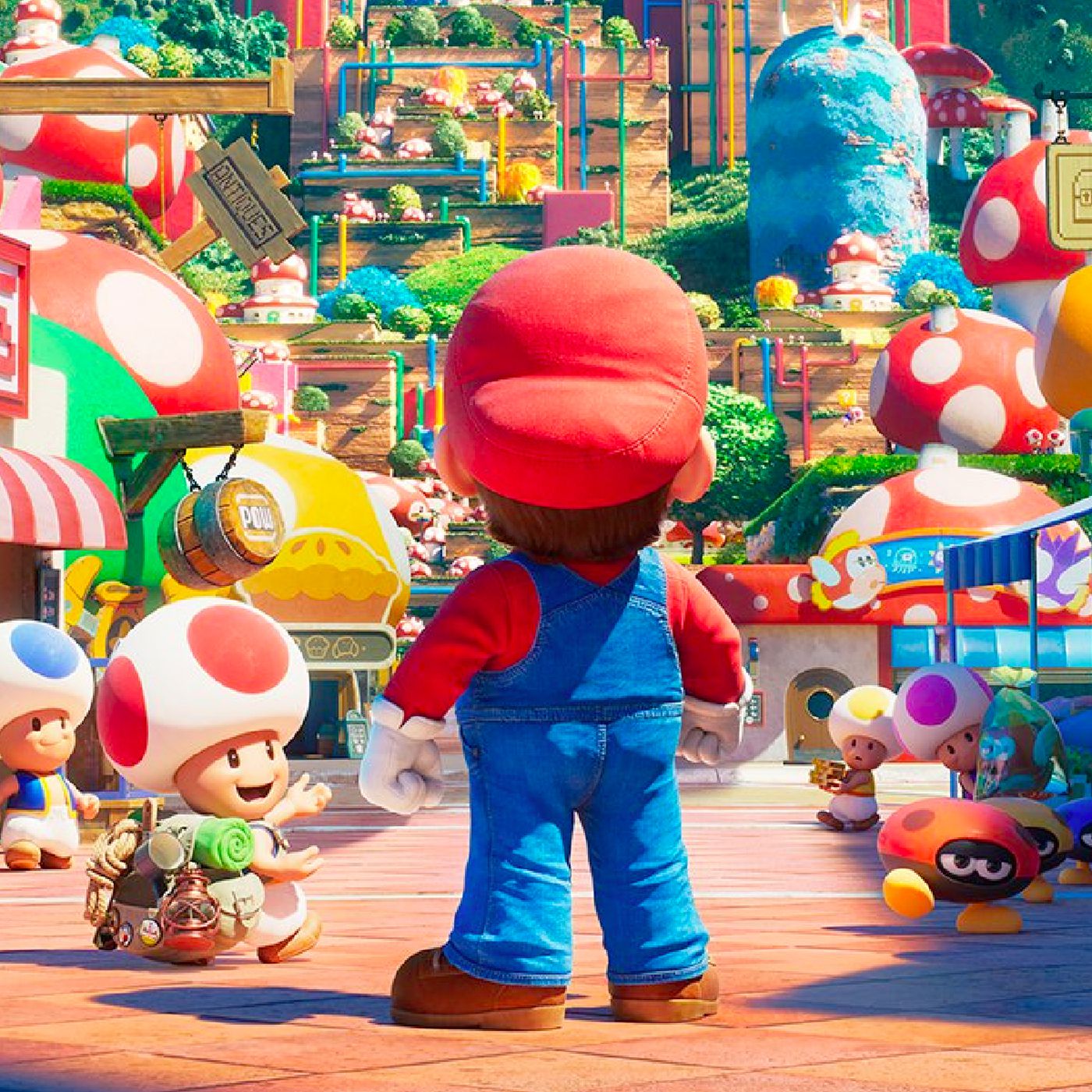
The animated characters have a plush toy quality, but this is candy-colored cardboard, and by cardboard I mean crap or at least something akin to rice cakes in taste delight and nutritional value.
Maybe the funniest thing about it is Universal sending out a note to critics warning us off “spoilers” about “the plot.” Those jokers. If there’s a “plot” in Matthew Fogler’s screenplay, it’s only in the broadest, first-attempts-in-ancient-Greece sense.
But I’m not going to pick on Fogler, who shouldn’t be highlighting this on his resume, even when tens of millions of tickets are sold. Getting a “story” out of that particular video game was nigh on impossible.
Two plumbers, trapped in a two-dimensional parkour chase through a video gamescape filled with ladders, culverts, barrels to hurdle, coins, “power ups” to grab, and a spiked-shell turtle named Bowser and a gorilla named Donkey Kong to contend with?
Oh, there’s also a princess, you say?
Whatever your affection for the game, it’s never been surprising that “mushrooms” play a key role in all of this. Cough cough.
What Fogler came up with was these two Italian-American Brooklyn siblings, voiced by Chris Pratt and Charlie Day, struggling to get their Super Mario Bros. plumbing service up and running, only to be sucked into an underworld/netherworld gamescape where a Princess (Anya Taylor-Joy, not that you’d know it) is being menaced by the turtle tyrant Bowser and his shell-shielded minions.
The brothers are separated. One will need the help of the gorilla. And that torturing toirtoise Bowser? He’s so bent on total domination and heartsick in love that he starts singing and playing power ballads, which is the only way we figure out “Oh, that’s the voice JACK BLACK.”
A word about voice casting. I couldn’t pick Chris Pratt’s colorless tones out of a line-up that included Aussie Chris Hemsworth and more interesting actors Chris Evans and Chris Pine. Day has mellowed out of his fingernails-on-a-chalkboard tones, and mores the pity, here.
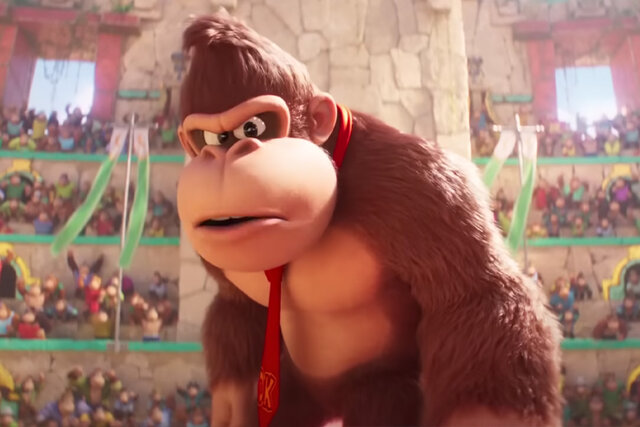
Taylor-Joy could literally have been anybody without us seeing her trademark anime eyes and dainty chin. And you kind of hear who’s voicing Donkey Kong before he breaks out the stoner laugh that made that actor and voice actor famous.
J. Black belting love songs is always a laugh. But otherwise, they spent money on “names” that add nothing to the movie.
An Italian-American “Atsa my spaghetti!” dinner scene almost amuses. And you don’t have to have any experience of the game to get a kick out of what they do to make the generic star-prize-token “Lumalee” into a character of relentlessly cheerful gloom.
“The only hope is the sweet release of death!”
The few laughs kind of die of loneliness, in what is allegedly a children’s animated comedy. And without laughs, all this ill-conceived animated replacement for one of the most infamous live-action flops of the ’90s has to offer is nostalgia for a simple game of a simpler time.
The eight-and-unders this is aimed at are way too young to get that.
Rating: PG, the odd rude moment or remark
Cast: The voices of Chris Pratt, Charlie Day, Anya Taylor-Joy, Seth Rogen, Keegan-Michael Key, Fred Armisen and Jack Black
Credits: Directed by Aaron Horvath and Michael Jelenic, scripted by Matthew Fogler. An Illumination/Universal release.
You’ve got to be careful about the liberties you take with the facts when you’re making a film about an infamous terrorist incident. Especially if you’re an Indian production and the movie you’re making is about an Islamist attack in neighboring Bangladesh, which is 90% Muslim. People are already wondering about your motives and agenda, after all.
“Faraaz” is about a 2016 attack on the toniest, most cosmopolitan restaurant in Dhaka, Bangladesh. Today’s “Around the World with Netflix” outing tells a fictionalized version of the tragedy from several points of view, most notably that of Faraaz Ayaaz Hossain, a privileged young college student celebrated for standing-up for two female friends he was dining with, and for standing-up for his version of Islam against the violent, primitive hate-mongering dogma espoused by the attackers.
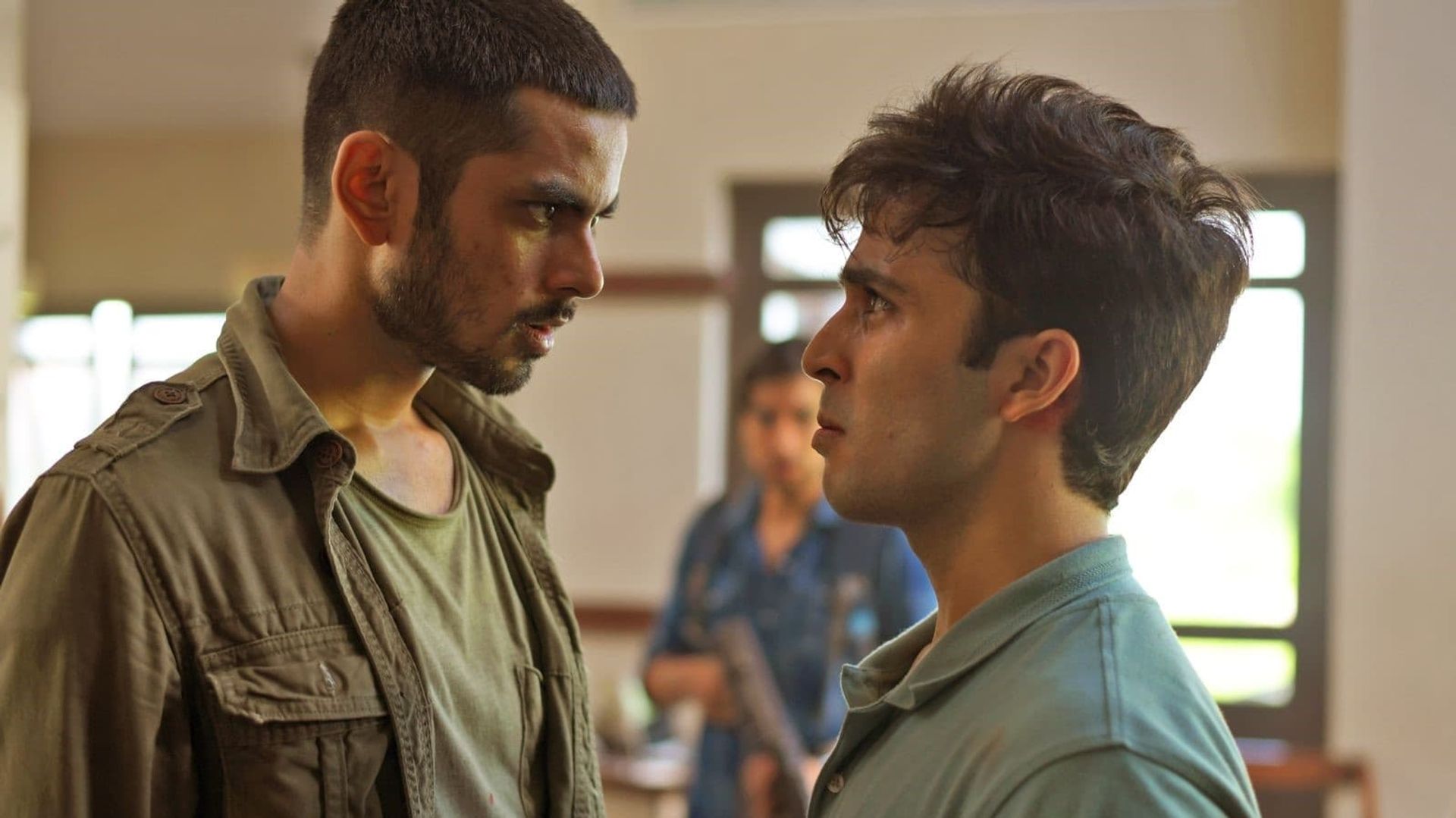
Director Hansal Mehta’s film, based on a screenplay by Raghav Kakkar, Kashyap Kapoor and Ritesh Shah, shows us the five naive terrorists, led by Nidras (Aditya Rawal) bickering over their last big meal before cunning, call-center mastermind Rajiv (Godaan Kumar) sends them to commit mass murder and become “martyrs” to the cause.
Their “motives” are vague. None of the hostages they end up taking dares to ask “So, what’s your grievance?” And even the police and Army negotiators can’t get “demands” out of them. Reading the admittedly-scanty Wikipedia page on the attack doesn’t really settle that, either. They’re just ISIS inspired haters of “infidels” and “foreigners” who picked a fat, soft target in which to express their outrage.
Faraaz (Zahan Kapoor) is the youngest son of a wealthy South Asian Big Pharma empire whose politically-connected mother (Juhi Babar) is nagging him into going to Stanford and leaving their luxury villa behind. The real Faraaz attended Emory U. in Atlanta.
He winds up with other well-heeled Bangladeshis and rich foreigners at The Holey Artisan Cafe, dining with two young and very modern female companions. One is even wearing short shorts in majority Muslim Bangladesh.
When the attack begins, almost anyone looking European, Chinese or Japanese or Hindi is shot.
“Kill all those who are not Bangladeshi Muslims,” Nibras decrees (the film is in a mix of English and Hindi with English subtitles). And so it is.
Those taken hostage aren’t exactly “safe,” with some of the trigger-happy killers demanding that one man drop his pants to “prove” his faith, others ordered to “recite any surah.”
Faraaz is recognized as a “Prince of Bangladesh,” and offered the chance to leave. But his lady friends are not, so he refuses.
Outside, the police are alerted and stumble into a situation they don’t have the “gear” or the experience to handle and get themselves shot up. “Twelve” officers are slaughtered in the film, only two in the actual event. Perhaps that higher death count is meant to placate via “sacrifice” the incompetence depicted in the police leadership — Danih Iqbal plays the arrogant, trigger-happy police commisioner — and chain of command.
And Faraaz’s panicked mother gathers with the other relatives to demand action and call in favors to get it.
The action sequences are well-handled, and it’s standard operating procedure to show such incidents from these different points of view.
But the “debates” over “Your Islam” and “My Islam” are so on-the-nose as to make one question their veracity. Was Faraaz really this outspoken and ready to argue with armed rednecks who hated his very entitled existence?
As the movie has taken other liberties, you have to wonder. And that’s a stupid distraction to build into your thriller. If you’re depicting public officials as incompetent, changing their names isn’t really a proper cover. And were they incompetent? Don’t know that, either.
The cops, SWAT and Army turf wars are played almost for laughs, and their lack of urgency about this emergency robs the story of much of its power and pacing.
Even Faraaz’s point of view scenes are limited, as if the filmmakers didn’t want to tread on his legacy, no matter what they might have found out researching the script, which is based on a book by Nuruzzaman Labu.
“The myth” is what’s most important and the reason for “Faraaz” being made. But there’s a lot more going on here than him wondering “How brainwashed are you?” if he or anyone else staring down five AK-47s and grenades ever said that. In “Faraaz,” we just don’t know, and we kind of want to find out.
Rating: TV-MA, graphic violence, profanity
Cast: Zahan Kapoor, Aditya Rawal, Juhi Babbar, Sachin Lalwani, Nitin Goel, Danih Iqbal and Kaushik Chakraborty
Credits: Directed by Hansal Mehta, scripted by Raghav Kakkar, Kashyap Kapoor and Ritesh Shah. A Netflix release.














 Movie Nation