
Manuela Martelli goes “Hitchcockian?”
May 5, limited release.
Manuela Martelli goes “Hitchcockian?”
May 5, limited release.



I have loved a lot of the anarchic and ever-so-colorful animation to come out of Illumination, Universal’s cartoonworks of choice.
Have I mentioned how much I adored the anarchy of “Minion: The Rise of Gru” last year? Unadulterated Tex Avery-era Looney Tunes, that one.
But as I sat, slack-jawed and bleary-eyed, taking in all that comprises the latest scripted-for-the-screen incarnation of the mostly-plotless video game, “The Super Mario Bros. Movie,” I had just one question.
“Why does this exist?” I mean, aside from naked cashing in on a legendary video game brand?
The animated characters have a plush toy quality, but this is candy-colored cardboard, and by cardboard I mean crap or at least something akin to rice cakes in taste delight and nutritional value.
Maybe the funniest thing about it is Universal sending out a note to critics warning us off “spoilers” about “the plot.” Those jokers. If there’s a “plot” in Matthew Fogler’s screenplay, it’s only in the broadest, first-attempts-in-ancient-Greece sense.
But I’m not going to pick on Fogler, who shouldn’t be highlighting this on his resume, even when tens of millions of tickets are sold. Getting a “story” out of that particular video game was nigh on impossible.
Two plumbers, trapped in a two-dimensional parkour chase through a video gamescape filled with ladders, culverts, barrels to hurdle, coins, “power ups” to grab, and a spiked-shell turtle named Bowser and a gorilla named Donkey Kong to contend with?
Oh, there’s also a princess, you say?
Whatever your affection for the game, it’s never been surprising that “mushrooms” play a key role in all of this. Cough cough.
What Fogler came up with was these two Italian-American Brooklyn siblings, voiced by Chris Pratt and Charlie Day, struggling to get their Super Mario Bros. plumbing service up and running, only to be sucked into an underworld/netherworld gamescape where a Princess (Anya Taylor-Joy, not that you’d know it) is being menaced by the turtle tyrant Bowser and his shell-shielded minions.
The brothers are separated. One will need the help of the gorilla. And that torturing toirtoise Bowser? He’s so bent on total domination and heartsick in love that he starts singing and playing power ballads, which is the only way we figure out “Oh, that’s the voice JACK BLACK.”
A word about voice casting. I couldn’t pick Chris Pratt’s colorless tones out of a line-up that included Aussie Chris Hemsworth and more interesting actors Chris Evans and Chris Pine. Day has mellowed out of his fingernails-on-a-chalkboard tones, and mores the pity, here.
Taylor-Joy could literally have been anybody without us seeing her trademark anime eyes and dainty chin. And you kind of hear who’s voicing Donkey Kong before he breaks out the stoner laugh that made that actor and voice actor famous.
J. Black belting love songs is always a laugh. But otherwise, they spent money on “names” that add nothing to the movie.
An Italian-American “Atsa my spaghetti!” dinner scene almost amuses. And you don’t have to have any experience of the game to get a kick out of what they do to make the generic star-prize-token “Lumalee” into a character of relentlessly cheerful gloom.
“The only hope is the sweet release of death!”
The few laughs kind of die of loneliness, in what is allegedly a children’s animated comedy. And without laughs, all this ill-conceived animated replacement for one of the most infamous live-action flops of the ’90s has to offer is nostalgia for a simple game of a simpler time.
The eight-and-unders this is aimed at are way too young to get that.

Rating: PG, the odd rude moment or remark
Cast: The voices of Chris Pratt, Charlie Day, Anya Taylor-Joy, Seth Rogen, Keegan-Michael Key, Fred Armisen and Jack Black
Credits: Directed by Aaron Horvath and Michael Jelenic, scripted by Matthew Fogler. An Illumination/Universal release.
Running time: 1:32
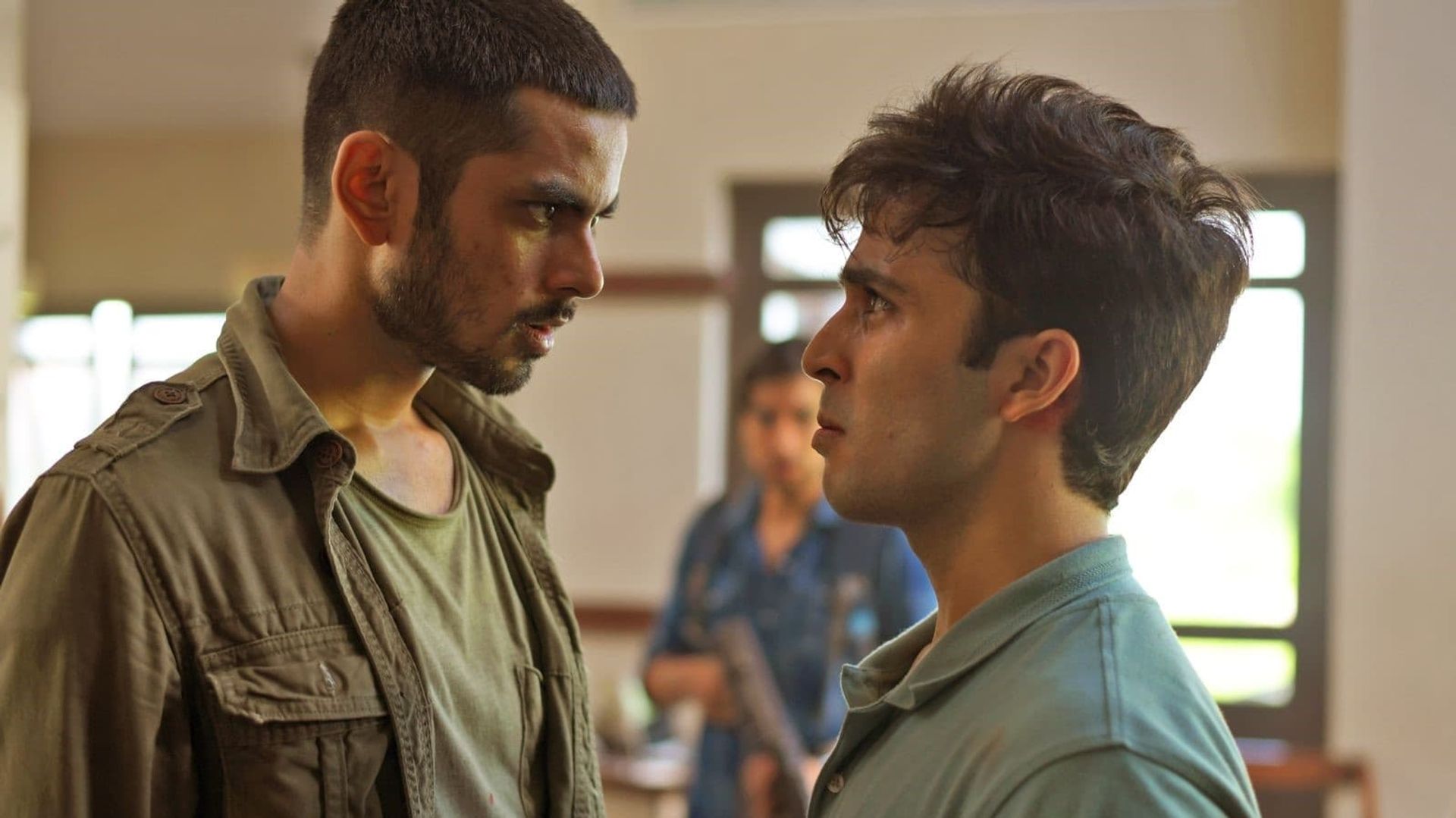
You’ve got to be careful about the liberties you take with the facts when you’re making a film about an infamous terrorist incident. Especially if you’re an Indian production and the movie you’re making is about an Islamist attack in neighboring Bangladesh, which is 90% Muslim. People are already wondering about your motives and agenda, after all.
“Faraaz” is about a 2016 attack on the toniest, most cosmopolitan restaurant in Dhaka, Bangladesh. Today’s “Around the World with Netflix” outing tells a fictionalized version of the tragedy from several points of view, most notably that of Faraaz Ayaaz Hossain, a privileged young college student celebrated for standing-up for two female friends he was dining with, and for standing-up for his version of Islam against the violent, primitive hate-mongering dogma espoused by the attackers.
He was honored with posthumous awards and became an Islamic icon, based on fact and a growing, evolving myth, much like Christian victims of the Columbine school shooting in the U.S.
Director Hansal Mehta’s film, based on a screenplay by Raghav Kakkar, Kashyap Kapoor and Ritesh Shah, shows us the five naive terrorists, led by Nidras (Aditya Rawal) bickering over their last big meal before cunning, call-center mastermind Rajiv (Godaan Kumar) sends them to commit mass murder and become “martyrs” to the cause.
Their “motives” are vague. None of the hostages they end up taking dares to ask “So, what’s your grievance?” And even the police and Army negotiators can’t get “demands” out of them. Reading the admittedly-scanty Wikipedia page on the attack doesn’t really settle that, either. They’re just ISIS inspired haters of “infidels” and “foreigners” who picked a fat, soft target in which to express their outrage.
Faraaz (Zahan Kapoor) is the youngest son of a wealthy South Asian Big Pharma empire whose politically-connected mother (Juhi Babar) is nagging him into going to Stanford and leaving their luxury villa behind. The real Faraaz attended Emory U. in Atlanta.
He winds up with other well-heeled Bangladeshis and rich foreigners at The Holey Artisan Cafe, dining with two young and very modern female companions. One is even wearing short shorts in majority Muslim Bangladesh.
When the attack begins, almost anyone looking European, Chinese or Japanese or Hindi is shot.
“Kill all those who are not Bangladeshi Muslims,” Nibras decrees (the film is in a mix of English and Hindi with English subtitles). And so it is.
Those taken hostage aren’t exactly “safe,” with some of the trigger-happy killers demanding that one man drop his pants to “prove” his faith, others ordered to “recite any surah.”
Faraaz is recognized as a “Prince of Bangladesh,” and offered the chance to leave. But his lady friends are not, so he refuses.
Outside, the police are alerted and stumble into a situation they don’t have the “gear” or the experience to handle and get themselves shot up. “Twelve” officers are slaughtered in the film, only two in the actual event. Perhaps that higher death count is meant to placate via “sacrifice” the incompetence depicted in the police leadership — Danih Iqbal plays the arrogant, trigger-happy police commisioner — and chain of command.
And Faraaz’s panicked mother gathers with the other relatives to demand action and call in favors to get it.
The action sequences are well-handled, and it’s standard operating procedure to show such incidents from these different points of view.
But the “debates” over “Your Islam” and “My Islam” are so on-the-nose as to make one question their veracity. Was Faraaz really this outspoken and ready to argue with armed rednecks who hated his very entitled existence?
As the movie has taken other liberties, you have to wonder. And that’s a stupid distraction to build into your thriller. If you’re depicting public officials as incompetent, changing their names isn’t really a proper cover. And were they incompetent? Don’t know that, either.
The cops, SWAT and Army turf wars are played almost for laughs, and their lack of urgency about this emergency robs the story of much of its power and pacing.
Even Faraaz’s point of view scenes are limited, as if the filmmakers didn’t want to tread on his legacy, no matter what they might have found out researching the script, which is based on a book by Nuruzzaman Labu.
“The myth” is what’s most important and the reason for “Faraaz” being made. But there’s a lot more going on here than him wondering “How brainwashed are you?” if he or anyone else staring down five AK-47s and grenades ever said that. In “Faraaz,” we just don’t know, and we kind of want to find out.

Rating: TV-MA, graphic violence, profanity
Cast: Zahan Kapoor, Aditya Rawal, Juhi Babbar, Sachin Lalwani, Nitin Goel, Danih Iqbal and Kaushik Chakraborty
Credits: Directed by Hansal Mehta, scripted by Raghav Kakkar, Kashyap Kapoor and Ritesh Shah. A Netflix release.
Running time: 1:52



“A mother’s love” comes in a most unusual package in “A Thousand and One,” an intimate mother-and-son character study that’s most rewarding in sharing the details of barely scraping by in New York City.
A.V. Rockwell’s debut feature is built on a bracing, abrasive performance by singer-turned-actress Teyana Taylor. Her character, Inez, only lets us see “warmth” in tiny doses. It’s as if she’s learning that along the way, because as a child of “the system,” growing up in state care, she has no clue how to show it.
“A Thousand and One” is the sort of movie that lets the viewer judge Inez, who spirits a little boy she’s come to know and pity out of a hospital and out of that foster parent/group home/social worker machine she experienced growing, and raise him as her own. We judge her, first scene to last. But Taylor’s defiant performance demands that by the closing credits, we consider her in her totality — the crime, and its motives, methods and above all else, results — and wonder if we’ve been right or wrong about her all along.
We meet her on Riker’s Island in the New York at the beginning of Rudolph Guiliani’s administration. She’s doing a fellow inmate’s hair, set to be released back into a city that was — in 1994 — about to be transformed, for good and bad, by shifting attitudes, fading compassion and a new winner-take-all economic reality.
Whatever Inez went to jail for, her former hair salon boss doesn’t want to hear about it. He shoves money in her hands just to get rid of her. She’s scrambling to get herself employed or self-employed, just to find a place to live that isn’t in the open air.
And then she spies a silent child of about five (Aaron Kingsley Adetola) mixed in the with the children in a group home in her corner of Brooklyn. She starts talking to him, relating to him what she went through “when I was in foster care.” She buys him ice pops, and always calls out to him when he and the bigger kids in the home come out to play.
Inez sees Terry, and calls him “T.” She watches him ignored or bullied by the other kids and the adults in charge. When he gets hurt, she hears about it and makes her way to the hospital where he was taken. He comes to regard her, at her suggestion, as his mother. When he asks her, “Why do you keep leaving me?” she takes action.
They slip away, make their way from Brooklyn to Harlem, where she still has one friend (Terri Abney) who’ll take her, and this child — who has made the newspapers — in. Living briefly with Kim and her disapproving mother (Delissa Reynolds) we see patterns emerge, poor and working class Black women taking a keen interest in a child and how he will be raised, and Inez’s fitness for ensuring that upbringing.
She is unfiltered, hot-tempered and impulsive, with “a rap sheet as long as the sidewalk,” one former employer notes. But she’s got this kid now, and she’s capable of forming a plan.
She’ll get a place to live, get work and perhaps wait for her man, Lucky, to get out of jail, feeding and caring for T the best she knews how, all while laying low to keep him and herself from being caught.
Terry will be left at home along in dumpy apartments. When she’s questioned about why he isn’t in school, she’ll finesse that. And when Lucky (William Catlett) gets out, maybe they’ll form “a family.”
There’s a nobility in this story that keeps popping out at the most unexpected moments. Lucky may say “He ain’t my kid,” and be reluctant to engage with the shy, untrusting child. But he does. He and Inez fight, break up and make-up, even after they get married. But troubled as all that may sound, Terry has people looking out for him, getting him fed, housed, clothed and to school.
He’s in on the conspiracy, which he seems to forget as he ages into his teens (Aven Courtney plays him then) and approaching graduation (Josiah Cross is 17 year-old Terry). Wherever Mom got that birth certificate, Terry thrives in school.
The three young actors who bring Terry to life show us a boy who never quite grows out of his shyness, never makes much of his facility at schoolwork and rising prospects. But we notice.
Taylor’s uncompromising, arms-lenth Inez, a mother of uncertain means and dubious methods, is never entirely likeable. But as we watch her we do the math she did way back in the day, in that hospital. She’s keeping her promise, making his life upbringing better than hers was.
She’s a net positive in his life, any way you add it up.
As as writer-director Rockwell makes clear in obvious and more subtle ways, that’s no mean feat in a New York increasingly hostile to the working poor and others at the bottom of the economic ladder. Every change in “stop and frisk” (“hassle Blacks and Latinos”) policing, in housing regulations (Yuppy slumlord gentrification), in taxation to cover all manner of “public” services — from schools and transit to social services — hits Inez, Lucky and Terry and people like them the hardest.
Rockwell’s achievement is to script a simple character study, cast it with an actress up to turning it into a tour de force, and making the entire enterprise a history lesson in the true cost of Giuliani’s “more livable city” experiment.
Rockwell may never again take us completely by surprise, and really, you only get to be the darling of the Sundance Film Festival once. But he’s conjured up a debut feature that’s involving, informative and even moving, despite its unlikely heroine’s best efforts to prevent that.

Rating: R, sexual situations, smoking, profanity
Cast: Teyana Taylor, Aaron Kingsley Adetola, Aven Courtney, Josiah Cross,and William Catlett
Credits: Scripted and directed by A.V. Rockwell. A Focus Features release.
Running time: 1:57

If it’s wrong to use words like “entertaining” in describing the eco-thriller “How to Blow Up a Pipeline,” well sic the Big Oil goons on me and let the chips fall where they may.
A movie whose title tells the tale, it’s a bundle of nervous energy that wastes little screen time as it hurls us straight into the caper, an “act of terrorism” against the Texas oil oligarchy. It’s only via flashbacks that we get an idea of how “the team” is assembled, how one by one, these 20somethings are radicalized and set out to make a “Save the Planet” statement via bombs that cut off the flow of life-threatening hydrocarbons.
Based on a non-fiction book, a “manifesto” by Swedish activist/author Andreas Malm, sort of an “Anarchist Cookbook” for Millennials, it’s part “How To” tutorial, part eco-peril screed, with lots of speeches, debates and rationalizing what these eight disparate and in some cases desperate souls are about to attempt. And “Pipeline” is a genuinely suspenseful “Will they do it?” and “Will they get away with it?”
Ariela Barer of TV’s “Runaways” is Xochitl, a true believer in the classic mold — a coed radicalized by what she’s learned, hellbent on taking action. She might be dismissed as “just another girl who’s been to college, read a book and decided she knows how to save the world,” but nobody questions her commitment.
“We have a right to defend ourselves!”
Sasha Lane of “American Honey” is Theo, a cancer survivor and Xochitl’s best friend, someone whose flashback states the obvious. Yes, living too near petrochemical plants will make you sick. Alisha (Jayme Lawson of “The Batman” and “The Woman King”) is Theo’s more common sensical lover. She’s the most skeptical member of this crew.
Michael (Forrest Goodluck) is Native American, a nihilist who isn’t interested in the “Conservancy” his mother (veteran character actress Irene Bedard) works for and urges him into. He’s the one taking Youtube tutorials on bomb-making basics, and making some of his own.
Shawn (Marcus Scribner of TV’s “Black-ish”) is a college kid who’s done the debates but is done with the debating and the making of documentaries about environmental injustice and looming catastrophe.
Former child actor Jake Weary plays Dwayne, the guy with the most skin in the game. He’s a struggling Texan who lost his land to the pipeline’s imminent domain and wife and baby or not, is out for revenge. He knows the lay of the land and the pipeline’s Achilles Heel and, like Michael, can make things and work with his hands.
And Rowan (Kristine Froseth, who played young Betty Ford on TV’s “The First Ladies”) and Logan (Lukas Gage of “White Lotus”) are the hot, hormonal lovers, seemingly reckless, seemingly in it for the thrills.
Hearing their speeches, watching their DIY prep and picking up on personality conflicts, we can spot more than a few weak links in this chain of command. The question is not if something will go wrong, but how many things will and how they improvise, crack or let each other down on their way to their date with fate.
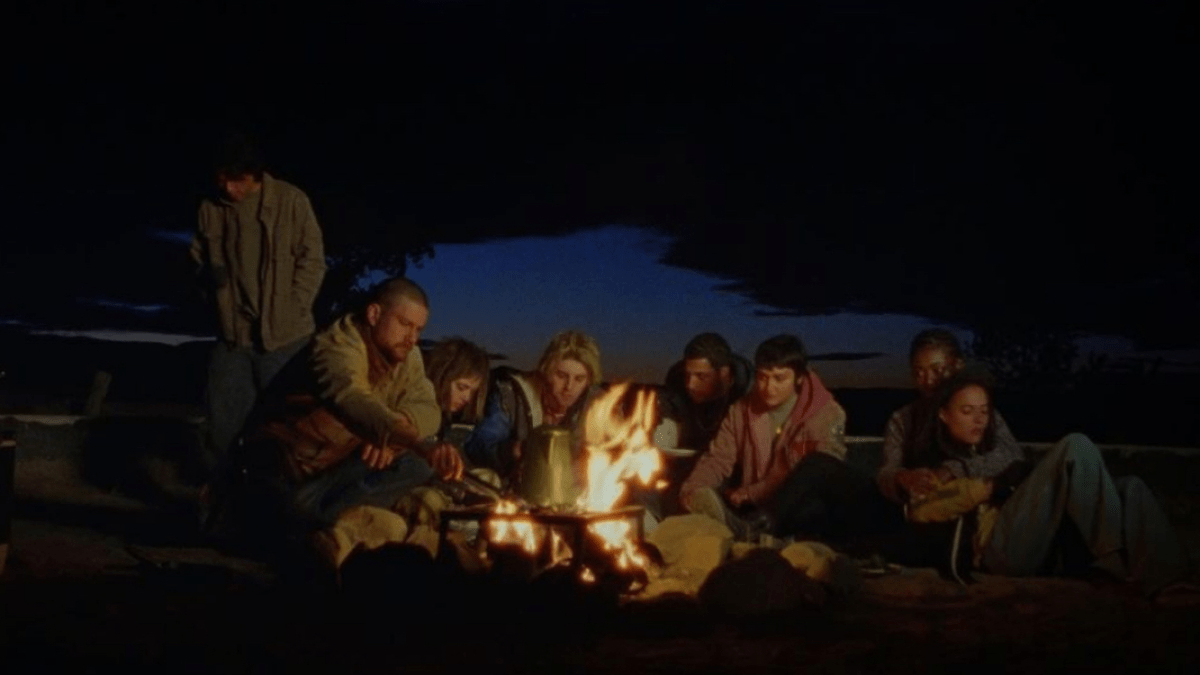
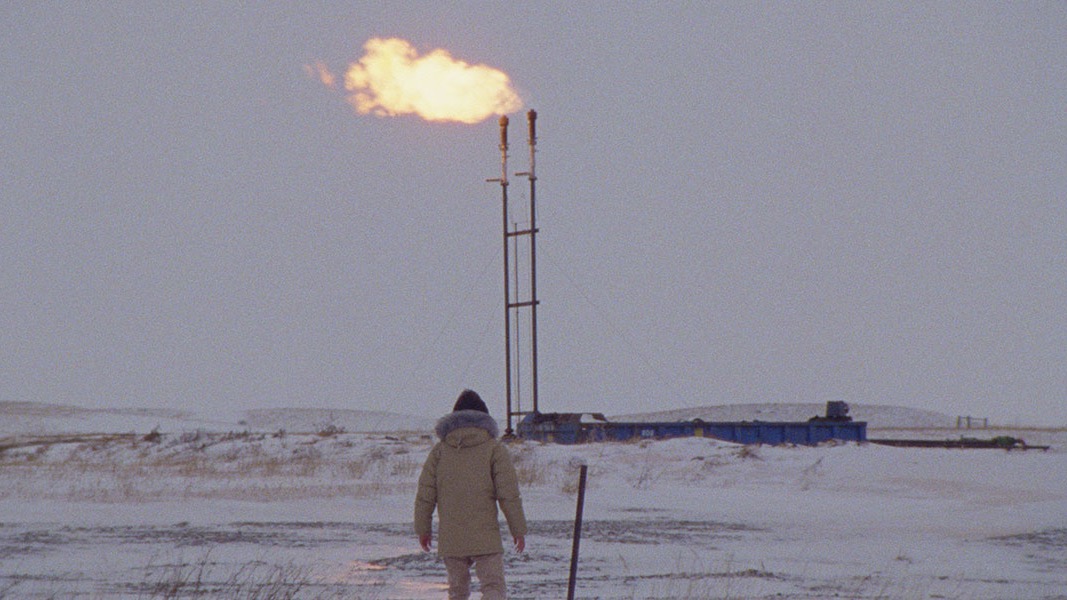
The pacing and flippant but considered dialogue — “Do you feel like a TERRORIST?” — make this material fly by and play lighter than it really is. “How to Blow Up a Pipeline” is every bit as serious as “The East,” a similar story with an entirely different target and a cast that first Elliot Page then billed as Ellen.
Director and co-screenwriter Daniel Goldhaber (the “cam-girl” thriller “Cam” was his) keeps the movie clipping along, but never so quickly that we can’t see problems coming from a mile off. Thus the predictable turns into the third act are somewhat upended by the twist-packed finale.
I like the flashback structure, which allows this picture to bolt out of the gate, the various characters sweeping into rural Texas, checking their watches and they careen towards their meeting, and a series of deadlines. Flashbacks enliven that “who they are/why they’re here” background, rather than having us follow a duller A-B-C step by step narrative.
And making it all work is the cast, all experienced but mostly just-unknown enough to give “How to Blow Up a Pipeline” a genuine indie anarchist feel. Barer, who co-scripted it, sets the “down for the cause” tone, and every distraction and potential point of friction layered on top of the other performances share that as their common starting point.
There are consequences to what they do, and they accept them with varying degrees of maturity. But they have no idea how badly things can go, which is kind of the point. As “call to action” as this “Pipeline” “project” might seem, there’s little need to say “Don’t try this at home, even in Texas” to the viewer.
Because Texas, America and the world are enough of a mess as it is.
Rating: R, violence, profanity “and some drug use”
Cast: Ariela Barer, Lukas Gage, Forrest Goodluck, Jayme Lawson, Kristine Froseth, Jake Weary, Sasha Lane and Marcus Scribner
Credits: Directed by Daniel Goldhaber, scripted by Ariela Barer, Gordon Sjol and Daniel Goldhaber, based on the Andreas Malm book. A Neon release.
Running time: 1:43
Nothing to do with Volkswagen, not really connected to Ant-Man or The Tick or The Wasp. But in theaters in August.
A Mexican superhero with ancient powers? Is he a big deal in Mexico? Is the comic in Spanish, because I’m in the middle of refresher courses on Espanol.
We’ll see what comes from this Aug 18.
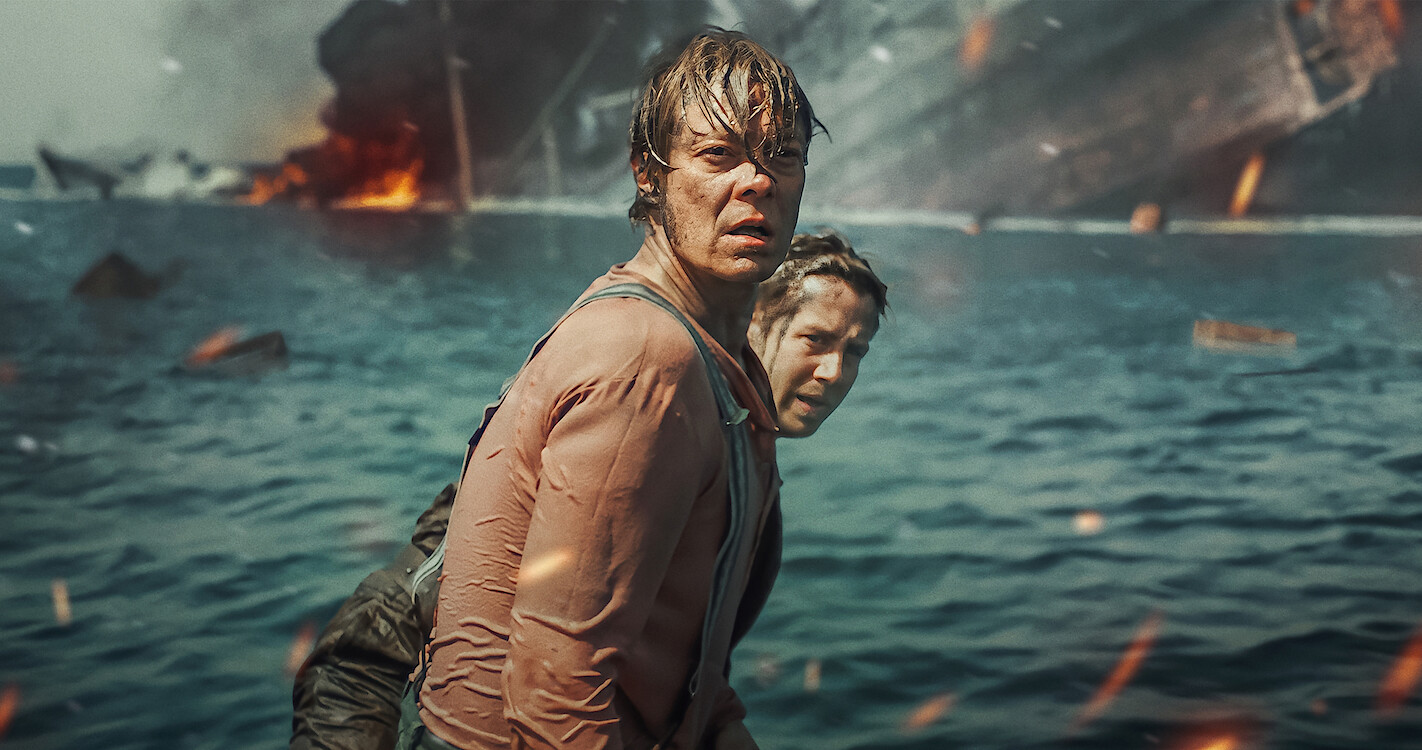
“War Sailor (Krigsseileren)” is a Norwegian Tale of Two Sailors. It’s a somber World War II sea saga of sorrow, sacrifice and everything that can go wrong when you sail your merchant ship repeatedly into harm’s way.
Writer-director Gunnar Vikane (“Trigger,” “Vegas”) expertly tells us a grim, reality-based, sometimes melodramatic story of the unique fate of sailors in the Norwegian merchant marine during the war. In three installments, he takes us from 1939, when friends Freddy (Kristoffer Joner of “The Wave”) and Sigbjørn (Pål Sverre Hagen of “Kon Tiki”) put to sea, all through the perils they faced as their country was occupied by the Germans and Norwegian sailors were pressed into service with the Allies for the duration.
In brisk, claustrophobic and impressionistic strokes, Vikane takes us through almost everything such unsung heroes of the war experienced — homesickness to losing comrades, a sinking and a near sinking — traveling from New York to Britain, Malta to Halifax, Nova Scotia in U-Boat infested waters, facing air raids as well any time they approached German-occupied Europe.
We also catch glimpses of life in occupied Norway as Freddy’s wife (Ine Marie Wilmann, who played Sonja Henie in “Sonja: The White Swan”) and three children struggle on, without his income, bartering for food and trying to maintain some semblance of normality in the Laksevåg corner of suburban Bergen until their husband and father comes home.
“The fog of war” is never mentioned or referenced, but it’s here from the start as Vikane’s script accurately limits what every character and any civilian at that time knew and didn’t know. Nobody could tell how long this would last. No letters got through, even though Freddy writes (and narrates) them from every ship they’re posted on, from every port of call.
Wife Cecilia gets Sigbjørn to make a promise about Freddy as they depart, pre-war. He will “look after him and bring him home,” Sigbjørn vows (in Norwegian with subtitles, or dubbed into English).
But the nature of the service and Freddy’s unique gifts at managing the crew as a mate (and union steward) mean that he’s the one looking after engine-room mechanic Sigbjørn much of the time.
They’re traumatized by survivors of other sinkings that they’re not allowed to stop long enough to pick up. And when they do get a survivor on board, both men make keeping young, illiterate orphan Aksel (Leon Tobias Slettbakk) alive. He started work at 14, never learned to swim and is only useful as galley labor with the cook, Hanna (Alexandra Gjerpen), the lone woman on board when the ship is pressed into service, with Norwegian government in exile permission, to feed and arm Britain to fight on alone against the fascists.
That’s one big fact that this Around the World with Netflix series reveals to the world at large. These seamen had no choice and no respite. They had no home to go home to, would be treated as “traitors” if they jumped ship, even moreso if they actually made their way back to Norway. They were working for shipping concerns most of them had learned not to trust, organizations that held their pay and their combat bonuses pretty much throughout the war.
These were ordinary men and boys, with some 100 women among them, according to a graphic in the series, who were basically galley slaves, undecorated combatants trapped on board helpless floating targets for six years.
The performances are understated for the most part, appropriately desperate and at times, the very emobidment of knee-buckling grief at others. Vikane and his players don’t spare us the consequences of combat — grievous wounds seen in close-up, bodies suspended beneath the surface of the sea, children’s corpses gently carried away from a bombed school.
In the slow-to-get-going first installment, we meet and get to know our protagonists and invest in their fates. Episode two is when the terror becomes most real, with air raids, “TORPEDO!” alarms, a catastrophic bombing on the shooting-gallery journey to British Malta in the Mediterreanean, and the grim realization that they’ve got to get off their latest ship as the war has tested and run through all of their luck. They know it’s time to go when they’re assigned to make the deadliest, least-survivable voyage of all — to Soviet Murmansk, northeast of Iceland, due east of the farthest point north of Norway.
And episode three doesn’t let the viewer off the hook, as we take in the anticlimactic “end” to the war and the PTSD aftershock of everything everyone went through.

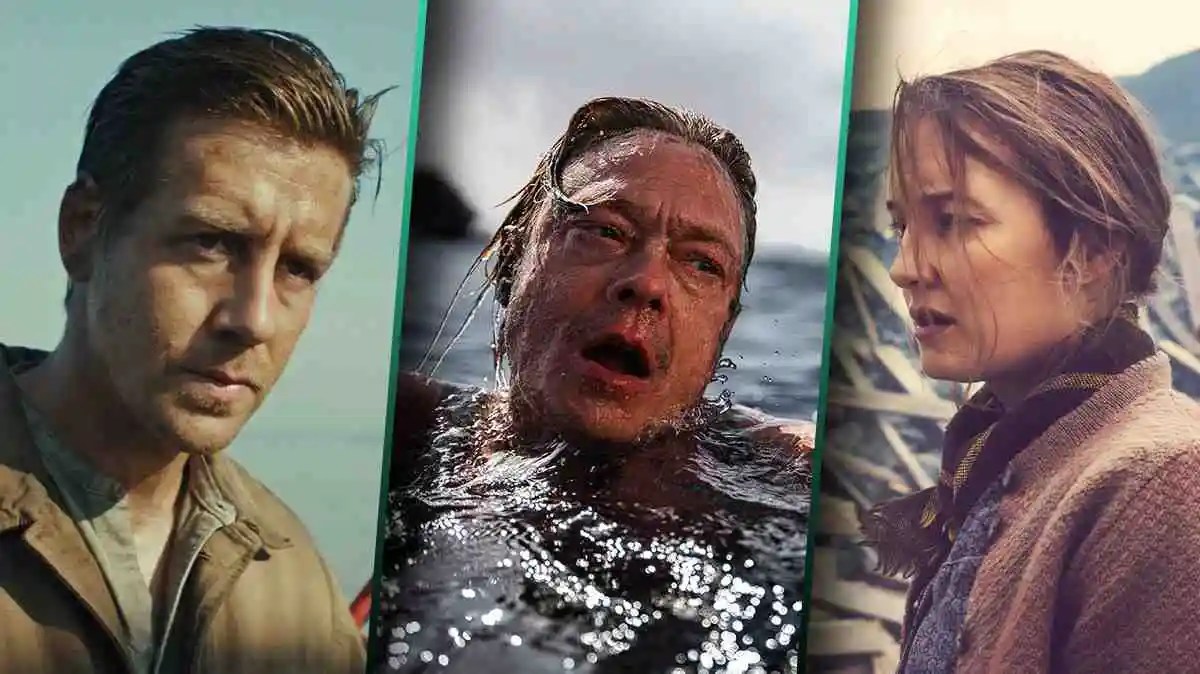
One of the things being a global streaming service has taught Netflix is the sorts of titles each culture’s national cinema creates that travel best and translate most easily abroad. We’re treated to Spanish sex farces, rom-coms and dramas, French and Polish thrillers, Korean and Vietnamese action and horror, Chinese and Taiwanese period pieces, dramas and ghost stories, Italian sex comedies, and from Scandinavia — movies or series about a corner of World War II that the rest of the Netflix world knows little about.
“War Sailor” joins Denmark’s “The Bombardment” and Norway’s “Navik” as Netflix gems that bring the broader scope of World War II in Europe home to the parts of the world that shipped food, weapons, soldiers and sailors to save. These aren’t “forgotten” episodes so much as simply history that’s not public knowledge outside of their home countries.
And Vikane, using hand-held cameras to take us into the chaos of air raids on board ship and in occupied Norway, does a fine job of putting us in the manic middle of it all. Parallel editing makes such raids coincide, with Cecilia frantically rushing to fetch her children as Freddy dashes from bridge to deck to engine room shouting “Alarm!” because there was no intercom, no klaxon of warning on board the often-aging and despairingly disposable merchant ships and the men and women who sailed them.
Rating: TV-MA, violence
Cast: Kristoffer Joner, Pål Sverre Hagen, Ine Marie Wilmann, Alexandra Gjerpen and Leon Tobias Slettbakk.
Credits: Scripted and directed by Gunnar Vikane. A Netflix release.
Running time: 3 episodes @:56 minutes each
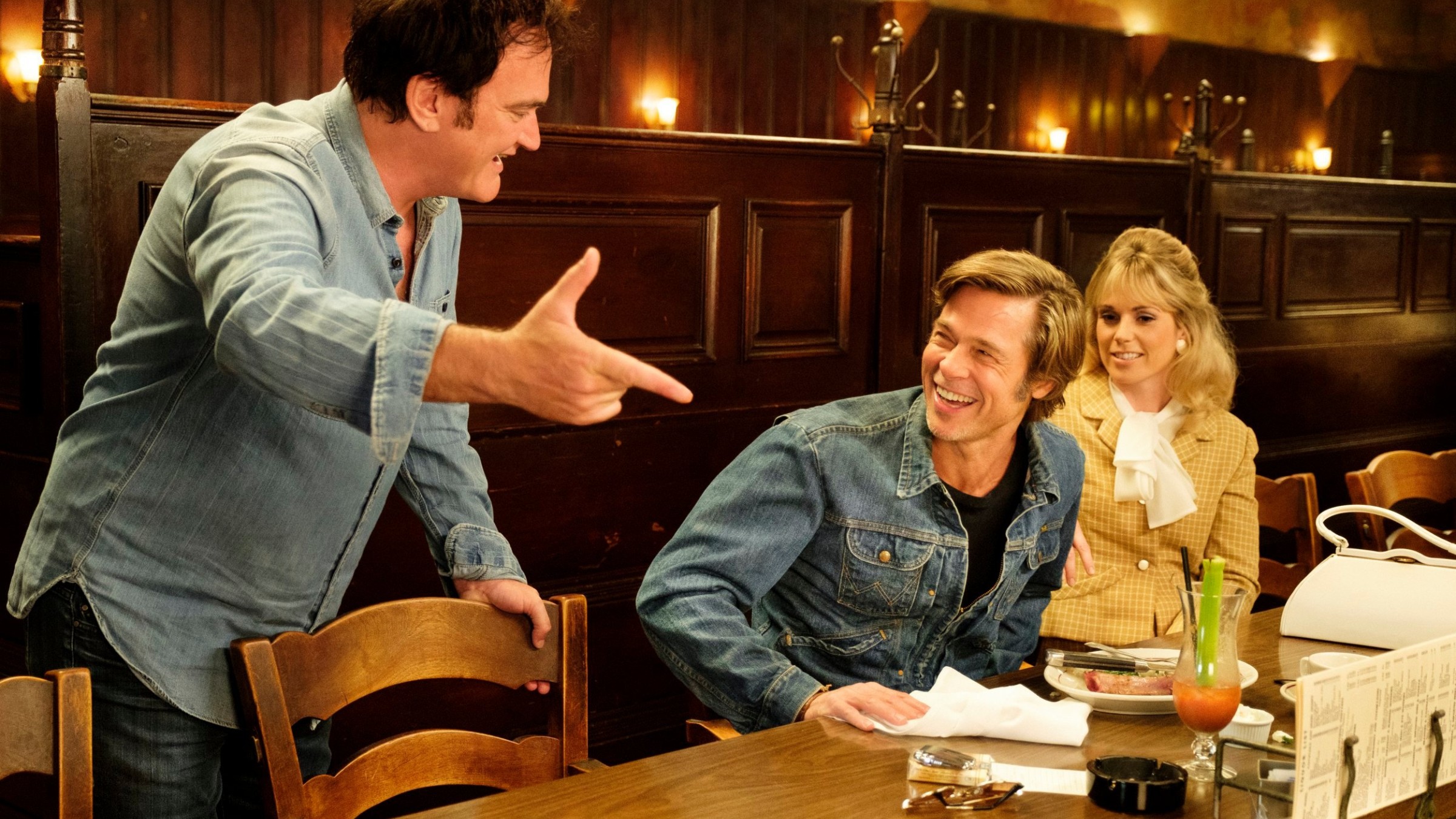
You’re never happy when a great booster of the cinema, a genuine film enthusiast, hangs it up.
But if we’re to take Quentin Tarantino at his word, the just-turned-60 Oscar-winning director of “Pulp Fiction,” “Jackie Brown” and “Once Upon a Time…in Hollywood” is keeping to a promise he made to finish up his film career at 60.
Yes, Hitchcock, Lean and Ford made fine films right up to the edge of their dotage. Scorsese has added a few exclamation points to his career post Social Security age. Scorsese made “The Wolf of Wall Street,” “Gangs of New York,””The Aviator” and won the Oscar for “The Departed,” all after his 60th birthday.
But QT wants OUT.
He confirmed this, calling today’s cinema “a creative wasteland,” on a French radio program transcribed by a helpful blogger at World of Reel. Is cinema dead? Tarantino’s kind of leaning that way. And we all know what he’s talking about without the word “Marvel” or the letters “DC” ever crossing his lips.
“I think that’s how it is in cinema, it’s cyclical in Hollywood, it comes and goes. In my opinion, things will change, for the better. I’m not saying throw everything away. You could say that in a decade that’s considered a creative wasteland, there are still a few films that break through the glass ceiling, that don’t conform to the norm. That makes them even more valuable.”
And he’s going out by taking another trip back into the Tarantino past, back to a sort of Golden Age of film criticism, something he rightly sees as vanished in the Tomatometer/post “thumbs up” era.
In days of yore, critics had names and practiced their craft with carefully considered and typed words polished by editors, reviews with sweep and scope, swooning in fulsome praise or burning in sulfuric take-downs scripted in lashing, acrid truth bombs.
It’s worth noting that some of us are still trying to do that.
In the ’70s, Tarantino’s most formative decade, critics weren’t cheerful, performative podcasters and under-scripted Youtubers. He’s paying homage to those great wordsmiths by making a period piece set in the ’70s, supposedly titled “The Movie Critic,” supposedly starring Cate Blanchett and reportedly NOT about the most famous critic of that era, Pauline Kael.
And he’d never lie, right? About this being his last film, about not using Kael — an iconoclast and curdmudgeon who held grudges, made personal attacks and got her proteges — “Paulettes” — appointed to film reviewing positions? Kael even sold out and went to work in Hollywood, briefly, after letting Warren Beatty turn her delusional head. I mean, she’s still the likeliest and most colorful candidate from that era, if QT is looking for inspiration.
But is it time for QT to bail? Is the cinema “dead?” Marvel and Disney own EVERYTHING and the audience’s appetite for men in tights doesn’t seem to be fading. Yet.
Tarantino’s last film was certainly his greatest box office and critical triumph. And what was it about? “Once Upon a Time” was set in a Hollywood at the end of the pre-blockbuster era, Hollywood at the end of the long, well-past-its-expiration-date heyday of TV Westerns.
Maybe Tarantino’s said what he has to say. Hard to see how he’ll make something violent and edgy out of film criticism and film critics, but hey, we’re a pretty dangerous lot when we’re cornered. And that departure from his “style” is the point. Will he cast aside some of his crutches for this one? Will he give up on the idea that anybody wants to see a movie about a movie critic, even if it is “The Tenth Film of Quentin Tarantino,” and thus an event? Because he says so?
“Jackie Brown” was my favorite Tarantino Exercise in Nostalgia. Great to see Pam Grier and Robert Forster relevant again.
I got a charge out of “Death Proof,” liked “Once Upon a Time…in Hollywood” and abhored “Inglorious” and “Django” and that half-assed “Hateful Eight.”
I wasn’t overwhelmed with “Pulp Fiction,” the movie that put his name in capital letters. Seeing it at a Manhattan critics’ preview way back in the day, I had my first serious exposure to “group think.” A jumbled, indulgent, kind of childish genre romp on speed, the breathless hype my peers were burbling as we exited the screening room sealed his fate.
This guy was going to be a star director in an age that wasn’t producing very many of them. They were all talking themselves into that as they headed out to type out their fealty to The New King.
Interviewing him a couple of times over the years, you could be impressed with his encyclopedic knowledge of genre films, ’70s cinema, ’60s and ’70s TV and pop music, and yet walk away wondering if any of that translated to “good taste.” He has an aesthetic, but like a lot of fanboys of his demographic, it celebrates the obscure, too often the deservedly obscure. A lot of my critic/contemporaries got the same vibe, that we were talking to an enthusiastic peer trying to persuade us to see the cinema the same way he did.
This fondness of the “cool,” the verbose and juvenalia did Tarantino no harm as we entered an era of arrested development in film fandom, adults who never let go of childhood obsessions — comics, Saturday AM TV and the Great Reruns of ’60s and ’70s television, nerd lit and genre nerd cinema. He was the successful version of Kevin Smith, taken seriously, foot fetish be damned.
Tarantino’s now talking about doing TV in this new Golden Age of Streaming, maybe some theater (I’ve seen Fringe festival versions of “Reservoir Dogs”), certainly a book or three. He’ll be a natural at the TV stuff, if nothing else.
Whatever he puts on the screen, we’ll almost surely see more “comeback” ’70s actors trotted out in cameos, hear more ’70s TV theme music and hear manic OCD pages of pop-culture-aware fanboy-friendly monologues.
I don’t know why he’d bother with another film, with the state of streaming today. Take every idea you loved but never finished and filed away and trek over to Netflix, Hulu, Amazon, HBO or whoever. Take that blank check and burn through as much footage as you’d like. It’s not like they’ll make you cut it.
But it’ll be interesting to see a critics’ darling’s take on the people who made him their darling before he rides off into the Netlix sunset. And as she proved in “Tar,” Cate Blanchett can play cultured, snobby and ominipotent with her eyes closed. She’d make a helluva movie critic.
Tarantino? He wouldn’t have been bad at it either, a champion of “acquired taste” cinema.

On screen hit men and women have had a code — “rules” — going back at least as far John Woo’s “The Killer,” which folded into the early films of Luc Besson (“Nikita,” “Leon: The Professional). Besson added the idea that this unsavory profession required an infrastructure — “cleaners” who did the killing, with others summoned to “clean” the mess they made, safe houses, middle men, etc.
“John Wick” director Chad Stahelski and his writers added a hotel for hired killers, and borrowed that interantional guild of killers idea from the old movie “The Assassination Bureau.”
None of this resembles the real thing. You have to track down “The Iceman” to see how haphazard this “work” is and what dimwitted, psychologically-damaged mugs real killers-for-hire are like.
But those tropes and more are trotted out in “Kill Boksoon,” a Korean thriller about a lady hired killer on the Peninsula. It’s built around some epic fights, brawls extended because our titular heroine anticipates how this or that strategy, move or weapon will work against this foe’s “weakness” in any given situation. We see how things might go if she chooses wrong, and how the fight actually turns out.
Gil-Boksoon, played with a wary, timeworn resolve by Jeon Do-yeon — she was in “Emergency Declaration” — knows her business and has her code, which we see in a dazzling opener which has her dispatch a big cheese yakuza, giving him his Katana sword so that it can be a fair fight.
She’s the single mom of a secretive, somewhat rebellious teen (Mim Si-a). Mom’s high-paying gig allows the 15 year-old to go to a pricey private school, dropped off by Mom in her G-wagon. “Event planner” is what Jae-young thinks Mom does for a living.
Mom belongs to a Korean guild of contract killers, an organization we see set up, years before, in flashback. Various crews, including Gil Buksoon’s MK agency, run by its killer chairman (Sol Kyung-gu) and his creepy, smirking sister (Esom), set all this up so that amateurs, “the unemployed,” can’t sully their professionalism.
As if.
They use movie-making jargon to describe their work. A “show” is a contract, a person to be killed. The location of the hit is “the set,” etc.
Their rules? “Never kill anyone underage.” “Only take ‘shows’ sanctioned by your company.” And “You must accept ‘sanctioned’ assignments.”
There’s no calling in sick, no sudden attacks of morality are allowed. When that parchment assignment arrives under a wax seal, that’s your fate.
“Kill Boksoon” is about — you guessed it — running up against those “rules,” as Gil Boksoon tries to stay alive, please her boss. She must overcome office politics, proteges vying for her “A class” killer status, professional jealousy and the unique challenges of every assignment or attempted betrayal. That’s a lot.
And by golly, she must be a better parent, with a better mix between work and homelife
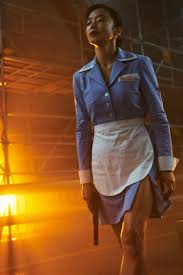

What this movie doesn’t have is “pace.” The intervals between brawls have some intrigue, a few attempts at parenting, and a growing sense of “stalling for run time” as they add a little to the story but are more notable for greatly testing the viewer’s patience.
The fights themselves are epic flurries of fists, tzinging blades and whizzing bullets.
Boksoon brings a “hatchet I bought online” (in Korean with subtitles, or dubbed into English) to a swordfight, anticipates blades getting knocked out of her hand, mid-fight, so that she can pluck them from mid-air to continue the tussle, or end it with a slice or a stab.
Writer-director Sung-hyun Byun (“Kingmaker”) gets all wrapped-up in world-building, showing us a crowded school for hired killers, having Boksoon put on a stage demonstration there, hearing her call “the cleaner” to tidy up a mess.
There are colleagues who are rivals and co-workers who are lovers, actually both at once.
And then there’s the parenting that’s being neglected as her daughter struggles through first love, school bullying and a chip-off-the-old-block gift for violence.
As this movie climaxes in a specialty hotel, it begs comparison with the “John Wick” films. But while the fights are terrific, they aren’t as epic as anything Keanu & Crew do, and they aren’t next-nevel furious, something Indonoesian and Thai thrillers and the Vietnamese “Furies” achieved.
I found the interludes tedious and the many different “versions” of how this or that fight comes out — anticipating the foe’s “weakness” and “next move” the way Robert Downey Jr.’s “Sherlock Holmes” did — cool, but confusing and a bit of a cheat.
Kill her off, or don’t. This isn’t “Edge of Tomorrow.”
There’s a joke, here and there amidst the mayhem, and a tendency to shift points of view a bit too freely.
One gets the feeling, re-watching this sequence to see what “really” happened or clock-watching through that interval awaiting something original, new or surprising to pop up, that there’s a better movie in this footage, if only there’d been less of it.
A tight 100 minutes is better than a slack 137, even if you need time to tell your daughter you don’t care who she loves.

Rating: TV-MA, graphic violence, sex, some nudity
Cast: Jeon Do-yeon, Lee Yeon, Esom, Hwang Jung-min, Mim Si-a and Sol Kyung-gu
Credits: Scripted and directed by Sung-hyun Byun. A Netflix release.
Running time: 2:17

April 21, the Florida Film Festival will play host to An Evening with John Cusack, a screening of his Cameron Crowe teen romance classic “Say Anything,” followed by a Q & A moderated by yours truly.
If you live in greater Orlando, you need to be there. Tickets? Here.
If you can’t make it and have a question for this generational talent and screen icon, a question you want me to ask, post it as a comment here.
I’ve interviewed him a few times over the years. Fascinating guy. Don’t miss this chance!

 Movie Nation