Movie Review: God Bless “The Childe” Who Survives This

“The Childe” is a flip and darkly amusing comic thriller from Korea, a tale of an impoverished Filipino boxer who laments the fact that he’s never been able to find his Korean father. Until he does find him.

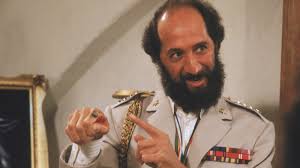
It’s violent, sadistic and quite a bit of fun, thanks to the big screen debut of Korean TV star Kim Seon-ho. As a comically-cocksure, joking, grinning, chuckling and whistling hitman who interferes with or expedites this “Dad” search, he identifies himself only as “a friend.”

It’s no wonder the broke boxer Marco (Kang Tae-Ju) gives him the side-eye when this “friend” lays out Marco’s immediate future.

“You’ll find out for yourself when it’s time for you to die.”

Our hitman loves his designer duds and dotes on him Merc. He drinks Cokes through a straw. But rest assured, he tells one and all whom he deigns to identify himself to instead of just stabbing, throat-slicing or shooting.

“I’m a professional!” (in Korean with English subtitles). He most certainly is. He’s also damned entertaining. And what did Hitchcock always say? “Good villains make good thrillers.”

Marco is a loser at life, probably since birth. He is a “mutt,” one and all say, a Kopino — half Korean, half Filipino. Marco’s mom needs life-saving surgery. He gambles his boxing winnings in Manila (I think that’s the location, even though those scenes were shot in Thailand) and pays others to hunt for his Korean father in the vain hope of getting the cash for the medical bills.

He’s even desperate enough to agree to pitch in on a jewelry store heist, which turns out to be a gang set-up for 11 guys who must have lost money on a fight Marco won and want to beat him to death.

Imagine his surprise when a Korean lawyer, complete with entourage, shows up saying that his father has been looking for him, too. They’ve brought along a hospice nurse. They promise to pay for Mom’s surgery. But he needs to get on a plane for Korea right now. Dad’s dying.

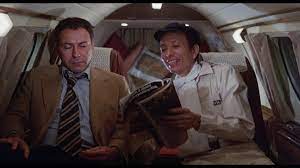
It’s on the plane that Marco first meets the “friend” whom he doesn’t realise has been stalking him. That friend doesn’t seem that friendly when he later ambushes Marco’s ride to his father’s side.

For a boxer, this kid is awfully prone to take the “flee” option when faced with “fight or flight” moments.Whatever’s going on, you can be sure there are mobsters, family factions and more than one “professional” on the lookout for Marco.

Go Ara plays a cold-blooded woman on his trail. Kang-woo Kim is the mob empire heir so determined to meet “my brother.”

As the bodies pile up and many a Genesis and Mercedes is trashed or perforated with pistol holes, we shout at the screen for Marco to “HIT somebody,” but not for our smirking cola-addict to get what he has coming to him. He’s just too damned fun.

Writer-director Park Hoon-jung keeps the action so brisk that we barely notice that the editing mixes up who is in which car and when that ride gets wrecked. He did “I Saw the Devil” and “V.I.P.” and delivers thrills on a modest scale and a modest budget. The same two stretches of Korean backroads through forests give him most of the chase coverage he needed (a bit of highway sneaks in there).

And you can guess where this is headed pretty early on. You could lop off the 18 minutes or so of explanations and other elements that constitute an anti-climax at the end and have a better film. But whatever.

Park keeps this A-to-B journey, with our hapless hero changing custody many times, on the move. Kang lets us feel the wince every time somebody calls Marco a “Kopino” or “mutt,” each slur cutting him to the quick. Marco’s unprofessionalism and cluelessness has him running right into peril time after time, refusing to use his reflexes and one known-skill to pop this or that goon or girl with a gun right in the mouth.

Every now and then though, he surprises us with a punch, just enough to keep his boxing card. It’s always unexpected, and always gets a sadistic laugh out of the viewer, if not the resident sadist in the script.

And Kim, dapper and profanely jokey — playing a guy who only truly gets angry when you ding his Mercedes or soil his pricey shoes — makes sadistic killers for hire fun again. He sets the tone right from the start as this unnamed “friend” overwhelms a garage full of thugs, promising their leader, Boss Cho, that this screwdriver in his hand is what he’s using to “carve your heart out” because a blunt instrument like that “is more painful.”

And he should know. He’s the “professional.”

Rating: unrated, violent as all get-out

Cast: Kim Seon-ho, Kang Tae-Ju, Go Ara, Kang-woo Kim

Credits: Scripted and directed by Park Hoon-jung A Well Go USA release.

Running time: 1:57

Posted in Reviews, previews, profiles and movie news | Comments Off on Movie Review: God Bless “The Childe” Who Survives This

Netflixable? Dropping in on the sword and sorcery anime “Black Clover: Sword of the Wizard King”

The magical manga turned anime spectacle “Black Clover” becomes a feature film in “Black Clover: Sword of the Wizard King,” an offshoot of the popular TV series that struggles through a sea of characters, contrived factions and sword and sorcery magic practiced by those fighting to rule and perhaps “cleanse” the Clover Kingdom.

It’s a lot to wade into, an anime effects extravaganza with so many story threads, agendas and characters that it’s not really the sort of thing you “wade into.” And despite Biblical undertones to its central struggle over free will, self-determinism and the “fallen angel” who wants to “fix this country” by ridding it of most of the wizards, wizard kings and magic-free bystanders who live in it, it never really rises above the nonsense of it all.

Director Ayataka Tanemura, who worked on the TV series, and her crew deliver eye candy and a simple plot buried under clutter in the form of fan service.

Characters pop in for glib one-liners, rallying cries, death threats and spells — SO many specialized, unique to the character spells.

“Fake manipulation, ABSOLUTE EVASION!” “Spatial Magic! Fallen Angel’s Wingbeat!”

The story sort of drifts free of the “two orphans/rivals” dynamic of the manga and TV show, where Asta and Yuna compete their way towards Wizard King status. Here, the years-long struggle between wizards Julius, a righteous consensus builder, and Conrad the megalomaniac to control Clover Kingdom takes center stage.

A prologue captures Conrad, foiled mid-power grab, contained and exiled “forever,” which is why the good folks of Clover Kingdom are told he’s dead. Julius & Co. overpowered him.

Ten years later, at The Triumph, the contest between wizards to determine who gets to move up in the hierarchy, Yuna and Asta’s rivalry is set aside by a coup attempt. Conrad is back. And he has allies and minions.

It will take teamwork to resist him, his faction and his “magic soldiers.” The Black Bulls and their bluff, “just took a dump” leader Yami, scientists at the Magic Tool Research Lab and others join the fray

The rivals pay lip service and lip service only to debating power and discrimination and prejudice and honor.

“I will fix this country!”

Are we meant to believe Conrad has a point? Without examples? I mean, he does insist to Julius “You’re the one standing in the way of PROGRESS!”

To be as well-esablished as this narrative is, characters spend an INSANE amount of dialogue (in subtitled Japanese, or dubbed) delivering exposition, back-story, history, motivations and the like aloud.

Fan or no fan, you have to admit that’s infantile storytelling.

A puerile, Pokeman-level encyclopedia of rules — whose power trumps what — must be considered and arbitrarily abandoned when the next epic brawl begins.

The problem with a fantasy with this much “history” and this many characters layered on top of a simple story is that its “complexity” is superficial, gained by simply adding more colorful wizards and spells, and that its conflict is exposed as contrived claptrap to anyone looking for a straightforward plot, properly motivated characters, logic and the like.

There’s little here for a non-fan, and almost nothing to invite non-fans to become fans.

Rating: TV-14, violent action, a few toilet references

Cast: The voices of Chris Niosi, Dallas Reid, Brynn Apprill, Christopher Sabat, Robert McCollum, Tia Lynn Ballard, Josh Grelle, Jill Harris and many others

Credits: Directed by Ayataka Tanemura, scripted by Johnny Onda and Ai Orii based on the Yuuki Tabata manga that also inspired the TV series. A Netflix release.

Running time: 1:53

Posted in Reviews, previews, profiles and movie news | Comments Off on Netflixable? Dropping in on the sword and sorcery anime “Black Clover: Sword of the Wizard King”

Classic Film Review: Kubrick becomes Kubrick, “Paths of Glory” (1957)

Cinephiles congregate around the films of Stanley Kubrick the way history buffs are drawn to Alexander, Hitler and Napoleon. They were all-powerful control freaks who set out to remake the world in an image they saw in their own minds, and gained the power to attempt it.

So it was with Kubrick, a chess fanatic who came along too late to have grown up with the world-building games that connect new generations of Kubrick fans to his films and his career. He is admired by fans at least partly because of his dictatorial powers over the worlds he created in his films.

He was an Orson Welles who won absolute power over his career and his movies, a Spielberg with more grandiose visions and ambitions.

“Paths of Glory” was a brisk and biting World War I anti-war film, a politicized combat movie that reset the standard for trench warfare movies. It was Kubrick’s first “all-star” production, thanks to Kirk Douglas, who co-produced it and attracted a “name” cast of Hollywood supporting players.

As he and his partner James Harris had co-producing credits, he had at least some control over his second United Artists release, control he wouldn’t do without after the experience of his next film with Douglas, the Roman epic “Spartacus.”

This 1957 film is quintessentially Kubrick, even though it wouldn’t bear the elephantiasis of his best known pictures — epic length even when the subject matter didn’t seem to command it. Only “Doctor Strangelove” would be as short, sweet and to the point as “Paths of Glory,” the one later Kubrick film to clock in at well under two hours. The intimate, creepy and dark “nymphet” comedy “Lolita” somehow became a two hour and thirty-three minute endurance contest thanks to his “final cut.”

The Kubrickian camera compositions, riveting long takes and tracking shots, production design and spare sound design give “Paths of Glory” a grandiosity beyond its brief time frame — just a couple of days in 1916 France — and 88 minute running time. It’s magnificent, and until “1917” and the most recent “All Quiet on the Western Front,” was the gold standard for recreations of “The Great War,” its trenches and the slaughter of No Man’s Land.

The story is a parable of class wrapped in an anti-war fable. It’s based on a Humphrey Cobb novel that was in turn based on a real incident — the French Army executing soldiers, at random, for an attack that failed. The soldiers died labeled “cowards” while the bungling officers who ordered their deaths sipped cognac and got off scot-free.

Douglas plays Col. Dax, a regimental commander who was a famous lawyer in civilian life. He is the middle class middle man, trapped between soldiers he is loyal to and the orders of an aloof, upper class General Mireau (George Macready, his face bearing a dueling scar, his every clipped line reeking of “good breeding” and privilege) charged with making a futile attack. Mireau is reluctant to accept the task of seizing the fortified “Ant Hill” objective of the assault, but caves in with a smirt because he craves the promotion offered by the conniving, manipulative General Broullard (Adolphe Menjou, chuckling, patronizing corruption incarnate).

There were cowards in the ranks, symbolized by the drunken, blame-passing Lt. Roget (Wayne Morris). But he’s able to CYA just a little while longer by selecting Corporal Paris (Ralph Meeker, in top form) as the man from his unit marked for execution, the one man with first-person knowledge of Roget’s murderous incompetence.

Kubrick’s “The Killing” trigger-man Timothy Carey plays an almost comically-dismayed soldier chosen to be shot “to set an example” for the ranks. And Joe Turkel, another “Killing” alumnus who’d go on to screen immortality as “Lloyd” the bartender in “The Shining” and as the villainous tycoon “Dr. Tyrell” in Ridley Scott’s “Bladerunner,” plays the unluckiest of all, a victim selected by drawing lots.

Dax insists on being allowed to represent them in their court martial. But it’s an exercise in officious futility in front of officers who have already decided the three’s fate.

Kubrick’s military-styled mastery of the technique of staging a battle became part of the lore making up his mystique. Georg Krause’s camera tracked through the battlefield, following the whistle-blowing Col. Dax, with Kubrick breaking down sections of No Man’s Land into killing zones, with each extra assigned a zone to “die” in.

This would bear fruit in “Spartacus” and “Barry Lyndon” battle scenes, and whetted Kubrick’s appetite for his planned late 1960s “Napoleon” picture.

The crowded, nicely-detailed but overly-tidy-and-quiet trenches and dugouts of the line are contrasted with the echoing opulence of the chateaus where the top officers reside, work, dine and dance in a formal ball, removed from the murderous combat they’re responsible for.

We’re allowed to think of this film’s class warfare and callous incompetence as “French” with our eyes. But our ears cast away that distancing, as they’re filled with American accents, especially in the ranks. Meeker, Carey and veteran mug Emile Meyer, cast as the priest summoned to minister to the condemned men, underscore that.

The most revolting snob in the officer corps is Maj. Saint-Auban, a sneering social climber and aide who mimics General Mireau’s “childish” “animals” patronizing regard for the footsoldiers.

“If these little sweethearts won’t face German bullets,” Mireau sneers, “let them face French ones!”

Saint-Auban, played by the future boss of “The Six Million Dollar Man,” Richard Anderson, will be his contemptuous prosecutor in the trail.

The performances are uniformly sharp and compact, with the oft-hammy Douglas setting the standard. Meeker, Turkel, character actors Bert Freed (as an unsentimental Sgt.) and John Stein (as an unflappable artillery captain) are outstanding in small roles.

Legend has it that Carey tried to ham it up and steal the incarceration, court and execution scenes and that at one point Kubrick put him through 50+ takes to correct this. Whatever Carey’s acting foibles (he’s great here), Kubrick got in a very bad habit with that bit of dictatorial indulgence. He became infamous for the number of takes he’d demand.

But the results speak for themselves, perfect frame after perfect frame, scene by succinct scene and with performances that register, as sharply as ever, 70 years after “Paths of Glory” came to the screen.

This film is the one that placed Kubrick firmly on the path to his own glory, a reputation for being one of the cinema’s most infamous perfectionists and one of its finest artists built on “Dr. Strangelove,” “2001,” “A Clockwork Orange, “Full Metal Jacket,” and this film, undeniably marking the former Look Magazine photographer for greatness way back in 1957.

Rating: “approved,” violence

Cast: Kirk Douglas, Ralph Meeker, George Macready, Adolphe Menjou, Richard Anderson, Wayne Morris, Timothy Carey and Joe Turkel.

Credits: Directed by Stanley Kubrick, scripted by Kubrick, Calder Willingham and Jim Thompson, based on the novel by Humphrey Cobb. An MGM release on Tubi, Movies!, Amazon, Youtube etc.

Running time: 1:28

Posted in Reviews, previews, profiles and movie news | Comments Off on Classic Film Review: Kubrick becomes Kubrick, “Paths of Glory” (1957)

Movie Preview: “Priscilla,” the Elvis Movie about the Teen The King Groomed to be Queen

Sofia Coppola hasn’t had a winner in some time. “On the Rocks” was Ok…ish. A pale comparison to “Lost in Translation.”

But in telling Priscilla Beaulieu Presley’s version of this “fairy tale” romance of the ’60s, and doing it for A24, she’s got one that’s sure to be noticed.

Posted in Reviews, previews, profiles and movie news | Comments Off on Movie Preview: “Priscilla,” the Elvis Movie about the Teen The King Groomed to be Queen

Netflixable? A Mexican Loner takes on “Dark Forces (Fuego Negro)” in a noir horror world

Dark Forces (Fuego Negro)” is a bloody-minded, sex-scene-stuffed Mexican film noir that that staggers along like a George A. Romero zombie.

That’s rich, because “zombies” aren’t the creatures of mythic horror this Bernardo Arellano thriller has in mind.

Atmospheric, with gloomy scenes bathed in lurid shades of neon, if it went any slower it would unfold in reverse.

A loner (Tenoch Huerta) shows up at a classic noir hotel. He’s not just checking in, he tells the sketchy desk clerk (Marina Huerta). He’s looking for somebody.

Yeah, the clerk might have a lead. But as “Franco,” hunts for Sonia, whom flashbacks suggest is his sister, he has time to rescue/bed the waitress/sex-worker Rubi, given a femme fatale clingy edge by Eréndira Ibarra. She’s the fall-in-love-in-an-instant type.

“In crime,” he assures her (in Spanish with English subtitles), “whoever has your back today stabs it tomorrow.”

He’ll meet the creepy-as-all-get-out cadaverous gay trumpet player/drug dealer (Nick Zedd), first in his nightmares.

And he’ll consult a the albino medium (Johana Fragoso Blendl), a sensitive soul who “sings” her prophecies, but who can only be consulted during a full moon.

For an 80 minute movie, this picture dawdles a lot. Long pauses, slow turns, wasting screen time on Franco doing his exercise regimen in his hotel room, wasting more time on his fetishized unwrapping (it’s in a hanky) folding knife, which looks like nothing special.

But Franco needs it for his “work.” And his work is “hunting,” and not just for his sister.

Some of the effects, a soul-sucking tapeworm that comes out of the possessed’s mouth and into a victim, aren’t bad. The dialogue has its moments.

“Evil has drunk from your blood!”

But the pacing just amplifies how routine-and-worse this is, sex and occasional burst of violence aside. The actors aren’t interesting, the archetypes they play are tedious, the tropes and props — Franco wears a trench coat, of course — laughably predictable.

“Dark Forces” is the sort of thriller you “research” by watching telenovela thrillers on the TV, day drinking at home.

Rating: TV-MA, graphic violence, sex

Cast: Tenoch Huerta, Eréndira Ibarra, Mauricio Aspe, Daina Liparoti, Johana Fragoso Blendl and Nick Zedd.

Credits: Scripted and directed by Bernardo Arellano. A Netflix release.

Running time: 1:21

Posted in Reviews, previews, profiles and movie news | Comments Off on Netflixable? A Mexican Loner takes on “Dark Forces (Fuego Negro)” in a noir horror world

Documentary Review: Boiling Down “Taylor Mac’s 24-Decade History of Popular Music”

One does not know what took so long for drag performer/singer, writer and activist Taylor’s Mac‘s Olympian undertaking, “Taylor Mac’s 24-Decade History of Popular Music,” to make it to TV and the masses.

An epic 246 song show, toured as four six-hour marathon productions, he only did the entire 240 year history — with band, back-up singers and guest musicians — in one long day and night on one occasion — Oct 8-9, 2016.

Filmmakers Rob Epstein and Jeffrey Friedman, who gave us “The Celluloid Closet” and “Linda Ronstadt: The Sound of My Voice,” and their filming/recording production crew were at St. Anne’s Warehouse in Brooklyn to capture it all.

Maybe it took them this long to edit 24 hours of straight-through performance — with interview inserts with the production team and showcasing the outlandish, period-parodying costumes of designer Machine Dazzle at a fashion shoot — into a finished film.

In any event, the timing of this history lesson through music presented in a drag show could not be better — released right before July 4, right in the middle of nationwide attacks on drag, sexuality and history itself by a zealous, scapegoating, intolerant minority.

The show was born during that live-performance/Youtube-immortalized “History of Rap,” “History of Dance,” “History of Music” craze of the mid-to-late 2000s.

Mac’s brainchild? To tell the long, sometimes tortured tale of the United States via music, the popular songs of every era, “songs you’d hear in pubs (mostly).” He’d include what would later be called the “erased” parts of our national story and fold it all into an AIDS allegory.

“That history is in our songs,” he says on stage, midway through a vamp on “Yankee Doodle” to open the show.

So he was going for “epic,” an “Angels in America” drag musical that would highlight the nation’s history and the queer elements and famous figures — like Walt Whitman — and unknown ones.

“Bayard Rustin, a queer Black man, organized the (1963) March on Washington,” is among them.

The filmmakers turn this “You had to be there (the committed-to-the-end audience was relatively small)” show into Taylor Mac’s “The Last Waltz,” a generous sampling that gives us the musical, theatrical, historical and emotional flavor of the event.

I can’t imagine sitting through any production of that length. But this 106 minute sampler zips by, serving up facts you didn’t know — “Coal Black Rose,” the first “minstrel” (singer in blackface) song, started life as a racist sea chantey about gang rape of a slave — and old tunes rendered in new lights.

“Father of American Song” Stephen Foster is ripped for his racist-even-for-their-day ditties. Ted Nugent’s anti-glam rock “Snakeskin Cowboys” is “appropriated” from its “f-g-bashing” origins and rendered into a “Junior Prom” ballad.

Bowie’s “Heroes” to Bruce’s “Born to Run” — “So that’s what it was like in America before ‘Will & Grace!'” — take on renewed cultural significance, placed here on Mac’s historical timeline.

AIDS is summed up as a disease, a disaster and a call to arms — out of the closet and into the streets — as Laura Brannigan’s dance-club hit, “Gloria,” performed by Mac in an exhausted, funereal ballad that morphs into audience participation “community building.”

Mac, a MacArthur “Genius” grant recipient, holds center stage for almost the entire “performance art” concert and theatrical happening, with spirited backup singers, singing harpist Erin Hill (“10,000 Miles”) or folk singers taking on a number, here and there.

Even though I couldn’t imagine the endurance contest of experiencing the show in person in real time, this documentary — which identifies via graphics the songs and their earlier-than-you-realized dates of composition — leaves you wanting more. As dazzling as this highlights sampler can be, one hopes more of it will be released in bite-sized servings.

Perhaps on Youtube, where this sort of performative history with social commentary and comical interjections first reached a mass audience? We’ll see.

For now, we have an excellent snapshot of a singularly sensational theatrical event, entertainingly pulled off-by a talent who should be as celebrated for his stamina — He’s OK with “He,” but identifies as “Judy.” — as he is for his genius.

Cast: Taylor Mac, Matt Ray, Anastasia Durasova,
Niegel Smith

Rating: unrated, profanity, sex toys and phallic props

Credits: Directed by Rob Epstein and Jeffrey Friedman. An HBO release on Max (June 27).

Running time: 1:46

Posted in Reviews, previews, profiles and movie news | Comments Off on Documentary Review: Boiling Down “Taylor Mac’s 24-Decade History of Popular Music”

Movie Review: Jennifer Lawrence “commits” to “No Hard Feelings”

In a summer marked by “outrageous” women-driven comedies of the “Oh no they DIDN’T” variety, Jennifer Lawrence‘s “No Hard Feelings” stands out as the most outrageous of them all.

If your jaw doesn’t drop at the sight of a two-time Oscar winner, buck naked, raging and pummeling prank-prone young tourists “summering” in Montauk — rich drunken d-bags who thought it’d be cute to steal the clothes of a couple of skinny-dippers — well, maybe duck back into the “Spider-Verse” because this isn’t the movie for you.

But as “The Blackening” and the upcoming “Joy Ride” and earlier summers’ “Girls Trip” and “Bridesmaids” taught us, “outrageous” is hard to sustain, if you try to top your peak moments. And “outrageous” alone is never enough.

Lawrence takes the Cameron Diaz/Aubrey Plaza role in this raunchy farce from the writer of “Bad Teacher” and director of “Good Boys.” And while she’s game for anything, whatever it takes to pound a laugh out of a moment, it’s not enough in a comedy that sprints out of the gate, buries us under zingers and turns all sensitive and sentimental as it pulls its punches in the second and third acts.

Lawrence plays Maddie, a “local” year-round resident on the toniest end of the tony “East of the Hamptons” Long Island. Like townies in all tourist towns, from Aspen and Jackson Hole to Key West and Haleiwa, she’s got to hustle to be able to afford to live “in paradise.”

That makes her bitter, resentful of the rich who drive up property values, which drive up taxes and put her in danger of losing the bungalow on a coveted acre of land that her mother left her.

Maddie’s underwater, depending on summer to “make my nut,” collect enough in bartending tips and rideshare customers to cover that and all the other bills piling up.

Having her Toyota reposessed isn’t part of the plan. The fact that it’s repo’d by her “ghosted” ex (Ebon Moss-Bachrach) might give her wriggle room, or would if her latest Italian hook-up didn’t banana-hammock his way into her pleading.

Thirtysomething Maddie’s cut a wide swath through Montauk. The locals guys know better than to fall for her charms, her curves or her act.

Roller-blading to her one remaining job (funny) only hardens her determination. Is she desperate enough to “date” the son of some richies who offer a used Buick Regal for that service in a classified ad, just to bring their teen “out of his shell?”

“Date him or ‘DATE’ him?” she wants to know.

“Yes,” designer mansion/helicopter Mom (Laura Benanti) offers, helpfully.

“Date him HARD,” doting dad (Matthew Broderick, Ferris Bueller privilege all grown up) says. “Date his BRAINS out.”

Her pregnant friends (Natalie Morales and Scott MacArthur) make sure she understands she’s a “sex worker” if she does this. Hard-headed, hard-hearted Maggie is “just a girl who needs a car.” She’s sexed up plenty of guys and “never gotten a Buick” out of it. What’s the big deal?

But this Princeton-bound kid (Andrew Barth Feldman, terrific) is sullen, shy, and so deep into his shell and naive to the ways of the world that he may be a lost cause.

Blame his parents, who monitor his every move and “protect” him from most everything. Blame them for naming him “Percy.”

The fact that he volunteers at the animal shelter may give Maddie access. But throwing herself at the kid, working harder at “working it” than a shapely, sexy Montauk barmaid should ever have to work, doesn’t help.

“You seem like the sort of person we take dogs FROM, not send dogs home with.”

There’s a bracing, balls-out quality to Lawrence’s Mean Girl/Bad (sex) Teacher turn here, and she leans into it like a lady who could use a hit. Maddie bullies Percy, her exes, customers and little kids at the laser tag emporium that’s Percy’s idea of a fun-time.

Feldman, an alumnus of the “High School Musical” TV-reboot, becomes a poster boy for “putzy nebbish” or “nebbishy putz” as Percy, misreading seduction signals, so spoiled and clueless he thinks nothing of spitting out — literally — his first-ever Long Island Iced Tea in front of his flirty neo-dominatrix hot date, who will put up with anything just to get that damned car.

Not that he knows about that.

But the script’s efforts to soften the comedy with sentiment — her taking pity on the kid, him psychoanalyzing her — turn “No Hard Feelings” soft in short order.

Bang-up set-pieces still pop up here and there. Lawrence, as we’ve seen on chat-show appearances, can be wicked fierce with a comeback. An ex has a ring on his finger?

“Is her vag ‘dishwasher safe?”

“No Hard Feelings” lives when impulsive, not-that-bright Maddie furiously focuses on her next immediate need — that car — and what she has to do next to “close the deal.”

It makes too little out of her class resentment, which fuels her fury. A generation too phone-obsessed to copulate is only dealt a glancing blow.

The picture shows signs of some re-cutting, as bits seen in the trailers didn’t make the final edit and some players (Kyle Mooney, Hasan Minhaj) come in for a sight gag or punchline, and get either built up or cut-down, depending on how they played to test-audiences.

But for all her efforts, Lawrence never quite hits that comic sweet spot. She can’t pull off that bowling-ball-of-brazen thing that Plaza, Schumer and Tiffany Haddish made their brassy brands. There’s a reason nobody tried to soften up the “Bad Teacher,” and that nobody thought a sensitive Sandra Bullock “type” would work in that role.

But when she’s manipulative and mean, working the hair, the legs and the cleavage like they’ve never let her down so far, Lawrence’s mean and mouthy “Man-Eater” is something to behold — outrageous, “out there” and literally letting it all hang out because who in their right mind going complain about that?

Aside from guys named “Percy?

Rating:  R for sexual content, language, some graphic nudity and brief drug use

Cast:Jennifer Lawrence, Andrew Barth Feldman, Laura Benanti, Natalie Morales, Ebon Moss-Bachrach, Scott MacArthur, Hasan Minhaj, Kyle Mooney and Matthew Broderick.

Credits: Directed by Gene Stupnitsky scripted by Gene Stupnitsky and John Phillips. A Sony/Columbia release.

Running time: 1:43

Posted in Reviews, previews, profiles and movie news | Comments Off on Movie Review: Jennifer Lawrence “commits” to “No Hard Feelings”

Documentary Review: “The League” reasserts The Negro Leagues’ place in Baseball and Black History

Every baseball fan knows about the Negro Leagues, that parallel baseball universe that competed and thrived in the decades before “baseball apartheid” ended and America’s Pastime brought Jackie Robinson, Larry Doby and others into the Major Leagues.

Ken Burns had a hand in popularizing the Negro Leagues and placing them within the context of the segregated game in his PBS series “Baseball.” He turned Kansas City Monarchs veteran Buck O’Neil into a star, and O’Neil revived the memories of Satchel Paige, Josh Gibson, Cool Papa Bell and others.

O’Neil is “back” in the new Sam Pollard documentary backed by Roots star, “Tonight Show Band” leader and film producer Questlove. “The League” is an entertaining survey of Negro Leagues history with special attention paid to their place within the African American life of their day.

O’Neil, like Henry Aaron, Maya Angelou, Bob Feller and many others who appear in “The League,” has passed away. But the decades of interviews they and many others left behind flesh out a film that features historians, sportswriters, scholars and museum curators who tell this story through the colorful characters who put on a show, and those ran the show behind the scenes.

It is the poet, actress and memoirist Angelou who gives the film its title, noting that after the “official” birth of the Negro Leagues in 1920, anybody in any Black community in America knew what you were talking about “when you said ‘The League.'”

The great teams of that era, roughly 1920 to 1951, were The Philadelphia Crawfords and the Homestead Grays, the Newark Eagles and those Monarchs of Kansas City.

Entirely too many teams were called “Giants” — Chicago American Giants, Washington Elite Giants, Nashville Standard Giants, Cuban X-Giants, Miami Giants, Brooklyn Royal Giants and Bacharach Giants and so on. And that’s one way, along with ever shifting lineups, allignments and the like, that the film struggles a bit with literal Negro Leagues history.

But even Major League Baseball has had problems wrestling with that tiger, trying to decide who was “major” and who was more of a minor league or barnstorming operation and when this or that team or league became “official.”

Pollard, who produced episodes of the PBS Civil Rights doc series “Eyes on the Prize” and directed “MLK/FBI,” gives us a history of segregated baseball, which began that day in 1887 when legendary baseball pioneer Cap Anson refused to let his team take the field against a Major League team fielding a Black player, and didn’t end until Jackie Robinson took the field for the Brooklyn Dodgers in April of 1947.

Forgotten figures like player, manager, owner and league founder Andrew “Rube” Foster, “one of the greatest baseball minds” ever, are given their due. Foster helped make the Negro Leagues a faster, “more aggressive” and more theatrical version of a game that turned slow and stodgy as soon as Babe Ruth started hitting home runs in the “live ball” era.

Foster picked the motto of the “separate” Negro National League, which came to life just after the “red summer” of race riots that followed World War I. He borrowed a phrase from Frederick Douglass to describe what Black players and Black businesspeople starting teams would be facing.

“We are the Ship, All Else the Sea”

The film punches holes in the hallowed myth of Branch Rickey, the Dodgers GM who took that bold step of integrating the majors. Rickey set a precedent that Major League teams didn’t need to compensate Negro Leagues teams for players they signed to contracts.

Negro Leagues teams were owned by African Americans, and Rickey found ways to delegitimize them.

In introducing Newark Eagles co-owner Effa Manley, via oral history interviews, we learn how the Negro Leagues pushed for integration of the game for years, but had every reason to expect to be paid for players they developed and introduced to white baseball and whom they had under contract. The regal Manley didn’t care for Rickey. She much preferred colorful Cleveland franchise owner Bill Veeck, who called her to tell her he wanted her player Larry Doby to be the first Black American League player, and paid her for his rights.

It wasn’t a market value price, we’re told. But it was the principle and the cash that mattered.

Where “The League” sparkles is in its retrieving interviews with the great pitcher Paige, Monte Irvin and other Negro Leagues stars who lived long enough for the country to start interviewing Black baseball players about those years.

Also invaluable is the memory of Negro Leagues umpire Bob Motley, who recalled everything from idolizing the players and angling for a shot at umpiring to the nature of the bus rides between towns and the segregated hotel and restaurant situation for anybody traveling while Black back then, even star ball players.

They lived on “peanut butter and bread,” Negro Leagues player turned baseball home run king Henry Aaron remembered.

Pollard’s expert witnesses note the role “The League” played in the African American business community as the largest Black-owned enterprise of its day. Early on, “context” tends to overwhelm everything else, as we grapple with The Great Migration and the role the World Wars played in mobilizing African American leaders and followers to demand equal rights.

But at every turn, the context comes back to the game, which players could play in the Caribbean Winter Leagues each off season, where “color” didn’t matter and they were reminded of what America might someday embrace.

Books and a visit to the Negro League Baseball Museum are still the best place top get a chapter-and-verse history of African American baseball, pre-Cap Anson and on through to Jackie Robinson. But “The League” does much of what you’d want a documentary on the subject to do — highlight colorful figures, let them speak, where possible, and park it all within the context of an America that drifted from “Plessy v. Ferguson” to “Brown vs Board of Education,” with baseball leading the way into segregation, but also leading (along with activists and World War II) the way out.

Rating: PG

Cast: Monte Irvin, Junius “Red” Gaten, Maya Angelou, Henry Aaron, Amiri Baraka, Buck O’Neil. Bob Motley, Satchel Paige, Bob Feller, Gerald Early, Effa Manley and Bob Kendrick.

Credits: Directed by Sam Pollard. A Magnolia (July 14) release.

Running time: 1:44

Posted in Reviews, previews, profiles and movie news | Comments Off on Documentary Review: “The League” reasserts The Negro Leagues’ place in Baseball and Black History

Movie Preview: Traveling with the guy you want to break up with? Beware of the “Quicksand”

Shudder has this “No one knows we’re out here” thriller, set in Colombia.

July 14.

Posted in Reviews, previews, profiles and movie news | Comments Off on Movie Preview: Traveling with the guy you want to break up with? Beware of the “Quicksand”

Netflixable? “The Wildflower” takes a swing at Nigeria’s Patriarchy and Rape Culture

“The Wildflower” is an infuriating melodrama about victims of abuse in Nigeria, oddly presented as a “dramedy” to the domestic market, as some of what’s being shown is alleged to have a comic intent.

We’re meant to be infuriated by the brutal, sexist patriarchy, a “ociety that “has raised women to mute their voices.” Most every women in the film is harassed, imposed-upon, bullied, beaten and worse.

But the picture is infuriating in other, unintended ways. A pieced-together-script loses track of injustices and story threads, piles characters on in the third act and generally blows what is pretty close to a solid Lifetime Original Movie about sexism and how it enables sexual assault.

How is any of this funny? At one point, we even see a character “breaking” in the midst of a manic, loud shouting match with his character’s wife. As the man later kills the wife he’s been beating regularly, one can wonder about a country where spousal abuse is still considered an object of fun, and where rape isn’t taken as seriously as it has been in the West — at least since the 1970s.

But that’s kind of the point of director Biodun Stephen’s sometimes-moving but often messy movie. IT’s time for Nigeria to take this seriously.

We’re shown three different women, Lagos neighbors, who face abuse. Rolake or “Rolly” (Damilare Kuku) has a masters in architecture and a new job with a handsome, go-getter builder (Deyemi Okanlawon). Her “hero worship” of Gowon Williams doesn’t wholly blind her to the red flags that go up.

He comments on her appearance, suggestively, and seems eager enough to bring his new personal assistant along on business trips. Her boyfriend may be leery, but Rolly isn’t.

Her young friend and neighbor Ada (Sandra Okunzuwa) is a teen forced to navigate the lecherous remarks and bullying of a local womanizer (Zubby Michael). She is warned to steer clear of him, and he isn’t having it.

And Ada’s mother (Toyin Abraham) runs a little spice stall that brings in little money, which means her overdressed, womanizing lout of a husband blows his top whenever he comes home demanding “my food” and there is none there. He beats her and insists it’s his fault.

The only “comic” bit to this relationship might be his attempts at makeup sex and her insults about the experience.

All of these women will be assaulted. One will die, with her killer forgotten in the messiness of this script. One will be arrested for defending herself. And one will be sued for going public about her attack.

Kiki Omeili plays the doctor who treats the sexual assault victims and begs them to go public, involving NGOs and activist groups to start a conversation that could change the culture.

The “good” kind of infuriating here — how angry we get and are meant to get over the ill-treatment facing these women, the cultural biases and police disinterest and ways some women perpetuate these injustices by accepting them, blaming themselves or other women for sexual assault or merely staying silent — never quite outweights the “bad” infuriations in the film.

“Why are you letting a man treat you so carelessly?”

Minimizing a murder, drifting off to include a preacher and his once-raped wife’s debates on speaking out, suggesting Rolly’s boyfriend might become a court case spy for the rapist but not making that clear, court scenes that misunderstand legalese, those are as vexing as some of the arch dialogue, characters that border on caricatures and plot contrivances.

But all that said, strip away the attempts at comedy and “The Wildflower” would play and cleanly make its points in most any culture, not just a Nigerian market that perhaps prefers their social justice stories leavened with abuse jokes and boys-will-be-boys tolerance for the sexism that enables abusers.

Rating: TV-MA, violence, rape

Cast: Damilare Kuku, Deyemi Okanlawon, Sandra Okunzuwa, Toyin Abraham, Zubby Michael and Kiki Omeili

Credits: Directed by Biodun Stephen, scripted by Niyi Akinmolayan and Mannie Oiseomaye. A Netflix release.

Running time: 1:47

Posted in Reviews, previews, profiles and movie news | Comments Off on Netflixable? “The Wildflower” takes a swing at Nigeria’s Patriarchy and Rape Culture