Movie Review: “The End of Oak Street,” End of Summer Dregs

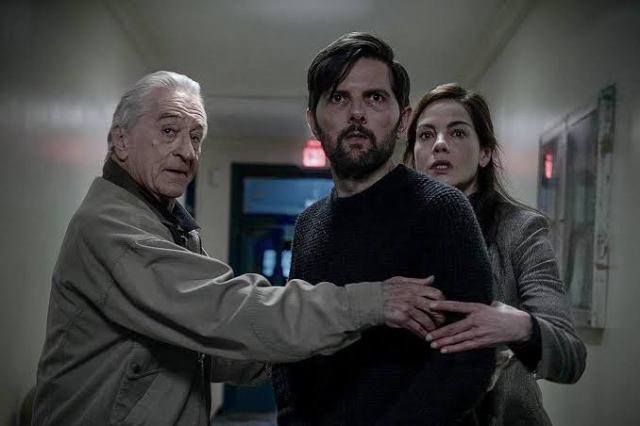
Say what you want about the Spielberg-lite creature feature “The End of Oak Street,” but Oscar winner Anne Hathaway makes us believe that she believes it’s “The End.”

A seriously silly movie that misses more laughs than it reaches for, “Oak Street” summons up Spielberg suburbia of the ’70s and ’80s but wastes the period piece settings on a flat, cliched genre pic about a bunch of feathery dinosaurs — something we learned about them in the decades since “Jurassic Park” — raising hell when time and tectonic plates slip and flip.

An overheard “NASA reports” strange “ripples” in the solar system on the radio, a neighbor marveling at a peculiar pre-palmetto plant that’s burst through her lawn, a high school kid who dreams of Cornell and studying with Carl Sagan, and a few flashes, booms and growls in the night and next thing we and the Platt family knows “wormholes” might be real.

Their 1982, polyester eart0 tone fashions, cathode ray tube world with its dead car brands — vintage Plymouths and AMCs abound — is uprooted and surrounded by beasts straight out of museums hunting them and their neighbors and their pets into an extinction level event.

And they didn’t even have to pull out their Jumanji board to bring all this down on themselves.

Writer-director David Robert Mitchell leaves most of his “It Follows” skillset behind for a pricey and dull horror lark testing you or your kids flashcard skills in identifying Allosaurus, Stegosaurus, Gargania and Pterosaurs et al, and yes I had to look them up.

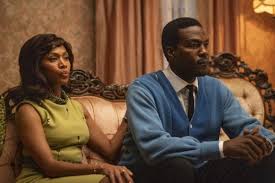
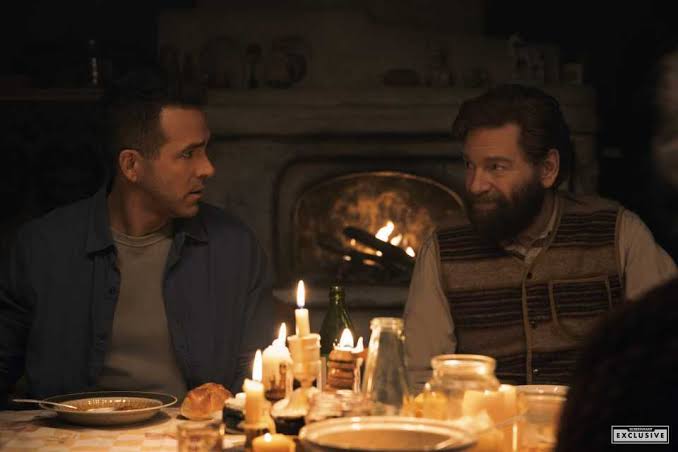
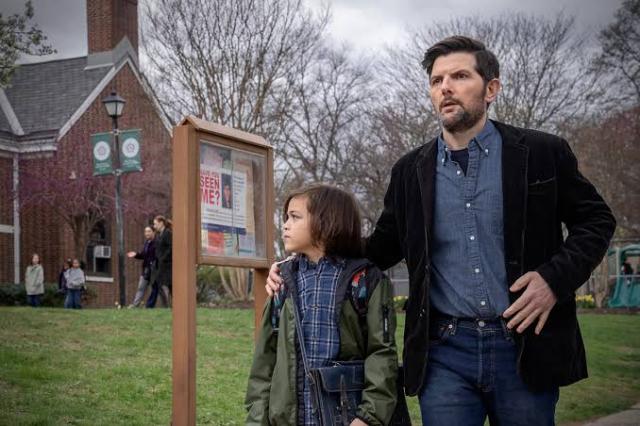
The Platt parents (Hathaway and Ewan McGregor) have annoying neighbors (P.J. Byrne), Spielbergian smart-ass kids, and secrets. Wife and aspiring novelist Denise has the most benign one. Husband Greg is awfully anxious to skip family time for his side hustle delivering pizzas. Maisy Stella plays the Cornell hopeful daughter (the most under-written character) whose Sagan dreams are gone with the wormhole or whatever caused this. Christian Convery is whiny son Brian, who has school issues and a low fraidy-cat threshhold, unless his unruly cattle dog Starbuck is concerned.

One by one, those suburban concerns fall away as they take on prehistoric beasts with the occasional gun, a baseball bat, knives and the tween son’s bow and arrow.

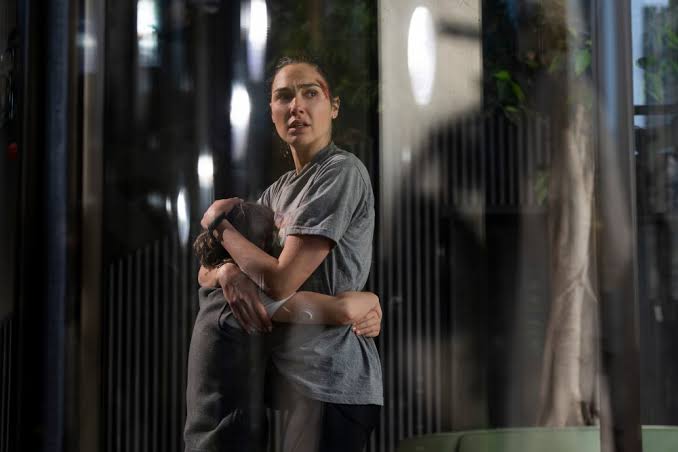
Mitchell tries to keep the violence close at hand and his cast on the run. Hathaway “sells” this terrified fleeing better than anybody else. But for all the deaths, immediate and impending, the stakes never feel all that high.

The “science” is a sloppy afterthought and you can pretty much predict the story beats and deaths two or three scenes in advance, in some cases.

A few tight compositions in XCUs stand out, visually. Hathaway gives us a dose of disappointed wife and fiercely protective mom.

“Is this the end of the world, mom?”

She’s more convincing in answering that than Dad is in his “not going to let anything happen to you” cliche speech.

So while one can appreciate reminding the old master of his glory days tropes in the summer Spielberg tossed off “Disclosure Day” and tried to pass it off as epic. But there have been better Spielberg impersonations, better When Dinosaurs Attack movies,

And at some point, in between raptor and super snake and mega-gator assaults, we can’t help but recall “It Follows” was a one off, Mitchell’s follow-up “Under the Silver Lake” wasn’t Andrew Garfield’s finest hour and we’re allowed to ask of “The End of Oak Street,” “Is that it?”

Rating: PG-13, grisly violence, profanity

Cast: Anne Hathaway, Ewan McGregor, Maisy Stella, Christian Convery, Jordan Alexa Davis and P.J. Byrne.

Credits: Scripted and directed by David Robert Mitchell. A Warner Bros. release.

Running time: 1:38

Posted in Reviews, previews, profiles and movie news | Tagged , , , , | 5 Comments

Netflixable? Self-Centered Actress/Mom’s Come Home to “This, That and Everything in Between”

“This, That and Everything in Between” is a perfect covers-all-the-bases title for a soap opera. In this case, the soap in question is a feature length film from the Philippines.

But “soap” is what this meandering mess stumbles into after an opening act that struggles to be a laugh-free farce about a delusional diva actress coming “home” to get to know the screenwriter-daughter she abandoned 27 years before.

When the laughs don’t come, let’s reach for melodrama?

That mirrors the plot of this Cholo Laurel (“Afterlife,” “Wherever You Are”) potboiler. A rising star screenwriter (Jodi Sta. Maria), famous for rethinking her plots on set, juggles her way towards an American screenwriting fellowship by toying with abrupt changes in direction of the script she’s already pitched to Hollywood.

But Jo has a hard time focusing on the writing and her Big Chance when her self-absorbed, short-tempered actress/birth-mother shows up after 27 years.

Paz (Agot Isidro) had her own shot at stardom at home in the Philippines. But she dashed off to New York to try and create an American film breakthrough while she was still young and beautiful enough to be labeled a “starlet.”

Now she’s “home,” “allowed” back in the country some say. Nobody recognizes her as a well-preserved but grey-haired diva, which has her biting the head off of cab drivers and profanely tearing her 20 year-old son Mattias (Gabriel Lazaro) a new one over pretty much any slight.

Jo isn’t all that into re-connecting with “Our Lady of Eternal Absence.” She’s got an award-winning series to keep afloat and final prep for that Brooklyn writing fellowship to take care of.

But Dad (Gardo Versoza) insists she come home to San Rafael, to the people who raised her and the insecure narcissist who didn’t. He needs Jo’s help with all this.

Paz insults siblings who’ve made careers on the Filipino stage and Filipino Netflix series. Her screaming bouts with her son don’t lessen her “issues,” or his. He’s twitchy, and has taken to getting stoned to tune her out.

“You don’t GET me (in Filipino and English),” Paz shrieks to her ex, her extended family and anybody else within earshot. But Jo, “JoANNE,” as her mother insists on calling her, isn’t hearing it and isn’t having it.

And then, dang it all, the movie abandons any sense of exaggerated “fun” it was reaching for and turns melodramatically serious.

The script is structured to have an awkward “reunion” dinner with family eat up a lot of the second act, and as Matti turns out to be the truth-teller in mom’s many tall tales about her “success” and real life, that promises laughs. Not many arrive, but at least they’re promised.

Then the picture lurches into a kind of unemotional, tasteless bittersweet reverie that threatens to put viewers to sleep.

In a youth-oriented business like film and TV, Jo seems entirely too old (she’s 37, since mom left her when she was ten) to be pursuing or seriously considered for a “fellowship” in a profession she’s already been a success in.

But not a whole lot of this makes sense. A favorite moment for me was when our diva yanks off her wig…to show us even shorter but less grey “real” hair underneath. What’s all that about? A compromised bit of half-committing to the part?

Isidro is over-the-top and amusingly awful in the lead role, but even she struggles to land an “out loud” laugh.

The other family issues stuff isn’t particularly well-handled, either. The dialogue isn’t that quotable even if the leads are decent, having just enough edge in their performances to give them credibility as estranged mother and daughter.

Notice, Mom, how I have no old family photos of you and me before you left. “You were never there.” But who, Mom spits back, does Jo think was TAKING those photographs?

Little dollops of heart and moments that ring true make you wish this movie played. But it doesn’t. It drifts away from Jo’s on-set TV writer problem solving and becomes a script that even Jo couldn’t fix, cliches and tropes and “soap opera” plot tricks or not.

Rating: TV-MA, smoking, drug abuse, sex and profanity

Cast: Jodi Sta. Maria, Agot Isidro, Gardo Versoza and Gabriel Lazaro.

Credits: Directed by Cholo Laurel, scripted by Cody Abad, Cholo Laurel and Shania Sumergido. A Netflix release.

Running time: 1:52

Posted in Reviews, previews, profiles and movie news | Comments Off on Netflixable? Self-Centered Actress/Mom’s Come Home to “This, That and Everything in Between”

Movie Review: A “Burning” “Rashomon” from Kyrgyzstan

It may be ethnocentric to think this way, but one can’t help but hope that universally recognized civil rights, liberty and justice make their way into every corner of the world. Because you never know what sort of values you’ll see in the cinema of Egypt, Malaysia, Saudi Arabia or any other corner of the Islamic world.

“Burning” is a mystery thriller from Kyrgystan, a former satellite state of the Soviet Empire, now a land-locked country where Islam is the dominant religion, superstition still has its place in the culture and women’s status is traditionally subservient, with head coverings required. And whatever you do, ladies, don’t let the men catch you smoking.

“Burning” is a tale told in three chapters , titled “Guilted, “Excuse” and “The Reason.” Radik Eshimov’s film unravels the story of a house fire, who and what caused it as “witnessed” or at least understood by three different neighbors.

Like “Rashomon” and its inspiration in this sort of disparate views screen storytelling, “Citizen Kane,” we’re led along and led astray by some of what we’re shown and told by the drunken Jyrdal (Rusalam Orozakunov), the more sober and gruff Durus (Askar Kachkynbaev) and lastly, his pharmacist-wife (Zhanilai Isakova). But some sort of opinion of “truth” and “justice” may turn up in their testimonials.

The home of Asel (Aisanat Edigeeva) and husband Marat (Omurbek Izrailov) has burned. It happened shortly after the arrival of mother-in-law Farida (Kalicha Seydalieva).

This fire happens not long after the couple lost their little boy. But Asel is pregnant and hopeful and Marat has summoned his mother to “help” and look after her as he’s to be away.

Farida is either a scowling witch with nefarious connections to the henchmen of local mullahs that will ensure her control over this pregancy, or a victim or simply a bystander. Asel may be a hapless victim herself, judged “guilty” in losing their son, “possessed by a jinn (genie, demonic spirit) or an abused wife who has few rights and has lost her sanity at her plight.

Marat might be naive, trying to stay helpful and hopeful, concerned and sober minded, or an abuser.

Director Eshimov and screenwriters Aizada Amangeldy and Dastan Madalbekov may give weight to every version of the story, but they cheat in lots of obvious ways. Our “eyewitnesses,” relating their versions of the story to one another and other neighbors after the fire, show us things they could not have witnessed and relate conversations and incidents they did not see or hear.

And of course, the filmmakers’ fingers are on the scales of which “version” is the cold, hard truth.

But the ending is quite moving and underscores what a sophisticated — if slow and uncertain at times — piece of screen storytelling this is.

There’s horror, suspense and violence, and the performances give every one of the three leads the chance to play pleading victims or hissable villains.

It’d be a candidate for “Lifetime Original Movie” in North America, fascinating for the alien culture it captures but clumsy in its melodramatics. But “Burning” gives one hope in its messaging, in the polish of its performances and in the fact that it was made at all.

Rating: unrated, violence

Cast: Aisanat Edigeeva, Omurbek Izrailov, Kalicha Seydalieva, Askar Kachkynbaev, Ruslan Orozakunov and Zhanilai Isakova

Credits: Directed by Radik Eshimov, scripted by Aizada Amangeldy and Dastan Madalbekov. An Indiepix release.

Running time: 1:41

Posted in Reviews, previews, profiles and movie news | Comments Off on Movie Review: A “Burning” “Rashomon” from Kyrgyzstan

Movie Review: A “Last Ride” with Spike Lee’s Less Talented Kid Brother

“Last Ride” is a bit of a head-slapper, a creaky, crawling thriller with intensely unlikable characters doing one stupid thing after another and a screwy semi-supernatural plot that staggers from the unlikely to the insanely inane.

It stumbles out of the gate and staggers along for 89 minutes. And then it gets worse.

But because it was produced by Spike Lee’s filmworks and directed by his younger brother, Cinqué Lee, it got into lots and lots of festivals before vanishing without a trace. And now Amazon has it.

See how nepotism in the movies works, kids?

A prologue has an alcoholic father (Gustaf Skarsgård, brother of Bill and Alexander, son of Stellan) arm twist his 20ish son’s (Samuel Pau Small) pot dealer in Norway into leading them up via cable car/gondola to the top of a Norwegian peak. The kid is contemptuous of his old man, but there they are.

Dad, between sips from his oversized flask, allows that he has unfinished business on this mountain.

We’re promptly dropped into a flashback, Three obnoxious tweens (Roman Griffin Davis, Charlie Price, Felix Jamieson) are trying to talk a Norwegian cable car worker (Kristofer Hivju) into taking them up that same mountain in iffy winter weather.

The kids reek of privilege. It’s early March, 1982, and they’re not in school, they’re on vacation. Two of them have divorced parents who have…taken an interest in one another.

And they all have a secret that isn’t really a secret.

Devin, Syd and Jamie takes Polaroids of one another, patter maniacally about girls, school, family and each other. And they won’t take no for an answer from redbearded “Viking” Øyvind.

He finds himself “just a babysitter” for twerps “like you.”

But a shared love of The Clash abruptly changes “No. Go home…Come back tomorrow” or whenever to “Yes.” And so they sing-along to “London Calling” as the gondola takes one more wintry trip up the mountain in the gathering gloom.

Our first tip that not all is well is having the “London Calling” sing-along cover the entire tune. No canny director wastes screen time on a gag once we’ve gotten the gist.

And the cassette has barely finished when an ominous noise brings their gondola to a halt. Everything electrical and electronic is zapped. Poor Øyvind has barely put out a fire when he, too, is shocked. And there they are.

We see lights flickering out in a wave across the valley below. The jabbering kids are beside themselves. Who will save them? How? And what the hell just happened?

“If it was a blackout, there should be car lights,” one of them reasons.

There’s not a lot of “reasoning” in this lot, who take a while to adjust to the fact that there’s a dead body in their midst, someone who did them a favor and paid for it with his life. That last part they never reconcile.

Three varying-degrees-of-stupid boys must cling to life in a freezing cable car twelve storeys off the snowy ground, confronting every new clue about their situation with the dumbest possible response.

They’re children, so there is no “work the problem” here. There are light sticks in the first aid kit? Let’s light’em all up. It’s cold and getting colder? Let’s steal the dead guy’s…cigarettes. And clothes.

“I can smell his breath” on his sweater, one remarks. “Yeah, one of his last” another retorts.

What writer-director Lee was going for here is a Nordic peril “Stand by Me.” Alas, “Hang by Me” was not a considered title. “The Grand Allignment” was. Yes, Lee went to the trouble of attaching this traumatic tragedy to an astronomical event.

The old fiction writing 101 maxim “Write what you know” seems to have evaded Lee — he also directed the gimmicky “Window on Your Present” — who may have called on memories of all the indulged, idiotic white kids he knew growing up, or just imagined how awful such children can be.

The claustrophobic setting is comically misused.

The kids just scream “child actor” in their performances and the script does the adults no favors, either.

Anf then an epilogue as inane as the prologue ensures that whatever the outcome of what happened in that gondola was, the movie about it accomplishes nothing but leave a bad taste in the viewer’s mouth.

Rating: TV-16+, violence, profanity, tween smoking

Cast: Roman Griffin Davis, Charlie Price, Felix Jamieson, Kristofer Hivju, Samuel Paul Small and Gustaf Skarsgård

Credits: Scripted and directed by Cinqué Lee. A Quiver release on Amazon.

Running time: 1:38

Posted in Reviews, previews, profiles and movie news | Comments Off on Movie Review: A “Last Ride” with Spike Lee’s Less Talented Kid Brother

Movie Review: You Can’t Spell Heartache without “H is for Hawk”

Almost all of us missed “H is for Hawk” when it was shown in “select cinemas” last winter. And we’re all the poorer for it.

This sublime, understated film — based on a memoir by Helen MacDonald — is another showcase for one of acting’s most natural, unaffected performers, Claire Foy. Foy gives another career-defining dressed-down performance as a woman haunted by loss, refocused on a fresh risk as she seeks any distraction to lessen her grief.

Broadly put, “Hawk” is about grief and Ox-bridge academia and falconry, as practiced by a Cambridge “fellow” who adopts a goshawk.

Helen (Foy) is a not-wholly-focused Phd candidate teaching disinterested students “erased” science history, debunking “The Great Man Theory” of breakthrough discoveries by pointing out a woman, for instance, who made Watson and Crick’s the shape of DNA “discovery” happen.

And then her beloved, ever-curious career newspaper photographer dad (Brendan Gleeson) dies and all the procrastination, perpetual tardiness, impulse control and easy distraction comes home to roost.

A onetime falconer, she decides this would be the perfect moment — with her future teetering, eviction and career suicide pending — to focus on training a goshawk, “the maddest and wildest of the raptors.”

Falcons are “like fighter jets,” she explains to any layman or laywoman misinformed enough to ask if that’s a Peregrin or Merlin she’s got on her gloved arm. “Hawks are Apache attack helicopters,” relentless low altitude bringers of death and destruction to any meal they get in their sights.

The hawk she names “Mabel” becomes her sole focus, neglecting her lone friend at work (Denise Gough), her grieving mother (Lindsay Duncan) and all else as deadlines pass and life goes on outside the bubble of her ever-more-cluttered and filthy university flat.

Whst profundity there is in this simple narrative lives in the details. Foy dresses the part, studiously avoids eye contact with the bird on first meeting as her character begs the breeder selling goshawks to give her the one who is the most skittish, dangerous and “wild.”

What a “well-behaved goshawk” needs, he (Sean Kearns) asks? “Murder. Calms her right down. Let her kill a lot.

Foy gingerly keeps the hawk at arm’s length even as we see Helen becoming more and more obsessed about keeping this “hunting partner,” not “pet,” alive and training her to embrace their “partnership.”

Sam Spruell underplays the falconer (and perhaps ex-lover) she consults to renew her skill, a man not given to panic and the very model of patience that antic Helen must mimic. Josh Dylan is the brother who isn’t close enough to intervene in Helen’s quietly monomaniacal declne.

BAFTA-winning director and co-screenwriter Philippa Lowthorpe (“Three Girls,” “Call the Midwife”) includes glorious footage of goshawks in action and on the hunt even as she zeroes in on Foy’s brave-front hiding a broken heart and spirit performance. We see her work reflected with care in the supporting players, with Duncan and Gough in particular playing up the “kid gloves” loved ones often take when trying to buck up someone mid-breakdown.

Gleeson leans back in his turn, under-selling “larger than life” and letting us see her father as Helen does. Naturally, they shared a love of the natural world, and raptors were a big part of that.

The whole effect is life affirming as “H is for Hawk” takes us on a journey deep into a daughter’s crippling grief and glimpse, via sentimental and even playful flashbacks, the larger-than-life hole in her life that opened when the spirited, always-curious, always-engaging dad who made her died.

Rating: PG-13, smoking, adult situations, profanity

Cast: Claire Foy, Lindsay Duncan, Denise Gough, Sam Spruell, Josh Dylan and Brendan Gleeson

Credits: Directed by Philippa Lowthorpe, scripted by Emma Donahue and Philippa Lowthorpe, based on the memoir by Helen MacDonald. A Roadside Attractions release streaming on Amazon Prime.

Running time: 1:58.

Posted in Reviews, previews, profiles and movie news | Tagged , , , , , , | Comments Off on Movie Review: You Can’t Spell Heartache without “H is for Hawk”

Classic Film Review: Dietrich and Douglas, Posh Infidelity with “The Lubitsch Touch” — “Angel”

It’s 1937, and Marlene Dietrich would let the world know she could shed almost every hint of her German accent when it suited her purposes.

Melvyn Douglas proved that all a bland leading man needed to do was grow a pencil thin mustache and change his name from Melvyn Eduoard Hesselberg so that he’d be fit to court Marlene on the screen and “make Garbo laugh.”

And Berlin expat Ernst Lubitsch sat at the pinnacle of the Hollywood heirarchy, the go-to producer/director for sophisticated romantic melodramas and comedies, typically posh films that demonstrated “The Lubitsch Touch” — upscale and witty, cutting and romantically (sexually) daring for their Production Code day.

“Angel” is peak-period Lubitsch, even if it isn’t the first, second or third title a film buff summons up to sing his praises. This patient (slow) but meticulously crafted 1937 melodrama is about infidelity in the offing, if not in practice.

There’s even a hint of the unease Western Civilization was roiling under as attempts to head off another world war unfold in the background, off camera.

And then there’s the star power. Dietrich plays a sexy, upper class European woman of mystery who drops in on an old friend — a former Russian grand dutchess (Laura Hope Crews) — for reasons never quite explained.

As the grand duchess runs what appears to be a high end brothel, or at least escort service, this “old friend” busness doesn’t need much explanation. Maria is married and bored, and she has a past.

A rakish Brit fresh from India (Douglas, not even feigning an accent) drops in, mistakes the unnamed “lady” for the grand duchess and is instantly smitten.

It’s the eyes, the impossibly long eyelashes and that way Dietrich used them in this, the flirtatious “side-eye” corner of her career. She teases, tempts, lets him lead himself on and declines to give her name.

“I don’t want to know your name,” she purrs, maintaining decorum even as he talks her into a dinner rendezvous.

“Angel! That’s what I shall call you,” he enthuses.

And then, in the dark of a Parisian park, she watches him go to buy a flower from a poor street vendor, and vanishes.

We only see this and his reaction to it through via the face of the lady flower seller (Louise Carter) — sad, resigned, but hey, he dropped the flower I just sold him. Dust it off and I can sell it again!

Returning to Britain, Lady Maria settles back into her wealthy life with an important diplomat, Sir Frederick Barker (Herbert Marshall of “Foreign Correspondant” and “The Letter”). They prattle on about their effortlessly “happy” marriage, planning this outing or that dinner out.

And then the rakish Anthony Halton (Douglas) stumbles into their corner of this small world of British wealth, power and title. Who will realize what, and when? And how will each react?

The settings include the grand duchess’s salon, a seriously venerable British mansion, a dress-to-impress day at the Ascot racecourse and an evening at the opera. Of course.

The temptations and intrigues of the plot, borrowed from a Melchior Legyel play, are somewhat starchy and dry — dated even. But Lubitsch and one of his favorite screenwriters, Samuel Raphaelson, populate this gilded corner of “Lubitschland” with a house full of servants who are both comic foils for the leads, and judgemental commentators (without all the facts) on what is going on.

The dialogue is a veritable glossary of old world attitudes and pithy “truths” about class. love and the sexes.

“It’s the privilege of a woman not to make sense,” Maria declares. “Men that expect women to be logical are likely to be failures in love.”

“Angel” has plenty to make it feel a tad musty and old-fashioned, but there’s naughtiness seeping in around the edges. The jokes land and the cliches and stereotypes still play as they provoke eyerolls today.

Dietrich was already a legend, and showed off range and subtlety here as her film career took a turn towards iconic, later to the point of self-parody.

Douglas would age into a grand character actor (“Hud,” “Being There”) and only truly come into his own after his leading-man-paired-with-much-more-famous-leading-ladies ended.

Marshall is the anchor in reality here, delivering that British “Keep calm and carry on” stoicism (pre-war) that must be dropped if he’s to have a prayer of hanging onto his wife with a past.

“Ninotchka” was in the future for Lubitsch and Douglas, with “Destry Rides Again” soon to become Dietrich’s comical high water mark.

But “Angel” doesn’t let down the side or the cinema, a classic that’s too much of its time to sting, a lesser script perfectly shot and edited into the lovely, delicate bauble it remains to this day.

Rating: TV-PG

Cast: Marlene Dietrich, Melvyn Douglas, Herbert Marshall and Edward Everett Horton

Credits: Directed by Ernst Lubitsch, scripted by Samuel Raphaelson, based on the play by Melchior Legyel and its English adaptation by Guy Bolton and Russell G. Medcraft. A Paramount release on Tubi, Amazon, other streamers..

Running time: 1:31

Posted in Reviews, previews, profiles and movie news | Tagged , , , | Comments Off on Classic Film Review: Dietrich and Douglas, Posh Infidelity with “The Lubitsch Touch” — “Angel”

Netflixable? It’s “The Last House” and Nobody Should Buy It

“The Last House” is “A Quiet Place” with rain — “A Rainy Place.” With survivalism. And monsters.

It’s a dull and exceptionally stupid environmental thriller, sort of “The Revenge of the Sea” for dummies.

Screenwriter Matthew Robinson wrote “Love and Monsters” a few years back, and the unfunny parts of Ricky Gervais’s rom-com “The Invention of Lying.” Here, he feels obligated to have our patriarch-hero utter the lines that every overmatched horror movie dad has said before him when the rains come, their house traps them inside and “something” is “out there” controlling all this.

“I’m not going to let anything BAD happen to us!”

Like that’s within dad Jason’s (Wagner Maura) control.

The set-up is stupid — the rains come, everybody’s house locks them inside to eventually starve or other die. But wait, there are monsters doing this? What’s their angle? People as food? Why let them rot, then?

Dad Jason and plucky mother Ann (Greta Lee) devote themselves to protecting their kids in their tumbledown Seattle home that’s about two mortgage payments shy of reposession. This mysterious “We’re locked in!” has an upside.

“At least we don’t have to worry about the mortgage this month.”

The script dives deep into the DIY nature of being trapped, on your own, in a world that has shut down. Communication with neighbors comes through chalk boards, passing gossip on about how far this calamity extends. Food must be rationed, but if you get sick, you’re all but doomed.

Nobody can “help” anybody else.

The loopsholes our family (Riley Chong and Noah Alexander Sosnowski play the kids, with Gabriel Barbosa and Emma Ho taking over “five years later”) benefits from come from the crumbling nature of the house. They create gaps in the “total lockdown.”

Mom DIYs vegetable garden is manageable with only the seeds of what they’ve been eating (and no, um, polinators). Unemployed engineer Dad makes DIY traps for “chimney fishing” for critters out in the wild, which reclaims their subdivision when the humans are stuck inside.

Yeah, a lot of animals meet their untimely end in this, before you run off to visit DoesTheDogDie.com.

Meaningful subtexts about what constitutes “living” — hiding in a house, or figuring out a way to face the perils of the world outside — are stumbled over. A whole lot of the logistics (walk-around sewers in a subdivision) make little sense and the science makes none at all.

Director Louis Letterrier once gave us an “Incredible Hulk,” but he’s hard pressed to serve up any suspense here, even in the action-packed third act.

The players do what they can, which isn’t much, considering the screenplay’s limitations.

But hey, Robinson got to write a version “Edge of Tomorrow 2.” So at least we’ll know what happened if that never goes before the cameras.

Rating: PG-13, violence, profanity

Cast: Greta Lee, Wagner Maura, Riley Chong, Noah Alexander Sosnowski, Garbiel Barbosa and Emma Ho.

Credits: Directed by Louis Letterrier, scripted by Matthew Robinson. A Netflix release.

Running time: 1:52

Posted in Reviews, previews, profiles and movie news | Comments Off on Netflixable? It’s “The Last House” and Nobody Should Buy It

Movie Review: Discovering his Greek Roots in “A Spartan Dream”

A little charm is meant to go a very long way in the daft and twee Greek American comedy “A Spartan Dream.”

Never quite funny but aspiring to “cute,” it serves up a little Greek history — some of it in fantasy form (NOT a “true story”) — along with Greek culture and Greek grievance in a love story that like many things about this movie, never gets off the ground.

Pete Bundic of Netflix’s “Chilling Adventures of Sabrina” series stars as Brad, a college-age son of a widowed and broke Greek diner owner in New Jersey sent back to The Olde Country to sell a piece of inherited property.

But evicting Uncle George (Nikos Tsergas) and Aunt Marigo (Isadora Deli) will take guts and maybe a little “This is just business” heartlessness, as aunt and unclde have lived in the house with an orchard Brad’s late mother, George’s sister, inherited for over 26 years.

Further complicating matters is the cute Greek teen Brad’s aunt and uncle took in, Gorgo (Georgia Mesariti). Brad practices his Greek, listens to his Greek history lectures on tape and absorbs the culture he inherited but never experienced first hand.

Brad starts learning the minute he gets off the plane, waylaid by a too-helpful cabbie (Kostas Koronaios) who takes him to see the objects this “Spartan” lad’s ancestral home, Vapheio, is most famous for — the Vapheio gold cups.

It’s 1987, and Greece’s famous actress turned Minister of Culture, Melina Mercuri (Katerina Didaskalou) has gotten serious about demanding the British return the Parthenon Marbles that Britain’s Lord Elgin “bought” from the Greece-occupying Turks over 170 years before.

Brad wrestles with his responsibility to his father, his empathy for his Greek relatives and those in the flat-broke town they live in, his attraction to young Gorgo, a country in the midst of a 220 day drought and a heritage that keeps manifesting itself in halucinations and dreams of Spartans of the past.

It’s no wonder Spartan-expat Brad snaps.

Athens still owes Sparta a debt, he figures. And the way to get them to pay attention and pay up is to restart Sparta’s ancient Peloponnesian War with Athens. Do this on the verge of a Queen Elizabeth visit to Greece and it’ll make headlines and an international stink.

All Mercuri wants to do is shame the old monarch into giving back the marbles cut off from the Parthenon and displayed, for well over a century, in the British Museum.

The plot is loosely borrowed from Leonard Wibberley’s “The Mouse that Roared,” an early film hit for Peter Sellers from over sixty years ago. Start a war nobody intends to fight as a fund-raising exercise.

But there’s almost no comic pop to any of this, with few scenes and few players acting them out making a comical impression. The girl slaps the guy a few times more than he has coming. The scheming part of “plan” is underwritten and written off.

The cabbie named Roy Rogers is the most promising laugh, and he’s more of a philosopher than a comic foil.

“There is no coincidence! Gods make the puzzle. Gods solve the puzzle. And all we do is hang on!”

Didaskalou evokes a hint of the grande dame Mercuri, but sure laughs are underscripted and the direction (by Michael A. Nickles, billed as “M. Achilles” here) is flatfooted and comically tone-deaf.

Our leading man has echoes of a Colin Hanks at his most colorless, not a good thing.

Guys, getting finance to film a comedy as working vacation in Greece is the easy part. Making a comedy that plays is where the “work” comes in. “A Spartan Dream” loses too much in translation. Apparently.

Rating: TV-PG

Cast: Peter Bundic, Katerina Didaskalou, Georgia Mesariti, Nikos Tsergas,
Kostas Koronaios and Renos Haralambidis

Credits: Directed by M. Achilles (Michael A. Nickles), scripted by Leonidas Demas and George Demas. A Freestyle release on Amazon Prime, other streamers.

Running time: 1:37

Posted in Reviews, previews, profiles and movie news | Comments Off on Movie Review: Discovering his Greek Roots in “A Spartan Dream”

Netflixable? “The Debt Collector” owes us Our Time Back

“The Debt Collector” is a rigidly, laughably formulaic martial arts thriller that takes forever and a day to tick off the checklist of ingredients of that formula.

The plot of this Thai tale is so moldy, with one mandatory waypoint or plot point following another, it’s sprouted its own rainforest.

But hey, the fights are OK and the chases pass muster. More or less.

Nadec Kugimiya of the “Death Whisperer” movies is our anti-hero, Num. We meet him as he’s shooting and slapping, beating and butchering a “deadbeat” debtor in hock to Num’s boss. Riddling the debtor with bullets isn’t just a bad business model. It lands him in prison.

But hard-hearted and handsome Num underwent a Buddhist spiritual conversion during his decade in The Joint. His priest/monk (Paphon Jirahitaphat) tells him “You are released from your suffering,” when he gets out. It’s implied that he’s released from the need to make others suffer, too.

But that delivery job he takes puts him in contact with street vendor Granny Lek (Kunkanich Khumkrong) and her tiny granddaughter (Ploypaphas Fonkaewsiwaporn). Num isn’t likely to stand by while her cart and business is repeatedly trashed by loan shark “debt collectors” thugs just like he used to be.

Being newly passive and “enlightened,” he pays Granny’s way out of the violence he sees them facing.

“May Buddha protect a good man like you.”

The problem is, that was just one payment. Everybody at the bottom of the social ladder seems in hock to this pale, thin punk Po (Daou Pittaya Saechua) with the hair-trigger temper.

As Num is forced to intervene, that puts him in Po’s sights, in the crosshairs of Po’s hulkish enforcer (Jack Jonathan Holman), on the radar of corrupt cops (Chaiwat Thongsaeng) and crime boss Madame Pim (Nualprang Trichit), who runs things in the city underworld.

There’s sure to be trouble.

The fist, firearm and knife fights are good enough in that “We’ve all seen better” sense. The same goes for the chases — adequate, nothing special.

But it’s the hoary plot that really grates. Our hero grew up in an orphanage, and guess who was his best bud there? Guess how the Dragon Lady crime boss figures into the hero and the villains’ histories?

Don’t bother guessing what happens to the people Num takes an interest in or advice from. Don’t expect no one to say “Using violence is never the answer” because somebody, sure as shooting, will.

Director and co-writer Surapong Ploensang (“Cracked” was his) and his co-writers pile on the cliches — a little terminal illness here, a few past victims haunting someone there — in this not-so-epic epic.

Pacing has been the downfall of many a thriller, and this 80 minute movie packed in a 132 minute package underscores that. If your movie’s slow enough, there’s more time for screenwriting mischief, more minutes allowed for all these superfluous cliches and tropes.

Cut this calamity to the bone and it might go down easier, and it certainly would pass by faster.

Rating: TV-MA, graphic violence, profanity

Cast: Nadech Kugimiya, Daou Pittaya Saechua,
Nualprang Trichit, Paphon Jirahitaphat, Jack Jonathan Holman and Chaiwat Thongsaeng

Credits: Directed by Surapong Ploensang, scripted by Ornusa Dasawaia Pun Homcheon and Surapong Ploensang. A Netflix release.

Running time: 2:12

Posted in Reviews, previews, profiles and movie news | Comments Off on Netflixable? “The Debt Collector” owes us Our Time Back

Classic Film Review: Cocteau Kink? “Les parents terribles — The Terrible Parents,” aka “The Storm Within”(1948)

One of the most praised French films of its day, Jean Cocteau’s 1948 dark comedy “Les parents terribles” still summons a chuckle or two and a cineaste’s appreciation of its compact, concentrated mise en scene-focused compositions, cinematography and editing.

Its witty, mocking depiction of family dysfunction that’s created a childish, spoiled adult son and the tiniest suggestion of incest were damned daring in 1938, when the Cocteau’s play premiered, and even when the older, milder-mannered film came out with almost the same cast a decade later, after the trauma of World War II and the French Occupation.

The playwright and writer-director of the film, the great Renaissance Man of the 20th century French avante-garde, a poet, playwright, visual artist and filmmaker, is rightly celebrated as the most accomplished artist of his day.

But “The Terrible Parents” (released as “The Storm Within” in much of the English speaking world), bookended by Cocteau’s two undeniable masterpieces, 1946’s “Beauty and the Beast” and 1950’s “Orpheus,” can’t help but suffer by comparison. It’s an elegantly filmed play, with just half a dozen indoor settings — soundstagebound if not exactly stagebound.

Shorn of its controversy, with a cast carrying a lot more miles and care (WWII) than their characters, the intervening years have preserved “Les parents”‘ reputation if not its sparkle. It’s the “Citizen Kane” of post-war French cinema — overrated by decades of rote reviewing repetition.

The great Jean Marais plays Georges, middle-aged gentleman tinkerer in a cluttered, rambling upscale flat that’s seen better days. Yvonne de Bray is his fragile, fluttery diabetic wife, Yvonne, a role model for every creepy delicate flower Tennessee Williams ever wrote, from Blanche DuBoi and Mrs. Venable to Amanda Wingfield.

They live in relative comfort thanks to Yvonne’s sister, Léo (Gabrielle Dorziat), smart and waspish and quick to dismiss the not-quite-squalor they live in as the fault of her slovenly relatives. They’re NOT bourgeois, no matter what their pretensions.

“What is a bourgeois family,” she huffs, in French with English subtitles? “A rich orderly family with servants!”

They’re not rich. They have no real servants. And they’re slobs, with none worse than Yvonne’s dashing ditz of an indulged college student son, Michel (Marcel André, well-preseved but over 60 when this movie was made).

Michel or “Mick,” as doting mamma calls the twenty-two year-old, is absent when the film begins, with his mother twittering in concern and the aunt finding another reason to criticize this “closeness” and indulgence — “You ignored Georges the moment Michel was born.”

Léo’s bitterness has a bite, and a legitimate grievance. Georges threw her over to marry Yvonne 23 years before.

And then Michel gets home and mama Yvonne rallies and prattles about how she bathed him and tucked him into bed well into his tweens and he gushes over the mother he calls by the sexy pet name “Sophia.”

It’s when Michel gives his news, that he’s in love with an older woman of 25, someone “kept” by a much older man who has fallen just in love with him and in love with Michel, that this unhappy “happy” home goes to pieces.

Madeleine, her name is. A secretarial school student and bookbinder. Father Georges faintly recoils at every detail. He knows her. He’s the one who “kept” her until she threw him over for a more age-appropriate lover.

The comic dynamics here have Léo as the one everyone confides in. She learns from Georges the pickle he’s in. She takes in Michel’s swooning and Yvonne’s fury that some (much) “older woman” is taking her boy away. And when she sneaks off to meet Madeleine (Josette Day), she hears her out and learns Michel’s lover’s ardor for her nephew.

“Don’t look into the heart. There’s everything in the heart. Don’t look too deeply into mine, or yours.”

As threats of exposure and accusation bubble up and heartbreak looms, it will be up to lovelorn Léo to figure out some way this can be resolved, no matter how impossible the idea that “It’ll all work out” seems.

The story’s incestuous undertones have lost their edge thanks to ensuing decades of many other plays and movies that covered similar ground. The tale’s most resonant line might be “If there weren’t situations like this, there’d be no plays!”

“Les parents terrible” is still funny enough to provoke a chuckle here and there. Overage cast and tidy soundstages aside, it’s still handsomely mounted and filmed.

But the pacing is leaden, even if the players know their roles and functions in the proceedings as if the roles were written for them — in many cases, they were — and they’d played these roles time and again (which many had).

The material screams “madcap,” frenetic — a sophisticated door-slamming farce by Sturges, Lubitsch or Hawks. Cocteau preferred preserving his stage creation in amber. Barely a door slams, and “sophistication” is most amusing when it comes undone or the stuffy pretense falls — loudly and rudely.

We indulge the great filmmakers we take to our bosom as “favorites,” and let a lot of things slide as we do. A recent-rewatching of Welles’ “Touch of Evil” held me only up to the point that the delusional director dubbed his own voice for his longtime co-star Joseph Cotten’s for a line — a grating mistake that a major studio somehow allowed on a B-picture they could never have known would become enshrined as a masterpiece, a true “classic” of its type. Welles did this a lot and had loads of excuses when he did. It still grates.

Cocteau’s dark stage comedy is still watchable, still amusing and somewhat observant. But it’s no “Beauty and the Beast,” no “Orpheus” and no “Our Man Godfrey,” “Bringing Up Baby” or “Ninotchka” either.

Rating: TV-PG, inuendo

Csst: Jean Marais, Josette Day, Yvonne de Bray, Marcel André and Gabrielle Dorziat.

Credits: Scripted and directed by Jean Cocteau, based on his play. a Les Films Ariane production now on Tubi, other streamers

Running time: 1:41

Posted in Reviews, previews, profiles and movie news | Tagged , , , , , , , , | Comments Off on Classic Film Review: Cocteau Kink? “Les parents terribles — The Terrible Parents,” aka “The Storm Within”(1948)