Movie Review: An International Incident imagined as a Buddy Picture — “Ransomed”

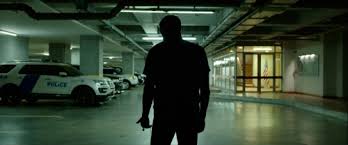
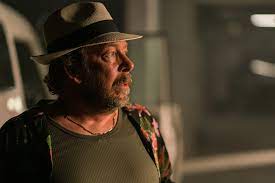
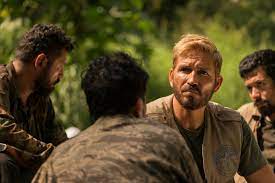
The true story of a Korean diplomat kidnapped in civil war-torn Lebanon in the ’80s becomes the most exciting, most entertaining buddy picture in years —“Ransomed” — the best action pic of the summer.

Sorry, Mr. Cruise.

Shoot-outs, car chases, sanctioned and unsanctioned cash transactions, governmental turf wars, sacrifice and near-savagery roll by, with the occasional pause for “You can’t scam a scammer” bickering (in subtitled Korean and some English), a feral dogpack attack, a rock fight and a couple of dangling-from-a-tall-building moments, played for thrills and laughs in Kim Seong-hun’s lightly fictionalized telling of this true story.

In the mid-80s, in the latter third of the Lebanese Civil War, Korea’s ambassador in Beirut is kidnapped. With all the factions fighting there, he gets lost in the Land of Many Militias shuffle, and is all but forgotten.

But a year and a half later, he gets just free enough to reach out, by phone and in code, to his old department. Disgruntled foreign service worker Min-Joon Lee (Ha Jung-woo) is all alone in the office to take that call and figure out who is tapping that departmental code.

Korea’s foreign service springs into action. But “Hold on there,” grumbles the KCIA. With the 1988 Olympics coming up and a national policy of not-paying-ransom, this could be a national embarassment, if not a humiliation if it all goes sideways.

Min-joon Lee volunteers to take the poison-pill gig, be fall-guy if this doesn’t work out. But he’s no fool. He does it on the condition that he be promoted to serve in the Korean embassy in the U.S.

A U.S. CIA intermediary (Burn Gorman, arrogant, dismissive but oozing competence) is consulted. A Swiss art dealer can help move the cash. And there is a network of Lebanese on the ground arranged to facilitate matters.

But the best-laid plans go instantly awry as the cagey and greedy Lebanese police are determined to catch any “hostage negotiator” coming into the country and steal their money.

Min-joon, who exaggerated his service in the Marines to get the gig, finds himself on the lam and almost on his own, save for his accidental connection with the one South Korean taxi driver in all of Beirut, Pan-su (Ju Ji-hoon).

The guy hands out tokens with “Trust Me” and his phone number written on them, telling us straight away that he’s a hustler and not to be trusted.

He dotes on his Mercedes 240, official taxi of the Middle East. And he reluctantly agrees to drive Min-joon around. Even as Pan-su finds himself drawn deeper into the unraveling debacle of this negotiation/hand-off, we have to wonder, can Min-joon trust this guy when the chips are down?

Buttoned-down Ha Jung-woo of “The Handmaiden” and “Tunnel” and mop-topped Ju Ji-hoon of “The Spy Gone North” have classic “buddy” thriller chemistry. Lies and double-crosses burden the relationship, but each guy clings to the other — one because this diplomat might be able to get him to America, the other because he needs a multi-lingual assistant with local knowledge.

When this militia has the hostage and that militia wants him and/or the money, it helps to have someone with the inside dope.

“Christian guys like it when you speak French to them” at Christian militia checkpoints.

The chases and narrow escapes are bullet-riddled and harrowing, in the spirit of “Escape from Mogadishu,” an earlier true story/thriller about a Korean diplomatic crisis in the Middle East.

It is written in the Good Book of Screen Comedy — introduced in the chapters on St. Charlie Chaplin and St. Harold Lloyd, most pithily practiced by St. Buster of Keaton — that whenever a character grabs a rusty gutter drain pipe on the side of an aged apartment building, she or he must have it break off the wall and dangle over the street on it. It’s always funny.

The players handle the light stuff beautifully, but director Kim Seon-hun (“Tunnel”) never loses track of the gravitas, the life at stake, the cruel way Mr. Secretary Oh is mistreated by his captors.

“Duty,” patriotic or otherwise, plays into the actions of some more than others, giving the action comedy a sober, sentimental edge.

But the jaunty action beats, the clever problem solving — inventing which corners to back our hero or heroes into and how they escape each jam — are what sell “Ransomed.”

The villains are under-developed — even the jerk who runs the KCIA. And the finale has a touch of the over-explained and over-played.

But “Ransomed” is still a pulse-pounding ride, a piece of history unburdened by the literal facts and a lean, high-stakes action picture that could give any “Mission: Impossible” outing a run for its money.

Rating: unrated, violence, profanity

Cast: Ha Jung-woo, Ju Ji-hoon, Fehd Benchemsi and Burn Gorman

Credits: Directed by Kim Seong-hun, scripted by Kim Jung-yeon, and Yeo Jung-mi A Well Go USA release.

Running time: 2:12

Posted in Reviews, previews, profiles and movie news | Comments Off on Movie Review: An International Incident imagined as a Buddy Picture — “Ransomed”

Netflixable? B-movie commando action from Poland, home of the “Soulcatcher”

“Soulcatcher” is a solid if somewhat flatly-directed shoot-em-up thriller from Poland, a movie interesting to fans of the “special skills” commando “extraction” genre chiefly due to the ways it differs from such slam-bang action features in The West.

There’s this gadget that beams immobilizing, maddening rays at foes and it was invented in Poland. It’s been spirited away to Romania, apparently by way of Chechnya.

So a Polish Iraq War vet (Piotr Witkowski) who now leases his services to the government as a mercenary is sent to get it, and bring back the Polish scientist (Jacek Pondiedzialek) who invented it and maybe his easy-on-the-eys daughter Eliza (Aleksandra Adamska).

Romanian warlords and Chechen generals stand in his way. And Interpol could be...a problem. But no worries, he’s got his team, and government backing from a favorite cabinet minister (Jacek Koman). What could go wrong?

The conventions of the genre dictate that at least one member of his “team” has to be named “Bull” and live in a house full of dogs, one’s got to be a pilot who can fly anything — including drones (Sebastian Stankiewicz). And that sniper (Michalina Olszanska)? Check out her haircut. Every team needs a lethally efficient lesbian shooter.

Much of the energy expended on the screenplay was spent on wrong-footing the viewer, not letting us know exactly where were are in the opening gambit (a very primitive Romania) — that bit of action that sets up action pictures, from James Bond and “Mission: Impossible” installments to lesser. fare — this rescue that goes wrong, that one that goes right…with a twist.

A “brother” will die, as well as comrades in arms. And our hero, “Code-name: Fang (LOL),” will finish one part of the job only to see new foes rise up to be dealt with.

“This was Mission: Impossible!” the government minister enthuses (in Polish with subtitles, or dubbed), at one point.

No. No it wasn’t.

The firefights and brawls are perfunctorily staged and shot. The pacing is limp and the coherence of the plot — just what the hell DOES this Soulcatcher thingy do? It seems selective in how it impacts victims — isn’t up to par.

Still, I’m always interested in seeing how another culture and another national cinema approaches a genre. With Hollywood refusing to pay its writers and having revenue-sharing issues with writers and actors, I predict we’ll be seeing a lot more Polish, Malaysian, Indian, et al movies on our favorite streaming services in the near future.

Let’s hope most of them are better than “Soulcatcher.”

Rating: TV-MA, violence, profanity

Cast: Piotr Witkowski, Aleksandra Adamska, Jacek Koman, Jacek Poniedzialek, Michalina Olszanska and Sebastian Stankiewicz

Credits: Directed by Daniel Markowicz, scripted by
Dawid Kowalewicz and Daniel Markowicz. A Netflix release.

Running time: 1:40

Posted in Reviews, previews, profiles and movie news | Comments Off on Netflixable? B-movie commando action from Poland, home of the “Soulcatcher”

Next screening? Summer Cinema Season ends, or at least winds down — “The Meg 2”

An uncommonly stupid movie turned into an unlikely hit five years ago.

Has it been five years? Wow.

Anyway, Warners being Warners, there’s a sequel to “The Meg.” Statham being Statham, he took those suckers’ money. It’s not like those rocket scientists will be blowing it on “Flash” sequels.

The jerks have stopped previewing their movies in Orlando and in a lot of large markets. “Barbie” made them cocky.

But we’ll see what we see, because the first one was more the promise of a few good laughs than a delivery system for such laughs.

Posted in Reviews, previews, profiles and movie news | Comments Off on Next screening? Summer Cinema Season ends, or at least winds down — “The Meg 2”

Movie Preview: A Thriller about what Might be in that “Storage Locker”

Ah, the Films of August.

They’re always like this. But you never know when a good one might sneak in under the radar. “Storage Locker” film about a comic book collector who digs for hidden collectible treasure in a couple of strange sisters’ demonically-occupied storage unit.

This one comes out Aug. 22.

Posted in Reviews, previews, profiles and movie news | Comments Off on Movie Preview: A Thriller about what Might be in that “Storage Locker”

Movie Preview: Morgan Freeman shows Josh Hutcherson the benefits of going back in time “57 Seconds”

Hadn’t heard much from Mr. Hutcherson, the “Hunger Games” hearthrob, of late.

This Sept. 29 release co-stars Freeman, Lovie Simone and Greg Germann in a story of how even a tiny bit of time-travel can change one person’s future, and maybe the world’s.

Posted in Reviews, previews, profiles and movie news | Comments Off on Movie Preview: Morgan Freeman shows Josh Hutcherson the benefits of going back in time “57 Seconds”

Movie Review: A Birthday Screening of “The Immortal Life of Henrietta Lacks” in the county where she grew up

I missed the HBO film “The Immortal Life of Henrietta Lacks” when it came out in 2017, even though I had read up on the story, had been tracking the film’s progress and had a personal interest in it.

HBO isn’t the easiest content provider for film critics to contend with.

But as luck would have it, there was a showing of the movie Tuesday night, Aug. 1, in the nearest town to the village where Henrietta Lacks, who died in 1951 but whose cells made her famous, grew up.

By design, the screening in South Boston, Va., just 14 miles from Clover, Va. would be on the night of Henrietta Lacks’ 103rd birthday. And that would be the day — not coincidentally — when the Lacks family and the Thermo Fisher Scientific bio-firm that had the rights to and been selling Lacks’ “HELA” cells to researchers for generations announced a settlement of the family’s lawsuit over the exploitation of her “immortal” cell-line.

So I made the trek back to the still-largely-segregated rural town where I grew up, to a former tobacco “prizery” repurposed as a community arts center, to join a still-rare integrated event there, an NAACP-sponsored showing of a movie that did not get its due when it came out.

Beautiful, moving, and very well-acted, “The Immortal Life of Henrietta Lacks” is as cinematic as any feature film HBO has ever made. It’s informative, but also poignant and pointed in its subtexts. Director George C. Wolfe, who was a playwright and celebrated stage director when I first interviewed him, gets a LOT of movie into this film’s 93 minutes.

“Immortal Life” deals with the arcane science of the story in a whirl of montages, and a black and white prologue that covers what those “HELA” (for “HEnrietta LAcks”) cells were used for in the decades after they were removed from Lacks, dying of cervical cancer and treated at Johns Hopkins in Baltimore.

This film, like the Rebecca Skloot book it is based on, is about the consequences of Lacks’ death at 31, of the removal of those cells, the fact that this happened at the tail end of some of the most egregious medical “experimenting” on African Americans and that corner of American culture’s long mistrust of the American medical establishment in general and more locally, Johns Hopkins U. Hospital in particular.

The narrative here is about Lacks’ children, the physical, psychological and financial costs her early death brought to her sons and one surviving daughter, Deborah, who has no memories of her mother and wears that trauma in every mercurial, manic-depressive reaction she has to a reporter who wants to tell her mother’s story.

Oprah Winfrey gives her finest film performance in this role, a woman consumed by past acts beyond her control, passionate to learn about her mother and prone to psychotic rages about the injustices done to Henrietta, her family and Deborah in particular. Deborah, above all else, wants her mother’s story told, but she’s furiously paranoid of any writer who might take on the job, who might be backing that writer and where this story’s profits would go.

Others had written about “the immortal cells,” which were a singular success as a line that proved durable enough to replicate on and on in the lab after Lacks’ death, and how they were instrumental in finding cures for polio, tuberculosis and HPV, and treatments for everything from cancer to AIDS to COVID.

What science-and-medical freelance reporter Rebecca Skloot wanted to do was delve into Henrietta’s barely sketched-in story. She’d get that from scholarly articles and medical history and records, and from Henrietta’s surviving family. That would prove to be its own Herculean task, thanks to family history, poor record keeping and mistrust about what happened to their mother, and how decades of exploitation of her made others rich and the family still working poor.

Skloot is played with that pasted-on “patient” smile every reporter (and a lot of women in general ) wear when dealing with difficult people — here, downright hostile interview subjects — by Rose Byrne.

Wolfe and co-writers Peter Landesman and Alexander Woo build their film around Deborah Lacks and Skloot, their difficult relationship and struggle over how to tell this tale and what to include in it, and the emotionally wrenching tug of war over one Black family’s tortured past and present.

The genius of the film’s casting is how well star-and-producer Winfrey and Byrne mesh, how Winfrey gets across Deborah’s limited education and grasp of how scientists “cloned” her mother, and how Byrne’s ever-smiling-through Deborah’s violent mood swings has its limits, but who comes to realize the actual hstory she’s dealing with even if this or that editor or publisher doesn’t.

Wolfe and his stars find humor in Deborah’s alarming mood swings, although the film can give you whiplash from the way the character and the tone changes with this piece of research or that breakthrough, which feels like a moment of welling pride and triumph. Then Deborah explodes again and all but shuts the project down.

Winfrey, Reg. E. Cathey, John Douglas Thompson and Rocky Carroll — as the surviving children — lean into their wary mistrust, their comical, crazy-like-a-fox “tests” and manipulations of this “white woman” who — whatever her motives — is able to get a lot further with the medical establishment than this “invisible,” dismissed Black family has ever been able to.

You go, girl. “You go on being white.”

The darkest laugh might be when Skloot gets a “cut out the family” direction from a publisher/editor, only to have the myopic fool die in a car accident, her excuse for ending their contract. Byrne finds just the right pitch for this scene, and every other one.

Courtney B. Vance vamps the hell out of a charlatan “lawyer” who tormented the family with promises he was incompetent to keep and venal, self-serving harassment when they figured him out.

“The Immortal Life” has poingnant and dynamic scenes from Cathey, and Leslie Uggams and John Beasley as relatives who remember Henrietta, glimpsed in flashbacks and played by Renée Elise Goldsberry.

Hers was an unremarkable and too-short life, which is why the focus of the film was wisely shifted to her family, the trauma of her loss and the traumas and abuses — medical and personal — that spun out of the tragedy of Henrietta’s death and the callousness of the system and the culture towards them.

The story’s unraveling takes place in Baltimore, but its heart-and-soul are in Clover, where the Roanoke-born Lacks grew up and where Skloot and Deborah uncover vanishing traces of Henrietta before they die out or fall down and blow away.

And let me add that the Branford Marsalis score to the film is a marvel — gorgeous, sometimes dischordant “free jazz” underlying the scenes in Baltimore, reflecting Deborah and her siblings’ fraut mental state and fury, folk blues setting the mood for the country world Henrietta grew up in, a farm in what was then labeled “The Heart of Tobaccoland.”

This terrific film’s less-than-stellar reception from critics and the Emmy Awards of that year may reflect a lot of things, not the least of which is a general “over it” response to Winfrey’s awards-bait project and the way she’s Big Footed her way through the culture past the point of some people’s tolerance. .

But released at a different time, under a different regime, this picture could have played in theaters and perhaps gotten its due.

I found it quite moving, almost wrenching at times, and it brought tears to many in the audience I saw it with, suggesting the communal experience of a cinema was its proper home all along.

And its heartening hearing locals in the county where she grew up talking up plans for a statue in her honor, to go along with the tombstone that finally marks her grave in Clover, over 70 years after Henrietta Lacks’ death.

A clever county grant writer might even be able to find some entity to undewrite restoration/rebuilding of the old Clover Rosenwald School Lacks attended in the Jim Crow South of her youth as a vistitor information center. Strike while the Henrietta iron is hot, kids.

But until then, Wolfe — he also directed the very fine “Ma Rainey’s Black Bottom” — Winfrey, Byrne and the cast have made a fine monument to a woman whose life might have been unremarkable, but whose death symbolized exploited and ill-used generations, and whose immortal cells quite literally changed the world.

Rating: TV-MA, disturbing images, profanity

Cast: Oprah Winfrey, Rose Byrne, Reg E. Cathey, Leslie Uggams, John Beasley, John Douglas Thompson, Rocky Carroll, Renée Elise Goldsberry and Courtney B. Vance.

Credits: Directed by George C. Wolfe, scripted by Alexander Woo and George C. Wolfe, based on the book by Rebecca Skloot, An HBO release.

Running time: 1:33

Posted in Reviews, previews, profiles and movie news | Comments Off on Movie Review: A Birthday Screening of “The Immortal Life of Henrietta Lacks” in the county where she grew up

Netflixable? Ellie Kemper goes hiking to reset her life — “Happiness for Beginners”

Ellie Kemper’s career high water mark was the delightful, quick and witty series “The Unbreakable Kimmy Schmidt,” created by Tina Fey and probably the funniest series Netflix has yet produced.

So it’s no surprise that she’d want to return to the scene of her greatest triumph. But “Happiness for Beginners” isn’t a series, it’s a rom-com. And it wasn’t created by Tina Fey, but by Irish writer-director Vicky Wight and her Irish co-writer Katherine Center. Suffice it to say neither is Tina Fey. That’s a pretty high bar to clear.

What they cooked up for Kemper is a role that doesn’t play to her stand-by strengths, that gee-whiz “innocent” and “naive” thing she rode through “The Office” and 52 episodes of “Kimmy Schmidt.” She’s older, so the girlish goofiness is gone, replaced here by an over-sharing, somewhat embittered 40ish divorcee who thinks a long group-hike along the Appalachian Trail in Connecticut and New York will be just the reset her life needs.

Helen was warned about the clumsy, short-attention-span oaf she married — mainly by her younger brother (Alexander Koch), who doubled-down on that warning on her wedding day.

Six years later, one year into a separation/divorce in which her douche-bro ex (Aaron Roman Weiner) won’t stop calling and trying to win her back, she takes up this backpacking course/backpacking trip with a goal of “getting my certificate” in such things.

“I want to stop breaking promises to myself,” she vows.

The idea is to surround Kemper with oddball “types” — the gay “aspiring actor” (Nico Santos), the Wall Street “bro” (Esteban Benito), the flake (Gus Birney) with a “fear of wood,” a self-described “millennial” who keeps breaking her own “vow of silence (Julia Shiplet),” “Windy with an ‘i'”(Shayvawn Webster) and the young eco-warrior/martinet hike-leader, Beckett (Ben Cook) who lectures and berates them constantly.

No rushing, no malingering, no littering, no stepping on logs, no shampoo (“It kills algae and bacteria”) even though “Seriously? That’s what we’re worried about, now?”

Surely some of those “types” will produce laughs, given a funny line. The scarcity of the former and utter lack of the latter hobble this picture from the start.

The “love interest” is Helen’s kid brother’s best friend Jake (Luke Grimes of the “Fifty Shades” franchise and TV’s “Yellowstone”) who just happens to be on the hike with them. He obviously crushes on Helen, and she abruptly and inexplicably flips-out at his presence and barks at him right up to the moment when they seem to click.

“Contrived” situations like that rarely play as amusing. But when you’ve wasted a perfectly good Blythe Danner appearance and then weighed down your late second act with “big secrets” that would drown a better comedy than this, you’re not making the case that Netflix should sign you to a lifetime contract, no matter how charmingly Irish you are.

The “big test” the hikers face is as contrived as pretty much everything else. Buy five, get one free day at the plot contrivance store?

Kemper seems ill at ease playing this mean, and has little chemistry with Grimes. And none of the supporting players, even the “bear hang” joke/punning gay guy, are any help.

Kemper’s still got good work in her, one would ope. But she’s no longer too young to realize “You can’t go home again,” even if “home” is a streaming service which made her a star.

Rating: TV-14, some profanity

Cast: Ellie Emper, Luke Grimes, Blythe Danner, Gus Birney, Nico Santos, Alexander Koch, Shayvawn Webster, Julia Shiplet, Esteban Benito and Ben Cook.

Credits: Directed by Vicky Wight, scripted by Vicky Wight and Katherine Center. A Netflix release.

Running time: 1:44

Posted in Reviews, previews, profiles and movie news | Comments Off on Netflixable? Ellie Kemper goes hiking to reset her life — “Happiness for Beginners”

Movie Review: A loser on the lam with a masseuse? There’s the “Rub”

“Rub” is a darkly comic road trip into the psyche that can be filed under the heading “Film Festival Movie.”

It’s reasonably coherent and somewhat interesting, but not enough of either to warrant a theatrical release. Park this massage parlor shoot-out saga in film festivals — even though it’s not edgy or daft enough to qualify as a “midnight movie.” And let filmgoers get a taste of what indie cinema often is when it’s not all it might have been.

Veteran bit player Micah Spayer plays Neal, a put-upon cubicle drone and classic, stereotypically-sweaty loner-loser.

He may not be a bad guy. But when all we have to go by is his failed “Happy Endings” online dating attempts and straight-up Incel sexual role-play gaming in his untidy whiteys, we have a hunch.

He’s teased at work, but that teasing produces a suggestion and a business card from his colleague Trevor (PJ Landers). The Just Smile Spa is the place to go when you’re lonely, horny and have $80 to spare for a massage and a little handskie.

Everybody takes it on him or herself to have a laugh on balding, bespectacled Neal, from his boss to Trevor to the Eastern European Olga (Inna Yesilevskaya) who greets him at the “Just Smile” door.

But the Dominican masseuse Perla (Jennifer Figuereo) takes pride in her work, and Neal shows his appreciation.

That just leads to merciless taunting at the office, and when Neal lashes out, that becomes “his” HR problem. As he’s the sort of guy who gets threatened because all the cars BEHIND his ancient Dodge Omni are blowing their horns at the inattentive roid-rager blocking traffic, at least he’s used to it.

His run of bad luck extends to the massage parlor, where a second session with Perla is interrupted by an armed robbery. When she hides him in a closet to protect him, he is moved to commit the first noble act of his life. He jumps out to protect her, choke the menacing pistolero, allowing her to grab the guy’s gun and shoot their way out.

Perla kills two gunmen. So naturally, the cops see Neal on the CCTV footage as they sprint into the street barely clothed and escape. He’s the one wanted as they go on the lam, chased by strong-armed police and some psychotic “Man in Black” who’s probably got a grudge against the guy who foiled his gangs’/friends’/family’s attempted robbery.

For a road picture, “Rub” — a punny title — doesn’t go very far. Hey, you try to flee the city, county, state and/country in a 40 year-old Dodge Omni. You’d be the first ever to make a getaway in that rattletrap.

Writer-director Christopher Fox makes this journey about Neal’s coming out of his shell and falling for an illegal immigrant who is worthy of his trust. Sort of.

Their odyssey flirts with a sort of aimlessness but not pointlessness. Neal must be indulged, seduced and challenged to discover whether Perla’s shaving of his head and presence in his life has truly changed his fate. And luck.

Spayer is perfectly believable in the guise of Neal, and Figuereo has a natural ease on camera. Nobody here is obviously an amateur or out of her or his depth.

But Fox doesn’t find much that’s novel or particularly interesting on this journey — a sympathetic garage owner (Westley Barrington Artope), a party with hippies that might get out of hand, a plan that’s barely a plan and all.

This slow-moving picture finds a resolution, but not a satisfying or surprising conclusion.

Maybe there’s a moral to the story, and maybe it’s “No matter where you go, there you are.” If so, there’s nothing remotely deep about that, and not much that would hold anybody’s attention outside of a film festival “This shows promise” screening.

Show it at midnight and you’re just going to disappoint folks further. .

Rating: unrated, violence, sex, profanity

Cast: Micah Spayer, Jennifer Figuereo, PJ Landers and Westley Barrington Artope

Credits: Scripted and directed by Christopher Fox. An Entertainment Squad release.

Running time: 1:44

Posted in Reviews, previews, profiles and movie news | 2 Comments

Netflixable? The rich find a new way to exploit everybody in their reach for “Paradise”

In sci-fi cinema shorthand terms, the German thriller “Paradise” is “Logan’s Run” with a whiff of “Soylent Green is PEOPLE!”

“Youth” is even more of a commodity than it is today is this dystopian future. And the rich are as villainous as ever, “buying” years of the less fortunate’s lifespan to give them back that ’80s Madonna glow. It’s the new version of “She’s had some work done.”

Set in a “climate change was solved” world, “Paradise” is a future where Aeon Corp. can celebrate the celebrated, transferring years of life in exchange for enough money to make your present day existence a bit or a lot more comfortable.

Immigrants from the Middle East and Africa struggling to get visas can be paid — if they’re a “compatible” “donor” — enough so that one person can sell a few years or a lot and made an entire family’s life better.

“Your time. Your chance. Your choice.”

That’s the pitch that Aeon’s “Donor Manager of the Year,” Max (Kostja Ullmann) makes to clients. His company heralds its role in adding decades of youthful life to “the top 10,000,” the world’s greatest scientists and creators.

Not everybody’s buying into that “donor” euphemism for a straight-up sale of a chunk of your life for cash to somebody with a lot of money. And it’s not just street protestors who complain that “the rich get younger and younger.”

But Max wouldn’t be the salesman of the year without having a comeback — “The poor get better and better standards of living,” he says, with a smile (in German with subtitles, or dubbed).

He worships his company’s visionary founder (Iris Berben) and makes plans to impregnate his doctor/wife (Marlene Tanczik) so that they can have full lives in their luxury apartment. But a housefire, an insurance company that won’t pay for their “negligence” and suddenly Max and Elena find out what living on the edge is all about.

And about that mortgage. It turns out her share of the downpayment was 40 years of her life.

Surely the “Donor Manager of the Year” can fix this. Surely his boss, the imperious Sophia, will hear him out. I mean, the extremely rich are as compassionate as the rest of us, right? Look at Elon!

It takes no time at all for law enforcement to log them as flight risks, arrest Elena and through “enforced donation,” take away 38 years. No babies, no blush of youth. Nothing Elena (now played by Corinna Kirchhoff) and Max can do.

But with resisters led by the mysterious Lillith (Lisa Loven Kongsli) carrying out murderous attacks on Aeon and its beneficiaries, and with others seeing underground opportunities to undo what Big Time “Donation” is up to, maybe there’s hope.

All it’ll take is finding the right “donor,” “kidnapping her (Lisa-Marie Koroll) and sneaking that woman out of Germany for an illicit operation, and maybe Elena will get her years back.

The performances here are OK, in a flat, unemotional sort of way. This story has pathos built in and three directors couldn’t wring that out of the script or the performances.

The production design is impressively futuristic and yet dystopian (refugee resettlement centers will still look like ghettos).

The three directors in charge of this try to get their picture on the move, “Logan’s Run” fashion, with the paid bodyguards of the kidnapped woman’s family led by a ruthless, young and “chronologically 64” so very experienced hunter (Lorna Ishema) on their trail.

But this isn’t an on-the-run thriller. It’s more about the ethnics of this magical “procedure,” the amorality of those behind it and the people they’re preying upon. And “ethics” implies “discussions. Lots of discussions.

Can Max and older Elena reconcile themselves to do what they had done to them?

That makes for a somewhat dull and meandering build-up to an action finale that’s slightly under-cut by the competing agendas in play.

Still, as dytopias go, this one isn’t a complete bust. “Paradise” serves up food for thought in a just-provocative-enough satire of the growing gap between the coddled and well-cared-for rich and everybody they’re screwing over.

If you don’t think the “one percent” is filled with tycoons willing to shorten others’ lives just to line their coal baron/Big Plastic/Big Insurance pockets a little more, you haven’t been paying attention.

Rating: TV-MA, violence and sex

Cast: Corinna Kirchhoff, Kostja Ullmann, Marlene Tanczik, Iris Berben, Lisa-Marie Koroll
Lorna Ishema and Lisa Loven Kongsli.

Credits: Directed by Boris Kunz, Tomas Jonsgården and Indre Juskute, scripted by Simon Amberger, Peter Kocyla and Boris Kunz. A Netflix release.

Running time: 1:58

Posted in Reviews, previews, profiles and movie news | Comments Off on Netflixable? The rich find a new way to exploit everybody in their reach for “Paradise”

Movie Review: Murderer/kidnapper becomes life coach for “The Passenger”

“The Passenger” is a slow-burn thriller/slow-footed thriller that pairs up a meek, aimless and dissociative young man with the fast-food employee who just shot up the burger joint where they both worked.

People died, but something about the mousey, bullied Randy Bradley (Johnny Berchtold of TV’s “Gaslit”) brings out the compassion in Benson (Kyle Gallner of “Smile” and the latest “Scream”). He limits the shotgunned-to-death count to three, orders the 21 year-old into his Benson’s Mom’s ’75 Chrysler New Yorker, and does the math.

He locked the doors on their burger joint and they hid the bodies in the back. Depending on who shows up for work to relieve the opening shift and how panicked and inept the police “in a town of 10,000 people” are in facing a triple homicide, they should have a seven hours or more head start.

“Who knows where we’re gonna be in seven hours?”

But over the course of this long day, the brutish, has-all-the-answers shooter will interrogate Randy and others and take us all on a journey that covers more psychological ground than geographical.

Director Carter Smith, a B-movie veteran (“The Ruins,””Swallowed”), takes his time establishing just how meek Bradley is — so meek that he neglected to correct their boss when he filled out the kid’s name-tag with his last name, not his first — and never ever gives “The Passenger” the pacing it needs to come off.

There are suspenseful moments. Every waitress, ex-girlfriend of Randy’s or ex teacher they meet could be a target. Benson chewing out Randy over his control-freak mother makes her another candidate for killing. Will Randy grow the guts to prove to Benson that he’s “fixable,” that can change the arc of his life?

We have seen that arc in action, Randy being bullied by the co-worker who set-off Benson and started this rampage. So we think we know the answer even as Randy asks the question.

“What does this have to do with me?

But “triggered” is only the beginning. As is the way of these things, each young man has secrets, and they are parsed as Randy’s personality is mulled-over by those Benson insists he reconnect with.

Randy has a problem caring about anyone or feeling anything.

The Jack Stanley script, co-star Berchtold and a couple of supporting players provide a nice moment of pathos, here and there. Gallner is menacing enough.

But get past the “We’re all damaged” messaging and the ludicrous notion that this sort of trauma could be therapeutic and you’re stuck with a film that meanders rather like the spree killer who refuses to flee leave town without first “helping” Randy, a narrative with no urgency and a picture with such slack pacing that you can’t help but lose interest, and sooner rather than later.

Rating: unrated, violence, profanity

Cast: Kyle Gallner, Johnny Berchtold, Liza Weil and Kanesha Washington

Credits: Directed by Carter Smith, scripted by Jack Stanley. A Paramount VOD release, coming to MGM+.

Running time: 1:34

Posted in Reviews, previews, profiles and movie news | Comments Off on Movie Review: Murderer/kidnapper becomes life coach for “The Passenger”