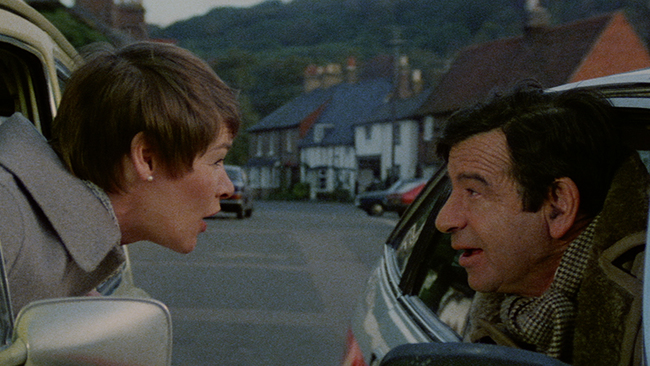
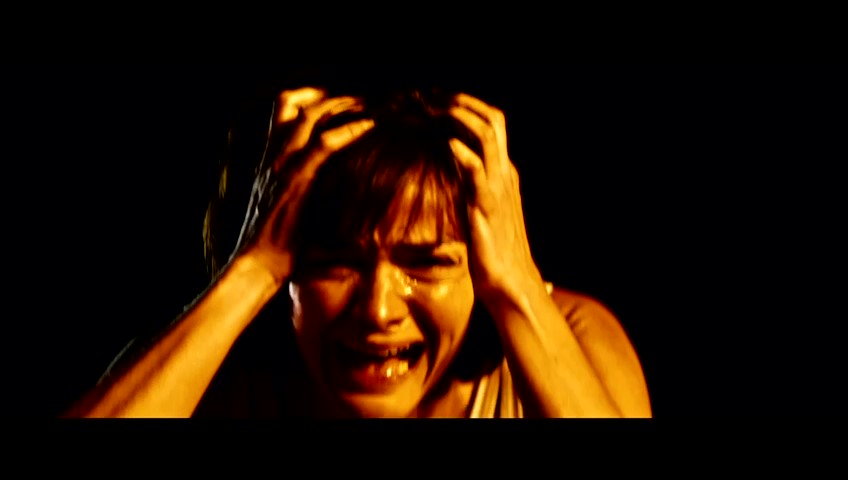
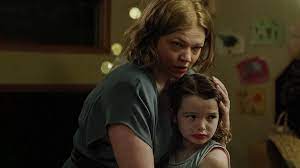
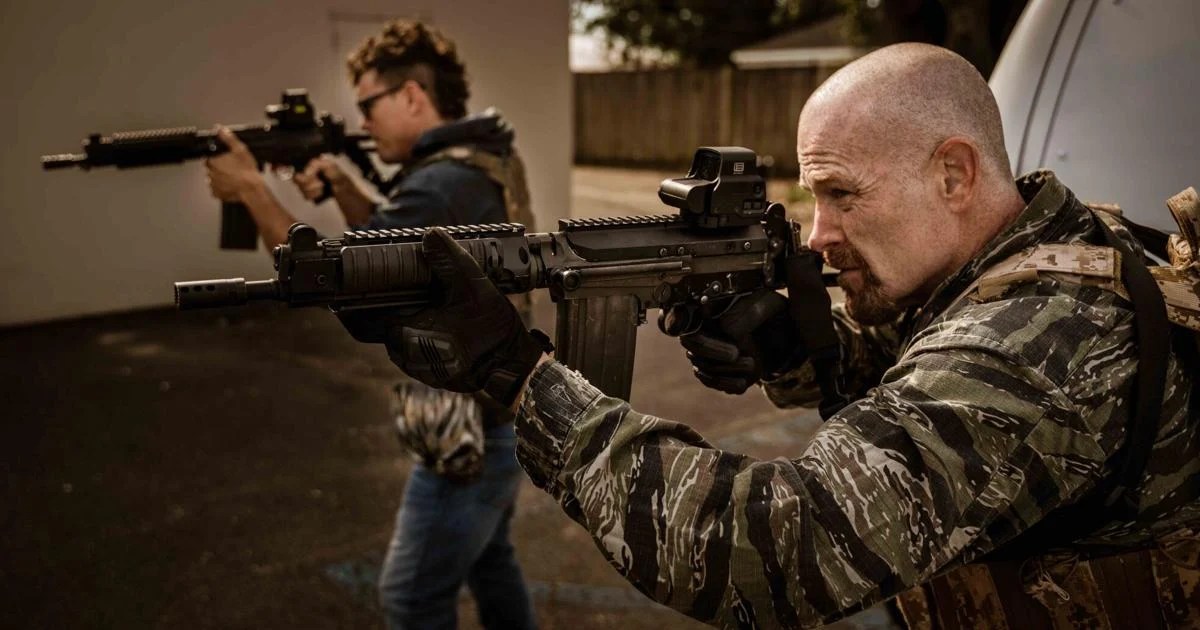
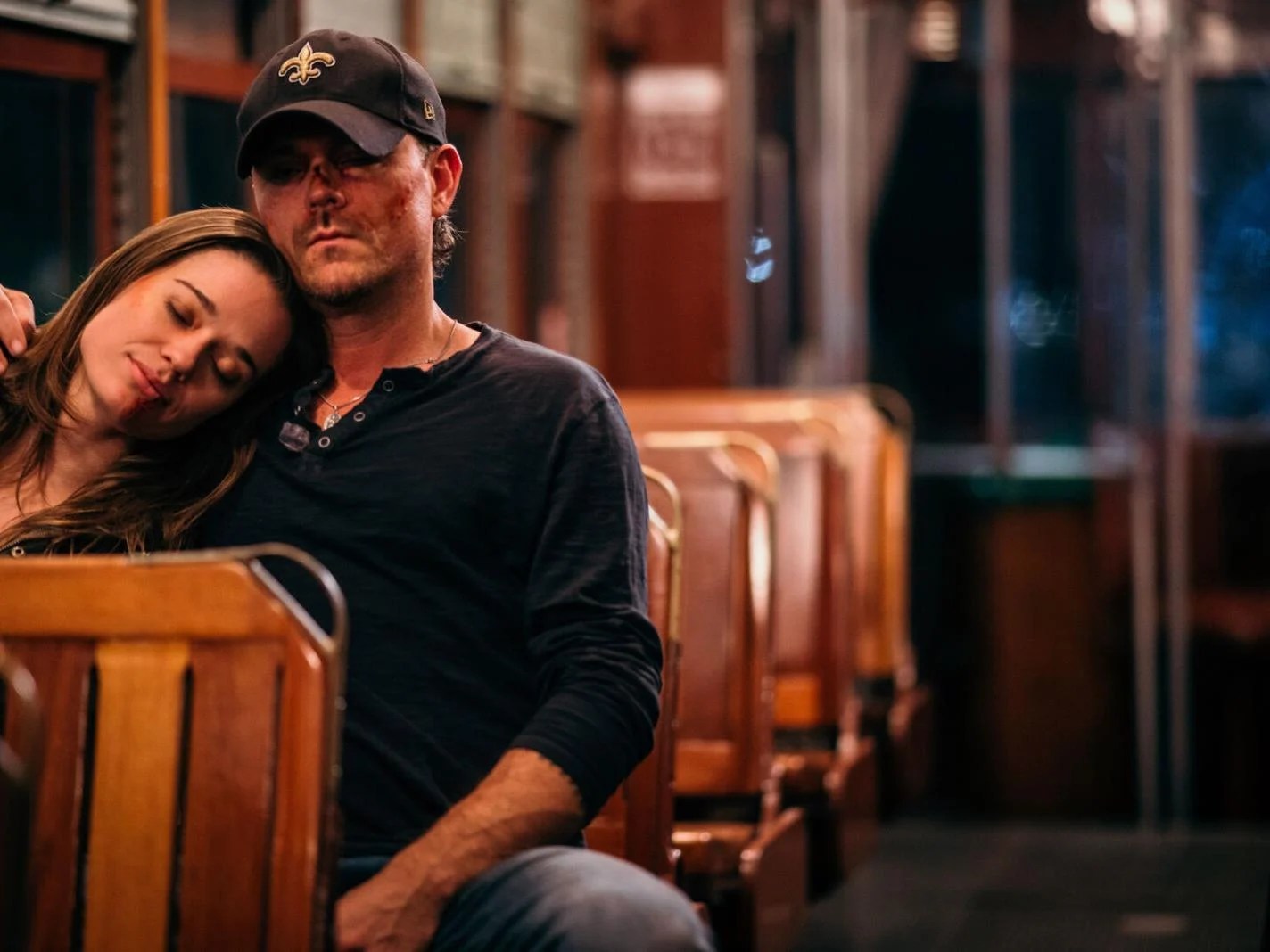
Anyway, Warners being Warners, there’s a sequel to “The Meg.” Statham being Statham, he took those suckers’ money. It’s not like those rocket scientists will be blowing it on “Flash” sequels.
The jerks have stopped previewing their movies in Orlando and in a lot of large markets. “Barbie” made them cocky.
But we’ll see what we see, because the first one was more the promise of a few good laughs than a delivery system for such laughs.
They’re always like this. But you never know when a good one might sneak in under the radar. “Storage Locker” film about a comic book collector who digs for hidden collectible treasure in a couple of strange sisters’ demonically-occupied storage unit.
Hadn’t heard much from Mr. Hutcherson, the “Hunger Games” hearthrob, of late.
This Sept. 29 release co-stars Freeman, Lovie Simone and Greg Germann in a story of how even a tiny bit of time-travel can change one person’s future, and maybe the world’s.
I missed the HBO film “The Immortal Life of Henrietta Lacks” when it came out in 2017, even though I had read up on the story, had been tracking the film’s progress and had a personal interest in it.
HBO isn’t the easiest content provider for film critics to contend with.
But as luck would have it, there was a showing of the movie Tuesday night, Aug. 1, in the nearest town to the village where Henrietta Lacks, who died in 1951 but whose cells made her famous, grew up.
By design, the screening in South Boston, Va., just 14 miles from Clover, Va. would be on the night of Henrietta Lacks’ 103rd birthday. And that would be the day — not coincidentally — when the Lacks family and the Thermo Fisher Scientific bio-firm that had the rights to and been selling Lacks’ “HELA” cells to researchers for generations announced a settlement of the family’s lawsuit over the exploitation of her “immortal” cell-line.
So I made the trek back to the still-largely-segregated rural town where I grew up, to a former tobacco “prizery” repurposed as a community arts center, to join a still-rare integrated event there, an NAACP-sponsored showing of a movie that did not get its due when it came out.
Beautiful, moving, and very well-acted, “The Immortal Life of Henrietta Lacks” is as cinematic as any feature film HBO has ever made. It’s informative, but also poignant and pointed in its subtexts. Director George C. Wolfe, who was a playwright and celebrated stage director when I first interviewed him, gets a LOT of movie into this film’s 93 minutes.
“Immortal Life” deals with the arcane science of the story in a whirl of montages, and a black and white prologue that covers what those “HELA” (for “HEnrietta LAcks”) cells were used for in the decades after they were removed from Lacks, dying of cervical cancer and treated at Johns Hopkins in Baltimore.
The narrative here is about Lacks’ children, the physical, psychological and financial costs her early death brought to her sons and one surviving daughter, Deborah, who has no memories of her mother and wears that trauma in every mercurial, manic-depressive reaction she has to a reporter who wants to tell her mother’s story.
Oprah Winfrey gives her finest film performance in this role, a woman consumed by past acts beyond her control, passionate to learn about her mother and prone to psychotic rages about the injustices done to Henrietta, her family and Deborah in particular. Deborah, above all else, wants her mother’s story told, but she’s furiously paranoid of any writer who might take on the job, who might be backing that writer and where this story’s profits would go.
Others had written about “the immortal cells,” which were a singular success as a line that proved durable enough to replicate on and on in the lab after Lacks’ death, and how they were instrumental in finding cures for polio, tuberculosis and HPV, and treatments for everything from cancer to AIDS to COVID.
What science-and-medical freelance reporter Rebecca Skloot wanted to do was delve into Henrietta’s barely sketched-in story. She’d get that from scholarly articles and medical history and records, and from Henrietta’s surviving family. That would prove to be its own Herculean task, thanks to family history, poor record keeping and mistrust about what happened to their mother, and how decades of exploitation of her made others rich and the family still working poor.
Skloot is played with that pasted-on “patient” smile every reporter (and a lot of women in general ) wear when dealing with difficult people — here, downright hostile interview subjects — by Rose Byrne.
Wolfe and co-writers Peter Landesman and Alexander Woo build their film around Deborah Lacks and Skloot, their difficult relationship and struggle over how to tell this tale and what to include in it, and the emotionally wrenching tug of war over one Black family’s tortured past and present.
The genius of the film’s casting is how well star-and-producer Winfrey and Byrne mesh, how Winfrey gets across Deborah’s limited education and grasp of how scientists “cloned” her mother, and how Byrne’s ever-smiling-through Deborah’s violent mood swings has its limits, but who comes to realize the actual hstory she’s dealing with even if this or that editor or publisher doesn’t.
Wolfe and his stars find humor in Deborah’s alarming mood swings, although the film can give you whiplash from the way the character and the tone changes with this piece of research or that breakthrough, which feels like a moment of welling pride and triumph. Then Deborah explodes again and all but shuts the project down.
Winfrey, Reg. E. Cathey, John Douglas Thompson and Rocky Carroll — as the surviving children — lean into their wary mistrust, their comical, crazy-like-a-fox “tests” and manipulations of this “white woman” who — whatever her motives — is able to get a lot further with the medical establishment than this “invisible,” dismissed Black family has ever been able to.
You go, girl. “You go on being white.”
The darkest laugh might be when Skloot gets a “cut out the family” direction from a publisher/editor, only to have the myopic fool die in a car accident, her excuse for ending their contract. Byrne finds just the right pitch for this scene, and every other one.
Courtney B. Vance vamps the hell out of a charlatan “lawyer” who tormented the family with promises he was incompetent to keep and venal, self-serving harassment when they figured him out.
“The Immortal Life” has poingnant and dynamic scenes from Cathey, and Leslie Uggams and John Beasley as relatives who remember Henrietta, glimpsed in flashbacks and played by Renée Elise Goldsberry.
Hers was an unremarkable and too-short life, which is why the focus of the film was wisely shifted to her family, the trauma of her loss and the traumas and abuses — medical and personal — that spun out of the tragedy of Henrietta’s death and the callousness of the system and the culture towards them.
The story’s unraveling takes place in Baltimore, but its heart-and-soul are in Clover, where the Roanoke-born Lacks grew up and where Skloot and Deborah uncover vanishing traces of Henrietta before they die out or fall down and blow away.
And let me add that the Branford Marsalis score to the film is a marvel — gorgeous, sometimes dischordant “free jazz” underlying the scenes in Baltimore, reflecting Deborah and her siblings’ fraut mental state and fury, folk blues setting the mood for the country world Henrietta grew up in, a farm in what was then labeled “The Heart of Tobaccoland.”
This terrific film’s less-than-stellar reception from critics and the Emmy Awards of that year may reflect a lot of things, not the least of which is a general “over it” response to Winfrey’s awards-bait project and the way she’s Big Footed her way through the culture past the point of some people’s tolerance. .
But released at a different time, under a different regime, this picture could have played in theaters and perhaps gotten its due.
I found it quite moving, almost wrenching at times, and it brought tears to many in the audience I saw it with, suggesting the communal experience of a cinema was its proper home all along.
And its heartening hearing locals in the county where she grew up talking up plans for a statue in her honor, to go along with the tombstone that finally marks her grave in Clover, over 70 years after Henrietta Lacks’ death.
A clever county grant writer might even be able to find some entity to undewrite restoration/rebuilding of the old Clover Rosenwald School Lacks attended in the Jim Crow South of her youth as a vistitor information center. Strike while the Henrietta iron is hot, kids.
But until then, Wolfe — he also directed the very fine “Ma Rainey’s Black Bottom” — Winfrey, Byrne and the cast have made a fine monument to a woman whose life might have been unremarkable, but whose death symbolized exploited and ill-used generations, and whose immortal cells quite literally changed the world.
Rating: TV-MA, disturbing images, profanity
Cast: Oprah Winfrey, Rose Byrne, Reg E. Cathey, Leslie Uggams, John Beasley, John Douglas Thompson, Rocky Carroll, Renée Elise Goldsberry and Courtney B. Vance.
Credits: Directed by George C. Wolfe, scripted by Alexander Woo and George C. Wolfe, based on the book by Rebecca Skloot, An HBO release.
Running time: 1:33
Posted inReviews, previews, profiles and movie news|Comments Off on Movie Review: A Birthday Screening of “The Immortal Life of Henrietta Lacks” in the county where she grew up
Ellie Kemper’s career high water mark was the delightful, quick and witty series “The Unbreakable Kimmy Schmidt,” created by Tina Fey and probably the funniest series Netflix has yet produced.
So it’s no surprise that she’d want to return to the scene of her greatest triumph. But “Happiness for Beginners” isn’t a series, it’s a rom-com. And it wasn’t created by Tina Fey, but by Irish writer-director Vicky Wight and her Irish co-writer Katherine Center. Suffice it to say neither is Tina Fey. That’s a pretty high bar to clear.
What they cooked up for Kemper is a role that doesn’t play to her stand-by strengths, that gee-whiz “innocent” and “naive” thing she rode through “The Office” and 52 episodes of “Kimmy Schmidt.” She’s older, so the girlish goofiness is gone, replaced here by an over-sharing, somewhat embittered 40ish divorcee who thinks a long group-hike along the Appalachian Trail in Connecticut and New York will be just the reset her life needs.
Helen was warned about the clumsy, short-attention-span oaf she married — mainly by her younger brother (Alexander Koch), who doubled-down on that warning on her wedding day.
Six years later, one year into a separation/divorce in which her douche-bro ex (Aaron Roman Weiner) won’t stop calling and trying to win her back, she takes up this backpacking course/backpacking trip with a goal of “getting my certificate” in such things.
“I want to stop breaking promises to myself,” she vows.
The idea is to surround Kemper with oddball “types” — the gay “aspiring actor” (Nico Santos), the Wall Street “bro” (Esteban Benito), the flake (Gus Birney) with a “fear of wood,” a self-described “millennial” who keeps breaking her own “vow of silence (Julia Shiplet),” “Windy with an ‘i'”(Shayvawn Webster) and the young eco-warrior/martinet hike-leader, Beckett (Ben Cook) who lectures and berates them constantly.
No rushing, no malingering, no littering, no stepping on logs, no shampoo (“It kills algae and bacteria”) even though “Seriously? That’s what we’re worried about, now?”
Surely some of those “types” will produce laughs, given a funny line. The scarcity of the former and utter lack of the latter hobble this picture from the start.
The “love interest” is Helen’s kid brother’s best friend Jake (Luke Grimes of the “Fifty Shades” franchise and TV’s “Yellowstone”) who just happens to be on the hike with them. He obviously crushes on Helen, and she abruptly and inexplicably flips-out at his presence and barks at him right up to the moment when they seem to click.
“Contrived” situations like that rarely play as amusing. But when you’ve wasted a perfectly good Blythe Danner appearance and then weighed down your late second act with “big secrets” that would drown a better comedy than this, you’re not making the case that Netflix should sign you to a lifetime contract, no matter how charmingly Irish you are.
The “big test” the hikers face is as contrived as pretty much everything else. Buy five, get one free day at the plot contrivance store?
Kemper seems ill at ease playing this mean, and has little chemistry with Grimes. And none of the supporting players, even the “bear hang” joke/punning gay guy, are any help.
Kemper’s still got good work in her, one would ope. But she’s no longer too young to realize “You can’t go home again,” even if “home” is a streaming service which made her a star.
Rating: TV-14, some profanity
Cast: Ellie Emper, Luke Grimes, Blythe Danner, Gus Birney, Nico Santos, Alexander Koch, Shayvawn Webster, Julia Shiplet, Esteban Benito and Ben Cook.
Credits: Directed by Vicky Wight, scripted by Vicky Wight and Katherine Center. A Netflix release.
“Rub” is a darkly comic road trip into the psyche that can be filed under the heading “Film Festival Movie.”
It’s reasonably coherent and somewhat interesting, but not enough of either to warrant a theatrical release. Park this massage parlor shoot-out saga in film festivals — even though it’s not edgy or daft enough to qualify as a “midnight movie.” And let filmgoers get a taste of what indie cinema often is when it’s not all it might have been.
Veteran bit player Micah Spayer plays Neal, a put-upon cubicle drone and classic, stereotypically-sweaty loner-loser.
He may not be a bad guy. But when all we have to go by is his failed “Happy Endings” online dating attempts and straight-up Incel sexual role-play gaming in his untidy whiteys, we have a hunch.
He’s teased at work, but that teasing produces a suggestion and a business card from his colleague Trevor (PJ Landers). The Just Smile Spa is the place to go when you’re lonely, horny and have $80 to spare for a massage and a little handskie.
Everybody takes it on him or herself to have a laugh on balding, bespectacled Neal, from his boss to Trevor to the Eastern European Olga (Inna Yesilevskaya) who greets him at the “Just Smile” door.
But the Dominican masseuse Perla (Jennifer Figuereo) takes pride in her work, and Neal shows his appreciation.
That just leads to merciless taunting at the office, and when Neal lashes out, that becomes “his” HR problem. As he’s the sort of guy who gets threatened because all the cars BEHIND his ancient Dodge Omni are blowing their horns at the inattentive roid-rager blocking traffic, at least he’s used to it.
His run of bad luck extends to the massage parlor, where a second session with Perla is interrupted by an armed robbery. When she hides him in a closet to protect him, he is moved to commit the first noble act of his life. He jumps out to protect her, choke the menacing pistolero, allowing her to grab the guy’s gun and shoot their way out.
Perla kills two gunmen. So naturally, the cops see Neal on the CCTV footage as they sprint into the street barely clothed and escape. He’s the one wanted as they go on the lam, chased by strong-armed police and some psychotic “Man in Black” who’s probably got a grudge against the guy who foiled his gangs’/friends’/family’s attempted robbery.
For a road picture, “Rub” — a punny title — doesn’t go very far. Hey, you try to flee the city, county, state and/country in a 40 year-old Dodge Omni. You’d be the first ever to make a getaway in that rattletrap.
Writer-director Christopher Fox makes this journey about Neal’s coming out of his shell and falling for an illegal immigrant who is worthy of his trust. Sort of.
Their odyssey flirts with a sort of aimlessness but not pointlessness. Neal must be indulged, seduced and challenged to discover whether Perla’s shaving of his head and presence in his life has truly changed his fate. And luck.
Spayer is perfectly believable in the guise of Neal, and Figuereo has a natural ease on camera. Nobody here is obviously an amateur or out of her or his depth.
But Fox doesn’t find much that’s novel or particularly interesting on this journey — a sympathetic garage owner (Westley Barrington Artope), a party with hippies that might get out of hand, a plan that’s barely a plan and all.
This slow-moving picture finds a resolution, but not a satisfying or surprising conclusion.
Maybe there’s a moral to the story, and maybe it’s “No matter where you go, there you are.” If so, there’s nothing remotely deep about that, and not much that would hold anybody’s attention outside of a film festival “This shows promise” screening.
Show it at midnight and you’re just going to disappoint folks further. .
Rating: unrated, violence, sex, profanity
Cast: Micah Spayer, Jennifer Figuereo, PJ Landers and Westley Barrington Artope
Credits: Scripted and directed by Christopher Fox. An Entertainment Squad release.
In sci-fi cinema shorthand terms, the German thriller “Paradise” is “Logan’s Run” with a whiff of “Soylent Green is PEOPLE!”
“Youth” is even more of a commodity than it is today is this dystopian future. And the rich are as villainous as ever, “buying” years of the less fortunate’s lifespan to give them back that ’80s Madonna glow. It’s the new version of “She’s had some work done.”
Set in a “climate change was solved” world, “Paradise” is a future where Aeon Corp. can celebrate the celebrated, transferring years of life in exchange for enough money to make your present day existence a bit or a lot more comfortable.
Immigrants from the Middle East and Africa struggling to get visas can be paid — if they’re a “compatible” “donor” — enough so that one person can sell a few years or a lot and made an entire family’s life better.
“Your time. Your chance. Your choice.”
That’s the pitch that Aeon’s “Donor Manager of the Year,” Max (Kostja Ullmann) makes to clients. His company heralds its role in adding decades of youthful life to “the top 10,000,” the world’s greatest scientists and creators.
Not everybody’s buying into that “donor” euphemism for a straight-up sale of a chunk of your life for cash to somebody with a lot of money. And it’s not just street protestors who complain that “the rich get younger and younger.”
But Max wouldn’t be the salesman of the year without having a comeback — “The poor get better and better standards of living,” he says, with a smile (in German with subtitles, or dubbed).
He worships his company’s visionary founder (Iris Berben) and makes plans to impregnate his doctor/wife (Marlene Tanczik) so that they can have full lives in their luxury apartment. But a housefire, an insurance company that won’t pay for their “negligence” and suddenly Max and Elena find out what living on the edge is all about.
And about that mortgage. It turns out her share of the downpayment was 40 years of her life.
It takes no time at all for law enforcement to log them as flight risks, arrest Elena and through “enforced donation,” take away 38 years. No babies, no blush of youth. Nothing Elena (now played by Corinna Kirchhoff) and Max can do.
But with resisters led by the mysterious Lillith (Lisa Loven Kongsli) carrying out murderous attacks on Aeon and its beneficiaries, and with others seeing underground opportunities to undo what Big Time “Donation” is up to, maybe there’s hope.
All it’ll take is finding the right “donor,” “kidnapping her (Lisa-Marie Koroll) and sneaking that woman out of Germany for an illicit operation, and maybe Elena will get her years back.
The performances here are OK, in a flat, unemotional sort of way. This story has pathos built in and three directors couldn’t wring that out of the script or the performances.
The production design is impressively futuristic and yet dystopian (refugee resettlement centers will still look like ghettos).
The three directors in charge of this try to get their picture on the move, “Logan’s Run” fashion, with the paid bodyguards of the kidnapped woman’s family led by a ruthless, young and “chronologically 64” so very experienced hunter (Lorna Ishema) on their trail.
But this isn’t an on-the-run thriller. It’s more about the ethnics of this magical “procedure,” the amorality of those behind it and the people they’re preying upon. And “ethics” implies “discussions. Lots of discussions.
Can Max and older Elena reconcile themselves to do what they had done to them?
That makes for a somewhat dull and meandering build-up to an action finale that’s slightly under-cut by the competing agendas in play.
Still, as dytopias go, this one isn’t a complete bust. “Paradise” serves up food for thought in a just-provocative-enough satire of the growing gap between the coddled and well-cared-for rich and everybody they’re screwing over.
If you don’t think the “one percent” is filled with tycoons willing to shorten others’ lives just to line their coal baron/Big Plastic/Big Insurance pockets a little more, you haven’t been paying attention.
Rating: TV-MA, violence and sex
Cast: Corinna Kirchhoff, Kostja Ullmann, Marlene Tanczik, Iris Berben, Lisa-Marie Koroll Lorna Ishema and Lisa Loven Kongsli.
Credits: Directed by Boris Kunz, Tomas Jonsgården and Indre Juskute, scripted by Simon Amberger, Peter Kocyla and Boris Kunz. A Netflix release.
“The Passenger” is a slow-burn thriller/slow-footed thriller that pairs up a meek, aimless and dissociative young man with the fast-food employee who just shot up the burger joint where they both worked.
People died, but something about the mousey, bullied Randy Bradley (Johnny Berchtold of TV’s “Gaslit”) brings out the compassion in Benson (Kyle Gallner of “Smile” and the latest “Scream”). He limits the shotgunned-to-death count to three, orders the 21 year-old into his Benson’s Mom’s ’75 Chrysler New Yorker, and does the math.
He locked the doors on their burger joint and they hid the bodies in the back. Depending on who shows up for work to relieve the opening shift and how panicked and inept the police “in a town of 10,000 people” are in facing a triple homicide, they should have a seven hours or more head start.
“Who knows where we’re gonna be in seven hours?”
But over the course of this long day, the brutish, has-all-the-answers shooter will interrogate Randy and others and take us all on a journey that covers more psychological ground than geographical.
Director Carter Smith, a B-movie veteran (“The Ruins,””Swallowed”), takes his time establishing just how meek Bradley is — so meek that he neglected to correct their boss when he filled out the kid’s name-tag with his last name, not his first — and never ever gives “The Passenger” the pacing it needs to come off.
There are suspenseful moments. Every waitress, ex-girlfriend of Randy’s or ex teacher they meet could be a target. Benson chewing out Randy over his control-freak mother makes her another candidate for killing. Will Randy grow the guts to prove to Benson that he’s “fixable,” that can change the arc of his life?
We have seen that arc in action, Randy being bullied by the co-worker who set-off Benson and started this rampage. So we think we know the answer even as Randy asks the question.
“What does this have to do with me?“
But “triggered” is only the beginning. As is the way of these things, each young man has secrets, and they are parsed as Randy’s personality is mulled-over by those Benson insists he reconnect with.
Randy has a problem caring about anyone or feeling anything.
The Jack Stanley script, co-star Berchtold and a couple of supporting players provide a nice moment of pathos, here and there. Gallner is menacing enough.
But get past the “We’re all damaged” messaging and the ludicrous notion that this sort of trauma could be therapeutic and you’re stuck with a film that meanders rather like the spree killer who refuses to flee leave town without first “helping” Randy, a narrative with no urgency and a picture with such slack pacing that you can’t help but lose interest, and sooner rather than later.
Rating: unrated, violence, profanity
Cast: Kyle Gallner, Johnny Berchtold, Liza Weil and Kanesha Washington
Credits: Directed by Carter Smith, scripted by Jack Stanley. A Paramount VOD release, coming to MGM+.
Robert Mitchum didn’t play a lot of villains. But boy, when he did it was a wonder to behold.
“Cape Fear” is a iconic thriller that parked Mitchum opposite stoic Gregory Peck in what turned out to be a classic, and a rare one that was almost as good when it was remade with Robert DeNiro, Nick Nolte, Martin Scorsese behind the camera and Grand Old Man Mitchum in a pivotal supporting role.
But “The Night of the Hunter” is so singular a cinematic landmark that you’d think no one would dare remake it. It’s shown in film classes, at film festivals and in film societies. It’s quoted, borrowed from and paid homage to in films as diverse as “Do the Right Thing” and “What Lies Beneath.” Yet somehow the Davis Grubb novel was remade as a disastrous TV movie in the ’90s with Richard Chamberlain. And in 2020, Universal announced it was plotting a new big screen version of this 1955 black and white classic.
As it’s been three years since that was reported, let’s hope they’ve had time to reconsider. The series of great decisions and happy accidents that made the original a masterpiece would seem impossible to replicate.
Novelist Grubb’s gritty, Depression Era West Virginia parable of good and evil, greed and righteousness, of a murderer in the middle of idyllic, riverfront slice of Americana, was his first book. It overshadowed his half-a-dozen-novel career, because when Hollywood grabbed the screen rights, it was James Agee, a Pulitzer Prize-winning novelist, poet, critic and screenwriter from just south of West Virginia — a fellow Appalachian from Knoxville, Tennessee — who would sympathetically adapt it.
Agee only wrote one other screenplay. You might have heard of it — “The African Queen.”
Director Charles Laughton is best remembered as a larger-than-life British character lead who played Henry VIII, Quasimodo in “The Hunchback of Notre Dame” and a Captain Bligh for the ages in “Munity on the Bounty.” Laughton only partially directed one other film, and that’s barely worth recalling (“The Man on the Eiffel Tower”).
And even though the tall, dark and handsome baritone Mitchum only played two heavies, this psychopathic “preacher” almost pushes his Max Cady from “Cape Fear” into the sinister shadows.
Mitchum’s Harry Powell charms. He judges. He preaches, and Mitchum even sings in a career-peak-period (1955) role that was so far removed from his stoic, man’s man heroic persona that it may be the best argument for “The Oscars rarely recognize the greatest” ever.
Whatever the cost of playing the murderous, grudge-toting ex-con Max Cady, it took guts for a leading man of Mitchum’s stature to play a “Bluebeard,” a perverse, widow-murdering, child-hunting monster hellbent on finding stolen loot hidden by the children of a condemned cellmate.
The film, in immaculately-captured sound-stage and West Virginia locations, looks and plays like a grimmer-than-Grimm fairytale, with a monster-sized villain often-filmed in the shadows, a plucky heroine bathed in angelic light and two kids on the run on the river fleeing a killer who took their mother away from them in a time when it wasn’t nearly as hard to get away, and get away with murder.
Stanley Cortez, the director of photography who made Orson Welles look like a genius, yet-again, via “The Magnificent Ambersons,” frames every shot like a glossy art print and fills frame after frame with innocence menaced by malevolence. Cortez would go on to have a band in “Chinatown.”
It wasn’t just writers, actors and the directors who made those films masterpieces. This was a cinematographer/artist who painted with light, shadow and fog in forced-perspective shots that are some of the most perfect ever conceived.
In the middle of the 1930s Depression, a father (Peter Graves) dashes home and stuffs the cash from a bank heist into his little girl’s (Sally Jane Bruce) doll. He’s killed people in the robbery, but before the cops grab him, he makes his boy (Billy Chapin) “swear” to look after his sister, “guard her with your life,” and keep the secret of the $10,000, even from his mother.
“You’ve got common sense. She ain’t.”
As she’s played by rising star Shelley Winters, we get it.
Dad is arrested, bringing his little boy to tears. He’ll be tried and hanged, and their cruel, small town classmates torment young John and little Pearl so that they have to stop going to school.
But they have bigger problems on the way. We’ve alreasdy met booming, smiling, Bible-quoting Harry Powell, the sort of psycho who inveighs against sin and hates himself for hitting the strip clubs, who talks to God in sicker-than-sick prayers.
“Lord, send me a widow!”
A car-theft bust — we’ve seen one of his dead widows, but the police haven’t — throws Harry into Moundsville Prison and in the same cell as convicted killer Ben Harper (Graves). Powell’s tricks and preacherly nagging don’t get him any closer to that hidden cash. But the gallows might,
“Lord, you sure knew what you were doin’ when you brung me to this very cell at this very time. A man with ten thousand dollars hid somewhere, and a widder in the makin’.”
Harry gets out and sets out to find the riverside village where the Harpers live, to meet and win over the widow Willa (Winters) and arm-twist the children into giving up the loot.
Thanks to peer pressure from the village busybody (Evelyn Varden) and her “You need a man” to raise two kids” insistence, Willa does the “respectable” and practical thing and pairs up with the preacher with “Love” and “Hate” tattooed on his knuckles.
Winters plays Willa as shocked and martryed, a jaw-dropping choice that makes her death all the more memorable.
Mitchum lets us sense the psychosis of this fatally-flawed fanatic. He lets us see how Harry narrows his search down to John and the cunning verbal traps he sets for the boy and his much younger sister. He isn’t shy about underscoring Harry’s bullying, woman-hating perversion and creepy association with sex. And Mitchum never had a problem with the good looks and manly charisma it takes to sweep a woman off her feet.
Willa is a goner. Little John? He’s going to be a more formidable foe.
The Southern savvy script backhands small town cruelty and naivete, that unwillingness to see anyone wearing “the cloth” as a threat. And it lets us see how quickly those fooled are to pretend that never happened and bay for blood when this “Bluebeard” is outed, the hypocrites.
Harry’s worse, but Icey and the hate-filled mob are no prizes.
The money is meant to weigh on John, so much so that sees it as a destructive force. It killed his father and his mother and may get him and Pearl killed, and it so possesses his instant-stepfather that it won’t be good for Harry’s health, either.
The children only escape the darkness when a blunt, bluff and righteous woman takes them in. Rachel tells the cast-away-children she’s raising tales from The Bible as life lessons, good vs. evil homilies about “that sneaking, ornery no-count King Herod and (baby) King Jesus.”
Lillian Gish plays Miss Rachel as a speaking version of the idealized Southern woman D.W. Griffith made her out to be in their silent film collaboartions. She is defender of the right, protector of children and embodiment of the Woman Who Passes on Western (Christian) Civilization to her young charges.
Yes, this character seems to connect her to Griffith’s “Birth of a Nation” and its racist ideal, but Gish’s warmth and steel inform the character’s unimpeachable piety and tolerance. A young teen in Rachel’s care swoons over the handsome murderer who shows up in clergical garb, croons “Leaning on the Everlasting Arms,” and Rachel forgives her, even if the hormonal teen has put them all in peril.
“The Night of the Hunter” is the kind of classic that reveals more of itself in repeated viewings, the stark beauty of the the soundstage forced-perspective shots that show critters in the foreground, John and Pearl paddling downstream in the background, or them in their dad’s skiff in the lower front of the frame, a killer preacher on horseback in silhouette, singing that hymn as he hunts his tiny prey.
The innuendo Laughton and Agee got in this script about marriages and sex — “When you’ve been married to a man for forty years you know all that don’t amount to a hill of beans. I’ve been married to Walt that long and I swear in all that time I just lie there thinkin’ about my canning.” — the lusty way young teen Ruby (Gloria Castillo) gulps in Mitchum, the matter-of-fact way Gish’s Rachel acknowledges it and forgives her, is eyebrow raising even today.
The film’s Southern Gothic folktale feel comes from Grubbs, Ages and Cortez. Laughton seems to be the font of its wicked weirdness and fun. There was a time when he would have grabbed the Mitchum role and played it with relish.
But could be sing?
The lovely duet that Gish and Mitchum produce as they’re in that third-act standoff still raises the hair on the back of my neck. But the ending is just treacly enough that there’s room for doing something fresh and twisted with this story, should it be remade.
The best argument for Universal getting another film out of this title might be how this film still plays to a crowd, and how rarely classic films are seen in that context which they were intended. I’ve seen viewers hoot and gasp and talk back to the screen, even film buffs at film festival showings of “The Night of the Hunter.”
This picture still delivers suspense, shocks, laughs and heart-touching sentiment.
And 70 years after its release, we still feel the sting intended by the Appalachian author, the mountain-born screenwriter, the manly movie actor and gay British director who dared make a film that acknowledged that the “Americana” depicted here wasn’t whitewashed The Disney Version.
Evil wrapped in religion, the twisted sexuality of the supposedly pious, the helpless gullibility of conservative rural folks for any wolf in sheep’s clothing, it’s a tale both timeless as it ever was, and shockingly timely even today.
Rating: unrated
Cast: Robert Mitchum, Shelley Winters, Lillian Gish, James Gleeson, Billy Chapin, Sally Jane Bruce, Evelyn Varden and Peter Graves.
Credits: Directed by Charles Laughton, scripted by James Agee, based on the novel by Davis Grubb. A United Artists (MGM) release on Tubi, Youtube, Amazon, etc.
Running time: 1:32
Posted inReviews, previews, profiles and movie news|Comments Off on Classic Film Review: The Devil Went Downriver…to West Va. — Mitchum and Winters and Gish in “The Night of the Hunter”(1955)
I interviewed Tobin Bell once, some years back, when it seemed like his “Saw” legacy was finally winding to a close.
As a lifelong lover of character actors, I’ve celebrated his non-“Saw” outings, his chances to show us he’s more than the inscrutable, moralizing investigator, judge, jury, torturer and executioner of the Jigsaw saga.
Safe to say I couldn’t love the guy more if I was on his will. But come on now.