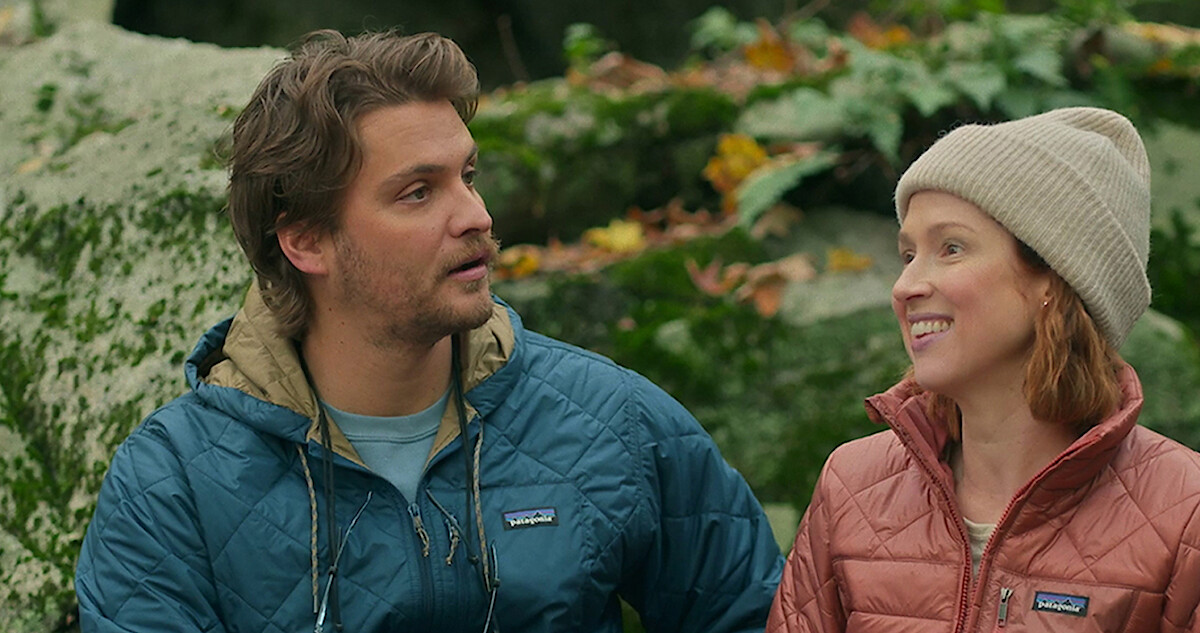
This one comes to Netflix Oct. 6.
Looks good. Haven’t seen nearly enough of Benicio del T of late. Or his one-time co-star, Ms. Silverstone.
Nowicki? I know the guy. Winter Park, Fl, “Blindside” and a lot of other movies. Coroner, here?
This one comes to Netflix Oct. 6.
Looks good. Haven’t seen nearly enough of Benicio del T of late. Or his one-time co-star, Ms. Silverstone.
Nowicki? I know the guy. Winter Park, Fl, “Blindside” and a lot of other movies. Coroner, here?


It’s no shock that screenwriters who gave us “Hoosiers,” “Rudy” and “Men of Honor” could get a few tears out of a tale an aspiring baseball player struggling to overcome the degenerative spinal disorder he was born with and make it to the big leagues.
But what three credited writers, stars Dennis Quaid, Colin Ford, Bonnie Bedelia and Scott Glenn and director B-movie Jeff Celentano (“Breaking Point”) have a harder time managing is finding a point to “The Hill.”
The story is that Rickey Hill (played by Jesse Berry in his younger scenes) was born with that medical issue in the late ’50s, wore leg braces into his tweens, but practiced swinging a stick or a bat obsessively until that day he shed the braces and became a Texas teen hitting phenom.
His father (Dennis Quaid) was a “hardscrabble” preacher who never believed he could or should try to play baseball. He has a “higher calling,” Dad said at the time, with Mom (Joelle Carter) rarely objecting but granny (Bonnie Bedelia) and his siblings sticking up for little Mickey Mantle-obsessed Rickey.
The family struggled in near poverty but Rickey was hellbent on proving he could play, even if his father was sure his ability to memorize and apply lessons from scriptures was his true “calling.”
But if you haven’t heard of Rickey Hill, however miraculous or at least inspiring it was that he was able to play the game, you shouldn’t have. He never made it to the big leagues, one of the hardest journeys any athlete can undertake.
So, what’s this movie about?
The baseball episodes are rules, logic, tradition and reality-bending enough that the broadcast announcer for an exhibition “tryout” game doesn’t have to say “This is something that norally doesn’t happen,” because “Duh.” At least he isn’t the announcer from an earlier game, going on about “another game-winning home run” and the friends and family who marvel how Rickey’s four-for-four night “gets” his “average” “up to .400.”
If you don’t know how ridiculous that sounds, you don’t know what “season opener” means any more than three credited screenwriters — Angelo Pizzo, Scott Marshall Smith and Aric Hornig -do.
The kid doesn’t grow up (Colin Ford plays him as a teen) to embrace Daddy’s hopes for him and become a popular preacher.
So are we looking at another “Rudy” story here, some self-promoter who spends his life pitching the “miracle” of his “almost” overcoming-every-adversity story and gets a movie made? I honestly don’t know.
That said, the long flashback scenes recreating the 1960s childhood of growing up with a baseball-hating father who had little tolerance for backwoods Texas Baptists who smoked and chewed and spat tobacco during his (indoor) sermons are somewhat interesting.
What isn’t intersting is almost everything else — the little moments meant to be “a sign” when the preacher gets another job from the rich lady who happens to pick them up when they run out of gas, or the junkyard owner (Ray Clemons) who shrugs off little Rickey’s leg-brace long fly-ball (rock) that breaks a windshield on his lot and becomes the kid’s cheerleader and backer, etc.
Quaid is a terrific actor, and if you’re a fan, make a double-bill out of “The Hill” (PG) and “Strays” (hard-R) this weekend if you want a case of whiplash. But as righteous and stern as the character is, he’s one-dimensional and not scripted into being the one who brings you to tears.
That would be David Silverman‘s job as the bluff, no-nonsense elementary school Coach Don who doesn’t let us or anybody else know his lay preacher background until he confronts his fellow preacher to make him recognize his little boy’s “gift from God.” And Bedelia and Carter have some touching moments as well.
By the time Scott Glenn shows up as the famous baseball scout who bends all sorts of rules and and any sense of simple fair-play common sense to give the freshly-redamaged Rickey a last showcase chance to get signed, I was all out of eye-rolls to give.
Rating: PG
Cast: Dennis Quaid, Colin Ford, Bonnie Bedelia, Joelle Carter, Jesse Berry, Siena Bjornerud and Scott Glenn
Credits: Directed by Jeff Celentano, scripted by Angelo Pizzo, Scott Marshall Smith and Aric Hornig. A Briarcliff Entertainment release.
Running time: 2:04
Someboy is stalking Nancy, messing with her Smart House, phone, work and home computers, her electric and electronically-wired-in car.
Somebody murdered her fiance the night before their wedding. Somebody is sabotaging her at work, setting traps in her personal life and framing others for the misdeeds.
And that somebody could be any one of four obvious suspects, or maybe somebody she hasn’t met yet.
Paranoid? She should be.
“The Admirer” is a cleverly-timed, well-structured but clumsily scripted and flatly played thriller about that almost universal paranoia about “wired” life. Every “smart” gadget in our lives is a “data breach” waiting to happen. Every one with a camera and/or a microphone is a privacy violation in progress.
Roxanne McKee (“Game of Thrones”) plays Nancy, who is on the phone Facetiming with her fiance (Lucas Aurelio) when a shadowy figure she sees rushes into view and pushes Ross right out a window.
A year later, the cops never caught anybody or took her “stalker/murderer” story seriously. And it’s starting up again.
Missteps at work, settings changing on the themostat, water temp for her showers and music volume in her house, anonymous “secret admirer” flower deliveries at the office — who could be doing this?
Might it be the backstabbing subordinate, Sarah (Christina Bennington), the “unstable” IT guy/lover Doug (Jack Parr) who just got fired, brittle boss Gina (Tina Cascia), new IT guy Martin (Richard Fleeshman), Nancy’s all-access personal assistant Simon (Jordan Ford Silver)?
Nancy’s going to be the last one to figure out everything is out to get her.
“My house is trying to kill me!”
Her “You can’t trust anyone” is meant to be a complaint about her love life. Maybe she’d better apply that more broadly.
Some cop is going to assure her “You’re going to be OK. I’ll make sure of it.”
And somebody better call HR, because this ad-agency of the over-dressed is a minefield of inappropriate relationships and unprofessionalism.
Director Martin Makariev filmed this Rolfe Kanefsky and Chris Philip script with “Lifetime Original Movie” parameters — no swearing, no skin, no sex, mostly off-camera, with only a few smatterings of blood.
That isn’t the reason it plays so emotionally dry or that it struggles so much to create suspense. Everything feels articifial and bloodless, even the murders.
“Peaky Blinders” alumnus Parr has the only role with real rough edges, and even dangerous IT Doug should be afraid of this “work enemy” or that boss quick to blame everybody else.
I invested in figuring out whodunit. But the “talking villain” finale is an eye roller and that’s just indicative of what a slick, soap operatic melodrama “The Admirer” is, pretty much start to finish.
Rating: unrated, violence
Cast: Roxanne McKee, Tina Casciani, Christina Bennington, Jack Parr, Jordan Ford Silver and Richard Fleeshman.
Credits: Directed by Martin Makariev, scripted by Rolfe Kanefsky and Chris Philip. A FilmRise release.
Running time: 1:29


Whatever the highs and lows of his earlier and later career, the years 1962-64 stand out as the most ambitious of legendary screen comic Peter Sellers. He made a string of films, just as he was blowing up as a screen star, that stand out for their sophistication and feature many of his greatest performances.
From “Lolita” and “Waltz of the Toreadors” through “Doctor Strangelove, or How I Learned to Stop Worrying and Love the Bomb” to “The Pink Panther,” “A Shot in the Dark” and “The World of Henry Orient,” we catch Sellers as an actor on the rise and on the make — taking every prestigious role he was offered, putting in the work, climbing the ladder of stardom, just starting to be demanding and “difficult” and throw his weight around, on his way to iconic status and the truly huge paychecks to come.
And then he had that first heart attack, and a lot of that wind left his sails, pretty much forever.
“Only Two Can Play” of 1962, is a droll sex satire and send-up of Welsh pride that if not one of his very funniest films, stands out as among Sellers’ most sophisticated. Based on a Kingsley Amis novel, as a film it is classic Sellers, built on a sometimes amusingly antic but often buttoned-down performance.
Sellers plays John Lewis, a Welsh librarian with a wife, two small children, and a bit of ambition. He’d like that big promotion at work, and his wife (Virginia Maskell) would dearly love the “extra 150 a year” that would offer.
Lewis may not be the best candidate for the job, as he is “not sufficiently up on Welsh literature.” But he can turn on the posh accent when needed and affect enough snobbish authority to be the theatre critic at the Aberdarcy Chronicle, their Welsh town’s local newspaper.
It’s his wandering eye that could be his undoing, or his “doing.” Lewis notices, checks-out and leers at every lovely lady in a skirt he spies — on the streets, in their apartment building, on the tennis courts or at work, and many seem to give him the eye back. A pretty woman looking for a book he can’t lay hands out — something just off “the banned list” — gives him her number, and temptation becomes opportunity.
As he notes in voice-over, he’s constantly facing this choice of “doing something and regretting it,” or not.
Mai Zetterling, the first Scandinavian beauty paired-up with Sellers, on or off camera, becomes his ultimate temptation. She’s a Norwegian war immigrant who married well — she drives an imported Mercury convertible — and is helping out a local theatre company find reference books for costuming its next production. Lewis flirts, and she flirts right back.
“I’ll try anything, once.”
And she is connected, someone with the ear of the chair of the search committee for that library promotion. She’s married to him. She could be Lewis’ edge over his competition for the job, his nervous, tic-ridden and very Welsh colleague, the Welsh lit expert Ieuan Islewyn Owen Dafydd ap Jenkins (Kenneth Griffith).
And you thought Ioan Gruffudd was a mouthful.
The role stands out for the scenes of domesticity Sellers plays with Maskell, a husband nagged into pursuing the promotion by his wife, a dad indulging his children and tormenting that one shrewish neighbor. He’s a threadbare posh, a librarian with a tux, a worn suit and enough of a literary-air to have that critic job as a side hustle.
Sellers does a few of the “voices” the actor put on that made him him famous. And Sellers as Lewis scrambles madly to extract himself from Mrs. Liz Gruffydd-Williams’ (Zetterling) many-roomed house when her husband and “the council” come home, abruptly.
There’s a sly innocence to the ways Lewis tries to put his wife at ease, or throw her off the scent as he’s trying to make time with this never-quite-consummated fling. Wife Jean lets us know she’s not falling for it in all sorts of ways.
Maskell and Zetterling head a sparkling supporting cast that includes a hilarious Richard Attenborough as a preening, diminutive, goateed local hipster/poet/playwright and lifelong rival of Lewis, Griffith’s twitchy turn as a librarian, a single-scene Welsh lampoon by Graham Stark, Sellers’ future subordinate in years of “Pink Panther” movies and no less than “Q” himself, Desmond Llewelyn, future Bond movie gadget guru, shows up playing a priest.
Mayhill, Swansea in Wales beautifully subs for the fictional city of Aberdarcy, just high-faluting enough to be pretentious about Welsh culture, have a literary and theatrical scene and require the services of a theatre critic, just rural enough to have cattle, who interfere with an attempted assignation in the back of Mrs.Gruffydd-Williams’ amusingly-complicated convertible.
Sellers effortlessly casts off lines like “People invite me (to society parties) just to get the name of my tailor,” fitting in with “that crowd” with witty observations such as deconstructing the working methods of much-lauded painter of the day.
“What he does, you see, he puts the canvas on the floor, chucks some whopping great dollops of paint on it and drags a naked woman across it. Yes. Yes. Sort of job I’d like, that. I’d enjoy cleaning the brushes anyway.”
Amis’s novel “That Uncertain Feeling,” written about his own experiences moving to Wales, a writer exasperated by the pretention of the Welsh locals, provided Sellers with a role that demanded he tone down the “Goon Show” business, the love of donning disguises, silly voices and playing broad characters and just be a lightly-funny, somewhat unsympathetic leading man.
Sellers didn’t do it often, and this film may not be remembered with the same affection as “The Ladykillers,” “Lolita,” “Dr. Strangelove,” his many turns as Clouseau or his last gasp of glory in “Being There.” But “Only Two Can Play” shows us a broader career that might have happened had the ever-growing paychecks not limited him to farces and his first heart attack turned him cautious.
Rating: “approved”
Cast: Peter Sellers, Mai Zetterling, Virginia Maskell, Kenneth Griffith, Raymond Huntley, Graham Stark, Desmond Llewelyn and Richard Attenborough
Credits: Directed by Sidney Gilliat, scripted by Bryan Forbes, based on a novel by Kingsley Amis. A British Lion release on Tubi, Amazon, etc.
Running time: 1:44


“Don’t Look Away” is a textbook film for anybody hoping to learn how to make a scary, fun and attention-worthy thriller with next-to-no-money.
Need something to “stalk” victims, a variation on The Many Faces of Chucky that’s fresh and a novel bit of scriptural problem solving? What could be scarier than a murderous mannequin?
“It moves without moving,” one alarmed would-be victim mutters in a less-experienced actor’s version of shock.
“It’s everywhere, and nowhere at the same time,” another gasps.
That’s how you solve the problem of “animating” an inanimate object, a mysterious and murderous “mannequin, like they have in Bloomingdale’s” who in shadows and silhouette looks like Gort from “The Day the Earth Stood Still” went on the Slenderman Fast diet.
He doesn’t really “move.” He’s edited, quite clevery, into this spot, that shadow and right into your face.
It’s creepy as hell, and it has the young people it’s chasing shouting “Don’t LOOK AWAY” because that’s when it sneaks up on you. “Run! GET OUT!”
Well, they’re young Canadians, so it’s “Get OOOOT!” But you get the idea.
Kelly Bastard (okaaay) stars as Frankie, the young woman who accidentally stumbles into a truck-hijacking where the hijackers are slaughtered when they open the lone box in that trailer. She “sees” what did this. She is rendered speechless.
Phd candidate beau Steve (Colm Hill) has a hard time getting a word out of his LSAT-studying girlfriend, or taking her fear seriously.
But her friends drag her to the club. A little molly from her pal Molly (Vanessa Nostbakken) and Frankie isn’t just seeing things in the shadows, she’s struggling to explain to cops how she’s covered in another person’s blood, seeing as how it’s not the first time in the past two days.
Her friends don’t believe her, until they see “it.” Steve may never buy in, but old beau Jonah (co-writer Michael Mitton) does. He sees this plastic “SlenderMan.”
Mitton and director Michael Bafaro, billed as “The Michaels, shared writing credits in this hit-or-miss indie. They might have leaned a little more into how darkly funny this all is. Horror references abound in the dialogue, the editing (“Signs”), and we “hear” friends watching “The Shining.”
There’s a too-slowly rising threat level that should ratchet up suspense and fear, but doesn’t. Only a couple of the players seem very good at conveying “terror” anyway.
A brisk, bravura opening with mostly off-camera violence (slaughter and gunshots heard, not seen) and the viewer getting just a fraction of a glimpse of this scary prop in the shadows out of Frankie’s field of vision eventually sags into a duller talky, relationshippy middle act. And the “explainer” finale leaves a lot fo be desired.
But blocking, shot compositions, cinematography and editing energize it, and a chilling electronic score by Phil Western brings to mind John Carpenter’s musical gifts, which is the whole idea.
Shortcomings aside, by all means take that title seriously. “Don’t Look Away,” you might miss something scary, funny and pretty good.
Rating: unrated, bloody violence, drug abuse, profanity
Cast: Kelly Bastard, Michael Mitton, Colm Hill, Abu Dukuly, Jason Haney, Sophie Thom and Rene Lai
Credis: Directed by Michael Bafaro, scripted by Micheal Bafaro and Michael Mitton. A Level 33 Entertainment release.
Running time: 1:23
An opera he can’t finish because he’s “blocked,” gorgeous arm candy/shrink Anne Hathaway isn’t…helping.
Marisa Tomei is a sexy…tug boat captain?
Laughing already?
Sept. 29, two Oscar winners and the estimable Mr. D. deliver the goods.

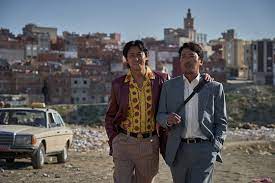
In the name of all that’s holy and sane, don’t try watching “10 Days of a Bad Man” without first watching “10 Days of a Good Man.” I’ve seen the earlier film, part of a planned trilogy of adaptations of novels by Turkish author Mehmet Eroğlu, and I was still pretty much lost through the middle acts of this Asia Minor whodunit.
No, the director and screenwriters — one of whom was unhelpfully Eroğlu himself — haven’t learned to “kill your darlings” and thin this Byzantine tale of the further misadventures of 50ish ex-con, disbarred lawyer and pill-popping private eye Sadik down to something coherent.
The meandering script is a tsunami of names, characters both on camera and off. Here’s what it sounds like.
“Jale?” “Gul?” “Who’s Timurlenk?” “Find Ferhat!” “Who’s Yasemin?”
Scores of names are hurled at Sadik, now going by “Adil” but still a figure of weary, literary charisma thanks to the performance of Nejat Isler.
This time out, he’s summoned by the mob boss from the first film who’d now love to just be addressed as “Sir” (Erdal Yildiz) to find this guy, Ferhat. As you might remember from the first film, Sadik-now-Adil ran up quite a “debt” of favors to “Sir.” A bad car wreck in the opening scene of “Bad Man” just adds to his bill.
A gorgeous doctor (Hazal Filiz Küçükköse) of confusing ties to Adil also wants our Istanbul gumshoe to find out who killed her uncle.
And to manage these two cases, in between pain pills, in “10 days,” our injured Adil will need his niece-not-his-niece Pinar (Ilayda Akdoga) to run social media searches and get him into clubs and whatnot, all the while coming on to a guy almost three times her age.
“You’re in love with me,” skin-baring Pinar purrs in Turkish, or dubbed into English. “You just don’t know it yet.
Her constant come-ons remind us that male wish fulfillment fantasies know no borders.
In the first film, our PI narrated his story and was obsessed with classic fictional private eye Philip Marlowe. Here, he’s just read ‘Hamlet’ and can quote “O, that this too too solid flesh would melt,” and trots out “You know I read ‘Hamlet.’ Don’t underestimate me.”
But the older woman who keeps calling him “Columbo” is the one who’s onto something. Sadik-now-Adil reads people, sifts clues and uncovers motives. And he’s a little slow and annoying as he does it.
The clutter of characters, seen and unseen, of agendas, settings and off-camera complications render this film as much of a lumbering muddle as the first installment in the trilogy. But then you remember all the unseen faces we hear Marlowe prattle on about in “The Big Sleep” or Sam Spade sputter through in “The Maltese Falcon,” so maybe it’s just a Turkish version of that, albeit a duller and slower one.
And there’s a fine, action-packed finish that does a bit to tidy things up, even though one of Adil’s cases is solved perfunctorily and the other with guns.
I’ve kind of given up hope that these thrillers will travel better and improve with each outing. You’ve still got the author co-writing the script and refusing to cut it, and a TV-trained director who can’t talk him into that as he shoves 22 episodes worth of complications into a 124 minute movie.
At least Isler makes an agreeable tour guide through these intrigues, getting his man or getting his woman, even if we can’t help but cringe if and when he “gets the girl.”
Rating: TV-MA, violence, sexual situations, pill popping, smoking, profanity
Cast: Nejat Isler, Ilayda Akdogan, Riza Kocaoglu, Hazal Filiz Küçükköse, Ilayda Alisan, Kadir Çermik and Erdal Yildiz
Credits: Directed by Uluç Bayraktar, scripted by Damla Serim and Mehmet Eroğlu, based on the novel by Mehmet Eroğlu. A Netflix release.
Running time: 2:04
This does look a tad “killer doll” creepy, I must say.
Sept. 1.


That weary thriller trope “It was just a dream” gets utterly beaten to death in the moody, obscure and somewhat convoluted horror tale “Deliver Us.”
It’s a graphically violent a story set in Russia where a nun, claiming Catholic mythology’s second “immaculate conception,” is set to give birth to twin boys — one a “conduit for the light,” a Christ, the other “a conduit for The Beast,” the AntiChrist.
Co-writer, co-director and star Lee Roy Kunz (the less famous “Delirium”) bathes his movie in gloom, gore, and lots of “It was just a dream” fake-outs in this thoughtful but frustrating variation on a “Damien/The Omen” theme.
Yes, it’s a “Good v. Evil” “prophecy. And this time, that prophecy was written in tattoos on the backs of people ritualistically slaughtered and skinned in the film’s opening images.
Cardinal Russo ( Alexander Siddig of “Deep Space Nine,” “Gotham” and “Game of Thrones”) doesn’t tell the young priest, Father Fox (Kunz) what medium these images he’s so excited about were preserved on. But as he leads the fallen-but-not-“fallen” priest through the Medieval-looking picture glyphs, he enthuses “The prophecy might be real!”
Fox was summoned to a remote Russian convent to treat, minister to or exorcise a pregnant nun, Sister Yulia (Maria Vera Ratti of the recent “Leonardo” series), who swears she was impregnated by God and is about to birth two very special boys.
She tells him it was she who summoned the priest/exorcist from St. Petersburg, a man trying to “stop being a bad priest” and start being a “better man,” because “you are the only one who can keep the bad thing from happening.”
Father Fox has his own pregnancy issues. He’s in love, his industrialist-heiress girlfriend (Jaune Kimmel) is pregnant. And this is brushed over in the script as though the Vatican and the Russian Catholic hierarchy wouldn’t care or the viewer wouldn’t wonder, “OK, how the hell did that happen?”
But Father Fox is here, skeptical of anything he’s told is “divine” or “demonic” and maybe still wondering what those picture glyphs were written on which the cardinal didn’t want to discuss.
A sinister one-eyed priest (Thomas Kretschmann of “The Pianist,” just seen in “Gran Turismo”) is also on hand, not-so-secretly participating in rites that tell us he’s hellbent on keeping this birth from happening.
So of course the fallen priest, the pregnant nun and the cardinal go on the lam.
The moodiness of “Deliver Us” is undeniable, but I am hard-pressed to recall a thriller with less forward motion, pace or mounting suspense.
Ambling from the flat-footed getaway to an Estonian forest hide-out, with encounters with strangers who seem to go into shock at this sight of this new “Virgin Mother” and even try to kill themselves in her presence (dreams it seems), “Deliver Us” is in no rush to deliver anybody or anything.
We get a hint that the world is spinning into pre-ordained chaos outside of this “family” on the run bubbble, but only a hint.
Kunz more or less holds his own as an actor, and gives himself nude scenes because he’d rather we not be thinking about the holes in theology, Church doctrine, logic and common sense on display.
And almost every time something truly horrific or alarming happens, somebody wakes up as “dreams” here are how it/they/He”talks to us,” true-believer Yulia insists.
Between the many seriously underlit scenes and the rambling, somber and self-serious dialogue, I was at a loss, not about the point of this — to kill one or both of the babies and foil evil or stop a “Second Coming” and “End Times” — but about how this contrived, clunky narrative is going to get us there.
As Catholic horror tales goe, “Deliver Us” is more of a good-looking failure than a scary, thrilling or entertaining dive into Church arcana.
Rating: unrated, graphic violence, sex, nudity
Cast: Lee Roy Kunz, Maria Vera Ratti, Alexander Siddig, Jaune Kimmel and Thomas Kretschmann
Credits: Directed by Lee Roy Kunz and Cru Ennis, scripted by Lee Roy Kunz and Kane Kunz. A Magnet (Sept. 29) release.
Running time: 1:43

The projections I was reading for Warners’ low-risk/limited star power superhero movie “Blue Beetle” pointed to a $30 million opening, not great for a comic book adaptation but not terrible for the movie dumping ground month of August.
Middling Thursday night previews and a decent Friday –$9-10– put the film on track to earn $25 million, at this point, according to Deadline.com. TheNumbers (@movienumbers) posts that it will hit the $25.4 million mark by midnight Sunday.
Franchise starter? Maybe. Not a sure thing, though, opening well below the studio’s already low projections. Not a great movie, pretty cheesy as it services its comic book fan and Latino demos. Weak reviews overall. But the Warners marketing was weak — perhaps over-targeted, perhaps cut-rate — and big crowds did not show up.
An even more middling take might have dropped this one behind the movie of the summer, “Barbie.” It’s on track to add another $21.5. Box Office Mojo says it’ll clear the $565 million mark, just in North America, by Sunday .
“Oppenheimer” managed $10.6 million, climbing up the charts listing past Christopher Nolan blockbusters. It will have tallied $718 million worldwide by midnight Sunday.
“Teenage Mutant Ninja Turtles” aka “Mutant Mayhem” is set to pull in $8.4.
“Strays” is a bad movie with a lot of laughs, but a true “dog” of the dog days of summer. It is straining at the leash to make it to $8.3 million. according to @movienumbers. Those digital effects — getting dogs to talk — are costly, meaning this won’t break even before it limps off into the sunset.
The last word on the top five comes from @boxofficepro.