


Twas the writer Roddy Doyle who re-introduced the literary world to the concept of “Irish joy.” Sure’twas.
His “Barrytown Trilogy” of comic novels in the late ’80s and early ’90s — the self-published sensation “The Commitments,” “The Snapper” and “The Van” — later expanded into a pentalogy, captured the humor, the vitality and the hustle of an island that had been “poor, impoverished,” U2 lamenting “the Troubles” of Third World Ireland for far too long.
But it took the director of “Fame” to bring that noisesome frolic, a Dublin bubbling over with youthful dreams, energy and delusions, to the wider world. Alan Parker captured the old, battered city — where Doyle had set his fictional working class Barrytown neighborhood — and crowded his screen with exhuberant kids of all ages, amusingly gobsmacked adults, indulgent priests and more indulgent parents.
“The Commitments” hit viewers with a wet slap of delight in 1991, a blast of “proletarian” soul performed by Europe’s most famously downtrodden minority. The film was hardly a smash in theaters, but its video and TV afterlife were boundless. Doyle’s reputation and legend were made. A mini soul music revival — a smaller scale version of Britain’s “Northern Soul” fad or what America’s The Blue Brothers had brought forth a decade before — an explosion in Irish tourism and a 2013 stage musical spun out of it.
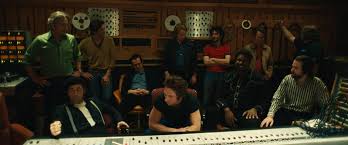
And here it is, a near-riotous time capsule of its day, a “real” band that of actors who could sing and play or musicians (Glen Hansard) who’d learn to act immortalized on Panavision and Dolby Stereo for all of us to marvel over decades hence.
Parker made the scruffiest “let’s get a band together” comedy of them all, a shambolic but amusing mess that loses track of its leading man after he organizes a fractious ensemble that is sure to come apart, come to ruin or come to its senses. And we get to watch it all go right or go wrong.
Jimmy Rabbitte (Robert Arkins) is a chain-smoking 20ish hustler, pitching pirated cassettes and second-hand vhs tapes (including Parker’s “Mississippi Burning”) at street markets all over Barrytown. But when he’s alone, he fancies himself being interviewed years hence.
“Tell us about the early days, Jimmy. How did it’all begin?”
His brainstorm is the sort of “Hail Mary” many a downtrodden schemer pulls out of his hat. He’ll form a band, one dedicated to preserving and celebrating his passion for American soul music. Jimmy then proceeds to build it around a few musical mates (Hansard, Ken McCluskey, Félim Gormley and Dick Massey), preaching his passion to any who figure “we’re too white” to pull that off that bit of cultural appropriation.
“Do you not get it, lads? The Irish are the Blacks of Europe. And Dubliners are the Blacks of Ireland. And the Northside Dubliners are the Blacks of Dublin. So say it once, say it loud: I’m Black and I’m proud!“
One of the more hilarious audition montages in all of cinema follows, pretty much to no avail which is pretty much the point. Everybody’s into music, nobody’s that good at what Jimmy wants to hear.
But Jimmy overhears a drunk (Andrew Strong) singing along with the old LPs at a wedding. His mates lust after fair Imelda (Angeline Ball), so he recruits Bernie (Bronagh Gallagher) to sing back up, and get her friend Natalie (Maria Doyle Kennedy) and by all means, reach out to Imelda to make sure she signs on.
And then the 50ish horn player Joey “The Lips” (Johnny Murphy) motorscooters up, with big tales of his years touring with Otis and Sam and Wilson Pickett and Martha Reeves, and the band has a name — “The Commitments” — a “leader” and a cheerleader.
“Black suits,” for the men, Joey insists. Black dresses for the ladies. This is “serious” music and should be treated with respect. For the assorted unemployed pipefitters, waitresses and the like, there’s nothing for it but to dive in and and pray that this will pay off and change their lives.
“‘Destination Anywhere,'” they sing. “East or west, I don’t care.”
Continue reading













 Movie Nation