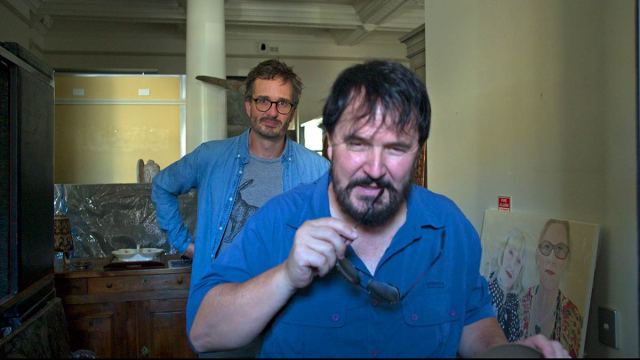
Documentary Review: Doggedly Chasing a Toxic, Pathological Gaslighter, this one in New Zealand — “Mister Organ”

It probably wasn’t on New Zealand journalist and filmmaker David Farrier’s mind as he tumbled into a story about narcississtic Kiwi name-caller, pathological liar and “in his own reality” con man named “Mister Organ” that he might have an American political allegory on his hands.

All that’s lacking in the film is a board certified diagnostician weighing in and saying “narcissistic peronsality disorder” to make the Michael Organ/Donald Trump comparison complete.

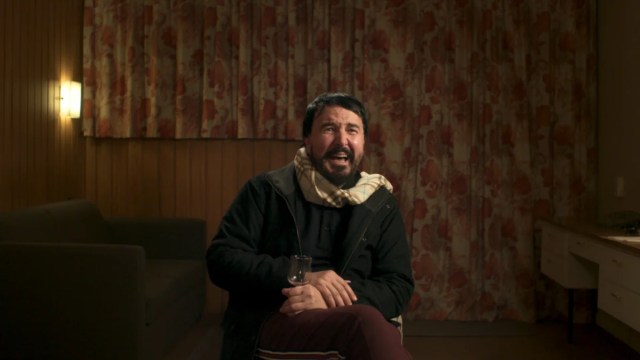
Farrier, a dogged reporter/filmmaker — remember “Tickled?”— spent years digging into the life of and getting to know and exposing Mister Organ.  He paid a legal and personal price as he and by extension the audience for this film discover just how ill-equipped society, human nature and the justice system are to deal with a relentlessly harassing gaslighter who simply repeats lies, ad nauseum, until most of us grow deaf to them and the most gullible among us — sometimes, even in court — actually believe the “art” this toxic BS artist is shoveling.

It begins with a bit of small business extortion. An antiques store in tony Ponsonby, Auckland, New Zealand is enforcing its “no parking in our parking lot” policy with a self-appointed “clamper” locking drivers’ wheels until they pay hundreds of dollars to get the clamp taken off.

The imperious owner of Bashford Antiques, Jillian Bashford, claims not to know who’s doing this on her behalf. Merely asking her about it, reporting or even complaining about it often results in threatening calls or letters from a “lawyer” named Michael Organ. Or “Organe,” or any number of other aliases trotted out by the guy over the years.

New Zealand, being a tiny country, makes it easy to figure out who this fellow is. He’s been in the papers, on talk radio. an ex-con who once stole a sailboat out of revenge against a creditor, a poseur who tried to pass himself as a “count” in myriad legal proceedings over the years. And he’s living with Mrs. Bashford, who is 30 years his senior.

“I’ve checked his legal qualifications,” a puzzled Farrier notes. “He doesn’t have any.

Down the rabbit hole Farrier goes, speaking with a convicted “terrorist” and a long string of acquaintances who describes themselves as “victims” of Organ. The deeper Farrier digs into the guy, the more he comes into contact with him. He eventually finds himself talked-over and shouted-down in court by this classic “stupid person’s idea of what a smart person sounds like,” the posh-drawled Organ. And then they really get to know each other, after years (we gather) of run-on phone chats, interviews and lies endlessly-repeated so that Organ really gets into Farrier’s head.

At one point, the filmmaker is choking back tears at this “pointless exercise” with an “impossible” man with “more money than me,” who is just “better than me” at burying objective truth and “never letting something go.”

But there’s a “never let something go” relentlessness to Farrier, too. He stays engaged with this liar he loathes, this smug, repellent bully, first trying to let him trip himself up with his web of deceit, and when that doesn’t phase the toxic creep, actively confronting him with those lies, the proven court case and jail time, and other contradictions.

Perhaps Farrier should be hosting “Meet the Press.” You don’t see this kind of push-back on American political TV.

Farrier’s frustrations spill off the screen and give the viewer the same anxiety the reporter feels, the same anxiety anyone shares who knows something about facing down a lying, harassing, bullying moron who won’t leave you be.

The quirky Kiwis depicted here aren’t amusing in that Taika/Jemaine way, just well-mannered eccentrics (and enablers, including Organ’s family) baffled by what to do about such a dangerous manipulator, how to deal with him and what they’ll do to escape his clutches.

Farrier leaves a lot unsaid in the film. He doesn’t look into Organ’s childhood — what made him this way — has no mental health experts on camera, and doesn’t get too deep into Organ’s possibly predatory (certainly overbearing) relationship with his Sugar Mama, Bashford.

But Farrier’s made a fascinating picture to ponder about how difficult it is to challenge a system and its gullible pawns who enable such predators to get away with all that they do, simply by talking, bluffing and buffaloing their lies into the conversation, fooling just enough of the people and scaring others and forcing everybody else to deal with their “reality,” no matter how unrelated to real “reality” it is.

Rating: unrated, profanity

Cast: Michael Organ, David Farrier and Jillian Bashford, many others

Credits: Directed and scripted by David Farrier. A Drafthouse Films release.

Running time: 1:35

Posted in Reviews, previews, profiles and movie news | Comments Off on Documentary Review: Doggedly Chasing a Toxic, Pathological Gaslighter, this one in New Zealand — “Mister Organ”

Next screening? A thriller that smells like a contender — “Fair Play”

Veteran TV Writer director Chloe Domont (“Ballers,” “Shooter,” Billions,” etc.) makes her feature film debut with this nasty dig into sexism and cutthroat office politics

Netflix is putting this and Phoebe Dynevor, Alden Ehrenreich, Eddie Marsan work/romance conflict thriller in theaters for a couple of weeks.

It streams Oct. 13.

Posted in Reviews, previews, profiles and movie news | Comments Off on Next screening? A thriller that smells like a contender — “Fair Play”

Movie Preview: Old West Nic Cage hunts Buffalo to Extinction in “Butcher’s Crossing”

Smaller distributor, as is Nic Cage’s lot these days. Looks existential and dark and prophetic.

Posted in Reviews, previews, profiles and movie news | Comments Off on Movie Preview: Old West Nic Cage hunts Buffalo to Extinction in “Butcher’s Crossing”

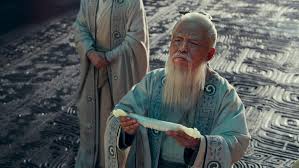
Movie Review: Chinese Myth writ large…and long — “Creation of the Gods I: Kingdom of Storms”

Imagine popping into a multiplex and diving into say, an “Avengers” or “Star Wars” movie. Imagine doing that in Papua-New Guinea or some place far removed from the “universes,” cultural tropes and long-beloved characters in those films and not having a clue what’s going on, for big chunks of the time.

“Capes? Tights? Hammers?”

That’s akin to any Westerner checking out an Indian, Japanese, Korean or Chinese myth turned into cinema. However well you know the universal templates such tales lean on, how much you remember from your Joseph Campbell, you’re going to be a bit at sea in a “Journey to the West” or “Creation of the Gods,” both Chinese epics so sprawling they required Harry Potter length “installments” to tell.

“Creation of the Gods I: Kingdom of Storms” has that Roman numeral in its title, so we know that two a half hours is just the beginning of this Chinese eye-candy epic.

It’s a tale of tyranny and magic, of nobility trying to overthrow the monstrous King Zhou (Kris Phillips, aka Fei Xiang) — with a little divne help from “The Immortals” — set during China’s first documented dynasty, the Shang.

There are grandiose sieges and battles in icy, wintry fog, intrigues, dragons and demons and beheadings and “interventions” and a murderously tempermental king from whom his own kin aren’t safe, especially after he falls under the spell of the enchanting “daughter of a traitor” Su Daji (Naran), aFox Demon.

Self-sacrifice is preached — “What is a king if not the bearer of all the Earthly sins of his people?” (in Mandarin with subtitles) –and sometimes even practiced.

The picture is state-of-the-art dazzling in its effects. The scope and scale of some sequences, digitally-augmented or not, is almost overwhelming.

But as storytelling, it’s a movie that gets lost in endless exposition, a parade of intertitles naming this or that figure in the “plot” and their relation to this or that king, as if that really helps.

It’s a cluttered narrative that might be better served as a simple sweep through myth and history rather than anything as literal as this. Mongolian director and co-writer Wuershan (“The Butcher, the Chef and the Swordsman”) is better at action than trying to explain it all.

There are a few characters to latch onto, some epic fights and even a hint of humor, here and there amidst the spectacle. And as is usual in the lesser epics of this genre, there’s an awful lot of shouting.

“Think you can kill ME?” “SAVE Fa JI!”

One of the immortals is a bratty child (Yafan Wu) who jets into scenes, intervening with his elders, via flaming flame-powered feet. Another, played by Li Xuejian, is a whimsically earnest sage, while a third (Bo Huang) serves up dark magic with a tongue-in-cheek touch.

That’s where the movie should lie, with the immortals and everything else just playing out inviting their interference. Burdening the picture with legions of mere mortals makes it hard to follow for anyone who didn’t grew up with the 16th century mytho-historical novel  Fengshen Yanyi.

It wasn’t just the pricy effects that slowed this years-in-the-making first film of a trilogy down and caused production to shut down at one point. Surely there was somebody lobbying for something more streamlined, that focused on the core story, the “hero’s journey” and those divine interventionists playing their games with mere mortals, the way gods always do.

“Kingdom of Storms” “Dazzling to look at,” sure. But the ungainliness of this lumbering, over-populated narrative has one often wondering, “Wait, where’d the Fox Demon go?”

Rating: unaated, acton violence

Cast: Yosh Yu, Huang Bo, Kris Phillips, Naran, Li Xuejian, Quan Yuan, Li Xuejian, Le Yang, Yu Xia and Yafan Wu

Credits: Directed by Wuershan, scripted by Jian Rn, Ping Ran, Cao Sheng and
Wuershan, based on a Ming era novel by Xu Zhong Lin. A Well Go USA release.

Running time: 2:28

Posted in Reviews, previews, profiles and movie news | Comments Off on Movie Review: Chinese Myth writ large…and long — “Creation of the Gods I: Kingdom of Storms”

Movie Preview: Trouble in British farm country bonds neighbors — “And Then Come the Nightjars”

This Oct 3 release is about a couple of old farm coots and coping an outbreak of hoof and mouth disease.

It looks a little lighter than that sounds.

Posted in Reviews, previews, profiles and movie news | Comments Off on Movie Preview: Trouble in British farm country bonds neighbors — “And Then Come the Nightjars”

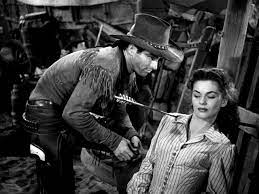
Classic Film Review: An Iconic Western turns 75, “Red River”

Some decades back, I interviewed the great Texas writer Larry McMurtry (“Lonesome Dove,” “The Last Picture Show”) at a cocktail party thrown in his honor at the University of North Dakota’s Writers Conference, which that year was focused on Western lit and film. And as an author whose works were being optioned for movies, the conversation wandered around to “Red River,” which was showing later that week at the conference, and a reason large scale Westerns like that (which McMurtry dabbled in) weren’t on Hollywood’s mind more.

Wide open spaces were in short supply. Larger than life actors who looked at home in the saddle were somewhat scarce (this wa pre-“Dances with Wolves”). And there aren’t enough “Longhorn cattle” to do a decent, historic cattle drive Western, McMurtry noted. “Damned near went extinct (as a breed) shortly before ‘Red River’ was made.”

So no, the 1866 cattle in this 1948 Howard Hawks film didn’t necessarily “look right,” which bugged McMurtry. But it’s hard to find many other faults in this Western masterpiece, an archetypal classic featuring an impressive cast and one of the great directors of his era perfecting his “Western” chops, which he’d use on “Rio Bravo,” a formula film he loved so much he remade it a couple of times under other titles (“El Dorado,” “Rio Lobo”) before hanging up his spurs.

Borden Chase was a novelist and short story writer (real name Frank Fowler) who gave us “Winchester ’73,””Bend of the River” and a few other Westerns in a career as ecclectic as Hawks, who aside from “Red River” is best known for comedies like “His Girl Friday” and “Bringing Up Baby,” horror (“The Thing from Another World”), Biblical epics and even a Marilyn Monroe musical (“Gentleman Prefer Blondes”).

“Red River” is a saga-length epic that follows a fictional story of the first Chisholm Trail cattle drive after the Civil War. We see Tom Dunson (John Wayne) leave a wagon train with his trusty sidekick, the original “Groot” (Walter Brennan) over the objections of the wagonmaster, aiming to head South into Texas. Unsentimental and ornery, Dunson leaves a woman (Coleen Gray) behind. She is later killed when the wagon train is attacked by Indians.

Dunson and Groot survive such an attack of their own, but lose all but one cow. Luckily, a shell-shocked teen (child actor Mickey Kuhn, wild-eyed and scary) escaped death in the wagon raid and he has a heffer. He’s already quick with a pistol, and Matt is adopted by Dunson.

We see Dunson take the land his ranch will be built on by gunning down a hireling of the Spanish Mexican Don Diego. A little Manifest Destiny rationalizing about who Don Diego “took” that land from, and the “Red River D” ranch is born.

Fourteen years later, Matt (Montgomery Clift) has returned from the Civil War, lean and antsy, unused to seeing Dunson “scared.” He’s “broke,” and the only way his vast herd is worth anything will be through driving it to a railhead north and East.

“Take’em to Missouri, Matt,” are his orders.

On the thousand mile/”ten miles a day” drive, there’s a river crossing, Indian attack and “STAMPEDE!” as the ordeal makes Dunson paranoid and prone to punishing or even executing those who challenge him.

Some day, at some point, Matt’s going to have to “be a man” and step in.

A movie like “Red River” did wonders for John Wayne’s acting reputation. He’s mean, playing a rare (soft-edged) heavy, and holds his own. But Brennan effortlessly upstages him, young Kuhn crackles in his two scenes, “soft” and sensitive Clift puts in the work to prove he wasn’t miscast, and John Ireland, one of the great character actors of his era, balances Clift’s “soft” touch with a gun-slinger’s swagger as itinerant cowhand-shootist Cherry.

The two actors allow a hint of the homoerotic to slip into their first meeting moment, comparing guns, for instance.

“Show me yours and I’ll show you mine.”

Ireland even makes Cherry’s more butch follow-up sound like a come-on.

“There are only two things more beautiful than a good gun: a Swiss watch or a woman from anywhere. Ever had a good… Swiss watch?

Ireland attended an Old Western Stars convention in Tennessee that I covered, and after asking him about Kubrick and “Spartacus,” I queried him about that subtext or not-subtext in the film.

“If Mr. Hawks put it in there,” he smiled, and left that hanging.

“Red River” is a movie of long Old West monologues of Shakespearean sweep. The Duke never played Hamlet. But he did have this.

“Give me ten years, and I’ll have that brand on the gates of the greatest ranch in Texas. The big house will be down by the river, and the corrals and the barns behind it. It’ll be a good place to live in. Ten years and I’ll have the Red River D on more cattle than you’ve looked at anywhere. I’ll have that brand on enough beef to feed the whole country. Good beef for hungry people. Beef to make ’em strong, make ’em grow. But it takes work, and it takes sweat, and it takes time, lots of time. It takes years.

Hawks was famous for his “Hawksian women,” and Joanne Dru brings fire and breathless chatiness to Tess Millay, who won’t shut up even as she meets Matt in the middle of an Indian raid on her “gamblers and women” wagon train.

Hawks and Chase invented or perfected most of the tropes of cattle drive tales with this classic film, which McMurtry leaned on for “Lonesome Dove.” Images burn into the memory — the sweep of the San Pedro River Valley, Arizona landscapes, the flaming arrow that hurtles in out of the darkness at Dunson and Groot, the “shootin’ contest” between Matt and Cherry and the epic brawl between tiny Clift and big’ol John Wayne.

The way the cattle drive’s beginning is edited — close-ups of the various hollerin’ cowboys (Hank Worden, Noah Beery Jr., Paul Fix, etc) — the humor of Groot losing partial custody of his “store bought teeth” to the Indian named “Quo” (Chief Lowachie), the rising paranoia and sadism of Dunson faced with success or ruin, all put this 1946 film, released in ’48 because of interference from Howard Hughes head and shoulders above most every Western you can think of, then or more recently.

It’s got a lot of the things that modern historians and films like “Unforgiven” have revised in the historical record. “Don’t leave any of’em (Native Americans) alive,” the quick turn to deadly violence and gun fetishizing of this film that has to be one reason the NRA and its Congressional lackies don’t want gun “ownership” studied as a mental health issue.

It’s faintly racist and genocidal, but also more representational than most Westerns of the day. Those big speeches are so old fashioned that they make the movie feel years older than it is.

IMDb’s page on “Red River” has a simple error, referring to Noah Beery, Wallace Beery’s son, as “Noah Beery Jr.” And somebody at some point promoted British second unit director Arthur Rosson to “co-director” in recent years. Did the DGA approve this? The Library of Congress apparently didn’t. I can’t find an origin to this alteration, just a similarly crowd-sourced credit reference on Rosson’s Wikipedia entry.

I’d love to know the story of that, and until I hear a convincing reason for this “demotion” of producer-director-auteur Hawks, I’m calling “Bull-s—“ on that bit of sleight of hand.

But as “Red River” has been remade (with James Arness), re-released at various lengths and even colorized, somebody’s got to stick up for this American masterpiece by an American master.

star

Rating: TV-PG, violence

Cast: John Wayne, Montgomery Clift, Joanne Dru, Walter Brennan, Noah Beery Jr., Harry Carey, Harry Carey Jr., Chief Lowachie, Paul Fix, Hank Worden and John Ireland.

Credits: Directed by Howard Hawks., scripted by Borden Chase and Charles Schnee, based on a short story by Chase. An MGM (owns the rights now) release on Tubi, Youtube.

Running time: 2:13

Posted in Reviews, previews, profiles and movie news | 1 Comment

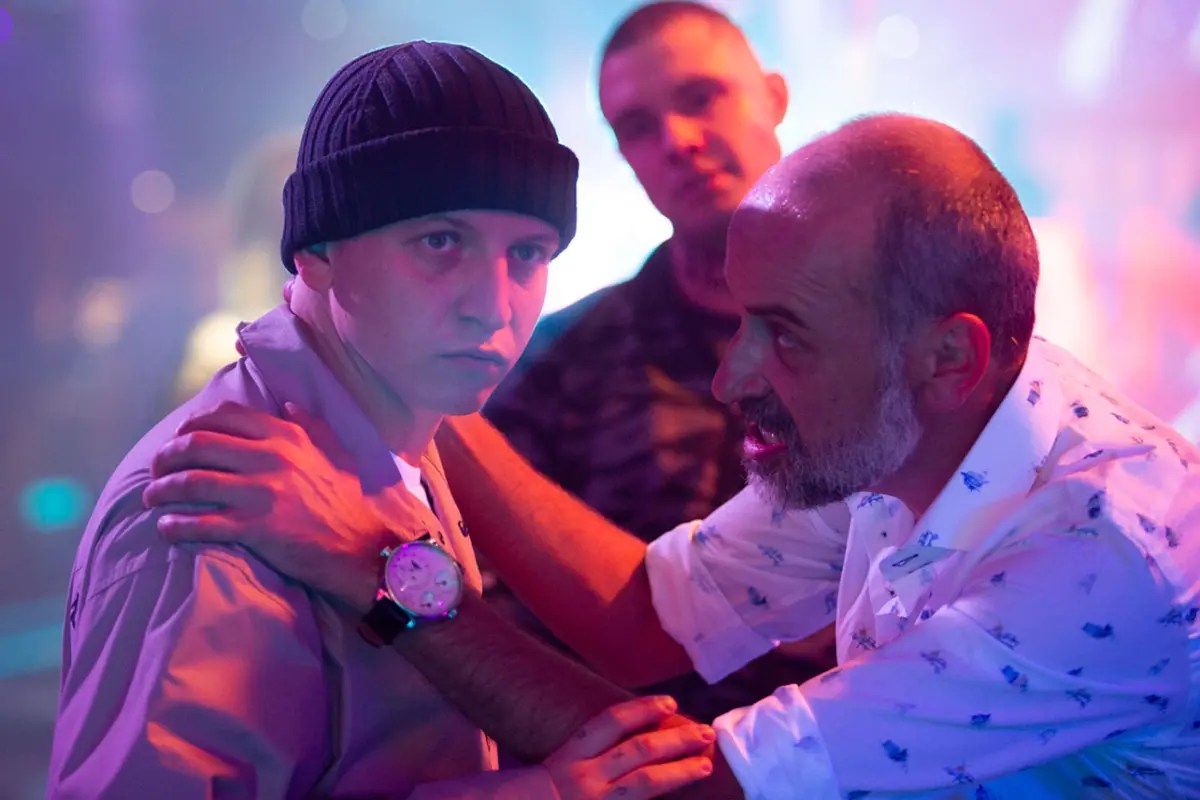
Netflixable? Polish rapper needs drugs to finance his “Freestyle” record

Energy, violence and a breathless pace cover some of the many sins of “Freestyle,” a Polish hip hop thriller about selling drugs to finance a record because our Polish hero “needs to be spittin'” rhymes.

Amped-up, coked-out drug dealers at every level, violent psychotics and frazzled victimizers who see themselves as victims burst off the screen of Maciej Bochniak’s cliched, illogical and kind of heartless “Eight Mile” riff.

International films about hip hop sometimes play up the connection with the universal music of the disenfranchised, the musical expression of desperate people with talent. And some, like “Freestyle,” are happy to merely mimic the pose, the “gangsta” posturing and “outlaw” image.

That’s where Diego, born “Dawid” (Maciej Musialowski) seems to be coming from. He’s gotten out of rehab and juvie, it’s established in the first scene. He’s the son of a gangster. He’s got talent and engery to burn. And his junkie partner “Flour” (Michal Sikorski) keeps screwing everything up.

They’re nearly finished with their record when they’re tossed out of the studio, something about Flour stealing a mike there at some point.

Flour’s caught up in the drug delivery business that Diego got out of. But with financial pressures, a reluctance to have any contact with his estranged father and an influencer (Nel Kaczmarek) who treats him like a side piece, he’s got to help Flour drop some “sacks” with this Aderall-jagged Slovak who makes threatening “jokes,” accuses him of being a “snitch” and is hellbent on making them hear HIS idea of good rap music before they go.

With shows coming up, the boyfriend of influencer Mika getting suspicious and bills piling up, Diego takes a chance at dabbling in “the old life” and everything blows up in his face.

He lurches from “It’s my instinct, it’s what I do” cockiness to endless explanations to mob bosses and dealers, at least some of whom warn him about what he’s risking.

“This is the worst moment to make a Papa Smurf speech!” he flips out, in Polish with subtitles, or dubbed.

The speed of the second half of the film brushes by double and triple crosses, the film’s unwillingness to see Flour as the “f–k-p” who causes a lot of the problems and the “only chance” this or that mobster gives Diego, which turns into multiple chances, beat-downs and other violence.

Musialowksi has a gym-rat rapper’s walk, muscular belligerence that he drags into every overmatched meeting.

And filming much of the heightening action with hand-held cameras — a “police” raid,” a near riot at the show, etc. — was the right choice, keeping the energy level up.

But “Freestyle” is so sloppily, melodramatically-plotted that it can’t stand up to even cursory scrutiny. Like a coke-fueled bender, it’s a whole lot of urgency, energy and anger that don’t add up to a damned thing when one sobers up.

Rating: TV-MA, graphic violence, drug abuse, ex, nudity

Cast: Maciej Musialowski, Nel Kaczmarek, Filip Lipiecki, Michal Sikorski, Hanna Nobis and Anna Bielowska

Credits: Directed by Maciej Bochniak, scripted by Maciej Bochniak and Slawomir Shuty. A Netflix release.

Running time: 1:29

Posted in Reviews, previews, profiles and movie news | Comments Off on Netflixable? Polish rapper needs drugs to finance his “Freestyle” record

Movie Preview: Emma and Willem and Ruffalo in an Oddball Oscar contender, “Poor Things”

Yorgos Lanthimos strikes again? “A woman plotting her course to freedom!”

Posted in Reviews, previews, profiles and movie news | Comments Off on Movie Preview: Emma and Willem and Ruffalo in an Oddball Oscar contender, “Poor Things”

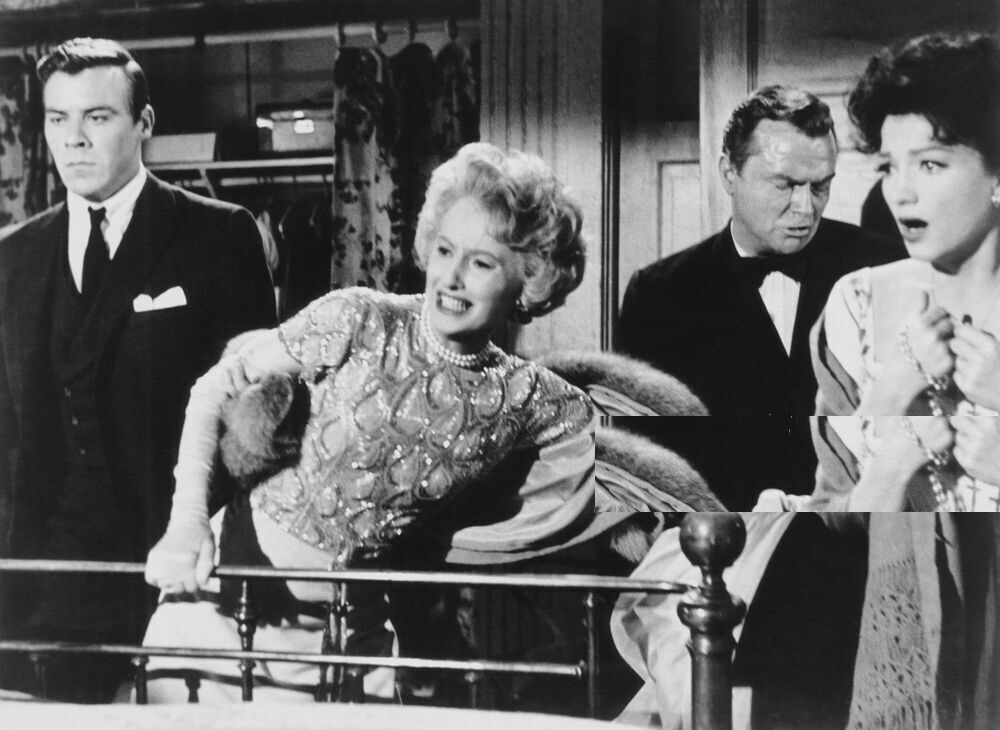
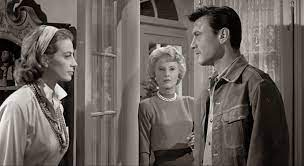
Classic Film Review: Stanwyck, Harvey, Capucine and Jane Fonda take a “Walk on the Wild Side” (1962)

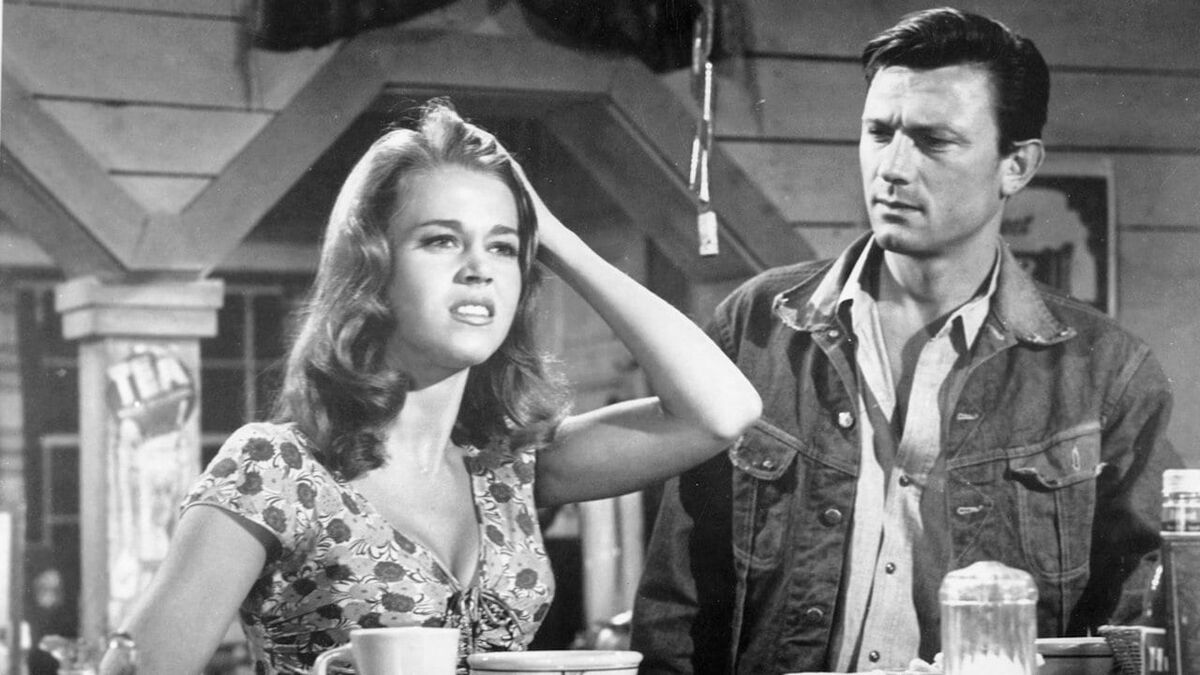
Jane Fonda wasn’t the star attraction, or even the prettiest actress on the screen in her third film, 1962’s “Walk on the Wild Side.”

The regal French beauty Capucine was higher billed. The versatile Anne Baxter and earth mama Joanna Moore were also on board, after all.

But try and take your eyes off Fonda in this melodramatic but rarely sentimental Great Depression tale of women, a Big Easy brothel and the innocent young man from Texas who doesn’t realize what his long lost love has been up to in the years since they parted.

Fonda pretty much steals the picture as Kitty Twist from Paducah, raw and broke and hungry and on the road until she makes her way to New Orleans where she’ll prove “a gal’s always…got other things she can use” to make a buck.

Barbara Stanwyck plays the madam of The Doll House brothel, so there’ll be no “stealing from the house” and no scene stealing on her watch, thank you very much.

Laurence Harvey has one of his better roles as lean, 30ish Dove Linkhorn, who just buried his daddy on the small family ranch outside of Arroyo, Texas. He meets the fiesty, amoral and light-fingered Kitty, who meets Dove on the tramp, hitchhiking and hoboing his way across Depression Era Texas for New Orleans.

Kitty takes Mr. “greenhorn” under her wing, jumping trains and showing a little leg to help with the hitchhiking.

“What’d you tell’em?” Dove wants to know about a compliant trucker.

“Never mind. Just cough now and then like you’re dying.”

Legend has it that Ben Hecht contributed to this screenplay. A safe bet would be that he wrote most of Hank Fonda’s daughter’s lines. Fonda lands the punch line like a pro.

“Talkers ain’t never cute, and the cute ones never talk.”

Dove is on his way to find a long-lost summer love, Hallie. But events conspire to sideline him at Teresina’s Cafe (Anne Baxter slinging the chicharrones and an accent) Cafe, for a bit. The utterly opportunistic Kitty goes her own way, for a while. And we miss her.

Turns out Hallie (Capucine, of “The Pink Panther”), an aspiring artist, lives and works in The Doll House. She’s in demand, which gives her throw weight about Madam Jo (Stanwyck) and her muscle, the sadistic Oliver (Richard Rust). She’ll need that pull when Dove finds her and tries to, as the cliche goes, take her away from all this.

The film, adapted from a Nelson Algren novel — he wrote the dope thriller “Man with the Golden Arm” — plays on screen likeTennessee Williams Lite, from its sordid New Orleans setting to the Big Themes of naive optimism struggling against cruel reality.

The abusive pimp puts on gloves before slapping around simple Georgia girl Precious (Moore, who gained a measure of immortality from a four episode arc on “The Andy Griffith Show,” of all things).

Ken Lynch, who played a lot of cops and heavies over the years, plays the city-hall-connected “friend” of the bordello, and a big fan of Hallie.

And Okie-lean John Anderson plays a judgmental, fire and brimstone street preacher who meets his match when he calls Hallie “harlot.”

“You’re no friend to God or man,” Dove barks, “standing there, hollering hate to the world. God is love. God is mercy and forgiveness! Try preaching that sometimes, Mister Preacher!”

Pretty topical, even today. And that’s an accurate taste of the South of that time, too. Every person you confront was liable to come back at you, and hot, with her or his own interpretations of Christiianity. I’ve seen it and it’s a wonder to behold.

But this movie is Jane Fonda’s “a star is born” moment. Stanwyck is fierce in her best scenes, a matriarch growing into her tough broad middle age. But Fonda lets us see Kitty working it, scheming it, sassing it, facing Terasina-might-steal-her-man-with-warmth with spit and a little xenophobia

“Tortillas? Chicharrones?”

“I hope it’s easier to eat than pronounce.”

It not as “Wild” as all that. It might be — OK it definietly is — Tennessee Williams Lite. But “Walk on the Wild Side” grabs its Southern sin and sadism cliches, its good-girl-gone wrong (NOT Kitty, oh no.) tropes and takes them for a spin. And in the hands of a pretty good director (Edward “Crossfire” Dymtryk) and a good cast including a future two-time Oscar winner, it more wild than mild, and that’ll do.

Rating: TV-MA, violence, sexual (bordello) setting

Cast: Laurence Harvey, Capucine, Jane Fonda, Anne Baxter, Richard Rust, Karl Swenson and John Anderson.

Credits: Directed by Edward Dymytck, scripted by John Fante and Edmund Morris (with Raphael Hayes and Ben Hecht), based on a Nelson Algren novel. A Columbia release on Tubi, Amazon, Youtube etc.

Running time: 1:53

Posted in Reviews, previews, profiles and movie news | Comments Off on Classic Film Review: Stanwyck, Harvey, Capucine and Jane Fonda take a “Walk on the Wild Side” (1962)

Netflixable? Getting the last Word on a Chilean Monster — “El Conde”

It sometimes seemed, in the long years of trials, deflections and evasions that comprised the last days of Chile’s murderous looter and dictator Augusto Pinochet, that the monstrous bastard would never die.

A “normalized” and “accepted” despot with a tidier media image in the U.S. and the UK than his true peers, Marcos, Franco, various Duvaliers and Battista, he must have seemed like a vampire as he evaded accountability for his coup, his crimes and his amassed stolen fortune.

Certainly Chilean filmmaker Pablo Larrain must have thought so. The director of “Jackie,” “Neruda” and “Spencer” branches out from revealing bio-pics for “El Conde,” an often beautiful but always dry and slow motion black and white tirade about the fascist dictator he and his countrymen grew up under.

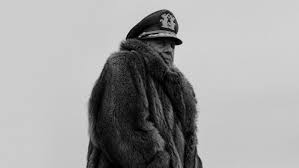
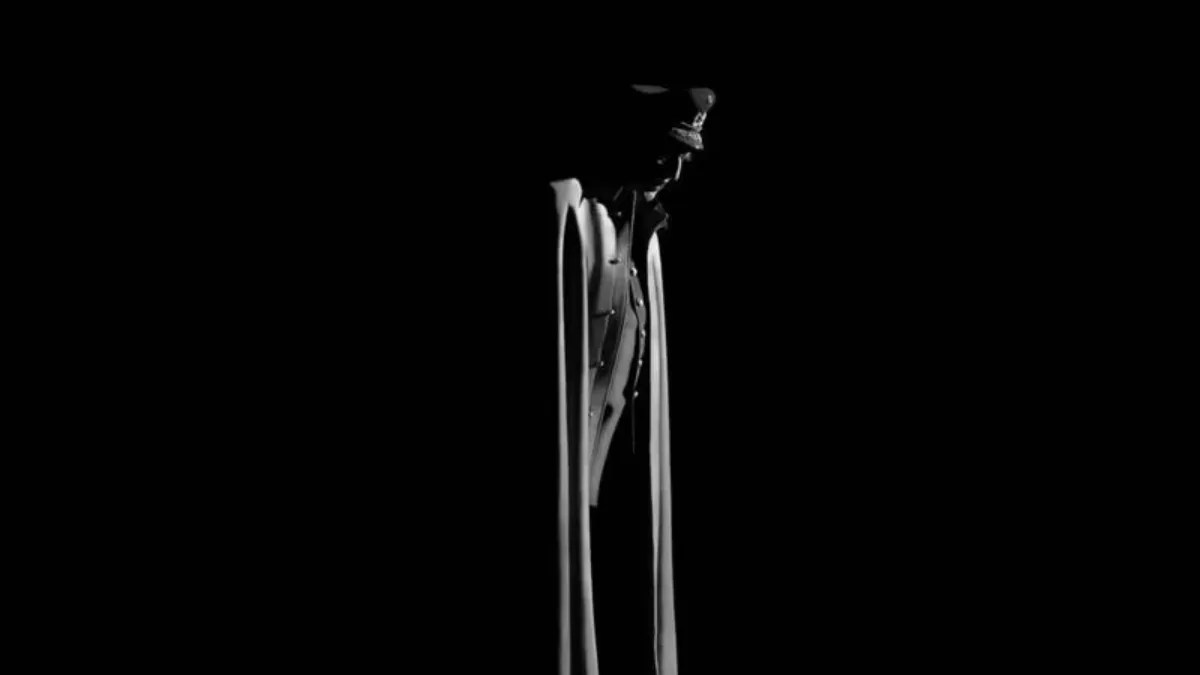
“El Conde” — the title was from the “Captain General’s” preferred mode of address “in private,” “the Count” (Maybe he WAS a vampire!)– sets up as a “Death and the Maiden” reckoning for an evil-doer, an “Interview with the Vampire” interrogation for an old immortal who has faked his death as he murdered his way from 18th century France to Russia, Haiti, Algeria and Chile. It plays out as somewhat less focused than that, and a lot more frustrating.

Pinochet’s great hidden wealth seems lost. His five reviled, avaricious children join him and his “dwarvish, hateful” wife Lucia (Catalina Guerra) on an island estate, presided over by the vampire’s aide de camp, the “White Russian” Fyodor (Alfredo Castro), “a Cossack forged from vodka and steel,” as El Conde (Jaime Vadell) waits for help doing something he’s avoided for centuries — dying.

His friends at the Catholic church provide him with a winsome young nun (Paula Luchsinger) to research his financials and “exorcise” him so that he can at long last die.

She smiles coyly and speaks to him in French, “the language of treason,” he calls it, from his days in Revolutionary France. Sister Carmen asks him about “the murder and disappearance of thousands of children” between queries about looted money and assetts hidden in plain sight in Britain, the U.S., and elsehwere, “sales” of Chile’s industry and patrimony to him or his vile (but not vampire) offspring.

And as The Count and his wife swan about in minks, the young nun prays and prepares to chase away the demon so that the hijo de puta can be removed from the human race.

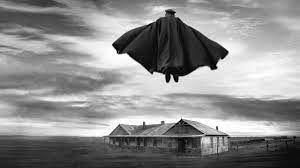
Larrain’s film, mostly in Spanish but endlessly-narrated in British English, has lovely images from the moors and tundra of Chila, and the flying sequences here as the Count and his bitten minions set out “hunting” are almost breathtaking.

Great conceit, seeing the always caped and military-capped Captain General as Dracula in a military uniform.

But the middle acts are consumed with laundry lists of Pinochet and his (sometimes foreign) enabler’s sins, crimes for which Larrain has much zeal for bringing up and none for resolving.

The endless narration is mostly here for layering insults on everyone attached to Pinochet, for explaining and over-explaining the exposition that never seems to end. Once we’ve gotten the “joke,” that the vampire was born in France and used to lick the guillotine after executions during the Revolution and ended his days as a blood-thirsty fascist dictator, focusing on what is known about his regime and pecadillos by showing us is always better than having a narrator explain it.

Yes waiting around to see who that Brit-accented narrator is worth one’s while. But Larrain’s polemic, giving us bare glimpses of the man’s crimes and wallowing in whether this blood or that heart is “old” or “young” and thus more nutricious for vampires adds nothing to the experience.

Larrain takes Netflix money to ensure “El Conde” has striking images, but no tasty “acting” moments. It’s an allegory that works but never quite scores a knock-out blow and a satiric thriller that manages a lot of still-angry name-calling but little sense that this will ever be enough.

Rating: R, violence, sex

Cast: Jaime Vadell, Catalina Guerra, Paula Luchsinger and Alfredo Castro

Cast: Directed by Pablo Larrain, scripted by Guillermo Calderón and Pablo Larrain. A Netflix release.

Running time: 1:51

Posted in Reviews, previews, profiles and movie news | 2 Comments