

Here we go again, Ellen Burstyn may be 90, but she’s still getting a demon exorcising job done.
My review is here.
Here we go again, Ellen Burstyn may be 90, but she’s still getting a demon exorcising job done.
My review is here.
Netflix has had very good luck with World War movies, mostly made abroad. This three part series, set in WWII France, is about a blind radio operator speaking out about the darkness of fascism, and a German soldier witnessing this monstrous political movement from the inside.
Aria Mia Loberti and Louis Hofmann star.
Hugh Laurie and Mark Ruffalo are also in the cast.
Nov. 2.
They didn’t use words like “groomer” way back when. But if this isn’t the most famous case of it — ever — I don’t know what is.
Cailee Spaeny has the title role. Aussie Jacob Elordi is The King….who liked them young. Very young.
Nov. 3.

“Love is in the Air” is an an inane and scenic romance from Australia, a “Hallmark Movie” is all but name.
This Netflix release is an old-fashioned “fish out of water” comedy that’s rarely comic, a city boy/gal from the bush rom-com that blows the “meet cute” and so glams up our tough lady pilot of the bush that she’s ready for a runaway, all right. Just not one that caters to small propeller planes.
Long review short, it’s a film built on a foolproof formula, in which the fools foul up the basics.
Delta Goodrem is Dana, who never shows up for a day at work at tiny, one-Cessna Fullteron Airways without perfect makeup, eyelashes, highlights and a daily blowout.
She’s a pilot always missing tourist charter appointments for “remote air support” pick ups and drop-offs, mail delivery and “emergencies, such as taking a snakebit dog from a remote sheep station to a vet.
That irks the boss, but as Jeff (Roy Billing) is her widowed Dad, there’ll be no complaining.
The sassy mechanic Nikki (Steph Tisdell) worries about their one-serviceable aircraft’s 50 year-old engine, and wishes Dana would get back together with the local hunk.
“You’ve gotta put your foot on the ground sometime, otherwise, life will fly right by you” is merely the first of the eye-rolling aviation puns that litter the script.
But Fullerton (not a real town, Whitsunday, Queensland was the main location) isn’t independently-owned. A hustling analyst with London’s ITCM Financial sees the operation is on their books, and well worth liquidating. Will (Joshua Sasse) tells the boss (Hugh Parker) this, and the boss — also his dad — sends him south, “to the ass-end of the world,” to check out the operation and make their move to close it down.
Considering that the plane ticket, etc., would just be more lost cash, you’d think they’d do that remotely. But no. Dad wants the lad to prove himself. Which Will proceeds to screw up, almost from the start.
A half-hearted attempt at mistaken identity at the airport, a hasty enlistment in “assisting” pilot Dana in some of her work, and Will is enchanted by the place, the seat-of-your-pants nature of the job and the flying, and smitten with the sassy Dana.
What that situation needs is sparks, a little friction. If you remember the tomboyish bush pilot Maggie of “Northern Exposure” you know how this is supposed to play. Beautiful or not, she’s too butch for the sissy city boy. But the sparks fly anyway.
That doesn’t happen here. Everything is watered-down, with any promising rough edges rubbed off. There’s little chemistry between the attractive leads. The “real reason” Will’s here is sure to get out. Even the third act “crisis” (a storm) is predictable and is plotted out in the least logical or interesting way imaginable.
A bit of attempted beach football (soccer) in a suit, a little cricket on the tarmac, a little slang — “Get a wiggle on!” “Oh my giddy aunt!” — a few puns, and a bit of coastal Queensland scenery is about all there is to the stale “Love is in the Air.”

Rating: TV-14, mild peril, profanity
Cast: Delta Goodrem, Joshua Sasse, Roy Billing, Hugh Parker and Steph Tisdell.
Credits: Direted by Adrian Powers, scripted by Katherine McPhee, Caera Bradshaw and Andrian Powers. A Netflix release.
Running time: 1:28
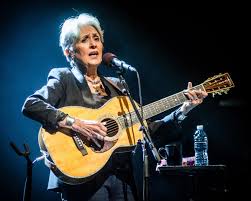
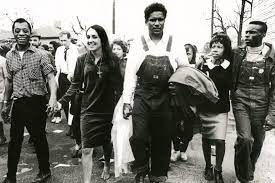


Joan Baez wrapped up her 60 year career as a folk music icon and very public global civil rights activist with a 2019 show in Madrid, an exclamation point at the end of decades of thrilling, often landmark performances, protests and outspoken activism.
Her unmistakable soprano voice ringing clear and true, even as it aged, covering classic folk tunes and songs of her own creation, was always a clarion call for justice.
Now 82, she’s already been lauded and given her due as a legend, an “American Master,” as PBS labeled her.
“Joan Baez: I Am a Noise” is a more intimate look inward at a life in the public eye, famous from her teens, a Time Magazine cover at 21, respected and controversial from the beginnings of her public life to the end of it.
Three directors use lengthy conversations with Joan, her now-passed sister Pauline and mother “Joan Sr.,” archival interviews, readings from childhood essays and life journals, taped letters from the road and even cassette recordings of therapy sessions to paint a deeper portrait of a complex woman with so many layers to her no single film could do her justice.
A Mexican-American (her father was a preacher-turned physicist and UNESCO researcher) who experienced discrimination in childhood until she picked up first a ukulele and then a guitar, Baez was “running around barefoot, long-haired, looking like the Virgin Mary and probably thinking I was a little bit like her” in her youth,
But as her family became Quakers and she witnessed poverty in America and around the world, thanks to her father moving them to assorted Third World countries working for UNESCO, she noted in a teen essay, “I am not a saint. I am a noise.”
Interviewers like Christiane Amanpour might hail “one of the purest notes in music history,” but Baez sees herself, in reflection, as “just the right voice at the right time.”
“I Am a Noise” uses some childhood reenactments to recreate that childhood, and snippets of animation to provide visuals for the vast archives of audio recordings of her tape-recorder-mad father, her own taped letters and reflections.
We see performances from the last stretches of the tour she didn’t want to call “a farewell,” with her small band — son Gabriel Harris was her percussionist — and the film uses snippets of those shows and samples her scores classic live performances over the decades.
She revisits her brief, youthful and celebrated affair with Bob Dylan and her role in legitimizing his career and songwriting. We see their soulful and sometimes playful joint stage appearances, and note how her rural New York home is still decorated with images of Bob.
It’s a somewhat sprawling and almost ungainly film, years in the making, very revealing and yet notably incomplete. The great love affairs — male and female — leave off Apple founder Steve Jobs, and the weight of late life allegations of abuse by their father, which Baez and her folk-singing younger sister Mimi Fariña made, necessarily burdens the movie’s third act.
The focus is narrowly on Joan and her family, with only rare outside voices of authority glimpsed in archival interviews placing Baez on the pedestal music and cultural history built for her.
But her reflections on a life lived in the public eye are insightful and her memories of the many landmark civil rights events she participated in and help popularize an invaluable record of her era.
When folk singer and actor Theodore Bikel (“The African Queen,” “The Defiant Ones”) introduced Baez onto the stage at the 1960 Newport Folk Festival, his few simple words set up all the acclaim that her later life would live up to.
It was a rare thing, Bikel noted, to have a “great singer and musician” wrapped up in someone who is also “a great human being.”

Rating: unrated, drug content, abuse discussions, some profanity
Cast: Joan Baez, Pauline Baez, Gabriel Harris, Joan Baez Sr., with archival interviews/etc. with Bob Dylan, Mimi Fariña, Richard Fariña and David Harris
Credits: Directed by Mira Navazsky, Maeve O’Boyle and Karen O’Connor. A Magnolia release.
Running time: 1:53
This paranoid sci-fi thriller, based on a hit novel by Rumaan Alam, comes to theaters in Nov. and then Netflix Dec. 7.
“Mr. Robot” veteran Sam Esmail makes his feature film debut directing this, with BBC “Industry” star Myha’la Herrold (she’s losing the “Herrold” in billing, now) getting big exposure in this prestige pic from Netflix.
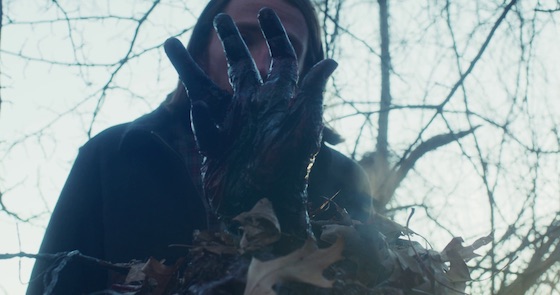
There are a lot of telltale signs that “Grieve,” a pretentious, cryptic and childishly obscurant title loosely labeled as “horror” and inexplicably picked up for distribution by Terror Films, might be a student film.
I try not to review student films, even those whose filmmakers are cheeky enough to get an off-off brand distributor to pick their movie up. They’re mostly bad, and I don’t grade on the curve. Which is a way of saying I can be pretty mean. Ask anybody.
Writer-director Robbie Smith hasn’t made anything else, near as one can tell.
His screenwriting betrays a certain in-his-own-headspace insensibility that opens with nearly three minutes of a character curled up on a floor, listening to what appears to be (the audio mix is poor) an old phone message while the screen is covered in large block letters “GRI” over “EVE.”
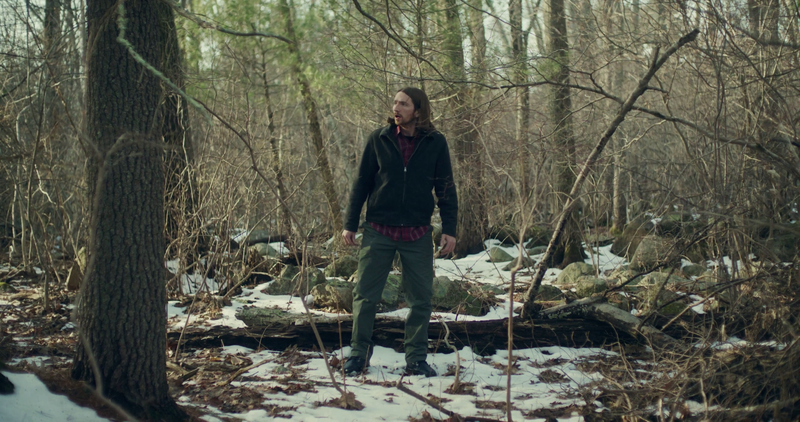
A prologue that is a pointless structural blunder (the “credits” come after it) sets up our grieving Sam (Paris Peterson) before he is sent home from the office and into his family’s cabin out in the snowy, overcast woods. Somewhere.
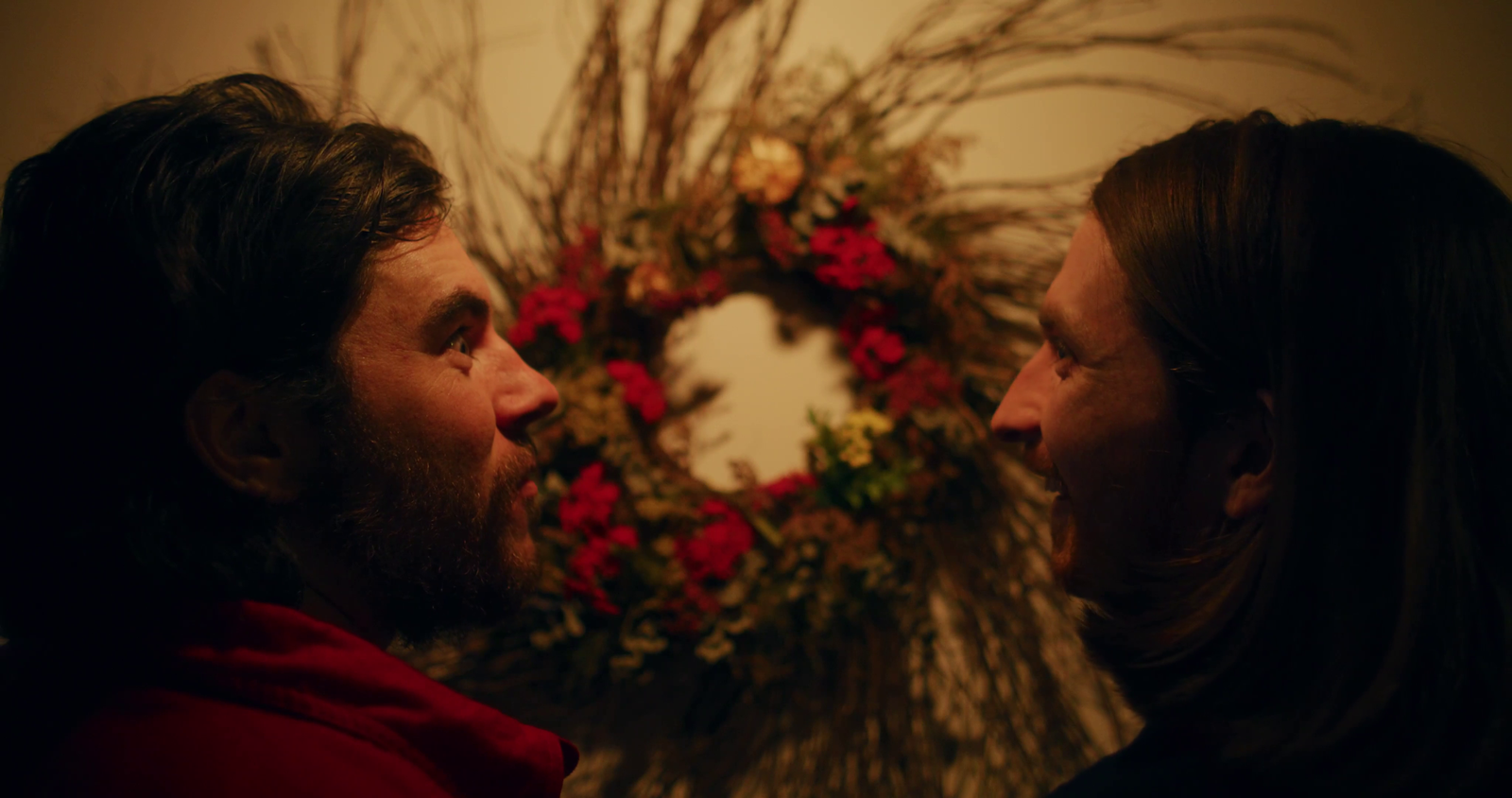
Sam is grieving for Sarah (Danielle Keaton), whom we finally glimpse in a flashback over 20 minutes into the nearly-dialogue-free opening act. And he reconnects with a childhood friend (Jacob Nichols) from cabin country, unhappily married, working class and ready to “party” with pills and what not.
Sam starts to hear voices. Sometimes, it’s his voice, narrating…something. Every now and then, he hears cryptic pronouncements whispered in French.
“Nothing festers in the cracks and expands…Nothing lives and grows.”
Yes, it’s as inane in English as it is in French.
By the time Sam sees a gnarled hand reach out of the ground, we wonder if he’s losing it, if he’s having pill flashbacks or he’s actually encountering something supernatural, apparently unrelated to his grief. By the time he has his first “accident” (self harm), we still haven’t figured out what exactly is going on here.
Helpfully, Smith provides an explanation for the plot on the film’s IMDb page. There’s little that he wrote there that actually jibes with the pseudo-artsy, choppy, indifferently-plotted movie we’ve seen on the screen. And “explaining” away your intentially obscure movie with a director’s statement is very “student film,” BTW.
The cast is neither accomplished nor interesting — mostly-unknown, with Keaton’s long career of bit parts apparently deemed unworthy of documenting on Wikipedia.
Obscure, clumsily-pretentious, under-scripted and flatly acted, there’s nothing to recommend here.
But if it’s a student film, there’s always the hope that things will click further along, maybe in grad school. Or not.
As it is, I can’t for the life of me figure out what any distributor saw in this, and even the publicist sending out pitches for this waste of time mis-titled “Grieve” “Grief” in bold block letters of her own.
Good grief.

Rating: unrated, violence, drug abuse
Cast: Paris Peterson, Danielle Keaton and Jacob Nichols
Credits: Scripted and directed by Robbie Smith. A Terror Films release.
Running time: 1:05
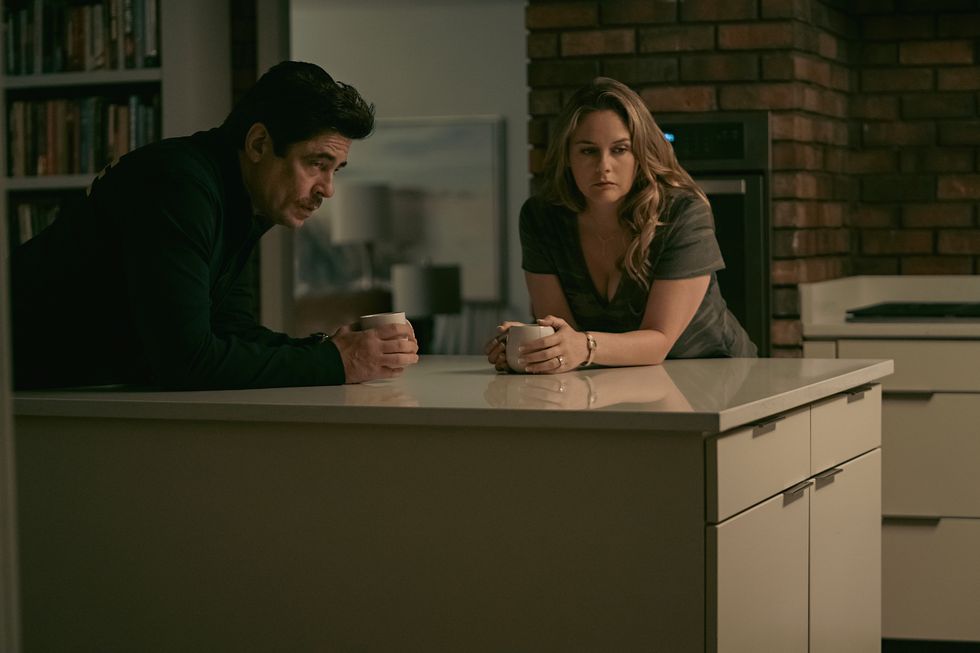
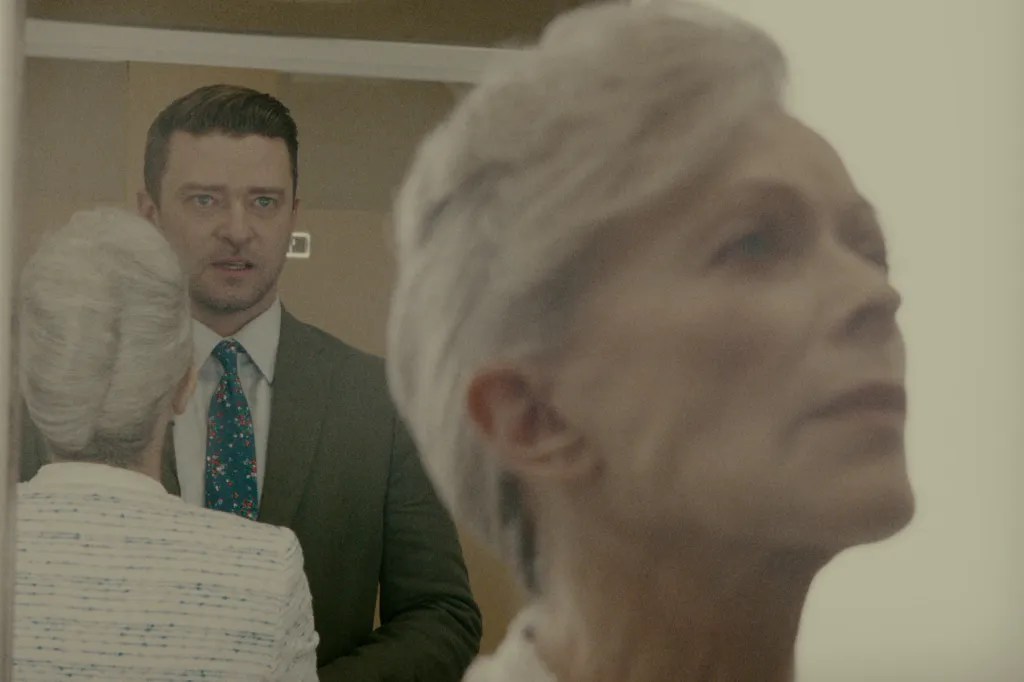
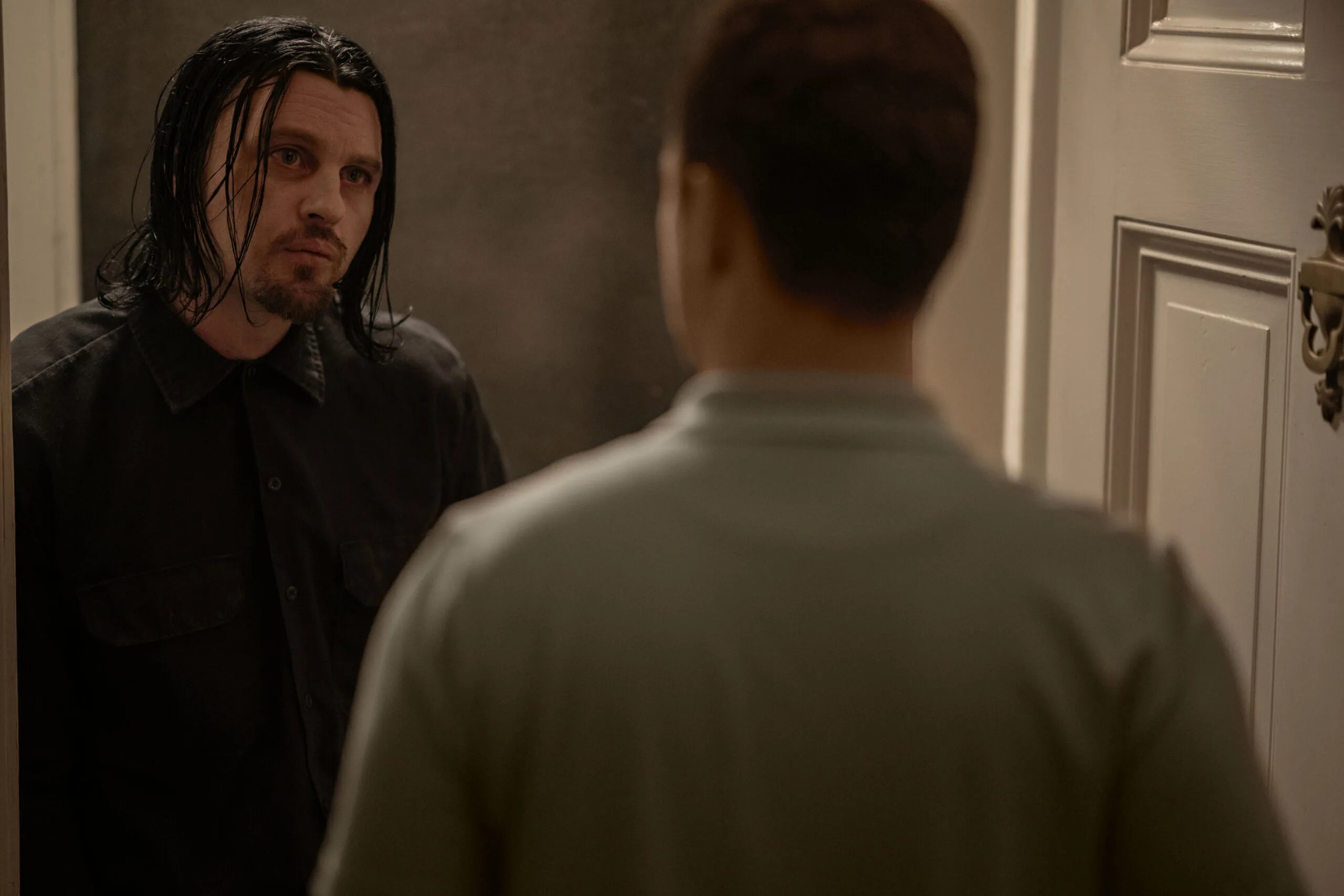
“Reptile” ends with a few delicious twists and such a satisfying punch that it’s a shame we have to talk about “Netflix editing” again, that lack of cutting that makes even a pretty smart and dense thriller play like a New Orleans funeral.
The film, co-scripted by star Benicio del Toro, starts slowly, slows down for a few more complications, meanders a bit and finds its way to a fine finish that’s a bit late arriving.
It’s a tale of murder, infidelity, drugs, real estate and a cop with a past on the case. A willowy young real estate agent (Matilda Lutz) is murdered. Her handsome but older real estate tycoon beau (Justin Timberlake) is Suspect One.
But Det. Tom Nichols (del Toro), a Philly cop new to the suburban Scarborough P.D., and his partner (Ato Essandoh of TV’s “The Diplomat”), his captain (Eric Bogosian) and his department have a lot of other possibilities thrown in front of them as this case progresses.
There’s the dead woman’s “artist” not-quite-ex-husband (Karl Glussman). The mother of our real estate tycoon (Frances Fisher) gives off strong dragon lady vibes. This nut the real estate hustlers screwed over (Michael Cameron Pitt) figures in their deliberations as well.
So do a lot of other variables in this slow-to-unravel tale, one that throws in an “It was just a dream” red herring — one among many — and shifts points of view several times, even as though is the dogged, perhaps-tainted Nichols that is our protagonist here.
They went for a bit of stunt-casting that really pays off — re-pairing del Toro with his “Excess Baggage” (1997) co-star Alicia Silverstone, who plays the earthy, sexy and brassy cop wife who gives as good as she gets from her detective husband.
There’s also a kitchen renovation that isn’t going well, a real estate business that has some off-the-books tax tricks that add an extra whiff of corruption, some back and forth over clues, DNA and a misidentified vehicle of interest, all set against a cop culture that sees a lot of off-hours socializing amongst the Blue, with the cynical, callous detectives placing cash bets on suspects and the sage Nichols noting to his new partner that “overtime” in police work is for “milking,” if you need the extra money.
That casts a shadow over Nichols’ self-rightous lecture to a subordinate “uniform” at a crime scene.
“When you walk through that front door, there’s a jury of twelve watching you.”
There’s something about Nichols that has his captain insisting he’s “clean” to the chief, that has one cop-obsessed suspect declaring “This is your chance to redeem yourself,” that makes us wonder about that opening act hand wound that Nichols walks onto the crime scene with.
Justin Timberlake was born looking “guilty.” But maybe that’s just meant to throw us off.
Just guessing here, but the poker-faced, iguana-eyed Oscar-winner del Toro, of “Traffic,” “Sicario” and “The Usual Suspects” is as good an inspiration/explanation for the title “Reptile” as any. Still, the script is littered with self-serving, scaly characters up and down the line.
Music video director Grant Singer, who makes his feature directing debut and co-wrote the script, gets a lot of misdirection plot threads in a story almost overstuffed with characters, some of whom we’re meant to underestimate, some we fear and others we fear for.
Love del Toro in this part, love seeing the sparks he sets off (as a jealous husband) with Silverstone, and it’s great seeing the under-utilized Pitt, Fisher and Bogosian in chewy roles for a change.
But Singer has of now no feel for pacing, and Netflix has made it some sort of streamer policy that they don’t push newcomers or screen legends like Scorsese, Spike, Cuaron and Campion to deliver brisk, tight cuts with pace and urgency. This lizard drags for the first 90 minutes and only really gets up to speed in the third act.
It’s perfectly watchable, but let it play on during the bathroom breaks and search for snacks. It’s so slow you probably won’t miss anything vital, not until the third act.

Rating: R, violence, drug content, profanity
Cast: Benicio del Toro, Alicia Silverstone, Justin Timberlake, Eric Bogosian, Frances Fisher, Tom Nowicki, Ato Essandoh, Karl Glussman, Dominick Lombardozzi, Matilda Lutz and Michael Carmen Pitt.
Credits: Directed by Grant Singer, scripted Grant Singer, Benjamin Brewer and Benicio del Toro. A Netflix release.
Running time: 2:16



Before the band that would Change the World became The Beatles, the template for all rock quartets to follow, they had a floating lineup of many musicians of varying talents, generally taking the stage with six members.
In addition to guitars and drums, they had washboard, banjo and “tea-chest bass” players in their aggregation, that last instrument homemade with a wooden box, a stick and a string.
They played the jazzed-up folk/blues that was all the rage in the U.K. of the late 1950s, skiffle. And their name came from the corner of Liverpool where most of them grew up and the boys’ school many of them attended — Quarry Bank High School.
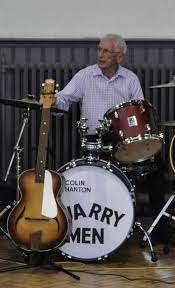
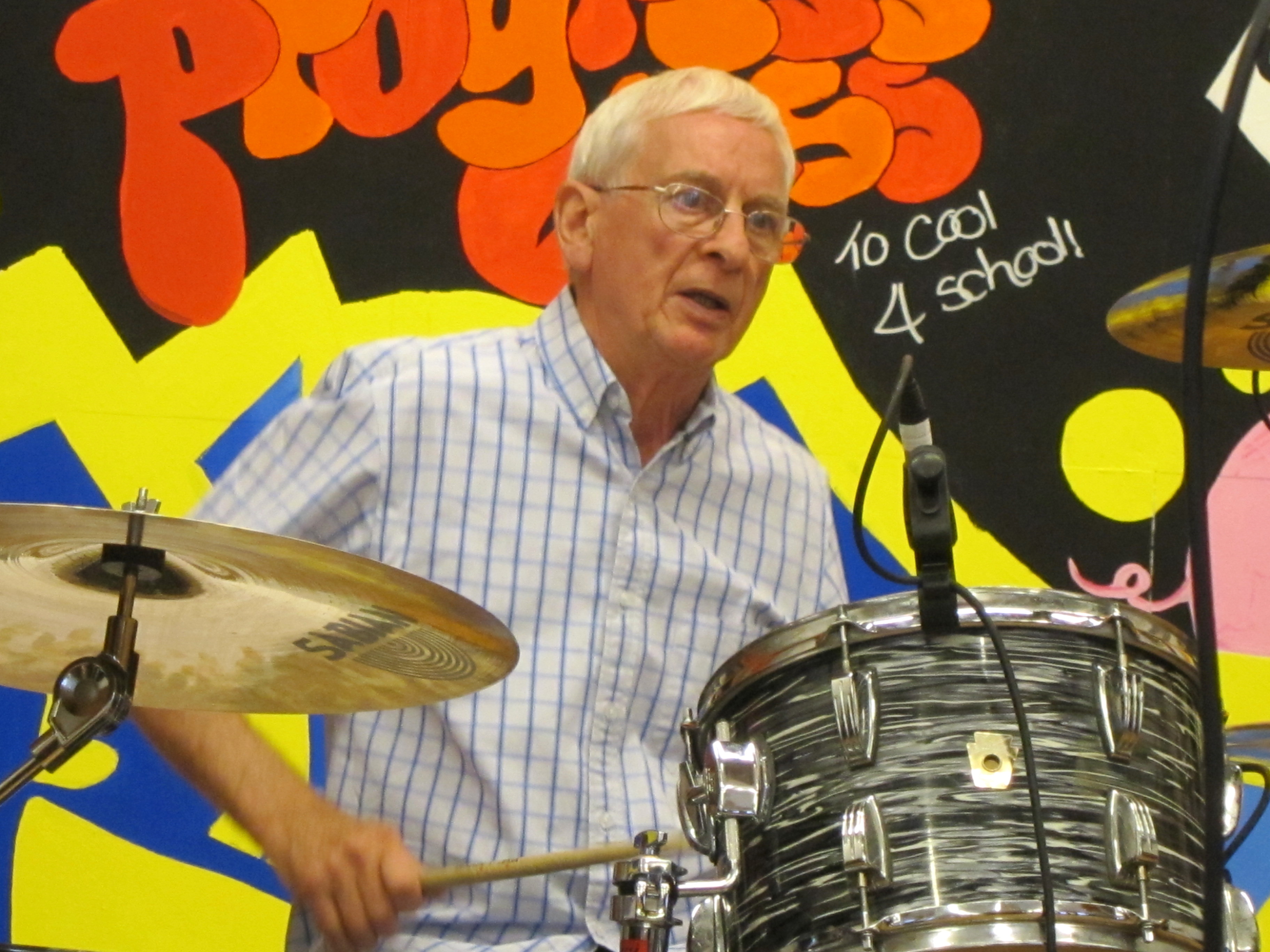
“Pre Fab!” is an amusing, informative and bittersweet documentary about the “forgotten” players in a band that would be founded by John Lennon, and would eventually include Paul McCartney and George Harrison, The Quarrymen.
If you’re a Beatles “completist,” you’re going to know at least some of this story. But this new documentary from the director of the equally fab “Women in Motion,” about the NASA career of “Star Trek’s'” Nichelle Nichols, rounds up the survivors of that group, including Paul McCartney, to talk in depth about those years. We get insights about the relationships, influences, group dynamics and key moments that took that teen group to the very pinnacle of fame and success when they formed and reformed as The Beatles.
You think you know The Beatles? You don’t unless you know Colin Hanton, Len Garry, Rod Davis, John Duff Lowe, original “manager” Nigel Walley and the other Quarrymen and their first-hand accounts of pop culture lightning st it struck just after their time getting to know John, Paul and George.
The anchor interviews are with Quarrymen drummer Colin Hanton, a twinkly retired upholsterer who makes “Life isn’t fair” a cute running gag as he recalls his near-miss shot at fame, and the co-writer of his memoir, Lennon curator Colin Hall.
They and Beatles historians, along with John Lennon’s half-sister, Julia Baird, Billy Bragg and musician, Beatles contemporary and Apple Records A & R guru Peter Asher paint a picture of post-war Britain, the generation that grew up free from fear of air raids and bridling at the country’s hidebound classism and genteel working class poverty.
And they flesh out the cast of characters in this “garage band without a garage,” filling in the blanks of how this fellow knew that one, who got who into the band, an ever-shifting lineup of teens who embraced Lonnie Donergan’s wildly popular, high-energy cover of “Rock Island Line,” sort of the Ur Text of Skiffle.
Some of them were ready to adapt as the band embraced Buddy Holly, Little Richard and American rock’n roll. And some were washboard, tea-chest bass and banjo players.
There’s terrific stuff like hearing the earliest surviving recordings and how they survived, band members relating how Lennon’s mother Julia knew how to play the banjo and passed on “banjo chords” and tuning to the nascent guitarists — like John — trying to get pleasing sounds out of their axes.
And there’s the also-ran players’ cheerfully-philosophical realization that McCartney, who knew proper tuning, and Harrison, already a very young guitar fanatic, changed the band and made it more likely they’d all drop-out or get pushed aside as ambition and professionalism set in.
Hanton is a spry, droll presence at the heart of these recollections, the film’s tour guide through the Liverpool of “Eleanor Rigby’s” grave, “Strawberry Fields” and tea-chest bassist Len Garry adds a cheeky sparkle to the testimonials.
The film’s history makes it a must-see for any Beatles fanatic. But the third act’s adorable surprises and redemptive yet comic touches lift the film above simple history and take it into the realm of re-examining “Life isn’t fair,” because sometimes it all works out in the end.
This bright, sunny amd brisk pre-history makes a fine companion to Peter Jackson’s laborious but thorough “Get Back,” which lays out — in great detail — how the “Fabs” from “Pre Fab!” reached the end of their “long and winding road.”
As origin stories go, it’s hard to beat the self-effacing personalities and musical myth-building of “Pre Fab!” It’s finishing its festival run now. Hopefully, some smart distributor and rodent-mascot “Get Back” promoting streaming service will give this delightful musical history lesson a proper home.
Rating: unrated
Cast: Colin Hanton, Paul McCartney, Peter Asher, Julia Baird, Colin Hall, Sylvia Hall, Billy Bragg, Len Garry, Bob Harris and Rod Davis, with John Lennon and George Harrison (archival footage).
Credits: Directed by Todd Thompson, scripted by Mark Bentley, Joe Millin and Todd Thompson, based on the memoir by Colin Hanton and Colin Hall. A Stars North release.
Running time: 1:33


My old friend Todd Thompson, an Orlando filmmaker who struck gold with a Nichelle Nichols doc “Woman in Motion” that every “Star Trek” fan saw, is back with a Beatles before they were The Beatles film.
His doc “Pre Fab!” is showing to friends, family, backers and an Orlando film critic at the historic Garden Theatre in bucolic, bike-crazed Winter Garden, Fla. I’ve been following/covering this dude for 25 years and I could not be prouder of the filmmaker he’s become.

The Garden was built in 1935 and was the first sound cinema in Greater Orlando, movies in the middle of citrus orchards and mosquitoes.
The place used to be so quaint and rural that you’d see bobcats in the empty streets, that Jodie Foster was set to film the period piece “Flora Plum” with Russell Crowe here some years back. Russell blew out his shoulder, the picture was put in turnaround and eventually was filmed somewhere else at a later date.
Now, a bike trail-inspired development boom has made Winter Garden a much more populous Orlando and theme park workers bedroom community with scads of restaurants and amenities.
It’s a rainy Sunday in Central Florida. Who’s ready to “Get Back” before they were Fab?
Who remembers skiffle?


