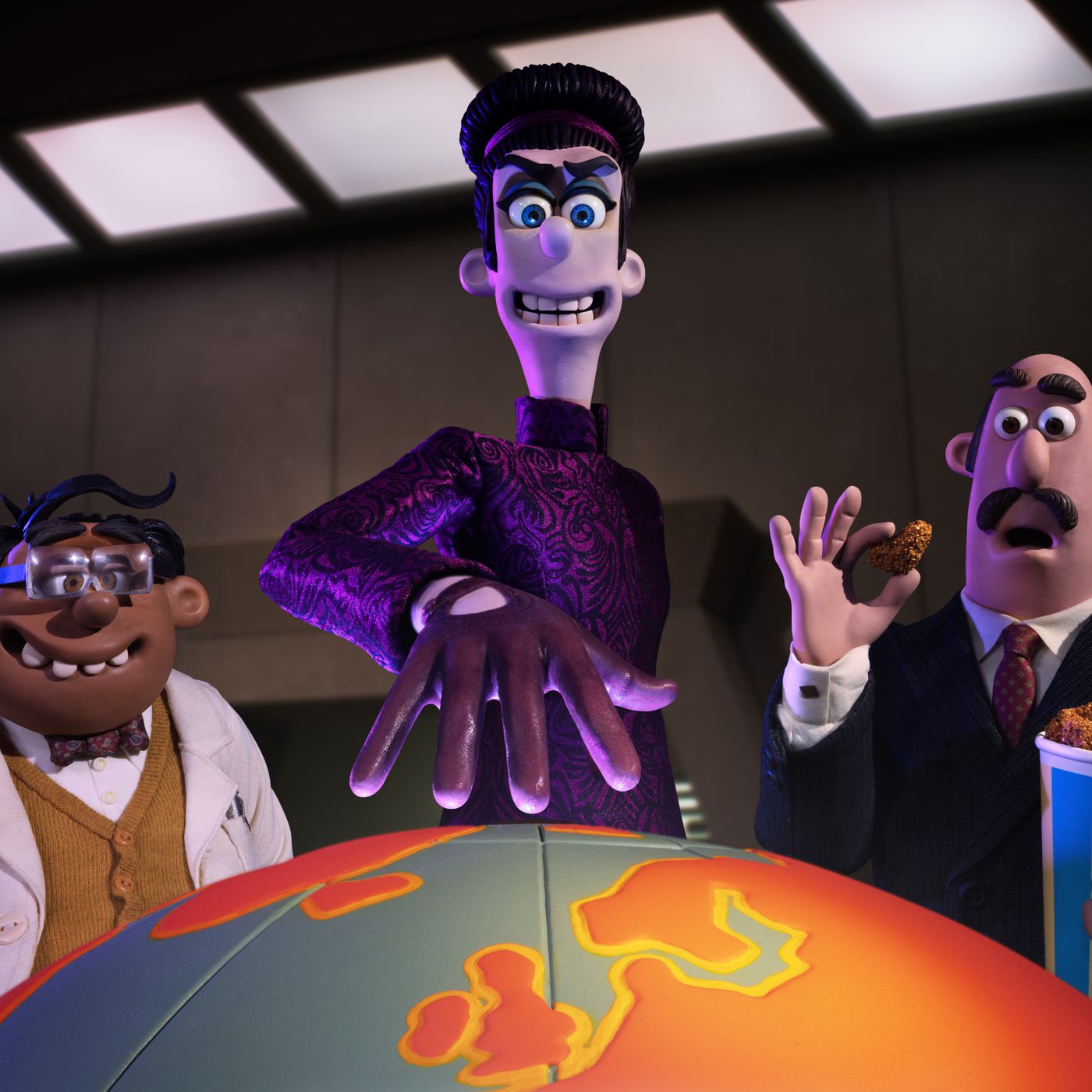
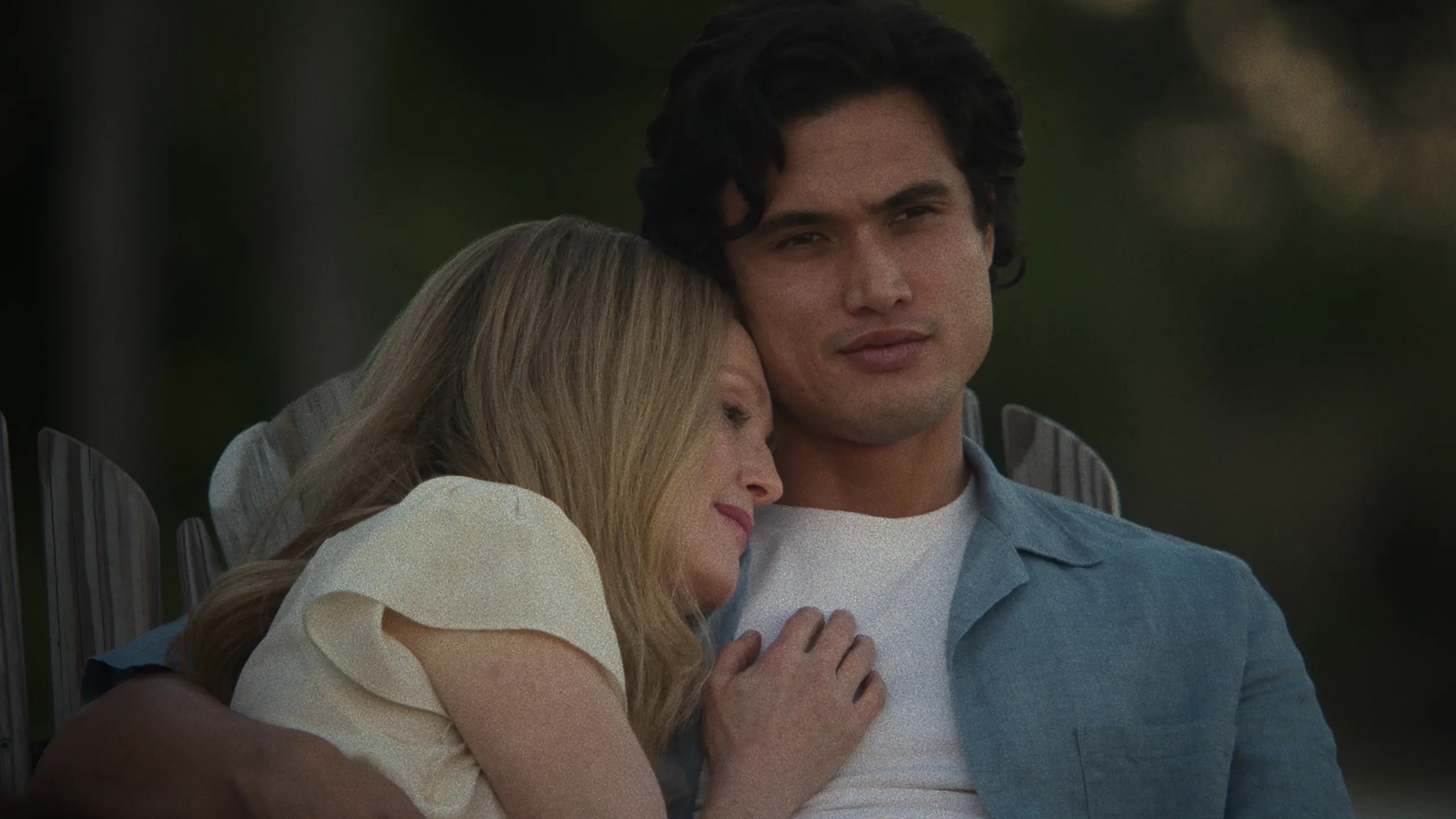
A Taiwanese/American gangland thriller/action shoot’em up, this one looks jokey and bloody and kind of fun.
Jan. 4. Netflix
A Taiwanese/American gangland thriller/action shoot’em up, this one looks jokey and bloody and kind of fun.
Jan. 4. Netflix
Hiyao Miyazaki’s latest “final film” (he’s retired a few times, most recently in 2013) is doing bang-up business at the U.S. box office as “The Boy and the Heron” looks to win a weak, no-real-competition early Dec. opening weekend.
Deadline.com was projecting a $10-12 million take for this fantasy fable from the master Japanese animator who gave us “Spirited Away,” “Ponyo” and “The Wind Rises.”
The final tally is $12.83, per @TheNumbers.
Ordinarily, that wouldn’t be enough to win a weekend. But early December is traditionally a weak stretch for new openings, and this year’s Thanksgiving offerings — a new “Hunger Games” installment winding down, “Napoleon” underperfoming ($4 million) and last weekend’s concert film blockbuster, “Renaissanse: A Film by Beyonce” taking a STEEP dive on its second weekend — left the box office door open for this anime event.
“The Hunger Games: The Ballad of Songbirds & Snakes” took in $9.4 million in its umpteenth week of release.
The real “race” here was between “Renaissance,” “Trolls Band Together” and last weekend’s other “big” (ish) release, “Godzilla Minus One,” with all three films expected to tally about $6-6.5 million, based on Friday’s box office take.”Godzilla” is only losing 40-45% of its opening weekend take, a much better hold than the front-loaded ticket sales of the Beyonce movie.
A reminder, this is how singing star concert films normally perform in theaters — a big opening, a steep drop-off (But 77%+? Ouch.), and quick disappearance. “Renaissance” only took in $5 million this weekend. Taylor Swift’s “Eras” was a blockbuster exception, opening huge and sticking around for an epic month of big box office.
“Godzilla Minus One” easily took third place, with $8.34 million.”Trolls” added $6.2, “Napoleon” only managed $4.2 and seems not destined for greatness.
Limited release/low box-office expectation pictures such as the filmed stage musical “Waitress” ($3.2) starring Sara Bareilles, Oscar-bait “Poor Things,” ($644K), less Oscar worthy “Eileen” ($615) and the corrosive “Saltburn” are left fighting for the Top Ten leftovers, along with “Silent Night” and “Dream Scenario.”
Angel Studios’ faith-based sci-fi “The Shift” is doing middling business, $2 million or so.
“Thanksgiving” faded to black even faster than “Wish” (another $5 million and change). Disney isn’t reporting “The Marvels” earnings any more, because the pain is too deep.


A refugee smuggling tragedy tears at the fabric of a Greek family in “Behind the Haystacks,” a touching and deeply involving drama that is the Greek submission for consideration as Best International Feature for the next Academy Awards.
The Middle Eastern conflict refugees are mostly in the background of writer-director Asimina Proedrou’s debut feature, a film that reveals the cultural and social rifts and weaknesses that migrants, fleeing wars and climate-change worsened economic strife, have opened in a troubled country that serves as a gateway to Europe.
The story is told within the frame of a lakeside summer picnic in a village on the border with Macedonia. Children playing in the water are shocked to find bodies floating in the reeds. And something about the way the men of the farming hamlet laugh this off, ask them if they know the legends about “water nymphs” and the like as the women look pained or appalled is just chilling.
We learn the “real” story of those bodies, life in this place and the differing attitudes of the locals to “outsiders” via three versions of what happened there, told from the point of view of indebted farmer/fisherman Stergios (Stathis Stamoulakatos), his devout Greek Orthodox wife Maria (Eleni Ouzounidou) and their 20ish student nurse daughter Anastasia (Evgenia Lavda), an aspiring singer bridling at the restraints of living under her father’s thumb.
Stergios is paying off a tractor and hiring an Albanian immigrant to use it to fertilize and cultivate his land, and driving back and forth across the border to fish the lake and sell his catch to a local butcher.
His finances, and those of the village farm co-op, are a shambles, mirroring those of Greece itself. Corruption, tax dodges and sloppy envoicing have him and many of his neighbors on the brink, Nobody is paying anybody else what they owe, and they’re all in trouble.
Stergios resists the offers of “help” from his hated, sketchy, strip-club-haunting brother-in-law Dmitris (Paschalis Tsarouhas), whose visits are unwelcome as he showers birthday cash on his niece, Anastasia.
That “help,” when Stergios is finally forced to accept it, involves smuggling refugees into Europe.
“If it gets out of hand you’ll be the one behind bars,” he’s warned when he gets belligerent (in Greek with English subtitles).
Wife Maria is in charge of fund-raising for a restoration of Saint Barbara’s, the parish church. The older priest orders that there be no church outreach for the poor huddled Muslim masses encamped and struggling to survive as they await escape or government help. Old emnities aren’t so much mentioned as felt.
Maria is as obedient to her priest as she is to her husband. But a neighbor, Georgia, has common sense compassion and ignores the priest’s un-Christian edict. Maria finds herself torn when she goes to the camp, hunting for Georgia, and sees the problems of the people there.
Anastasia is young, working her way into a career and straining to live a more lively life than the broke one her controlling, bullying father oversees. She lands a side hustle as a singer, but needs to keep that secret. She takes a lover, and that is also something her father cannot know about.
“Behind the Haystacks” is neatly separated into those three narrative threads, with that of Stergios as the most detailed and dramatic.
Proedrou sets up and reinforces the idea that the problems were always here — a stodgy, patriarchal society only as adaptable as the limited, stubborn men running things, “independent” and proud rural people who rationalize getting by via cheating, an ancient religion limited by ancient grudges it won’t abandon and outsiders who are to be ignored, unless there’s easy money to be made off them, dismissed and unmourned when things go wrong.
The three-act structure may be simplistic, but it works. The arcs of the various stories have a predictibility to them that doesn’t ruin the parable’s impact. The performances are compelling and lived-in.
And the detailed depiction of Greece beyond the tourist sites, beyond the headlines, out in the country “Behind the Haystacks” make this as timely and topical as any film up for Oscar consideration this year.
Rating: unrated, violence
Cast: Stathis Stamoulakatos, Eleni Ouzounidou, Evgenia Lavda, Christos Kontogeorgis,
Dina Mihailidou and Paschalis Tsarouhas
Credits: Scripted and directed by Asimina Proedrou. A TVCO release.
Running time: 1:56
Ryan O’Neal was ridiculed for being a wooden pretty boy in his early films. But he was very funny opposite Streisand in “What’s Up Doc?” and lowdown amusing in “Paper Moon.”
His best role might have been an iconic, largely silent and much-imitated turn in the title role on Walter Hill’s genre-defining “The Driver.”
Pretty cool. RIP.


Disney has apparently “right sized” its approach to the “Diary of a Wimpy Kid” rights and franchise that it acquired when the studio bought out 20th Century Fox.
The early live action films were the best, but how many of those will kids tolerate? Are you going to keep recasting “kids” for the films every three or four years? And it’s doubtful those will have much of a shelf life, even on The Disney Channel and Disney+.
But even modest-budget animated films have a timelessness that lets them stick around. And making movies that resemble CGI versions of the illustrations in Jeff Kinney’s “Wimpy” books tightens the connection to those learning-with-laughs comedies.
“Diary of a Wimpy Kid Christmas: Cabin Fever” isn’t anybody’s idea of “an instant holiday classic.” Parents won’t gather the family around the electronic hearth to watch this lighthearted but slight-to-a-fault tale of Greg Heffley learning “The True Meaning of Christmas.”
But it’s harmless streaming TV babysitting fodder for eight-and-unders, even if there’s barely enough here to hold even their attention for long.
Greg (voiced by Wesley Kimmel) is counting the days until Christmas, trying to maintain at least the illusion that he’s “being good” so that he’ll get that coveted new video game system from Santa.
Maybe Greg’s not the whole-hog believer in the jolly fat man delivering toys down the chimney that his more innocent pal Rowley (Spencer Howell) still is. Rowley’s sold on “being good” as a lifestyle choice. Greg? He’s more non-commital.
But neither of them anticipates the big holiday problem that’ll have their fingerprints all over it, one that could cost them their Christmas.
It’s a snowman-building accident that happens just days before the holiday. The massive ball of snow that they’ve rolled up as the base for this planned snowman gets away from them, “snowballs” downhill and breaks the snowplow that working class Gabby (Lisa Ann Walter) drives.
Her best efforts to catch the culprits fail as they scamper out of sight and at Greg’s direction, ditch their snowy weather clothes in a dumpster. But the dumpster turns out to be a “donate a toy” box. Their names are stitched in their stocking caps and scarves. The cops are the ones who empty that box and deliver the toys.
And wanted posters are slapped up all over the neighborhood with their not-quite-likenesses.
A blizzard just delays the inevitable, allowing them more time to stew over their fate and try to wriggle out of this jam. It’ll take all of Greg’s scheming and a lot of luck to keep them from being found-out or turned in, caught and tossed in jail, a favorite nightmare of many a “good” kid.
“My parents would be…SO disappointed in me!” Rowley whines.
The better-to-give-than-receive messaging comes through loud and clear, even if the pratfalls aren’t anything to write home about and the jokes paper thin.
“You’ve gotta TRUST me, Rowley! Have I ever steered you wrong?” “A BUNCH’a times!”
And the animation, which does more with color than with character design, settings or sight-gags, is adequate, nothing more.
Turn it on, leave the room and bake a pie. Maybe it’ll jump-start a small child’s interest in the books.
Rating: PG
Cast: The voices of Wesley Kimmel, Spencer Howell, Erica Serra, Chris Diamantopoulos, Hunter Dillon, Lisa Ann Walter and Gabriel Iglesias.
Credits: Directed by Luke Cormican, scripted by Jeff Kinney. A Disney+ release.
Running time: 1:06

Maybe the definition of madness is “doing the same thing over and over again, expecting a different result.” That doesn’t really explain Netflix’s mania for big budget/”name” cast disaster movies.
“Don’t Look Up” was merely the most-hyped. “Bird Box” had Sandra Bullock. Remember “Extinction?” Their shot at Dom DeLillo’s “White Noise?”
Yeah, I’m leaving a few out. But Netflix must be tapping into a pretty good-sized audience for this genre. Because while there are differences between their many efforts in such films, one thing they invariably share in common is that they’re all…lacking.
“Leave the World Behind” stars Oscar winners Julia Roberts and Mahershala Ali, along with Ethan Hawke and a nice Netflix supporting actor check for Kevin Bacon to cash.
It’s got a few bromides about “We need to get along before we’re torn apart” politics, a couple of “gotcha” moments that almost deliver, and the most amusingly pointed shot ever taken at Tesla in a mainstream film.
But there isn’t much to it, and you can feel it going wrong right at the start as veteran TV producer/show-runner and sometime director Sam Esmail (“Mr. Robot,” “Homecoming”) indulges too much in little musical montages, showing off either his taste in R & B, hip hop, etc. or his movie’s music rights clearance budget. Early and often, we’re treated to Next, Joey Bada$$, Blackstreet and TV on the Radio tunes underscoring a light moment, or set to choreography for a dance scene.
Sure. OK. Quit stalling. Get to the story you want to tell, whydoncha?
Roberts plays Amanda, a tetchy, tense ad agency rep who impulsively books a weekend for herself, college prof husband Clay (Hawke) and their two teens Rose (Farrah McKenzie) and Archie (Charles Evans).
They’ve got to get out of New York, out to a “hamlet” on Long Island. Because Amanda’s come to a conclusion about herself.
“I f—–g hate people.”
They pile into their Grand Cherokee and make their way to a McMansion in Point Comfort. But the strident strings and nervous piano in the score warn us something’s up before they notice.
It happens on the beach.
“Look at that boat. It’s so big!” “It’s getting closer.” “I think that ship is headed towards us.”
A huge tanker runs aground right in front of them. “Nav system issues” they’re told.
Then the wi-fi, TV, radio and phones go silent, and just when 13 year-old Rose was getting close to the end of her first-ever “Friends” binge.
Well after dark, there’s a knock at the door, and two Black strangers hem and haw through how this is their house that they’ve rented and would they mind awfully much if they stayed here for the night, as there’s a blackout in the city and nobody knows anything about what’s going on.
The best exchanges come here, with a tuxedoed Ali as the owner (he says) who never actually talked to the renters by phone, who conveniently lacks ID and whose 20something daughter (Myha’la) isn’t taking Amanda’s borderline racist mistrust and wariness of these two without sarcasm.
“It is, you know, OUR hourse!”
It takes a while to ask for that ID. The fact that George, “G.H.” (Ali) has keys to the liquor cabinet and cash to reimburse them for the inconvenience is enough for the “reasonable” Clay. But Amanda is seething.
And their “tests” are just beginning. More or less, anyway. Because something bad is going down.
Planes will tumble from the sky and all the region’s Teslas will migrate “home” as a drone drops red leaflets in Arabic and flashes of phone service and TV “emergency alerts” sketch in little except that something terrible is happening.
Darkness in mid-day, deer gathering in herds to stare at the house, ominous shots from space that show us satellites and even a moon’s eye view of the imperiled Earth, ginning up a little suspense about what and where the “real” menace may be.
Continue reading


“Eileen” is a chilly, immersive character study about a young woman drowning in the drudgery and burdens of the trap her life has become.
Eileen, played by the wonderful Thomasin McKenzie, has a soul-crushing job at a young men’s prison. And at the end of each workday, she drives her battered, smokey, exhaust-leaking Plymouth Savoy home to her alcoholic ex-police chief dad (Shea Whigham, hatefully perfect), but not before stopping at the liquor store to replenish his supply.
For this, she gets nothing but abuse and insults.
“You should be nicer to me,” she complains, to no avail.
It’s the winter of ’64-65 from the looks of things, and in this corner of Massachusetts, even “the beach” is bleak at this time of year. It’s no wonder Eileen fantasizes about the sex lives of others, and masturbates with images of a young guard or even of a silent young murder suspect in her mind.
And then this blast of big city sophistication, a well-dressed and perfectly-turned out beauty blows into her world. The new psychologist at the prison is a woman, a cool vivacious blonde vamped-to-the-max by Oscar winner Anne Hathaway. In this repressed, depressing, sexist world, Dr. Rebecca St. John is a breath of fresh air, an intellectual oasis, an ally and a confidante. Maybe even, when the chips are down, she could be a co-conspirator.
The latest film from the director of the Florence Pugh star vehicle “Lady Macbeth” is a vivid recreation of a time and a place in pre-feminist history, when males at any level, from loutish barflies to leadership in any institution — prisons included — had license to sexualize, demean and diminish women of real accomplishment.
In the case of “Dr. ‘Miss’ Rebecca St. John,” as her warden introduces her, we see somebody who may have to endure such loutishness, but maintains lines she won’t let any man cross, and a streetwise New York savvy about where to land a punch, and when.
Continue reading
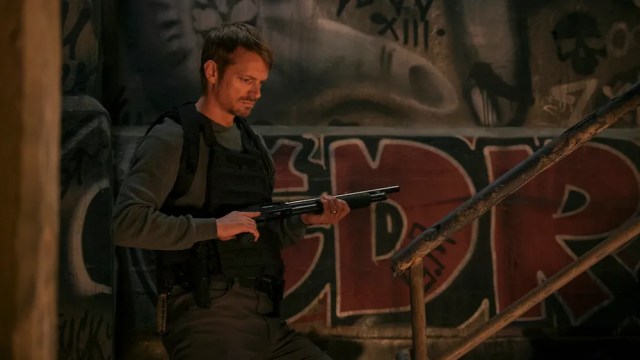


“The Smell of Money” is a social justice documentary about environmental racism and its role in bringing home the bacon, ham and sausage in the American food chain.
Set in the towns and rural counties of Eastern N.C. where Big Pork has set up shop, with giant processing plants fed by “factory farms” and their underregulated/unenforced cesspools of pig feces. “Money” takes us through the decades-long legal fight to do something about a toxic, life-shortening and occasionally directly lethal stench. That stink is produced by these absentee landlord factory farms plopped down, often on land obtained by dubious manipulations of small town courthouses and old deeds, right in the middle of people’s neighborhoods and lives.
It’s a broad subject, so much so that parts of the story — the infamous Southern practice of disputing poor Black landholder’s century-old deeds and claims to inherited property by white interests with deep pockets — have to be mentioned but passed-over to make room for other grievances. Specifically, the way Smithfield Foods in its many incarnations has bent the state’s politics to its will, devaluing working class folks and limited-incoming retirees’ property, taking shortcuts to solve a catastropic waste problem and cavalierly “waiting out” the parade of lawsuits and gigantic judgments rendered against Smithfield, hoping the elderly and made-sick-by-Smithfield-practices plaintiffs will die.
Director Shawn Bannon and screenwriter Jamie Berger’s film is infuriating. And you don’t have to have driven through this corner of the South, as I used to on a regular basis, to be mad at a corporate invasion targeted at “invisible” and mostly Black and generally powerless people.
The entire enterprise is engineered to protect the company behind all the wrongdoing as it signs up farmers and those who get their hands on farmland to open feeder factories — CAFO, “Concentrated Animal Feeding Operations” — directs how such operations should be run and funds politicians who change laws to protect them from demands to do something about the dangerous smell and insulate them from accountability.
Even the way the debate is framed has been manipulated, as a parade of state TV news coverage demonstrates. The fumes are diminished with the word “nuisance,” and the white-haired Jesse Helms wannabe anchor at WRAL-TV seems to relish the confusion the word sews as he describes “nuisance” suits in ways that make it sound like the “nuisance” is to this multi-billion dollar, now Chinese-owned corporation.
One of the film’s villains is the Republican state ag commissioner, Steve Troxler, who rallies farmers — who aren’t being sued despite their role in spraying waste over acreage guaranteed to seep into the water supply and very air breathed by their “neighbors.”
“We are NOT a nuisance,” Troxler bellows at rallies. “We have done nothing WRONG. We are feeding the WORLD. What we are is a BLESSING.”
But as plaintiffs such as Elsie Herring, living in a literal “Little Pink House,” Rene Miller and others make clear, the only people “blessed” live a long ways at a geographical and financial remove from this nasty business which occasionally kills an employee thanks to the toxic environment they’re working in.
Continue reading


In secular cinematic terms, “The Oath” is a limp, underfinanced Pre-Columbian “Last of the Mohicans,” an “action adventure” about the lone survivor of a tribe hunted down by his hated rivals, but not before he’s fallen in love with an outcast from the tribe that’s trying to finish the genocide it started.
The characters are kind of colorless. There’s one big swordfight and the “romance” is largely off camera. The not-exactly-an-epic production values — nothing is “built,” with a river, a waterfall, forest and a rock overhang cave the only settings — are still a step or two above the “student film/first film” feel of the entire enterprise.
But “The Oath” isn’t “secular.” Actor (often billed as Darin Southam) turned writer-director-star Darin Scott has conjured up a MesoAmerican thriller built on Mormonism’s foundation myth, with just enough magical thinking thrown in to make everything “historical” presented here play as eye-rolling hokum.
Set about 500 years after the death of Jesus, and roughly 500 years after Jesus appeared to the “lost tribes of Israel” in the Americas, it’s about descendents of the Biblical Joseph who fled Egypt, crossed the Mediterreanean and Atlantic and settled in the New World, only to engage in a blood feud here.
The last of the Nephites, Moroni (Scott) is on the run through the verdant woodlands of North America, hunted by the minions of Aaron, king of the Lamanites. He’s played by Billy Zane in a classic Brigham Young beard, speaking in some sort of pre-Columbian Irish accent.
That Billy Zane. What a cut-up.
Moroni prays in interior monologues as he lays low and finishes inscribing the golden plates alleged to have been the source scriptures for the Book of Mormon. He urges the almighty to “make me mighty in body and soul” so that he won’t have to endure “the slavery of my (fore)fathers,” the dreamcoated Joseph and his Israelites in bondage in Egypt Land.
Widowed Moroni finds his scholarship with those golden plates interrupted when he takes in the injured and cast-out concubine Bathsheeba (Nora Dale) from the evil Aaron’s “court.”
Once they get past her “You’re boring, all of your talking” and his raised-eyebrow over what “concubine to the king” entails, they’re destined to fall in love.
But the rules of drama are that this is the perfect moment for ace trackers, including Bathsheeba’s sister (Karina Lombard) and Aaron’s head henchman (Eugene Brave Rock) to find them.
The film’s Mormonism origin story is back-engineered to get us from the words of the descendant of one Joseph to the hands of a New American Joseph, Joseph Smith, via those inscribed plate/pages of gold Smith claimed to have found buried in upstate New York in 1823.
I first encountered the rough parameters of this tale as a child, in handed-down Mormon comics from a true-believer uncle. As a childhood fan of the National Geographic TV archeology and paleontology specials and a lover of history, the yarn struck me as eye-rolling “history,” and a dim, dull fantasy not remotely inventive enough to be on a par with the Marvel comics I was reading and outgrew by my early teens.
Darin Scott as he now bills himself isn’t able to wring anything more convincing out of this scenario on film. It’s a production that conspicously avoids any depiction of “lost tribes” as advanced civilizations. No “cities,” no buildings for the king and his “court.” About all we see here that might have made it into the archeological record — had any of this really happened — are steel swords and bronze breastplates.
But this isn’t about archeology. Mormonism’s founding text and version of American pre-history has been debunked at the highest, most scientific and official levels. No “Lost Tribes of Israel” voyaged 5000 miles to the Western Hemisphere.
Given that provable fact, and allowing that few religions could pass a rigorous fact-based dig into their origins, “Oath” is a story that needs to at least be compelling enough to be the backbone of belief.
“The Oath” isn’t anywhere near compelling, convincing or even interesting enough to make that sale. The movie’s lifeless and generic, and does nothing to shake the sense that the theology behind it is probably balderdash.
Rating: PG-13, violence
Cast: Darin Scott, Nora Dale, Karina Lombard, Eugene Brave Rock and Billy Zane.
Credits: Directed by Darin Scott, scripted by Darin and Michelle Scott, based on The Book of Mormon. A Freestyle Media release.
Running time: 1:44


Prolific provocateur and cinema revolutionary Jean-Luc Godard cut a long, narrow swath through film history in his 91 years.
He changed cinema into something messier and more realistic in launching the French New Wave in the 1950s. Movies were never the same after 1959’s “Breathless,” and other early works such as ” Bande à part (Band Apart)” and “Contempt (Le mépris).” And like his onetime idol, Chairman Mao, spent the rest of his career attempting and advocating for a perpetual revolution.
He stirred up passions, pro and con, pretty much for the rest of his life — boo’d at Cannes, pied in the face after his “blasphemous” “Hail Mary,” dismissed, chastised, running off to self-imposed exile and even attempting suicide a couple of times.When he finally died, it was via assisted suicide in Switzerland.
But his towering reputation and legend live on. Quentin Tarantino named his production company “A Band Apart” after the Franco-Swiss enfant terrible. Others still celebrate him, and he remains a bucket-list filmmaker that any self-described cinemaphile must sample.
And now there’s a documentary that attempts to take in the totality of Godard. “Godard Cinema” is an ambitious compilation of clips, snippets of films and other projects, interviews with him and those who knew, married and worked for Jean-Luc Godard — some loving, some hating — as well as academics, biographers and experts (all French) who remind us that while his reputation waxes and wanes, his relevance outlives him, as do his greatest films.
Godard might have been the smartest filmmaker ever to step behind the camera, the very model of the cerebral cineaste, a deep thinker even at his most wrongheaded. Alternately brooding and playful and almost always arrogant, he broke into cinema as a film critic.
Naturally.
As a critic, he was of a generation of French “Cahiers du Cinema” (Notebook of Film) writers who pushed the idea of cinema as art, as if no one had ever thought of it before them, as if they slept through Latin class at their posh prep schools and didn’t recognize that MGM’s logo since the 1920s has been “Ars Gratia Artis,” “art for art’s sake.”
Champions of the “auteur theory,” they lionized filmmakers with consistent themes, styles and obsessions, not just the John Fords and Orson Welles, but Hitchcock, Sam Fuller and genre specialists who made statements as they demonstrated the old maxim “an artist is someone who hammers the same nail over and over again” with every movie.
Ever used the term “film noir?” These are the folks who identified that famous criminal underbelly genre, and named it.
Cyril Leuthy’s film remembers Godard’s avowed practice of asking “What would (filmmaker Jean) Renoir do?” in a given scene or given cinematic situation. “Or Hitchcock?” He’d then try to do “the opposite.”
“I am a painter who does literature,” he said in one archival interview. “Cinema is the truth at 24 frames per second” was a film student T-shirt just waiting for mass production.
Leuthy’s film notes how Godard massaged his “legend,” smoking and wearing his pricey sunglasses indoors, telling anyone who asked — biographers included — that there are “no pictures of my childhood.” One historian asked “Was Godard ever a child?”
Yes he was. Yes, there are photos, or at least one photo. “Godard Cinema” gets at his reasons for covering-up his privileged (raised in Paris and Switzerland), politically-connected upbringing.
He prepared meticulously, some who worked with him declare, but always hid that to ensure he’d be labeled a “genius” for just tossing off his 140 features, shorts and even movie trailers that pass for art.
Godard didn’t like sharing screenplays with the cast, and was an innovator in the “earpiece in the actor’s ear” directing style, passing on dialogue and acting directions mid-take. He was given to quoting philosophers famous and obscure off-set, and having his characters do so in his films. As neither actor nor viewer had a firm grasp of why this quotable line worked here or there, that could be exasperating to all concerned.
The documentary does justice to the man, and does well enough at summing up how his contrary personality serves his art, although it might be better served having an English-language narration for US distribution. By the time we drift past his most famous U.S. TV interview, with Dick Cavett as “Every Man for Himself” (1980) came out, revelations in “Godard Cinema” are in shorter supply, as indeed his relevence seemed to fall-off after that watershed event — save for the rank provocation of “Hail Mary” (1985).
But if “Godard Cinema” prompts streaming services to renew our acquaintance with the work, films from “Breathless” to “Hail Mary” that often retain their power to jolt, shock, inspire and provoke, all the better.
Rating: unrated, nudity, smoking, some profanity
Cast: Jean-Luc Godard, Julie Delpy, Hanna Schygulla, Anna Karina, Macha Méril, with Johnny Hallyday, Jean-Paul Belmondo, Dick Cavett, many others, narrated by Guillaume Gouix.
Credits: Scripted, directed by Cyril Leuthy. A Kino Lorber release.
Running time: 1:41