
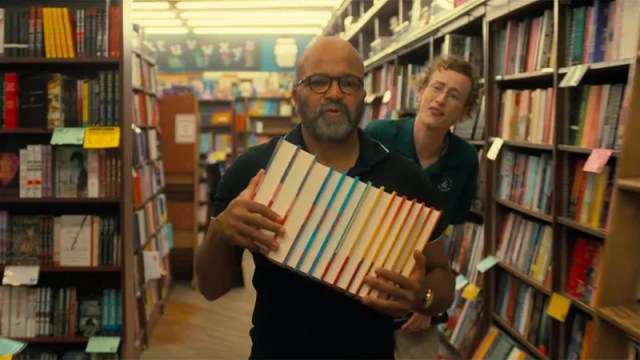
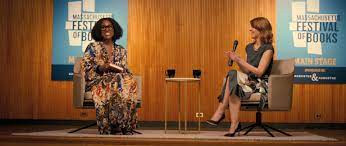

Beautifully-cast and well-acted, handsomely-mounted and comically topical, “American Fiction” strikes a precise blow at publishing culture, stereotypes of The Black Experience in America, expectations of The Reading Public and just what “they” let the African American “us” write about, sell and popularize.
But the canny casting of great character actors like Jeffrey Wright, Issa Rae, John Ortiz and Sterling K. Brown and the hot topic subject matter don’t make that “precise blow” a knockout punch in this wandering and somewhat slow-footed debut feature film by the TV writer (“Watchmen,” “The Good Place,” “Master of None”) Cord Jefferson.
There’s a sort of knowing comfort and warmth to this all-star satire that muffles its impact as a takedown of its targets. And like a lot of series TV writers, pacing and boiling a good story (Percival Everett’s novel “Erasure”) with real bite down to a feature film is a transition Jefferson doesn’t fully master.
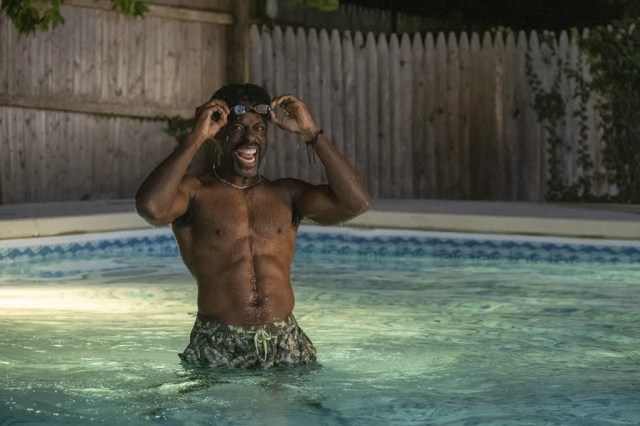
Ah, but the pleasures here are rich. Pairing up the great character actor Wright and Leslie Uggams as a college professor and “serious” novelist and his regal but mentally failing mother, giving him Tracee Ellis Ross as his accomplished OB-GYN sister, Brown as his narcissistic plastic surgeon brother, late to figure out he’s gay, and Ortiz has his disappointed, despairing and then delighted agent could hardly be better.
And the milieu — Boston, the world of books, the clubbiness of “publishing, higher education and its “snowflake” student culture, a Black family of affluence and accomplishment — is “fall film” lived-in and a four course dinner one eagerly dives into.
Wright plays Thelonious “Monk” Ellis, a grumpy professor and struggling author, a literary fiction novelist and “Black writer” who rejects that last label and is revolted by what publishing, the “white liberal” audience that reads books and the culture at large “demands” of writers who look like him.
“You know, I don’t even believe in ‘race.'” “Look at what they publish. Look at what they expect us to write.”
His dismay grows in a steady drumbeat — the fragile white coed who takes offense at Monk’s teaching Flannery O’Conner’s “The Articificial Nigger” in a post-“woke” lit class, the frustrations of getting his latest “serious” novel published and his horror at the dialect-slinging “Black trauma porn” success of Sintara Golden’s (Rae) best seller “We’s Live in Da Ghetto.”
It’s enough to make a self-respecting/self-serious writer blow a fuse, especially if his agent (Ortiz) never has any good news for him.
“The ‘blackest’ thing about this one is the ink.”
Forced by his department chair to take a “leave” and return to Boston and his not-quite-estranged family, “Monk” is rattled by reminders of his upbringing and buffeted by tragedies that force him to stick around, take stock of what he’s not doing — selling books — and what he must do to take care of his regal, dementia-impaired mother.
That’s what leads him to write a book just like Sintara Golden’s, a lurid, “Black Experience” potboiler, to hide behind the nom de plum “Stagg R. Leigh” and get his agent to pitch this “very real” story of a Black man against The World, The System and his own failings, “My Pafology.”
That’s a giant step down for an author accustomed to titling his dense, layered novels “The Haas Conundrum” and the like.
His agent may be thrilled when this sellout “stunt” seems destined for best seller status. Monk, a purist named for an uncompromising jazz purist, is horrified.
That sets up as a nice, tidy and funny satire, a tad familiar (“The Hoax,” “The Arrangement,” “Barton Fink”) but promising big laughs as the Man of Letters is corrupted by the system he rejects, “posing” as a “fugitive from justice” novelist on the phone with gullible publishers and on TV (disguised) for more gullible chat show hosts.
Continue reading














 Movie Nation