Movie Preview: Russell Crowe’s a sick detective who should let “Sleeping Dogs” lie

Crowe and Karen Gillan, Marton Csokas and Tommy Flanagan star in this mystery/thriller based on the novel by E.O. Chirovici.

Crowe plays an ex homocide detective with brain issues, memory problems and a possibly innocent man he wants to save.

“Sleeping Dogs” is the directing debut of the screenwriter of “Exodus: Gods and Kings,” “Allegiant” and “Assassin’s Creed.”

Oh, and the last and least of “Transporter” movies.

Decent cast, solid source material, and the trailer strikes a grim tone. This could be good.

It comes out March 22.

Posted in Reviews, previews, profiles and movie news | Comments Off on Movie Preview: Russell Crowe’s a sick detective who should let “Sleeping Dogs” lie

Series Preview: Walton Goggins is the Salesman we need for the Apocalypse — “Fallout”

Dale Dickey also survives the end of the world. And Ella Purnell. And Kyle MacLachlan. At least for a bit.

April 11. Prime.

Posted in Reviews, previews, profiles and movie news | Comments Off on Series Preview: Walton Goggins is the Salesman we need for the Apocalypse — “Fallout”

Classic Film Review: Re-encountering “Forbidden Planet” (1956)

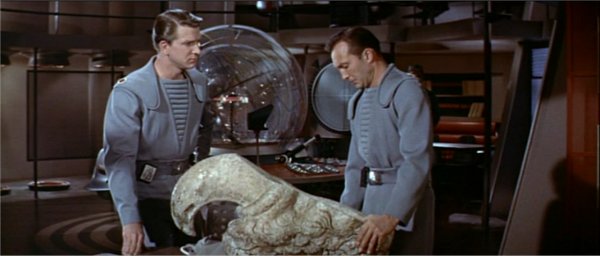
Dated, comically corny but heavy-handed, pretty and production-designed to death but oh-so-sound-stagey, “Forbidden Planet” remains a touchstone film in the science fiction canon almost in spite of itself.

A lot of its cachet relates to the Cold War zeitgeist that produced it, an era more famous for B-movie sci-fi with aliens invading. and real-life fears of World War III with the Russians. A 1950s state-of-the-art special effects adventure labeled “cerebral” in the Golden Age of Flying Saucers and the peak years for Sigmund Freud worship, it merits the label “quaint” today.

“Forbidden Planet” has genuine “wolf whistles,” booze-based low comedy and sophmoric sexism of “The Seven Year Itch/Seven Brides for Seven Brothers” variety. One doesn’t have to recall the great Canadian clown Leslie Nielsen became to be amused by his hunky, womanizing starship captain, “notorious in seven planetary systems!”

The director was best known for “Lassie Come Home” before making this. The bulk of the screenwriter’s stand-out credits were for episodic TV to come — “The Rifleman” — and a B-movie of the late ’50s, “The Invisible Boy.” This isn’t “canonical” cinema in that regard.

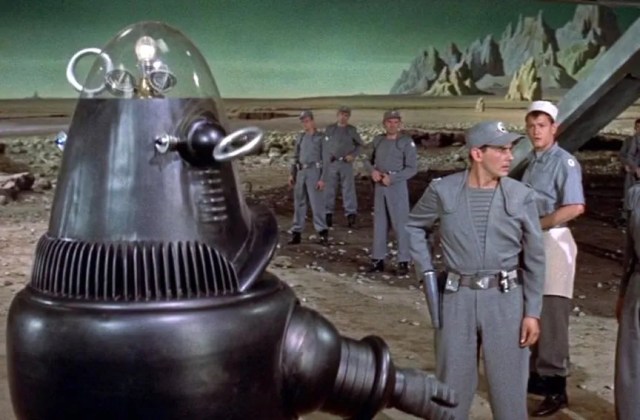
But generations of future fangirls and fanboys grew up delighted by cutesy Robby the Robot, which underscores the cartoon nature of it all. Perhaps “Lost in Space” nostalgia contributes to enduring “Forbidden” love.

Loosely based on Shakespeare’s “The Tempest,” it has long been a favorite of dewy-eyed English majors parsing its interpretation of the wizard Prospero, Miranda, Caliban, Stephano and Fernando.

So here it sits, on a (Short?) pedestal, the film whose “id” might have led to “Lost in Space” with the “ego” giving birth to “Star Trek.” Or perhaps it was the other way around.

But is it any good 66 years on? Yes and mostly no, I fear. There are intellectual flourishes that no one should mistake for literary. Some of the performances are amusing on purpose, some unintentionally.

Its futurism is saucer-driven, getting the “moon landing” wrong by a century, showing off communicators with string-wired microphones, “blasters” recycled from “Flash Gordon” and a big, roomy, split-level “bridge” filled with all different ranks of Navy-throwback “spacemen, a lot of tactile props, gauges, dials and switches and a single cathode ray tube “screen” that is as graphcially primitive as anything in Fritz Lang’s “Metropolis,” filmed thirty years before.

If you get past the creepy skirt-chasing of the ship’s senior leadership upon first encountering the mini-skirted Anne Francis there’s still the stunningly-dull parade of matte-paintings cyclorama backdrops, models and stage sets and props that comprise a tour of the planet’s buried “Krell” technology, a tour led by Walter Pidgeon at his most stentorian.

And don’t get me started about the way the cast “aim” their “blasters” in the damnedest directions when shooting bolts at the animated monster then menacing their parked C-57-D United Planets Cruiser (saucer).

The story? That saucer from the Earth of the 2200s is sent to a planet in the Altair system where the “colonize and conquest” starship Bellerophon was sent 20 years before, only to be never heard of again.

The space travel scenes feature the crew decellerating from hyper drive on pads that look a LOT like transporter modules from the “Star Trek” universe. There’s a huge, roomy split level bridge where everybody from the skipper (Nielsen) to the smart and religious ship’s surgeon — “The Lord sure makes some beautfiul worlds!” — (Warren Stevens) to the sailor-capped and aproned cook (Earl Holliman) is welcome and has a voice.

“Another one of them new worlds. No beer, no women, no pool parlors, nothin’. Nothin’ to do but throw rocks at tin cans, and we gotta bring our own tin cans.”

They are warned off this planet and their search for survivors by Morbius (Pidgeon), the previous expedition’s philologist (language expert) and apparently sole survivor.

“Turn back at once,” he demands via radio. “I wash my hands of all responsibility” otherwise.

The ship lands, the crew meets Robby the Robot, with the captain complimenting him on the “high oxygen content” of this seeming desert planet’s atmosphere.

“I seldom use it myself, sir,” Robby intones. “It promotes rust.”

The robot, the hard-drinking joker of a cook and the utter ogling of one and all when, 378 days into their mission, they get a gander at Morbius’s sheltered bombshell daughter, make the early middle acts of “Planet” a comedy.

The captain has a problem with all the other fellows leering at the woman he’s leering at, including his fellow officers (Jack Kelly is the horndog second in command). He disapproves of her (almost see-through) short skirts.

“It would have served you right if I hadn’t… and he… oh go on, get out of here before I have you run out of the area under guard – and then I’ll put more guards on the guards!”

The film takes a turn to the serious when we learn of what happened to the colonists, speculate on how Morbius survived and absorb the danger the saucer’s crew are in.

But there’s no flow to this allegedly building suspense. We’ve got to interrupt that to see the great Morbius’s daughter experience her first make-out session, and second. We’ve got to listen to pages of exposition as Morbius takes the captain on a tour of the planet’s underground lair of nuclear reactors, ventillation shafts and what not.

So many centerpiece moments here take one right out of the movie. Yes, engineer/IT guy and future “Six Million Dollar Man” boss Richard Anderson is listening to data coming in through ear buds, but the futurism lacks the imagination to be accurate or even interesting.

Pidgeon’s man at ease with his great knowledge character turns pedantic and dull. Nielsen’s Captain Adams is the obvious, going-out-of-date prototype for his fellow Canadian Shatner’s more savvy-and-sex-obsessed-than-smart starship captain.

Frances does what she can with a role written by older men in the 1950s, but smart and educated Alta is about as interesting as the most desperate Match.com profile you’ve ever read.

“I’ve so terribly wanted to meet a young man. And now, three of them at once!”

Elevating this as a “landmark film” when Robert Wise’s “The Day the Earth Stood Still” was smarter, more suspenseful, better-acted and more in tune with its times seems laughable. Yes, studgy MGM tried to show us the future and space travel and the eternal shortcomings of human nature. Yes, they took a shot at adapting a timeless Shakespearean plot to a futuristic setting.

That doesn’t mean they succeeded. Even grading it on the “product of its times” curve, “Forbidden Planet” seems best appreciated as MGM Cinemascope/Eastmancolored cheese.

But taken the way those of us who grew up with “Forbidden Planet” experienced it on on late night cable, in college cinema societies and the like, it remains what it’s not-so-secretly-been all along, sophisticated-seeming sci-fi for children, especially children of the 1950s and ’60s.

And even we have to laugh at a lot we maybe weren’t supposed to.

Rating: G

Cast: Walter Pidgeon, Anne Francis, Leslie Nielsen, Warren Stevens, Jack Kelly, Richard Anderson and Earl Holliman.

Credits: Directed by Fred. M. Wilcox, scripted by Cyril Hume, loosely based on Shakespeare’s “The Tempest.” An MGM release on Tubi, Amazon, etc.

Running time: 1:38

Posted in Reviews, previews, profiles and movie news | Comments Off on Classic Film Review: Re-encountering “Forbidden Planet” (1956)

Series Preview: Ewan McGregor survives The Revolution, “A Gentleman in Moscow”

Mary Elizabeth Winstead co stars. The rest of the supporting cast isn’t familiar to me.

Impressive looking production, based on a best seller, and not one by Ayn Rand.

March 29 on Paramount+.

Posted in Reviews, previews, profiles and movie news | Comments Off on Series Preview: Ewan McGregor survives The Revolution, “A Gentleman in Moscow”

Movie Review: Motel Clerk finds “Night Shift” perils

Short but slow, occasionally chilling but never quite scary, “Night Shift” is a straight-up genre thriller that embraces that most ancient and hallowed of horror tropes, “A lone woman menaced in the dark of night.”

Poor pacing dooms this debut feature from siblings who bill themselves as The China Brothers. But they lean into formula, found a few good players and reach for the usual twists in the usual places and manage to lift it above “Well, I’ve seen worse” status.

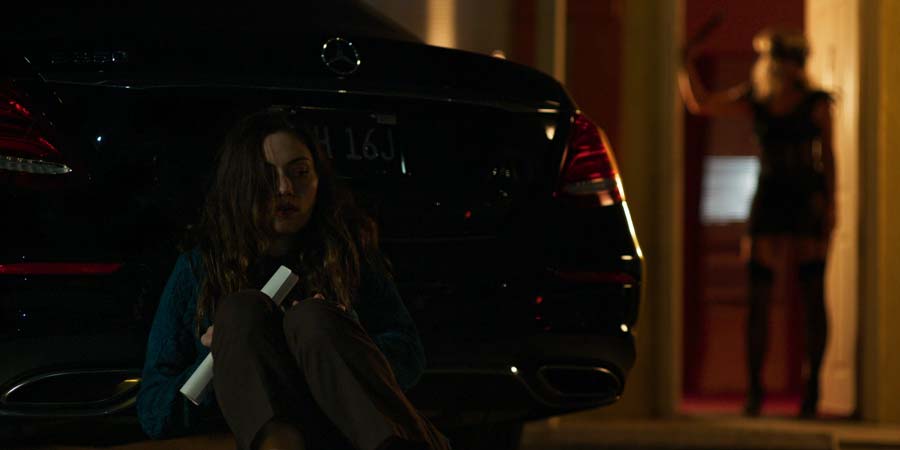
Phoebe Tonkin, an Australian beauty who achieved top ten billing in the Oscar nominated “Babylon” a couple of years back, stars as Gwen, who has moved to a new town in the desert Southwest and needs a job that pays in cash.

The All Tucked-Inn seems to fill that bill. Owner Miles (Lamourne Morris) does it all there, and could use a break from this family-passed-down business.

“I know it looks as if the damned Addams Family lived here,” he says of the motel gone to seed. But it’s remote and quiet.

Gwen, daughter of a hotel maid, accepts the gig and shows him how to do a “French fold” with the bedsheets, and he’s off.

The motel has a customer, sassy Alice (Madison Hu). And then a couple of tipsy, tuxedo-and-evening-wear swells (Lauren Bowles and Patrick Fischler) check-in just as rudely as they can manage. But their not-shocking-at-all leather pecadilloes aren’t even in the top ten of the weirdest things facing our Gwen, whose hair droops over one eye in every scene where she has a say about it.

She’s all alone as darkness sets in. Gwen has a “history,” of course. That creepy sinkhole in the pool? Nothing to fret over. The half-price discount on “Cabin 13?” That’s just due to customers’ “superstition.” And the desk calls that come from that empty room, the bloodied walking corpse she keeps seeing in the shadows, standing behind her as she answers those chilling calls from no one? Don’t give her a second thought.

“It’s for you,” the ghost purrs.

Benjamin and Paul China take their sweet time setting all this up. A lot of sweet time. When the frights and jolts come, they barely move the needle. This thriller doesn’t hurtle at us, it sleepwalks by as we’re meant to be embraced by its spell.

Frankly, it’s too generic to manage that. A couple of performances pop, but the foreshadowing is so obvious we know almost every thing to expect, and when to expect it.

The third act is properly pitiless, as they often are in such pictures. But there’s nothing and no one to invest in — not the swingers, not run-away Alice, and not Gwen with the hair draped coquettishly over her right eye in too many scenes to count.

Rating: unrated, graphic violence, sexual material, profanity

Cast: Phoebe Tonkin, Lamourne Morris, Madison Hu, Patrick Fischler, Lauren Bowles and Christopher Dehham.

Credits: Scripted and directed by Benjamin China and Paul China. A Quiver release.

Running time: 1:21

Posted in Reviews, previews, profiles and movie news | Comments Off on Movie Review: Motel Clerk finds “Night Shift” perils

Netflixable? “Code 8” merited a sequel? Really? “Part II” it is

“Code 8” was an “X-Men on a Budget” thriller, reasonably well cast, with hunky mutants (not called “mutants”) and decent taser-finger effects.

But it was an ungainly lump of a movie, clumsily trying to switch between criminal mutants, who are a persecuted minority, and the cops who both persecute them and try to keep the crooked folks with “special powers” from spreading the drug “psyke” they make from their own spinal fluid.

It’s not much of an exercise in sci-fi movie “world building.” It’s so deritive as to be content with “world borrowing.”

A Canadian production, it made almost no money and thus was low profile enough to seem “fresh” and “new” and thus attract an audience on Netflix.

Now, there’s a sequel. I rewatched most of the original film, not realizing I’d seen it and reviewed it. It’s that forgettable.

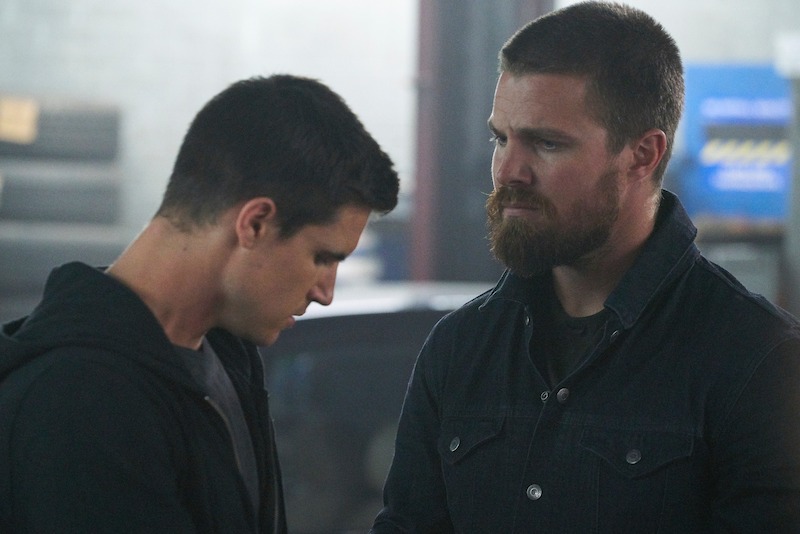
The sequel — “Code 8: Part II” — sees our principal rivals return. Connor (Robbie Amell) is fresh out of prison, thanks to what he found himself entangled in back in “Code 8.” Garrett (brother Stephen Amell) is now the psyche kingpin of Lincoln City (Toronto).

As Connor took the fall for Garrett, the mobster figures he “owes” him. But Connor doesn’t want any part of that until a “special powers” kid, Pavani (Mikayla SwamiNathan) loses her brother to a crooked cop (Alex Mallari) angling to become union chief, leading his protection racket with badges minions.

Pavani is the “rarest” of those in the alt world of people with “special powers.” She’s a “transducer.” “Electric” Connor tries to save her from the crooked cops and the movie’s special focus in this sequel — a piece of recognizable tech from our own world, a robotic police dog.

Director Jeff Chan spends a lot of “Code 8: Part 2” showing us the robot get out of cars, stalk and chase prey. It’s the “non lethal” alternative to the murderously trigger happy android Guardians, which we saw in “Code 8.” Only it’s not “non-lethal.” That’s just a Lincoln City PD lie. ‘

On the lam with Pavani, who witnessed the mechanical dog murder her brother, Connor turns to the corrupt but playing-the-angles Garrett. And stuff gets messy.

Only it never does. An on-the-lam thriller is inherently more interesting than the “See how the mutants are perscuted/see how they fight back” X-Men riffs of the first film. But this thriller has no momentum. Its forward motion is too often interrupted to watch the robotic police dog do something, an expensive effect, even in Canada.

Our villain is cool and collected, just not very interesting.

By the end of the first act, “Code 8: Part 2” (Do they ever define a “Code 8?” I assume it’s a call about mutant misbehavior but I never heard it.) goes adrift and the kid becomes an afterthought to our good and bad “special powers” guys feuding and bonding and scheming.

That’s not much to justify making a sequel to a movie that may have had the narrative room to allow one, but never the entertainment value to justify it.

Rating: TV-MA, violence

Cast: Robbie Amell, Stephen Amell, Mikayla SwamiNathan and Alex Mallari Jr.

Credits: Directed by Jeff Chan, scripted by Chris Pare, Jeff Chan and Sherren Lee. An XYZ release on Netflix.

Running time: 1:40

Posted in Reviews, previews, profiles and movie news | Comments Off on Netflixable? “Code 8” merited a sequel? Really? “Part II” it is

Movie Preview: “Just out of rehab,” body image issues, maybe Dave Bautista can help? Brittany Snow directs “Parachute”

Courtney Eaton, Thomas Mann, Gina Rodriguez, with Joel McHale as the dad, and cuddly Dave Bautista. Maybe he’s her “sponsor?”

Coming soon.

Posted in Reviews, previews, profiles and movie news | Comments Off on Movie Preview: “Just out of rehab,” body image issues, maybe Dave Bautista can help? Brittany Snow directs “Parachute”

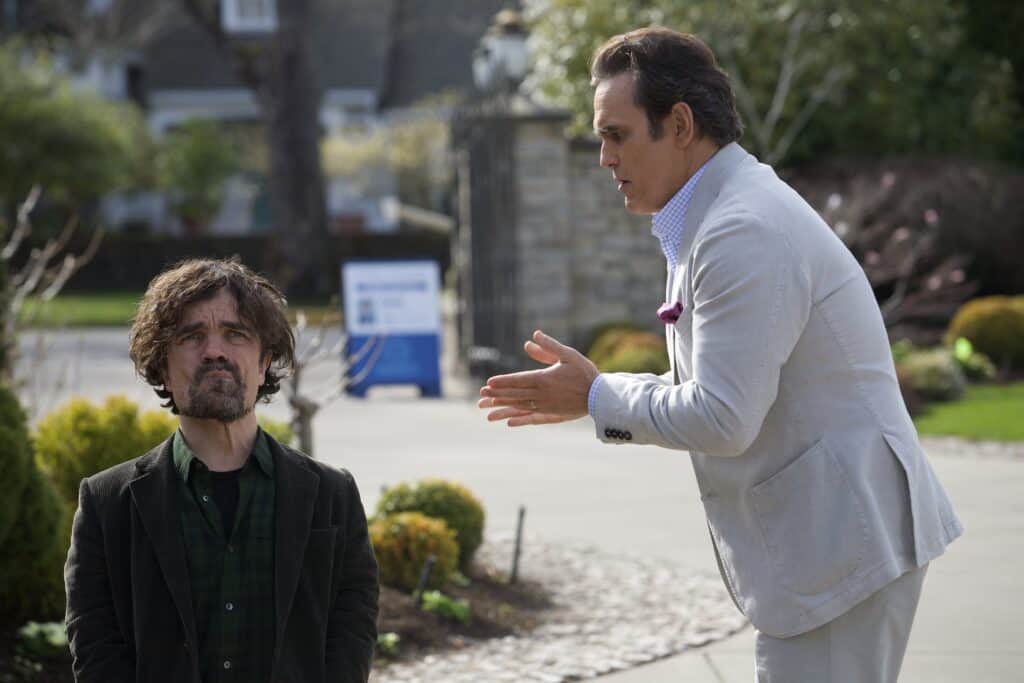
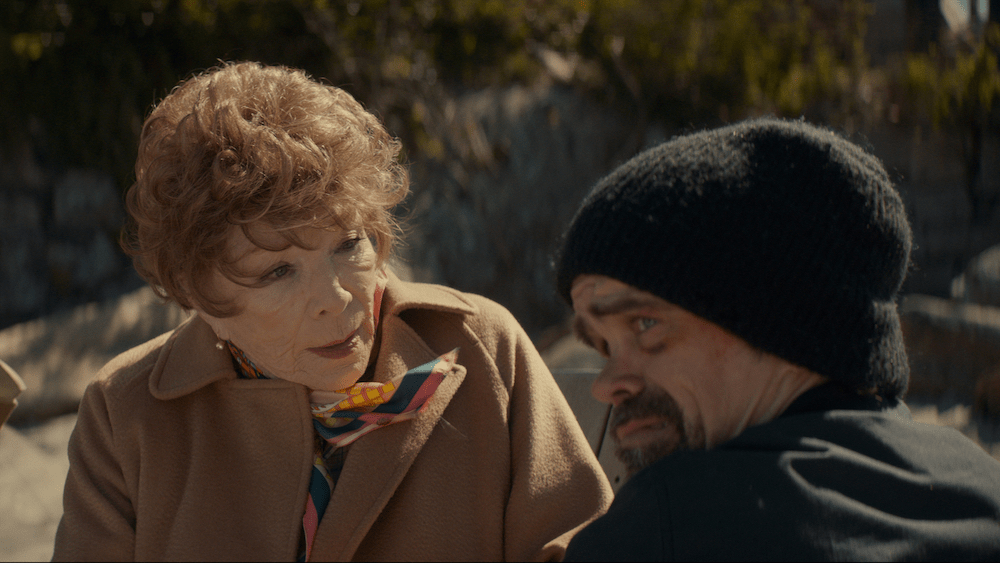
Movie Review: Dinklage is an “American Dreamer” who digs real-estate — with a Shirley MacLaine Catch

“American Dreamer” doesn’t so much end as peter (Ahem.) out, with a finale that feels like a series of compromises which no one wanted to winnow down.

But if you skip the movie leading up to that, you’ll be missing a lot of laughs and a tale that takes that “Peter Dinklage as sex symbol” thing about as far as it can go.

He plays a grumpy, broke non-tenured college economics professor who is obsessed with the only real way to accumulate wealth and security in capitalist America — real estate — especially real estate he can ill afford.

First time feature director Paul Dektor and screenwriter Theodore Melfi of “St. Vincent” and “Hidden Figures” tell us a “true story” “sort of” about an economist who knows a great deal when he sees one in the classifieds, but who doesn’t wholly consider the fine print.

It’s a comedy about capitalism as it relates to the Big Questions in Life — “What do we need to be happy? What do we want?” and “How far” is “one willing to go to get it?” It’s about the fantasies we lose ourselves in.

And it’s about the animal magnetism of Dinklage, linked to another amusing turn in a long career of them by Oscar winner Shirley MacLaine, with very funny supporting work by an ensemble that includes Matt Dillon, Danny Pudi and Danny Glover.

Dinklage is Dr. Phil Loder, unhappily teaching “Cultural Economics” to “spoiled d–k weasels” at Massachusetts’ Brockton U., a drinker and frustrated novelist surrounded by “twat waffles” in the faculty and pestering his department chair (Pudi) for a parking spot for his aged Saab, the car of choice of academics all over America in the ’80s and ’90s, and in movies about academics forevermore.

Phil, we learn, has this long-running relationship with a man he calls “Ass—e,” who refers to him by the same contemptuous nickname.

Dell (Matt Dillon, in grand form) is his reluctant real estate agent. Phil shows up for every high end open house on Dell’s client list, with every mansion millions of dollars beyond Phil’s modest price range.

To Phil, Dell is a lowly “dirt pimp,” someone built to be abused. “Everything about me screams SUCCESS,” Dell counters to Mr. “No equity, no money, no tenure,” who seems born to waste his time.

Phil fantasizes about living in these palaces, and imagines a beautiful wife (Rebecca Olson) and her sister there with him. It’s his “American Dream.”

And then he spies the classified ad for a $5 million dollar mansion available for $240,000 if you take it “with live-in.” The “live-in” turns out to be the rich old lady (MacLaine) who owns it.

The real-estate savvy filmgoer may wonder about this screenwriterly fantasy “deal.” Elderly Astrid doesn’t expect care-giving. She doesn’t seem cash poor. Why would she “sell” this house for so little just to have a stranger move in with her? It never makes sense.

Phil sells everything he owns — grumpily — cashes in his 401K and unloads the car. He may have to eat sandwiches the rest of his life, and ride a scooter to work. But now he’s got his piece of that “dream” he’s only been able to dream about.

The script, from this point on, veers back to and fro with accounts of Phil’s sex appeal to one “consenting adult” student (Michelle Mylett), to a probate lawyer who turns out to be one of Astrid’s “kids” (Kimberly Quinn) and examples of the sorts of clashes we might expect anyone to have when living in a house with Shirley MacLaine or a character she plays.

Phil has lots of accidents on the property. Astrid’s “kids” mean he has “a contested WILL in my future,” and not a clean path to ownership.

A wisened, too old for this you-know-what private detective (Glover) gets involved and the accidents pile up and where WILL they take this narrative before all is said and done?

The screenplay has much that’s fun about it, with zippy one-liners, droll aphorisms and sharply-drawn characters who clash and crack-wise with one another. Dinklage wears this role as easily as any he’s taken, and he clicks with Dillon, Glover, Quinn, Pudi and especially MacLaine.

But there’s real indecision on screen here, as if no one could quite decide where to take things, what would feel “true” vs. what might be “satisfying.” And the organizing device of writer Phil word-processing his “novel,” chapter by chapter, is even more lame here than in the other 754 movies its turned up in.

And yet there’s just too much fun here to miss, even with “Dreamer’s” flaws. Dinklage savors every man-of-letters zinger, and gives a toast for the ages as a kicker. Remember this one, because Phil did, and Dinklage performs it like a lad who appreciates a great Irish toast his own self.

“Here’s to a long life, and a merry one. A quick death, and an easy one. A pretty girl, and an honest one, a cold pint, and ANOTHER one.”

Rating: unrated, sexual situations, profanity

Cast: Peter Dinklage, Shirley MacLaine, Matt Dillon, Danny Pudi, Kimberly Quinn, Rebecca Olson, Michelle Mylett and Danny Glover.

Credits: Directed by Paul Dektor, scripted by Theodore Melfi. A Vertical release.

Running time: 1:38

Posted in Reviews, previews, profiles and movie news | Comments Off on Movie Review: Dinklage is an “American Dreamer” who digs real-estate — with a Shirley MacLaine Catch

Movie Preview: “Our little girl is growing up so fast!” “Inside Out 2” hurtles towards…PUBERTY!

This looks cute and funny and smart and useful to kids, as indeed “Inside Out” was. Now the kid’s a little older.

June 14, “Anxiety” and “the Sar Chasm” and “suppressed emotions” enter the picture for this Pixar sequel.

Posted in Reviews, previews, profiles and movie news | Comments Off on Movie Preview: “Our little girl is growing up so fast!” “Inside Out 2” hurtles towards…PUBERTY!

Movie Review: Beau Bridges and Rob Mayes mosey down “The Neon Highway” to Nashville

There are echoes of a lot of “Making it in Nashville” tales in “The Neon Highway” — “Crazy Heart,” “Honky Tonk Man” and “Tender Mercies” among them.

There’s a singer with a song he can thinks can change his life, a tune composed in optimism but tainted by tragedy. And there’s an unpleasant burnt-out has-been, a “country music legend,” who might be able to make it happen.

That fellow, named Claude Allen, is played by Beau Bridges here, further reinforcing the connection to his brother Jeff Bridges’ Oscar-winning turn in “Crazy Heart.” Beau, you might remember, can sing a bit, too. His weathered, cracking and “out of practice” old man’s voice is put to great use here.

But director and co-writer William Wages’ “Neon Highway,” formerly titled “Unsung Hero,” is a mopey affair, and some of that moping includes missteps, twists that stop the picture cold and make it drag through the middle acts.

A fine finish earns it a “nice try” review. But a couple of the tunes, a few scenes and the lead performances hint at a better movie that was lost in the bargain.

Rob Mayes, a singer and sometime actor (of TV movies like “Just Jake,” “The Christmas Edition”) stars as Wayne Collins, whom we meet as he and his brother (T.J. Power) take their shot at the big time at Bobby’s Nashville roadhouse, where stars are discovered.

A Jeep wreck later that night shatters those dreams.

Years afterward, Columbus, Georgia family man Wayne has a son ready for the University of Tennessee, but his telephone repair contract work and his teacher-wife’s (Jennifer Bowles) salary won’t get him there.

Lo and behold, a slovenly old coot moves into an old farm and needs wifi help. And his fancy, old-school electric guitar gives him away as Claude Allen (Bridges), a Nashville icon.

The best scenes in “Neon Highway” show the wary way the two men size each other up. Claude is dismissive and ornery and isn’t impressed until Wayne mentions playing at Bobby’s in Nashville. Claude will remain unimpressed — “Just what the world needs, another picker” — by Wayne’s country wannabe work-partner, the boss’s son.

Wayne presses a song on the old man, refusing to hear Claude’s “done with all that, now” protests. Claude takes the song, makes it “better,” and next thing we know, he’s talked Wayne into taking off for Nashville.

Beau has always been the better Bridges at playing unlikeable, and that pays off as Claude seems downright shifty. He wants to do things “my way,” even if his way includes reaching out to Music City contacts who are no longer working, or who hold grudges about the past.

Wayne, like the viewer, suspects Claude of attempting to steal his song.

Not enough is made of that tension. And nothing much fun comes from the odyssey of their drive to Nashville, checking in at a weather-beaten and familiar (to Claude) motel run by picker pal Ray (Sam Hennings) and his sister (Sandra Lee-Oian Thomas), an old flame of Claude’s.

A lot of these Nashville scenes and situations have “Thing Called Love” comic potential, and seem dull if not downright pointless without that touch.

There are also underdeveloped characters and plot dead ends, which make the picture drag. And one big “twist” is just dead weight on the entire enterprise.

The song, “Neon Highway,” isn’t bad. But one that The Collins Brothers sing in that opening scene, a dopey ditty about “I need dirt on my truck, I need dirt on these roads…I need dirt on my toes,” sounds like a hit.

That was your movie, guys. That sets a tone that would have played better than this fumbled melodramatic reach for “maudlin.”

Still a “nice try,” though.

Rating: PG-13, alcohol abuse, profanity

Cast: Beau Bridges, Rob Mayes, Sandra Lee-Oian Thomas, Jennifer Bowles, Sam Hennings and Wilbur Fitzgerald.

Credits: Directed by William Wages, scripted by Phillip Bellury and William Wages. A Mountain Pictures release.

Running time: 1:52

Posted in Reviews, previews, profiles and movie news | Comments Off on Movie Review: Beau Bridges and Rob Mayes mosey down “The Neon Highway” to Nashville