
Movie Review: Why pull the trigger when “The Old Woman with the Knife” is available?

“The Old Woman with the Knife” is a Korean variation on the World of Assassins tale, where killing for hire is a business with professionals assigned out of offices and following “rules.” It’s another story of an aged killer competing with a younger one to see who gets whom first.

And yes, we’ve seen versions of this where all the killing is done with knifes, poison and garrotes until somebody — usually mobster victims — figures out that pistols are a decent defense against such cutlery “artists.” The third act becomes bullet-riddled just as arbitrarily as the first two acts were sliced and diced.

Veteran Korean actress Lee Hye-yeong (“The Devil’s Game”) stars as the assassin her employer calls “Godmother” in her advanced years, but who used to be nicknamed “Nails” and took on the name “Hornclaw” because that’s how she rolls.

But way back in ’75, she was a battered young woman (Shin Si-ah) taken in by a mop-topped diner owner, Ryu (Kim Mu-yeol) and his wife. His work takes him away from home for days at a time. One homecoming, he arrives to find that their new dishwasher has fought off and killed a rape-minded thug of a U.S. G.I.

It turns out Ryu’s “pest control” work is killing human pests. He treats it as a calling. But as crime victims and the bullied start paying for “pest” removal, the Sinseong Agency goes professional, “eliminating malignant vermin” from society. Hornclaw has found her destiny.

Decades later, Ryu’s long gone but Godmother Hornclaw is still the best if you need a brutal bookie poisoned on the subway or some other “pest” out of your life. But she’s going soft. That injured, abandoned and aged dog she finds demands her pity.

“It’s awful to be abandoned when you’re old and sick,” the kind veterinarian (Yeon Woo-jin) tells her, in Korean with English subtitles. So she takes in the dog.

The punk who goes by Bullfight (Kim Sung-cheol) is a freelancer who has to be talked into joining an agency where he’ll get paid for the killing that seems to come naturally to him. “Nails” isn’t as hard as she used to be, with joint pains and eye problems and the agency’s doctor refusing to hide that from her boss. Bullfight will act as “backup” on her tougher jobs.

We’ve all seen “The Mechanic,” “John Wick” and a DVR full of old-killer/young killer tales. We know how this “relationship” will play out. And we fear for the dog.

Director and co-writer Min Kyo-dong goes back to 1999’s “Memento Mori,” so he does what he can to make this formulaic script (based on Gu Byeong-mo’s novel) surprising. There are several twists to hold our interest over 125 minutes. OK, maybe for 90 minutes of that.

Lee is a somber presence at the center of this, handling the fight choreography (as if anybody believes a 65 year-old woman could kick this much ass) and rarely betraying emotions, an unsentimental killer who gets sentimental over a dog and the veterinarian who talks her into adopting it. Kim makes a properly belligerent smart-assed “brat with a death wish” foil, someone who has absorbed the “you’re killing a bug” ethos of their line of work.

But the cluttered backstory meant to flesh out the present day relationship dilemma just serves up more mayhem — one woman or punk with a knife slashing through mobs of minions and the like. The ingredients of an over-familiar formula are right there, letting us know more or less exactly where all this is going, lowering the stakes along the way.

There’s a grace note, here and there. One victim from their profession talks of how one knows the end is nigh — ghosts appear while they’re doing the work.

“Those who miss you come to greet you” upon death. Even hitmen and hitwomen, apparently.

Still, the film never quite transcends the “mixed bag” treatment of a weary genre that it is. We know who she is and how she got this way, but the lack of interior life leaves the character cold as a corpse, with little chance for the viewer to warm up to her.

Rating: unrated, bloody violence

Cast: Lee Hye-yoeng, Kim Sung-cheol, Kim Mu-yeol and Yeon Woo-jin

Credits: Directed by Min Kyo-dong, scripted by Kim Dong-wan and Min Kyo-dong, based on the books by Gu Byeong-mo. A Well Go USA release.

Running time: 2:05

Posted in Reviews, previews, profiles and movie news | Tagged , , , , , , , | Comments Off on Movie Review: Why pull the trigger when “The Old Woman with the Knife” is available?

Netflixable? Her Son’s Arrest reduces her to “The Woman in the Line” at his Argentine Prison

“Due process” has been much on the minds and even in the news in North America, as ordinary citizens grapple with the shock of a rights-trampling regime killing people in boats it can’t identify much less charge with a crime and with citizens and immigrants alike being snatched from the streets by masked, armed and brutish unofficial “police” in name only.

That’s what the Argentine drama “The Woman in the Line” is about, a country with a history of making people “disappear” leaving too much of the oppression apparatus of the state in place to ensure it never happens again.

Co-writer and director Benjamin Ávila’s generally gripping and engrossing drama never misses a step when we see a mother assaulted in a police raid that arrests her teen son — with no charges named and no tolerance for debate or questioning what the authorities can and cannot do.

“It’s a mistake! My kid’s a SAINT!” (in Spanish with English subtitles) is almost sure to be an overstatement. But where’s the due process when masked, armed goons bust in your house and slap you when you dare to protest this home invasion?

The film, “inspired by a true story,” takes liberties with that story, something bluntly acknowledged in the closing credits. We viewers are entitled to think the co-writers did their subject and their movie wrong by taking the tale in a much more conventional inside-and-outside prison melodramatic direction.

Natalia Oreiro of “I’m Gilda” and “Today We Fix the World” plays Andrea, a widowed mother of three shocked and seriously put-out when her tall, teen son Gustavo (Federico Heinrich) is dragged away, right in front of her eyes.

Andrea has a temper, which is not mollified by getting punched during the arrest, nor rebuffed by an efficious and cruel “system” that gives her no answers and insists on locking her kid up without so much as a word with him or a listing of charges.

She rages at internment functionaries and roars at guards and the other women in similar circumstances who complain when she cuts line or tosses a tantrum.

Her lawyer (Luis Campos) isn’t spared her fury.

Her mother, whom she asks to pick up her younger kids and take them home and her employer both get lies about what’s going on. She won’t tell friends, either. We suspect her embarrassed silence does her no favors.

The kid, when he finally calls, is more stoic. He hastily gives her a list of what he needs and hangs up.

Andrea finds her world upended and her rights circumscribed as she frantically cooks and packs for the kid and endures food-rummaging and strip searches from the guards. She’s in over her head, and this widowed real estate agent can’t help but notice that most everyone in line at this prison is a woman, and that they’re at best tolerant of each other when they aren’t elbowing their way past one another to get what they need or want.

Andrea snaps more than once. A fellow inmate steals her kid’s new shoes? She’s going after that guy’s mother.

An older woman (Amparo Noguera) whose nickname is “’22,’ like the madman,” tries to calm her and show her the rules and roles everyone must play. This 22 has lots of experience with this system and this visitation process and all the ways the state gets back at women in line who get out of line.

And another client of her lawyer, Alejo (Alberto Ammann) is also a calming influence, an inmate who knows this world and Gustavo’s risks and who calls her — repeatedly — just to reassure her about her son, and just to hear a friendly woman’s voice.

The way this story sets up, we figure these women will get over their stand offishness and organize either to demand due process and civil rights for their loved ones, or plot an escape. Suffice it to say the story turns more melodramatic than Hollywood far-fetched and violent.

Not every “turn” is accurate or as dramatically satisfying as this film promises. The more we learn about this case, the more conventional and less truthful the story becomes.

But Oreiro is a fierce presence at its heart, making Andrea an uncompromising hotheadwho fumes and pokes around, finds herself taking extraordinary risks and unable to control her temper even as she’s doing that.

And the story can’t help but move us, even as we wonder if would have been more moving had it hewed more closely to the facts.

Rating: TV-MA, violence, smoking, profanity

Cast: Natalia Oreiro, Federico Heinrich, Amparo Noguera and Alberto Ammann.

Credits: Directed by Benjamín Ávila, scripted by Benjamín Ávila and Marcelo Müller. A Netflix release.

Running time: 1:45

Posted in Reviews, previews, profiles and movie news | Tagged , , , , , | Comments Off on Netflixable? Her Son’s Arrest reduces her to “The Woman in the Line” at his Argentine Prison

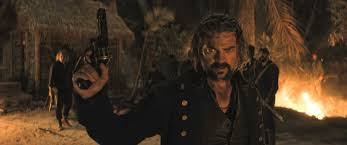
Netflixable? “Gunslingers” is a New Career Low for Everybody Involved

“Gunslingers” is an early 20th century Western set in Kentucky — nobody’s idea of the West — starring B-and-C movie icons Stephen Dorff, Heather Graham, Costas Mandylor and Nicolas Cage.

And if that doesn’t lower your expectations for it, it should.

It was written and directed by the “prolific” C-and-D movie filmmaker Brian Skiba, who has but two online “Master Classes” he could teach for aspiring filmmakers. How’d he convince this cast, including Tzi Ma (“The Farewell” and TV’s “Kung Fu”), to show up with a “This time I’ll be BETTER, I PROMISE” and how he convinces anybody to finance his cascading career of cluster-you-know-what embarrassments.

This is basically Dorff, who always takes things seriously, surrounded by a few big names rolling their eyes and having a laugh with a lot of no-names and/or amateurs who never let us forget they’re just playing dress-up for the camera.

It’s about a robbery gone wrong that gets a young Rockefeller killed in the Northeast, with the man who killed him (Dorff) fleeing South by Southwest to rural Kentucky and the town of Redemption.

Skiba loves that word. He even titled a film “Guns of Redemption.” Here, the town is filled with “wanted” men and women, with a whole infrastructure built to protect them, from fake hangings, fake graves and funerals presided over by “preacher” Jericho (Mandylor) photographed by Halloween costumed photographer/madman Ben (Cage).

Cage dons designer sunglasses and affects a hoarse whinny of a voice for this role, which has neither foot planted in reality.

Graham plays a wounded mother fleeing a murderous husband, come to warn Thomas (Dorff) that a “100 man” masked posse led by his grudge-carrying brother (Jeremy Kent Jackson) is coming for him.

One-eyed brother Robert sees Redemption for what it is, “a buncha wanted criminals playin’ possum.”

The plot is a couple of shootouts leading to a long if never remotely epic standoff/shootout in and around the Domus de Sallust saloon.

As the mayhem, six shooters and bad-acting go off all around him, Dorff stands above it all, reminding us that this might have been taken seriously instead of all this vamped bad makeup, acting and screenwriting ineptitude and goofing around by players who figure they’re better than this.

But maybe Dorff’s the real fool here for not realizing what everybody else did.

Rating: R, lots of violence and profanity

Cast: Stephen Dorff, Heather Graham, Tzi Ma, Costas Mandylor, Scarlett Rose Stallone, Laurie Love, Jeremy Kent Jackson and Nicolas Cage

Credits: Scripted and directed by Brian Skiba. A Lionsgate release on Netflix.

Running time: 1:43

Posted in Reviews, previews, profiles and movie news | Tagged , , , , , , | Comments Off on Netflixable? “Gunslingers” is a New Career Low for Everybody Involved

Netflixable? Farrell hedges his bets on “Ballad of a Small Player”

The latest turn in the twisty, quixotic career of Colin Farrell is a surreal and supernatural gambling tale of one not-quite-posh poseur’s days of reckoning when every debt, every losing streak, every health problem and every crime comes due.

“Ballad of a Small Player” is a lot like Farrell’s own approach to his art. At 50, his filmography still runs cold to hot. Something like Apple TV’s “Sugar” and HBO’s “The Penguin” turns the heat back on, and he’s all-in on a daft gamble like “A Big Bold Beautiful Journey” and a surreal saga of a card-playing, card-carrying addict like Lord Doyle, a loser who takes heart in “It’s not too late for you” advice, but for all the wrong reasons.

He’s played the long odds before. “The Lobster” and “The Banshees of Inishirin” paid off, after all.

This “Lord” Doyle is a “small player” with delusions of big time status. That ascot, those suits (green velvet when we meet him), the yellow leather gloves he passes off as “Saville Row’s finest” to anyone who asks (they don’t look tailored), it’s all part of passing himself as someone worthy of respect, deference and most important of all, credit.

Of course it’s a fake name. He sees himself as “a high roller on a slippery slope” in the “gambling capital of the world, Macao,” in his voice over introduction to the viewer. But only a fraud and con artist would think naming himself “Lord” or his son “Barron” would fool anybody with a lick of sense.

His debts at the hotel where he’s been staying in style is overdue. His lies only buy his a couple of days, his pathological need for credit to go back to the tables — punto banco Baccarat is his addiction of choice — gives him the sweats.

But a casino down the street might stake/trust him, the sympathetic doorman (Alan K. Chang) suggests. Not that things go any better at the Rainbow. He can’t even cover his top dollar champagne bar bill. A credit-line broker there Dao Ming (Fala Chen) helps him out, and lives to regret it. Because he’s determined to take down “Grandma (Deanie Ip), a mouthy oligarch’s wife with bottomless resources and uncanny luck at the tables.

Grandma calls him dirty names in Chinese and “Lost soul” to his face, in English, as she cackles and cleans his clock. Lord Doyle’s belief that he’s “standing at a statistical crossroads” and that his “run of bad luck” has to end, and with her. But it won’t and pleading with Dao Ming doesn’t move her.

But losing another gambler she’s staked to suicide shakes her, and she makes a connection with Mr. “I don’t have a gambling problem.” She tells him of the upcoming “Festival of the Hungry Ghost,” and as he sweats and hyperventillates when the bell tolls and the walls close in and old creditors (Tilda Swinton) storm in amongst the new ones, we have a hard time buying into Dao Ming’s faith.

“It’s not too late for you.”

We, like Farrell, assume that anything directed by Edward Berger (“Conclave,” “All Quiet on the Western Front”) is a safe bet. And the neon-bedecked Vegas-of-the-Orient setting and garish hotels and hotel rooms and (mostly Chinese) gambling addicts give us hope. But screenwriter Rowan Joffe (“Before I Go to Sleep”) adapting a Lawrence Osborne novel seems like an ill-advised bet.

But the right cards never seem to turn over in the right order for this gamble.

Unlike James Bond, our lead “explains” Baccarat (it’s not the same variation Bond played in the early films). The explanation lacks…something.

The life and death stakes suggest a supernatural “test” for Doyle, one presided over by Grandma and/or Dao Ming. But that, like must of what happens in the third act, is passed over as “ambigious.”

Farrell, Swinton, Chen and Ip do what they can with their characters. But it’s hard to decide if anyone here is just another demon or angel in Doyle’s fevered brain, or real. Alex Jennings plays a fellow card-hustling “gweilo” (white ghost “foreigner), but the character serves no purpose whatsoever.

We’re left with a shiny bauble of a “ghost man in Macao” parable, a “Twilight Zone” card game with a deck stacked by fate. But somebody at Netflix should have brought fate or Joffe back in for rewrites.

Farrell? He’s just waiting for the chance to go all-in on the next hand, the longer the odds the better.

Rating: R, profanity, suicide

Cast: Colin Farrell, Fala Chen, Deanie Ip, Alex Jennings, Alan K. Chang and Tilda Swinton.

Credits: Directed by Edward Berger, scripted by Rowan Joffe, based on a novel by Lawrence Obsborne. A Netflix release.

Running time: 1:41

Posted in Reviews, previews, profiles and movie news | Tagged , , , , | Comments Off on Netflixable? Farrell hedges his bets on “Ballad of a Small Player”

Movie Review: Yorgos and Emma and Jesse, lost in “Bugonia”

The latest from the challenging and celebrated filmmaker Yorgos Lanthimos might be his most on point satire yet.

The director of “The Favorite” and “Poor Things” addresses the intellectual disconnect of modern discourse, the impatient and sometimes brusque way the educated, the informed and the impersonal scientifically minded struggle to communicate with the superstitious, misinformed and passionately aggrieved.

“Bugonia” also makes us wrestle with what we’re entitled to, as viewers, even from a cinematic voice as singular and shrwed as Lanthimos. Is he obligated to satisfy as well as engage?

This kidnapping thriller touches on the growing environmental crisis, the inability of people drawn to science to address human concerns in a humane and empathetic way and irrational people who see conspiracies and “dark forces” beyond rational understanding destroying their lives and poisoning civilization and the planet, rather than focus on the dark figures right in front of everyone’s eyes.

And Lanthimos takes such a comically cheap way out of resolving this plot dilemma that we don’t so much ponder “What’s it all about?” the way we did “The Lobster” or “The Killing of a Sacred Deer,” as dismiss it.

It’s on target and yet in the end a dissonant cop-out, with or without Marlene Dietrich underscoring his point for him.

Emma Stone plays Michelle Fuller, a callous loner and socially awkward chemist with a degree in psychology who struggles to humanize herself to her workforce at the biochem giant — Auxolith — whom she is inclined to work to death. As CEO, she just hates the “optics” of the insane hours she demands.

As the company’s campus and distribution are located in Georgia, in the “Right to Work” (anti-union) South, the “optics” may be all this “visionary” tyrant is worried about. Her yoga and self-defense tutored regimen in her solitary mansion are all the distractions she allows.

But there’s a madman out there, an aggrieved employee who knows that “No one on Earth gives a single f–k about us,” with a cousin-acolyte who is the only one who believes him when he says “I’ve figured it out.”

And Teddy, played by rail-thin, wild-haired and mad-eyed Jesse Plemons, has a plan. Teddy’s fervor has to do with “theories” he’s read about and on podcasts he listens to. It’s about the die-off of bees he keeps on his family’s farm and the destruction of a whole class of humanity just like him, his mother (Alicia Silverstone) and his dim-witted cousin Don (Aiden Delbis), whom he’s brought on board.

Teddy masterminds a kidnapping of the CEO of the company he packs boxes for. For an oligarch in training — Stone’s Fuller could be based on Theranos villain Elizabeth Holmes — our G-wagon driving master of the universe doesn’t have much in the way of security. As she drops and pummels her attackers, we see why she perhaps doesn’t feel the need.

But one syringe later she’s chained to a bed in Teddy’s basement, her head shaved because “that’s how they track her.” She wakes up to learn of her crimes against Teddy’s “family…community…civilization…and the bees.” A rational woman of science with an understanding of psychology tries to “dialogue,” work the problem and reason her way out of peril.

It’s just that she’s a smart person talking to a crank, a man “in a bubble” of his own creation, one that has him convinced she’s Andromedan — from that distant galaxy — and that she will commune with her fellow Andromedans in four days, on the next lunar eclipse. He delusionally figures he can intervene and save the planet when that happens.

“Bugonia,” whose title is a pun on the fact that the ancient Greeks believed bees popped out of the carcas of decaying oxen, is about two people in “bubbles” and their inability to connect in any rational way.

Teddy is down his rabbit hole and willing to torture Michelle to get her to admit that he’s right. Michelle can try to reach him and get punished for it, or appeal to any humanity in his shotgun-armed cousin. But they’re all speaking in duologues. No one truly understands anyone else.

Efforts to “explain” Teddy’s broken psyche ring true. But anybody who’s watched a “Twilight Zone” episode can guess where this is going early on, if only the director has the nerve to take the easy, cheap laugh way out.

Plemons and Stone, who has become the director’s Oscar-winning muse, are terrifyingly real. And the allegory of a civilization in crisis lured like lemmings off this or that cliff of lunacy lands hard.

But the payoff, probably based on co-writer and Korean filmmaker Jang Joon-hwan’s “Save the Green Planet,” feels like a comical cop-out that is even less “funny” than the dark and unsettling insanity that preceded it. Whatever the intent and expense gone to in order to realize this payoff, the message-undercutting effect is sour and unsatisfying.

Rating: R, bloody violence, torture and profanity

Cast: Emma Stone, Jesse Plemons, Aiden Delbis, J. Carmen Galindez Barrera and Alicia Silverstone.

Credits: Yorgos Lanthimo, scripted by Will Tracy and Jang Joon-hwan. A Focus Features release.

Running time: 1:58

Posted in Reviews, previews, profiles and movie news | Tagged , , , , | Comments Off on Movie Review: Yorgos and Emma and Jesse, lost in “Bugonia”

Movie Review: Every Heist needs “The Mastermind” to Plan It

Grey skies, a “cool jazz” score and sketchy characters are selling points of “The Mastermind,” a ’70s period piece infused with the “grit” aficionados associate with the films of that benighted decade.

It looks the way fall thrillers, even dryly comic heist pictures like this one, are supposed to look.

The latest from writer-director Kelly Reichardt (“First Cow,” “Meek’s Cutoff” and “Wendy and Lucy”) is a movie that “shows” us rather than “tells” us what’s going on, what’s going wrong and the psychological and intellectual state of the characters.

And what it shows us is a heist that people with no experience in such things pull off and all the things that go can and will go wrong when others pick up on that inexperience.

“I don’t think you thought this thing through,” is something James “J.B.” Mooney hears and hears again in describing the small, suburban Framingham (Massachusetts) Museum of Art robbery he’s masterminded.

It’s not based on a true story, but it was inspired by a couple of rather casual and under “thought through” art-nabbings, possibly the 1990 heist that deprived the Isabella Stewaert Gardner Museum of Boston of works by Rembrandt and Vermeer, and certainly a lower rent 1972 theft from Worcester Art Museum.

Reichardt’s quiet, contemplative style is no more suited to this genre than it was the doomed wagon train Western “Meek’s Cutoff” or the eco-terrorism thriller “Night Moves.” But she uses this caper-gone-wrong plot to serve up a Boomer character study set in protest riven 1970, as our title character finds himself making an odyssey through the American counterculture as he tries to flee the country.

Josh O’Connor from “Emma.” and “Challengers” is our title character, a seemingly aimless “art school dropout” with a failing cabinetry business, an obliging working wife (Alana Haim) and two tween boys, at least one of whom is what we might now refer to as “on the spectrum.” The kid won’t shut up about his obsessions, and even folds and tosses paper airplanes in the local museum, where Mom and Dad end up taking them, age appropriate or not.

The kid is useful to 30something J.B., a born “distraction” and a reliable indicator of which guards nap on the job and how much attention the average patron would pay to something noisy and out of the ordinary. In the parlance of the trade, J.B is “casing the joint.”

But he’s there so often he has to assemble some locals (Eli Gelb, Javion Allen and Cole Doman) to do the deed for him — four abstract paintings by Arthur Dove, to be grabbed and stuffed into sacks from a little-visited gallery within the (fictional) Framingham museum.

As J.B. has pocketed a few miniature collectibles from the collection, with wife Terry as an accomplice, and she sews the sacks the paintings are to be stuffed in, we assume she’s in on it. But maybe not.

The heist hasn’t even happened when we start to count the loose ends J.B. hasn’t planned for. When the driver quits after getting paid to steal the getaway car, everything sort of goes downhill, from a cop taking his lunchbox out to take a break in the rear entrance, to a high school driver blocking the stolen getaway car, to the one guard who puts up a fight.

J.B.’s father (Bill Camp) is the first to cluck “didn’t think this through” while reading the newspaper account of the robbery at family Sunday dinner. Mother (Hope Davis) doesn’t realize the loan she slipped to her son for a “business opportunity” just financed the heist.

Reichardt takes her time setting up this slow-motion trainwreck and keeps her cards close to her vest in terms of character details that underscore just how “wrong” this whole thing goes. She spares us the melodramatics and just lets things happen and the consequences be accepted in ways no conventional thriller would.

She showcases the anti-war protests that were the signature of a generation, and then has J.B. cynically exploit them and his old college pals (Michael Angarano and Gabby Hoffman) and “the Movement” to attempt his getaway.

As a writer, director and editor, Reichardt pays a lot of attention to pacing, the more deliberate the better. We watch painstaking efforts to hide the paintings, J.B.’s meticulous attempt to swap pictures from a passport he’s come by, and find outselves frustrated by the passivity of it all.

Pacing that slow is not to every taste, and in the case of this dip into the heist picture genre, we see the narrative’s momentum slowed and stakes lowered by her “patience.” But Rob Mazurek’s glorious muted horns, period-jazz (Think Lalo Schifrin and “Bullitt”) score contrasts with her dialogue-free, overly-deliberate “detail” scenes and lifts the picture and gives it momentum.

And every time we allow ourselves to walk in J.B.’s dirty white sneakers, identifying with the man on the lam, pondering how he’ll get away with it, somebody else comes along — maybe a mobster (Matthew Maher of “Air”) — to remind him and us that maybe “you didn’t think this thing through.” Because he didn’t.

Rating: R, profanity, a hint of violence

Cast: Josh O’Connor, Alana Haim, Eli Gelb, Javion Allen, Gabby Hoffman, Michael Angarano, Matthew Maher, Hope Davis and Bill Camp

Credits: Scripted, directed and edited by Kelly Reichardt. A Mubi release.

Running time: 1:50

Posted in Reviews, previews, profiles and movie news | Tagged , , , , | Comments Off on Movie Review: Every Heist needs “The Mastermind” to Plan It

Classic Film Review: Black and White Deadpan from the Golden Age of “Indie” — “Down by Law” (1986)

Memory always gets the last cut in editing any beloved classic film we embraced, way back when.

I recall the totality of writer-director Jim Jarmusch’s work in his indie make-or-break years, the 1980s — the impromptu road trip to Florida of “Stranger Than Paradise,” the Memphis hotel clerk (Screamin’ Jay Hawkins) and rockabilly Japanese tourist couple obsessed with Elvis (her) and “Carrull Perkins” (him) of “Mystery Train.”

But I’d forgotten the whole “how they wound up in prison” prelude to “Down by Law,” a 1986 movie and music nerd’s take on prison escape stories. It has New Orleans at its pre-Katrina seediest and features Jarmusch at his “indie artiste” peak — filming in black and white, confining the most potent action to “off camera” so as not to break his “some people will find this boring” spell, casting for hipster street cred more than anything else.

That prelude has picturesque, down market street scenes, Edward Hopper compositions in the night shots, litter and decay and pimps and hints of domestic violence egged-on by women and the good fortune of landing Ellen Barkin for those early moments, already in “The Big Easy” to film her big budget thriller breakout role.

Jarmusch needed her as a fiesty girlfriend who kicks D.J. Zack (Tom Waits) to the curb — literally — in a prologue that shows a couple of characters, a pimp (John Lurie) and that fired-and-fired-again D.J. Lee Baby Sims (Waits) get “set up” and busted for child prostition and a body in the trunk of a Jaguar a sketchy guy just wants driven “across town.”

Fire-breathing Barkin and the screwy Italian tourist (Roberto Benigni in his American cinema debut), taking notes on Southern American idiomatic English, are the life of the film’s opening act, which has only one character (played by Rockets Redglare) attempt a New Orleans drawl and the “set-ups” so obvious that their victims complain about their obviousness.

It also makes us question early Jarmusch favorite Lurie’s presence in the cast. It’s a good thing he’s been an exemplar of cool and artistic versatility (a funky jazz saxman and painter). Because Lurie’s physically in the early scenes, but his shrinking presence and unemphatic, whispered dialogue creates a vacuum where a hustling pimp is supposed to be. A veteran of Jarmusch’s “Stranger Than Paradise,” he’s just bad in the early scenes, only coming into his own after everybody’s locked up together in The Joint — the Parish prison.

But once they’re behind bars — with Zack and Jack staring each other down because neither one is all that tough — in a tiny, quiet cell where a guy can’t even get a light for his smokes when he wants one, “Down by Law” finds its tone and its voice. And only when Benigni’s Roberto, aka “Bob,” gets tossed in there with them does the picture’s comedy take off.

“Eef looks can keel,” Bob declares, in his best imitation American movie dialogue, “I yam dead man!”

Bob’s a peace keeper, coming between the two “tough guys,” keeping the focus on those who imprison them. If it takes starting a chant-a-long that ripples through the entire cellblock, threatening to erupt in a riot, to distract Jack from Zack and vice versa, Bob’s your man.

“Aye scream YOU scream, we ALL scream for ice-a cream!”

Bob’s noticed something about “the yard,” a way out. Next thing we know the Parish Prison trio are dashing and splashing across the bayou, feuding, splitting up and reconnecting all along the way to “Mississippi,” “the closest border” Jack insists. No, “TEXAS,” Bob pleads.

Strange country” he says of the state to the west. “I see MANY films!”

Jarmusch polished and perfected his “deadpan” phase through “Mystery Train” (1989) and the seminal, all-star international taxi drivers around the world spectacle “Night on Earth” of 1991.

But Benigni was a harbinger of less deadpan movies to come. He chatters away and sweetly takes over “Down by Law.” And as a Roman taxi driver who wears his sunglasses at night and scares a poor padre to death with his unfiltered, depraved, driving and breathlessly blurted confession, his reputation in the U.S. was made and Oscar glory a mere matter of time.

Jarmusch’s most notorious years — pre “Broken Flowers,” his 2005 national “comeback”/”coming out” — were fun, because not everybody was a fan. Seeing his films at one of the last single-screen Manhattan movie houses (the Paris), at the New York Film Festival or at the Beverly in Los Angeles, as I did, was like “Rocky Horror Night.” You were in a room filled with like-minded fans, eagerly anticipating the next hip happening he served up.

“Down by Law” isn’t the Jarmusch film listed with the National Film Registry for perservation (“Stranger than Paradise”). And for my money, his best and most fun films were the ones that came right after this — “Mystery Train” and “Night on Earth.” “Coffee & Cigarettes” had its moments, and “Broken Blossoms” was uncharacteristically sweet for him and for star Bill Murray.

But look at the way Lurie and Waits dress in “Down by Law” before and after their prison clothes. Decades of future hipster shirts, hats, pants, suspenders and facial hair was laid out for us and we didn’t even know it.

Drink up the dry opening act, with its predictable “set-ups,” and wait for our filmmaker to pack three guys — two of them music legends — in a cell and then on the lam together. Relish the Waits songs and Lurie score.

And watch these two influencial fringe figures from music who also happened to ac take a back seat to the Italian dynamo the minute Benigni shows up. Sure, he’d wear out his welcome in America sometime after “Life is Sweet,” when “Son of the Pink Panther” should have finished him. But here, he’s just the latest “discovery” of a filmmaker who more than most represented New York indie cinema just as it hit its peak.

Rating: R, sexual situations, physical violence, profanity

Cast: John Lurie, Tom Waits, Roberto Benigni, Billie Neal, Vernel Bagneris, Rockets Redglare and Ellen Barkin

Credits: Directed by Jim Jarmusch An Island Pictures/Janus Films/Criterion release on Tubi, other streamers.

Running time: 1:47

Posted in Reviews, previews, profiles and movie news | Tagged , , , , , , , | Comments Off on Classic Film Review: Black and White Deadpan from the Golden Age of “Indie” — “Down by Law” (1986)

Have you donated to Wikipedia this year?

Wikipedia, the secondary/overview font of much of the “knowledge” available on the Internet, is 24 years old this year. Growing pains and legitimate complaints lodged against its “crowdsourced” biographies, histories, science and facts in its early years notwithstanding, it’s endured because it is a reliable source of quick-read articles on this or that — “Cliff Notes” summaries as we used to call them when avoiding reading “Moby Dick” in high school or figuring out why Emmanuel Kant mattered in college.

It’s not a “primary source,” but it summarizes such legitimate sources and links to them. If an article isn’t as reliable as they demand, they say so and urge those with inside knowledge to add links to back up the assertions of fact in each piece.

Writing an opinion blog filled with reviews built on of facts, I link to Wikipedia all the time, because they “fact police” their work and it’s an easy place to get a reader of a review, profile or obituary up to speed on what you’re talking about. A good example of using it was for my review of “The Commitments,” based — like “Rosie” and “The Van” — on a Roddy Doyle novel, a few days ago.

The Internet Movie Database, generally the last word authority on movie production details, inexplicably has deleted or never listed Doyle’s “The Snapper,” which became a movie shortly after “The Commitments.” Not Wikipedia.

It’s run by a foundation and they’re fundraising.

With the Internet awash in misinformation that has all but replaced religion as Marx’s “opiate of the masses,” almost all of it manufactured by agenda-driven oligarchs and totalitarians and passed on by their gullible stooges, with mainstream media pretty much wholly compromised, sites like Wikipedia the nearly bullet-proof fact police at Snopes.com are a firewall against lies and the liars who tell them.

I just donated. I urge you to as well.

Veritas potestas!

Posted in Reviews, previews, profiles and movie news | Tagged , , , , , | Comments Off on Have you donated to Wikipedia this year?

Movie Review: A San Fran Romance with Wrenching — “Maintenance Required”

“Maintenance Required” is a gear-grinding rom-com that tries to blend car repair and romance between two good looking mechanics who meet on an online vintage Ford Bronco restoration forum.

That’s not a terrible idea, nor is the notion that Charlotte “Charlie” O’Malley has turned her dad’s Oakland garage into an all-young-female operation.

“All Girls Garage” anyone?

But co-writer/director Lacey Uhlemeyer, making her writing and directing debut, and her two similarly inexperiened co-writers (Erin Falconer and Roo Berry) have no idea what to do with their premise.

They take a stab at avoiding the leering, male-gaze-centric appeal of any “All Girls Garage” variation, but then dress their rarely-dirty starlet (“Riverdale” alumna Madelaine Petsch) in tight belly shirts and overalls that she rarely keeps buttoned up. Her receptionist (Madison Bailey of TV’s “Outer Banks”) is a manicurist attired like somebody who just left the beauty shop on the way to the club.

The creative team pays lip service to the notion that an all-women’s repair shop will be less patronizing and predatory than your average upcharge everybody/especially women, Firestone/Tire Kingdom franchise. But they do little with it.

They end up making a depressingly bland comedy with few romantic sparks and no real point of view beyond its curb appeal.

Charlie’s dad’s shop is an Oakland institution. She took it over after his death, and took on finishing up restoring the 1960s family Bronco, which has such a spectacular repaint that Marge — the SUV’s name –can’t help but look like a wholly restored car show competitor with a few new parts yanked out for movie purposes.

That’s what has her on the Bay Broncos online forum, looking for advice and encouragement after hours. Her “Greasemonkey” avatar bonds and commiserates with “Bullnose,” an across-the-bay restorer doing an electric engine swapout on his vintage Bronco.

Unbeknownst to the fair Charlie, Bullnose is Beau, aka “The Closer” for the ever-expanding Miller Boys chain of car repair franchisees. Run by the unscrupulous and somewhat dim Mr. Miller (Jim Gaffigan, the least funny he’s ever been) they’re like a Pep Boys with even fewer scruples.

You can guess the entire rest of the movie from that description. Beau is to open a franchise right across from Charlie’s, and even manicures-while-you-wait and fair-pricing can’t protect her from the kind of creepy lonely Charlie flirts with online, who figures out who she “really” is before she does, and keeps it a secret.

Beau’s got a gay BFF (Matteo Lane), a florist and advisor on his unhappy love-life with the hot but uncommitted Lola (Ianna Sarkis). Charlie has sexual smorgasbord sampler co-worker (Katy O’Brian) who wears all the bi-curious movie identifiers.

Charlie drives a “Bullitt” ’67 Mustang, Beau tools around in a ’58 Mercedes convertible. They pine over the concourse classics at a car show. Beau swoons and quotes “Notting Hill.”

“I’m just a man sitting in his car, asking her to love him.”

Charlie’s accused of “hiding in your Dad’s garage for the rest of your life.”

And Gaffigan’s Mr. Miller leads the corporate staff — whose names he barely bothers to learn before firing anybody who doesn’t toe-the-line — in capitalistic prayer.

“Please give this family wisdom so that we may underprice and bury our competition,” after which they’ll raise prices as a monopoly.

That’s almost funny, and a few double entendres nearly amuse. But from the moment the movie makers blow the “meet cute,” this “The Shop Around the Corner/You’ve Got Mail” ripoff doesn’t tickle, tantalize or titilate, even when the ladies of the shop engage in competitive tire-changing.

Rating: PG-13, sexual situations, profanity

Cast: Madelaine Petsch, Jacob Scipio, Madison Bailey, Katy O’Brian, Matteo Lane, Ianna Sarkis and Jim Gaffigan.

Credits: Directed by Lacey Uhlemeyer, scripted by Erin Falconer, Lacey Uhlemeyer and Roo Berry. An MGM release on Amazon Prime.

Running time: 1:42

Posted in Reviews, previews, profiles and movie news | Comments Off on Movie Review: A San Fran Romance with Wrenching — “Maintenance Required”

Movie Review: A Soap Opera’s Season of Intrigues Precede the Famous Painting “Auction”

What an immersive byzantine delight the French dramedy “Auction” turns out to be.

The latest from writer-director Pascal Bonitzer (“The Young Karl Marx,” and he scripted “Gemma Bovery”) is a playfully malicious peek behind the scenes of big money art auctions and the schemers who run such businesses.

“Le tableau volé” it was titled in France, “The Stolen Painting.” And the story of how that painting was stolen was nothing compared to the veritable soap opera melodrama that engulfs owners, the heirs who claim it as theirs and the conniving auction house that will “do anything” to ensure they’re the ones who bring it to auction and everybody around them.

Every motive is suspect, every fresh character has an angle, no one is quite who they seem and not every loose end will be tied up when all is said and done and lawyered and gaveled home in this dry but featherweight and fun comic mystery.

André Masson is a top dog auctioneer at Scottie’s of Paris, an Aston Martin-driving big shot with a watch collection that would feed the poor in some small countries, and a smooth talker who will weather an aged prospective client’s bigotry and familial vindictiveness to land a sale.

This job, André (Alex Lutz) explains to young intern Aurore (Louise Chevillotte), has its “Indiana Jones” moments of discovery. But most of the time, “You’re soliciting like a whore,” (in French with English subtitles).

Aurore is a little too quick to declare she’ll be “happy to whore” for him. We wonder about their history, the sexual tension and the baggage each brings to the table.

What André means is that lying, withholding, fluffing and bluffing are all a part of the job, on or off the clock. We get a glimpse of his standing among the swells who run Scottie’s, fellows who figure the gift of a collectible book on “The Art of Crawling,” how to be a “courtesan,” is insulting enough, until André’s rejoinder pops their entitled bubble.

“I admire you doesn’t mean I respect you,” doesn’t put him in his place either.

But when a “lost” painting that he’s certain is a “fake” turns up, André’s own classism gets the better of him. He practically spits out words like “moonlighting factory worker” (Arcadi Redeff) from the unfashionable city of Mulhouse who has the painting when describing the “lost” Egon Schiele version of Van Gogh’s “Sunflowers” turns out to be real.

Nobody uses the word “provenance” to describe the story that André and his “specialist, not expert” ex-wife Bertina (Léa Drucker) tell of this “Sunflowers” painting’s history, when it was painted, who bought it and when it was lost.

But as the lost work’s history becomes clear, so does that of the experienced liar Aurore, the putting-on-airs André, the too accomodating Bertina and the too-blase-for-this-case lawyer (Nora Hamzawi) that the young factory worker Martin retained.

Bonizter could have titled the film “Provenance,” with all of the faux snobbery and skullduggery and side-eye scheming that goes on among the alleged “to the manner born.”

We cringe at the way “Sunflowers” left its owner’s hands, and fear for the painting’s safety, as Martin has young working class friends who take an awfully keen interest in his possible newfound wealth. We try to guess what twist involving this or that character’s motives and backstory will come into play. And we wonder if the spokesman for the “rightful heirs” (Doug Rand, beautifully unreadable) isn’t leaning into his “righteous Jew” pose a tad too hard to be believed.

Lutz and Drucker give perfectly modulated turns as people with a shared personal history and a still relevant professional one. Bertina and André’s reaction to seeing their prize in person for the first time, hung in a well-kept working class house, right next to a dart board, is perfect. They laugh in shock, delight, horror and awe.

And Chevillotte is adept at all the tricks pathological liars use, lying to get in jams and to get out of them. Her story may be a sidebar, but it’s every bit as fascinating as the main plot thread — damaged and devious and learning on the job how to throw a spanner into the works, or how others might accomplish that.

“Auction” is good, underhanded fun, and even the loose ends that Bonitzer leaves hanging — perhaps this had a longer cut at some point — leave one uncertain about how this high-stakes poker game will play out or who might upend the table with not-quite-all-their-cards on it for that final hand.

Rating: unrated

Cast: Alex Lutz, Léa Drucker,
Louise Chevillotte, Arcadi Radeff, Doug Rand and Nora Hamzawi.

Credits: Scripted and directed by Pascal Bonitzer. A Menemsha Films release.

Running time: 1:31

Posted in Reviews, previews, profiles and movie news | Tagged , , , , , , | Comments Off on Movie Review: A Soap Opera’s Season of Intrigues Precede the Famous Painting “Auction”