
One of the most formative books from my movie fanatic youth was Theodore Gershuny’s “Soon to be a Major Motion Picture: The Anatomy of an All-Star, Big-Budget Multi-Million Dollar Disaster.”
Gershuny’s on-set/in-the-studio observation of the making of Otto Preminger’s greatest debacle, “Rosebud,” remains — I dare say — a definitive eye-opener and an insightful foray into how movies are made and how they can go as wrong as they often do.
Whole epochs in technology, the shape and demographics of the audience and the very business model of making movies have evolved and devolved since 1975. But Gershuny’s all-access account of what it’s like when money, locations, stars and crew are on board the Major Motion Picture train when a production leaves the station with a very bad but “We’ll fix it” script in hand remains a cautionary tale as informative as any investigation of the disaster that was “Heaven’s Gate” or the triumph against the odds that “Apocalypse Now” turned out to be.
Egos, agendas, one hard-drinking “action” star (Robert Mitchum) quits and another (Peter O’Toole) is cast in his place, contempuous sexism and Zionism and retrograde attitudes that play as stunningly tone-deaf today, it’s a “miracle” “Rosebud” ever got the green light. The film was already hard to get one’s hands on in 1980, when the book came out. And despite being a Peter O’Toole fanatic and a (director) Otto Preminger appreciator, I could never make myself watch it when “Rosebud” aired on cable or streamed. Until now.
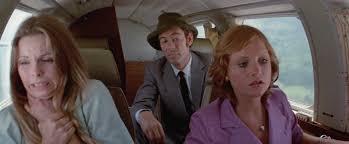
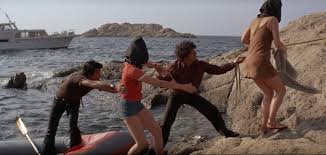
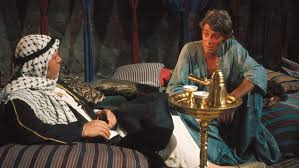
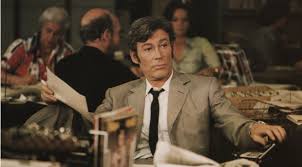
The film, based on a novel by Joan Hemingway (Ernest’s granddaughter) and Paul Bonnecarrère, came out during a peak era of Middle East unrest, when Palestinians used terrorist acts such as hijackings and the Munich Olympics mass-kidnapping and massacre to call attention to their plight.
They were being displaced and “erased” from their homeland while the whole world looked away.
American foreign policy was very much bent to Israel’s will — even then (something addressed in the film). But there were countries and public figures (Vanessa Redgrave, for one) who had Palestinian sympathies, even then, something John Le Carre’s 1983 thriller “The Little Drummer Girl” touched on.
That’s the climate that Preminger — a directing legend who had given us “Laura,” “Anatomy of a Murder,” “Advise & Consent” and perhaps most tellingly, “Exodus” — made one of his most topical movies, “Rosebud” in.
The global elite would be the target of the film’s smiling, swaggering but generally colorless terrorists. We see them plan and prep their plot when they gather in Corsica. Meanwhile, the daughters of Greek, British, American and other super-rich are gathering on a yacht named after the sled in “Citizen Kane.”
Sabine (Brigitte Ariel) may have taken a leftist French school teacher lover who ruffles her superrich father’s (Claude Dauphin) feathers. But she’s blithely unaware that her money only insulates her from daddy’s fury. There are others watching, waiting and planning their undoing.
The very young Isabelle Huppert and Kim Cattrall are among Sabine’s Rolls Royce chauffeured quintet (Lalla Ward and Debra Berger also co-star), the daughters of an English lord (Peter Lawford) and American senator (ex-New York majoy John Lindsay) among them.
When they’re set-up and nabbed and the yacht’s crew are killed, everybody involved knows the worst has happened. That’s why the (secretly Jewish) shipping tycoon Fargeau (Dauphin) grasps for private help.
Larry Martin (O’Toole) is a Paris-based correspondent for Newsweek, a Brit who’s also a covert hired “fixer” for the CIA. He’s at home in this world, used to tracking down terrorists, dealing with Mossad and mitigating one bad outcome for another. He’s cocky, charming and competent, an expert in getting the answers and results he wants.
Meanwhile, the terrorists make films for The Media, and everybody around the world cooperates to “save these girls,” save for the U.S., which is most easily coerced into doing Israel’s bidding.
As the chase begins and the hunt for the terrorist mastermind (Richard Attenborough, in one of the great casting miscalculations ever) takes our louche anti-hero all over Europe and the Med.
What could go wrong with either side’s best-laid plans, or the movie? Gosh, where does one begin?
A couple of funny O’Toole moments stand out. He was, by the mid-’70s, just past his matinee idol glory days, a gangly, pasty-skinned, somewhat functioning drunk who knew his lines and tured on the cockiness and the charm on cue.
But the man had no gift for fight choreography by then, and seeing his inept moments tangling with killers I kept thinking “Twiggy (the iconic British model of the ’60s) would have been more convincing.”
And then there’s the ghastly sight of the very young Huppert throwing her rich teen character at the shirtless cadaver — O’Toole’s Martin — she needs to rescue the rest of her friends. Would this have even been attempted with Mitchum as the star?
Preminger’s son’s screenplay is clumsily plotted and clunky when it needed to tick over like clockwork. But even a film as archaic as this one has a political edge that we didn’t often see in Hollywood cinema before the ’70s.
O’Toole’s Martin marvels at how the ultra rich like Fargeau get what they want out of TV, governments and spy agencies.
“I thought I worked for the United States. Or has he bought those now?”
Lecturing the terrorists, then as now, only shows our hero, our filmmakers and their studio bosses as utterly tone deaf to “the other side” of the Palestine problem.
“You intend to destroy the very people you’re going to save.”
The Israelis we meet in the film are cold, calculating and competent, myopic about who they will “exterminate.” One of the super rich (Jewish) fathers involved is implicated in crimes against humanity with Palestinian victims. The Palestinians aren’t represented here, a product of insensitive casting and disinterest in “their” side of the story in the script.
The acting never rises above indifferent. The pacing is so poor that we notice every action beat that doesn’t quite come off all the more.
Watching the film fifty years after its disastrous release, one can be struck by the travelogue scenery and wince at the projected effects augmenting actual location shooting. We can appreciate the quaint nuts and bolts of Hollywood’s idea of “surveillance” in that pre-CCTV, pre-cell phone era while laughing at the idea of two (Italian? French?) navy men, summoned from the tennis court and dropped by a chopper onto the deck of the moving yacht with nothing but the pistols tucked in their tennis shorts to confront whoever it is they’re facing.
“Rosebud” was close to Preminger’s last hurrah and pretty much sealed his directing fate. O’Toole would need an ’80s “comeback” to restore his reputation (He was in “Caligula” at about the same time). Lindsay would turn out to be the “last liberal Republican.” Huppert and Cattrall would find great fame and glory — Huppert very soon afterwards, Cattrall when “Sex and the City” premiered.
But all things considered, I have to say I still prefer the book about the making of this film over the movie itself.

Rating: TV-PG (but should be PG-13 due to violence, nudity, smoking)
Cast: Peter O’Toole Isabelle Huppert, Richard Attenborough, John Lindsay, Cliff Gorman, Lalla Ward, Brigitte Ariel, Raf Vallone, Debra Berger, Peter Lawford and Kim Cattrall
Credits:Directed by Otto Preminger, scripted by Erik Lee Preminger, based on a novel by Joan Hemingway and Paul Bonnecarrère. An MGM release on Tubi, Youtube, other streamers
Running time: 2:06


