Movie Review: Slow-not-Fast and “Furiosa: A Mad Max Saga”

You can lose yourself in the awe inspiring excess of George Miller’s latest “Mad Max” movie. “Furiosa: A Mad Max Saga” is two hours and 28 minutes of action epic that gives “Dune” a run for its money in “Best Filmed Use of Sand Dunes ‘Since Lawrence of Arabia.'”

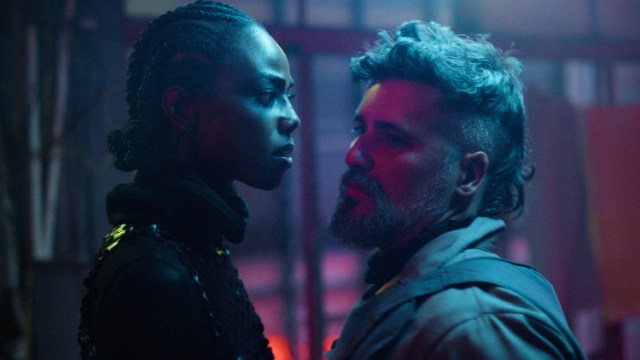
Revel in the fun, villainous turn by Chris Hemsworth as the hunky, shirtless and long-maned villain, Dementus the Red, appreciate the clever casting of “It” girl Anya Taylor-Joy as the younger version of Charlize Theron’s warrior woman from “Mad Max: Fury Road,” and acknowledge the acceptable job of back-engineering the story to get us to that film.

But this is the first “Mad Max” movie I can remember that just drags through the violent and occasionally exciting later acts. Miller, who has made a career out of these movies, seems to have less to say, and simply runs out of anything to say at all for the drawn-out finale.

The energy wars parable of the ’80s films became more of an environmental one for this renewal of the saga — remember, Miller also gave us the “Happy Feet” save-the-planet animated musicals. But even that seems half-hearted here.

“Furiosa” feels, at times, like a Miller take on the “Fast and Furious” franchise, with motivations for actions and action beats themselves a struggle to invent and work-out because of all that he’s done with rat-rodded “survivor” cars, trucks, motorbikes and ultralight aircraft in the films that came before.

But it begins with grand promise and achieves spectacle — via digitally-assisted stunts, explosions, etc. — on a scale that raises the bar on popcorn pic action. If only it all seemed justifiable and logical.

Little Furiosa (Alya Brown) is kidnapped by bikers who get a tad too close to her tribe’s Edenic “place of abundance.” She eventually falls in the hands of the Messianic biker lord, Dementus (Hemsworth, over the top and fun) who cannot talk her out of directions to her solar powered valley of plenty, run mostly by empowered women.

A girl “all there,” with all her reproductive organs instact, is a valued asset in “The Wasteland.” Dementus, who lost his children in the cataclysm that ended society, raises her. And when his grandiose schemes to rule The Wasteland by beseiging The Citadel (seen in “Fury Road”) come to naught, she becomes a bargaining chip sold to the genetically-damaged, breathing-apparatus dependent leader/breeder of the hellish society there.

Only her wits and toughness will save her. Her mother (Charlee Fraser, in a fierce, breakout turn) hunted her down and came close to freeing her. But at least the child learned that she doesn’t have to be a concubine to the patriarchy from her.

When she grows up “useful,” brave and tough (and played by Anya Taylor-Joy), she is the perfect partner to take on in “the crew” that driver Praetorian Jack (Tom Burke) needs to make transport runs between Gastown, The Bullet Farm and The Citadel. But Dementus and his ever-growing “great horde” threaten this already unjust, dysfunctional nascent civilization. And he and Furiosa have unfinished business.

The film’s best sequence is the long pursuit, mother for child, that opens the picture. Things afterward start to seem repetitive because if you’ve seen one LTD, Valiant, Charger or Microbus rat-rodded for post-Apocalyptic service, you’ve seen it all.

There’s the suggestion that some have worked out just what this “Wasteland” can raise and sustain life with, but there’s little in the way of showing that. This world is all about the gas, bullets and a violently sexist society that’s spun out of notoriously sexist Australian culture.

Promising ideas are hinted at, the best of them being that the women-empowered “green place” is an achievable Eden, while the short-sighted, violent and testosterony male societies ended civilization and are now monstrous, inhuman dictatorships where life, even among the alleged elite, is cheap.

Everybody else lives off scraps in caves, it is implied.

George Shevtsov plays “The History Man,” a learned fellow kept at the right hand of Dementus to remind him of the world that’s vanished and the English language that’s in steep decline as well. Angus Sampson is Organic Mechanic, a guy with some knowledge of biology, physiology and cuisine.

But too few supporting players make much of an impression and few set pieces seem remotely original, as there’s nothing as gonzo of having marauders hunting prey on “Fury Road” with their own guitar hero shredding away on the prow of a truck.

Hemsworth’s Dementus travels in a chariot pulled by three motorcycles, and a lot of the lads in his gang have taken on names like “Mr. Harley, Mr. Norton, Mr. Davidson” and “Mr. Honda.” But that’s about it for wit.

“Where are they going so full of HOPE? There IS no hope!”

Taylor-Joy makes a solid impression as our focused fury of a Furiosa. There’s meant to be chemistry with her fellow “Praetorian.” There is none.

A bigger gripe here is that this film feels more obviously production-designed than any “Mad Max” film. There’s less sense that what everybody’s using, wearing, driving and fighting out is “what’s left after the Apocalypse.” The biker gangs have improvised skis for “war boys” to ride on behind bikes and souped-up cars. The Citadel manufactures an amored supertanker to make those Fury Road runs. It’s covered in chrome. Why?

For one sequence, our heroine is dressed in jodhpurs. Again, why?

There’s a lot of that in “Furiousa,” which one can dwell on when the repetition sets in, when the political parables to today prove too thin to sustain serious thought and the story itself grinds towards an end that points to the beginning of “Fury Road.”

Whatever these films have done for Miller’s career as an action auteur, “Furiosa” is what happens when you saddle your horse to old cars and bikes chasing each other through “The Wasteland” for too long. Even without Vin Diesel, “Fast Slow and the Furious” gets to be a repetitive drag.

Rating: R, graphic, grisly violence

Cast: Anya Taylor-Joy, Chris Hemsworth, Tom Burke, George Shevstov, Alya Brown, Lachy Hulme, Angus Sampson and Charlee Fraser.

Credits: Directed by George Miller, scripted by George Miller and Nick Lathouris. A Warner Brothers release.

Running time: 2:28

Posted in Reviews, previews, profiles and movie news | Comments Off on Movie Review: Slow-not-Fast and “Furiosa: A Mad Max Saga”

Classic Film Review: Murder, Corruption, Catholicism and DeNiro and Duvall acting out a Sibling Rivalry — “True Confessions” (1981)

The first time the phrase “the finest actor of his generation” was attached to Robert Duvall was in a cover story in “American Film” magazine in the fall of 1981.

Duvall already had “The Godfather” movies, “Apocalypse Now” and “The Great Santini” to his credit. But a story headlined “America’s Hardboiled Olivier,” about the actor and his prep and performance opposite the already widely-lauded Robert DeNiro in “True Confessions,” seemed to chisel his reputation, his subtle skills and and range in stone and set the stage for his Best Actor Oscar a couple of years later in “Tender Mercies.”

“True Confessions” is an engrossing but somewhat tentative story of sibling rivalry tucked into an infamous Los Angeles murder mystery.

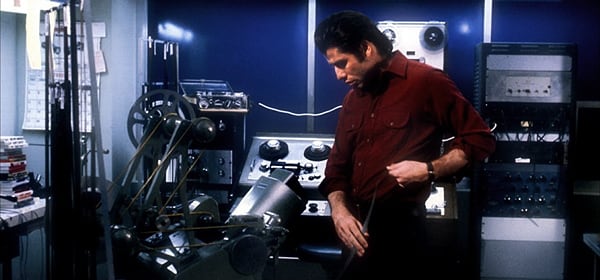
Duvall plays a detective trying to solve a fictionalized version the infamous “Black Dahlia” murder of an aspiring actress. But the story, based on a then-recent novel by John Gregory Dunne, is really about the corruption of 1940s Los Angeles, as Duvall’s Det. Sgt. Tom Spellacy is a former “bagman,” a collector of illegal cash for assorted crooks, and “once a bagman, always a bagman” he is reminded by those who hold him in contempt.

The corruption isn’t limited to the police, where Spellacy’s partner Det. Frank Crotty (Kenneth McMillan, great at this sort of piggish, unfiltered part) openly takes protection money from local Asian businesses. The plot folds in a Catholic Church twisted by money, in bed with shady characters and in need of cover-ups to maintain its power in the city.

We get a sense of Tom’s distaste for this reputatation in his first visit to his brother, the powerful Monsignor Spellacy (DeNiro), aid and advisor to the Archbishop of Los Angeles (Cyril Cusack). A priest has died in bed with a prostitute. We see Tom’s resentment of his brother, his “you’re no better than me” attitude as he does the power-broker priest this professional “courtesy.”

Monsignor Des Spellacy is carefully maintaining friendly relations with the seedy developer, Jack Amsterdam (Charles Durning) and Amsterdam’s corrupt lawyer (Ed Flanders). Amsterdam’s money put the Church in its present position, brokering Catholic schools into new housing developments, with every parish underwritten and only a lone older priest (Burgess Meredith) complaining about “The Holy Church” being run “like a business.”

Monsignor Spellacy? “I think he’s a better accountant than a chancellor” of the Church.

DeNiro’s Spellacy eats at the best restaurants and golfs with the rich and powerful. He sees the corruption around him, and we gather that he might still have a conscience about this. Or maybe not.

Tom’s resentment fires his investigation of this new, gruesome (“bisected body”) and his efforts to connect “The Virgin Tramp” murder victim, as the press labels her, to the Catholic power structure. He humiliates his brother in public, insulting Amsterdam and their past “bag man” connection to Amsterdam’s face in a tony restaurant. He grinds his teeth over the way their nursing home bound mother fawns over the priest in the family. And he can turn testy, even in the confessional, where he knows he can pin his sibling down and chew him out and Des will have to sit there and take it.

The “uneven” label this film has worn in my eyes and those of others since its release owes to the clumsy way the script connects one circle of corruption to another, to the too-subtle nuances DeNiro brings to his guarded, morally ambiguous priest, and the way that constrasts with Tom’s explosive, woman-slapping temper.

The murder mystery is perfunctorily handled, hardly what you’d expect if you’ve gone to the trouble of folding “The Black Dahlia” (a thigh tattoo) case into your Cain and Abel allegory.

The framing device has the brothers meeting in the early ’60s to make peace, fifteen years after the events in the movie’s fictive present. It sentimentalizes their relationship even as it makes for an apt metaphor for where the power-broker Monsignor ended up — a parish in purgatory (Joshua Tree and environs).

Director Ulu Grosbard, mostly a stage director, doesn’t do justice to the criminal investigation parts of this sordid story. There isn’t much suspense about everything that is coming to a head. But it’s telling that his second most notable directing credit is another story of sibling rivalry, the very fine Jennifer Jason Leigh/Mare Winningham drama “Georgia” (1995).

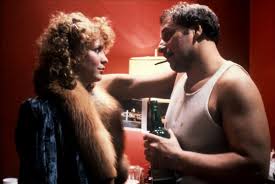
In a male-dominated movie that leans into the sexism of the times — all-male Catholic organizations, an all white male police department only integrated by Asians in the coroner’s office (the venerable James Hong)Rose Gregorio — the wife of director Grosbard — makes her mark as a “madam” at “a five dollar cat house” (brothel) who has “history” with Tom, not that he’ll tolerate her getting out of line.

DeNiro, fresh off his Oscar-winning performance in “Raging Bull,” takes pains to lower the heat and play his priest as quiet and thoughtful. That’s a defensible choice, although it does make the sibling rivalry a dramatic mismatch. The Oscar-nominated Meredith shines in his supporting role, as do Durning (a little dance number before the explosion) and the ever-seedy McMillan.

Two TV-stars to be — Dan Hedaya (“Cheers”) and Pat Corley (“Hill Street Blues”) basically audition for the oily roles that would make them famous, one playing a reporter in perpetual need of a shave, the other another corrupt Catholic shaker and mover.

But this is Duvall’s movie, tracking his character as he goes through the jaded motions, finds a reason to take this case “personally” to “settle a score,” and who lives long enough to regret it. He parks this cop midway between “The Great Santini” and his quiet consigliere in “The Godfather,” and he and DeNiro put on a clinic on naturalism in screen acting in their scenes together.

Much is made of any DeNiro pairing with another challenger to the title “Greatest American Screen Actor” that he’s worn for half a century. What makes “True Confessions” a classic is this rare meeting between Mr. Method and “America’s Hardboiled Olivier,” a collaboration of equals, two of the best ever, matching methods and wits in a film that hasn’t improved with age, but which still can be taught in screen acting courses as a grand example of How It’s Done.

Rating: R, graphic violence, nudity, profanity

Cast: Robert DeNiro, Robert Duvall, Charles Durning, Kenneth McMillan, Rose Gregorio, Ed Flanders, Cyril Cusack and Burgess Meredith

Credits: Directed by Ulu Grosbard, scripted by John Gregory Dunne and Joan Didion, based on a novel by Dunne. An MGM/UA release on Roku, Amazon, etc.

Running time: 1:48

Posted in Reviews, previews, profiles and movie news | Comments Off on Classic Film Review: Murder, Corruption, Catholicism and DeNiro and Duvall acting out a Sibling Rivalry — “True Confessions” (1981)

Netflixable? Children in peril, chased by a “Monster”

Oh, Indonesian cinema!

You keep getting our hopes up, tackling Western or International genres on film, often getting the look and some of the basics right but never quite closing the deal.

I’ve reviewed scores of Indonesian films over the years, and even taking into account cultural differences (an Islamic country), with films that take a chaste view of romance, action that’s a tad tepid and drama that can be downright dainty, I’ve always found them just too tentative and slow-footed to enjoy.

As there’s little online audience for reviews of such Around the World with Netflix films, I’ve been avoiding Indonesian fare for a while now. But “Monster” seems somewhat Indonesia-proof, at least in concept.

It’s a movie almost totally devoid of dialogue, which lets the visuals tell the story.

“Monster” is a kids-in-jeopardy thriller, two tweens kidnapped by the title character for purposes never made wholly clear — something do to with video, perhaps streaming child porn? Couldn’t get that past censors? Thrill-killings on camera? Kids cut up for cannibalism?

The children must fight their captor, work the problem and escape or die. That’s simplicity itself.

And it’s a remake of “The Boy Behind the Door,” a Shudder release of a couple of years back. Netflix likes buying intellectual properties (scripts) and remaking them in many of the languages and cultures Netflix services. So director Rako Prijanto and adapter Alim Sudio know, more or less, how this is supposed to go, where the frights are and how they can be manufactured. Not that the original film was all that.

But after a promising start, “Monster” settles into a lurching pace that underscore every hokey situation, every illogical “escape” and “That makes no sense” scripted blunder.

It’s got a few suspenseful moments, a couple of early jolts and chills. Then the whole enterprise morphs into an 84 minute long ordeal.

Bib sister Alana (Anantya Kirana, pretty good) notes the creep (Alex Abad) trailing her and her brother Rabin (Sultan Hamongan) from school, and hears the thumping and cries after the bearded weirdo has stuffed the kid into the trunk of his Toyota Crown after luring Rabin out out of the arcade.

Alana finds herself nabbed as well, duct-taped, bound and gagged.

The story’s first act has Rabin facing something like his fate with the most unhurried serial kidnapper/killer ever, and Alana starting that process of “working the problem.”

She bloodies herself freeing first an eye, then her hands and then herself. She doesn’t run for help, as they’re plainly in a big old house in the middle of nowhere. She goes back for her brother, hiding right behind the video-game addict kidnapper as he settles onto the couch to play, ducking into roach-infested cabinets to hide, trying to figure out which of the plot’s (guessing here) seven keychains has the key to open this or that door, Rabin’s shackles, etc.

She gulps for air in panic, at times. Rabin yelps at his plight. But nobody’s in a hurry.

Even after the kidnapper, who “forgot” Alana was still (supposedly) in the trunk figures out he’s being watched and schemed against, he can’t force himself to act swiftly, decisively and logically.

That hobbles the comically drawn-out second and third acts and ends any hope this might be an Indonesian thriller that plays or travels.

Write it off to cultural differences if you want, but if cinema is an international language, thrillers must translate high stakes and building suspense to work pretty much any where in the world. A quicking pace is generally how this is managed.

Aren’t they teaching that in Indonesian film schools?

Rating: TV-MA, violence, smoking

Cast: Anantya Kirana, Sultan Hamongan, Alex Abad and Marsha Timothy

Credits: Directed by Rako Prijanto, scripted by Alim Sudio, based on the script to “The Boy Behind the Door,” by Justin Powell and David Charbonier. A Netflix release.

Running time: 1:24

Posted in Reviews, previews, profiles and movie news | Comments Off on Netflixable? Children in peril, chased by a “Monster”

Movie Preview: Jessica Alba’s back, and still kicking ass — “Trigger Warning”

This June 21 Netflix release puts our actress-turned-entrepreneur back in a familiar guise, a beautiful woman underestimated in a fight.

Anthony Michael Hall is among her co-stars.

Posted in Reviews, previews, profiles and movie news | Comments Off on Movie Preview: Jessica Alba’s back, and still kicking ass — “Trigger Warning”

Movie Review: A Dying Wish that Grief and Regret Insist must be granted — “Cottontail”

He bears the gutted look of the grieving, even as he keeps some semblance of routine — visiting the fish market, haunting his favorite sushi bar.

But there’s an absence we feel before it is announced, tipped by the second glass he asks for when he gets a beer. The wife he met at this very diner is no longer with him.

He endures the funeral, partakes in its rituals. And when he reads her note with “my last wish” on it, he doggedly sets out to fulfill it.

“Please scatter my ashes on Lake Windermere,” his wife of many decades asked. They lived all their lives in Tokyo, but never got to take a trip as a family reprising a treasured visit of her childhood. Now, he must travel to Britain and make his way to the lake country, popularized and preserved by the books and bequest of Beatrix Potter.

“Cottontail” could have been a simple sentimental journey, a fish-out-of-water quest by a widower to a faraway place meeting eccetric locals who aid him on his journey to the most special place in his late wife’s heart. But writer-director Patrick Dickinson’s film transcends those nostalgic trappings to make sublime, understated points about the way grief empties you out and doesn’t always bring surviving families close together.

Sometimes, bitterness and guilt get in the way.

Lily Franky, star of the Oscar-nominated “Shoplifters,” is Kenzaburo, our solemn, morose tour guide through the Japanese way of death. A struggling novelist, he finds plenty of reasons to flash back to memories of how he met his beloved Akiko (Tae Kimura), treasuring the shy allure that drew him in, regretting the ways he let her down and not wanting to share this last request from the son (Ryô Nishikido) and daughter-in-law (Rin Takanashi) he kept at arm’s length during Akiko’s long decline.

He smokes and he drinks and he recalls their first meeting and courtship — Yuri Tsunematsu and Kosei Kudo play them as young lovers. And then he drinks some more.

Son Toshi brings his wife and child to fulfill the “trip we never got to make together as a family” part of his mother’s wish. But that doesn’t go well.

Kenzaburo is hellbent on undertaking this on his own. He speaks just enough English to understand the rowdy, trainride bridesmaid’s party’s “Oh luv, you’re on the wrong train/going the wrong way.” And swiping a bike and trekking on foot will only get him so far.

But “the kindness of strangers” includes meeting an aged farmer (the great Ciarán Hinds) and his daughter (Aoife Hinds), people who, it turns out, have a special understanding of this quest.

Dickinson, a British documentarian who made a short film some years ago about an expat Japanese couple facing terminal illness (“Mr. Rabbit”), shows Western audiences Japanese funeral and cremation rituals, but also gets at a cultural fear of “being a burden” to others, the embarassment that comes with end-of-life’s many indignitites and humiliations.

The road trip part of “Cottontail” carries its charm, its romance and its “closure.” The flashbacks convey the bitterness of regret as we see reasons for the chain-smoking Kenzaburo’s standoffishness. He’d rather ask strangers for help than face his son.

And the entire sweet and sober enterprise — a British filmmaker writing and directing a very Japanese film about loss, much of it in Japanese with English subtitles — captures not just the differences in cultural approaches to death and dying, but the universal nature of grief, the essense of a great absence and our helplessness in grappling with it, no matter where we are or how we grew up.

Rating: unrated, end of life subject matter, smoking

Cast: Lily Franky, Tae Kimura, Ryô Nishikido, Rin Takanashi, Kosei Kudo, Aoife Hinds and Ciarán Hinds.

Credits: Scripted and directed by Patrick Dickinson. A Level 33 release (June 7).

Running time:1:34

Posted in Reviews, previews, profiles and movie news | Comments Off on Movie Review: A Dying Wish that Grief and Regret Insist must be granted — “Cottontail”

Movie Review: One “last” COVID Lockdown Rom-com? “Footnotes”

An aspiring actress, formerly an aspiring dancer, considers mortality and the end of human existence — but not who will be keeping records once the human race itself has ended. It’s the early days of the COVID-19 pandemic, when people were frightened and the disease was running rampant and “the system” itself seemed to be crashing. A lot of us were having these not-wholly-reasoned-out thoughts.

“If the world ended tomorrow, I wouldn’t even be a footnote.”

Just as someday, if the cinema survives, the run of “COVID” romances, dramas and comedies that people made during and after lockdown — limited cast, a couple of sets, “COVID protocols,” the works — will be but a footnote.

Writer-director-star Chris Leary‘s “Footnotes” is about two late 20somethings thrown together in big, impersonal Greater LA just as the worst pandemic explodes. He’s living at reduced rent in the small complex, because he’s sort of the “super” there. Will (Leary) gives Apurna (Sharayu Mahale) her keys when she moves in.

He takes care not to flirt. No sense giving her a “creeper” vibe. She goes out of her way not to flirt back.

Then comes COVID, and a simple “Do you have any toilet paper?” plants the seeds of a “platonic” “Hey,” Im not gonna SLEEP with you” relationship.

As their friends-by-necessity conversations, dinners, drinking and drug consumption (played for comic effect) go on, the topics turn intimate, the “platonic” thing is accepted, grudgingly, then tested. By the time the lockdown ends, they’re both right to wonder if what they experienced with each other merited a “footnote,” or something more.

A couple of moments turn on the charm, a couple of scenes carry the weight of reality, expectations and longing. And then this lockdown dramedy drifts away from “just us two.” As it does, it becomes more complicated and progressively less interesting than the “almost interesting” it once was.

Their connection, the banter, a couple of outside characters and situations, none of it lingers in the memory beyond the closing credits or in my case, was clever enough to merit being added to my notes.

Critics “grade” the many COVID romances like this on the COVID curve, or we did as the pandemic was fresher in the mind. It took some doing even to make a simple “two-hander” like this, and everyone gets an A for effort for trying.

But even as I run quick searches to refresh my memory about “memorable” COVID comedies like this (“Getting to Know You,” “The End of Us,” etc.) there’s no escaping the sad reality that they all ran together pretty much the minute the third, fourth and twenty-fourth one came out.

And most of them, unfortunately, barely merit a footnote.

Rating: unrated, drug use, profanity

Cast: Chris Leary, Sharayu Mahale

Credits: Scripted and directed by Chris Leary. A Buffalo 8 release.

Running time: 1:32

Posted in Reviews, previews, profiles and movie news | Comments Off on Movie Review: One “last” COVID Lockdown Rom-com? “Footnotes”

Movie Preview: Japanese Man has Ashes to scatter in England, and Ciaran Hinds to guide him — “Cottontail”

Well, isn’t this a lovely, fish-out-of-water tle soaked in melancholy.

Lily Franky, Ryo Nishikido, Tae Kimora and Ciaran Hinds’ daughter Aoife Hinds star in this Man with a Mission, but dependent upon the kindness of British strangers story.

June 7.

Posted in Reviews, previews, profiles and movie news | Comments Off on Movie Preview: Japanese Man has Ashes to scatter in England, and Ciaran Hinds to guide him — “Cottontail”

Movie Review: Lightly “inspiring” “Sight” Never Quite Uplifts

“Sight” is a pleasantly bland bio-pic about the Chinese-born surgeon who came up with a treatment that has restored the sight of millions around the world.

Dr. Ming Wang’s story, growing up during the unrest in the last years of China’s Cultural Revolution, battling anti-education/anti-intellectualism at home, prejudice and limited resources in college in the United States, only to become one of the most celebrated people in his field, is the stuff of many an uplifting biography or autobiography.

It’s rather blandly-handled in this somewhat old-fashioned bio-pic, with the big twist in the story having to do with not just what drives someone, but how one takes inspiration from failure.

Director and co-writer Andrew Hyatt did “Paul, Apostle of Christ” and that “Duck Dynasty” biopic “The Blind.” He’s not out of is element, but not having a hard “faith-based” message to anchor the picture causes his movie to drift by, never unpleasant, but not particularly compelling either.

Ming Wang (Terry Chen) is a press-conference-after-surgery-famous Nashville eye surgeon known for restoring sight to “impossible” cases, and noted for his worldwide philanthropy — accepting cases from the young and the blind, or their advocates, from all over the world.

An Indian child (Mia Swamination) becomes a great test for him. Blinded by her mother to give her an edge begging in her corner of Calcutta, Dr. Wang’s skills, invention, and that of his colleague, Dr. Mischa Bartnovsky (Greg Kinnear) are pushed to their limits with this case.

That causes the obsessed surgeon to hallucinate a tween girl from China back into his life. That leads to flashbacks, a crisis in confidence and confiding in a pretty Chinese-American bartender (Danni Wang) as he struggles to remember why he’s driven to do this, and to find a way around the damage this little girl suffered to her eyes.

We see Ming’s 1970s Chinese childhood — Jayden Zhang and Ben Wang play younger versions of him — a doctor’s son growing up in Mao’s People’s Republic, facing assaults on his school, his person and his adored childhood friend, Lili (Sara Ye), whose grandfather happens to be blind.

Bits of Wang’s back story are filtered into his present day dilemma as we learn the trauma of his youth, the fate of those who knew him and his roundabout path to America, college and success.

Hewing to what we can assume is pretty close to the truth doesn’t rob the film of its drama. But the lack of highs and lows become a real issue as tiny conflicts are blown out of proportion and the big one — dealing with the anti-education “uprising” of the Cultural Revolution — is watered-down to a frustrating degree.

The “true” story seems more compelling than how it is presented on screen. The picture’s old-fashioned nature suggest we’d get more conventionally “Hollywood” triumphs and turnabouts than are served up here.

Chen is stoic in the lead role, and Kinnear — “faith-based” is kind of his brand now — is reliably supportive in a co-starring role.

But there’s little sizzle to any of this. The performances are flat, top to bottom and the script struggles to wrong pathos out of even the saddest plot elements.

We’re all heroes of our own story, and Dr. Wang’s took a more trying journey than most, or so the film suggests. Overfamiliarity with this sort of immigrant’s journey and the tentative nature of the storytelling — even keeping the “faith-based” elements at arm’s length (Fionnula Flanagan plays the nun who brings the Indian child to America) — mute the impact of “Sight,” which is a shame.

Even the Chinese sequences (in Chinese with English subtitles) have their edges rubbed-off as the script goes to some pains to avoid criticizing the government there, past or present. Lacking that edge, any “miracle of faith” or a story arc with obvious ups and downs, “Sight” fails to move, with only the closing credits — showing the real Wang’s achievements — coming anywhere near to living up to what we’re assured, in the opening credits, is “an incredible true story.”

Rating: PG-13, violence

Cast: Terry Chen, Greg Kinnear, Ben Wang, Danni Wang and Fionnula Flanagan,

Credits: Directed by Andrew Hyatt, scripted by Andrew Hyatt, John Duigan and Buzz McLaughlin, based on the autobiography of Dr. Ming Wang. An Angel Studios release.

Running time: 1:42

Posted in Reviews, previews, profiles and movie news | Comments Off on Movie Review: Lightly “inspiring” “Sight” Never Quite Uplifts

Netflixable? Garish, Goofy “Golden Kamuy” manga adaptation struggles to make sense and maintain interest

Based on a manga that has led to several anime treatments in recent years, “Golden Kamuy” struggles onto the screen in live action feature film form as a cartoonish curiosity.

A post Russo-Japanese War period piece about a treasure hunt involving tattooed ex-convicts, with soldiers, an ex-soldier, an aged ex-samurai, mobsters and an Ainu huntress, it features action and supernaturalism and enough exposition and characters to fill three two hour movies.

Ainu mores and customs are glimpsed in the midst of a lot of chasing and fighting in pursuit of 24 convicts, each of whom has clues from a puzzle tattooed on their torsos by an inmate who hid a cache of “cursed” gold after that 1904-1905 war.

It’s very “manga” in look and feel, more steam punk than period-perfect. Despite efforts to recreate the battlefields of northeastern China, near the Russian-held city of Port Arthur, and the wilds of wintry, primitive Hokkaido, this Shigeaki Kubo film never shakes the feeling of “fan service” in its plotting and a not-quite-whimsical enough “anime rendered into live action” tone.

Being ever so Japanese, there are pauses for food and discussions of food at the damnedest times — minced squirrel here, skewered dumplings there, otter served the traditional Ainu (a hunter-gatherer subculture) way, and miso which the main Ainu character amusingly describes as having the texture and smell of “feces.”

We get a taste of the origin story of our hero, the battle-scarred Saichi (Kento Yamazaki) who labeled himself “Immortal Sugimito” after his supernatural survival of battle wounds in the war.

“I just can’t seem to die!”

He hears tell of this gold treasure from a traveling companion as he pans for gold in Hokkaido. That’s when he realizes that 24 escaped prison inmates collectively carry the map to this treasure horde.

Saved from a brown bear attack by the young Ainu huntress Aspira (Anna Yamada), she becomes his new traveling companion guide to all things Ainu on this quest to track down the various inmates — brutes, escape artists, etc.

Meanwhile, The Seventh Division, led by Toshizô Hijikata (Hiroshi Tashu) has turned its post-war mission into one of finding those inmates and that treasure. And he’s not alone.

The story is relatively straightforward, or would be if we weren’t pausing for the inclusion of every supporting character, some of them quite minor, who must be introduced and identified by (inter-titles) name.

That’s “fan service” that does the movie no service.

Still, it’s an interesting peek into a part of Japan, Japanese history and culture — especially the forcibly “assimilated” Ainu — that the movies seldom visit even if the story is pieced together between chases, fights and standoffs.

Rating: TV-MA, violence, off-color humor

Cast: Kento Yamazaki, Anna Yamada, Hiroshi Tashi, many others.

Credits: Directed by Shigeaki Kubo, scripted by Tsutomu Kuroiwa, based ont he manga by Satoru Noda. A Netflix release.

Running time: 2:07

Posted in Reviews, previews, profiles and movie news | Comments Off on Netflixable? Garish, Goofy “Golden Kamuy” manga adaptation struggles to make sense and maintain interest

Movie Preview: Jean Reno — Jean RENO? — introduces us to “My Penguin Friend”

A true story about a tropical isle beachcomber who rescues an oil soaked Antarctican in the surf, whose friend “Dimdim” returns, year after year, and whose saga “goes viral.”

That “professional” “cleaner” and “Ronin” Jean R. looks damned adorable paired up with a penguin, I must say.

Posted in Reviews, previews, profiles and movie news | Comments Off on Movie Preview: Jean Reno — Jean RENO? — introduces us to “My Penguin Friend”