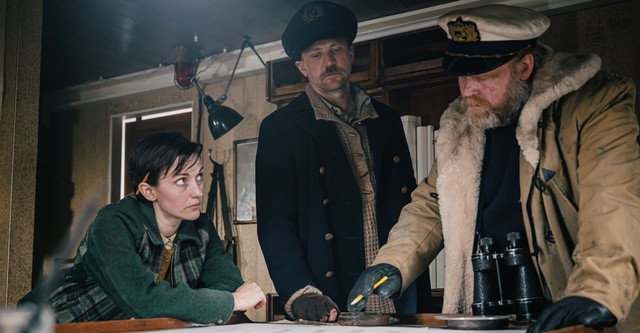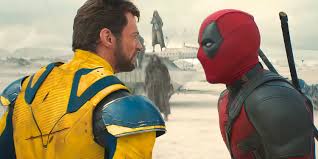



It looks right. Good cast. Is Disney sweating bullets over HBO or Max or HBO Max stealing their “Star Wars” thunder?
No.
It looks right. Good cast. Is Disney sweating bullets over HBO or Max or HBO Max stealing their “Star Wars” thunder?
No.
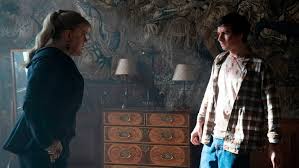
This explains that which doesn’t need explaining, but Tim Burton’s got a shot a serious September 6 hit, his first in ages, with this one.
Bringing back Winona and Michael Keaton, parking Jenna Ortega front and center. This looks, sounds and smells like a winner.
Willem Dafoe vs. Michael K? I’m there.
It’s based on a true story, that of Robert Peace, a Newark streets to Yale’s halls success story. Jay Will has the title role.
It’s an August 16 release.


The cop “buddy picture”has been around so long that they many films made from this model run together in the mind.
It’s all one long “Bad Boys” and “Lethal Weapon” high speed “Rush” down “21 Jump Street” where “The Other Guys” can play “Let’s Be Cops.”
And it’s not as if the rest of the world hasn’t taken its shots at the genre. “The Infallibles” is close enough to “The Takedown” to have me wondering, “Wait, is this a sequel without Omar Sy?”
Alas, one thing these two French action comedies have in common is how they borrow all the genre ingredients and somehow can’t make the Soufflé rise.
“Infallibles” has a badass, trigger-happy loner cop from Marseilles who knows her way around town and knows what she’s doing on a Jetski. We meet her foiling an armed robbery in Nice harbor.
Det. Samani (Inès Reg) is as no nonsense as they come, and looks as if she could hold her own in a brawl. And if she’d prefer to be called “Benecherif,” it’d behoove you to oblige.
Det. Hugo Beaumont, played by screenwriter Kevin Debonne, is his own version of a “loose cannon.” But to his fellow Paris cops, his attempts at hot-dogging just make him a perpetual screwup. It’s a good thing he has a highly-placed aunt (Stéphanie Van Vyve), a police prefect who puts him on the toughest case — a family gang, the Bogaerts, whose specialty is robbing armored trucks.
Samani/Benecherif is re-assigned to that case in far-off Paris, with Hugo, because the prefect says she’s looking for “new recruits, new methods.” As Benecherif is “nuts” and insults every collaborator and threatens every person of interest and Hugo is just looking to play hero, we’re not sure how that’ll work out.
Hugo’s marksmanship, physical conditioning and doggedness might serve them well. But he’s got a gift for snatching failure from victory, just as he’s about to snap on the handcuffs.
And the woman who doesn’t want to be called “Samani” has anger issues, “follow the law” issues and Daddy issues –a gangster father (Moussa Maaskri) still in prison, but one who might know the Bogaerts, or at least their “psychotic” patriarch (Philippe Résimont).
Reg, in what might have been her break-out role had the movie been better, brings a nice, real-women-have-curves bravado to Samani. One gets the impression that if this could be made funny, she’s the one who could do it.
Debonne scripted himself a co-starring vehicle, but did it by cutting and pasting lots of plot elements and silly situations from other movies in this long-established genre. He has a hunky swagger that could have paid dividends in a better movie.
They cast good mobsters, with Résimont (“AKA”) and Maaskri (“22 Bullets”) instantly credible as made men with a history.
Veteran director Frédéric Forestier makes us think we’re in for a flashier film than he delivers (a common thread on his resume, apparently) with striking drone shots in the opening chase through Nice.
The players are more than up to the bickering partners banter (in French, with English subtitles), the spirited street chases, brawls and shootouts.
But this picture starts out a stretch and wanders into eye-rolling in a flash. Yes, it’s supposed to be funny and cringy when the cops pull their guns on each other, mid-argument and more than once. No, it isn’t funny the second time. Nor is much of the punchy dialogue.
“Let’s give him the ‘good cop, bad cop’ routine!”
Well, maybe “This is Paris. We don’t play Pétanque here!” lands a bigger laugh in Lyon.
By the sputtering slam-bang finale, even the most devoted genre fan will have reached the “That makes no sense” level of dismay.
Rating: TV-16+ (violence, profanity)
Cast: Inès Reg, Kevin Debonne, Moussa Maaskri, Kévin Azaïs, Vincent Rottiers, Stéphanie Van Vyve and Philippe Résimont
Credits: Directed by Frédéric Forestier, scripted by Kevin Debonne. An MGM release on Amazon.
Running time: 1:39


There are plenty of elements that almost instantly categorize the German comedy “Blame the Game” as a farce.
It’s got a large ensemble, mostly people who know each other, gathering for a group board and card game night. Some take being “game nerds” a lot more seriously than others. A new couple is threatened when the host invites the exes of one of those guests. The ex is a rich, bullying dentist. The host couple is an imbalanced marriage. One character is an on-the-spectrum, blurt-out-every-thought type and another is the last to realize that her lover is not just “on a break” but on a permanent one.
There’s a “hidden” and cute Latina maid who secretly does all the work, a white cockatoo named “Helmut Kohl” that gets loose, a wacky friend summoned to retrieve it, a trigger happy/booby-trap loving neighbor, the games are “fixed” to someone’s advantage and it’ll all come to a head in naked ping pong bout.
The pratfalls and hinjinks kind of write themselves, right?
Not exactly. Pacing counts for everything in a farce, and while this one has a promising bit, here and there, it’s something of a stiff. It never gets on its feet and sprints.
Jan (Dennis Mojen) meets and flirts with Pia (Janina Uhse) at the dog park. She’s a college educated photographer and he’s a high school drop-out bike shop owner. Those differences don’t become an issue until she invites him to game night in the posh suburban mansions in the Grunevald neighborhood.
Jan figures a Youtube tutorial on how to play “Monopoly” is all he needs in a “What could go wrong?” sense. But warnings from his bike shop partner Alex (Edin Hasanovic) that “No one ‘chill’ lives in Grunevald are quickly borne out.
Hostess Karo (Anna Maria Mühe) is unimpressed with his guest’s gift. Upper class fop/nerd Kurt (Maximilian Meyer-Bretschneider) says every quiet embarassing thing out loud and co-host Oliver (Axel Stein) has invited Pia’s boorish ex, who proceeds to give her the full-court-press to try and win her back.
He dominates the games and uses every chance to ridicule under-educated Jan as a “Loser.” Jan, out of his element, can’t seem to do anything right. He’s he’s accidentally let loose Oliver’s beloved cockatoo, stumbled into the fetching au pair/housekeeper (Alfonsina Bencosme) and Jan and hapless cockatoo-hunting friend Alex have met the “crazy” gun-toting neighbor (Bernd Hölscher).
There’s enough going on that you’d think this Marco Petry film (scripted by Claudius Pläging and Andrej Sorin) would spin it into something that gets up a head of steam.
But that never happens. The booby traps are “Three Stooges” vintage, the put-downs aren’t clever and the naked ping pong elicits a grin, but pretty much dies of loneliness. None of the ex regaling one and all about trips he and Pia went on, Oliver setting off a slide show of photos of such trips and the “great sex” they had accounts add up to a single laugh. It’s just mean and provocative.
As the provocations yield only the mildest clapbacks and as the various comic elements stroll, ever so slowly by, you remember that the only way any of these well-worn situations and character types ever delivered laughs was when they pass by in a blur.
No 92 minute film should feel this slow.
Rating: TV-MA, sex, nudity
Cast: Dennis Mojen, Janina Uhse, Anna Maria Mühe, Axel Stein, Taneshia Abt and Edin Hasanovic
Credits: Directed by Marco Petry, scripted by Claudius Pläging and Andrej Sorin. A Netflix release.
Running time: 1:32
For this remake of the Chow Yun-fat classic, Woo takes a few pages out of Luc Besson’s “Lady is a Killer” thrillers — “La Femme Nikita,” “Anna.”
Nathalie Emmanuel is our hired gun with a “code,” this time. Sam Worthingon and Omar Sy are among the co-stars.
August 23 on Peacock.
Miracle surgery “saves” our hero, only to have somebody try to make a play out of his former “Elephant Man” life.
Adam Pearson and Renata Reinsve also star in
Aaron Schimberg’s genre-busting film.


“Young Woman and the Sea” is about the inspiration for “Nyad,” the American swimmer who became the first woman to swim the English Channel and thus upended notions of “the weaker sex” in sports.
Norwegian director Joachim Rønning (“Kon-Tiki,” the last “Pirates of the Caribbean” movie) and a mostly-European cast tell this All American story in that plucky, old fashioned Disney style — with great obstacles, sketchy, archetypal villains and all of America watching, or listening on the radio as our heroine makes her attempt.
It’s “Iron Will” in the water, “The Greatest Game Ever Played” with a different manner of Brit as the villain, “Cool Runnings” without the Jamaicans or the laughs.
Daisy Ridley of the “Star Wars” universe plays Gertrude “Trudy” Ederle, the New York child of German immigrants (Jeanette Hain, Kim Bodnia) who survives a near-fatal bout of measles to find her true home in the water.
The Jeff Nathanson script — he co-wrote “Catch Me If You Can,” and Rønning’s “Pirates of the Caribbean” sequel– of her life stuffs a lot of obstacles in her way in early scenes, many of them montages. She overcame measles, growing up German-American during World War I and in an era when women were only just being allowed into select “strenuous” sports.
Getting to the Olympics in Paris in 1924 as a swimmer was seemingly a fluke, as America’s sexist Amateur Athletics Union — its name is changed in the movie — wanted to ban women from competing altogether.
Glenn Fleshler plays the athletics mogul who first recruits Trudy to the U.S. team, then saddles her with a Scottish trainer, Jabez Wolffe (Christopher Eccleston), hampering her Olympics training and then going out of his way to keep her from doing what he was never able to accomplish — swim the English Channel, “the greatest challenge in sports.”
Her sister Meg (Tilda Cobham-Hervey) lays out the stakes for women, then and now.
“People don’t want us to be the heroes,” she says. “They don’t want us to do anything.”
Early attempts at publicity have photographers and reporters wanting to know, “But does she bake? I’d really like to see (a shot of her) in the kitchen.”
Trudy and Meg’s father (Kim Bodnia) is determined to arrange their marriages to nice German immigrant boys.
Ridley brings her stiff-upper-lip pluck and good swimmer’s form (“American Crawl”) to Trudy, a woman who responds to her “real” coach’s (Sian Clifford) encouragement, progressing from “She swims like a horse with two broken legs” to championships.
Cute bits of business have Trudy swimming from Manhattan to New Jersey at night to win a bet and get sponsored for her Channel attempt, and the grim labor and challenges of long distance swimming is showcased — tides and cold temps and damned jellyfish — with skill and suspense, much as it was in “Nyad.”
The period detail is quite good here, as Trudy faces long medical odds, then long financial ones, then long athletic odds as America tracks her far-away-attempt via the radio and news service reporting of the day.
The players make a good show of overcoming a quintessentially corny script to suggest genuine determination to change the way the world looks at women and authentic conservative stone-walling and sabotage standing in the way.
Eccleston and Fleshler are practically silent cinema villains. You can tell just by looking at them their intentions.
Ridley, Clifford, Cobham-Hervey and Jeanette Hain, who plays the mother who set all this in motion by vowing that her girls would know how to swim, unlike the female victims of a New York ferry disaster from their childhood, are terrific.
Yes, the script is apparently showing us the 1904 General Slocum disaster, which took a terrible toll on the German American community at the time. “Young Woman and the Sea” has Trudy witness the smoke and hear the fire engines in 1914. That accident happened before she was born. Other incidents in the script appear exaggerated and historically indefensible.
“Young Woman and the Sea” is more “The Disney Version” of Trudy’s life, times and challenges than a literally “true story.” But its core truths are unchallenged and its message resonates to this day.
There are women, ready to achieve and excel at new endeavors. And there’s always somebody there, often several somebodies who are often men, to tell them they can’t even try.
Rating: PG, a little anachronistic swearing
Cast: Daisy Ridley, Stephen Graham, Tilda Cobham-Hervey, Kim Bodnia, Sian Clifford, Jeanette Hain, Glenn Fleshler and Christopher Eccleston
Credits: Directed by Joachim Rønning, scripted by Jeff Nathanson, based on the book by Glenn Stout. A Disney+ release.
Running time: 2:09


Your hat comes off and your heart goes out to anybody with the gumption to attempt to create a new musical. That’s ambitious.
Melissa D’Agostino didn’t just co-write the script to “Mother of All Shows.” She stars in it, sings and dances in it, and directed herself, Wendie Malick and others in this Canadian musical fantasy of mother/daughter issues.
“Mother” is about a daughter (D’Agostino) who dreads checking in with the paralyzed mother (Malick), who can still “annihilate me with a single glance.”
The one thing daughter Liza and mom Rosa could bond over? Old ’70s and ’80s TV variety shows. Walking into the nursing home, Liza is transported, via flickering cathode ray tube TV edits, into “The Rosa Show.”
The sets are cable access cheap — spray painted hula hoops glued together, curtains. The costumes are sequined and off-the-rack looking. The show has “regulars,” such as Liza’s absent Dad (Michael Miranda), passed off as a magician with a good disappearing act, “The Great Gusto.” There’s a multi-talented MC and sketch performer, Bradberry Ignacio James III (Juan Chiaron, excellent) and Liza’s cousin Lisa (Tarah Consoli) comes in to abuse the daughter and alleged “co-star” who can never get out of her “bully” mother’s shadow.
Rosa dances simple choreography with chorus boys, sings her theme song and does a groaning, hit-below-the-belt monologue to her “lentils and germs.”
“Boy, being a parent is over-rated.”
Rosa and Liza spent decades not getting along. Rosa remains defiant about the body shaming disappointment her 39 year-old daughter is. But Liza has her own thoughts about why this relationship is so messed up — her toxic, “needling” mother.
They work this out (kind of) through this variety show of the mind.
Songs about “Mothers and Daughters” and the past blend with silent (black and white) pantomime sketches with Liza’s dad, a dance illustrating how her mother bullied everybody and a break for a “Dating Game” riff, where Liza picks her beau (Daryl Hinds) because whatever her mother thinks, he’s Mr. Right.
Beau Alan sings an “Ain’t Our First Rodeo” tune in cowboy clothes. The concept is funny until the song sort of falls apart.
But I like the way the film’s ambition runs up against the budget. Sets for ’70s variety shows were often scanty and sometimes noticably cheap, and the DIY sets here underscore a “Let’s put on ‘The Carol Burnette Show’, kids” ethos.
The songs, by co-screenwriters David James Brock and D’AGostino and Rebecca Grant, have heartfelt sentiments but almost intentionally clumsy lyrics. D’Agostino and others here come from the Fringe Festival world, where one often sees shows dashed-off in a creative burst, but sorely in need of polishing.
There’s nothing musical here anybody would hum leaving the theater. The singing is adequate, but no more, the dance undemanding.
And every scene drifts on past its payoff. Even the introductory drive to the nursing home is dramatically flat and interminable. It TV terms, it’s an 80 minute film in a 110 minute time slot.
Later sketches and sequences and commercials, all designed to mimic variety shows and their formats, have a “let’s get the writers take another pass or two at this” feel — “cut for time,” in “Saturday Night Live” speak.
Mothers and daughters have their issues and that has been rich material for novelists, poets, playwrights, screenwriters and sitcom creators forever. “Mother of All Shows” was onto something, but doesn’t really make a statement on that subject, and doesn’t entertain much at all as its trying to.
But good on them all for trying.
Rating: unrated, profanity and innuendo
Cast: Wendie Malick, Melissa D’Agostino, Daryl Hinds, Michael Miranda, Juan Chioran and Tarah Consoli.
Credits: Directed by Melissa D’Agostino, scripted by David James Brock and Melissa D’Agostino. A Gravitas Ventures release.
Running time: 1:50
This is the true story of a brilliant photographer who breaks barriers to cover the ugliest events in WWII in Europe.
Josh O’Connor, Alexander Skarsgard and Andy Samberg also star in this Sky release, which American distributor Roadside Attractions appears to have.