Netflixable? “The Perfect Couple” show the perfectly rich as perfectly trashy

It’s a murder mystery set among the filthy-rich/cash poor on Cape Cod, a tale of parties and endless infidelities in which almost everybody has some posh name or nickname — “Tag, Merritt, Greer,” “Shooter” — and almost everybody seems like a suspect.

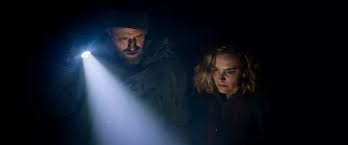
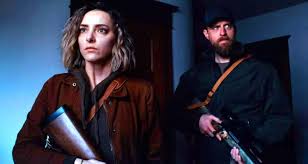
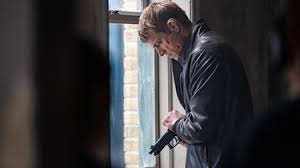
Netflix’s “The Perfect Couple” is perfectly trashy and predictably unpredictable as it spends six episodes setting up one “HE did it” or “Maybe SHE did it” after another.

Built around Oscar winner Nicole Kidman and Liev Schreiber, thisJenna Lamia (“Good Girls,” “Awkward”) production is practically a parody of a “beach book” turned murder mystery movie, dolling everybody up and sketching characters in as “types” — the stoner womanizing patriarch, the entitled, broke bro son (Jack Reynor), his bitchy-pregnant wife (Dakota Fanning) who married money. She thought.

“The key to this family is to just stay on the periphery, where it’s safe.”

And amid the accusations, intrigues, police interrogations and flashbacks to the rehearsal dinner/party where the crime was committed, and to earlier parties and arguments, “Couple” shows off beachside mansion life, vamps a version of “how old money” acts and showcases the difference between good plastic surgery (Kidman) and bad (Isabella Adjani).

Working class Amelia (Eve Hewson) is about to marry Benji Winbury (Billie Howle). Mother of the groom Greer (Kidman) is frosty but accepting. She, too, married Winbury money. But she’s had to prop up the clan and her louche husband Tag (Schreiber) by writing fiction of the romance novel persuasion.

But Amelia’s model-thin influencer maid of honor Merritt Monaco (Meghann Fahy) turns up dead at that rehearsal dinner. People have motives. People have injuries, suggesting involvement. People have access to drugs that were found in her system.

Male people have the ability to put her in the condition she was in at her death — pregnant.

Who could have done it? Well, any of them.

The Nantucket police chief (Michael Beach) is so cowed by Winbury cash that the State sends an abrasive investigator (Donna Lynne Champlin) to supervise this case. Wait’ll she finds out the chief’s daughter is sneaking around with a Winbury teen.

And on and on the complications, interrelationships and suspicions go, with character after character subjected to scrutiny, “custody” and accusations. They sneak around and sleep around, rummage for clues or to cover their tracks, scheme and cast asperions and deflect blame.

“Dont get caught in Greer’s crosshairs!”

Even Kidman and Schreiber have trouble making their characters two, much less three dimensional. The lesser lights in the cast have no prayer.

There’s nobody here to identify with, nobody to root for, even the bride, who gets an E-Type Jaguar for her troubles.

So like any soap opera, you hunt for villains to relish. But even they — the foreign friend who’s slept with generations of Winburys (Adjani), the most abrasive heir, the loutish Tag, the controlling matriarch, the judgmental housekeeper — are lacking the snap of lip-smacking villainy.

“The Perfect Couple” has a thesis no one buys into, a dated grasp of media and scandal in the 2020s and characters that are more cartoons than flesh and blood folks with foibles. It’s a TV version of a bad “beach book,” making one wish one had spent these six hours doing something else, preferably on a beach.

Rating: TV-MA, violence, sex, profanity

Cast: Nicole Kidman, Liev Schreiber, Eve Hewson, Jack Reynor, Isabelle Adjani, Ishaan Khatter, Michael Beach, Meghann Fahy, Billy Howie and Dakota Fanning.

Credits: Created by Jenna Lamia. A Netflix release.

Running time: Six episodes @:50-63 minutes each

Posted in Reviews, previews, profiles and movie news | Comments Off on Netflixable? “The Perfect Couple” show the perfectly rich as perfectly trashy

Movie Preview: Reese and Will have the dueling weddings blues — “You’re Cordially Invited”

A filmed-in-Georgia comedy about two parents steamrolling a rural inn/venue on behalf of their respective ready-to-marry children, this one has
Geraldine Viswanathan, Meredith Hagner, Jack McBrayer, Wyatt Russell, Bobby Moynihan and Celia Weston.

Jan. 30, hear come the brides! Love the way they have to label this “New Movie” in the trailers. Because it doesn’t seem “new,” much of what’s promoted with trailers these days is of the streaming series variety, or bogus “fan made” AI-assisted fakery.


Posted in Reviews, previews, profiles and movie news | Comments Off on Movie Preview: Reese and Will have the dueling weddings blues — “You’re Cordially Invited”

Movie Preview: Nick Frost goes OFF on the Home Renovation from Hell — “Krazy House”

A suburban sitcom — Alicia Silverstone co-stars — turns into a comic nightmare of slaughter, splatter and revenge.

Guaranteed to offend someone — EVERYone? Finishing its festival run, “coming soon” to theatrical and streaming?

Posted in Reviews, previews, profiles and movie news | Comments Off on Movie Preview: Nick Frost goes OFF on the Home Renovation from Hell — “Krazy House”

Netflixable? End of life issues lay bare the rift between “His Three Daughters”

“His Three Daughters” is an awards-bait drama about three quarreling adult children gathered for a death watch for their father. A drama-savvy reader will recognize that as the plot to Anton Chekhov’s “Three Sisters,” even if the writer-director doesn’t credit that classic as his inspiration.

Compact, almost claustrophobic in its setting, the size of the cast and the myopic scope of the drama, it’s theatrical, made for theater.

Characters talk at each other more than they talk TO one another — soliloquizing, taking deep breathes and launching into long anecdotes about Dad, their lives since growing up in his New York home and of course, their grievances with one another.

But while the power trio at the heart of the piece, Carrie Coon, Natasha Lyonne and Elizabeth Olsen, play variations on character “types” — the shrill, brittle and OCD “organized” sister Katie (Coon), the weepy, touchy-feely, not-quite dizzy youngest Christina (Olsen) and the oldest, a slacker/stoner “professional” gambler, Rachel (Lyonne) — can impress and serve up shades of subtlety, it’s a dry and dry-eyed journey through a beloved parent’s last days.

Katie’s first impression is the one that sticks — a woman on edge and in charge, not just keeping it together but staying on task, one task that she obsesses over between backbiting about sister Rachel and testy calls with an unruly teen back home.

“Back home” is across town, “town” being New York City. Katie lives a few boroughs away, close enough to have visited before their Dad (unseen until the film’s finale) a lot before he entered hospice care. Did she?

“The past is the past,” she sermonizes. But it isn’t. As irked as she is about the present, she has an endless succession of bones to pick with Rachel, whom we gather is the oldest, a “leeching, broke-ass f—–g punk” pothead set to inherit the rent-controlled apartment.

Christina lives far away, has a pre-school daughter she Facetimes with at night and when she isn’t sharing airy fairy idylls about motherhood, she’s taking on her “shifts” sitting with Dad, and more than her share of the actual mourning going on.

Rachel isn’t taking “shifts.” She was their father’s caregiver for years, knows how often or how little the other two have visited and works at her obsession — sports gambling, “parlays” involving a collection of long shots, something she may have shared or learned from their working class father.

Katie’s situational obsession is the fact that their father didn’t sign a “DNR,” a do-not-resuscitate” request. Christina’s is “I think you should go a bit easier on (Rachel).” And Rachel’s is just getting through every not-wholly-aimless day, surviving this “sister” time, and not interrupting her life of lighting-up, placing bets and watching games with her beau Benjy (Jovan Adepo).

The script’s arch tendency towards speeches is thrown ino sharpest relief by the ironically-named “Angel” (Rudy Galvan), the hospice worker whose every word is an all-knowing pronouncement o finality. He is trying to keep the trio on task, letting them know when their father is losing his connection to the world and that it’s time to “say anything that you feel must be said.”

The sisters get as irritated with him as we do.

There are fantasy grace notes in the third act, but mostly “His Three Daughters” is a soapy, predictable “family” rift, Chekhov’s “Three Sisters” rendered in modernized Oscar-bait strokes.

Our three leads are good, with Lyonne giving us subtle moments that lift her character above caricature, Olsen’s West Coast “feeling” backed by an enviable level-headedness and Coon’s shrill martinet occasionally humanized.

But there is nothing here that comes close to touching the heart, and no attempts at “Terms of Endearment” tears or grappling with the growing sense of loss that aching dramas from “Amour” and “Departures” to “Biutiful” managed.

It’s set up the way Chekhov’s play is traditionally-mounted these days, as an actor’s showcase. That’s just not enough to put “His Three Daughters” over.

Rating: R, drug and alcohol abuse, profanity

Cast: Natasha Lyonne, Carrie Coon and Elizabeth Olsen

Credits: Scripted and directed by Azazel Jacobs. A Netflix release.

Running time: 1:41

Posted in Reviews, previews, profiles and movie news | 2 Comments

Movie Preview: A Kiwi “Bookworm” is more than Absent Dad Elijah Wood bargained for

Nell Fisher’s a precocious kid who’s grown up without a Dad.

Then, her children’s magician for celebrity parties dad from America shows up.

And they set out on an adventure.

Looks sweet, cute and juvenile, all one could want in an adventure comedy made for tweens.

Posted in Reviews, previews, profiles and movie news | Comments Off on Movie Preview: A Kiwi “Bookworm” is more than Absent Dad Elijah Wood bargained for

Movie Preview: Daisy Ridley is a new-mother wronged — “Magpie”

Is he cheating? What will she do about it? Why’s her baby crying all the time?

Oct. 25, we find out.

Posted in Reviews, previews, profiles and movie news | Comments Off on Movie Preview: Daisy Ridley is a new-mother wronged — “Magpie”

Classic Film Review: An early Kurosawa/Mifune/Shimura VD lecture and morality play, “The Quiet Duel” (1949)

Before making his global reputation with epic period pieces from Japan’s samurai past, Akira Kurosawa made movies for domestic consumption in a Japan recovering from the trauma and ruin of fascism and the world war that their militaristic state started.

“Stray Dog” and “Drunken Angel” have value as early genre pictures that capture bombed-out Japan at its postwar low-ebb. Films like “Scandal,” “Those Who Make Tomorrow” and “The Quiet Duel” have their melodramatic elements, and seem to be re-teaching the culture its values in an ethically unmoored era under American occupation.

“The Quiet Duel” (1949) employs two of the master filmmaker’s favorite actors, Takashi Shimura and Toshiro Mifune, as father and son physicians practicing medicine in a country wracked by shortages and an unrecovered supply chain, grappling with notions of honor, reputation and doing the right thing when confronted by the “shame” of venereal disease.

Based on a play from that era, it presents a tightly-confined world — a hospital — and moral absolutes, taking the noble path when the “worst” happens, even if it shatters your dreams and those of the woman you love.

Claustrophobic, symbolic and emotional, “The Quiet Duel” (“Shizukanaru kettô”) tells an intimate story with efficiency and tenderness, even if it isn’t the timeless crowd-pleaser that many of the films that followed Kurosawa’s global breakthrough, “Rashomon” (1950) were and remain.

We meet Dr. Kyoji Fujisaki (Mifune) asleep on his feet, passed-out between waves of wounded at a rainy jungle Imperial Army field hospital. His round-the-clock work has him taking shortcuts in the frantic effort to get to every patient. That’s why his gloves are off when he operates on one soldier. The man’s wounds are one thing, but when the doctor nicks his finger, mid-operation, the fact that the soldier has syphilis means the consequences could be dire.

It’s only later, after returning home to the hospital that his OB-GYN father (Shimura) runs that he gets himself tested. Facing years of treatment with a drug in short supply, Kyoji takes on a chaste, resolute determination to do right by his patient fiance of six years, Misao (Kyoji Fujisaki). That means that he must break things off and not tell her the reason he does.

The sexual stain of this illness is such that even the pregnant, unmarried apprentice nurse Minegishi (Noriko Sengoku) looks down on him, because she “never fell that far.” But her judgment turns more pitying, as does his father’s, when word gets around how Dr. Kyoghi Fujisaki met this fate.

When he crosses paths with the very soldier (Kenjirô Uemura) who infected him, Kyogi makes it his mission to lecture (in Japanese with English subtitles) the lout on proper treatment and the simple humanity of avoiding passing this curse on to an unsuspecting woman. “Think about other people!” Too late. The drunken creep has married and impregnated an unsuspecting wife, heedless of consequences, even when he learns them.

Everybody suffers, but the “responsible” and “honorable” doctor suffers most of all, bearing this burden, sneaking those injections and struggling to do the right thing as he throws himself into his work. Not that he carries this weight in silent good humor.

“My stupid conscience!”

Kurosawa takes us into a world of limited horizons, aptly presented in monochrome — shortages, privation, patients who can’t afford to pay for their care in a ruined grey and white city still rebuilding from carpet bombing.

The message the play and the film of it sends is that it’s only by diligence, compassion and thinking of others and society as a whole can the people pull themselves out of this.

The technique on display here is surehanded but rudimentary compared to Kurosawa’s later work. One arresting tracking shot grabs your attention, and a simple frame of the weather hitting an old ironwork fence depicts the change of seasons and the passage of years.

The performances have a hint of soap opera weepiness about them, but Mifune and Shimura hint at the international icons they would become, and Sengoku and Sanjô give us a taste of the long careers each had in her future, with Sengoku becoming a Kurosawa favorite (“Seven Samurai,” “I Live in Fear,” etc).

The murky print that the free streamer Tubi is using right now should be a candidate for restoration. But it’s clear enough for us to see the talent, if not the future genius, behind “The Quiet Duel,” a filmmaker who documented Japan as he knew it and a Japan he hoped it would be before turning to its epic past for his greatest works.

Rating: TV-PG, adult subject matter

Cast: Toshiro Mifune, Takashi Shimura, Miki Sanjô, Noriko Sengoku and Kenjirô Uemura

Credits: Directed by Akira Kurosawa, scripted by Akira Kurosawa and Senkichi Taniguchi, based on a play by Kazuo Kikuta. An Art Film Association release on Tubi.

Running time: 1:35

Posted in Reviews, previews, profiles and movie news | Comments Off on Classic Film Review: An early Kurosawa/Mifune/Shimura VD lecture and morality play, “The Quiet Duel” (1949)

BOX OFFICE: Animated “Transformers One” bests “Beetlejuice,” “Speak No Evil” holds off “Never Let Go,” “Substance” can’t crack Top Five

Taking the “Transformers” franchise back to the kiddie cartoon it always was turns out to be the safest bet Paramount could make with its creaking, clunky sci-fi/toys franchise.

No more Michael Bay, just family audiences turning up to the tune of $26+ million for “Transformers One,” an origin story the adults in the room never asked for.

Deadline.com says that will edge out Tim Burton’s return to the “Beetlejuice” universe, with “Beetlejuice Beetlejuice” adding $25 million to Warners’ coffers by midnight Sunday. That’s a genuine September blockbuster, probably ending the month with over $250-260 million in the domestic box office bank.

The James McAvoy vs. Mackenzie Davis thriller “Speak No Evil” is doing well enough to justify remaking the Danish/Dutch film it’s based on, adding as much as $6 million $5.8?) to its take this weekend. It should clear $30 by the time it’s finished its run.

I went to a late afternoon rural America matinee of “Never Let Go” and was an audience of one for this Halle Berry star vehicle (not really) directed by Alexandre Aja. It spun its wheels on the screen, and that’s proving to be the case with ticket sales as well, with only a $3.5-$4+ million or so opening weekend to brag about.

“Deadpool & Wolverine” is chasing it for that fourth place spot, also headed towards $4 million. Funny thing, I have ducked into this midsummer release while waiting for another movie to start once or twice, and audiences catching it this late in the game appear to be either laughed-out repeat visitors, or folks who don’t get any of the jokes. They’re wondering “Why did I bother?” Well, Ryan Reynolds can’t support a family on Aviation Gin cash, and Hugh Jackman, as Deadpool jokes in the movie, just “went through a divorce.”

Mubi opened “The Substance” on a lot of screens, got a collection of LA-mostly reviews pre-release, most o them enthusiastic. But as Deadline notes, they didn’t spend much promoting it. I asked for a screener link (Mubi, like Tubi, is mostly a streaming distributor) and couldn’t get one, and I wasn’t alone. Effort on that end is not as expensive as buying TV ads or booking Demi on all the late night chat shows, and it makes more impact.

“Substance” is not for all audiences, but it’s ambitious and biting and edgy and “out there” with terrific performances by Demi and Margaret Qualley and Dennis Quaid. They may clear $3 million with it on nearly 2000 screens. Maybe $. Maybe, but unlikely to hit $3.5. They left a lot of money on the table by cheaping-out on promoting it. Serve up screener links to critics, kids. Ask similar small distributors Roadside, Bleecker Street and A24. They’ll tell you lots of reviews equals more cheap attention and that pays off.

The rhetorical question “Am I Racist” is still drawing the racists, etc., but there aren’t enough of them to make it a “thing.” Maybe $2.6-$3 million in its second weekend, dropping to 7th place.

“Reagan” is more of a comfort food for conservatives hit, closing in on $30 million with another $2 million or just shy of that this weekend. Not a blockbuster, but its hanging around long enough to rub “bomb” off its bottom line. And that’s all that matters to its distributor and its audience, not veracity or morality. Quaid makes a decent enough version of Ronald Reagan, although he’s a lot more fun in “The Substance.”

The soulless reboot/sequel “Alien: Romulus” just cleared the $100 million mark on its last weekend in the top ten. Yay for whoever saw to that.

Posted in Reviews, previews, profiles and movie news | Comments Off on BOX OFFICE: Animated “Transformers One” bests “Beetlejuice,” “Speak No Evil” holds off “Never Let Go,” “Substance” can’t crack Top Five

Movie Preview: A Black child in London during the “Blitz”

“Twelve Years a Slave” filmmaker Steve McQueen, a Brit, saw a photo of a Black child on London’s streets during the darkest days of World War II and was inspired to make this film.

Saoirse Ronan is the big name in the cast of this Nov. 1 (theatrical) Apple Films release, Nov. 22. Benjamin Clémentine, Stephen Graham and Elliott Heffernan also star.

Posted in Reviews, previews, profiles and movie news | Comments Off on Movie Preview: A Black child in London during the “Blitz”

Movie Preview: Bong Joon Ho and Ruffalo…and RPatts and Tony Yuen and Toni Collette, in space in “Mickey 17”

Life and life and life and life prolonged,and cloned a sci-fi comedy about “multiples” and how they’re dealt with, even when they look like Robert Pattinson. Naomi Ackie also stars.

Dino makes every “Edge of Tomorrow” death amusing in the trailer. for this ilm, based on an Edward Ashton novel.

Jan 31.

Posted in Reviews, previews, profiles and movie news | Comments Off on Movie Preview: Bong Joon Ho and Ruffalo…and RPatts and Tony Yuen and Toni Collette, in space in “Mickey 17”