Movie Review: “Predestination”

2half-star6Predestination” is a clever, quotable twist on that age-old sci-fi trope, “time travel.” This Spiereg Brothers adaptation of a Robert A. Heinlein story touches on love, death and morality as it ventures back and forth with a time traveling Ethan Hawke.

It spins out of the phrase “Never do yesterday what should be done tomorrow,” and begins — in one of the film’s fictive “present days” — with a barfly promising to relate “the most incredible story you ever heard.”

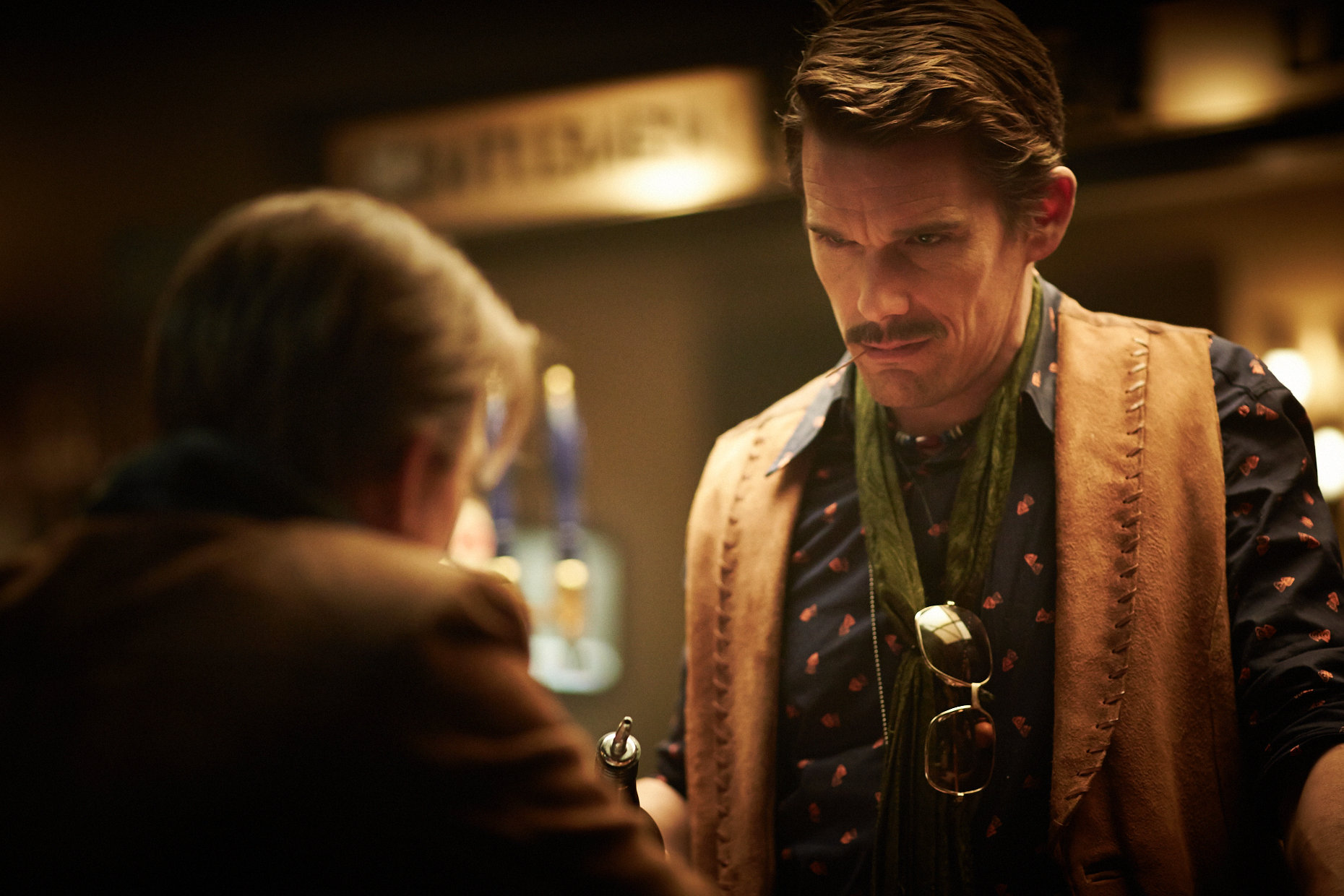
Hawke is the bartender who wants to hear it. But we know he’s being cagey, that he’s not a real bartender. He’s some sort of time traveling secret agent, out to foil the 1970s “Fizzle Bomber” and jumping back and forth through the 1940s to 1963, the 1970s 1985 and 1992, in that effort.

Does he suspect the storyteller? You bet. Do he or the barfly fret over the morality of terrorism, or summarily executing a terrorist before that terrorist acts? Not really.

“Some people just gotta go!”

The story is the movie’s long, set-up, a tale of a bullied childhood told by one who was bullied, a romantic rendezvous that may or may not happen, a single mother exploited by science and the debris, scattered through time, of every wound, ordeal and heartbreak that a single life has to endure.

Hawke and the amazing Sarah Snook (star of the horror picture “Jessabelle”) zip back and forth on the timeline, relating or avoiding each other (or earlier versions of themselves), unraveling a complex plot that suggests “some things are inevitable” and “luck is the residue of design.”

Will “The Bartender” find his prey and prevent a tragedy? Will he be able to pull the trigger, one last time? Will “The Unmarried Mother” improve her lot or change her destiny?

The Spierigs, Michael and Peter, are the Australian siblings who cooked up “Daybreakers,” a surprisingly sophisticated vampire sci-fi tale that was a minor hit for Hawke a few years back. Here, they ladle on the atmosphere — lovely period-perfect cloths, furniture, cars, etc., and let their two leads — along with Noah Taylor, as The Bartender’s time-travel-spy-agency boss — sell this premise.

And they pretty much do. Hawke is never less than reliably real and Snook is a revelation, convincing in a variety of guises.

We’ve seen far more variations of this story than most of us can recall, from “Timecop” and “Source Code” to “Deja Vu.” And the Spierigs work perhaps a little too hard at the “don’t give the audience hints” thing to make “Predestination” as much fun as it could be.

But it takes talent, in front of and behind the camera, to create something engrossing and new in the timeworn time-travel odyssey. Whatever its shortcomings, “Predestination” is never at a loss for surprises.
pre

MPAA Rating: R for violence, some sexuality, nudity and language

Cast: Ethan Hawke, Sarah Snook, Noah Taylor

Credits: Written and directed by The Spiereg Brothers, based on a Robert Heinlein story. A Stage 6/Sony release.

Running time: 1:37

Posted in Reviews, previews, profiles and movie news | Comments Off on Movie Review: “Predestination”

Movie Review: “The World Made Straight”

straight1The best indie cinema is regional in nature, films with a strong sense of place. And the further that place is from the over-filmed Southern
California or New York, the better. The rural setting of a “Winter’s Bone,” “Ulee’s Gold” or “Beasts of the Southern Wild” becomes the main
character, shaping the people and events whose stories the film sets out to tell.
“The World Made Straight” is a flawed but vivid Southern Gothic melodrama set in an isolated community in the mountains of North Carolina.
And whatever shortcomings this over-boiled adaptation of a Ron Rash novel serves up, its setting overcomes them — making seemingly miscast
players pay off and overwrought, theatrical characters feel right at home.
“Bloody Madison County” came by its nickname honestly. The lingering bitterness of a Civil War massacre hangs over the hills and
hollers like the smokey blue rain and fog in Tim Orr’s cinematography. The trouble is, the kids, especially Travis Shelton (Jeremy Irvine), don’t
know that history.
Travis is a 17 year-old drop-out who’d rather fish than work at an honest job. When he stumbles across a pot patch and steals a few plants, his
pal (Haley Joel Osment) puts him in touch with Leonard, an ex-teacher and burnout played with marvelous conviction by Noah Wyle.
Leonard grew up here, but he never fit in. He may sell pot, keep dogs and tote a rifle, but his trailer is neat, filled with artifacts from the Civil War,
and books. Aaron Copland’s “Appalachian Spring” plays on the stereo.
“Never heard of’em.”
“Used to open for Skynyrd,” Leonard cracks.
Leonard opens Travis Shelton’s eyes to family history, his people and the bloody past that gave Madison County its reputation. Leonard has the
journals of his own ancestor, a Civil War era doctor. He is the very guy to teach Travis about the Shelton Laurel Massacre, about the circular, self-
sustaining nature of mountain violence, about how “time don’t pass. It’s all just layers.”
Country singer Steve Earle shows up as a murderous but musically-minded pot grower and thug and Minka Kelly is the drug-addict beauty traded among the growers and dealers.

straight2
“World Made Straight” has the makings for a lean and mean revenge thriller. But N.C. native David Burris takes his time, letting the production
design and David Gordon Green’s N.C.-educated cinematographer, Tim Orr, set the tone and the pace with lovely, distinct images of hazy
mountains, houses where paint is barely a memory and mud-spattered late-model cars and trucks tell the hard life story of each person driving
them.
So it’s a slow film, and almost painfully melodramatic in its obvious twists and turns.
But the performances are finely tuned, and the story arc and situations — aside from a few pauses for a song — quietly gripping.
Burris hasn’t created a film that’s on a par with “Shotgun Stories,” Scott Teem’s “That Evening Sun” or Green’s early films, “George Washington” or “Undertow.” But with this debut feature, he’s shown he’s another regional talent whose sense of his “World” warrants the attention of anyone bored to tears by yet another tale of the mean streets of New York or L.A.

2half-star6

MPAA Rating: R for language including sexual references, drug content and violence

Cast: Jeremy Irvine, Noah Wylie, Minka Kelley,  Steve Earle, Haley Joel Osment

Credits: Directed by  David Burris, script by Shane Danielson based on the Ron Rash book. A Millennium release.

Running time: 1:59

Posted in Reviews, previews, profiles and movie news | Comments Off on Movie Review: “The World Made Straight”

Producers Guild nominations — Is this the Oscar best picture list?

Could be.

It doesn’t have “Into the Woods” or “Selma” on it, but today’s PGA nominations certainly feel like the best pictures to me.

There are our front-runners, “Boyhood” and “Birdman” and “Whiplash” are here.  So is “Gone Girl” (“Selma” was a little better), “The Theory of Everything,” “The Imitation Game,” “American Sniper,” “Foxcatcher,” “The Grand Budapest Hotel” and a mild surprise, “Nightcrawler.”

That’s as good a ten best as any. Conventional, with big unconventional exceptions — “Birdman,” “Boyhood,” “Grand Budapest,” Nightcrawler.”

The usual Clint Eastwood nomination is here, both the more touted (and inferior) Brit bio pics (I think “Theory of Everything” is better) are nominated. oscars

Best animated PGA nominations went to “The Boxtrolls,” “The Book of Life”, “Big Hero Six”, “The Lego Movie” and (?!) “How to Train Your Dragon 2.”

Posted in Reviews, previews, profiles and movie news | Comments Off on Producers Guild nominations — Is this the Oscar best picture list?

Movie Review: “Black November”

nov

Well, their hearts were in the right place.
“Black November” is a preachy, theatrical “message” thriller about the circumstances that are turning Nigeria into a failed state. It’s a film of declarations and declamations, history lessons and oil geopolitics, a tale told by Nigerians but peppered with well-known Hollywood faces.
And while it is laudable that Oscar winner Kim Basinger, Mickey Rourke, Vivica A. Fox and Anne Heche lent their support to writer-director Jeta Amata’s film, the help he really needed was from screenwriters. Clunky lines, broadly drawn characters, arch situations, from start to finish, “Black November” is an uphill battle against the urge to roll your eyes.
A well-financed and trained Nigerian terrorist group arrives in Los Angeles, gets the attention of a TV reporter (Basinger) and siezes the Second Street Tunnel, sealing it off with tanker trucks wired with bombs.
Among the hostages? The TV crew, and an oil tycoon, played by Rourke. There are many things Mickey Rourke’s screen persona suggests, but “tycoon” isn’t one of them — not when he thinks he can play the part with just a suit and a dab of grease holding down his biker’s haircut.
The terrorists want a Nigerian activist spared from the gallows. “Black November,” originally titled “Rise Up,” is the story of the radicalization of Ebiere Perema, charismatically played by Mbong Amata, the director’s wife.
In a 70 minute flashback, we see the chasm between the corrupt, incompetent and easily-bribed government and the impoverished people. Eibere witnesses one of those pipeline leak incidents we hear about on the news — gasoline being gathered by locals, a spark and a deadly explosion. Eibere starts to lead protests, and she cannot be bought.
“Am I supposed to collect a bribe to be a Nigerian?”
She debates the more radical Dede (Hakeem Kae-Kazim) who opts for a more violent path.
“I have become who the government made me!”
Director Amata (“The Amazing Grace”) does best by scenes of village life, funerals, births, tribal elders accepting bribes as a matter of course (with the people hired to give the bribes taking their cuts). The vestiges of British influence linger in the courtrooms, if not in the unjust justice system itself. Amata is on good dramatic ground making this a protest started by women, who have to battle their own patriarchal culture in addition to the venal “head of state” and the “Whatever it takes” oil barons.
But Amata’s depiction of the villains is comically broad and old fashioned. They meet at the “Western Oil Golf Club.” State Department officials (Vivica A. Fox among them) bicker over “interfering” and blunder through the worst lines in the movie.
“The United States will not condone acts of terrorism on American soil!” Ya think?
A TV reporter in Nigeria (Sarah Wayne Callies) turns advocate, blurting out “I’m on your side!”
So as important as it may be for Americans to understand the ferment that’s led to civil war, creating militant groups that now kidnap teenage girls by the hundreds, as interesting as it might be to explore yet another part of the world polluted and politically poisoned by Big Oil, Amata’s sermon is entirely too tone-deaf to change many hearts or minds.

2stars1
MPAA Rating: unrated, with shootings, beatings, a rape and other acts of violence

Cast: Mbong Amata, Mickey Rourke, Hakeem Kae-Kazim, Kim Basinger, Anne Heche, Sarah Wayne Callies

Credits: Written and directed by Jeta Amata. An eOne release.

Running time: 1:35

Posted in Reviews, previews, profiles and movie news | 1 Comment

Movie Review: “Selma”

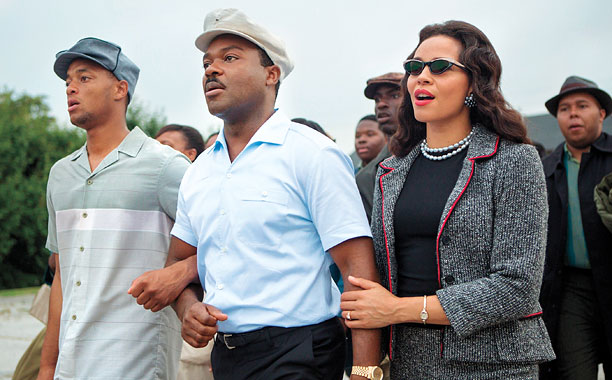
SELMAEarnest and often inspiring, “Selma” is a handsomely mounted “Eyes on the Prize” account of the defining protests of the Civil Rights Movement. Handsomely mounted and high-minded, it’s only sins are overreaching ambition and a tendency to rub the roughest edges off the principals .
It’s still a history lesson that’s both moving and informative, if not downright entertaining.
David Oyelowo (“The Butler”) is the Atlanta preacher Martin Luther King Jr., a man we meet on the night he receives the 1964 Nobel Peace Prize. Oyelowo captures King’s cadences, if not the ringing, clarion-call voice that every American has grown up hearing. As this King strategizes with his Southern Christian Leadership Conference braintrust, Oyelowo gives us passion and pause.
Here was a man who saw segregated Selma, Alabama, as a testing ground for the battle for voting rights. But like his colleagues, he was sober about this stage of the struggle. Selma is also “a decent place to die.”
The King shown here is married to a cause and to “Corrie,” Coretta Scott King, played by Carmen Ejogo, who is a lovely dead ringer for the real Mrs. King, and who gets across her quiet stoicism.
Veteran character actor Wendell Pierce (“Ray”) makes the most of The Movement’s drill sergeant, Rev. Hosea Williams. Common, Cuba Gooding Jr., Martin Sheen, Giovanni Ribisi and yes, producer Oprah Winfrey, have plum supporting parts. Winfrey is Annie Lee Cooper, the Rosa Parks of Selma’s push for voting rights.
Tom Wilkinson suggests a hint of President Lyndon Johnson’s cajoling, bullying nature. And Tim Roth makes a decent Governor George Wallace, for those who don’t remember what the original super-segregationist looked or sounded like. Yes, they somehow managed to cast four Brits in the four main roles here.
First-time screenwriter Paul Webb saddled director Ava DuVernay (“I Will Follow,””Middle of Nowhere”) with a script packed with characters — Andrew Young, J. Edgar Hoover, Mahalia Jackson and Malcolm X. Most have only a couple of scenes to make an impression as the history plunges onward, through police assaults with tear gas and truncheons, climaxing with murders.
But the infamous Edmund Pettus Bridge police riot is recreated — rabid racists screeching at protest marches that baited the bigots, sent the state police and local sheriff’s deputies into a beating frenzy and made national news. It is as shocking in recreation as it must have seemed in living rooms all over America, and DuVernay wisely makes this the emotional linchpin of her film.
Too much conflict is kept off camera, too much effort is put into highlighting the jagged edges of guys like Hoover and rubbing them off everyone else. And anyone who has heard tapes of the real King confronting LBJ will realize that the power dynamic depicted here just doesn’t ring true. King’s moral authority asserted itself, but nobody stood up to Johnson to his face. Nobody. You argued, got barked down, slipped off and did what you had to do in spite of him. Wilkinson simply isn’t forced to be as scary as the real president was.
Still, it’s a good film, well-performed and a fair and honest (inter-titles of dates and times from F.B.I. surveillance logbooks verify this scene or that one) portrayal of a time when people had to literally endure beatings just for the right to vote.

3stars2MPAA Rating: PG-13 for disturbing thematic material including violence, a suggestive moment, and brief strong language.

Cast: David Oyelowo, Carmen Ejogo, Tom Wilkinson, Tim Roth, Wendell Pierce, Martin Sheen, Oprah Winfrey

Credits: Directed by Ava DuVernay, screenplay by Paul Webb. A Paramount release.

Running time: 2:02

Posted in Reviews, previews, profiles and movie news | 1 Comment

Movie Review: “Beloved Sisters”

sisters

Voice-over narration in the movies is a crutch, rarely used by anyone with the skill to use the visual medium to tell the story with pictures, as film was meant to do. But you can almost excuse the maddening fill-in-between-the-pictures narration of the lengthy German bio-pic “Beloved Sisters.”
It’s a story of some importance and complexity, of the love triangle that entangled the great German poet/historian Friedrich Schiller and two sisters. The scandalous epic, set during the romanticism that swept across Europe and eventually led to the French Revolution, could have been a German “Doctor Zhivago.” It certainly has the length to justify that comparison.
But it’s something of a stiff, partly because of a somewhat less than charismatic lead, but mostly due to the droning narration, which gives “Beloved Sisters” the tone of a German history lecture, delivered in the original German.
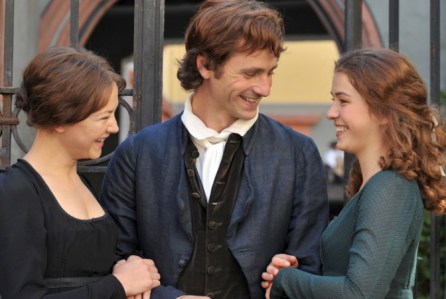
Charlotte and Caroline von Lengefeld were German versions of Jane Austen heroines, cash-poor, needing to marry to preserve their widowed mother’s genteel life. Then, they meet young, dashing and headstrong Schiller, a struggling poet who might make them forget their fiscal matrimonial duties for a life of passion. Caroline (Hannah Herzsprung) does her familial duty and marries into the lesser nobility. But she holds the more impressionable younger sister Charlotte (Henriette Confurius) to the “secret oath” they took in girlhood — no sister must ever leave the other sister alone in the world. So they share Schiller’s attentions.
Schiller (Florian Stetter) — fancies them both, the worldly (and more sexual) Caroline a bit more.
At a pivotal moment, he leaps into a raging river to rescue a drowning child even though he cannot swim, the siblings team up to nurse him and arrive at a pact. Charlotte will marry Schiller, thanks to Caroline’s match-making. And Caroline, an apsiring writer herself, will continue to enjoy Schiller’s romantic attentions, using younger sister as cover to keep Caroline’s husband from suspecting infidelity.
It’s the late 18th century, and the revolutions in thought that the Age of Enlightenment have spawned revolutions in literature, science, historical research and printing, where mass dissemination of these new ideas have made Schiller celebrated, if not rich. As the French Revolution boils over abroad, in Germany the nobility quivers in fear and tries to suppress romantics like Schiller and the women who love him.
Another character describes Schiller as “a young man driven by excessive ardor,” and while there is evidence of his womanizing and his impulsiveness, Stetter plays the fellow as a somewhat passive passionate poet — a tad too Ashley Wilkes for the women’s Rhett Butler reaction to him.
The two female leads only manage the occasional moment of obvious lust or love, robbing this entire affair of much of what would label it as “torrid.”
But writer-director Dominik Graf does well by the dry, Austen-eque touches, the way Charlotte is chastised and instructed by her noblewoman employer (Maja Maranow) for “not knowing her market value.” Her line about courting the “right” sort of fellow is more frank than Austen, but almost as funny as the English writer would have put it.
“Never dally at with a man at the back door when another is waiting at the front.”
And Graf does a splendid job of staging the famous meeting between Schiller and the elder statesman of German literature, Goethe, an event captured in a long shot — buzzing busybodies staring at the two of them across the river, gossiping and trying to read their lips with spyglasses as the two giants of German letters (Goethe, reverently, is never shown) stood and chatted, awkwardly, at a distance better suited for duel-by-pistol.
But this mini-series length film, in two parts (in German and French with English subtitles), never works up a romantic head of steam, never captures the frisson and ferment of a tumultuous age. And, thanks to the flat depiction of Schiller, “Beloved Sisters” never overcomes the feeling that it’s a lecture, with a little rough and ready German sex tossed in, here and there, to wake up the class.

2half-star6

MPAA Rating: Unrated, with somewhat graphic sexual situations

Cast: Hannah Herzsprung, Florian Stetter, Henriette Confurius
Credits: Written and directed by Dominik Graf. A Music Box release.

Running time: 2:50

Posted in Reviews, previews, profiles and movie news | Comments Off on Movie Review: “Beloved Sisters”

Ethan Hawke — “fame” still isn’t his real destiny

predestinationHe’s made a trilogy of films covering the long course of a college-age romance, love the second time around and a marriage that may or may not endure the later, bitter years. And then there’s “Boyhood,” in which Ethan Hawke invested a dozen years of his movie stardom into showing the arc of three lives — a son, growing up, an always-adolescent dad maturing and a struggling, insecure mother finding herself.

Hawke, at 44, is no longer the rising star or hot young hunk, though he remains the hipster icon, even with a little grey around the temples. He’s finally aged and ready to play his idol, jazz great Chet Baker. And these days, he’s taking stock of where his acting career has taken him and what he can give back to a business that has kept him in the public eye for 30 years.

“One of the things that happens as you cross the ’40’ line, is you start to think a lot about your relationship to younger people,” Hawke says. “I’ve been going through that a lot, thanks to all this time I’ve spent with Ellar Coltrane (the kid in “Boyhood”). He’s now the same age I was when I started in movies.”

Hawke‘s first film was “Explorers,” which he made when he was 15. The Austin native (raised in New Jersey) went on to make many a commercial film, plucking an Oscar nomination for “Training Day,” for instance. But the hallmarks of his career, even when he was tabloid fodder, have always been risk, generosity and loyalty.

He signs on to a no-budget horror film with a pointed political message and “The Purge” becomes a hit. He was the “name” that helped Sidney Lumet get his last film, the terrific “Before the Devil Knows You’re Dead,” made, and his participation has gotten many a stage production or indie film off the ground.

And loyalty? He’s made eight films with his fellow Austinite Richard Linklater, with commitments that have often been years in the making — “Before Sunrise,” “Before Sunset,” “The Newton Boys,” “Fast Food Nation” on through “Boyhood.”

“For those of us who have been his champion for a couple of decades, it feels really good to have people, well, start to GET it,” he says of Linklater, finally earning Oscar buzz for “Boyhood,” widely regarded as one of the best films of 2014.

Hawke‘s latest is another risky endeavor and yet another demonstration of his loyalty. He took a chance on the Australian Spierig Brothers (Michael and Peter) with their offbeat vampire tale “Daybreakers,” which became a January hit a few years back. “Predestination” is another Spierig Brothers genre piece, and another gamble. This time, the dice roll on yet another time travel tale.

“I love to take chances on people, which is why I follow my gut on what seems like original material, something I haven’t seen before,” Hawke say. “Everything is trying to be like something else. You find something you haven’t seen before, you take a chance on filmmakers that aren’t as experienced.

“‘Predestination’ isn’t just a time-travel movie, it’s its own weird thing.”

Hawke plays a government agent sent back in time to foil a terrorist bombing. The story takes us from the 1940s to the 50s, 60s, 70s and 80s as his character hears the tortured life-history of a barfly (Sarah Snook) who might be his prime suspect.

“If anybody claims to have understood this script before we started shooting, I’m calling them out,” Hawke jokes. “‘LIAR.'”

The film’s early reviews praise Snook’s breakout performance — Hawke generously takes a back seat to her for much of the film — and Hawke for his “darkly shaded hero” (FilmInk).

“The truth is, I had done ‘Daybreakers’ with these guys, and I’m willing to just go with their ideas, however weird. Because ‘Daybreakers’ was like that, really good and original.

“All we have to go on in our life is our gut, right?”

Pondering his new film’s themes, the idea that our fates are somehow predestined, Hawke will allow that it “seems like such an interesting thing to think about. We think, as we live our life, that we have no idea what’s going to happen next. But when we look back, it seems like everything that did happen HAD to happen. Some given day, you can’t decide whether to go left or right. It’s a big decision in your life. Then, twenty years later, you think ‘Well, I was ALWAYS going to go right.’ It’s predestined, in a way. It just never feels like that in the moment.”

But 30 years into a screen and stage career, Hawke‘s still in it for the surprises that life has to offer.

“When ‘Boyhood’ is still playing in theaters SIX MONTHS after it was released, when ‘The Purge,’ which we made for like $2 million becomes a hit and part of the national conversation, I allow myself to be shocked. But I have to say, another part of me wants to say I am NOT surprised. ‘The Purge’ was an AWEsome idea for a movie. I knew it the second I read it. Same with ‘Boyhood.’ But you never know, you just don’t. So you go with your gut and hope that this one is destined to work out.”
And speaking of his relationship to young people, Hawke is starting to fret over one of his acting trademarks. NOBODY looks cooler with a cigarette than Hawke, with “Predestination” showcasing that skill.
“I was in a taxi a couple of weeks ago and the taxi driver recognized me. He launched into a diatribe about the way I smoke in ‘Brooklyn’s Finest.’ ‘The COOLEST,’ he says. Somehow, this guy had spent months thinking about this. He was so excited to talk to me about the way I lit that cigarette after I shot some guy.”
Hawke laughs.
“I do worry about it a little bit. But you have no IDEA how cool smoking can look until you see how Chet Baker smokes!
“But it’s not my fault if your children smoke. OK, maybe it is.”
Posted in Reviews, previews, profiles and movie news | Comments Off on Ethan Hawke — “fame” still isn’t his real destiny

Movie Review: “The Better Angels”

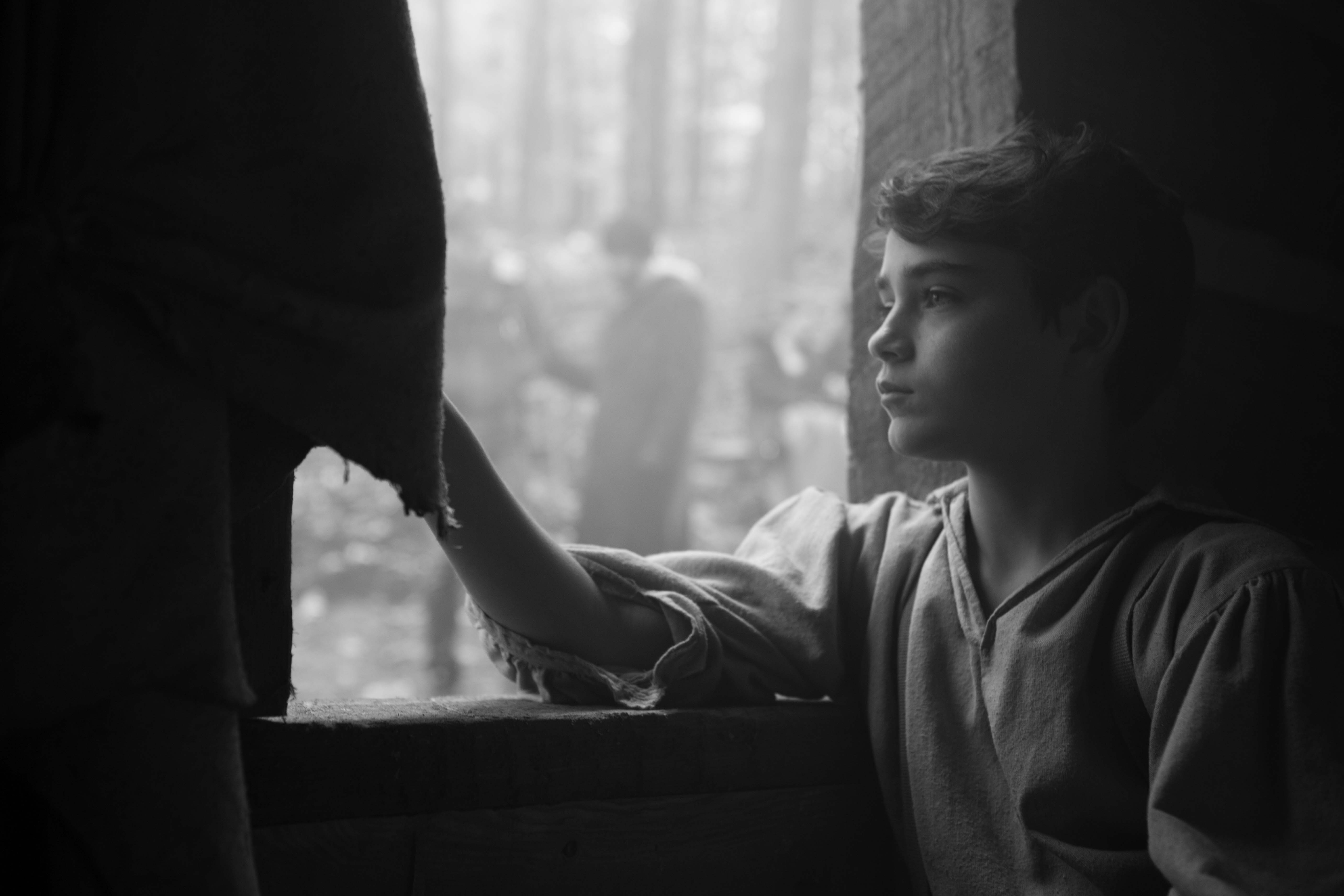
angels2“The Better Angels” is an arty, poetic rendering of Abraham Lincoln’s youth of hardscrabble farming, near poverty and tragedy, the childhood, in essence, that made the man.
It’s about the parents who raised him, the stern, hard-working father Tom (Jason Clarke),whom he somewhat disdained later in life, and the two women he called mother — his adoring birth mother Nancy (Brit Marling) and his indulgent champion stepmom, Sarah (Diane Kruger).
Of them, he said, “All that I am, or hope to be, I owe to my angel Mother.”
Writer-director A.J. Edwards tells this story in the style of his producer and mentor, Terrence Malick. It’s a “Tree of Life” Lincoln biography, austere, pretty, filmed in black and white and narrated by a drawling Kentucky cousin, Dennis (Cameron Williams) who grew up with young Abe. There’s far more voice-over narration than dialogue and only the occasional hint of the orator, master of rhetoric and witty yarn-spinner that the kid would grow into. The Tweenage Abe, played by screen newcomer Brayoden Denney, was quiet, bookish, not so much avoiding hard farm work as simply preferring the company of books.
“He asks questions I can’t answer,” the illiterate Nancy tells Tom. “He’s got a gift.”
That doesn’t stop “Pappy” from switching the boy when he does wrong, or yanking him away from the dinner table for daydreaming. Edwards keeps the movie so quiet that the little violence that’s here — hunting in the silent woods, whippings or merely grabbing the kid — is amplified in volume and importance. This is what Abe remembers of his father.
The actresses cast as his “Angel” are understated beauties, and both have a reserved quiet here that turns them into the very visual of “angelic.” But they’re barely sketched in, hazy memories of what a barely-recalled mother must have been like. Wes Bentley plays another angel, a teacher who sees Abe’s potential.
Edwards has essentially made a Terrence Malick film with less pretension, a simpler story and more coherent boundaries. His frontier world is vividly recreated, and our knowledge of the future Lincoln — the orator, statesman, human rights advocate (he sees his first slaves in his tweens) — allows us to read more into this Edenic farm life than any one character says. We taste the horror of illness in that medically primitive era, the terror that it must have struck in people with no hope of a doctor’s care.
The story boosts the father’s role in Lincoln’s life — one magic scene has Tom hoist the kid in the air in pride at Abe mastering a wrestling move — and wonderfully recreates the limited universe this very curious man grew up in. It’s a bit too spare and Malik-like for its own good. But the incessant voice-over, another Malick trademark, here makes the whole enterprise feel overheard, a story constructed from memory where the words are just ways of underlining what we would come to know about Lincoln the man based on Lincoln the boy.

3stars2

MPAA Rating:  PG for thematic elements and brief smoking

Cast: Jason Clarke, Diane Kruger, Brit Marling, Wes Bentley, Brayoden Denney.

Credits: Written and directed by A.J. Edwards. An Amplify Media release.

Running time: 1:34

Posted in Reviews, previews, profiles and movie news | Comments Off on Movie Review: “The Better Angels”

Box Office: “Woman in Black 2” $15, but “Hobbit,” “Unbroken” and “Into the Woods” roll on

boxoffice“Woman in Black 2: Angel of Death” earned poor reviews, has no stars anyone recognizes outside of their immediate family, but being the first horror movie in some weeks and being the only fresh film to go into wide release this weekend translates into a $15 million opening. Not bad. A hot horror title from a proven franchise might clear $18-20, so again, not bad.

“The Hobbit: The Battle of Five Armies” won the weekend in the low $20s, and has reached $200 million faster than the last “Hobbit,” as deadline.com notes.

“Into the Woods,” “Unbroken” and “Night at the Museum 3” all will have cleared $90 million by the time the weekend is over.

“Annie” is over $60, “Imitation Game” is over $30, “Big Hero 6” is over $200, “Hunger Games” the latest cleared $324.

Posted in Reviews, previews, profiles and movie news | Comments Off on Box Office: “Woman in Black 2” $15, but “Hobbit,” “Unbroken” and “Into the Woods” roll on

Movie attendance hits a 20 year low

Lots of sequels, too many comic book movies, studio movie slates aimed at a young, distracted, willing-to-stream-it-at-home audience, the lack of a must-see-in-theaters blockbuster or two, or three or four — all worked against movie going in theaters this past year.

About 1.2 billion tickets were sold, the lowest since 1995. A lot of “little” movies did OK, “Hunger Games” and “Lego Movie” and a few others blew up, to a degree.

Only a few really demanded that you see them in theaters. As we saw with “The Interview,” millions of curious folks would rather watch from the comfort of their own homes.

Hate to see it, but until “Avatar 2,” well, it is what it is.

Posted in Reviews, previews, profiles and movie news | 1 Comment