Movie Review: “Magnus” proves that not all chess champs are madmen

magnus1

The first question of any chess movie, as with any chess match, is “How will this surprise us?”

“Magnus,” about “The Mozart of Chess,” Norwegian prodigy Magnus Carlsen, asks “Why bother?”

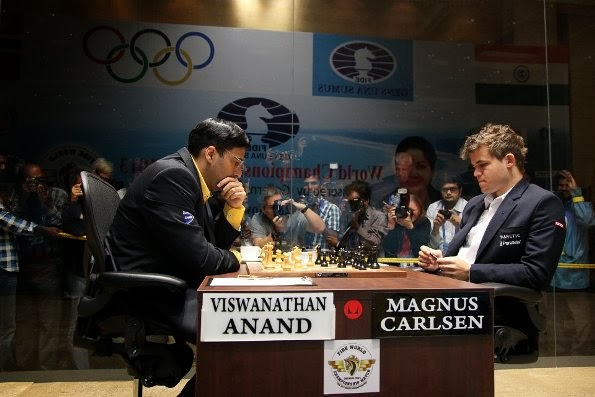
If you haven’t heard of him, didn’t read the Time Magazine “most influential” list or catch the CBS “60 Minutes” profile, you might hold out a little hope. At the opening of Benjamin Ree’s film, Carlsen is settling in to a grueling championship match (in 2013) with five-time world champ Vishy Anand in Anand’s hometown in India.

Will Magnus crack up? As we’re treated to home movies from his childhood in which his father Henrik describes him as “slow to develop” and physically awkward, and we don’t hear Magnus speak, maybe you think “Is he on the spectrum?”

He didn’t fit in at school, took his share of bullying and lost himself in Donald Duck comic books, novelty tunes and chess.

But the adult — he turns 26 on Nov. 30 — seems perfectly sane, “not, for lack of a better expression, a ‘borderline nutcase,'” Magnus declares in flawless English.

So much for Bobby Fischer comparisons — at least in terms of psychology.

Ree’s film tracks Carlsen’s career, from his childhood where his parents — both of them Norwegian engineers — identified him as “special” from the age of four. Dad pushed his numbers-obsessed son with the prodigious memory into chess. And we follow Magnus up the ladder, rattling legendary champ Garry Kasparov when he was just 13, winning some, losing and drawing other matches.

In childhood, he’d get distracted, wander from the table. The film suggests this wasn’t an early manifestation of the head games chess is infamous for. He was just a kid who gets bored sitting still.

As he closes in on the prize he’s pursued all his life, Ree’s movie makes us fret about what might be termed a lack of killer instinct, a propensity to feel the pressure and let it hurt his game.

magnus2

And then there’s The Big Match, in 2013 in Chennai, India. Ree makes this thrilling and entertaining, setting up Magnus as a solo act faced with a foe whose mastery of the game was built on a big prep team of grand masters and an ability to memorize scores of variations recommended by computer programs. Can the kid get the champion “out of his preparation,” the breathless, Indo-biased chess commentators at the match wonder?

Ree uses graphics to try and let us “see” the board as Magnus does, which doesn’t really work. He exaggerates the few obstacles the boy faced and clings to whatever mysteries there still are about how he does what he does.

And he does something Magnus Carlsen himself would never countenance. He virtually never surprises us, making his film more a celebratory hagiography for proud Norwegians than anything the rest of the world, in and out of chess, can embrace.

stars2
MPAA Rating: unrated

Cast: Magnus Carlsen, Garry Kasparov, Vishy Anand, Henrik Carlsen

Credits:Directed by Benjamin Ree, script by Linn-Jeanethe Kyed, Benjamin Ree. A FilmRise release.

Running time: 1:18

Posted in Reviews, previews, profiles and movie news | Comments Off on Movie Review: “Magnus” proves that not all chess champs are madmen

Movie Review: Miles Teller leaves it all in the ring in “Bleed for This”

bleed1

A century of “fight pictures” means that there’s really nothing new, visually, that filmmakers can show us in the ring. So “Bleed for This” director Ben Younger concentrated, instead, on sound.

He deafens us with the tinnitus of a knock-out, alarms us with the silence brought on by other blows and blasts us with the roar of the crowd and the loud music fighters often train by to keep their focus when they’re in the ring and facing bedlam.

This latest film from the guy who gave us “Boiler Room” is a true story and the funniest boxing picture this side of “Rocky.” That’s because the subject of the film, Rhode Island’s Vinny Pazienza, is a genuine character. And Miles “Whiplash” Teller makes us laugh at his bravado even as we feel his pain.

We get a load of the guy’s impulsiveness on weigh-in day. He’s late for a Vegas fight press conference because he’s encased himself in Saran Wrap, pedaling frantically on an Exercycle. Vinny, who loves to eat, is desperate to make weight.

No sooner has he won that first “victory” — making his super lightweight limit of 140 pounds — than he is off, eating and gambling the night away — the night before the fight, which he promptly loses.

When Vinny loses, his extended-family of women (Katey Sagal plays the mother who can’t watch his fights) ache and quake for him, his brash and profane trainer-dad (Ciaran Hinds) grimaces. And Vinny, inevitably, winds up in the hospital.

That’s why Lou, his manager (Ted Levine) all but announces his retirement, post-fight. But Vinny, who has a passion for fighting and a working-class family to prop up with his cash, won’t hear of it. That’s why Dad sends former Mike Tyson trainer Kevin Rooney (Aaron Eckhart), an alcoholic just as desperate for redemption as Vinny.

But Vinny’s moment of triumph, a title fight in Providence, is short-lived. A car wreck (on his way to a casino) almost kills him and breaks his neck. He shouldn’t ever fight again, and this time, even his enabling Dad agrees.

Do you smell a “long shot comeback?” Because I do.

Teller, lean and mustachioed, brings a lightness to Vinny that makes his “all-in, all the time” self-destructive side lovable. The anesthesiologist puts him under before his neck surgery and asks, “I want you to count backwards from ten, Vinny.”

Too complicated for the kid.

“Didn’t they tellya? I’m a BOXER!”

Eckhart makes his best foil.

“You smell like liquor!”

“You smell like RHODE ISLAND!”

This is Eckhart’s most immersive performance, and yes, I saw his take on “Frankenstein.” Rooney is a balding, stoop-shouldered ruin of a man. He still has his Porsche and his pride, but not much else. Like Vinny, he’s been “put out to pasture.”

Rooney gets the film’s best boxing picture aphorisms. He tries to teach the “Paz-manian Devil” “the difference between a risk, and a gamble.”

Vinny’s all about how tough he is, which is why he’s brawled his way into the hospital so many times.

“Some hits,” Rooney growls, “you aren’t being ‘tough’ by taking.”

bleed2

The fight scenes are expertly handled, as engrossing and immediate as any in the movies.

But the film so limits its scope that relationships — Vinny’s serial romances, his big family – — and characters are shortchanged. Levine makes a hateful impression as an aged vulture of a manager, but Sagal has too few moments to register.

Younger plays up the ethnic stereotypes — walls covered in crucifixes and prints of the Virgin Mary, every meal packed with loud, gesturing Italians eating pasta.

An unfortunate aesthetic touch is the film’s use of actual news footage of Pazienza back in the day. We can see the real fighter, who looks nothing like Miles Teller, in sportscasts, fight telecasts, and even in a poster in his father’s gym where Vinny trains. I know the film doesn’t have the budget of “Creed,” but come on.

There’s not much new in the fight game, as far as the movies are concerned. With Mixed Martial Arts stealing its thunder, every boxing picture feels like a relic, like “The Fighter” — a period piece.

But Teller, who takes us from grins to grimaces with skill, and Eckhart, given his best role in years and his most likable performance ever, make “Bleed for This” worth the blood and the pain.

stars2
MPAA Rating:R for language, sexuality/nudity and some accident images

Cast: Miles Teller, Aaron Eckhart, Ciaran Hinds, Ted Levine, Katey Sagal

Credits:Directed by Ben Younger, script by Pippa Bianco, Angelo Pizzo and Ben Younger. An Open Road release.

Running time: 1:56

Posted in Reviews, previews, profiles and movie news | Comments Off on Movie Review: Miles Teller leaves it all in the ring in “Bleed for This”

Movie Review: Only Michael Shannon escapes the arch flourishes of Tom Ford in “Nocturnal Animals”

noc1

Style trumps story and performance in Tom Ford’s “Nocturnal Creatures,” an arch film noir wrapped in the plastic of art world aesthetics, and damn near smothered by them.

The second film from the fashion designer and former creative director for Gucci glams up Amy Adams, but gives her one of the most constricting roles of her career. Ford casts Jake Gyllenhaal as the would-be novelist college professor she left behind for the callow ambition and money of the runway-ready Armie Hammer.

And the film, built around the icy art entrepreneur/museum maven Susan (Adams) stylishly coming to grips with her failing second marriage while reading a self-referential confessional thriller novel manuscript by her first husband (Gyllenhaal), veers between a commentary on modern manhood, and parody of the mercenary nature of marriage in America, at least among the affluent and heterosexual of Texas.

An art show opening offers a chic, shallow triumph for Susan, whose marriage to Hutton Morrow (Hammer) is falling apart as his business fails and he compensates by cheating.

“What right do I have to not be happy?”

But there’s the consolation of “Nocturnal Animals,” a novel her ex Edward Sheffield (Gyllenhaal) sent for her to read in her designer bed, in her showpiece bath tub, all in her glistening, austere Architectural Digest home.

As she cozies up with the book, she flashes back to that first marriage, young idealistic love which her frosty, frosted “Real Housewives of Dallas” mom (Laura Linney, killing her one scene) warned her away from. And in the pages of the book, she  imagines Edward as its antagonist, Tony Hastings, a man whose equally red-headed wife (Isla Fisher) and daughter (Ellie Bamber) are taken from him in a road confrontation with West Texas deplorables straight out of “Breakdown” or “Deliverance.”

It’s in this novel’s alternate reality that “Nocturnal Animals” is on surer ground. It’s a simple yet riveting film noir — a  morality tale about a “good” and “sensitive” man whose every reaction to the dire circumstances he, his wife and teen daughter face is inept and inadequate. In a lawless landscape where the only help is the gun Tony doesn’t have in the glove compartment of his vintage Mercedes diesel (not the car to outrun outlaws with), city academics are helpless.

The cop who shows up to investigate the night’s horrors is droll, dry and judgmental. He seems to “tsk tsk” the lack of firearms used in the crime, or by Tony to defend himself. And since he’s played by the great Michael Shannon, he takes over the movie.

“I’m Bobby Andes,” the tall, skinny, chain-smoking detective drawls. “I look into things around here.”

noc2.jpgShannon gives yet another Oscar-worthy performance as this man’s man who only slowly softens enough to understand the hopeless dilemma Tony faced, and whose idea of justice is as primitive as Tony’s was passive and modern. They’ll “get” their men, and how.

So this is how Susan’s ex sees himself and their marriage ending, trapped by her view of him, doomed by the traits she decided — after marriage — that he needed to make her happy. Not that we can tell she ever has been. Happy, I mean.

In glamour shot close-ups, Adams wears the heavy makeup, black dresses and matchiung nail polish like she was born to it and Ford makes sure she looks like she stepped straight off the cover of Vogue in every scene. Gyllenhaal is required to physically shrink in both of his roles — as Edward, and Tony as Susan imagines him. He wears his heart and his reason on his sleeve and we realize they’re both circumscribed characters who never quite compliment each other.

Linney and Michael Sheen (as a gay art world habitue) glimmer in bit parts, Fisher has nothing to play but increasingly distraught victim. Aaron Taylor Johnson’s monstrous turn as rural road rage and resentment personified is so over-the-top it would feel like fiction, if we hadn’t seem ample news footage of his “type” these past few weeks.

Which leaves the movie to Shannon — glowering, inhaling cigarettes, breathing life into the middle acts of a movie that feels more like a fashion spread surrounding a piece of short fiction about the alien world of West Texas slapped into the latest issue of Elle, Vogue or the like.

Whatever trappings surround it, the terrible, only-happens-in-the-movies crime and his character’s investigation of it are all that animate these “Nocturnal Animals.”


2stars1
MPAA Rating: R for violence, menace, graphic nudity, and language

Cast:Amy Adams, Jake Gyllenhaal, Michael Shannon, Isla Fisher, Armie Hammer, Ellie Bamber

Credits:Written and directed by Tom Ford, based on an Austin Wright novel. A Focus Features release.

Running time: 1:57

Posted in Reviews, previews, profiles and movie news | Comments Off on Movie Review: Only Michael Shannon escapes the arch flourishes of Tom Ford in “Nocturnal Animals”

Movie Review: Ford and Ferrari make racing a grudge match in “The 24 Hour War”

24

Remove yourself far enough from NASCAR country and you won’t have any trouble identifying “the greatest rivalry in the history of racing.”

That would be gigantic global car builder Ford vs. Italian bespoke racing works Ferrari, a rivalry that dominated the greatest auto endurance races of the 1960s — LeMans, the 24 Hours of Daytona, the Twelve Hours of Sebring.

“The 24 Hour War” is a somewhat jingoistic documentary about that celebrated and deadly dangerous feud, one that spilled over from the boardrooms and onto the world’s great race tracks for one all-the-marbles decade. Television director and producer Nate Adams and comic/car guy Adam Carolla, who gave us the terrific “Winning: The Racing Life of Paul Newmanre-team for this history lesson which, by the simple outcome of the rivalry, tends to play as a Ford Racing promotional film.

242

Conducting fresh interviews with the survivors of the era, the descendants of those who didn’t survive and lots and lots of archival footage of grunting, screaming sports cars, Carolla and Adams give us a quick overview of the history of the respective companies, an eye-opening blast of the dangers of that pre-“Safety First” era and the characters and intrigues of the battles that saw teams of Ferrari and Ford drivers struggle to sweep the other away in the most prestigious sports car races on Earth.

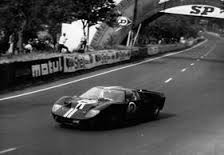
“Intrigues?” Let’s start with Ford’s decision to get back into racing after it and other American manufacturers had abandoned it after a string of deadly crashes in the 1950s, the deadliest coming at LeMans in 1955, when a driver and 83 spectators died in a single accident. Ford was about to take over Ferrari and own itself a prestige sports car marque, Enzo backed out and the Ford Family made it their business to get even by building the GT-40 and running the black dancing pony Ferraris off the track in the mid-60s.

The Ford-centric film (too much so, to be frank) is a celebration of American know-how and problem solving. Ford rounded up the very best and the brightest, in the garage and in the cockpit, and turned them loose on a problem, which they eventually solved.

Car-builder and speed guru Carroll Shelby and drivers Dan Gurney, Bob Bondurant, Mario Andretti, with Brits David Hobbs, Jackie Oliver and Brian Redmon swap stories, anecdotes and opinions — from both inside and outside the Ford circle — about the stakes, the schemes and the cost of this on-track “war.” Historians pipe in, providing more neutral perspective.

Racing footage from Daytona, Sebring and LeMans demonstrates just what all the talking heads are going on about — Ford’s efforts to make the GT-40 as durable (for a 24 hour race) as it was fast, Ferrari’s efforts to counter what Ford came up with as it started to dominate tracks in the mid-1960s. Particularly memorable — the deluge that saw cars plowing through lakes of water at Florida’s rough-hewn Sebring road course in 1965.

A clip of a GT-40 just sprinting away from a bright red Ferrari at Daytona in 1966, when Ford finally got Ferrari’s measure, tells us all we need to know. Or so you would think. Ferrari may have fallen by the wayside, but Ford’s GT-40 dominance wasn’t eternal, either, with the rise of Porsche and more recently Audi.

But no matter the results of recent races, “The 24 Hour War” is a bracing reminder of the days when drivers became legends, racecar teams were a big source of national pride and when Ford got out of the business of building “living rooms on wheels” and took its chances on “the Super Bowl of Speed” — LeMans.

stars2

MPAA Rating: unrated, violent accidents, mild profanity

Cast: Dan Gurney, Mario Andretti, Carroll Shelby, Piero Ferrari, Edsel Ford II, Bob Bondurant, Henry Ford III, Gordon Chance, AJ Baime, Ralph Nader

Credits:Directed by Nate and Adam Carolla . A Chassy Media release.

Running time: 1:39

Posted in Reviews, previews, profiles and movie news | Comments Off on Movie Review: Ford and Ferrari make racing a grudge match in “The 24 Hour War”

Book Review — “Alfred Hitchcock: A Brief Life”

hitch

Does the world really need ANOTHER Alfred Hitchcock biography? After the hundreds of thousands of words by his more-or-less autobiographers (Francois Truffaut, Peter Bogdanovick, chief among them) who interviewed him in person and added analysis, of others from Robin Wood to Donald Spoto and William Rothman (“The Murderous Gaze”), is there anything new to say about the Master of Suspense?

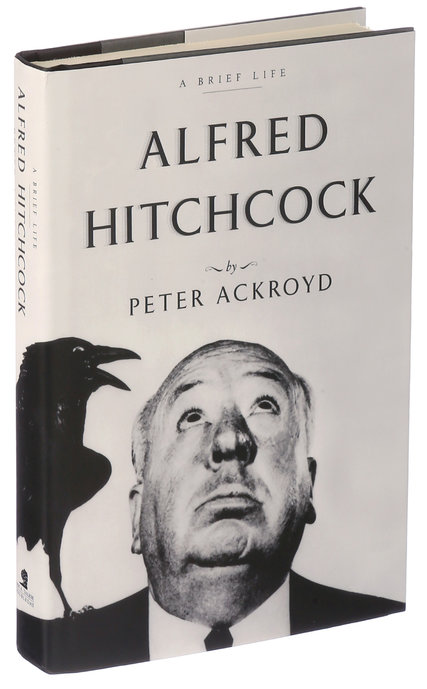
No. Or at least, “not really.” British writer-by-assignment Peter Ackroyd, whose best known credits are quick “biographies” of Shakespeare and, um, London, isn’t breaking new ground and on occasion, gets his facts wrong in his new book “Alfred Hitchcock: A Brief Biography.”

But get past his sometimes clumsy constructions and the general cut-and-paste-other-people’s research nature of his “Nice work if you can get it” assignment, and the breezy, fairly thorough brevity of “A Brief Biography” wins you over.

Here’s a birth to death tale that hits the highlights, dismisses some theories about the man (lifelong fear of the law, overt perversion), or at least gives them no more weight than they probably deserve.

Having access to half a century of serious Hitchcock scholarship, and Youtube — for all those “screen test” clips, bits of “Alfred Hitchcock Presents” and the like — one can compile a fairly comprehensive biography of the filmmaker. And every passing year passes further judgment on the movies which endure, and those which fade. His light entertainments and his “gotcha” thrillers — “Shadow of a Doubt,””Foreign Correspondent,” “Strangers on a Train”, “North by Northwest,” and of course, the Holy Trinity — “Psycho,” “Rear Window” and “The Birds” — are as fresh as ever.

Much of the rest fades in impact, though “Spellbound,” “Notorious,” “Rope” and “The Birds” have their champions.

Every so often, the working glass gourmand who loved playing the audience like a fiddle earns a revival, and he lives on in film schools — the great master of montage and storyboarding, the great treater of actors as “cattle.”

“A Brief Biography” fits the times, a shorter summary of all that’s said and known about him, an appreciation of his films and how and why they came to be, saving most of us the tedium of the heftier Hitch tomes and getting right to the juicy stuff.

Yeah, he came on to Tippi Hedron, but there are no accounts of him trying that stuff with earlier starlets. No, he wasn’t paid $129,000 per episode (in 1950s dollars) for “Alfred Hitchcock Presents.”

But for a Hitch bio Greatest Hits, “A Brief Biography” will do.


Posted in Reviews, previews, profiles and movie news | Comments Off on Book Review — “Alfred Hitchcock: A Brief Life”

Box Office: “Doctor Strange” wins again, “Trolls” troll “Arrival”

box

It’s “Almost Christmas” at the box office, and the modestly funny African American “family” comedy — with infidelity and drinking and just a little swearing — is doing well enough. It’s not earning Madea money, but $15 million or so, a few laughs after the end to a toxic election? We’ll take it.

The big winner of last weekend is still the big winner with weekend, with Marvel’s latest caped comic book crusader film earning another $38-40 million, based on Friday’s numbers.

The animated “Trolls” is holding its own in pursuit of “Strange,” over $34 million on its second weekend. “Strange” will clear $150 by Sunday night, “Trolls” will clear $100 million by Tuesday, Wed. at the latest.

So. “Arrival.” Smart, cerebral and serene sci-fi film? How’s it doing in Donald Trump/Not Neal DeGrasse Tyson’s America? $22 million. Not a bad opening, but pretty underwhelming for a genre that is the only serious challenger to comic book pictures for having a large loyal fan base. It should have legs, and awards buzz will help. But. Underwhelming.

“Hacksaw Ridge” is holding audience, “Inferno,” “A Madea Halloween,” “Jack Reacher”? They’re not.

The un-previewed horror pic “Shut In” is barely in the top ten and should be gone by Thanksgiving.

Posted in Reviews, previews, profiles and movie news | Comments Off on Box Office: “Doctor Strange” wins again, “Trolls” troll “Arrival”

Movie Review: “Moonlight”

moonb1

The black child they call “little” is the one the other kids beat up and bully.

He’s shy and quiet. His eyes spend most of their time pointed at the ground. He has the look of a beaten dog punished one time too many.

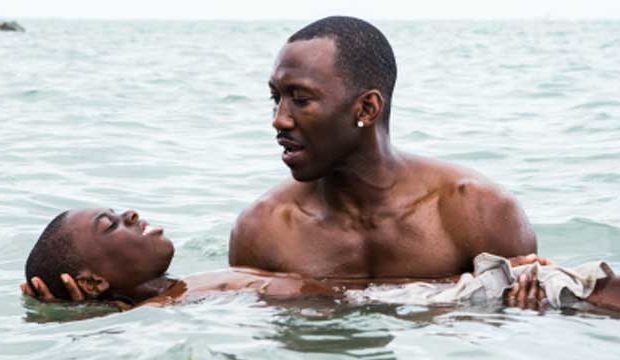
By chance, one day’s after-school bullying hurls him into an abandoned apartment, a “dope hole” where he hides. That’s where Juan (Mahershala Ali of “Free State of Jones” and “House of Cards”) finds little (Alex R. Hibbert).

Juan is empathetic, reassuring. But we know he’s a drug dealer by the pimped Chevy he drives and the street corners he frequents. Is he recruiting the kid, or about to prey upon him?

Juan and his girlfriend Teresa (Janelle Monae) feed the boy, try to draw him out and then deliver him to his mother, a nurse (Naomie Harris). But little keeps coming back.

And when he talks, his questions will break your heart, and Juan’s answers will make your head snap back.

“What’s a faggot?”

Juan thinks and gives maybe the most adult answer anybody has ever given to that query.

“It’s a word used to make gay people feel bad.”

“Moonlight” is an extraordinary gay coming-of-age melodrama set in the African American poverty of Miami’s Liberty City. A breakout film for writer-director Barry Jenkins, it is a serenely-paced, compellingly-acted, expertly shot and edited portrait of three stages of one boy’s life, his denying, facing, then denying again who he is as he copes with growing up on mean streets lined with palm trees.

The bullied little, sympathetically acted by Alex R. Hibbert, has heard that ugly word hurled at him. He’s so crushed by his life — and he hasn’t hit 11 yet — that he’s starting to ask that sort of question. Juan, a born father figure — at least for a guy who sells drugs – has advice that could save him.

“You ain’t gotta know right now…Decide for yourself who you’re gon’be.”

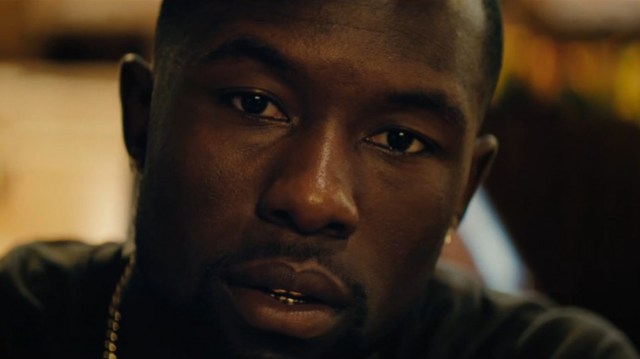
Jenkins tells his tale in three acts — “little,” the kid’s childhood, the suggestion that he might have his first crush, “Chiron” (little’s real name), taking the boy through even more awkward teens, and “Black,” the young man (Trevante Rhodes) the kid becomes.

moon2Jenkins drops so many surprises into the plot, doling out information in compact, complex moments in between casually-observed slices of life, that it’s OK to give away the first couple — Juan’s real character, little’s real curiosity — because there are so many more that will rattle you.

Jenkins and his cinematographer and Steadicam operator James Laxton stalk this kid all through his life, tracking him from behind as he flees bullies, tries to “get hard” to stop the bullying and when he marches into the moment where he seals his fate. Laxton’s camera swirls around the street corners where Juan checks on his street-dealers and into the tender moment Chiron is introduced to sex.

The biggest surprise of all may be how simple the movie is, how easily its third act wrong-foots the viewer, how vivid, hateful and broken Harris’s mother character registers. If there’s an Oscar nomination in this picture, aside from script or cinematography, it’s hers.

Gay coming-of-age stories are common enough these days, but “Moonlight” finds a new perspective, a new setting and a compelling new filmmaking voice to tell that story. It’s one of the best pictures of the year.


3half-star


MPAA Rating: R for some sexuality, drug use, brief violence, and language throughout

Cast: Mahershala Ali, Trevante Rhodes, Naomie Harris, Alex R. HibbertAshton SandersJanelle Monáe

Credits:Written and directed by Barry Jenkins. An A24 release.

Running time: 1:51

OSCARS…for Barry Jenkins (adapted script), Mahershala Ali and Best Picture. 

Posted in Reviews, previews, profiles and movie news | 2 Comments

Movie Review: Beatty’s batty in “Rules Don’t Apply”

rules2

Warren Beatty isn’t very interested in Howard Hughes, the man. He announces as much with an opening credit for his Hughes comedy, “Rules Don’t Apply.”

“Never check an interesting fact,” he quotes Hughes as saying. Did he actually say that? Who knows?

But the rest of “Rules Don’t Apply” is such balderdash, played for comic effect, that we have to buy into the premise and forget everything we know about Hughes. The dates, names, incidents and accidents of his legend are so thoroughly jumbled that remembering Martin Scorsese’s “The Aviator” is actually a hindrance.

Beatty, who plays Hughes in the picture, tries to give us a movie as wildly eccentric and asymmetrical as the man himself. He’s concocted a random romantic farce that isn’t romantic or particularly farcical.

But random? Yeah. Two hours and nine minutes — Beatty still commands final cut — and at the end, you remember you had to take Grandpa’s Towncar keys away at about the same age (79).

The aim is more “Melvin and Howard” than “The Aviator” or the Tommy Lee Jones TV movie “The Amazing Howard Hughes.” Co-screenwriter Bo Goldman wrote “Melvin and Howard,” and he helps Beatty try to find the Hughes of myth — brilliant, mercurial, veering from lucid to loony and flirting with “rich pervert” the whole time.

In mashing up events from the 1940s to the 1970s, framing the entire movie in Hughes’ famous early 1970s phone press conference debunking Clifford Irving’s hoax biography of him — and incorrectly dating that press conference “1964” and changing Irving’s name — Beatty puts the viewer off balance in much the same way Hughes keeps his various aides, assistants, business associates and limo drivers wrong-footed.

One of the latter is Frank Forbes, played with a trademark earnest dullness by Alden Ehrenreich, who underwhelmed in “Hail, Caesar!” and “Blue Jasmine” and “Stoker.” He’s a nice Christian lad from Fresno charged with picking up aspiring starlet Marla Mabrey and her mom from the airport and delivering them to their new home.
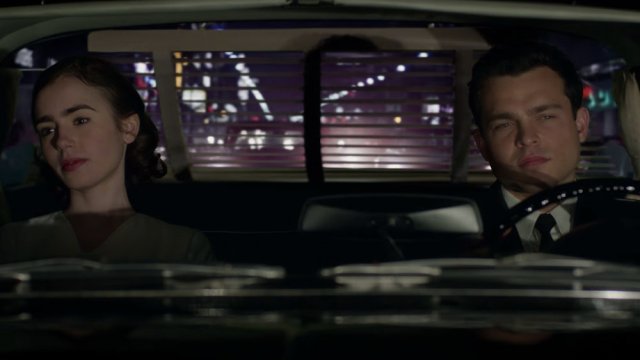
rules1It’s a showplace overlooking Los Angeles from high on a hill, with The Hollywood Bowl just below. Marla, a virginal Christian from Front Royal, Va., has been picked for a screen test for Mr. Hughes, labeled “The King of Hollywood” even though this is 1958 and his last mark on the movies was made a dozen years before.

“Stella Starlight” is the supposed name of the movie Marla is up for. But as she’s driven to ballet classes, acting classes and the like by Frank, she realizes the mysterious Mr. Hughes has filled dozens of houses with young women (Haley Bennett among them) just like her.

And as the days turn to weeks, Marla (Lily Collins) doesn’t meet Hughes, doesn’t get her screen test. Her mother (Annette Bening) loses patience. And Marla finds herself making an awful lot of eye contact with Frank, which is “against the rules.” Hughes hires religious, mostly-married drivers to control his starlets. They’re not allowed to fraternize, date or seduce the young women, as veteran driver Levar (Matthew Broderick) keeps reminding Frank.

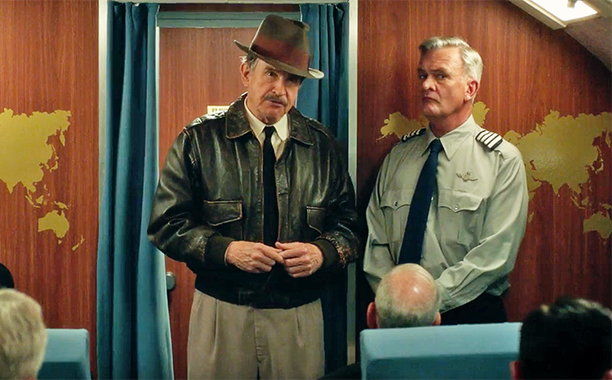
When we finally meet Hughes, the first impression is hardly impressive. Handsome? Sure. Aged? Quite. He’s also quite deaf and perfectly daft, a shy man who treats Marla to a TV dinner.

Half-known to Frank and Marla, the increasingly reclusive Hughes is fighting for his fortune and freedom against TWA airline investors, bankers and the government. Every crisis of his public life — a plane crash, the Spruce Goose, Congressional testimony, drug addiction, threats of consignment to a mental hospital and an urgent need to marry — is packed into a whirlwind year or so of his life.

Collins makes a perky church girl — “Blessed Savior!” is her favorite expletive — whom Hollywood and Hughes will corrupt. Frank is meant to be Marla’s knight in shining armor, whom she might betray once she’s seen the bright lights of the Big City.

But the young couple set off no sparks, and the older pairing — ancient lech and virginal daisy — is just creepy. Nobody makes us feel anything in this burlesque of history and botch-job of a romance.

Broderick plays a 50ish bounder who wouldn’t mind bedding Marla himself. and cameos by everyone from Alec Baldwin and Steve Coogan to Candice Bergen (more than a cameo, she’s Hughes’ secretary) and Ed Harris remind us that Beatty still commands an audience, at least among his AARP peers.

Beatty plays the guy very close to himself — rambling, incomplete thoughts, stammered out bits of brilliance and wit wrapped in layers of dizziness. Madness manifests itself in the paranoia of a man who has bugged hotel rooms and insulates himself from the world with legions of do-my-bidding assistants. He repeats himself repeatedly — in memos, and memorably, in his threat to clear his name in front of Congress or go into exile.

“I’d leave this country, and never come back. I’d leave this country, and never come back. I’d LEAVE this country, and NEVER come back. I’d leave this country and never COME BACK.”

There are shades of “Shampoo” and “Heaven Can Wait” and even “Bulworth” in the performance. They just don’t add up to much more than a goofy sketch, a caricature.

The dialogue is light, but rarely quotable, largely due to Beatty’s disjointed line-readings.

And the picture fits together so clumsily that no satisfactory tone emerges, relationships don’t gel and the story loses any sense of “arc.” Sure, “Rules Don’t Apply” to this movie, but all we’re left with is the odd warm and wonderful scene.

Marla has waited so long to meet the man that she blurts out her thanks, her dreams, her suggestions and her pleas for advice in a single breathless minute-and-a-half long sentence. Hughes, probably not wearing his hearing aid, devours his TV dinner peas — oblivious — until he starts rambling about TV dinners in the middle of her frantic monologue.

Marla sings a song, “Rules Don’t Apply,” of her own invention — charming first Frank and later Hughes with her voice, her innocence and her first-time-ever drunkenness.

Frank finally meets his boss, shows off his own business savvy and tries to keep the perpetually -Hughes focused long enough to hear his real estate investment pitch as they eat late night hamburgers on a dock where the Spruce Goose, Hughes’ massive wooden transport seaplane, is parked.

The general incoherence cripples the film, but those random scenes give it enough sparkle to make it worth enduring. But worth remembering?


2stars1

MPAA Rating: PG-13 for sexual material including brief strong language, thematic elements, and drug references

Cast: Warren Beatty, Lily Collins, Alden Ehrenreich, Annette Bening, Matthew Broderick, Alec Baldwin, Steve Coogan, Oliver Platt, Candice Bergen, Martin Sheen, Ed Harris, Amy Madigan

Credits:Directed by Warren Beatty, script by Warren Beatty and Bo Goldman. A 20th Century Fox release.

Running time: 2:06

Posted in Reviews, previews, profiles and movie news | Comments Off on Movie Review: Beatty’s batty in “Rules Don’t Apply”

Movie Review: China’s “I Am Not Madame Bovary” loses something in translation

bovary3

If the future of cinema is Chinese, as the single party state emerges as the world’s top box office market, then perhaps the time is right for more Chinese hits — films built for domestic consumption — to enjoy international release.

Or perhaps not.

Whatever the charms of “I Am Not Madame Bovary,” the latest from “The Chinese Spielberg,” this two hours-and-counting satire of Chinese bureaucracy, mores and customs does more to point out how vast the gulf in storytelling styles between East and West. As if decades of exported 3 hour Bollywood pictures hadn’t made that point.

“Bovary” has absolutely nothing to do with Flaubert’s famous novel. The title is a play upon Chinese slang for a faithless, philandering woman whose cheating leads to murder. She’s called Pan Jinlian in Chinese, and that label is something Lian (Fan Bingbing) will not tolerate.

She journeys far from her rural province seeking justice, from first a judge, then a mayor and on up through the Chinese system, for a divorce she says was “fake.”

Her story — that she and her then husband, Qin ( Li Zonghan) got divorced to win a coveted apartment where rules were in place that kept married couples out, that after the “fake” divorce her feckless truck driver husband went off and married someone else.

Now, she wants him in court. She wants his admission of what they did, and he did afterwards. She wants the satisfaction of annulling the first divorce so that she can divorce him again.

“If you can’t help me,” she shouts at the first judge she faces (in Mandarin, with English subtitles), “I’ll return home right now and kill him!”

When that first court denies her appeal, she goes further and further up the bureaucracy, blocking traffic with “Injustice” signs, harassing cowardly “suits” at every step of the way.

bovary2

This fool’s errand of revenge eats her up, and devours ten years of her life.  Every year’s campaign climaxes at the NPC — the National People’s Congress, in Beijing.

But if her quest makes Lian a little crazy, it drives the People’s Republicans bonkers. Protest? Claims of “Injustice”? In this paradise of Marxist Capitalism?

As her rage grows, Lian literally sharpens her machete and seeks an accomplice, with the promise of sexual favors. The butcher Datou (Guo Tao) takes her growing enemies list as too daunting, but longs to “save her” from this mania for justice in an injustice culture. He has a (not very) funny way of showing that.

Whatever her intent, Lian’s pursuit makes her infamous, the subject of gossip, and more of a “fallen woman” with each passing year.

Director Feng Xiaogang hasn’t had much of his work seen outside of China, and “I Am Not Madame Bovary” suggests some reasons. At festivals (where the film occasionally took a prize), he has talked of the artistic ambition of the piece. And that’s laughable.

His big idea — messing around with the shape of the frame, silent film style. Lian’s limited world and influence is represented by early scenes in a small, circular frame. That frame turns square, or close to “Academy Aspect Ratio” as the movie progresses, finally widening into Cinemascope as Lian becomes someone the authorities fear so much that they visit her and try to dissuade her from further protests.

Primitive? “Mickey Mouse” is more like it.

The sly-est take-aways from the movie might not register to local Chinese audiences. Lian can’t travel by bus without showing ID to a cop who checks every passenger before departure. The legal system shown here lacks advocates, merely “judges.” The country’s world revolves around a “Congress,” not shown, which rubber stamps the edicts of whatever cabal is in power. It’s all in the name of “order,” something every Chinese director and actor I’ve ever interviewed stresses is a paramount concern in a nation-state of billions.

The acting is rarely broad and Fan Bingbing delivers a credible haplessness in Lian.

But the occasional moments of broader comedy translate well-enough. Lian’s more and more compromised requests of whoever might be her accomplice — “Just hold him down for me” while she stabs her ex-husband — is funny.

But truthfully, “Not Madame Bovary” is not a lot of things — not that funny, or that interesting, for starters. Perhaps satire or comedy are not “China’s Spielberg’s” thing.

2stars1

MPAA Rating: Unrated, with some nudity, violence (an off-camera rape).

Cast: Fan Bingbing, Guo Tao, Da Peng, Zhang Jiayi, Yu Hewei, Yin Yuanzhang, Feng Enhe, Lin Xin, Zhao Yi

Credits:Directed by Feng Xiaogang, script by Liu Zhenyun, based on her novel “I Did Not Kill My Husband.”. A  Well Go USA release.

Running time: 2:09

Posted in Reviews, previews, profiles and movie news | Comments Off on Movie Review: China’s “I Am Not Madame Bovary” loses something in translation

Movie Review: “Loving” is the most important film of 2016

loving1

So tall and thin her family nicknamed her “Stringbean,” Mildred’s eyes wear the resignation of generations. And if they’re downcast, looking at the ground, never daring to make eye contact with authority figures or even strangers, that was handed down to her, too.

Him? He’s had to learn all this as an adult. He’s white. It’s the 1950s.  But  Richard Loving had the temerity to fall in love with a black woman in the Jim Crow South.

Warm, intimate and brittle, “Loving” is the most important movie of 2016, and one of the best. It brings back a word the culture has all but buried and forgotten — “miscegenation,” the pejorative and fancy term racists used to condemn and outlaw “mixing of the races.”

It’s a period piece with a history lesson in it. The fact that it’s not ancient history is a national embarrassment, but the message is one at least half the country can take heart in. You can “lose the small battles, but win the big one.”

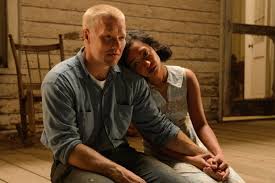
Ruth Negga (“World War Z”) is Mildred, who tells her boyfriend Richard (Joel Edgerton of “Black Mass”) she’s pregnant the first moment we see them together on screen. Richard barely flinches. Great. We’ll go to D.C., get married, and that will be that.

They’re in love, something the performers never let us forget over the course of their saga.

But married in D.C. means nothing in the even-more-segregated Virginia of the late 1950s. The county sheriff (Marton Csokas) stages a raid to arrest them. Their lawyer (the always-interesting Bill Camp) cops a plea. They agree to probation and exile. They must leave the Commonwealth, not to return in each other’s company, for 25 years.

The Lovings, who want from their government all anybody wants from a government, “to be left alone,” accept their fates. But Mildred despairs of raising their growing family in D.C. And when the Kennedy administration takes over in Washington, she resolves to get “some relief.”

“Loving,” the latest slice of the South from the great Southern director Jeff Nichols (“Mud,” “Take Shelter,” “Midnight Special”) takes us through the years the Lovings were caught up in the court system. They were reluctant champions of a couple of Jewish American Civil Liberties Union lawyers, slick opportunists anxious to take this case to the Supreme Court, and by the way, change American history in the process. A smirking Nick Kroll is amusing as Bernie Cohen, in-over-his-head but dogged enough to go the distance.

I love the way Nichols captures the common humanity that rural Southern blacks and whites could share, if history and geography conspired to let it happen. Richard is just another car guy, more at home racing and tinkering with his black friends and “Bean’s” brother (Alano Miller) than the racially resentful rednecks who are his culturally-ordained peer group.

loving2

Negga plays Mildred as reserved and fearful, literally keeping her head down for much of her life. Edgerton, wearing a bristly crew-cut and bricklayer’s arms, has working class violence in his DNA. You can just feel it. But around Mildred, he just melts.

A lovely scene — Life Magazine sends a photographer (Nichols’ muse, Michael Shannon) to capture this court-bound couple at home. His shot seen around the world? Mildred laughing at “The Andy Griffith Show” (“The Pickle Story”), Rich laughing even harder, his head in her lap.

Nichols has built a quiet, low-key film of hidden passion and emotions kept in check, a story where the potential for something awful and violent to happen hangs over it, but where the downtrodden cling to hope and to relief from a court that, at least back then, promised “Equal Justice under Law.”

3half-star

MPAA Rating: PG-13 for thematic elements

Cast: Ruth Negga, Joel Edgerton, Alano Miller, Marton Csokas, Bill Camp, Nick Kroll, Michael Shannon

Credits:Written and directed by Jeff Nichols. A Focus Features release.

Running time: 2:03

Posted in Reviews, previews, profiles and movie news | Comments Off on Movie Review: “Loving” is the most important film of 2016