Pre-holiday Box Office: “Despicable” out-runs “Cars,” “Baby Driver” blows up, “Beguiled” bombs

box

THE popcorn picture of the summer — that would be “Baby Driver,” to you toy robots/boys in tights/girls in bustiers folks — is headed to a MARVEL-ous $27 million opening weekend. Not comic-book level, not “Fast and Furious” franchise level.

Add in the Wed-Thursday numbers, and it’s a $30 million hit.

But without being a big name brand name picture, with a cast led by a little known young actor “famous” for supporting roles in lightly-regarded YA almost-hits, that’s impressive. Ansel Elgort now has his shot. Edgar Wright steps into the ranks of major box office directors.

baby2

Of course, the “brand name” picture of the weekend is dominating the box office. “Despicable Me 3” is headed to an $81 million opening. Parents and kids have built in expectations, thanks to the brand. And we all love those Minions. That’s $16 million more than “Cars 3” opening. Pow, right in the kisser, Pixar.

But seriously, the godawful/not-funny-in-the-least “Despicable” TV commercials should be your warning. This isn’t “Cars 3” bad, utterly devoid of laughs. The Minions see to that. Steve Carell and Kristen Wiig trying to improvise TV spots where they switch personalities? Painful. Just like the picture. Even Universal marketing’s lamest efforts don’t matter. The SECOND weekend, though — watch out. This dog will have that canine word of mouth about it.

The second weekend is most telling for “Transformers: The Last Knight.” The fifth “Transformers” pic, phoned in all around, fell off the table after its opening weekend. Third place and plummeting. It almost lost a place to “Wonder Woman,” which has been out forever.

The not-suspenseful/not-scary/not horrific “The Beguiled” is a bomb. Barely cracked the top ten in wide release. Sofia Coppola remakes a creepy Clint Eastwood chiller from the early 70s (Don Siegel directed), and TOTALLY misses the point. And even though the champagne-drunk dopes at Cannes thought it a masterpiece, domestic critics are having a laugh at it and audiences know to stay away.

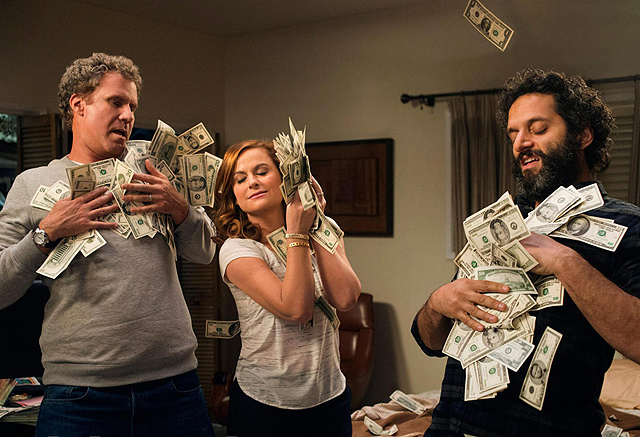
New Line/Warners didn’t preview “The House” because they know what Mariah Carey, edited out of the picture for “diva” behavior, must have sensed. It’s terrible, a no-script crap out that relies on Will Ferrell and Amy Poehler to riff it into amusing.

They don’t. It’s still earning $9 million+ based on their names and TV ads.



Posted in Reviews, previews, profiles and movie news | Comments Off on Pre-holiday Box Office: “Despicable” out-runs “Cars,” “Baby Driver” blows up, “Beguiled” bombs

Movie Review: Ferrell, Poehler crap out against “The House”

House2

This past week’s best misdirection play wasn’t a tweet from a doomed, bratty not-really-a-billionaire in the White House. It was from the cast and director of a comedy, dishing on how they’d cut Mariah Carey out of their movie for “diva” behavior.

The joke’s on them, or us. Because Carey is the lucky one. It’s those trapped with “The House” on their credits who crapped out, and those trapped watching it.

Pairing up one-time SNL castmates Will Ferrell and Amy Poehler should have been the safest of safe bets. “Buddy picture” veterans who have made even Mark Wahlberg and Tina Fey funny, just put them in a situation and let’em riff, and you’ve got comic gold on your hands.

That’s pretty much what shows up on screen, two pushing 50 sketch comics straining, stretching, swearing and mugging, trying to find the funny in a comedy about earnest, over-extended, clingy and doting parents who set up an underground casino so that their Taylor Swift wanna-look-like daughter, Alex (Ryan Simpkins) can go to Bucknell.

No, it’s not just a basketball team with a college attached. It’s an expensive university in an era where college costs are spiraling ever upward.

Scott (Ferrell) has a phobia about numbers, and hasn’t paid close enough attention to their finances. And Kate (Poehler) is even less responsible in that regard. A college visit just reminds them that her nickname was “Smoke a lot of pot and pee outside Kate,” back in the day.

They let a dumped, broke and down-on-his-luck pal, Frank (Jason Mantzoukas of “The Dictator”) beg them into joining him for a trip to Vegas. That’s where Frank’s gambling problem is introduced and Kate and Scott almost strike it rich, almost solve their little insolvency.

And even though they live in a square, uptight and financially mismanaged planned community run by a martinet village councilman (Nick Kroll), they let Frank talk them into the one sure thing in a gambler’s life. “The House” always wins. Let’s set up a secret, off-the-books casino in Frank’s empty, foreclosed-upon house, make our college money, and get out.

What I hesitate to call a “script” briskly gets across the DIY nature of the casino — Walmart tinsel and strip light decor, plywood roulette tables and a tiny den converted into a stand-up comedy club. Potential laughs are, as they say in the poker rooms, “left on the table” there.

But the germ of a good idea peeks through, as gambling is presented in classic gateway vice fashion. Flawed “perfect” people in the planned community are exposed as hotheads with impulse control issues. Gambling leads to infidelity leads to drugs leads to violent crime.

And our casino proprietors have only memories of DeNiro/Pesci/Sharon Stone and Scorsese’s “Casino” as their guide in how to act tough and not get rolled by the unsavory characters such operations attract.

Mantzoukas adds nothing funny to the proceedings, so Ferrell and Poehler try to wrangle laughs out of parents dropping the F-bomb in front of their not-so-innocent kid, an only child who adores them and suffers their “Alex sandwich” hugs.

house3

Most of of the scant laughs here pop up on the periphery, neighbor ladies (Lennon Parham, Andrea Savage) airing their feud at town council meeting.

“You know what LAURA brings to a potluck? Her nasty mouth…and NOTHING else!”

That blows up into an actual brawl, which the casino trio improvise into a refereed match, with wagering and DIY duct-tape gloves in a crime-scene tape boxing ring.

It all feels random and slapped together, with seriously under-developed heroes, villains, over-the-top geyser-of-blood violence played for laughs (That works) and the spectacle of Poehler’s Kate living down to that college nickname (public urination) or of Ferrell and Poehler improvising slapstick in a container store.

All of which remind us that the winner, the one person to beat “The House” — is Mariah Carey.

1half-star

MPAA Rating: R for language throughout, sexual references, drug use, some violence and brief nudity.

Cast: Will Ferrell, Amy Poehler, Nick Kroll,  Jason Mantzoukas

Credits: Directed by Andrew Jay Cohen, script by  Brendan O’BrienAndrew Jay Cohen. A New Line/Warner Brothers release.

Running time: 1:28

Posted in Reviews, previews, profiles and movie news | 2 Comments

Movie Review: Dinner guests get an earful from “Beatriz at Dinner”

beatriz1

Beatriz wasn’t supposed to be there. Not at dinner, anyway.

In the Red State/Blue State America of “winners” and “have-nots,” a working class Mexican-American like her wouldn’t sit down to a celebratory dinner with the callous super rich. She’d be serving them.

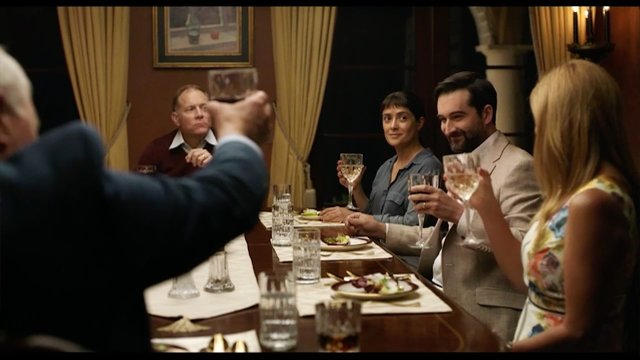
But she’s had a rare, deep connection to the family hosting this meal where a rapacious developer and his legal and financial team toast their latest success, getting a deal past environmental regulation and the government meant to impose it. And so they, and she are exposed to each other and their wildly divergent worldviews thanks to “Beatriz at Dinner.”

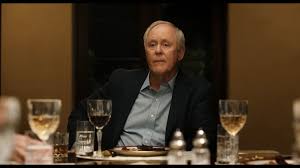
Mike White, who scripted biting, edgy satire of this sort (“The Good Girl,””Chuck and Buck”) before making his fortune with “School of Rock,” serves up an unsettling and generally deft comedy of manners with this clash, a film that greatly benefits from subtle, stinging performances by Salma Hayek and as her opposite number, John Lithgow.

Beatriz wears the weariness of working people everywhere, as wells as a profound sadness. A lonely member of the working not-quite-poor, she gives massage therapy and alternative medicine treatments to cancer patients near her working class Altaduna, California home. She copes with an intolerant and intolerable neighbor, lives with needy, neurotic dogs and a goat, drives a barely-functional VW and dreams of a childhood on coastal Mexico, drifting romantically among the mangroves.

Her life is thrown into sharpest contrast through her other gig, massaging clients like Cathy (Connie Britton), the wealthy wife of a developer (David Warshofsky) living in mansion in a gated community on the coast. 

Cathy’s world screams “Rich White People’s Problems,” but she considers Beatriz a friend. And when that VW quits, she invites Beatriz to stay for dinner. The movie revels in watching the out-of-place Beatriz as she quietly observes the guests arriving wearing clothes and jewels that cost more than her broken car.

She is sensitive, a little embarrassed and left out. She interjects in the conversations only when it touches on her areas of expertise — holistic treatments for kidney stones, muscle tensions, “hair therapy” and the like.

But the overbearing guest of honor, the hotel developer Doug Stutts (Lithgow) and the white wine she sips brings out more from her. This sensitive “healer”is forced to rub up against a callous user and abuser of Mother Earth, animals, government loopholes and people. So we can’t help but expect fireworks.

White, and director Miguel Arteta (“The Good Girl,””Cedar Rapids”) are determined not to provide them. Our antagonists argue, dismiss and try to avoid rolling their eyes at each other’s positions. But they take care to avoid going over the top into unforgivably rude.

Hayek conveys sorrow and a hint of pity for these short-sighted, money-over-all “winners” society has foisted on people like her. And Lithgow, playing a Koch Brother without an “h,” takes pains to be polite even with someone he is hard-wired to regard with contempt.

His tactless “But where are you REALLY from?” in their introductions — wanting to know her legal status and how she got into the U.S. — falls just shy of ugly. He doesn’t know people like her and is indelicate with his questions. Her counter, “But where are YOU really from?” is the most telling exchange in the picture.

beatriz2He, like those on his side of the political, financial and cultural divide, has chosen to play down his own origins as he moves in a world where wealth is an entitlement rewarded with TV notoriety — “I have opinions, and because I have money, people listen.”

Beatriz’s back-story unfolds in between scenes in which she all but recoils, appalled at what these people are celebrating, at their lifestyles and at the amorality of their choices. Stutts’ bragging about big game hunting in Africa may physically wound her, and Arteta’s camera captures the first signs of discomfort among the other guests. Chloe Sevigny and Jay Duplass are rich lawyers who look down in faint recognition of the deal they’ve made with the Devil to get where they are.

Stutts may be a bulldozer, running over everything and everyone in his path, and Beatriz may seem like a “Star Trek” “empath,” all feelings and hurt — but White and the players take care to never let them drift into caricature.

The adherence to unwritten social codes is so strict that we blanch every time they’re broken. Only when the film takes its most radical third-act jolts in tone does it feel forced, contrived. And the ending is simply abrupt.

White, who just turned 47, has looked at America’s divide and figured out what every other pundit has — that we’ve stopped listening to each other. The gates are metaphorical as well as literal. But like every defensive wall ever built, they cannot separate us or protect us from each other for long. Sooner or later, a Beatriz or Stutts is going to be in our face and force us to deal with him or her.

So the message of  “Beatriz at Dinner” has merits beyond this curtailed social satire’s running time. The longer that conversation is delayed by social niceties, the more alarming that reckoning is going to be.

2half-star6

MPAA Rating: R for language and a scene of violence |

Cast: Salma Hayek, John Lithgow, Connie Britton, Chloe Sevigny, Jay Duplass

Credits:Directed by Miguel Arteta, script by Mike White. A Roadside Attractions release.

Running time: 1:22

Posted in Reviews, previews, profiles and movie news | Comments Off on Movie Review: Dinner guests get an earful from “Beatriz at Dinner”

Movie Review: Third time isn’t the charm for “Despicable Me 3”

me3

Well, thank Gru for the Minions, anyway.

Without the little yellow sidekicks, staging a “West Side Story” prison break, singing a gibberish “I Am the Very Model of a Modern Major General” or “99 Bottles of Beer on the Wall,” there wouldn’t be much to laugh about in “Despicable Me 3.”

One more pan dipped into the Supervillain Gru goldmine shows this Illumination franchise is a claim that’s petered out, with no fresh ideas — no funny ones, anyway.

The gimmick to “3” is the villain turned AVL (Anti-Villain League) agent Gru (Steve Carell), and agent-wife Lucy (Kristen Wiig) are fired for not catching Balthazar Bratt, a mullet with a bald spot trapped in the ’80s blandly voiced by Trey Parker of “South Park,” and given nothing amusing to say.

me2

So the screenwriters decide Gru must have a more handsome, upbeat twin brother he never knew about back in his home country of Freedonia. Yup.

The rich Dru, who inherited their father’s ill-gotten supervillain gains, would like to learn the business. From Gru. Who is a dad, a husband, and even though he’s an unemployed father of three, determined to no longer be a bad guy.

me1

It’s a gorgeously designed picture, like the similarly comatose “Cars 3.” Check out the texture on Gru and Dru’s woolen scarved. There’s a certain inventiveness to some of the gag problem solving.

But there’s desperation in the manic, random moments of mayhem, to the shrieks of the littlest girl, Agnes, in her pursuit of a Freedonian unicorn, in the limp ’80s moonwalks, fashion sense and embittered ex-child star villainy of Bratt, who even swears in’ 80s “jokes.”

“Son of a BETA-max!”

None of which will register with children.

At least some of that randomness is filled with the Minions, funny to tykes and adults alike. Because Carell burned through his only silly voice with Gru, and has nothing new for Dru, and Illumination needs to get a clue. It’s the Minions that are still funny, not Gru.

2stars1

MPAA Rating: PG for action and rude humor

Cast: The voices of Steve Carell, Kristen Wiig, Trey Parker, Steve Coogan, Julie Andrews

Credits:Directed by Kyle Balda, Pierre Coffin and Eric Guillon,  script by Cinco Paul, Ken Daurio. A Universal release.

Running time: 1:30

Posted in Reviews, previews, profiles and movie news | Comments Off on Movie Review: Third time isn’t the charm for “Despicable Me 3”

Movie Review: Tavernier crams a French film appreciation course into 3 hours with “My Journey Through French Cinema”

journey1

In “My Journey Through French Cinema,” the filmmaker Bertrand Tavernier becomes — for three hours and ten minutes — that favorite college professor, the one with thousands of stories, anecdotes passed on second or third hand.

“Journey” is a long personal essay, heavy with excerpted scenes, of the French cinema of Tavernier’s life, the movies that moved him and directors, from Jean Vigo (“L’Atalante”) and Jean Renoir to Jean-Luc Goddard and Claude Sautet (“Un Coeur en Hiver,” “A Heart in Winter”).

Tavernier, 76, is best-known on this side of the Atlantic for his ’80s jazz-noir pic “Round Midnight,” and the lone “Hollywood” film among his credits, “In the Electric Mist,” a Tommy Lee Jones crime thriller based on a James Lee Burke novel. He’s had a solid if not stunning career that stretched from the ’70s to today, as he winds that career down and takes stock.

“My Journey” is an autobiography, with Tavernier recalling the post-war French cinemas with the fanciful names, “Le Florida,””California” and “Far West” where he first fell in love with movies.

The surprising thing about the documentary is the filmmakers he chooses to cast a spotlight upon, genre directors little known outside of France or Quentin Tarantino’s video collection — Jacques Becker, Jean-Pierre Melville among them.

Yes, he was impressed and moved by the films of Renoir (“Grand Illusion”) and Marcel Carne (“Children of Paradise”). He acknowledges a debt to Truffaut, Chabrol and Goddard, and includes clips of interviews each director gave for earlier documentaries, French TV profiles and the like.

And Tavernier, who like many of his generation, got his start as a critic, picks at the reputations of the high and the mighty. Renoir, “under-rated” as a technical filmmaker, created lovely movies that are somewhat undercut by his efforts to kiss up to the Vichy collaborationist government during World War II.

Jean Gabin, the working class leading man who dominated French films in the ’40s and 50s, is remembered for bringing a particularly “French” style to acting. The movies of B-movie action hero Eddie Constantine are embraced, as are “The 400 Blows” and the ’60s work of Goddard (“Breathless,” “Pierrot le fou”) and the crime dramas of genre director Melville (“Army of Shadows,” “Bob le Flambeur.”).

Tavernier passes on anecdotes about each, analyzes scenes and the way the films stand out from the cinema of their era and what impressed him at the time. He breaks down the way Renoir used movement and tracking shots, the spare acting of Gabin and the music of Maurice Jaubert, among others.

His documentary weaves a spell of sharp-eyed, deep analysis, noting this director’s “narrow sets” and “deep depth of field,” that one’s embrace of music and silences, or jazz and traditional French accordion tunes.

All of which influenced Tavernier, and more importantly, world cinema. Watch the moment from “Grand Illusion” that “Casablanca” borrowed, sample the simplicity of filmmakers like Becker, whom Tavernier compares to “Red River” maestro Howard Hawks — simple, pointed, propulsive scenes shot at eye level, without any camera trickery.

And sample scenes from ancient, almost forgotten French films with Louis Jordan, Eric von Stroheim and Sessue Hayakawa as their stars.

journey2‘Tavernier tells this story, in French with English subtitles, and opens our eyes to a world of French cinema only the hardest of the hardcore Euro-cinephiles will know.

Yes, it’s too long, and only gets truly interesting in the third act when Tavernier recalls using his reviews and essays to get the attention of filmmakers he wants to work for (unethical here in the States, commonplace in France).

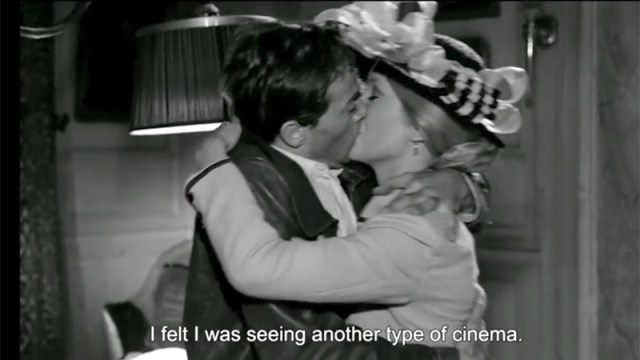
And the filmmaker takes his eyes off the ball with the subtitling — white subtitles on black and white footage — a mistake most filmmakers learned to avoid 15 years ago.

But “My Journey” makes for a great crash course in French films beyond the classics taught in every film course in every film school — Cocteau’s “Beauty and the Beast,” Vigo’s “L’Atalante,” Renoir’s “Rules of the Game” and Truffaut’s “400 Blows.” It’s worth the three hour investment in time only if you keep a notepad to jot down the hidden gems in France’s rich post-war film tradition.

3stars2

MPAA Rating: Unrated
Cast: Bertrand Tavernier, Jean Gabin, Jean Renoir, Francois Truffaut
Credits: Written and directed by Bertrand Tavernier.  A Cohen Media release.
Running time: 3:10


Posted in Reviews, previews, profiles and movie news | Comments Off on Movie Review: Tavernier crams a French film appreciation course into 3 hours with “My Journey Through French Cinema”

“Pitch Perfect 3?” Me neither

Yes, there’s another one. Rebel Wilson needs the cash, Anna Kenrick needs the relevance. Or is it the other way around?

Christmas. Not much in the trailer other than Rebel’s fat-joke hat.

Posted in Reviews, previews, profiles and movie news | 1 Comment

Movie Review: Coppola tries for a daffy and dark “Beguiled”

beg1

Sofia Coppola doesn’t acknowledge the earlier Clint Eastwood/Don Siegel film of “The Beguiled,” or even mention the Thomas Cullinan source novel in the credits.

“Written and directed by Sofia Coppola.”

Perhaps she never read it, or saw the earlier movie. Because her daffy and dark spin on the Gothic and macabre Civil War story, while peppered with comedy-of-manners laughs, has not a moment of dread and turns a tale of sexual temptation and repeated betrayals and revenge into Jane Austen with a drawl.

It’s something of a farce. The film utterly misses the point, another “toast of Cannes” failure, this one from the director of “Marie Antoinette.”

Nicole Kidman is Miss Martha, presiding over an island of gentility in 1864 Virginia, a finishing school for girls she runs out of a self-sufficient but somewhat rundown antebellum mansion.

Miss Martha and Miss Edwina (Kirsten Dunst) teach French, music and manners to the last five girls in their charge, children unable to go home to Atlanta or Savannah or even Richmond as the war rages around them. They tend the garden as their slaves have “run off,” dress impeccably, have vespers after each evening’s meal and dread the coming of the “Bluebellies,” who “rape every Southern woman they come across.”

But when a wounded Union deserter (Colin Farrell) crosses their path, Miss Martha is torn. Sure, she could turn him in, do her “duty.” But he’s a teachable moment, too. So they take him in and she stitches him up, showing the girls “the Christian thing to do.”

And he is, after all, handsome. So before you can say “Fiddle dee dee,” the girls, led by the sexually worked up Alicia (Elle Fanning, in full vamp) and the teachers are competing for his recovery time and his attentions.

When the Irish Corporal McBurney wakes up, he sizes up the situation and starts his play. He has two armies to elude, even after his leg heals. So he turns on the charm, beguiling even the littlest students and disarming the headmistress with his candor about his first taste of battle.

“You ran?”

“I did. I surely to God did.”

The script lets Kidman balance an arm’s-length wariness with sexual longing, and Dunst makes a shockingly good spinster, embracing a delicate surrender to come-ons about “such a delicate beauty as yours.”

Fanning, her hair draped over her eyes like a covergirl on Confederate Vogue, is laughably over-the-top.

And Farrell literally bats his eyes at them all, turning cheeks red, motives impure and jealousies on.

“Now you stop your giggling!”

Coppola doesn’t even try to present a version of Civil War women struggling at home, as “Cold Mountain” and the indie thriller “The Keeping Room” and even “Gone With the Wind” managed. Perhaps she can be forgiven for stripping slavery and interracial temptation/white male power over female African-Americans as subtexts.

And even though the romantic, Spanish moss-draped oaks of Louisiana are international shorthand for “the Old South,” the film’s limited settings look nothing like Virginia, and the accents are generic drawls.

Coppola stripped the tale, cut the length, eschews menace and goes easy on the malice, which made the earlier version of the story work. Even as an arch, serio-comic female revenge fantasy, this “Beguiled” fails to cast the necessary spell.

2stars1

MPAA Rating:R for some sexuality

Cast: Nicole Kidman, Kirsten Dunst, Elle Fanning, Colin Farrell

Credits: Written and directed by Sofia Coppola, based on the Thomas Cullinan novel. A Focus Features release.

Running time: 1:33

Posted in Reviews, previews, profiles and movie news | Comments Off on Movie Review: Coppola tries for a daffy and dark “Beguiled”

Movie Review: French musical “Footnotes” rarely misses a step

foot1.jpg

Every musical is built around songs of aspiration, “dream songs” in which a character can’t express emotions and hopes in mere words. She or he just has to sing them, maybe do a little dance as she does.

Think of Belle from “Beauty and the Beast” longing for “more than this provincial life,” or everybody in that enchanted castle, in this song or that one, hoping at long last to break the curse.

“Footnotes” is a French musical with nothing but songs of aspiration. And what are the characters singing about? Hopes of finding a job, of keeping a job, of quitting a job and hitting the road.

Here’s a musical everybody can relate to. The dreams are down to Earth, not set in “La La Land.” There’s a chance at love, but it’s not important enough to warrant a song. No, the bigger hopes are of paying the bills, feeding oneself and keeping gas in the moped.

“I have no time to dream,” the struggling working-class 20something Julie may grouse, but we know better.

It’s just that there are limits to our heroine’s dreams. Played with disarming, French-girl-next-door charm by Pauline Etienne, Julie is the face and voice of a global generation, bounced from “McJob” to “McJob” in a cruel, bosses-have-all-the-power economy. Every “try-out” is a scam to get a free day or week’s labor out of the powerless.

We know where she’ll end up thanks to a documentary prologue. Romans, in the Rhone Valley south of Lyon,  is the designer shoe capital of France, a working-class town that cranks out world class shoes for the rich.


174694_bd

And it is at the Jacques Couture factory that Julie finds work, in shipping, and sings of the “bright prospects for eternity,” because getting dumped by her beau and hounded by her bank, she’s at her wit’s end.

But our coquette is barely a day into her probation period hiring when the merde hits the ventilateur. The director of the company, which makes fine women’s footwear, by hand, offhandedly announces planned “upgrades” in a magazine profile.

The French have the best euphemisms. In America, we call it “right-sizing,” or “down-sizing,” all pointing to jobs being sent to China or wherever the labor is cheapest this year.

And the all-female factory workforce sing and dance themselves into a tizzy on the factory floor. “We could go on hunger strike,” they sing in French. “We could kidnap his brat!”

Julie, despite being told to keep her head down and do her job, is caught up in the with the older women, chanting “You will not stitch up the Couture Girls”  as they charter a bus and drive to Paris to confront the self-absorbed big boss, Xavier Laurent (Francois Morel, in smarmy boulevardier mode) in the middle of a shoe fashion show.

Tugging Julie in another direction in the hunky-and-he-knows-it truck driver, Samy (Olivier Chantreau). He smolders when he smokes, and when he sings it’s about following his “Marlboro Man” dream West, to America, with cowboys and Geronimo invading his fantasy.

Julie fights the feeling, but she is smitten.

The co-writer/directors, Paul Calori and Kostia Testut, expand on a short film they made and give us a musical fantasy of accessible dimensions. The tunes are light bossa novas in the French fashion, saucy fight songs and ballads. The voices are pleasant, not ready for “The Voice” or Broadway. The choreography is amusing, relatively simple and to the point.

As is the movie itself. The delightful “Footnotes” is grounded in reality, light on its feet, with just enough intrigues, betrayals and twists to fill 80 brisk minutes with minor delights.

3stars2

MPAA Rating:unrated, with adult situations, fisticuffs

Cast: Pauline Etienne, Loic Corbery, Clementine Yelnic, Francois Morel, Olivier Chantreau, Julie Victor,

Credits: Written and directed by Paul Calori, Kostia Testut. A Monument release.

Running time: 1:23

Posted in Reviews, previews, profiles and movie news | Comments Off on Movie Review: French musical “Footnotes” rarely misses a step

The music of “Baby Driver” –a kid hipster’s playlist, or geezers’ greatest hits?

A few words, then, in praise of Kirsten Lane, music consultant on films from “Shaun of the Dead” and “Hot Fuzz” to “Love Actually” and “Bridget Jones’s Baby” and now the musically overloaded “Baby Driver.”

Music is an integral part of the story of Edgar Wright’s film, a movie inspired by the Simon & Garfunkel tune “Baby Driver,” which had nothing to do with a too-too-young getaway driver locked into assorted iPods to get him moving, motivated and putting the pedal to the medal.

It’s just a very cool ingredient to add to the movie, which I think is the best popcorn picture of the summer. 

And of course there’s the tinnitus the kid, “Baby,” says he needs music to drown out.

The tunes run the gamut, such a wide selection of songs that no mere 20-or-so year old possibly have sampled, delved into and become obsessed over in his short time on Earth.

There are classic driving tunes — most on the nose, “Radar Love,” and the not-quite-forgotten instrumental “Hocus Pocus,” by Focus.


Queen’s “Brighton Rock,” Martha Reeves and the Vandellas’ “Nowhere to Run” (most memorably chasing “The Warriors”), a “Harlem Shuffle” by Bob & Earl, and The Jon Spencer Blues Explosion turn up.


But soundtracks like this, placed in the iPods of music mad anti-heroes or heroines, always beg the question — It is the character, or the filmmaker’s music taste we’re hearing?

I mean, yeah, The Commodores’ “I’m Easy” is impossible to miss in modern culture. Alexis Corner and Danger Mouse might find their way to your average white 20something.

Blur and Beck (a bit before his time) might catch the driver’s attention. Jonathan Richman? Maybe he stumbled across the King of Quirk in “There’s Something About Mary” and dug around for his other work. But Queen? “Brighton Rock?”

Of course it’s the filmmaker and the music consultant, always older, always wish-fulfillment fantasizing that “kids these days,” with their “infinite playlist” phones, pods, etc., are listening and appreciating everything from classic jazz to classic rock, maybe even a little classical music, to boot.

The late John Hughes, whom I got to interview a few times over the years, was one filmmaker who put all his trust in younger, hipper music consultants, filling the soundtracks of his most famous films with music that came to embody an era in (white) youth culture and music. He wasn’t the hip one, his consultants were.

But check out this track list and tell me how young Baby could have discovered all that, on his on, in this Baby’s few years on Earth? Granted, he isn’t doing much but eating, sleeping, taking meetings with gangs of thieves, making mixtapes and composing his own sampled “tunes” and driving the getaway cars. It’s not like we ever see him practicing/rehearsing his craft. Still, that’s a lot of listening time for such a short lifespan.

Some day, you sense this driver will become his own version of The Star Lord of “Guardians of the Galaxy,” most at home with the singular songs of his youth, that vast repertoire shrinking as he ages out of music hunting, music-buying and movie going.

Roger Moore’s review of “Baby Driver” is here. 


Posted in Reviews, previews, profiles and movie news | Comments Off on The music of “Baby Driver” –a kid hipster’s playlist, or geezers’ greatest hits?

Movie Review: “The Skyjacker’s Tale”

sky1.png

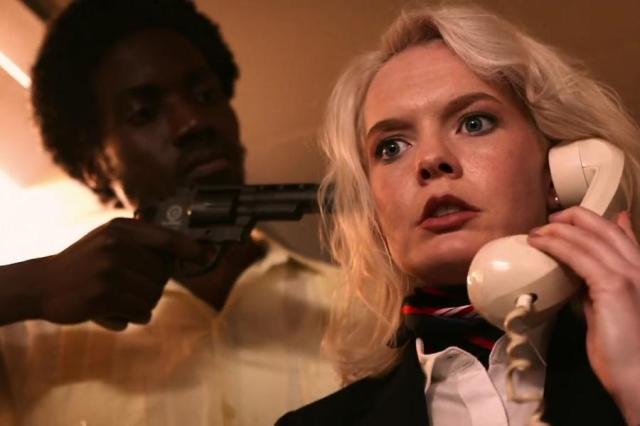
You don’t hear about or see the ramifications of the “Fountain Valley massacre” when you visit St. Croix in the U.S. Virgin Islands.

But there are ghosts there, if you recognize what you’re seeing.

One of the less developed islands, blacker, more segregated and “colonial” in feel, with the influx of the super rich only around the margins, disused cruise ships docks and the like, you have to know some history to get why this “paradise” feels like the Virgin Island that time forgot, or got left behind.

And that history is a bloody, almost Jamaican moment in St. Croix history. In 1972, armed bandits broke into an all-white country club, grabbed a little cash, and shot a lot of white people. The “Fountain Valley massacre,” it was called. And being an island and not a very big one, it wasn’t long before five suspects were rounded up, interrogated and convicted — sentenced to life-and-then-some prison terms.

The Canadian documentary “The Skyjacker’s Tale” tells the story of one of them, Ronald “Ronnie” LaBeet, a radicalized Vietnam War vet who, as Ishmael Muslim Ali, took over an American Airlines flight in 1984 and hijacked it to Cuba, where he lives to this day.

Perhaps only a Canadian could tell this story, or would have attempted it. It’s not just a question of travel and access to Ali/LaBeet. But the whole idea of questioning a mass murder conviction and turning out a compelling movie designed to do little more than cast doubt seems somewhat out of step with the United States these days.

Writer-director Jamie Kastner (“The Secret Disco Revolution”) tracks down those who hunted and prosecuted Ali, a survivor of the massacre and stewardesses, passengers and the pilot of the 1984 New York to Christianstad, St. Croix flight that wound up in Havana.

Kastner sets the stage for the massacre itself, recalling the exploitive, racist culture in the islands of that era. And he lets Ali have his say.

“I am a revolutionary! I am not a criminal!”

Kastner maps the journey of Ronnie LaBeet, from St. Croix boy serving in Vietnam, radicalized by the atrocities he witnessed there,.

“I came to the conclusion that I wasn’t no American,” he recalls.

He came home, became a New York Black Panther, before making his way back to St. Croix, where he was a home island hoodlum, given to robbing tourists and hiding in the rainforest hills afterward.

Naturally, he’s on any short list local authorities whip up when they’re looking for suspects.

He denies having any role in the massacre, but when authorities — Federal marshals and FBI agents among them, drag him and other men accused of the massacre back to the crime scene for “intensive” interrogation, all bets are off.

sky2

And after a circus of a trial, with leftist gadfly William Kunstler flying down to mount a “political crime” defense, he and the others were convicted. A dozen years in brutal Federal prisons, with no hope of hearing his voice heard or his claims of a sham trial and police misconduct heard, and Ali was ready to try anything. Being transported to a prison back home was, he says, his chance.

The movie creates a lovely arc for how we think of Ali, from monster to, “Well, maybe not.” But you’re allowed to think the filmmaker is naive, tilting his story toward those on Ali’s side, buttressing a case for his humanity and justifiable skyjacking.

Still, in editing the picture, he captures Ali in a whopper of a contradiction. He says if he’d been allowed to do his time in St. Croix, he never would have tried to hijack a plane, when he was on a plane, to St. Croix, to serve his remaining time when he took this action.

There are a couple of startling revelations in this 75 minute movie, but nothing on the order of “The Thin Blue Line” and “Making a Murderer,” where we get the suggestion that others might have done the crime.

That’s the Achilles heel of this still-compelling, eye-opening film, a determination to exonerate via coerced confessions without, as Ali himself dismisses, any notion that anybody else committed the murders.

“I’m supposed to be ‘The Fugitive’? Richard Kimble or some s—, looking for the real killers?” Quite right, that’s the state’s job.

But lacking anything like the suggestion of alternative perpetrators, “The Skyjacker’s Tale” is just a lot of self-serving talk from a disarmingly charming man who says he wasn’t given justice, and who escaped the justice he was given.

2stars1

MPAA Rating: unrated, with photographs of graphic violence, profanity

Cast: Ishmael Muslim Ali, Margaret Ratner Kunstler, Michael Ratner

Credits:Written and directed by Jamie Kastner. A Strand release.

Running time: 1:15

Posted in Reviews, previews, profiles and movie news | Comments Off on Movie Review: “The Skyjacker’s Tale”