
It’s “Everything, Everything” again. Or “The Fault in Our Stars.”
And it stars tabloid terror Bella Thorne and Arnold Schwarzenegger’s son.
Yeah, the studio is only previewing it tonight. And it opens tonight. Which speaks volumes.
It’s “Everything, Everything” again. Or “The Fault in Our Stars.”
And it stars tabloid terror Bella Thorne and Arnold Schwarzenegger’s son.
Yeah, the studio is only previewing it tonight. And it opens tonight. Which speaks volumes.
Angelina Jolie’s blundering adaptation of “Unbroken” has prompted a sequel. A runner’s surviving Japanese barbarism to get back to the Olympics? That sounds like a movie to me.
 Francis Ford Coppola is one of the undisputed masters of cinema,masters of cinema, screenwriter of “Patton,” auteur of “The Godfather” movies, “Apocalypse Now,” “Tucker,” “Peggy Sue Got Married,” masterpieces married to commercial motion pictures, with the Oscars and “Greatest Film of All Time” listings to prove it.
A friend who crashed a party at a Brooklyn warehouse Coppola owned some years back related the story that the Old Master sat, drinking wine and shrugging, “I’m finished,” to anybody who cared to ask.
So when a boutique studio nabbed his “Tetro” a few years back, I tracked him down for an interview. I was dazzled by how curious he still was about movie-making, trying new things, and impressed by how he shrugs off failure (“Tetro,” an experiment, didn’t come off, I thought).
He tried running a studio. He was a breakthrough digital filmmaker (“One from the Heart”). He makes wine. He’s dabbled in opera, TV. He’s predicted the future of film, at various times, with varying degrees of success. He teaches workshops at any college lucky enough to have him.
Now he’s written a book — “Live Cinema and its Techniques” — about his efforts to marry his myriad storytelling passions — the “live” impact of theater and teleplays produced “live.”
It’s a lively read, a plea for embracing new tech and applying it to filmed storytelling techniques that were perfected during the 1950s, the era of “live” TV drama, which Coppola worships. He workshopped and shot a couple of short films, whose scripts and notes and production diaries he includes in the book.
He suggests that sports TV technology, and increasingly image-perfect digital cameras, make the idea of performing a movie (it’s actually TV, but let him have that) “live,” shooting it in order, with the odd pre-produced bit, in 90 minutes to two hours.
With 8K cameras capturing the action on the set, most of them hidden, establishing shots can be grabbed, and from them, the bytes of data compromising a smaller part of the screen blown up to allow a filmmaker to cut to close-ups from the same shot from the same lens of the same camera.
There’s a little history in the book, about film’s early days, TV’s invention, the folding modular stage sets of experimental theater, the joys of “little imperfections” that you see every week on “Saturday Night Live” (adds excitement to the viewing experience).
And there are anecdotes, little ways Coppola learned to make the limited rehearsals usually given to film production more like theater. He hit on an idea making “The Godfather,” inviting the cast to an introductory dinner, where he seated them in the pecking order of their characters. He discovered that getting actors to make a meal together, improvising in character, made the sense memory stronger and the connection between actor and character stronger.
“Live Cinema” is a quick read, a fun book and thought-provoking. Like many an old master, Coppola’s become more impressionistic as he grows older — bold strokes, not fretting over perfection or exactitude, impatient to do something quickly, with the heat of inspiration spilling over cast and crew.
True story, back when I worked in public radio, I interviewed — not Fred Rogers, but “Margy,” seen in this trailer for the new Morgan Neville documentary, “Won’t You Be My Neighbor?”
She was a producer on “Mister Rogers’ Neighborhood,” touring the provinces to talk up the program, PBS etc. I remember her being EXACTLY like him, his quiet demeanor and innate sweetness. Now, I don’t know if being around him made her that way, at least during the run of the show. But as I was listening to the interview on tape, editing it, I was struck by how calming she was, how she made me take on her vibe, the way Rogers may have given her his. She said as much in the interview.
A wholly beloved figure, of seminal importance to children’s TV and decades of American childhood. Maybe they’re over-selling the tolerance, consideration, thoughtfulness and sensitivity he might have brought “to a generation.” Trump’s America doesn’t really reflect Children of Fred, all grown up. But then, Trump voters probably weren’t Fred fans as kids.
This goes into pretty wide release June 8, and I fully expect Mr. Neville (he came through Orlando talking up “20 Feet from Stardom” with Merry Clayton) to collect his second Oscar for this one, sight unseen.
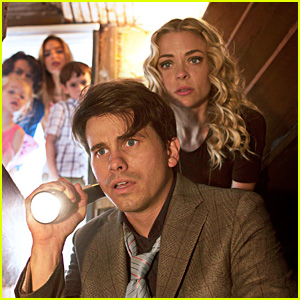
We’re introduced to Jill as she paces, nervously, on top of her dining room table.
There’s a belt around her neck. And she’s trying to work up the nerve to hang herself.
That’s when she hears barking. That’s when she sees the feral canine in her yard, staring up at her.
It’s only when we get a taste of her life that we start to understand. Jill (Marianna Palka) is miserable. She’s got four demanding, high-maintenance kids who eat up all her time. Her husband Bill (Jason Ritter) is a cheating heel. We meet him between the legs of a younger colleague (Sol Rodriguez). He’s so self-absorbed he won’t let Jill go on a painting retreat she’s planned, so clueless he can’t see his company melting down around him.
Bill’s “I love you” wouldn’t convince a judge. He’s so thoughtless he thinks nothing of the belt he has to remove from around her neck when he finally comes home late that night. Suicide didn’t work, and he didn’t even notice she’d tried. Nothing for it but to become a “Bitch.”
Writer-director-actress Palka’s “Bitch” is a dark, allegorical and humane comedy about a wrecked marriage and Mom’s extreme way of checking out of it. The overriding joke here is straight out of that classic of the African American theater, “Day of Absence,” or the Mexican-American film that ripped that off — “A Day Without a Mexican.”
Nobody realizes just how Jill is the glue that holds them all together and makes their wives work until she disappears. Her husband frantically calls her sister (Jaime King), doesn’t know which schools to drive the kids to, doesn’t know how to make lunch, doesn’t even know how to drive Jill’s Sport Maternity Vehicle (SUV).
But when he gets home from the debacle that is his office (Roger Guenveur Smith is the layoffs-happy Big Boss), the giggling, fearful kids have figured it out.
“She’s uh, not being HERSELF,” they joke.
Mom’s gone canine. She’s a dog, barking and living in her own filth, in the basement.

Scottish expat Palka also wrote and directed “I’m the Same” and “Good Dick” (also co-starring Ritter), so “Bitch” isn’t her first provocative title or daring take, and “I’m the Same.” She’s convincingly feral, as an actress, in this one. Her dialogue-writing isn’t particularly memorable, though the script has some solid twists and sharp (if over-familiar) observations about family and a mother’s place in it.
Palka brings out the very best in her cast, though, from the just-bratty-enough kids, with only the young teen daughter (Brighton Sharpino) savvy enough to grasp what’s going on. Tellingly, she’s the only other person in the house to see the mysterious spirit dog that sends Jill off the deep end.
And Palka is wise to hitch her comic wagon to Ritter, all antic tantrums, testy befuddlement and panicky here, playing male privilege to the hilt, a cheater with the gall to scream about how “selfish” his wife is for doing this.
A favorite moment? Bill has just gotten the last kid into kindergarten, is frantically whining into his phone when Ritter abruptly just drops — fake-faints in the middle of a call, right in the playground — then pops back up because he hasn’t got time to faint.
Not with the wife nuts, the kids demanding him, the authorities nosing around with an eye toward committing Jill and his boss threatening his job and lifestyle.
It’s all rather pat and it wraps up in the most pat way possible. “Bitch,” truth be told, isn’t as daring and “out there” as its titles promises.
But it is amusing, a lady-turns-dog comedy with just enough bite to be worth streaming.

MPAA Rating: R (sexual situations, profanity)
Cast: Marianna Palka, Jason Ritter, Jaime King, Brighton Sharpino, Roger Guenveur Smith
Credits: Written and directed by Marianna Palka. A MarVista release.
Running time: 1:32

Action-packed and impressively stupid, “Pacific Rim: Uprising” is essentially a Chinese sequel to the original, more Asian outreach from the studio that brought you “The Great Wall.”
It’s got a British lead, an international (no name) cast, and a few Americans in supporting roles. Heck, it’s got an Eastwood! And the funniest product placement in any action film this year.
But whatever the foot soldiers are up to in those Transformers-sized fighting machines, it’s the Chinese who are calling the shots, pulling the strings and underwriting the defense of the titular hemisphere they call their own.
Cinematic acceptance of the inevitable?
It’s an expensive sink-hole of a movie — packed with exposition, even though we’ve already been introduced to the monsters (Kaiju) invading Earth through rifts between dimensions, the Jaeger human-operated robot-warriors built to fight them, and the world of Chinese tech, vast Chinese wealth and assorted Asian cities destroyed when they’re turned into battle zones.
John Boyega, who broke out in the British street kids fight aliens sleeper “Attack the Block” and became a star in the new “Star Wars” saga, is Jake, son of the Jaeger fighter (Idris Elba) who died saving the world in “Pacific Rim.” The kid’s a hustler, a Jaeger washout and a screw-up who can only be redeemed when the Kauji (dinosaur monsters) return — with their own version of Jaegers.
He has to team up with Nate (Scott Eastwood) in one of those two-man robots at some point. First, he’s got to help train new young recruits, especially his kindred spirit — the requisite “plucky young girl” (Cailee Spaeny), a street urchin who builds mini-Jaegers out of a world littered with Jaeger spare parts.
Ten years of peace have seen seen scientists Newt (Charlie Day) and Gottleib (Burn Gorman) thrive — one in the private sector, working for Shao Industries and its imperious, sexy clothes horse leader (Tian Jian of “The Great Wall”), the other running tech for the Pan Pacific Defense Corps.

And then the monsters return, seemingly with evolved robot fighters of their own.
The picture plays out simply — exposition-exposition-exposition, then fight-chase-fight fight, pause for noble sacrifice or remembering an earlier death, pithy one-liner, then exposition-exposition-exposition again, etc.
“He might take the stick out’a his butt and BEAT you with it!”
There will be betrayals, battles that test everyone’s mettle in the metal. Amara (Spaeny), will go all fan-girl at seeing her favorite Jaegers — “Titan Redeemer!” “Sabre Athena!” “Gypsy Avenger!”
Just keep in mind the guiding principle at work here. Everything’s designed to make China and “the Chinese way” — order is paramount, cooperation and discipline and following orders without — look good.
Chinese villains? We may never see them in another movie. Even if there’s a trade war.
As for the players running and punching in front of all those green screens, the girl is ho-hum, Boyega fights back the boredom, Jing is heroically chilly.
Eastwood? Somebody finance a “Birth of the Spaghetti Western” movie about how his dad became a star. Scott looks and sounds more like the Old Man every day, and that’s a movie — Clint, heading to Spain to work for a bunch of cheapskate Italians he’d never heard of — I’d pay to see.
“Pacific Rim: Uprising?” Not worth it. Not even in 3D.

Nah, I wasn’t nuts about the first film, either.
MPAA Rating: PG-13 for sequences of sci-fi violence and action, and some language
Cast: John Boyega, Scott Eastwood, Cailee Spaeny, Tian Jing, Rinko Kikuchi, Jim Zhang, Burn Gorman, Charlie Day
Credits:Directed by Steven S. DeKnight, script by Steven S. DeKnight, Emily Carmichael, Kira Snyder, T.S. Nowlin . A Universal release.
Running time: 1:50
Sir Ben Kingsley — Is he a Lord? He should be. — has been looking for other variations on his “Sexy Beast” charismatic bad guy role. “An Ordinary Man” is just the latest.
I laughed out loud a few times at Sir Ben’s droll way with this villain. Hera Hilmar is the woman who winds up being his fugitive–in hiding — bad guy’s “maid.”
Debonair, murderous, lover of black leather and stocking caps. Director Brad “City of Angels” Silberling’s “An Ordinary Man” opens April 13 in some markets.

“Momma won’t let you stay,” the little boy Carter (Gabriel Bateman) pleads. It’s raining as he ditched the dog in a dingy alley, but you can’t tell from all the tears. “Please go.”
“I love you, Benji.”
That’s all you need to know about this new installment in the world’s most sentimental doggy film series. He’s orphaned as a puppy — Mean Old Dog Catchers — is adopted and ditched in New Orleans. Then the kids who can’t keep him walk in on a robbery at Mr. Sam’s ( Gralen Bryant Banks) pawn shop where paramedic mom (Kiele Sanchez) pawned their late father’s watch. A kidnapping ensues.
And wouldn’t you know? The danged dog sprints to the rescue!
Brandon Camp takes over the Benji Family Business from his father, Joe Camp, who directed all the earlier installments, beginning with 1974’s sleeper hit of the same title. Darby Camp plays Carter’s little sister Frankie, and Lucy Camp plays a cop.
Brandon adds nothing new to the Benji formula — a few “Awwws,” the occasional canine stunt (nothing too strenuous save for a Rottweiler chase), tears and “thrills” aimed at your average six year old.
Will Rothhaar and Angus Sampson ably play the drawling, tattooed heavies, guys who haven’t thought through their robbery or the kidnapping that results from it. And they sure and shootin’ haven’t reckoned on the wily mutt’s ability to outfox them and their danged one-eyed Rottweiler.
Rothhaar’s bleach blond Syd coos “Little doggy, come out to PLAY-yay.” Bad guys love to quote “The Warriors.”
The dog? He steals hot dogs to feed the homeless (dogs) with. He can raise a pooch posse. He can unlock doors with a key. (How do I train mine to do that?) He can follow a trail of strawberries.
New Orleans makes a colorful setting for this pedestrian reboot, with just a hint of the city — the Big Muddy, streetcars, street jazz, parading gris gris flingers — to give it texture. Bullying is a subtext, as it is in most every kid’s movie these days.
What little humor there is comes from canine slapstick (limited) and the police detective’s (Jerod Haynes) interactions with the dog.
He needs an all points bulletin — “Suspect is brown, about 35 pounds.”
He’s following the dog’s clues. “Do I LOOK like I need puddin’?”
“You’re talkin’ like that DAWG is smart’n the police.”
The soundtrack’s worth noting here too, venturing from New Orleans jazz to Cat Stevens’ “I Love My Dog” and John Hiatt’s soulful “Have a Little Faith in Me.”
We put a lot of effort into sparing our kids a little fear and a few tears in their movies. This one, following that pre-namby-pamby 1974 film’s formula, remembers that there’s no excitement without a little menace, and that tears are OK, so long as you earn them.
There’s little that’s surprising for anybody over the age of 10, and any threat to resolve things too quickly is interrupted — of course — by fresh obstacles. Mom is a bit torn up by her missing kids, but is still going to work. The kids? We don’t fear for them — much.
The action takes a quick turn for the preposterous and the bleak in the finale. But fear not. Just break out the Kleenex, parents. And not just for yourselves.

MPAA Rating: unrated, but worth a G, of course.
Cast:Gabriel Bateman, Darby Camp, Kiele Sanchez
Credits: Written and directed by Brandon Camp, based on the 1974 Joe Camp film. A Netflix release.
Running time: 1:27
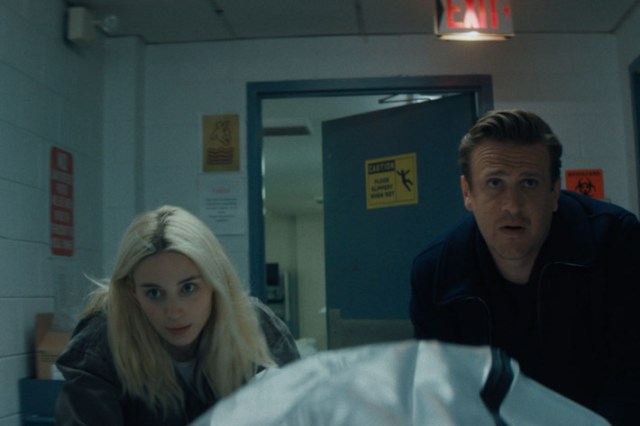
The gloom is relentless, from the End Times fog that hangs over the locations to the funereal subject matter — “proof” that the afterlife is real, with millions upon millions ready to check it out, because things here among the living seem hopeless.
As the late-not-great Vic Ferrari might have reviewed “The Discovery,” “Whoa, hard to get happy after THAT one.”
This Charlie McCarthy (“The One I Love”) drama is sci-fi at its cheapest, a Netflix film that relies on location, weather and quiet to set its tone and a very good cast to make it watchable.
Robert Redford plays a scientist who, when we see him interviewed (by Mary Steenburgen) for TV, is years past his great breakthrough. He’s proven that when we die, we don’t just rot. There’s a “new plane of existence” that we go to. He’s not sure on the specifics, but millions have taken him at his word and punched their own “start over” button. People are ending their lives in hope of some alternate existence.
He’s no sooner denied accepting responsibility for the massive spike in the suicide rate when one of the TV crew kills himself, right in front of him.
Is Thomas Harbor a prophet or a false prophet? He is heedless science who may have jumped the gun on his big announcement.
That’s the opinion of Will (Jason Segel), a neurologist who meets an assertive, brash blonde Isla (Rooney Mara) on a nearly empty ferryboat shortly after that TV interview.
Will grasps that “consciousness is another state of matter,” starting up a conversation with the only other passenger on the boat. But committing suicide to see what becomes of it? Madness.
“Maybe they went someplace better,” she offers.
“Maybe they went someplace worse.”
The movie, which never breaks tone to add excitement, joy, whimsy or sarcasm to the proceedings, misses its first opportunity here.
The world is emptying out, and two people on a big ferry headed to Aquidneck, Rhode Island have the whole thing to themselves. Sure, the impact of a mass die-off would be an economic collapse, a societal shut down and a less crowded planet. It’d mainly be lonely.
Isla is headed to this isle to kill herself, and Will intervenes. And when they show up at the ancient hotel turned summer camp turned hidden research station, we discover that Will is Dr. Harbor’s Doubting Thomas son.
There’s another son, Will’s brother (Jesse Plemons) helping run the place, with Cooper (Ron Canada) and a whole lot of people who have survived their suicide attempts. They’re not exactly zombies, but they’re compliant.
“We opened the door for these people,” Dad explains.
“You’ve started a cult!” the smarter son fires back.
The research goes on, as does the movie, which lurches from an energy-deprived spin on “The Rapture” to “Flatliners” without the sex appeal, bravado or excitement.

Through it all, “The Discovery” fails to gin up anything that breaks its tone or tempo. There’s a little mystery to it, but nothing that drives our curiosity, no resolution that lives down to the utter glumness of it all.
The performers make no effort to overcome this. Segel tamps down his comic edge, and Mara offers nothing other than the icy, groomed perfection of her look to make her appealing or even interesting.
Redford gives this guy a touch of the villain about him, a man who hastens the World’s End but, like the Mark Zuckerbergs of this world, shrugs off any share of the blame.
The world may be a mess and our culture in a kind of death-spiral at the moment. “The Discovery” suggests there is no escape, and with an afterlife as pointless as the one sort of depicted here, who might cling to hope?
After 100 minutes of this, I mean?
MPAA Rating: TV-MA, suicide, violence, adult themes, profanity
Cast: Robert Redford, Rooney Mara, Jason Segal, Jesse Plemons, Ron Canada, Mary Steenburgen
Credits:Directed by Charlie McDowell, script by Justin Lader, Charlie McDowell. A Netflix release.
Running time: 1:42
A borderline homeless teen, a fading racehorse on the seedy, dusty Southwestern side of the sport, Steve Buscemi and Chloe Sevigny.
Those are the ingredients of “Lean on Pete,” a star vehicle for young Charlie Plummer and another intimate, personal portrait from screenwriter/director Andrew Haigh (“45 Years,””Weekend”).
The studio that acquired “Moonlight” and “The Florida Project” and “Lady Bird” and “Ex Machina” and many of the coolest, most interesting indie features of the past few years, A24, is releasing “Lean on Pete” April 6.

 Movie Nation