Next Screening? “Missing Link,” from the animation studio that brought us “Coraline” and “Kubo and the Two Strings”

Posted in Reviews, previews, profiles and movie news | Comments Off on Next Screening? “Missing Link,” from the animation studio that brought us “Coraline” and “Kubo and the Two Strings”

BOX OFFICE: “Shazam!” over $50, “Pet Sematary” under $25

box2Whatever their ongoing shortcomings in script, direction, etc., the Warners/New Line-DC team up has hit its marketing swee-spot and is on a comic book adaptation roll.

“Shazam!”, a lesser title, a more kiddie-oriented caped superhero adaptation, had a good Thursday night and an exceptional Friday and is on track to do $55-55 million on its opening weekend.

Deadline.com is calling it at $51 and change, but it’s a kids’ title, so they are going to be a little bit low if past is prologue. Over $50 is in “Ant-Man” territory, a solid high-performing hit without lines-around-the-block “Avengers” mania attached to it.

Not bad for a movie that pushes a few, “Well sure, all right. Whatever” critical buttons.

“Pet Sematary” was riding rapturous reviews out of Fanboy heavy SXSW and we were ASSURED it was The Next Big Stephen King Thing. It sort of is, but a raft of more skeptical reviews and what Deadline is calling “poor word of mouth” has made it only a middling horror performer -a $24 million weekend. A remake, a strong brand (Stephen King), and still only $24?

The best of the three new wide releases opening this weekend has “Best” in its title. The true story Civil Rights drama “The Best of Enemies” is a terrific big screen civics lesson, but only $5 million worth of tickets are expected to be purchased by those inclined to sit through an entertaining two hours on Durham, N.C. in the 1970s.

Don’t stay away, folks! It’s good and it has nothing to do with DOOK.

Among titles already in theaters, the doomed teens romance “Five Feet Apart” is holding audience share. It’ll reach $50 million — a nice return — before it starts losing screens by the fistful next weekend. Do a decent job with a movie teenage girls will want to see and the world — or at least the North American domestic market — will beat a path to your door.

“Dumbo” is taking a nosedive — down 67% Friday to Friday, with a 60% drop on its second weekend (to $18) the optimistic projection at this writing.

“Us” is still falling off fast, another falling $14 million in the bank this weekend.

The anti–abortion sermon “Unplanned” is still in the top ten, losing only around 40% of its small opening weekend audience.


Posted in Reviews, previews, profiles and movie news | Comments Off on BOX OFFICE: “Shazam!” over $50, “Pet Sematary” under $25

Documentary Review: “Satan & Adam” celebrates the rise and fall of Harlem street blues duo

satan1

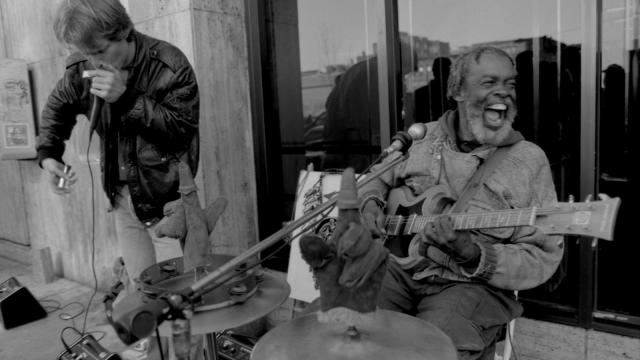
“Satan & Adam” chronicles a famous odd-couple blues duo who made their name on the streets of Harlem, earned fame by appearing on a U2 concert album and found a little success and a little heartache in the years that followed.

“Twenty years in the making,” as the hype goes, editor-turned director/editor V. Scott Balcerek caught guitar virtuoso “Mister Satan” and his harmonica-playing “apprentice” Adam Gussow in the ’80s, shortly after they teamed up.

And he didn’t lose touch over the decades, filming them in black and white back then, in color in later years and today. He’s assembled that footage, with interviews, eyewitness testimonials and the like into a charming and engaging history of a pop cultural phenomenon.

In 1986, Gussow was a Princeton grad and grad student at Columbia, fresh off a romantic breakup, “which put me in a space where I could be…struck by the blues.”

In Harlem, about a block north of the famed Apollo Theater, a “One Man Blues Band” ripping it up on a guitar, keeping time with tambourine and high hat via pedals, Mister Satan did the striking.

Passionate, accomplished, a beloved local landmark and just a little off — as anybody who bills himself “Mister Satan” is likely to be — the guitarist let the kid sit in with him for a couple of tunes, playing harmonica.

“I won’t embarrass you,” Gussow promised. He didn’t.

As word spread, “Satan’s gonna play with the WHITE boy,” a crowd gathered. And as the electric shock of that first collaboration settled in, an act was born — “Satan & Adam.”

The novelty of seeing them caught on with passersby, and then won the attention of the New York media. And as it did, Gussow learned of Mister Satan’s previous life.

He’d been on Ray Charles’ record label, had a minor hit (“Oh She was Pretty”).

As Sterling Magee, the singer-guitarist played with Etta James, Little Anthony and the Imperials and Marvin Gaye. He’d backed up James Brown at the Apollo just down the street from their regular spot. Now, he was playing on the street. That moniker he was now going by explained a lot.

He billed himself as Mister Satan, “the Prince of Darkness,” because “I can go into the darkness of my mind and come out with beautiful things.”

Yeah, he’s a bit of a free thinker. He is “from the same planet as George Clinton, Sun Ra” record producer Rachel Faro opines. And as they played together, were suddenly “discovered” by U2 as they and director Phil Joanou made “Rattle & Hum” (Joanou and The Edge are among those interviewed), landed first a regular club gig, then an agent, then a record deal and tours here and abroad, Gussow figured out what’s pretty obvious the moment we see Satan on the screen.

He’s a flake, a great musician who could accept this “success” only up to a point, function normally only within his own parameters based on hard life experience and a touch of mental illness.

“Satan & Adam” has Gussow do most of the narrating, and what we pick up from him is how this educated New Yorker, obsessed with the blue and Southern Black culture, made his peace with that.

The payoff? They became almost famous, opening for Buddy Guy in Central Park, touring Europe as the opening act for Bo Diddley,

Magee relates his Mississippi childhood, raised on Gospel, falling into “serving the Devil, playing the blues.”

“I don’t do it for money,” he is heard saying. “I don’t do it for fame.”

Gussow got a taste of both of those with Magee, marveling at how when they were busking on the street, they’d split the bills, but Mister Satan would “blow up” if he didn’t get all the change. He always gave the coins away to the local homeless.

And “fame” was never going to sit well with the guitar man.

The college grad never quite got over his awe. “I was his boy, not his equal. His apprentice. I knew this was the best gig I was ever going to have.”

All he had to do was keep Satan’s equally “off” wife from wrecking the act while they were on the road, keep Satan on task when they had steady gigs (The Magees moved to Virginia after a dispute with a New York landlord) and talk him into the recording studio.

Rev. Al Sharpton and journalist Peter Noel provide cultural context, what else was happening as these two became celebrated. The New York of the “Do the Right Thing” era, when the gap between the haves-and-have-nots was widening and racial tensions were spiking was a tricky place to launch a salt-and-pepper act.

“Suddenly, I was the problem,” Gussow remembers, “just one more white man come to rip off the black man’s music.”

satan2.jpeg

“Cultural appropriation” is addressed more than once, here. But Gussow’s picking up the harmonica and mastering it? Mostly skipped over.

Balcerek’s film makes for a brisk journey through their rise and eventual breakup, generously sampling the duo’s live performances and rendering an interesting if superficial portrait of each man, especially during their rise.

It can feel superficial and less revealing than we might want. Much is left out, but for that we can probably turn to the book got out of the experience. “Mister Satan’s Apprentice.”

2half-star6

MPAA Rating: unrated, profanity

Cast: Sterling Magee, Adam Gussow, The Edge, Harry Shearer, Rachel Faro

Credits:Directed by V. Scott Balcerek, script by V. Scott Balcerek, Ryan Suffern. A Cargo release.

Running time: 1:23

Posted in Reviews, previews, profiles and movie news | 2 Comments

Movie Review: At long last, Terry Gilliam’s “The Man Who Killed Don Quixote”

quixote2

The cinema’s great, mad visionary Terry Gilliam has longed to film a tale called “The Man Who Killed Don Quixote” since the 1980s.

Talk about maddening. The man has had stars and money lined up (sort of) more than once on this ill-fated project, most famously getting underway with the French actor Jean Rochefort and co-star Johnny Depp in Spain, only to have every thing that can go wrong stand in his way. That made for a fine documentary about a film fiasco, a real-time catastrophe caught on camera — “Lost in La Mancha.”

One doesn’t need to recall that “Don Quixote” bested an earlier film genius, Orson Welles, to feel the production, the very title, is cursed. As this has happened to other Gilliam projects over the years, I even asked him if he himself was the one with the curse hanging over his career in an interview.

He laughed. But he didn’t deny it.

Now “The Man Who Killed Don Quixote” is finished, and lawsuits over who owns the rights have further entangled it so that it will first reach movie screens via Fathom Events for it at a “one night only” showing at a theater near you April 10.

And if the finished film feels a tad labored, the editing a trifle tentative, it’s no wonder. Grapple with any idea for 30 years, drag any stone up a mountain as many times as Sisyphus, and it’s going to feel over-cooked.

But “Quixote” is lifted by its performances, startling in its originality and striking in its setting. And there’s just enough of Gilliam’s magical madness to make one relieved, at times delighted, that the “12 Monkeys” maestro finally got this one monkey off his back.

It’s an absurdist fever dream brought to life, a filmmaker’s nightmare of the line of work he’s chosen, the reality he’s bent and the collaborators he’s used and tossed aside.

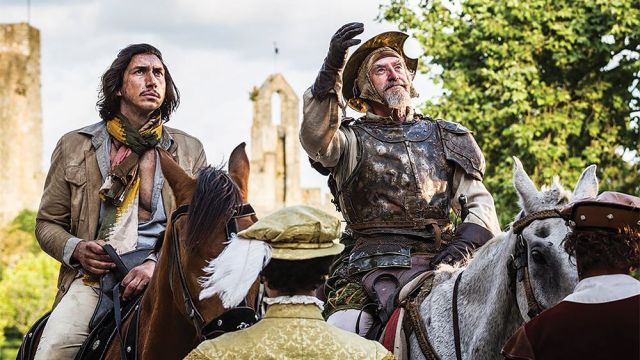
Adam Driver is Toby Grisoni, a vain, arrogant director of lavishly-produced TV commercials. He’s dismissive of subordinates, clients, pretty much everyone. And he’s in Spain (the Canary Islands, mostly) doing a commercial riff on Spain’s greatest literary hero, Don Quijote de la Mancha. It isn’t going well and he’s burning through the producers’ (Jason Watkins, Will Keen) cash and nerves.

“GENUFLECT everyone!”

He may bark “Me Organ Grinder, you monkey” into the phone, dumping calls with “Gotta go. Hands to hold.” But Toby is cracking under the pressure.

“He’s a genius! He’s a visionary!”

“Doesn’t help.”

A Gypsy (Óscar Jaenada) selling DVDs at one night’s lavish restaurant dinner distracts Toby from his worries, his boss (Stellan Skarsgård) and “the boss’s wife” (Olga Kurylenko). The video is of Toby’s student film, “The Man Who Killed Don Quixote.” That black and white movie’s daring style, non-professional cast and memories take over his life.

Before he knows it, he’s revisiting the village of Los Suenos (“The Dreams”), reveling in the sleepy hillside town he and his then-tiny production once took over, reminiscing over the cobbler (Jonathan Pryce, in full twinkle) he cast as the hero, recalling the waitress (Joana Ribeiro) he lured into show business as his “Dulcinea,” and dodging responsibility for what happened to her and to his career.

Fleeing town, he still takes a moment to follow a weathered, hand-lettered sign, “Quijote Vive!” (Quixote lives!) to a shed where an old woman is showing his student film, projected onto a sheet. Damned if Javier (Pryce), his “Don” way back when, doesn’t come to life.

And The Man of La Mancha, slow to get into character back then, is in so deep now that he insists that Toby is his Pancho Sanza, and that he rejoin his master for his quest, to live outside this “Age of Iron” and “restore the lost Age of Chivalry!”

The real world present flips back and forth with the Old World “adventures” as Toby is recognized by actors and hassled by cops at some times, dragging his “Don” into his modern reality with him, and at other times it’s the other way around.

Don Quixote, the “knight errant,” totally immerses the jaded young filmmaker in the simpler time and his delusions of glory, honor and bravery.

“There you are, Sancho. You crazy peasant, always playing games!”

There’s jousting, rousting, courtly wooing and singing. They contend with characters confused for Muslim terrorists today, and Muslims fleeing Spanish persecution “then.”

The famous delusions of the Don are shared with Sancho with Toby, each man seeing a different reality; windmills as raging giants, wine skins come to life, with grinning human mouths, sheep confused for “Muslims, their heads bowed in prayer to Allah!”

Driver is more interesting, nasty and befuddled than he often has been on the big screen even if he is perhaps not the best of all the leads Gilliam attempted to film this with (Ewan McGregor, Depp, etc.). But Pryce’s plummy, over-enunciated hamminess perfectly captures the “knight errant, and his loyal “squire-rel!”

I love the warmth of his malapropism-littered lines, the silly way he pronounces silent letters in even familiar words (“Give me my s-WORD!”), turning “chivalry” into “CHEE-valry,” and waxing poetic at the sight of any woman, no matter how homely.

“I shall forever preserve your kindness in the treasure of my memory.”

Toby may have a hard time shaking the sense that he’s “in” a movie, and still directing it.

“Aaaaaannnnd…cut right there.”

But Pryce’s Javier/Don Quijote is florid perfection, making one grateful that this poetic hero didn’t suffer injury or death before filming could finish, like John Hurt and Rochefort  — who might have played him.

“Tonight, we will sing songs to your bravery!”


But after so many years of struggle getting it made, it’s as if Gilliam couldn’t bear to finish it, or let “The Man Who Killed Don Quixote” end.

I counted five edits in a few seconds of film that capture Toby/Driver parking and dismounting a motorcycle.

And the film reaches a bittersweet climax at the 90-95 minute mark, and feels for all the world as the credits are coming. Nope. Another 40 minutes bear down on us, with Russian mobsters, a real damsel in distress, “real” giants, the bonfires of “Holy Week” purging the world’s materialistic excesses.

Gilliam and his longtime collaborator (Tony Grisoni, who also wrote “How I Live Now”) may not have “lost the thread” in their heads. But they lost me for some of that, anyway.

Still, “The Man Who Killed Don Quixote” is an absolute must-see for Gilliam fans and “film that never was” buffs. It’s a picture that crossed into legend long before it was actually, fully and completely in the can.

And it’s something to see, man.

2half-star6

MPAA Rating: unrated

Cast: Jonathan Pryce, Adam Driver, Olga Kurylenko, Stellan Skarsgård, Joana Ribeiro, Hovik Keuchkerian, Jordi Molla

Credits: Directed by Terry Gilliam, script by Terry Gilliam and Tony Grisoni. A Screen Media release.

Running time: 2:08

Posted in Reviews, previews, profiles and movie news | Comments Off on Movie Review: At long last, Terry Gilliam’s “The Man Who Killed Don Quixote”

Preview, “The Society” lets Netflix put the “Wrong” kids in charge

A little “Purge,” a hunk of “Lord of the Flies,” that’s “The Society.”

This series streams May 10.


Posted in Reviews, previews, profiles and movie news | Comments Off on Preview, “The Society” lets Netflix put the “Wrong” kids in charge

Movie Review: Race is the hangup that keeps them “The Best of Enemies”

best4.jpeg

You’re going to learn a new word today, because I learned that new word last night at a screening of “The Best of Enemies.”

It is “charrette,” a French word applied to crunch-time, deadline-conscious group problem solving. And that’s what was tried in 1971 in Durham, N.C., an exercise in tough, sometimes unpleasant grass roots democracy that brought two polar opposites to the negotiating table in search of ways to bridge a vast cultural divide — back then, it was the fight over school integration.

You think this engaging, inspiring and important movie about a little known piece of Civil Rights history has something to say to Divided America in 2019? Me, too.

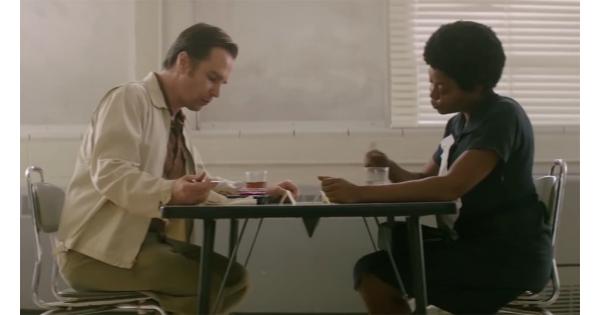
They called her “Roughhouse Annie.” Ann Atwater was a divorced mother of two who didn’t just gripe about the plight of black folks in general and single mothers like herself in segregated, bullhead Durham. She got involved, and nagged the dickens out of others to join her haranguing the racist city council. The lady was not one to mince words.

“Get your ass down to City Hall tonight! I’d BETTER see your face lookin’ Black and ANGRY!”

Casting the formidable Taraji P. Henson as Atwater takes no stretch of the imagination.

In a city where the Klan and the White Citizen’s Council were used by politicians to protect slumlords, unequal schools and white supremacy, Atwater was their tireless foe, a fury given to shouting down dismissive council members, and spinning the most racist member around in his chair when he made it a point of not looking at her when she spoke.

“We’re humans,” she bellows, exhausted from stating the obvious. “Humans shouldn’t have to LIVE like this.”

C.P. Ellis wasn’t just a good ol’boy who ran a local Pure filling station and garage. He was the Exalted Cyclops, an activist leader in charge of the local Ku Klux Klan chapter, recruiting Young Klan and leading them in “the good fight,” as and his co-believers saw it, fighting “the communists, N—-rs and Jews” as “part of something bigger than yourself.”

Sam Rockwell has done well with drawling racists in the past (an Oscar for “Three Billboards Outside Ebbing, Missouri”) and he’s spot-on as Ellis, a swaggering diehard/blowhard who keeps a shotgun in his Ford trunk and a big folding knife on the belt of the pants he hitches up high, for extra security.

Speaking from childhood experience, one couldn’t drive through Jesse Helms’ North Carolina in that era without passing scores of tobacco barns with “KKKK” (“Knights of the Ku Klux Klan”) painted on the side facing the road, advertising for a terrorist group that was a big part of Southern life and Southern politics.

A local woman is dating a black man? Grab your guns, Floyd (Wes Bentley), let’s go shoot up her house — with her IN IT — and train a couple of Klan Youth we bring along for the ride.

But the tide of history was turning, even if the large and active Durham Klan couldn’t see it. That’s when an electrical fire at the battered local “black school” brought Durham’s racial divide to the fore and the mendacious, mediocre status quo protected by the council president (Bruce McGill, also on-the-nose) into the spotlight.

The choices are to integrate the already under-funded, underwhelming schools, or let black kids fall further behind. The city was never going to make the right choice, and the judge the NAACP files suit with is desperate for a buck-passing solution.

That’s how they bring in the skeptical Shaw University professor Bill Riddick, given a patient-when-he-should-be-exasperated turn by Babou Ceesay of TV’s “Into the Badlands.” He will do this “charrette” thing he’s been demonstrating in cities, mostly in the North. He will sign up two co-chairs, leaders of their respective communities.

He will listen to the spit-spattering outrage, and find one “good” thing to focus on, as positive reinforcement in turning the most dogmatic. He will get the Civil Rights agitator and the KKK kingpin on board to legitimize this deadline-driven form of problem solving, bridging a racial divide that goes back centuries in just 10 days.

Mr. won’t-serve-black-customers, refuses-to-shake-hands “Not gonna have’em kids’n OUR school” and Miss “I am NOT gon’work with that CRACKER!” get the same sales pitch.

“If you truly represent your people, represent them!”

Producer (“Seabiscuit,” “Free State of Jones”) turned writer-director Robin Bissell packs in a lot of detail in this narrative; chilling scenes of Klan intimidation, Klan target practice and backdoor communications between the militant racists and politicians depressing examples of the state of Black life in the South in the 1970s — unsafe schools, lack of opportunity hemming people in on all sides.

The overarching message, voiced by Riddick, echoed by others and hammered home in the film is “Once you listen to the other side,” make an effort to get to know your “enemy,” you’re changed. As are they.

That’s what makes “The Best of Enemies” timely. But the history, of the last open era when white supremacy was a viable political stance, of the informal “rules” that kept “them in their place,” is just as valuable.

Bissell has made a film where the casting isn’t the only thing that’s “on-the-nose.” The message, where the film’s sympathies lie and its emphasis on the character with the bigger journey to make could earn it some “Green Book” styled blowback.

But if you don’t think we need to hear this sermon, you’re not paying attention. If you don’t think “reasonable” voices (Anne Heche, sporting a comically anachronistic haircut, is Mrs. Ellis, who supports her husband’s Klan activities but has the common sense to see they’ll go broke if he doesn’t “start sellin’ to the OTHER half of Durham”) are too easily drowned-out in divided, trying times, you’ve abandoned hope.

Bissell makes hope the currency of “The Best of Enemies.” It’s a clarion call to action, to getting involved, to “represent,” to listen and to talk. And for a lecture on the utility of a charrette, a civics lesson in grassroots everybody-engaged democracy, it’s damned entertaining.

3half-star

MPAA Rating: PG-13 for thematic material, racial epithets, some violence and a suggestive reference

Cast: Taraji P. Hensen, Sam Rockwell, Babou Ceesay, Wes Bentley, Bruce McGill and Anne Heche

Credits: Written and directed by Robin Bissell, based on an Osha Gray Davidson book. An STX release.

Running time: 2:15

Posted in Reviews, previews, profiles and movie news | 1 Comment

Next Screening? “The Best of Enemies”

Taraji P. Hansen and Sam Rockwell. A true story from the golden age of de-segregation, finding common cause against an unfeeling government that wants to starve the schools and crush the future.

You know, like today. Only less racist.

It opens Friday, and I can’t remember what the studio, STX, has suggested as an embargo (it opens Thursday night, so any “embargo” at all is a laughable request).


Posted in Reviews, previews, profiles and movie news | Comments Off on Next Screening? “The Best of Enemies”

Movie Review: Keira outshines the dim melodrama of “The Aftermath”


Overheated, overwrought, over-furnished and over-dressed, “The Aftermath” is a WWII period piece that squanders another perfectly good Keira Knightley performance in a good looking movie that doesn’t measure up to the costume changes required of its leading lady.

Yes, nobody wears period clothes as well as the runway-ready Keira K. And romances, ill-advised and/or ill-fated, are kind of her thing. The camera adores her in closeup. But in this film, even she can’t act her way past the implausible leaps in plot, the dissonant lapses in character motivation.

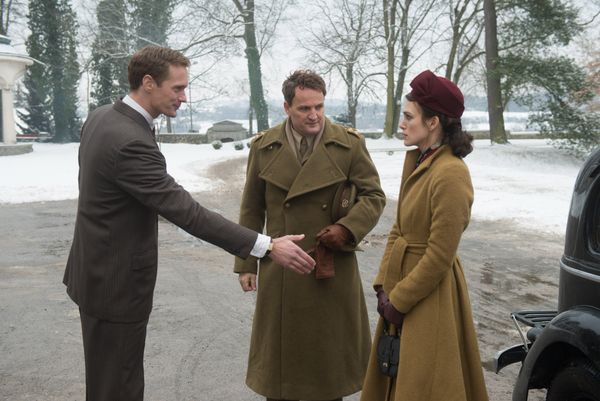
She stars as Rachael Morgan, a woman we meet on her way to a winter rendezvous with her Army captain husband (Jason Clarke).

It’s mere months after Germany’s surrender, and Capt. Morgan (Hah!) is stationed in Hamburg, one of the earliest and most telling tests of the Allied strategy of creating air raid firestorms, flattening cities, killing tens of thousands and creating hundreds of thousands of refugees.

Some historians point to Hamburg’s destruction (“Operation Gomorrah”) as very nearly breaking Germany’s back, with the strain it placed on a failing state. But never mind that.

In the movie version of “The Aftermath,” luxury train travel has already returned to Europe, the train station is none the worse for wear and Rachael’s husband, Lewis, has requisitioned a beautifully appointed mansion on the outskirts of the city.

It belongs to Stefan Lubert (Alexander Skarsgård), an architect who married well, somehow managed to avoid serving in the military or losing even his expensive furniture to the firestorm, looters or Allied spoils-of-war collectors. He has a teen daughter (Flora Thiemann) who is still fond of her Hitler Youth uniform and is tempted by the wrong sorts of German boys who survived with her — the ones with “88” branded on their arms.

What is the eighth letter in the alphabet, WWII buffs?

Captain Morgan is trying to keep these terrorists in check. He’s out to win over “hearts and minds,” by showing courtesy and kindness to the starving, sullen, vanquished foe.

That includes Herr Lubert.

Rachael doesn’t share his magnanimity. She is terse, rude and chilly to Lubert, because she has resisted her husband’s entreaties to let the Luberts remain. She practically hisses at him, refuses to shake his hand and rebuffs him at every turn.

And she wonders why the household staff makes snotty cracks about her in German right to her face.

The one Army wife (Kate Phillips) she can confide in puts her mind at ease. Susan is married to a brutish, mistrusting intelligence officer (Martin Compston), who shows no mercy to the Huns and has taught Susan not to trust them a bit.

Beware the “hate just beneath the surface” she warns Rachael.

Well, that’s catnip to the lonely wife of a properly repressed British officer, years of war under his belt with untold horrors that have passed before his eyes.

Rachael’s bitterness has an explanation. Stefan’s does as well, but he’s not allowed to show it, until that big come-to-terms-with-each-other hissing match between the two.

keira2.jpeg

You can’t say this isn’t well-cast, with Clarke perfectly-suited for this sort of stiff upper lip but broken and hiding it Brit of the “Keep Calm and Carry On” generation.

Skarsgård gives us less to grab hold of, a quiet, humbled man who says that he’s a metal presser, now that his chosen field has been put in limbo until Germany recovers. But all we see him do is chop wood, skulk around the huge, lavishly-furnished estate house and — at the drop of a hat — tumble for the English woman who plainly despises him.

Knightley makes the best of a character whose mood shifts in spurts and starts, from hate to lust to love.

James Kent made “Testament of Youth” earlier in his career, another wartime romance that doesn’t quick stick to your ribs. But he shows us the violence of a handshake-refused and takes a shot at making the occupiers look exactly like American and British films have always made the Occupying Germans come off–boorish, oppressive, capable of callous violence.

There’s even a riff on that “Casablanca/Inglorious Basterds” moment of the arrogant winners singing and drunkenly playing the last Steinway in Hamburg — not Nazis, this time, but Brits belting out Gilbert & Sullivan.

A nice detail — that big blank space with discolored paint over every mantle. It’s where the Fuhrer’s portrait used to hang in the homes of Party members.

But one should never punctuate a hot and heavy animal attraction scene with a comically embarrassing moment of coitus interruptus. There’s no “right” way for these two to play this, as there’s no humor in the movie and no real room for it in all the melodrama.

The screenplay finds no mysteries here, no questions about Lubert’s “cowardice” or his means of avoiding combat, no doubts about his loyalties and humanity, or lack thereof.

The shifts in attitude Knightley and Skarsgård have to act out are abrupt and jarring enough to feel like perfunctory requirements of a melodramatic script.

I mean, they’re both beautiful and all, and she’s got her full wardrobe with her and his wine cellar survived, along with the showpiece house and designer furniture. But come on.

1half-star

MPAA Rating: R for sexual content/nudity, and violence including some disturbing images

Cast: Keira Knightley, Alexander Skarsgård, Jason Clarke

Credits:Directed by James Kent, script by Joe Shrapnel, Anna Waterhouse and Rhidian Brook, based on a novel by Rhidian Brook. A Fox Searchlight release.

Running time: 1:48

Posted in Reviews, previews, profiles and movie news | Comments Off on Movie Review: Keira outshines the dim melodrama of “The Aftermath”

Documentary Review: “Screwball” takes a comic jab at Baseball and Performance Enhancing Drugs

screw1.jpeg

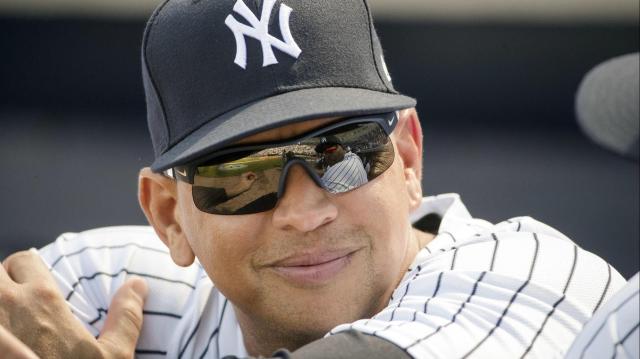
Our short-attention-span culture can be forgiven for forgetting — with any new round of celeb photos, red carpet shots with wife Jennifer Lopez, what a shady scumbag ex-ballplayer Alex Rodriguez was and probably remains.

So lest we forget, here’s “Screwball,” a pretty good recollection, dissection and postmortem of A-Rod and baseball’s epic Biogenesis scandal of less than ten years ago.

Birector Billy Corben, most famous for the “Cocaine Cowboys” movies, and the pot-smuggling documentary “Square Grouper,” has also done films for ESPN on the University of Miami and on pro-athletes who went broke after playing, and another doc called “The Tanning of America.”

So he’s the perfect guy to tie together the corrupt, anything-goes culture of South Florida, the unregulated “anti-aging” clinics that sprang up there and thrived under then-governor and well-known medical fraud tycoon Rick Scott and the (mostly Latin) baseball players who cheated to get ahead.

Corben’s film shows how they found their hook-up with Tony Bosch, a Cuban American compadre who speaks their language and got his entre into their world by making Manny Ramirez into the feared late-career home-run hitter nicknamed “Man-Ram” by some.

Corben interviewed investigators, Bosch and most of the other principles involved in this 2013 scandal — not A-Rod, and not Major League Baseball — and concocted a  comic riff on this scandal that devolved into a comedy of errors, in which virtually none of the guilty were truly punished.

He uses Tim Elfrink, the reporter for Miami New Times who broke this story via a disgruntled business associate of Bosch, as tour guide through a stink that implicated Rodriguez in all manner of wrongdoing, right down to hiring “protesters” after he was sanctioned by baseball — people paid to show up at ball parks holding up pro-A-Rod/anti-Bosch signs to sway public opinion.

It didn’t work, although truthfully, most of us have forgotten and moved on.

It’s a solidly–reported documentary, with plenty of context and lots of Tony Bosch at the heart of it, a fast-talking hustler who parlayed a medical degree from Belize into an anti-aging and then athlete-juicing practice that gained him riches, reflected glory and finally infamy.

Most of his credentials, the film points out, are “self-proclaimed.” And one of the funnier bits in it is Bosch griping about the difference between a “fake doctor” and “an unlicensed physician” — as if that matters.

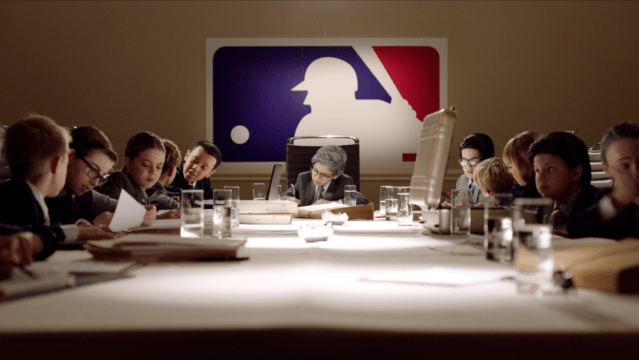
Corben IDs the cast of characters with baseball card shaped freeze frames, and on occasion (not consistently at all) he stages reenactments of events the various figures took part in. These reenactments star children, little boys mouthing the words of testimony from those implicated and those allegedly doing the investigating.

For instance, disgruntled marketing man and fitness, tanning and “anti-aging” fan Porter Fischer, who took the books that gave away the high school, college and professional athletes “Dr. T” (Bosch) “helped,” is portrayed by a kid wearing a fake-muscle suit.

Cute. Unnecessary, but cute.

But as the story unfolds, you kind of get why Corben saw the whole thing as childish and comical.

The State of Florida, “where fraud is the state industry” Elfrink says, hired a onetime Baltimore police officer to be their South Florida investigator of medical fraud. Jerome Hill had been fired in Baltimore for causes that should have ensured he’d never work in law enforcement again.

Florida is where guys like this get their second chance. Hill notes that Fischer, mixed up with some tough guys who ran tanning salons and were involved in the whole affair to an extent that they knew who they could blackmail and how they could cover it up, “is lucky he’s not in a canal somewhere.”

Major League Baseball, following up on the widening scandal Miami New Times had broken (a black eye for ALL of TV and print sports journalism, by the way), sent “investigators” to Florida to pay for information, offer bribes and sleep with employees of people they were supposed to be investigating.

“Every sleazy thing” MLB did to get to the facts, “A-Rod and his crew were doing the same thing” to ensure those facts never saw the light of day.

screw2

It was a mess, and the ineptitude of the state and the sport to police these practices and those wrongdoers can only be laughed at, now.

Which is why Corben gives the subject its comical treatment. It’s just that he loses his nerve, only recreating a few anecdotes instead of the bulk of the story with kid-reenactors.

I can’t say the scenes where he did that worked for me — kids looking like a young A-Rod, Bosch (complete with wig and “Dr. Tony Bosch” lab coat), Fischer and others, mouthing the words of whoever is telling this part of the story. Probably why Corben didn’t stick with this gimmick, start to finish.

He’s a terrific documentary storyteller, as his drug trade documentaries made clear. He just got too cute for his own good and got in his own way a bit, here.

2half-star6

MPAA Rating: unrated

Cast:Bryan Blanco, Frankie Diaz, Jonathan Blanco

Credits:Directed by Billy Corben. A Greenwich Entertainment release.

Running time: 1:43

Posted in Reviews, previews, profiles and movie news | Comments Off on Documentary Review: “Screwball” takes a comic jab at Baseball and Performance Enhancing Drugs

Preview: Joaquin Phoenix plays the most disturbed “Joker” yet

“Is it just me, or is it getting crazier out there?”

“Joker” hits theaters Oct. 4.

Posted in Reviews, previews, profiles and movie news | Comments Off on Preview: Joaquin Phoenix plays the most disturbed “Joker” yet