Documentary Review — “Nichelle Nichols: Woman in Motion”

nic2

Fans of “classic” “Star Trek” probably haven’t forgotten it. But some have, and generations that got hooked on “The Next Generation” and “Voyager” and “Deep Space Nine” etc. quite possibly never knew this.

But Nichelle Nichols, the actress who played the communications officer, a role basically reduced to interstellar receptionist, was the one member of that cast who truly changed history.

“Nichelle Nichols: Woman in Motion” is a warm, sentimental and delightful new documentary that aims to refresh our memories.

The “Woman in Motion” of the title is the give-away. It wasn’t just that this fledgling actress was one of the few African American women to be on a regular TV series in the ’60s, and thus a role model. She had a company, post-“Trek,” that was her instrument for altering the way we look at astronauts.

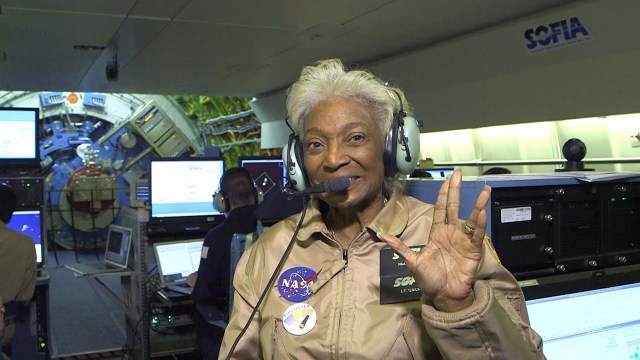
Todd Thompson’s documentary reminds us that NASA approached the once-and-forever “Lt. Uhura” of the Star Ship Enterprise after Nichols had noted “I don’t see my people here” after meeting real astronauts.

NASA hired Nichols, through her “Women in Motion” company, to encourage, cheerlead and in-person recruit women and people of color to apply to the agency, famed for its white guys in white suits, or at least white shirts and ties, since its birth.

And overnight — in mere months — the culture changed.

“Woman in Motion” is “Hidden Figures” in documentary form, covering just as much of Nichols’ personal life as she deems necessary (she is a producer on the film). So, no gossip, just a recounting of her upper middle class Chicago childhood of ballet lessons and a call to perform.

She sang in Duke Ellington’s band, transitioned to acclaim on Broadway and got her first “break” on TV in an episode about racial prejudice in a Gene Roddenberry TV series that preceded “Trek.”

Once she got on the show, she remembers the disappointment at the scope of the role. She’s often told the story of meeting Martin Luther King, Jr., who convinced her not to quit.

She was making an impact more than she ever realized.

Backed by a thrilling score by Colin O’Malley, Thompson & Co. use clips from the series (a biting and funny “Hailing frequencies open” mosaic and montage), snippets of her autobiography as a book-on-tape, archival interviews and a lengthy for-the-film conversation, graphics and testimonials to make their case.

Thompson’s film underlines and underscores Nichols’ undeniable contribution to broadening NASA’s horizons and drumming up interest in STEM education among minority students all over America with her work. Years of involvement — visits, public service announcements, talk show appearances on the agency’s behalf — cemented her legacy.

The “testimonials” delightfully back that up. Current and former astronauts, including former NASA chief Charles Bolden, sing her praises. Vivica A. Fox, who hits sci-fi conventions with the lady from time to time (“Independence Day” opened that door for Fox), recalled meeting her as being like meeting “a queen.”

Astronomer Neil deGrasse Tyson, co-stars George Takei and Walter Koenig, “Hidden Figures” producer Pharell Williams, Rev. Al Sharpton, Congresswoman Maxine Waters and former Senator Bill Nelson all marvel how just one actress, from an admittedly beloved and iconic TV series, could have inspired so many and triggered a change in one of America’s highest profile government agencies.

Roddenberry and others (screenwriters for the series) may have been drawn to her gorgeous looks, exotic eyes and dancer’s posture and poise (“and legs”). But they can’t have known how far Nichols would take that big break and how righteously she’d spend her pop cultural capital.

“Woman in Motion” tracks Nichols from that first year of involvement with NASA, through the Challenger disaster and beyond, and lets its star add one last teachable moment to her decades-long mission, one that helps the film transcend its natural “Star Trek” fan appeal.

What good is popularity if you don’t try to do some good with it?

3stars2

MPAA Rating: unrated

Cast: Nichelle Nichols, George Takei, Neil DeGrasse Tyson, Michael Dorn, Charles Bolden, Maxine Waters, Sen. Bill Nelson

Credits:Directed by Todd Thompson, script by Benjamin Crump, Joe Millin and John McCall. A Stars North release.

Running time:
Posted in Reviews, previews, profiles and movie news | Comments Off on Documentary Review — “Nichelle Nichols: Woman in Motion”

Movie Review: Faith-based “Breakthrough” celebrates “the power of prayer”

brreak2

The faith-based cinema of today seems to be breaking into two paths in search of that audience.

There’s the angry victimhood/revenge Christianity, films that follow in the wake of the “Left Behind” movies — dogmatic and political — “God’s Not Dead,” “The Case for Christ,” “Unplanned,” etc.

And there are the movies that are less about dogma and more about what the songwriter called “the quiet faith of man (and woman) — “Soul Surfer,” “Miracles from Heaven” and the new medical miracle drama “Breakthrough” stick to that path.

It offers up a dysfunctional (whether they admit it or not) family, a schism within a Protestant church between traditionalists and a hip, Christian “worship band” and skinny-jeans-and-sneakers wearing preacher.

There’s more respect than love between married former missionaries Joyce (Metz) and Brian (Josh Lucas). Their adopted son acts-out and swears.

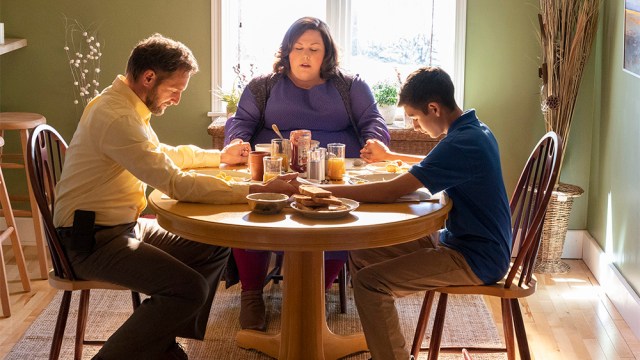
And all these conflicts are brought to a head when that kid, the slacking-on-his-schoolwork, pushing adoptive mom (Chrissy Metz of “This is Us”) away, ball-hogging basketball hot dog John (Marcel Ruiz) falls through Lake St. Louis on a winter’s day in suburban Missouri.

Three boys went under on that Martin Luther King Day. Only two came up.

The paramedic (Mike Colter) who fished him out was ready to give up looking.

The heroic emergency room team couldn’t get his cold corpse to spark a pulse.

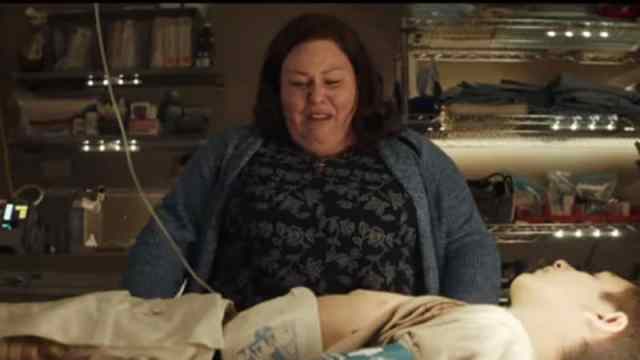
But Mom, praying, weeping and shrieking at the Almighty to “Breathe life into John!” does what no drug or cardiac paddles can.

And when the specialist (Dennis Haysbert) he’s airlifted to bluntly expresses doubts that the kid, who hadn’t breathed for 20 minutes or more, will “survive the night,” Joyce won’t hear it. She fights for her kid the way you’d hope any parent would.

“I need you to go and be the best (doctor) for John. And just let God do the rest!”

She’s won’t tolerate “negativity” in John’s room by the other doctors and staff, or in the waiting room where classmates, family friends and church members gather.

And the one guy who gets that is that California punk preacher with the pricey haircut and hipster shoes that she’s been feuding with. Every word in that description fits Topher Grace (“That ’70s Show”) except for preacher.

But damned if he doesn’t pull it off. This is pastor as grief-counselor, rallying support for a family that’s kept him at arm’s length, accepting Joyce’s power-of-prayer game plan at face value and providing what faith is, at its most fundamental, supposed to provide — comfort.

break1.jpeg

Actress turned director (TV’s “House of Cards,” “The Americans”) Roxann Dawson balances the hospital room action with the impact finding the lost boy had on the faithless paramedic. There are beautiful moments that capture the quiet terror of death by drowning.

There’s probably too much effort to play up the “miracle” invoked here, even though the film’s short (72 hour) timeline tends to undercut anything supernatural.

The viewer can take the “truth” of this story with as many grains of salt as seems appropriate — a Christian family sending their son to a Christian school, a child treated at a Catholic hospital, the first “miracle” witnessed only by the mom, the second by Mom and her preacher.

It doesn’t mute the movie’s impact to shrug all that off to medical flukes and what we don’t still don’t know about the improved survival odds of drowning in ice cold water.

The marriage here gets only as much scrutiny as the movie can stand. Joyce is diabetic and Metz only plays her in a couple of notes — judgmental, bossy, a tad shrill.

Josh Lucas is too good an actor to play husband Brian as disconnected as he does (a tad effeminate, in a couple of scenes, which we never see from Lucas) by accident. There’s a casting mismatch on top of that that’s also distracting.

And “Breakthrough” runs on, past its climax — and begins with a “Please love our movie” message from the filmmakers (Steph Curry is a producer) and cast.

But all those quibbles don’t ruin the movie or spoil this story’s power to move.

Metz makes us feel a parent’s worst nightmare, and you’d have to be made of stone to not be moved by her moments of truth, leaning hard on her faith, reassured when it gets her through.

That makes “Breakthrough” a touchingly uplifting movie in a cinema — especially a faith-based cinema — that could really use one.

2half-star6

MPAA Rating: PG for thematic content including peril

Cast: Chrissy Metz, Josh Lucas, Topher Grace, Marcel Ruiz and Dennis Haysbert

Credits:Directed by Roxann Dawson, script by Grant Nieporte. A 20th Century Fox release.

Running time: 1:58

Posted in Reviews, previews, profiles and movie news | Comments Off on Movie Review: Faith-based “Breakthrough” celebrates “the power of prayer”

Preview: Diane Keaton, Pam Grier, Rhea Perlman and Jacki Weaver are going out in style, shaking their Pom “Poms”

I missed this trailer when it dropped a while back. But you can catch up on such ads for an older audience, or a faith-based crowd, when you go to a showing of the faith-based “Breakthrough.”

A lot of wonderful players are getting a chance to make movies tailored to their audience as they age, part of the business model of “unserved niche” studio STX. Could be cute.

Love Keaton, Grier and Weaver, and Bruce McGill — another favorite I’ve tracked down for interviews over the years, star in this May 10 release.

Posted in Reviews, previews, profiles and movie news | Comments Off on Preview: Diane Keaton, Pam Grier, Rhea Perlman and Jacki Weaver are going out in style, shaking their Pom “Poms”

Preview: “Good” girls play bad in Olivia Wilde’s “Booksmart”

They’ve never been anybody’s idea of “trouble.” Until now. Graduation night, these “Booksmart” young ladies are going “Girls Gone Wild” — Olivia Wilde.

The screen beauty takes a turn behind the camera for this “Superbad” meets “Ghost World.”

“Booksmart” looks pretty damned funny and opens in limited release May 24.


Posted in Reviews, previews, profiles and movie news | Comments Off on Preview: “Good” girls play bad in Olivia Wilde’s “Booksmart”

Movie Review: Scare the kids with “The Curse of La Llorona”

llorona2Man, I don’t know what first-time feature director Michael Chaves did to scare the hell out of the kids he cast in “The Curse of La Llorona.” Judging from the utterly convincing looks of unfiltered terror and the blood-curdling screams he elicited, I don’t think I want to know.
Whatever else they manage in their performances –and they’re kids, so “uneven” is the best word to sum up their work in general — the children in this ghost story sell it. If you don’t have hairs rising on the back of your neck at half a dozen points in this Hollywood bastardization of a Mexican folk legend, you must be bald. Or made of stone.

Yeah, it works. And yes, the script strictly adheres to the horror movie “Battle a Demon”  Stations of the Cross. But it’s refreshing to see a movie, even one with few real surprises, whose filmmakers take such exacting care on the details that it still ticks over like a finely-tuned engine.

“The Weeping Woman” is presented here as a Mexican boogey-woman, the unseen menace you threaten your kids with.

“Finish your chores/homework/vegetables or La Llorona will get you!”

A prologue establishes who she was,  a 17th century rural beauty who married well, and when she realized her husband was cheating on her, drowned their little boys in a river.

She is seen as a wraith in a veil, “cursed to roam the Earth looking for children to take their place.”

Linda Cardellini (“Green Book”) is a widowed L.A. social worker whose husband was a cop killed in the line of duty. She’s barely keeping things together with her two-story house (with pool) and two young children (Jaynee-Lynne Kinchen, Roman Christou) when a troubling case forces her to focus and then takes over her life.

A recovering alcoholic (Patricia Velasquez) loses custody of her kids after the social worker and a cop drop in to check on them. The woman is a wreck, her house alight with candles, decorated with crucifixes and the like, her little boys locked in a closet. They have burns on their arms.

“Your mother did that to you?”

“No, it wasn’t her.” Something the boys won’t speak of did this. “We’re not safe anywhere,” one declares, and sure enough, they’re lured out of foster care and wind up dead in the river.

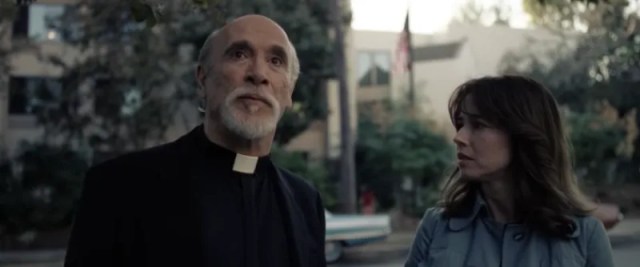
Making matters worse, Anna’s overly curious son (Christou) hears the crying and sees the apparition responsible. La Llorona (Marisol Ramirez, in some marvelous creepy makeup) has her next pair of kids picked out.Those “stations of the (horror movie script) cross” I mentioned — plot points that most movies of this genre embrace — include children in jeopardy, a single parent (usually) at a loss or in denial over what to do, a priest “explainer” (played in New Line’s “Annabelle” universe, and here by Tony Amendola), a third party “exorcist” or whatever you want to call them (often played by Lin Shaye, but Raymond Cruz has that gig here), elaborate rituals and holy relics used in the battle, and a creaky old house/apartment/church etc. as a setting.

llorona1

Director Chaves overcomes that predictability with some whizbang tracking shots, chasing the children through the squeaky-floored house, menacing others in the dim yellow (1970s setting) flickering lights of a foster home/orphanage, yanking characters across the room or down stairs.

Drowning is a particularly awful way to die, so you know there’s going to be a harrowing scene or three of children and adults struggling underwater. Extreme close-ups of dripping faucets and acidic teardrops are thrown in for good measure.

What’s most refreshing here is the effort made to Americanize/Hollywoodize a classic Mexican ghost story, with an Hispanic villainess or two, and an equal number of Hispanic heroes our widow must turn to.

‘The terror is universal, the character’s as “American” as anybody else. No matter what some people say.

The third act has some nice jolts, a few laughs and entirely too much “gear” — talismans, Holy water, etc. — to sustain the creepy tone the film builds up to that point. So they go for laughs, and land a few.

But the bottom line for every horror tale is the same. Does it chill, get those hairs on the back of your neck to stand up? Is it satisfying, in either a righteous or abandon-all-hope climax?

Don’t cry for “La Llorona.” She gets a wet, dirty job done.

2half-star6

MPAA Rating:R for violence and terror

Cast: Linda Cardellini, Raymond Cruz, Tony Amendola, Patricia Velasquez, Jaynee-Lynne Kinchen, Roman Christou

Credits:Directed by Michael Chaves, script by Mikki Daughtry, Tobias Iaconis. A Warner Brothers/New Line release.

Running time: 1:33

Posted in Reviews, previews, profiles and movie news | Comments Off on Movie Review: Scare the kids with “The Curse of La Llorona”

Movie Review: “Body at Brighton Rock”

body1.jpeg

There were two great take-aways from the horror classic “The Blair Witch Project.”

One was the faux veracity of “found footage,” which ratcheted up the fear that “This really happened, and their footage was all that’s left!” Yeah, we knew better, but the movie, as executed, put that in doubt, at least while we were watching it.

The other was the story’s inherent comedy. Film school nerds who know all about lenses and framing a shot, but not diddly squat about how to get by in the woods. That seemed to speak to and of a generation that was technically savvy, but a little lost in the “real” world.

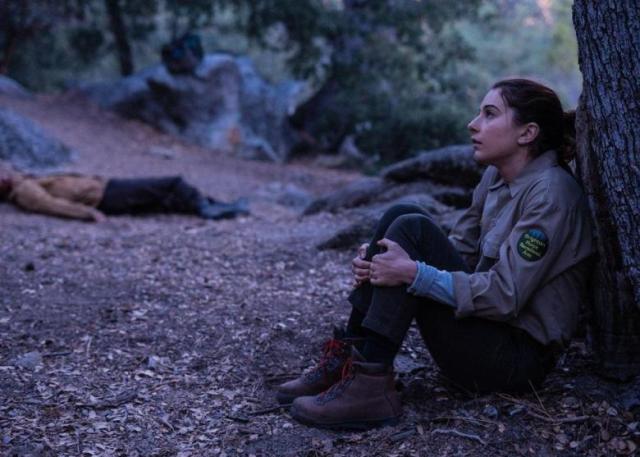
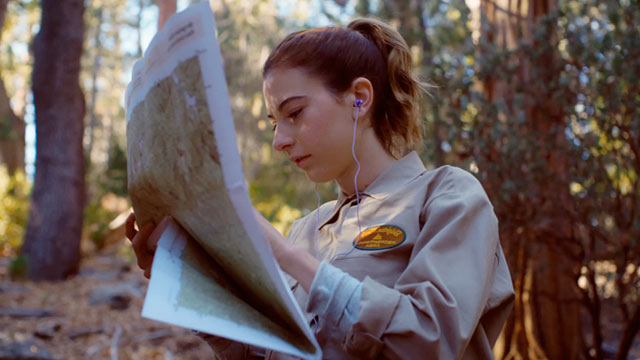
That’s where “Body at Brighton Rock” lives, a young park ranger, perpetually tardy and utterly lost without her phone, stuck in the bear/wolf/coyote and who-knows-what woods of a state park somewhere in the Mountain West.

It’s a creepy, cleverly staged thriller built around our Gen Y-er in Jeopardy, out of her depth in the remote woods of a very big piece of near-wilderness.

Writer-director Roxanne Benjamin doesn’t reinvent the genre or subgenre here. But she’s damned good at reminding us of how frightening what we don’t know can be, how scary the dark is and how fear itself is its own self-perpetuating terror.

Wendy (Karina Fontes) is our young ranger-in-training, late to morning briefings, skilled in “handing out brochures, tells kids to not start fires” — that kind of “ranger.”

A more woodswise co-worker (Emily Althaus) wants to swift duties on this given fall day. Wendy isn’t her first choice.

She remembers the time a “spider made you jump,” would prefer to give her warning-sign update work way ou on Hitchback Ridge to somebody “tougher,” more “hardy” another co-worker offers.

“You’re an indoor kid, right?”

Wendy’s blithe declaration that she’s “just as qualified” as they are earns a “Your funeral!”

Whatever.

“It’s just a walk in the woods. How hard can it be?”

There are all these warning signs around the place, “Never hike alone,” “Stay warm and safe.”

And then there are the unwritten “signs.” Slashes on trees, weird noises.

Watch your step! Hang onto that map!

It’s when she gets off the trail, at the furthest distance from park HQ, that Wendy is truly tested. There’s a dead man, and not a fresh body either, at the bottom of a cliff.

What does she do?

Break out the radio, call it in. “Secure the area, and hold tight.”

First responders are on the way. Or will be, you know, at the crack of dawn.

Radio protocol doesn’t include Wendy’s gut response — “No f—–g way!”

“It’s just me and him. Me and uh, the body.”

The crackling voices on the other end of the radio are skeptical and annoyed that it is Wendy left with this responsibility. And she doesn’t disappoint.

“Don’t disturb anything” as this might be a “crime scene” means Wendy disturbs things — the body, the bear bag (hanging your food from a tree), the empty tent.

“You should be fine…for one night” isn’t reassuring to a 20something who has trouble making a fire for herself, who panics at every weird noise she hears.

And then, a stranger shows up.

body2.jpeg

“Body at Brighton Rock” finds its frights in the real and unreal, and most effectively in the dark, when we really can’t tell the difference.

Benjamin rolls out threats we see coming and those that take us with as much surprise as they do Wendy. Fontes makes us believe she’s proud enough to put up a brave front, dedicated to her duty, but easily spooked and genuinely rattled at everything that’s happening.

It’s not edgy enough to join the ranks of indie horror classics, but “Body at Brighton Rock” is a solidly just–scary-enough thriller that reminds us that it’s not “found footage” that makes us jump, it’s things that shriek in the pitch black night.

2half-star6

80s ish guitar pop by The Gifted

MPAA Rating:R for language and some bloody images

Cast: Karina Fontes, Casey Adams, Emily Althaus and John Getz

Credits: Written and directed by Roxanne Benjamin. A Magnolia/Magnet release.

Running time: 1:28


Posted in Reviews, previews, profiles and movie news | Comments Off on Movie Review: “Body at Brighton Rock”

Documentary Review: Jodie Foster narrates “Be Natural: The Untold Story of Alice Guy-Blache, the First Female Filmmaker”

natural1.jpeg

Pioneering Franco-American filmmaker Alice Guy was never completely forgotten.

Her movies would be mentioned by legendary directors like Hitchcock and Eisenstein in their memoirs.

Every so often, over the decades of her life and in the 50 years since her death, some archivist or historian would seek to give her the due she was owed — first female writer-director-producer-editor, first female head of production, etc.

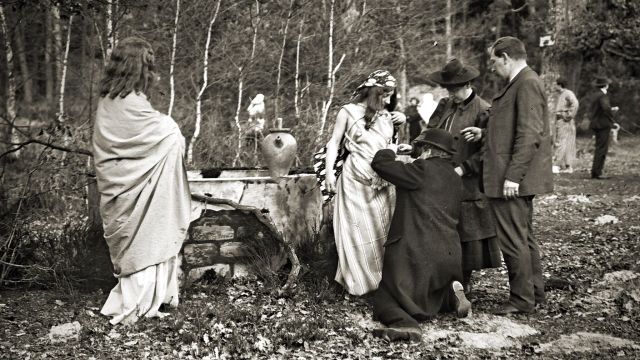
But the slights, omissions and outright sexist erasures of her name from the historical record ruled the day — a century of days. And this prolific, artistically and politically daring woman, whose story “dates back to 1896,” she says in an old black and white (1964)  French TV interview, could never quite take her place on the pantheon of Inventors of the Modern Cinema.

Until now.

“Be Natural: The Untold Story of Alice Guy-Blaché, the First Female Filmmaker,” begins with Alison McMahan’s 2002 book, “Alice Guy-Blaché: Lost Visionary of the Cinema”‘ and dives into globe-trotting original scholarship, filling the screen with some 138 interview subjects and mountains of primary source (written and film) material.

Filmmaker Pamela B. Green’s film resume was, before this, mostly concerned with creating and consulting on the credits of movies. She’s made a thorough, entertaining and eye-opening documentary about a woman writer-director often robbed of her credits — 1000 films, shorts from the prehistory of the cinema to sound features — who worked in a time before “Written, Produced and Directed by” was invented and noted on the screen.

“Be Natural” — the film takes its title from a huge slogan written on the proscenium of the stage where Guy shot many of her American films, at Solax Studios in Fort Lee, New Jersey — is one of the great works of motion picture historical scholarship.

From its fanciful scene-setting “post card” packed opening credits to a flourish of a finale — the recreation of one of Guy’s earliest single shot comedies, filmed on vintage equipment and starring Chris Kattan and Horatio Sanz — “Be Natural” is a film buff’s dream of a documentary and an absolute delight.

You can catch a hint of incredulity in Oscar winning narrator (and producer) Jodie Foster’s voice as she and Green (who did the interviewing) relate the history of film REWRITTEN with Alice Guy, later Alice Guy Blaché’s groundbreaking contributions finally included.

“Be Natural” she commanded her actors at a studio she designed and built (another first) with her then-husband. And the snippets of celluloid generously sampled here, the result of a worldwide search of film collectors and archivists by Green & Co., often back that up.

There was no avoiding the posing and presentational acting of her day. Remember, Queen Victoria was still living when Guy got her start in 1896, and when she made her first noteworthy scripted film — 1899’s “The Cabbage Fairy.”

But by the time she was making movies in America (her husband Herbert Blaché relocated them), the subtlety was obvious, the “feminism” overt and a sense of cinematic style all her own can be detected.

Green fills the screen with a mosaic of actresses, movie makers, studio execs, honchos and historians, and lets scores of them declare they have no idea who this woman was.

Most of them, anyway.

A great conceit of her movie is using that mosaic to zoom in on say, actress-director Lake Bell or Evan Rachel Wood, or a special effects specialist or “Wonder Woman” director Patty Jenkins, to ask a question about Guy’s life — her process, her business acumen, how she handled being a working mom (in the U.S.) at a time when there were no other female filmmakers and relatively few working mothers.

Green and her team then set out to answer those questions, tracking down descendants (first contacted, on camera, by phone), digging through souvenirs, scrapbooks, boxes of memorabilia. She talks to expert archivists, tracks down a 1980s video interview with Guy’s daughter and chases down names from Guy’s old address books.

This is Scholarship 101, working your way up to primary sources (hand-written notes, old scripts, a Legion d’honneur a descendant has stashed in his home archives in Arizona).

History buffs and film buffs will be tickled, as I was, at this detail — the research detective work we see unfold in the film.

There’s no footage of the woman, in her prime, extant. But is there? An old “Kinora” flip-book style animation of her from the very early 1900s is shown to a police facial ID expert, who breaks down how he determines identities and positively names Guy as the subject of the “film.”

She was a secretary for Leon Gaumont, present at one of the earliest demonstrations of the Lumiere Brothers’ pioneering projection system, the cinematographe, in 1895.

By the next year, she was shooting film for the studio that would come to be called “Gaumont” and which she would run, and within three years she was making one of the very first “scripted” motion pictures ever made — in Paris.

When actress Julie Delpy and others wonder how she could have overcome the gender restrictions of her day, we’re reminded that Guy filmed a comic cross-dressing spoof, “The Consequences of Feminism” — in 1906!

Historians take us on a walking tour of the locations Guy made movies on in Paris, their trek charmingly fading into footage of the actual movie on that same location over a century before.

It’s dazzling.

She gave the first female American director (an actress) her big break behind the camera, lectured at Columbia University and was instrumental in getting many of the first synced-sound movies — “music videos” of the day — on celluloid.

Unlike Edison, whose filmmakers tried to shoot and record-singing etc. direct to disc on the set simultaneously, Guy had the foresight to record the vocalizing first, and then have the singer lip-sync to it.

Another first!


Guy has been, as I mentioned earlier, resurrected before. There was a French TV documentary about her in 1964.

But as soon as that had aired, she was all but forgotten again, swept under the rug by male film scholars working in a more primitive (pre-Internet) time for researchers, when many of Guy’s films were simply lost and all they could work with was sketchy prior research and hearsay.

The implication, that they were only too eager to do this (Cinematique Francaise founder, curator and historian Henri Langlois, who KNEW her, all but denies her existence in one archived interview) out of sexism, is inescapable.

But Pamela B. Green, adding to the growing mountain of knowledge about Alice Guy Blaché, ensures that this oversight will not stand.

A film professional known for creating movie credits makes certain that this pioneer finally gets the credit she’s been due for over 120 years.

“Be Natural,” from the moment of release, becomes one of the seminal documentaries on early film history and must-see movie watching for any serious cinephile.

4star4

MPAA Rating: unrated

Cast: Narrated by Jodie Foster, with Alice Guy, Patty Jenkins, Evan Rachel Wood, Catherine Hardwicke, Jon M. Chu, Diablo Cody, Martin Scorsese, Agnes Varda

Credits:Directed by Pamela B. Green, script by Pamela B. Green and Joan Simon. A Be Natural release.

Running time: 1:43

Posted in Reviews, previews, profiles and movie news | Comments Off on Documentary Review: Jodie Foster narrates “Be Natural: The Untold Story of Alice Guy-Blache, the First Female Filmmaker”

Movie Review: Teens wonder if there is “No Alternative” to punk rock?

alt3-e1555507998913.jpeg

Maybe it’s bad form to slap a movie you like with the one thing you didn’t like about it, right from the top, but here goes.

There’s a third act turn toward the dark in “No Alternative” that feels abrupt, harsh and unearned — or at least less earned than writer-director William Dickerson may have felt.

It doesn’t spoil the coming-of-age period piece that precedes that turn, and trails it. But it does tend to blunt its impact.

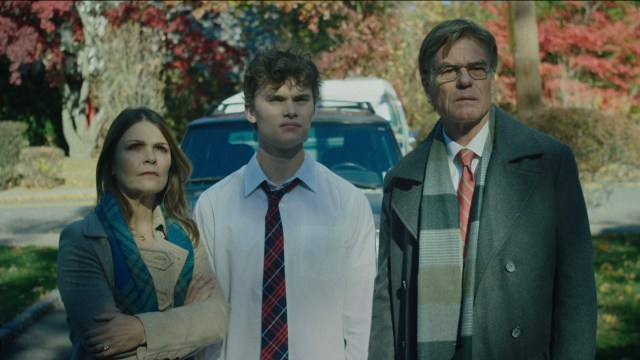
“No Alternative” is about siblings growing up in affluent suburban New York in the post-Nirvana grunge era. It’s 1994, and Bridget (newcomer Michaela Cavazos) and Thomas (Conor Proft) aren’t just sister and brother. They’re tight.

He’s waiting to hear if he gets into Georgetown, and he’s protective of his kid sister. Bridget seems to need it. She’s moody, stuck in a stocking cap, day and night, and in mild-mannered foul-mouthed rebellion with their parents.

Dad (Harry Hamlin) is a semi-stern judge running for the state supreme court, the type to bring home graphic descriptions of the crimes and criminals showing up in his courtroom, and Mom (Kathryn Erbe) wants to dote, but gives her kids space.

As we’ve seen Bridget in therapy, we get it. Her doctor is all about “smoothing out” this by prescribing that, treating her as a chemistry experiment.

Tom’s killing time this winter of college acceptance letters by jamming with his punk band. When they meet raspy, brooding and handsome singer Elias (Aria Shahghasemi), they realize that maybe they can take this seriously.

“I have a song that’s four chords…”

“That’s one too many, if you asked me!”

“It’s a love song. Called ‘Chumming.’

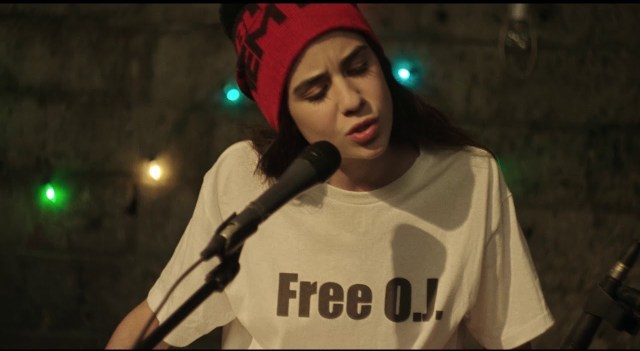
Bridget rolls her eyes at grunge. She’s into hip hop. And a discarded portable keyboard inspires her to put down the cigarette, knocks back a Zoloft with a vodka chaser, and starts spitting some rhymes of her own.

Dickerson’s film follows their parallel paths, a sister and brother seeking different things from music. Tom might get to put off growing up just a tad longer. Bridget? It’s her release, an artistic outlet (she also paints) that captures her ironic rage.

“No Alternative” isn’t a comedy, exactly. But Bridget’s scenes, as Bri-Dab, a rapper claiming a fake Harlem background, taking on the persona of Free 2B, rapping in the voice of a young black man (including the N-word), are hilarious.

“That was so punk rock I can’t even handle it,” Sarah Lawrence College boy Stewart (Logan Georges) tells her. He’s studying surrealism as a concept and sobriety as a lifestyle. He’s sweet on Free 2B.

And this happens as Bridget’s classmate, the promiscuous and equally “punk rock” (in that “Sheena is a Punk Rocker” sense) Jackie (Chloë Levine) is coming-on-strong to young Tom.

Pressure starts to build as the band bickers and the true extent of Bridget’s illness becomes clear and distracted Dad gets death threats, something he levels with his kids about even as he’s taking the strain out on them.

Maybe “You have my legs. You have my father’s legs. They’ve carried us a long way,” isn’t the platitude his son or daughter need at this moment.

alt1.jpeg

Dickerson (“Don’t Look Back” and “The Mirror” were two earlier indie efforts) is most at home immersing us in the milieu, and sending it up.

The “band” is more an excuse to hang out and drink and smoke and get tight and debate the qualities of this new film (“Pulp Fiction”) and where the filmmaker “stole” his ideas from.

Everybody’s worked up about how “punk rock” this or that is, and Tom and his pals are dressing and playing as if they could be “the New Nirvana.”

Bridget is adrift, impulsive, medicating and self-medicating. But she’s more in sync with the winds of change in music. Maybe she and her brother are drifting apart, musically, but if Jackie sleeps with him and smirks “I’ve had better,” she’s asking for a beat down.

Cavazos, who has the swagger and gift for the rude and crude of a young Sarah Silverman, is a revelation. Proft’s character is more a “type,” but he makes do with that.

There was a longer cut of “No Alternative,” according to IMDb. Perhaps the lost footage smoothed out and wholly-motivated that abrupt and clumsy third-act jump I opened the review complaining about. Perhaps not.

But what’s here is still a promising, entertaining effort. And it’s a fine showcase for Cavazos, who nails Bridget’s vocal fry, her pose, the disturbed and self-destructive vibe that she wears like a stocking cap, her armor against a world her illness — meds or no meds — won’t let her master.

2stars1

MPAA Rating: unrated, sex, teen drinking, drugs

Cast: Michaela Cavazos, Conor Proft, Kathryn Erbe and Harry Hamlin

Credits: Written and directed by William Dickerson. A Gravitas release.

Running time: 1:37

Posted in Reviews, previews, profiles and movie news | Comments Off on Movie Review: Teens wonder if there is “No Alternative” to punk rock?

Preview: Is “The Professor” Johnny Depp’s path to redemption?

He’s making movies for a smaller studio, the almost-indie Saban Films.

And he’s cutting his hair and playing a real role here, a college prof who discovers he’s dying of cancer and lives his life accordingly.

There’s a hint of tipsy in this turn as “The Professor,” which is Depp’s sweet-spot. If people aren’t totally over Johnny D., this May 17 release — sure to be lost in Blockbuster Season — could be one worth tracking down.

Posted in Reviews, previews, profiles and movie news | Comments Off on Preview: Is “The Professor” Johnny Depp’s path to redemption?

Preview: “The Secret Life of Pets 2” feels like an upgrade

A few laughs, signs that this animated sequel is headed in more interesting directions — more realistic pet “problems” spun out of the secret “emotional” life of pets. “The Secret Life of Pets 2” will tickle your kids June 7.

Posted in Reviews, previews, profiles and movie news | 1 Comment