Woody Allen Pitched a Memoir. Publishers Weren’t Interested.

The New York Times says publishing houses have finally taken the Farrow family side about Woody Allen’s alleged child abise. And so it ends. https://www.nytimes.com/2019/05/02/movies/woody-allen-memoir.amp.html

Posted in Reviews, previews, profiles and movie news | Comments Off on Woody Allen Pitched a Memoir. Publishers Weren’t Interested.

The Second “Deadwood: The Movie” trailer still looks like, uh, TV

Since time immemorial, this truism has ostensibly marked the difference between TeeVee and movies.

Television, even “It’s not television, it’s HBO,” is a close-up medium, more about intimacy, “neck-up acting” than film, which even in the HD-bigger screen era, still has the edge in terms of sweep and scope.

The action auteur Walter Hill, one of the few living filmmakers with the knack for making a Western look like a Western, gave us “Wild Bill,” which was the template for TV’s “Deadwood,” which he had a hand in producing (the pilot, setting the tone).

Sepia-tinged, dusty, grimy, rough and ready, “Wild Bill” looked like the Frontier Perdition you kind of imagine the real Deadwood must have been — earth tones, wood and dirt and mud and rough fabrics and dimly-lit saloons and gunsmoke and blood.

If HBO was going to all the trouble of making a stand-alone sequel, you’d think they’d bring Hill back as the “consulting producer” he was for the original pilot.

“Deadwood: The Movie” looks scrubbed and sanitized — mainly because of the “end of that era” civilization that is coming to the town — and has barely a hint of rough trade about it. It looks like what it is, a TV movie.

Posted in Reviews, previews, profiles and movie news | Comments Off on The Second “Deadwood: The Movie” trailer still looks like, uh, TV

Movie Review: Comedy comes to pieces in “79 Parts”

parts1.jpeg

Here’s a mob comedy as patchwork as its title –– “79 Parts.”

It’s a pieced-together period piece stuffed with characters, with multiple narrators and story threads, a “ticking clock” deadline or two that no one remembers and a hodgepodge of vintage vehicles dating from the 40s through the very late ’70s.

And none of it, not one moment of screen time, delivers anything resembling a laugh.

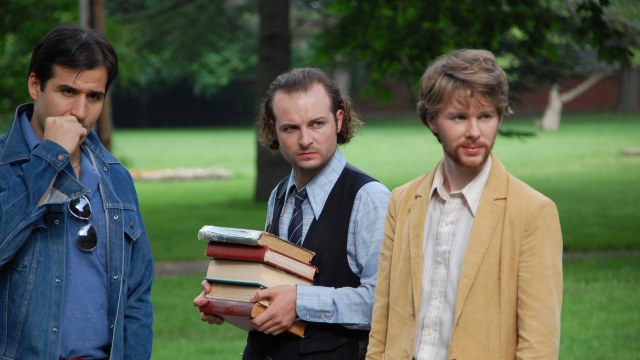
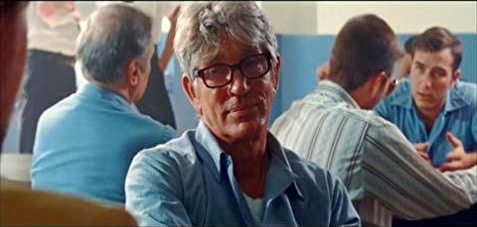
The two narrators are Slattery (Aidan Redmond, interesting), an Irish mobster who runs loan shark and chop shop operations (the “79 Parts” of the title) in his corner of “New York” in 1979, and Jack Anderson (Ryan O’Callaghan, meh), a one-time aspiring artist who is in the home stretch in law school because he’d love to get his crooked dad (Eric Roberts) out of prison.

Slattery needs to keep his young Italian immigrant mistress (Daniela Mastropietro) happy and his mob-connected wife (Lisa Regina) from killing him. Mob life?

“In your 20s, the job used to be sexy. Now that we’re in our 40s, it’s lost a certain luster.”

Anderson, no relation to the famous newspaper columnist of the era (apparently) needs $5,000 to pay off his last semester of law school. And darn it, let’s throw in that he’s “still a virgin,” because that’s what his narration tells us. His three-piece tan corduroy suit explains that.

The connection between the two is Gino, whose grandad (Tony LoBianco) is also in prison, and whose aunt is Slattery’s mob-made wife. Gino (Johnny Solo, badabing badaboom) is a classmate and hustler who’s always dragging Jack to the track.

Gino works for Slattery, whose marriage has created a combined business, “Paddys and Wops” chopping cars, using muscle and making threats. He vouches for Jack’s loan from Slattery, which Gino plans on gambling on “fixed” horse races with.

What could go wrong?

There are also INS agents sniffing around Slattery and his Italian baker mistress, assorted mugs and thugs, women who misuse Jack and vast collections of street walkers.

That may be the most accurate thing about this “period piece,” which looks like a film student’s idea of what the ’70s were like — a film student who doesn’t like doing research (the cars, the CARS).

Not that director Ari Taub is a film student.

792

It’s a movie of garish colors, big and badly-knotted ties (on the money) and hooker-wear straight out of “Starsky & Hutch.” It’s all shot in a could-be-anywhere Netherworld of gutted factories, abandoned railroad tracks and streets that haven’t been driven on in years. You shot in Brooklyn and this is what you got?

Every now and then, a character is given a funny name.

“Eight Track! Don’t touch the whores!”

The script’s idea of a sight gag is having the INS agents tie a string to a hubcap and drag it in front of suspects, looking for “a nibble” so they can hook them.

Hilarious.

All kidding or ridiculing aside, this is what could have worked. That milieu, that “Fort Apache — The Bronx” era New York at its nadir, chop shops and ranting, stereotypical Irish mobsters, maybe in comical conflict with stereotypical Italian ones.

Redmond needed more coherent lines than this for Slattery — “They say a leopard can’t change his spots. Everybody ends up where he’s s’posed to.” Say what now? Still, there’s something possibly worth working with here in all this unfunny clutter.

So many characters don’t work, so many lines don’t land, so much casting (cameos by Roberts, LoBianco and Sandra Bernhard) seems fruitless.

The “parts” might be here — a few of them, anyway. They just needed cleverer people to put all 79 of them together better.

1star6

MPAA Rating: unrated, violence, sex and profanity

Cast: Ryan O’Callaghan, Aidan Redmond, Kathrine Narducci, Sandra Bernhard, Tony LoBiancp and Eric Roberts

Credits: Directed by Ari Taub, script by Chuck McMahon.   A Factory Film Studio release.

Running time:

Posted in Reviews, previews, profiles and movie news | 2 Comments

Movie Review: “Tell it to the Bees”

bees1

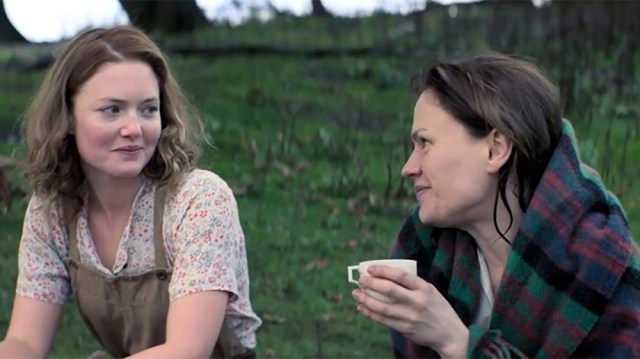
There’s a squishy wistfulness that hangs over “Tell It to the Bees,” a same sex romance set in small town Scotland in the 1950s. Flashes of magical realism gently but gratingly clash with drab melodrama. Winning performances by leads Anna Paquin and Holliday Grainger can’t banish it.

But the handsomely-mounted period production has its rewards and the finale manages a nice messiness that undoes some of what’s trite and far-fetched that’s come before it.

Jean Markham (the Oscar and Golden Globe-winning Paquin) has returned to the town she left decades before, taking over her late father’s medical practice. It’s 1952, and whatever she left town for — and we can guess that — she felt the pull of purpose drawing her back.

“These women, they work,  keep quiet and they don’t complain,” she tells a friend. “think I could make a difference.”

Lydia (Grainger, of “The Finest Hours,” “Tulip Fever” and TV’s “Bonnie & Clyde”) is one of those women, an outsider who moved here, putting in a full day on the looms at the textile mill, indulging her curious son Charlie (Gregor Selkirk), weeping when she thinks he’s not looking.

She’s married a lout (Emun Elliott) who refers to their child as “YOUR son” as he walks out on them. How will she pay the rent?

Charlie is how Jean and Lydia meet. His hobbies are Sherlock Holmes novels and getting into brawls with boys who disparage his Mum. One of those fights puts him in the doctor’s care.

And he and the doctor connect over a shared fascination with bees.

“My father used to say, ‘You tell the bees your secrets and they’ll never go away,'” Jean tells him. So Charlie takes to telling the bees his secrets.

But his mother and Jean are conjuring up secrets all their own. The whispering about both only grows as the homeless Lydia and Charlie move in with kind-hearted and well-off Jean.

The whispering, before and after, is about pretty much what you expect, thanks to the predictable arc of Henrietta and Jessica Ashworth’s screenplay.

So are the obstacles to their “forbidden love” in an era when homosexuality was illegal in Great Britain and small towns were the last place you wanted to test that.

“Those sort of people don’t change their minds,” Jean’s solicitor-friend (Steven Robertson) counsels.

It’s a romance of tasteful love scenes and brittle bigotry, with jarring transitions and a messy climax and that messier finale I mentioned earlier. Lydia’s a bit of a party girl, and seems more instantly-attracted to Jean than such stories traditionally play out. Her brutish soon-to-be-ex is a caricature of villainy, checked-out and moved-on, but still wanting control of this woman and son he refuses to support.

Some of that can be attributed to what might be our unreliable narrator (the adult Charlie). He’s pulling this all together from memory, and “The line between what I saw and what I thought I saw is blurred.”

Director Annabel Jankel broke through in films with the Dennis Quaid/Meg Ryan remake of “D.O.A.” in the 1980s, and whatever she can’t finesse in the script she compensates for in tone. This is a verdant, conservative place more comfortable with whispers and hissed insults than confrontation.

But even Jankel can’t smooth over the eye-rolling moments in the film’s climax. That doesn’t kill “Tell It to the Bees,” which passes otherwise without objection. But it does tend to rob one of much enthusiasm in endorsing it.

2half-star6

MPAA Rating: TV-MA, adult subject matter

Cast: Anna Paquin, Holliday Grainger, Gregor Selkirk, Emun Elliott

Credits:Directed by Annabel Jankel, script by Henrietta Ashworth, Jessica Ashworth. A Good Deed Entertainment release.

Running time: 1:46

Posted in Reviews, previews, profiles and movie news | Comments Off on Movie Review: “Tell it to the Bees”

Preview: A hurricane flooding isn’t the biggest menace in the Sam Raimi-produced “Crawl”

Kaya Scoledario and Barry Pepper star in this thriller, which captures two of the great menaces to Florida in one movie. Sam Raimi produced it.

This creeper “Crawl” opens July 12.

Posted in Reviews, previews, profiles and movie news | Comments Off on Preview: A hurricane flooding isn’t the biggest menace in the Sam Raimi-produced “Crawl”

Movie Review: “UglyDolls” have a song in their hearts

ugly1.jpegThe warning signs are there.

“Uglydolls” is an animated film from a studio start-up with no history in the medium.

The financing is mostly Chinese, with “The Chinese Amazon.com,” Alibaba, in a lead role. Why does that matter? Who does Hollywood never fail to take to the film production cleaners? “New Money.”

The selling point is the music, tunes by Christopher Lenertz and others, sung by big names like Kelly Clarkson, Nick Jonas, Janelle Monae and Blake Shelton.

So there’s every reason to expect this to suck, completely and utterly. But the tunes become a sort of saving grace, the animation’s not bad and the there’s enough slapstick to keep tiny tykes distracted.

And their parents could use a nap, which this death-itself screenplay delivers for anyone over the age of 10.

It’s about a happy, cardboard box town where discarded toys live and laugh and sing.

But Moxy — yes, a LOT of the names are “literal” and on the nose — longs to fulfill every doll’s destiny, to “get chosen.” Since she’s voiced by Kelly Clarkson, she sings about that longing, to be in “the Big World” where “there’s a child for every doll, and a doll for every child.”

Mayor Ox (Blake Shelton) can’t shake that belief. Pals like Wage (Wanda Sykes), Babo (Gabriel Iglesias), one-eyed Ugly Dog (Pitbull) and Lucky Bat (Leehom Wang) can’t dissuade her from exploring the mysterious “flower” from which new residents of Uglyville arrive.

It’s a garbage chute. She can’t see that, but we can. And when she convinces her pals to see if the Big World is on the other side of it, they tag along.

That’s how they end up at the Institute of Perfection,” where beautiful, cookie-cutter Bratz-styled dolls are lorded over by teen-idolist Lou (Nick Jonas).

Lou preaches “Pretty makes perfect,” and he sings “You’re U.G.L.Y., and that’s the ugly truth” to the new arrivals, among other tunes.

Moxy and her pals have to pass “quality control” and run “The Gauntlet,” run by Lou and his Mean Girls, to acquire “the greatest experience a doll can know,” being loved by a child.

ugly2.jpeg

The plush “ugly” dolls are rather formless felt concoctions. The “perfect” dolls has lovely yarn-texture hair and dazzling dance moves.

As I said, the songs here do the heavy lifting (“Spy Kids” creator Robert Rodriguez cooked up the story). We get the longing song, the villain’s obstacle song, the makeover song, the fulfillment finale.

A cute cover? Hall & Oates’ “You Make My Dreams Come True.”

One of the handful of laughs is a concert cliche from the rock Dark Ages. Lou inspires “MARRY me, Lou!” screams from his admirers every time he sings. Save for one, who shouts “Freebird!”

The other “As I said” here is this skews very young. If they’re old enough for school, the kids are old enough to be bored here.

But hey, it’s better than “UglyDolls on Ice” or “Uglyville’s Got No Talent.” Theoretically.

2stars1

MPAA Rating: PG for thematic elements and brief action

Cast: The voices of Kelly Clarkson, Nick Jonas, Janelle Monae, Pitbull, Blake Shelton, Gabriel Iglesias, Wanda Sykes, Lizzo and Emma Roberts

Credits:Directed by Kelly Asbury, script by Allison Peck, story by Robert Rodriguez. An STX release.

Running time: 1:27

Posted in Reviews, previews, profiles and movie news | Comments Off on Movie Review: “UglyDolls” have a song in their hearts

Morgan Freeman inspires, Greg Kinnear tries to clear an innocent man/footballer named “BRIAN BANKS”

Veteran character actor Aldis Hodge has the title role, that of an aspiring football star arrested and unjustly convicted, losing his dream and a good chunk of his life to “a broken system.” Freeman is an inmate who gives him the perseverance to endure the unthinkable, Kinnear leads the “Innocence Project” legal time trying to clear the name, “Brian Banks.”

An August Release, a true story.

Posted in Reviews, previews, profiles and movie news | Comments Off on Morgan Freeman inspires, Greg Kinnear tries to clear an innocent man/footballer named “BRIAN BANKS”

Ryan Reynolds is selling the crap out of this Pikachu movie

So funny. So cute. So very Canadian. Pikachu uses… Foot Massage? “Detective Pokemon Character” opens May 10. https://youtu.be/bo1YKTvM2Uc

Posted in Reviews, previews, profiles and movie news | Comments Off on Ryan Reynolds is selling the crap out of this Pikachu movie

Movie Review: Never buy a house from this Joker, “The Intruder”

intruder2.jpeg

Two truths quickly emerge from “The Intruder,” a thriller about buying a house from the wrong guy.

First, director Deon Taylor (“Traffik”) and editor Melissa Kent should be first chair at the symphony orchestra of their choosing. They play the audience like a fiddle, hurling close-ups, jarringly loud sound effects and scare-by-DEAFENING music at us when they want us to jump.

The finale is a beautifully shot, in-your-face/cage-fight-to-the-death, visceral and heart-pumping.

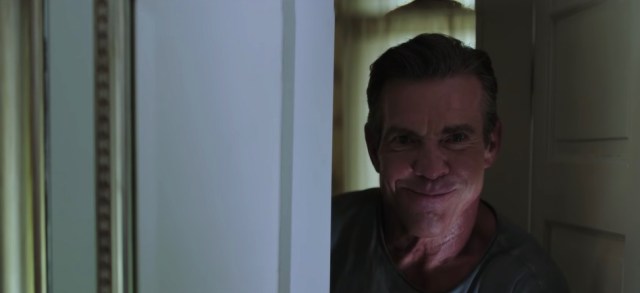
And the second truth is that Hollywood REALLY missed the boat by not giving Dennis Quaid a shot at playing The Joker. He’s had the demonic grin all along. He just had to apply it to the right demon.

Put those two together and you have the makings of an entirely too manipulative, too obvious couple-in-jeopardy thriller, and a fun “bad” movie.

There is no doubt that his Charlie Peck is “not right” when young couple Anna (Meagan Good) and Scott (Micheal Ealy) get him to show his gorgeous, remote 1905 Napa Valley villa tucked into verdant acreage. They’re ready to leave their San Francisco penthouse for the country, and all they need is $3 million+ to buy the house that Anna falls in love with on first sight.

Scott? He was as shocked as we are that they meet Charlie (Quaid), the Master of Foxglove — beware of houses with names — as he shoots a deer, right in front of them.

“POW!”

Charlie, the “Bambi killer,” has an off-putting laugh, a grin that can change into a scowl in a flash and an uneasy vibe about him. Scott sees all the guns, catches a hint of racial tactlessness, notices the way the man dotes on his wife and identifies a threat.

Here’s a manly man of the country who loves this house, his guns, doing stuff with his hands and the woods. Scott’s in advertising. Yeah, he’s intimidated.

The script may set us up for a “She won’t see him the same way…at first” scenario familiar to such thrillers. Quaid ensures that she has to be blind not to pick up the signals, the lip-smacking malice that oozes out of Charlie as they start to redecorate “my house.”

intruder1.jpeg

Security cameras require drilling holes “in MY house,” and totally unnecessary.

“What is necessary is that I protect my way wife, Charlie.”

“Want to protect her? Get a gun!”

The performances mesh nicely, though Good (the “Think Like a Man” and “Anchor Man” movies) has little more to play than big, naive smiles for Charlie, and sex appeal. Ealy (“Sleeper Cell,” “For Colored Girls”) has a nice offhanded sarcasm about house buying, wife-pleasing, etc.

And Quaid is worth every cent they paid him to go Full Joker on these Frisco Buppies.

The paranoia rises with every time Charlie, supposedly “moving to Florida” to be with his daughter, drops in. The nerves fray every time he pops into the frame, unexpected, often accompanied by a LOUD music cue from Geoff Zanelli’s strident score.

That’s not totally fair. I mean, there might have been music and sound effects that I missed, because the more impressionable members of the audience I saw this with were shrieking in alarm at every string the fiddlers in charge played.

The very hallmarks of a “fun bad movie.”

2stars1

MPAA Rating: PG-13 for violence, terror, some sexuality, language and thematic elements

Cast: Meagan Good, Michael Ealy, Dennis Quaid

Credits:Directed by Deon Taylor, script by David Loughery . A Sony Screen Gems release.

Running time: 1:42

Posted in Reviews, previews, profiles and movie news | Comments Off on Movie Review: Never buy a house from this Joker, “The Intruder”

Documentary Review: In nature, “The Serengeti Rules” don’t just apply to Africa

serengeti2.jpeg

We take The Big Idea for granted these days, the way we do a lot of big ideas.

This notion that the balance of nature is thrown off when biodiversity is upset is widely accepted, but had to start somewhere. And it came to life with one college professor, wondering at the interconnection between predators and healthy ecosystems, watching a planet where such eco-systems had been altered and seemed to be crashing.

Writer Sean Carroll’s “The Serengeti Rules” is about that professor and the generation of 1960s scientists, his “dynasty” of researchers, who adapted and tested his “keystone species” theory in the far corners of the world.

Nicolas Brown’s film based on that book is a striking nature travelogue that breaks down the theory, recreates the test cases that first supported it and profiles the University of Washington professor, Bob Paine, and four influential researchers Carroll found who “went out into the world and followed their passions,” and grabbed hold of Paine’s “kick it and see” experiment.

That’s how Mary Power describes Paine’s idea of altering an eco-sytem, in the laboratory sense, to see see how things work by ‘changing nature.'”

Paine came up with the idea of a way to “test the importance of predators” globally by looking at tide pools with starfish.” If the “apex predator” of a tiny system disappears, the tidal pool or a prairie stream, an Aleutian Island, a part of a Venezuelan national park or the African Serengeti, everything changes, and usually for the worst. In a tidal pool, you can easily remove the starfish and observe what goes haywire when that happens.

Using actors in recreations, Brown shows how Power, drawn to studying the ecology of rivers and ponds in childhood, sees the role large mouth bass play in creating green, healthy algae-filled pools in an Oklahoma stream. They eat the minnows who would otherwise turn such pools barren.

Jim Estes became a Paine devotee as he undertook the study of sea otters on Amchitka Island, with no expertise in them or even the branch of science that encapsulates them. He noticed that the one island on Alaska’s Aleutians chain that had no otters left also had no large stands of kelp, the undersea “forests” that are a vital part of a diverse and healthy system in that part of the ocean.

No sea otters means there’s nothing to eat the urchins which devour the kelp.

John Terborgh, a lifelong “bird man” sees the desolation in parts of Venezuela caused when all the jaguars and eagles are gone. Species that eat leaf cutter ants are harmed, and the soaring ant populations in turn defoliate the place.

Tony Sinclair is the fellow who’s spent decades on the Serengeti, trying to figure out why Wildebeest populations were swelling, competing with buffalo, only to “level out” at a healthy, sustainable population for reasons the film reveals.

Often their areas of expertise did not line up with the work the various ecologists ended up doing. But observing, testing and studying are gifts they all shared as they grew in understanding this new idea, that predators at the top of the food chain “drive the system from the top down,” which Carroll notes was “a whole new way of looking at nature.”

The personal stories give the picture a sentimental side. Paine was interviewed just before his death in 2016. Power recalled her life changing, as a tween, when her myopia — she hadn’t yet gotten her first pair of glasses — disappeared when she got her first mask and snorkel and discovered the world in a pristine New Brunswick pond.

Terborgh remembers a trek to see a Bachman’s Warbler “a mythical bird” even in his in youth, and starting to wonder then at all the natural world going “under the bulldozer” and “about to disappear from the Earth.”

Sinclair, a Brit, is shown climbing aboard a zebra-disguised propeller plane to aid in a wildlife count as he wondered (back then), “Can a bird man study buffalo?”

Carroll’s hook, that these researchers who got their start in the “follow your bliss” 1960s, were more open to dabbling outside their specialties, more open to new ways of looking at nature and thus pioneers, is in here.

But what sticks with you are the beautiful shots of kelp forests and otters, ponds seen from the bottom up, Africa and South America both threatened and, when “corrected,” healed. That’s the upbeat message that Carroll identifies in the opening moments of the film.

And then there’s Paine’s mantra, worth repeating even though it’s been a part of our thinking about nature, ecology and the need for biodiversity.

“Predators DO matter”

3stars2

MPAA Rating: unrated

Cast: Tony Sinclair, Mary Power, John Terbough, Jim Estes, Bob Paine, Greg Kriek, Ashlyn Jade Lopez, Samantha Nugent, Johnathan Newport, Mathieson McCrae, Jaime Excell

Credits: Written and directed by Nicolas Brown. An Abramorama release.

Running tie: 1:24

Posted in Reviews, previews, profiles and movie news | Comments Off on Documentary Review: In nature, “The Serengeti Rules” don’t just apply to Africa