
A young man’s future is derailed by a callous chancer and a faithless woman and a disaster he foretold and might have prevented is sure to doom many in his small Northumberland mining town in “The Stars Look Down,” the breakthrough melodrama from future Oscar winner Carol Reed.
The director who’d go on to film “The Third Man,” “Odd Man Out,” “Fallen Idol” and the Dickensian musical “Oliver!” would show flashes of the eye and ear that became his signature style in this Michael Redgrave star vehicle, a black and white picture populated with colorful character actors.
Based on an A.J. Cronin novel, it’s got a high-minded, ambitious, rise-above-his-working-class hero, a talented orator who sees the evils of unfettered capitalism trapping generation after generation in fictional Sleescale in “the pits,” mining “coking coal” in dirty, dangerous jobs that the entire town has come to identify as its heritage and its lot.
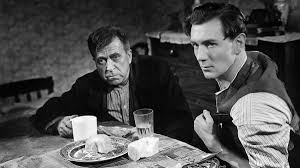

Davey Fenwick (Redgrave) may have started there himself as a teen, alongside his union leader dad (Edward Rigby) and aspiring soccer star kid brother (Desmond Tester). But growing up with a labor leader has him seeing through the patronizing, self-serving mine owner (Allan Jeayes) for who he is.
Boss Barras minimizes the risks of a mine section doomed to flood and slips a coin in Davey’s hand as he condescends how he’ll put in a good word when the student doesn’t finish college so that he can come back and teach at the local school.
Davey gives the coins to children.
His dad (Edward Rigby, archetypally on the money) is optimistic, in between coal coughs.
“Some day you’re going to do something about this industry of ours.”
His mother (Nancy Price, terrific) treats him with a mixture of sentiment and scorn.
“None of my family needed no college education,” she grouses, “stuffin’ you ‘ed with that highfalutin nonsense!”
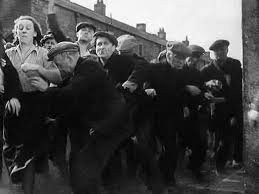
But go he will. The strike his dad calls over the objections of the mine owner and the compliant union leaders sets the whole town against the Fenwicks. Davey leaves just as his dad gets caught up in a riot in which the hateful local butcher’s shop is looted.
The instigator of that riot is Davey’s amibitious but no good thief contemporary, Joe (Emlyn Williams), who skips town with the cash from the butcher’s even as his father and Davey’s are tossed in jail.
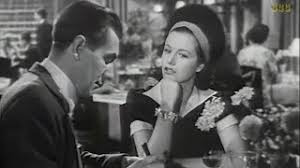
Crossing paths with Joe in Tynecastle, Scotland, one goes to college and the other becomes “a turf accountant” ( bookie) catting around with a rich man’s wife and leading on the landlady’s theater usher daughter, Laura (Margaret Lockwood).
Joe sees “smart” Davey as the perfect chump to dump Laura on as he eyes higher prizes. That’s how Joe ends up thrown together with the heartbroken Laura, who talks him into leaving school, taking up school teaching and never keeping her extravagant-beyond-her-upbringing tastes satisfied.
The film’s mid-WWII socialist subtext is refreshing to hear in the age of government by oligarchs. Davey preaches that “natural resources are NATIONAL resources,” and that the mines ought to be owned and run by the state.
No, that didn’t save the doomed coal industry. But Davey’s thinking, about doing something for people and not to them, is bracing.
What’s most dated in the script is the gender stereotyping. Women are subservient partners to their men, and when they’re not, they’re gold diggers and opportunists easily swayed by a smooth-talker like Joe.
Slapping a woman earns an “I deserved it” and then further feminine manipulations that don’t do our hero any good.
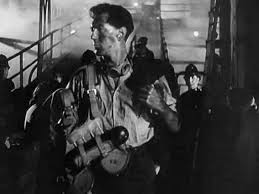
The film’s classic status is earned in the mine and mining disaster scenes, which have suspense and pathos built into them, with Davey’s cautionary pleas ignored and the media bending over backwards to portray the gambling-with-men’s-lives mine-owner as a hero.
The details are better than most movies set in mining country at the time — blindfolded horses brought down for labor, unquestioning fatalism by the miners and stolid grief from those who stay at home.
I don’t know if there’s a newer restoration of this 85 year old jewel, but if there isn’t there should be. The darkest scenes are murky with age and show signs of too many generations transferred from the original negative. Reed would make inky black darkness his home and cinematic calling card, and that is prefigured here.
The famed filmmaker was not an overnight success. His 1930s films have glimpses of talent amidst the budget-driven competence that is about the best we can say for his early genre pictures.
But in 1940, he delivered “The Stars Look Down” and then the delightful “Night Train to Munich.”
Northern Ireland (“Odd Man Out”) and Vienna and Orson Welles (“The Third Man”) came not long after that and a master filmmaker came into his own.
“Stars” may be just a melodrama with a mining disaster payoff, but it’s worth watching for the depiction of that disaster, for Redgrave’s earnest turn, for the tasty villainy of Williams and Lockwood and for the clues to the thematically challenging and visually stunning storyteller Reed shows himself as destined to become.

Rating: “approved,” TV-PG
Cast: Michael Redgrave, Margaret Lockwood, Edward Rigby, Emlyn Williams, Milton Rosmer, Cecil Parker, Desmond Tester, George Carney, Allan Jeayes and Nancy Price.
Credits: Directed by Carol Reed, scripted by J.B. Williams and A.J. Cronin, based on Cronins’ novel. A Grand National/MGM/Corinth Films release on Tubi, Amazon, etc.
Running time: 1:41


 Movie Nation