
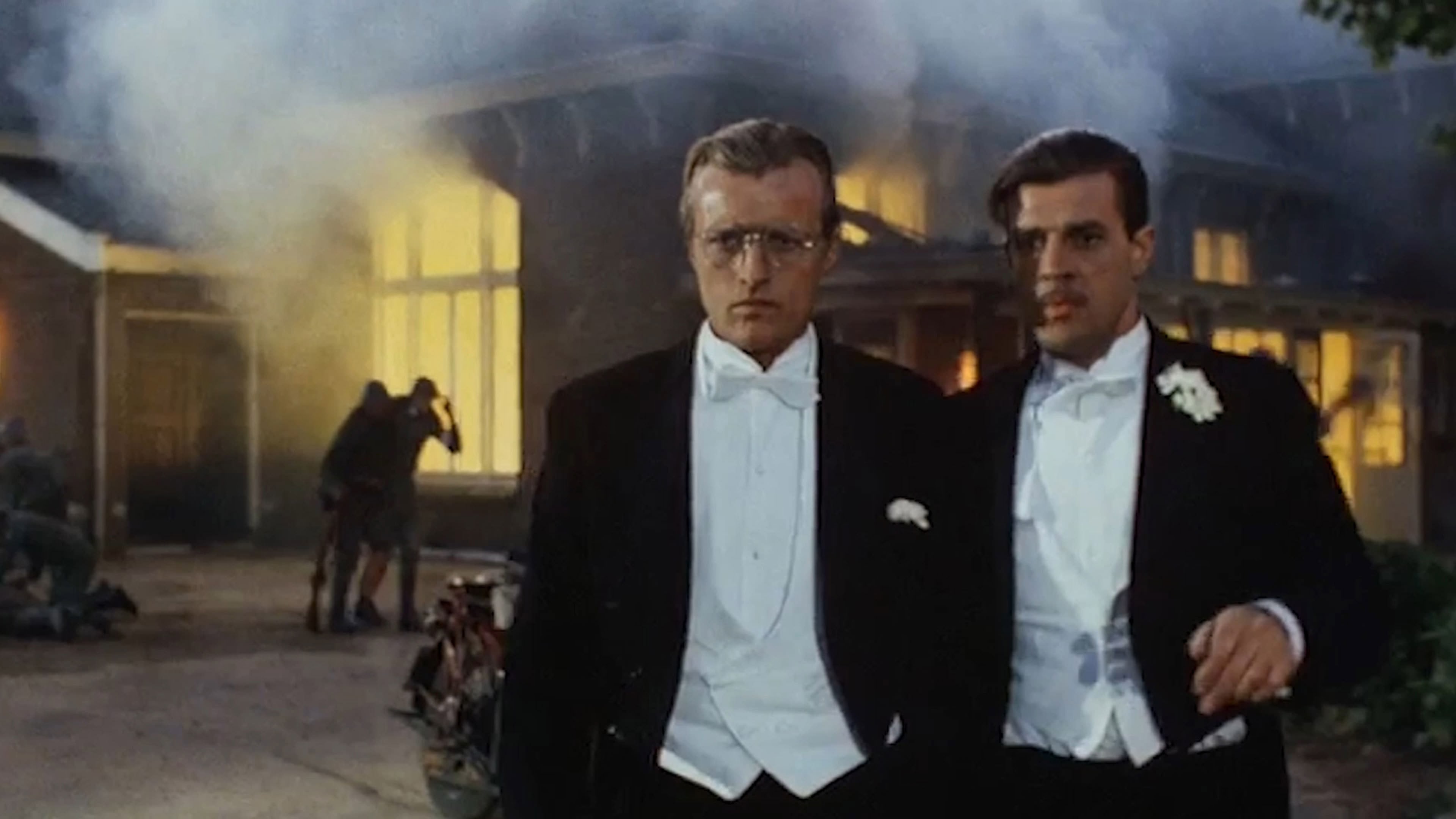


Long before “Robocop” made him a household name and “Basic Instinct,” “Showgirls” and “Starship Troopers” made him infamous, Dutch director Paul Verhoeven gained international acclaim for a few films in his native Holland, the most enduring of which is his jaunty/bloody/sexy World War II “true story” resistance thriller “Soldier of Orange.”
And when he needed a comeback after studios and audiences tired his overripe, oversexed style, he went back there for an even more violent, more suspenseful and sexier WWII Resistance thriller “Black Book.”
Verhoeven got Hollywood’s attention with 1977’s “Orange,” which came after his “Turkish Delight” breakout. Both films star his early muse, the formidable Rutger Hauer, who enjoyed a long Hollywood career that took him from “Blade Runner” to “Hobo with a Shotgun.”
“Soldier of Orange,” or “Soldaat van Oranje” in Dutch, is a thriller that doesn’t so much celebrate The Netherlands’ partisan fighters of WWII as appreciate them. We see their clumsy, cavalier and under-committed early recruitment, note their fence-straddling about whether to throw in against the Nazis before the tide turned, and their necessity.
Like the French and Norwegians, Dutch people could keep their heads held high after the war because of the few who fought back, didn’t collaborate, fraternize or sell-out to their German occupiers. Verhoeven shows us treachery, treason, the “cruelty is the point” that draws so many to fascism even today and the love-the-one-you’re-with immediacy of a deadly world war where who knew if you’d be around tomorrow?
The lens we see all this through is class, the upper crust college boys who meet in ’38 and go on to sign up or delay enlistment with Europe in mortal peril, only to get involved when it meant adventure, risk and more chances to wear black tie and tails than you’d think.
Hauer is Erik, a boyish freshman who endures hazing at Leiden University where the imperious and rich Guss (future Bond villain Jeroen Krabbé) rules the roost, at least as far as hazing underclassmen is concern. A self-described “prick,” Goss goes overboard abusing Erik and that bonds them for life.
All the lads know that only John (Huib Rooymans) is really concerned about “the Nazis” and the threat they represent. One and all dismiss that because he’s “The Jew” in their crew.
When the shock of war comes, Erik and Guss can’t enlist on the spot, and The Netherlands hastily surrenders for reasons given — Rotterdam is badly reduced by bombing — and the ones the script suggest. Their military was totally unprepared, falling for pranks, bungling the military call-up and generally lost when it came to who the fascists were in their midst, and of course blamed “the politicians” for selling them out.
Over the course of the war, some will collaborate, some will flat-out join the Dutch contribution to the Nazi war machine, some will resist and many of the young will float along on whatever impulse or opportunity presents itself to them.
Get away to England? SURE. Not this time? Maybe later, then.
Hauer and Krabbé compete to see who has the best swagger, with Guss right on the edge of upper class twit when it comes to thinking things through and Erik Mr. Indecisive in most matters that aren’t sexual.
Nico (Lex van Delden) was “Mr. Particular” in college, the detail-oriented guy you’d want running your resistance cell. Robby (Eddy Habbema) is the motivated radio operator with a Jewish fiance (Belinda Meuldijk) who is sweet on Erik.
We see most of this through Erik’s eyes, as the film’s opening sees him in uniform, tucked into newsreel footage of Queen Wilhelmina’s triumphant return to her palace at war’s end.
The genius of the film, the script and Hauer’s performance is the ambivalence and devil-may-care reminder that youth — especially upper class young people seemingly insulated from some of the harsh realities to come — can be slow to take up a “cause.” But adventure, risk and sex? Where’s the Resistance rave/hook-up this weekend?
“A spot of war would be exciting,” Erik cracks (in Dutch with English subtitles) early on, and that’s what Verhoeven is both reminding us of — that nobody in Europe was foolish enough to name people who had this situation land in their laps “The Greatest Generation” — and sending up.
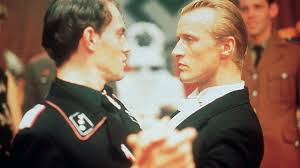
One hilarious set-piece has Hauer’s Erik dragged onto the dance floor by an old classmate (Derek de Lint) who’s gone Russian Front Dutch SS, a formal, threatening same-sex gavotte that Erik has to somehow exit in time to save a mission from betrayal.
The spycraft of Resistance work is far better covered in “Black Book,” as are the preps for the violence one must master to fight back.
But Verhoeven brilliantly handles the suspense of all this, people living through “interesting times” with no notion of living through them, even joking about “suicide pills” that are an option if they face capture, as if anybody in this lot thinks that far ahead.
And “Soldier of Orange” — the title comes from the royal family’s color of choice — still zips by, a sober, sexy and even silly WWII adventure that spends two hours and forty five lively minutes underscoring that “heroes” aren’t born to it or always trained and hardened to rising to the occasion. Oftentimes they’re lucky, in the right place and willing to take the right action at the right time, even if they never really give it a lot of thought as they do.

Rating: R, graphic violence, sex, nudity, alcohol abuse, smoking
Cast: Rutger Hauer, Jeroen Krabbé, Belinda Meuldijk, Susan Penhaligon, Lex van Delden, Dolf de Vries, Derek de Lint, Eddy Habbema,
Rijk de Gooyer, Huib Rooymans, Andrea Domberg and Edward Fox.
Credits: Directed by Paul Verhoeven, scripted by Kees Holierhoek, Gerard Soeteman and Paul Verhoeven, based on a book by Erik Hazelhoff Roelfzema.
Running time: 2:45


 Movie Nation