
Some decades ago, I was ensconed in the archives of the University of Tennessee in Knoxville, researching one of the university’s most famous alumni for a news article appreciation of his life and film career on the 100th anniversary of his birth.
And there, tucked into the papers of “National Velvet” and “The Yearling” director Clarence Brown were several screenplays, the filmmakers’ own copies of his scripts. There were notes and hand-written strike-throughs jotted on most every page of every one of them.
On the margin of one script — it probably wasn’t “Flesh and the Devil,” but might have been “Anna Christie”” — were the letters “GG” and a four-digit number. It took my breath away the moment I figured out what the hell it was I was looking at.
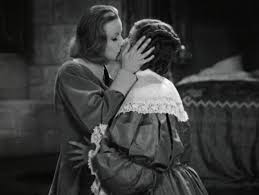
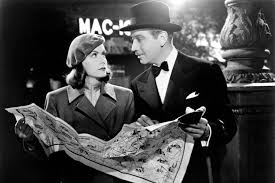
It was Greta Garbo’s Los Angeles phone number circa 1930. MGM paired up Brown and Garbo for four films, beginning with the silent blockbuster “Flesh and the Devil,” and including “A Woman of Affairs,” the Eugene O’Neill adaptation whose advertising tagline was simply “Garbo Talks!,” “Anna Christie, and the Tolstoy romance “Anna Karenina.” Of course Clarence Brown would have had her number.
That was April of 1990, when all the world had one last go at Greta Garbo mania. It was the month the reclusive Swedish screen icon died at 84. She’d retired half a century before, but thanks to endless media coverage of her passing, that phrase the critic Kenneth Tynan coined about her in 1954 was one many could quote.
“What when drunk, one sees in other women, one sees in Garbo sober.”
But it’s been decades since she died, and as almost nobody watches old films any more. Who remembers much more than a pose, a stare, a reputation built on a line from one of her films that she took to her grave?
“I want to be alone.”
Aside from the period piece “Queen Christina,” appreciated as “queer cinema” today, and the screwball comedy “Ninotchka,” her films are largely forgotten if not forgettable. It might be too much to expect Greta Garbo would still command public fascination. But has she disappeared from pop culture, five-going-on-six generations since her abrupt “retirement?”
The new documentary “Garbo: Where Did You Go?” asks this question. Filmmaker Lorna Tucker (“Westwood: Punk, Icon, Activist”) leans on Swedes descended from Swedes who knew her, a Swedish stage director and Swedish journalist and a few Americans related to people who knew her well in her later years, as well as archival interviews with Orson Welles, George Cukor, Kate Hepburn, George Cukor and Marlene Dietrich. A sampling of a BBC/MGM appreciation of Garbo knowingly narrated by her contempary Joan Crawford also summons up a life, an unlikely career and the culture that shifted under the weight of her celebrity.
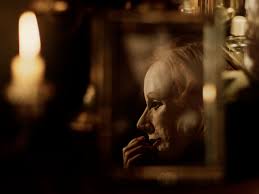
It’s an excessively gimmicky documentary, putting an actress in an unflattering Old Garbo mask at a dressing table for many voice-over-narrated scenes, using a willowy blonde actress (Ellyn Daniels) as “The Investigator,” the narrator who sets up the “acts” of Garbo’s life and tells her story through the journalists of her day. The great Swedish actress Noomi Rapace (“The Girl with the Dragon Tattoo”) voices Garbo’s own words in decades of letters, writing to relatives, drama school friends, lovers, would-be suitors and the Svengali director Mauritz Stiller who “discovered” hat counter clerk Greta Gustafsson, talked her into changing her name and took his “muse” to America with him when Hollywood and MGM talked him into moving.

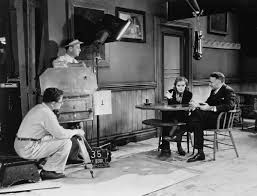
But Tucker smartly sets up conflicting takes on Garbo’s best films, her best destiny, best friends and mental state and lets the viewer decide.
Was the working-poor girl who never went to high school “happiest” in drama school in Stockholm? Was the much-older (and possibly bisexual) Stiller the best thing that could have happened to her, or the worst? Was “Anna Karenina,” “Queen Christina” or her teenaged Swedish breakthrough film “The Saga of Gösta Berling” her best film? Was “Ninotchka” really “the role that was closest” to the “real Garbo?”
Taped phone conversations from the ’70s and ’80s and the recollections of who made up her circle of friends remind us that the media labels celebrities who don’t want to talk to them “recluses,” when that’s rarely the case. They’re simply media shy.
The paparazzi were invented for Garbo, who was stalked, “pursued, chased” and hounded by newshounds all of her adult life.
“Why must people talk about me?” she asked in a letter. Why couldn’t people — the press, in particular — allow her the privacy she craved?
“Where Did You Go?” sets the record straight (again) about the abrupt retirement (she gave one late-life interview to a veteran Swedish journalist who earned her trust over weeks and several vacations at a European hotel). That notion that she set out to “close the door” by leaving the cinema at her peak popularity and sex appeal is promptly dashed by that.
We see screen tests from movies she thought about making throughout the late 1940s. These provide a still glamorous contrast to her first Swedish film appearances — in a silent celluloid theater ad for bread and an educational/industrial silent or two.
Orson Welles regales an interviewer about being treated to those earliest clips via the Swedish Film Academy in the decades before home video, and marveling at how that plump (a LOT of people called her “fat” in her youth) child became “the most divine creature to ever be on the screen.”
We learn from a descendent of a little known Swedish suitor, and hear about the much younger men who angled to be her “walking companion” in New York, men who used her and sold gossip about her to scandal sheets and photographers aiming to score that rare “Garbo sighting.”
Much of what has become her legend is verified by Garbo’s letters — her depression, her loneliness in America, her dismay at the slick shallowness of Hollywood films, the heartbreak of losing her sister young and then her mentor Stiller shortly after he returned to Sweden to leave his “creation” to the stardom he helped give her.
“Garbo: Where Did You Go?” is content to “verify” much of what has come before in biographies over the decades. And the gimmicks suggest writer-director Tucker had to content herself to simply providing an entertaining overview of the first truly famous life spent seeking, then shunning the world cinema spotlight.
The costs of fame were readily recognized by a pioneering figure who sought to shed it even as she stayed obsessed with what people in and out of the press were saying about Greta Garbo.
“Why must people talk about me?”
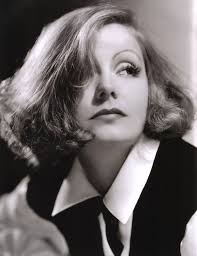
And yet thirty-five years after her death, with just a couple of her films still celebrated as “classics” and evidence of her legendary beauty only viewable in black and white stills from those films littering the Internet, people still do.

Rating: TV-PG
Cast: Greta Garbo, Ellyn Daniels, Orson Welles, Katharine Hepburn, narrated by Noomi Rapace.
Credits: Scripted and directed by Lorna Tucker. A Sky TV film on Netflix, other streamers.
Running tim: 1:30


 Movie Nation