
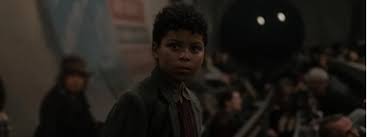
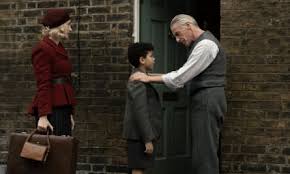
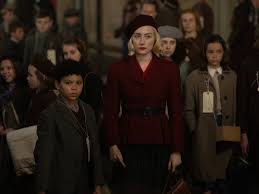
A single photo in Britain’s Imperial War Museum — a mixed-race child snapped as he joined the sea of children being evacuated from a British city early in World War II — inspired the brilliant writer-director Steve McQueen’s “Blitz,” a harrowing, moving and nostalgic day and a couple of nights in the life of a Black boy lost during the darkest days of World War II.
“Twelve Years a Slave” and “Small Axe” filmmaker McQueen used that photo to sweep away the whitewashed history of Britain’s “finest hour,” a trial by fire that’s almost always been depicted as a united, forthright and all-white country, loyal to its king, relying on the Royal Air Force, keeping calm and carrying on.
“Blitz” restores the many immigrants there to that not-that-calm story, and the ghoulish opportunists, the officious prigs behind early government blundering and the impersonal tragedy of it all in an odyssey undertaken and experienced by a nine year-old mixed race boy evacuated from the city, but determined to get back to his mum.
It’s sentimental, as such “Hope and Glory” enterprises always are. But “sentimental” gets a bracing reimagining through McQueen. The “truth” about the past wasn’t the misty lore of generations of WWII movies. It can include minorities of various stripes facing discrimination and outright hostility, and a Nigerian-born air raid warden (Benjamin Clémentine) reminding racists that “there is no segregation” in the Underground, where one and all take shelter from German bombing, and that using racism to “divide us” is just the sort of thing “Hitler” does.
Saoirse Ronan is Rita, a Stepney East Ender who keeps her Rosie the Riveter scarf around her blonde scalp as she’s building bombs for the war effort. It’s September of 1940, and the Battle of France has been lost. The Battle of Britain — an air offensive — is just ramping up. And city Britons and those from the south of the country, closest to the German bombers and under threat from Nazi invasion, are evacuating their children, en masse, to the north.
Rita’s boy George (Elliott Heffernan) is a prime candidate. He’s nine, living with her and her father (Paul Weller) in a townhouse, with danger arriving every night from German bombs plummeting out of the gloom.
We meet George’s Grenadian father via flashbacks, Rita remembering their jazz club courtship and the racism that “took him away.” We don’t know what happened, or if they got around to getting married.
George doesn’t want to get on that evacuation train, but he does. Slack supervision by the few adults in charge and the state of rail safety in those flimsy, wood-and-steel carriages (with doors everywhere) make it easy for George to make a break for it.
That begins his quest to “get home” and maybe apologize to the mum he told “I HATE you” to when he departed.
George will meet fellow escaped evacuees, kind strangers and a gang of “artful dodger” thieves who rob bombed stores and pillage the dead before the authorities can remove the bodies, because McQueen knows his Dickens.
George will face racism and deny being “Black,” until he meets that no-nonsense air raid warden (Clémentine) whom even the bigots have to listen to.
Rita will work, get dolled-up to go out pubbing with the girls — “Hey, sailor!” — and sing a sentimental song on the radio when the BBC comes by their factory for a morale-building broadcast.
She doesn’t know George is missing, and George doesn’t know that she’s not yet looking for him as they experience air raids and the comraderie of sheltering in the tunnels — where everybody had a “talent” or even an “act” to keep everybody else enterained.
In a lot of ways, “Blitz” is McQueen’s most conventional film, serving up the cliches and tropes of many a Blighty during “The Blitz” movies. But the melting pot world of foreign-born Brits who appear here — from an all Black big band at a club to the Caribbean islanders and Africans living in besieged Britain — freshen up those plot conventions.
McQueen may oversell the idea that Britain was as diverve in 1940 as it certainly became by 1950, but pretty much everything we see here is historically defensible if not literally ripped from this or that page from history.
Showing a swank nightclub where plentiful fresh food, drink and a Black big band let the swells pretend there isn’t “a war on” seems off — with the U-boat war/Battle of the Atlantic raging and the country under strict rationing since the preceding Jan. But nothing else here earns a “Surely that never happened” dismissal.
McQueen’s bomb-lit fires and post-bombing calamities above and below ground are vividly, impressionistically real recreations, adding to the sense that we’re experiencing not just history, but history forgotten or erased.
Ronan is properly feisty and stoic, and a believable new-to-running-a-drill-press factory woman and amateur (wavering pitch) singer.
Character actor Stephen Graham makes a properly demented leader of the gang of thieves.
And young Heffernan impresses as a child who uses grandpa’s parting advice to deal with bullies and bigots at every turn — “All talk and no trousers!” His George is just the sort of plucky, reckless kid we’d want as a tour guide through a familiar war-is-hell-on-Earth setting, a tour that lets us see this moment in history through fresh eyes.

Rating: PG-13, violence, sex, some profanity
Cast: Saoirse Ronan, Elliott Heffernan,
Benjamin Clémentine, Harris Dickinson, Paul Weller and Stephen Graham.
Credits: SCripted and directed by Steve McQueen. An Apple release on Apple TV+.
Running time: 2:00



