

Old World War II films that age well tend to have an artist behind the camera and eschew patriotic cheerleading for a weary “war is futile” but “fascism must be stopped” messaging.
Carol Reed’s “The Key” brings the cynicism of William Holden to a stiff-upper-lip/”Every man must do his duty” British WWII drama, and Sophia Loren arrives to give it a hint of sex, of a woman being “passed down” from man to man, and a romance with a whiff of the supernatural about it.
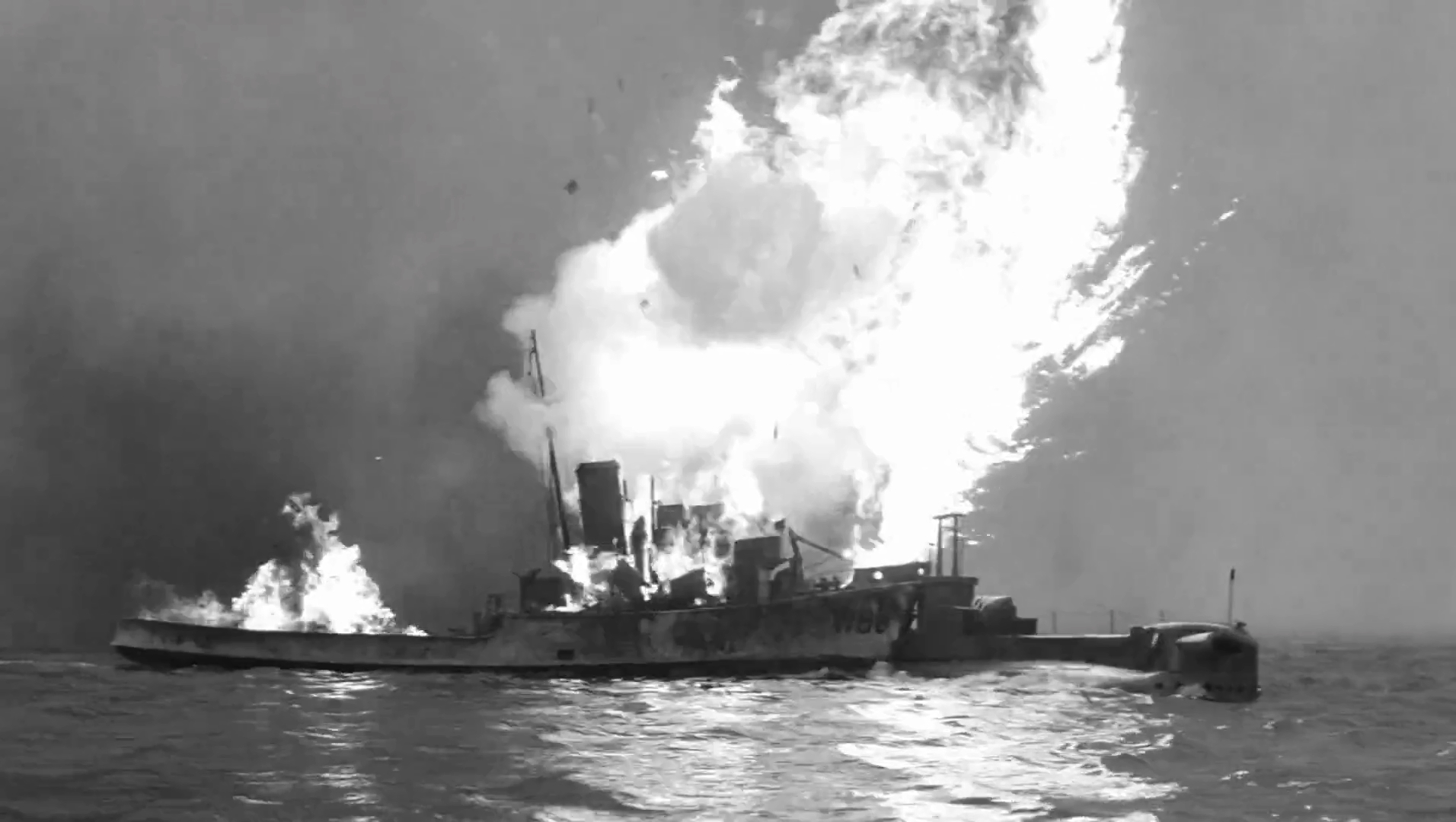
Reed made the most cynical post-war film of them all, “The Third Man,” and here tells a compact story of less glamorous but grim and deadly stakes, a tale of the ocean-going tugs sent to help ships attacked by U-Boats in British waters.
Blending lots of ship-at-sea footage and a few reasonably convincing models for the rescue/combat sequences with a fatalistic love story, and built on outstanding performances by Trevor Howard, Kieron Moore, Noel Purcell and Oscar Homolka in support, it’s a damned entertaining yarn and beautiful to look at to boot.
Holden plays Captain David Ross, an American who enlisted and became a sergeant in the Canadian Army at the outbreak of war. Now it’s 1940 about to turn ’41 and he’s been re-assigned to duty doing what he did years before — skippering a tugboat.
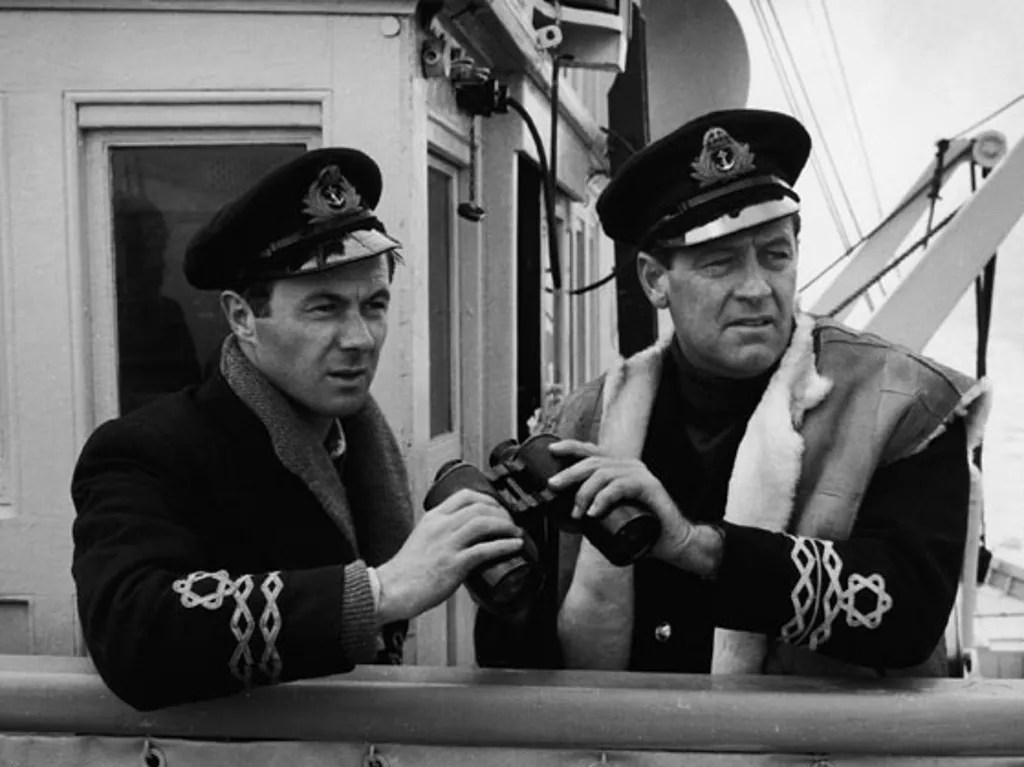
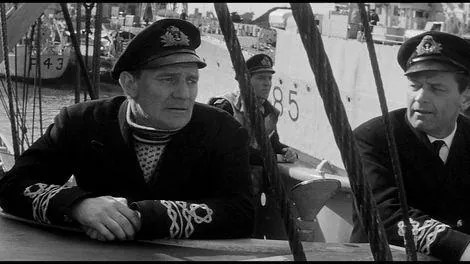
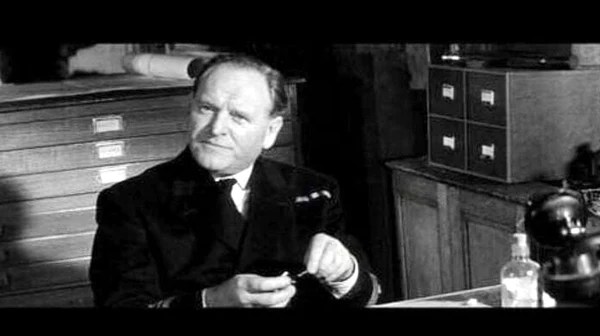
Howard’s Capt. Chris Ford is a grizzled old salt at the tugboat trade, and a hail-fellow ex-shipmate, ready with a dozen wisecracks about his old friend’s new gig.
“You’ve heard of ‘Lend Lease?’ They sent him.”
Capt. Ford takes new Capt. Ross out at the behest of the commanding officer (Bernard Lee, just a couple of years shy of becoming James Bond’s boss) and shows him the ropes of this dangerous duty — burning or sinking munitions ships and the like, U-Boats even more deadly on the surface than underwater, at least to the outgunned tugboats.
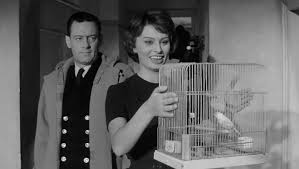
And when they finish the day with drinks at the pub and the camaraderie of his flat, complete with beautiful lady love Stella (Loren), Ford has some explaining to do to Ross.
Stella wears a wedding ring. She has a lovingly-signed photo of another skipper on her mantle. And that better-fitting jacket she passes on to new guy Ross has yet another name stitched in the lining.
In the crudest terms, Stella “comes with the flat,” even though Ford goes out of his way to avoid saying it. And he’s hasty to offer a key that flat to Ross. Apparently, one of her now-dead former flatmates started that tradition, a way of looking out for Stella, ensuring her a place to live and well…
“Make me a promise right now,” the not-so-old-salt insists. “The moment you use (the key) it, if you ever have to, (promise) that you’ll get another one made. And you’ll give it to someone, someone on the tugs.”
Keep things in “the family,” as it were.
Stella is a passive figure in all this. Still, she loves Chris and agrees to marry him. But Stella has premonitions. All it takes is a joking spilling of the wine all over his shirt — “Look, I’m wounded!” — for her to know his number’s up.
How will the American handle this responsibility, now that it’s fallen to him? How will he accept his “duty” and hers, and the notion that she’s “bad luck” thanks to her premonitions?
It’s Bill Holden playing the guy, remember. “Bridge over the River Kwai/Stalag 17” Bill Holden. He’ll handle it with that trademark American cynical skepticism, of course.
The combat scenes aren’t heroic, just frustrating as the dated and small-caliber firepower provided to tugs wasn’t enough to defend themselves. A good day is weaving about, reversing and turning, escaping destruction and getting a hearty handshake from whatever freighter captain they’ve rescued and towed to port. A bad day is not coming home yourself.
Holden and Loren are OK in the romantic scenes, little more. It’s the action, the fatalism, Reed’s attention to the details of this sort of work at sea and the men among men relationships that stands out.
Moore gives a fine edge to Ford’s first mate, who resents the American interloper. Lee is unflappable and droll, practically auditioning for Bond’s “M” here. And the veteran character actor Homolka shows what he can do with a meaty role as a pious, professional and helpful Dutch skipper who splits shifts captaining the W-86 tug with Ross. He makes short briefings on seamanship and lectures on sobriety and avoiding loose women entertaining, realistic and compassionate.
Capt. Van Dam owns this tug. He wants it to survive the war.
Reed manages some splendid black and white compositions reminiscent of “The Third Man” — a train departing in steam and twilight — and oversees magnificently-edited action beats.
It’s not quite “Kwai” in “prestige picture” polish. But “The Key” is damned good, and a terrific addition to your “Victory at Sea” World War II drama bucket list.

Rating: TV-PG, combat violence, adult situations, alcohol abuse
Cast: Willian Holden, Sophia Loren, Trevor Howard, Bernard Lee, Kieron Moore, Bryan Forbes, Noel Purcell and Oscar Homolka.
Credits: Directed by Carol Reed, scripted by Carl Foreman, based on a novel by Jan Hartog. A Columbia release on Tubi, Amazon, Youtube etc.
Running time: 2:06


 Movie Nation